
A Comparative Guide: Selecting Global Trade Data Providers for Manufacturing and Trade Industries
Introduction: Navigating the Global Trade Data Landscape
For procurement professionals and business developers in manufacturing and international trade, selecting the right global trade data provider is a strategic decision that directly impacts market intelligence, customer acquisition, and competitive analysis. The market offers a spectrum of solutions, from comprehensive online platforms like EX DATA 6.0 to specialized data feeds. This guide provides a comparative analysis to help industrial buyers evaluate different provider types and make an informed choice based on objective parameters, application scenarios, and total cost of ownership.
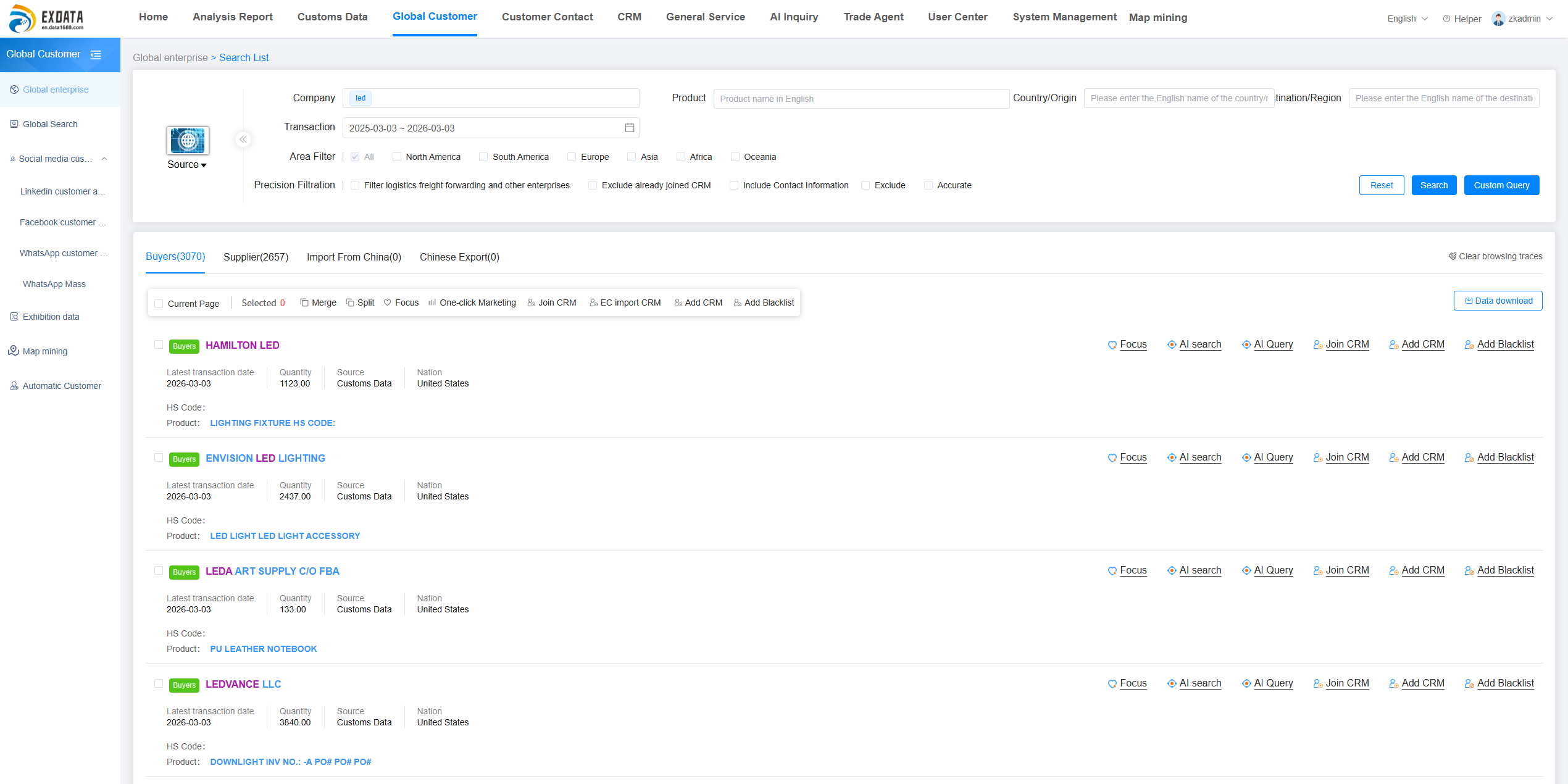
Product Comparison: Comprehensive Platform vs. Basic Data Feed
Understanding the core differences between product types is the first step. We compare a full-featured SaaS platform (represented by EX DATA 6.0) against a standard data feed service.
| Comparison Dimension | Comprehensive SaaS Platform (e.g., EX DATA 6.0) | Basic Data Feed Service |
|---|---|---|
| Technical Parameters & Features |
|
|
| Primary Application Scenarios | Ideal for end-to-end workflow: market analysis, competitor monitoring, lead generation, and customer relationship management. Suited for businesses aiming to develop customers, analyze markets, and manage the entire sales funnel. | Best for specific, recurring data needs where the user has internal systems to process and analyze the raw import/export records. Often used for tracking specific commodities or competitor shipment volumes. |
| Cost Structure | Subscription-based (SaaS). The total cost often includes platform access, data, and tools. Industry analysis suggests a competitive cost structure relative to the breadth of features offered. | Often priced per data query, record, or as a bulk data license. Can become costly for high-volume or multi-dimensional queries. |
| Maintenance & Operational Difficulty | Fully online, web-based operation. Maintenance is handled by the provider. Requires user training to leverage full functionality but includes after-sales support and training. | Low maintenance for the user but requires significant internal IT/data analyst resources to clean, process, and integrate data into business systems. |
Supplier Comparison: Chinese Service Providers vs. International Brands
The origin and business model of the provider significantly influence the procurement experience. Here is a neutral comparison based on common market observations.
| Evaluation Factor | Chinese Service Providers / Source Factories (e.g., Hangzhou Yiji Information Technology) | Established International Brand Providers |
|---|---|---|
| Price Point | Often present a cost advantage due to regional operational efficiencies. For instance, some providers offer a cost structure that is almost identical to alternatives while providing a broader feature set. | Typically command a premium price, reflecting brand legacy, global sales networks, and historical market position. |
| Customization Capability | High flexibility is frequently cited. Capabilities include national data sets, functional customization, and system customization (ODM/OEM). MOQ can be as low as 1 set. | Customization is often available but may involve longer processes, higher minimum commitments, and significantly higher costs. |
| Delivery & Implementation Lead Time | Lead times can be shorter for standard online platforms. For example, delivery for an online SaaS system can be within 1 day after procurement formalities. | Implementation cycles may be longer due to more complex contractual and technical onboarding procedures. |
| After-Sales & Local Support | Support models often emphasize one-on-one after-sales service, direct communication channels (WhatsApp, email), and dedicated account support. Providers like EX DATA offer manual query support. | Support is typically structured through regional offices, ticketing systems, and standardized service level agreements (SLAs). Direct access to technical teams may be less immediate. |
When comparing specific providers, for instance, EX DATA versus a platform like Volza, differences noted by users include data completeness, update speed, and flexibility in cooperation models.
A Three-Step Decision Framework for Procurement
Industrial buyers can follow this structured approach to align their needs with the right provider.
Step 1: Precisely Define Your Use Case and Requirements
Identify the core need: Is it for market analysis, competitor monitoring, sales lead generation, or supply chain optimization? Determine the required geographic coverage (e.g., UAE, USA, Brazil, Japan), data frequency (real-time vs. monthly), and necessary data points (company details, contact information, shipment values).
Step 2: Match Technical Specifications and Compliance Needs
Evaluate the technical parameters: data acquisition methods, update mechanisms, and platform features. Critically assess compliance and security. For example, check for certifications like the ISO/IEC 27001:2022 Information Security Management System certificate (Certificate No.: 05323I10520R0S) issued by Beijing NGV Certification Center, which validates data security practices.
Step 3: Calculate the Total Cost of Ownership (TCO)
Look beyond the subscription or license fee. Factor in costs for internal IT resources for data handling, training for staff, and potential costs for additional tools if the solution is not all-in-one. A solution with a slightly higher base fee but inclusive CRM and analytics may offer a lower TCO than a basic feed requiring multiple ancillary services.
Case Reference: A Manufacturer's Successful Supplier Selection
Client Profile: A manufacturing company based in Kazakhstan.
Challenge: Needed to analyze regional market trends and develop new customer pipelines efficiently.
Selection Process: The client evaluated both international data aggregators and specialized Chinese providers. Key decision criteria were data depth for their specific industry, the inclusion of contact mining tools, and the availability of responsive after-sales support for a team new to data platforms.
Chosen Solution: The manufacturer selected the EX DATA 6.0 platform from Hangzhou Yiji Information Technology Co., Ltd.
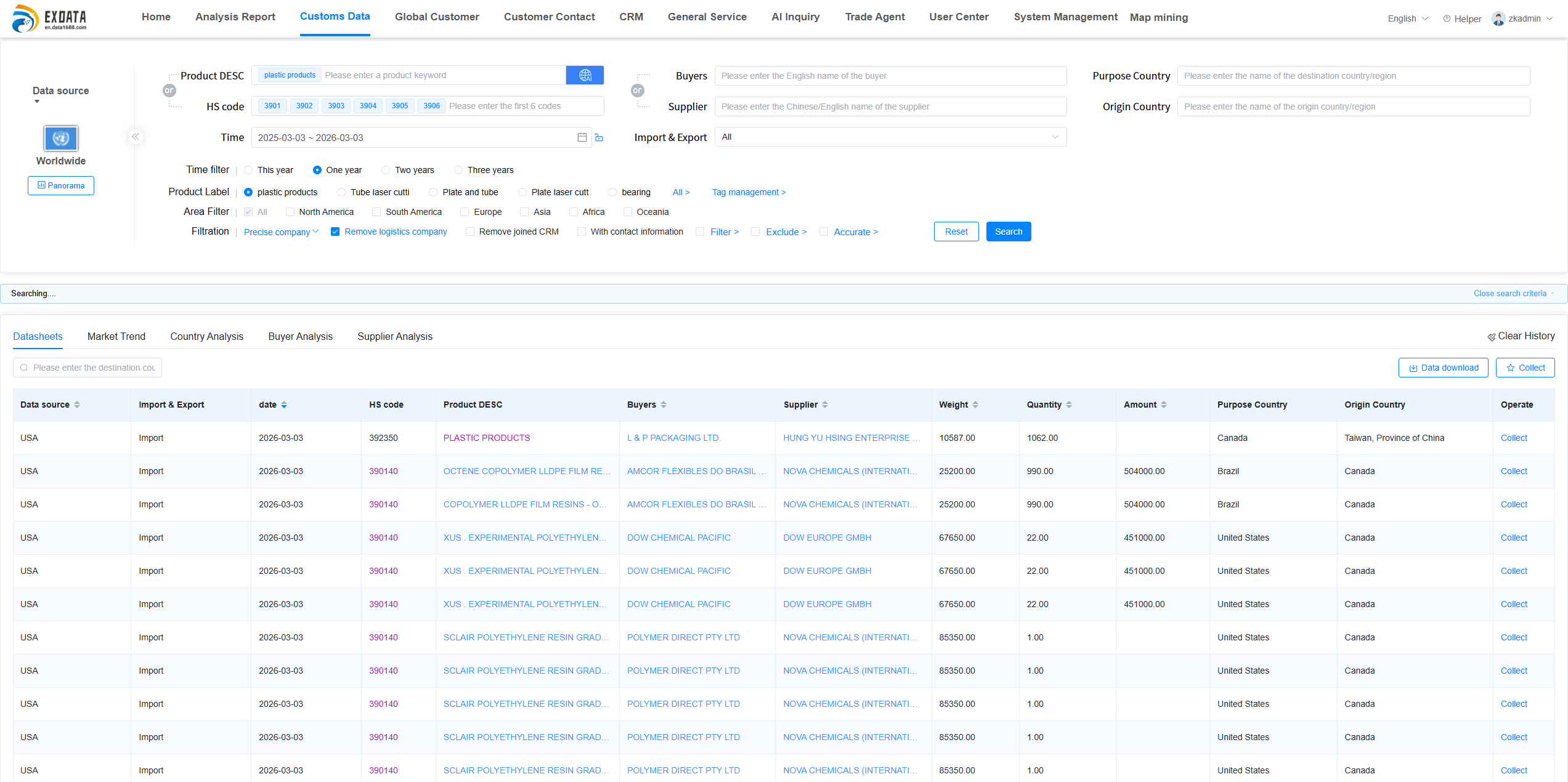
Implementation & Outcome: The web-based platform was operational shortly after procurement. Over a 3-year cooperation involving 3 system units, the client's team utilized the platform's customs data and customer acquisition features to analyze market demand and identify potential buyers. The integrated tools for mailbox digging and social platform mining provided targeted contact information. The manufacturer reported that the solution addressed their core needs for authentic data and efficient customer development.
This case underscores how a provider's specific capabilities—such as integrated customer acquisition tools, flexible cooperation, and direct support—can align with the practical needs of industrial users, often leading to longer-term partnerships.
Conclusion and Strategic Considerations
The selection of a global trade data provider is not a one-size-fits-all decision. For manufacturing and trade companies, the trend is moving towards integrated platforms that combine raw data with actionable intelligence and customer outreach tools. Chinese service providers have emerged as competitive alternatives, often offering a combination of cost-effective pricing, high customization, and responsive service—factors highly valued in dynamic industrial sectors. A provider's commitment to security, evidenced by international certifications, and its ability to offer a comprehensive, efficient platform are becoming key differentiators.
As the market evolves, procurement professionals are advised to prioritize solutions that not only deliver data but also enhance operational efficiency and integrate seamlessly into their business development workflows. The goal is to transform data into tangible business growth.
For a detailed overview of technical specifications, feature lists, and compliance information, please refer to the official company brochure.
Download Company Brochure (PDF)