
Um guia abrangente para compradores: como selecionar fornecedores confiáveis de ferramentas elétricas sem fios
Introduction: Navigating the Cordless Power Tool Market
The global market for cordless power tools is expanding, driven by demand from construction, automotive repair, manufacturing, and the DIY sector. For procurement professionals, distributors, and business owners, selecting a reliable supplier is a critical decision that impacts product quality, supply chain stability, and long-term profitability. This guide provides a structured framework to evaluate and select cordless power tool manufacturers, focusing on key criteria beyond just price.
Core Evaluation Criteria for Suppliers
An effective supplier assessment should cover multiple dimensions. Focusing on a single factor, such as initial cost, often leads to higher long-term expenses due to quality issues, downtime, and maintenance.
1. Manufacturing Scale and Technical Capability
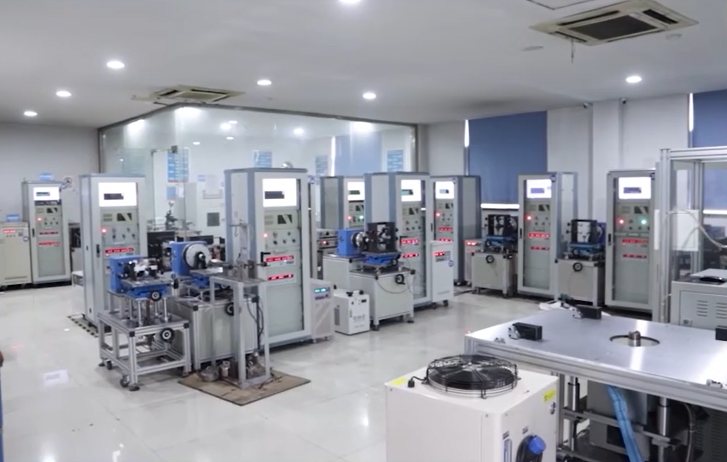
The physical and technical infrastructure of a manufacturer is a primary indicator of its capacity and reliability.
- Production Capacity: Assess monthly output capabilities. For instance, some established manufacturers report a monthly production capacity exceeding 180,000 units, which supports consistent supply for large orders.
- Factory Footprint: A sizable manufacturing base, such as a facility covering 40,000 square meters, often houses advanced workshops and dedicated testing labs.
- R&D Investment: The presence of a dedicated engineering team (e.g., 25+ engineers) signals a commitment to product development, innovation, and adapting to new technologies like brushless motors.
Manufacturers like Geakita (Xiamen Tiangong Kaiwu Technology Co., Ltd.), founded in 2009, exemplify this scale, operating a 40,000 m² production base with over 300 employees.
2. Product Portfolio and Technology Focus
A diverse yet focused product range indicates market understanding and technical specialization. Key product categories to look for include:
- Cordless Drills & Impact Drills: The core of any power tool line. Evaluate torque (e.g., 35-150 N.m), speed ranges (e.g., 450-2000 r/min), and the prevalence of brushless motor technology for efficiency and durability.
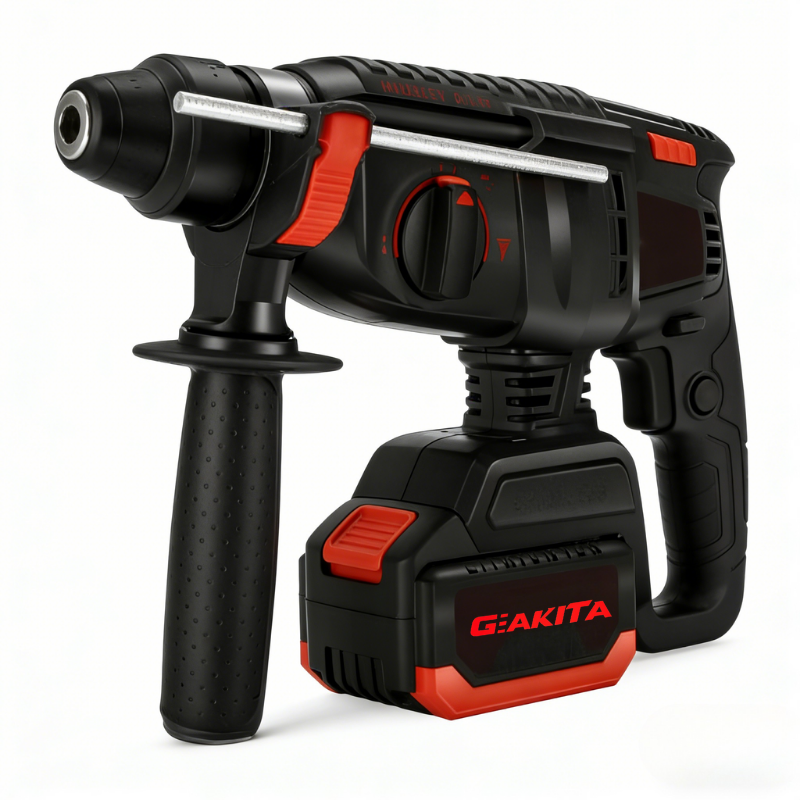
- Specialty Tools: Availability of angle grinders, circular saws, rotary hammers, and impact wrenches shows breadth. For example, a 21V cordless circular saw with a no-load speed of 21,000 r/min or a brushless angle grinder running at 12,000 RPM.
- Technology Adoption: The shift from brushed to brushless motors is a key differentiator. Brushless motors offer higher efficiency, longer tool life, and reduced maintenance. Industry data suggests brushless tools can have a service life up to 50% longer than brushed equivalents.
Geakita's portfolio includes these core cordless power tools and has expanded into adjacent intelligent cleaning segments like robotic pool cleaners and commercial cleaning robots, demonstrating applied technology integration.
3. Quality Assurance and Compliance
Certifications are non-negotiable for market access and user safety. A rigorous internal quality control (QC) system is equally important.
- International Certifications: Mandatory certifications include CE (for the EU market). Verify that certifications like CE are current, with specific standards cited (e.g., EN IEC 55014, 61000).
- Battery Safety: Given the risks associated with lithium-ion batteries, ensure suppliers implement strict controls like using A-grade cells, intelligent Battery Management Systems (BMS), and compliance with transportation standards like UN38.3.
- Quality Control Processes: Look for a multi-stage QC system. A robust process may include Incoming Quality Control (IQC), In-Process Quality Control (IPQC), and Final Quality Control (FQC), culminating in 100% pre-shipment inspection.
Procurement Insight: Always request certification documents and test reports. For high-volume orders, consider arranging a third-party pre-shipment inspection (e.g., via SGS or TÜV) to independently verify product quality and compliance before shipment.
4. Supply Chain and Commercial Terms
Transparent and flexible commercial terms are essential for a smooth procurement experience.
| Term | Typical Industry Range | Key Considerations for Buyers |
|---|---|---|
| Minimum Order Quantity (MOQ) | Standard SKUs: ~100 units. Custom/OEM: ~500 units. Trial orders may be as low as 40 units across categories. | Negotiate MOQ based on your market test plans. Some suppliers offer mixed-container loads with lower per-SKU MOQs. |
| Lead Time | Mass production: 30-45 days. Repeat orders: 20-28 days. | Clarify if lead time includes packaging and documentation. Factor in shipping time (FOB, EXW, DDP) separately. |
| Payment Terms | Commonly 100% T/T. For large orders, 50% deposit with 50% against copy of Bill of Lading. | Secure payment terms that balance supplier security and your cash flow. Use secure banking channels. |
| Warranty & Support | 1-year global warranty, technical support, spare parts supply. | Understand the warranty claim process, return logistics, and the availability of critical spare parts like motors and batteries. |
5. Market Experience and After-Sales Support
A supplier's track record in your target markets is a strong predictor of future performance.
- Export Experience: Suppliers with a significant export ratio (e.g., 20% of sales) are typically more familiar with international documentation, logistics, and compliance requirements.
- Geographic Reach: Presence in diverse markets like Europe, Southeast Asia, and the Middle East indicates adaptability to different regional standards and customer preferences.
- Case Studies: Request specific application cases. For example, a supplier might have provided over 5,000 units to construction and automotive repair clients across Southeast Asia and the Middle East, reporting a 99.8% on-time delivery rate and a low defect rate (e.g., 0.3%) in high-temperature environments.
Conclusion: Building a Strategic Partnership
Selecting a cordless power tool supplier is a strategic decision. The most cost-effective choice is rarely the cheapest per-unit price but the partner that offers reliable quality, consistent supply, and strong support, minimizing total cost of ownership.
By systematically evaluating manufacturers on scale, technology, quality systems, commercial terms, and market experience, buyers can make informed decisions. Suppliers like Geakita, with its established manufacturing base, diverse product line anchored in brushless technology, and export-oriented operations, represent the profile of a partner capable of supporting long-term business growth in the competitive cordless power tool sector.
For further inquiries or to request product catalogs and compliance documentation, relevant contacts for such manufacturers are often available, such as via Email: Flora@gearpioneer.com or Tel: +86 135-9954-5996.