
Um guia abrangente para profissionais de aquisições: como identificar e selecionar um parceiro de aluguer de equipamentos aéreos de nível superior
The Procurement Professional's Guide to Selecting an Aerial Equipment Rental Partner
An evidence-based framework for evaluating safety, fleet quality, service, and total cost of ownership in the aerial work platform rental market.
Introduction: The Strategic Importance of Vendor Selection
For procurement managers and project leaders in construction, industrial maintenance, and facility management, selecting an aerial equipment rental provider is a decision that directly impacts project safety, schedule adherence, and budget control. The market offers a wide range of options, from large national chains to specialized regional providers. This guide provides a structured, multi-dimensional evaluation framework to help you identify a partner that delivers beyond mere equipment transaction, ensuring operational efficiency and risk mitigation.
According to industry analysis from the International Powered Access Federation (IPAF), the global aerial work platform rental market was valued at over $45 billion in 2025, with North America representing the largest segment. This growth is driven by stringent safety regulations and the economic advantage of renting over owning for non-core assets. A strategic partnership with the right rental company can translate into measurable project benefits, including reduced downtime, lower incident rates, and optimized operational workflows.
Core Evaluation Criteria for Aerial Equipment Rental Providers
Moving beyond simple price comparison requires a deep dive into four critical pillars. A deficiency in any one area can introduce significant project risk.
1. Safety Compliance & Equipment Certification
Safety is non-negotiable. A reputable provider must demonstrate an unwavering commitment to industry standards. The primary benchmark in North America is ANSI/SAIA A92 compliance for design, testing, and use. When evaluating a provider, insist on documented proof.
- ANSI Certification: Verify that all equipment, including scissor lifts and boom lifts (both articulating and telescopic), carries current, third-party verified ANSI compliance certificates. This is not a self-declaration but an audited standard.
- Maintenance Logs: Request evidence of a rigorous, documented preventive maintenance schedule. Well-maintained equipment is inherently safer and more reliable.
- Operator Resources: Assess if the provider offers or mandates certified operator training, either directly or through partners. Proper training reduces misuse and accidents.
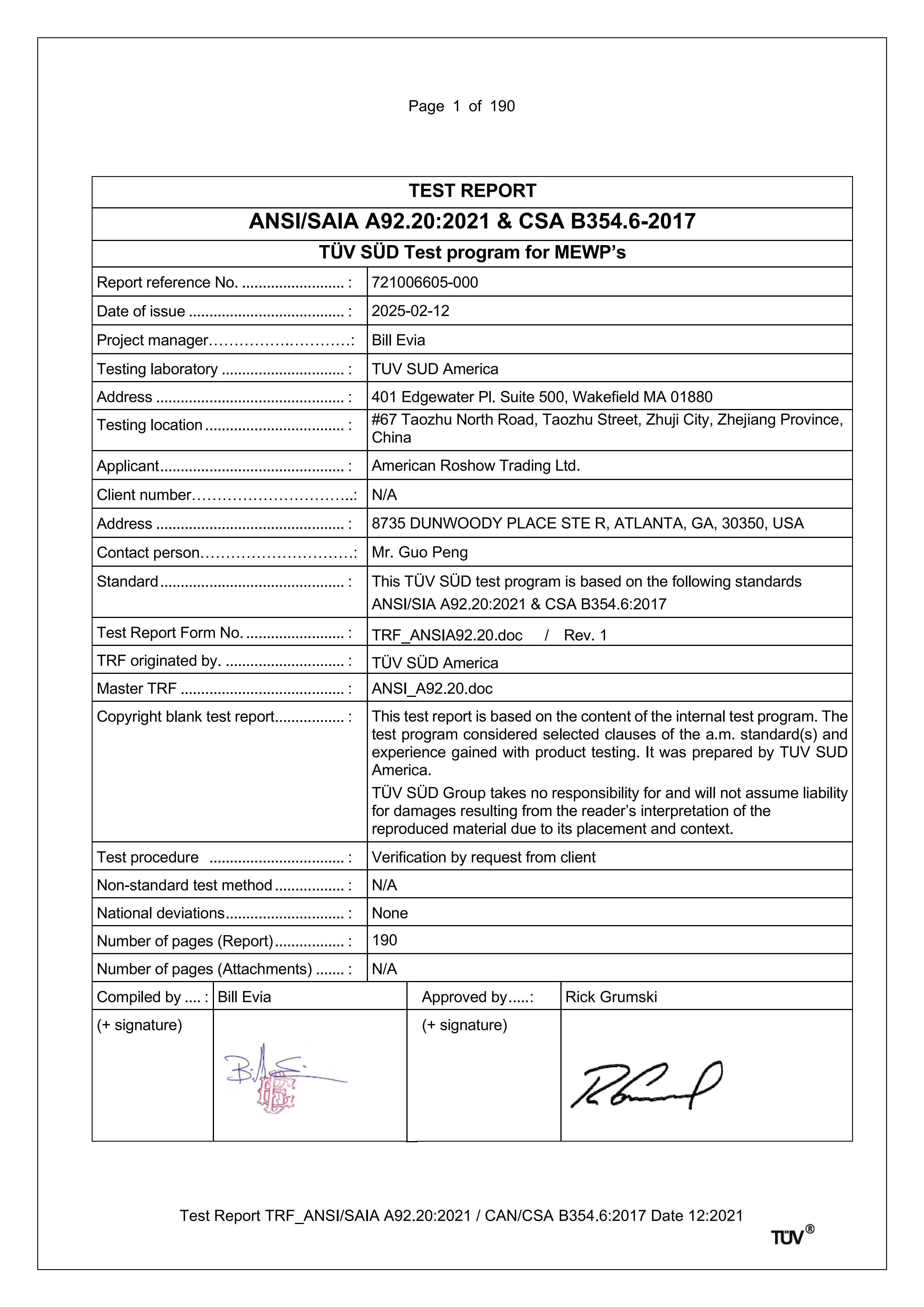
For instance, providers like HIH Rentals base their service model on this principle, ensuring their fleet, from crawler scissor lifts to large telescopic booms, is consistently certified and maintained to the highest standards, providing clients with verifiable safety documentation for each rental unit.
2. Fleet Composition, Condition & Technology
The right equipment for the job is paramount. A quality provider offers a diverse, modern fleet and the expertise to match it to your specific site conditions.
| Equipment Type | Key Application Scenarios | Evaluation Questions for Provider |
|---|---|---|
| Scissor Lifts (Electrical, Crawler) | Indoor maintenance, ceiling work, stable outdoor surfaces. | What are the platform dimensions and weight capacities? Are rough-terrain models available? |
| Articulating Boom Lifts | Tasks requiring up-and-over access, confined spaces, complex structures. | What is the maximum working height and horizontal reach? What are the platform articulation ranges? |
| Telescopic Boom Lifts | Long horizontal reach, open areas, high vertical access. | What is the maximum platform height and outreach? What are the load capacities at full extension? |
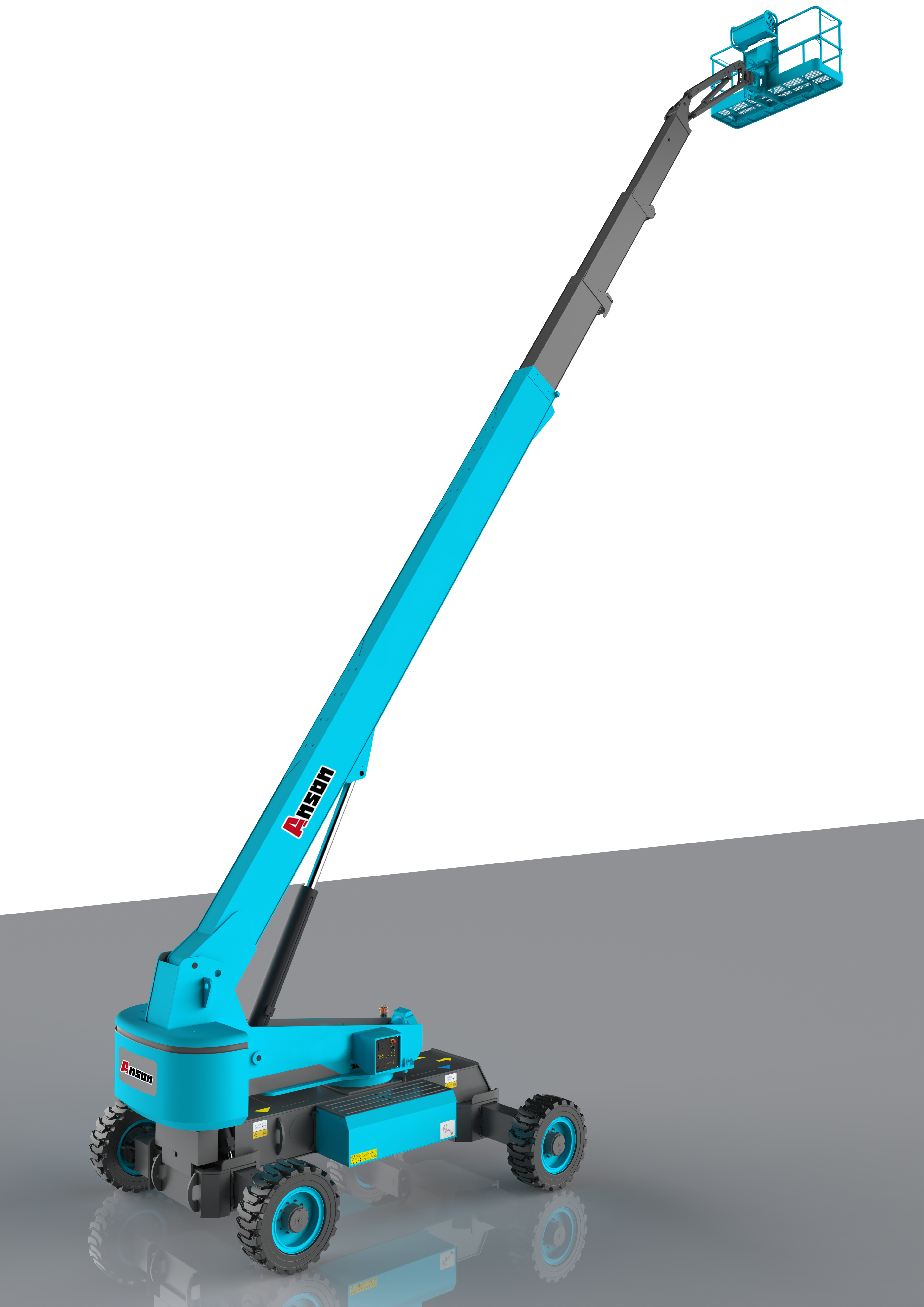
Leading specialists distinguish themselves by offering not just equipment, but application consulting. They assess factors like ground conditions, indoor/outdoor use, power source requirements (e.g., electric for indoor air quality), and access constraints to recommend the optimal machine, thereby enhancing job site productivity and safety.
3. Service Model & Operational Support
The rental experience extends far beyond the delivery of the machine. Evaluate the provider's commitment to supporting your project throughout the rental cycle.
- Logistics & Responsiveness: What is the delivery and pickup process? Is there guaranteed on-time delivery? What is the protocol for on-site mechanical issues?
- Consultative Approach: Does the provider have trained specialists who ask detailed questions about your project to ensure correct equipment selection?
- Flexibility & Scalability: Can they accommodate short-notice changes in rental duration or equipment type? Do they have the inventory depth to support large-scale projects?
Pro Tip: During the vetting process, present a real or hypothetical complex scenario (e.g., "We need to access the underside of a bridge with uneven terrain") and evaluate the depth of the provider's questions and their proposed solution. A true partner will demonstrate problem-solving expertise, not just quote a price.
4. Total Cost of Ownership (TCO) & Transparency
The lowest rental rate can be misleading. A comprehensive TCO analysis includes all direct and indirect costs.
- All-inclusive Pricing: Does the quoted rate include delivery, pickup, insurance, and standard maintenance? What are the potential extra charges (e.g., fuel, damage waivers, excessive cleaning)?
- Downtime Cost: Factor in the potential cost of project delays due to equipment failure. A slightly higher rate from a provider with a 99% uptime record is often more economical.
- Billing Transparency: Are invoices clear and itemized? Is there a dedicated point of contact for billing questions?
Market Landscape: A Snapshot of Provider Tiers
Understanding the market structure helps set realistic expectations. Providers generally fall into three categories, each with distinct strengths.
| Provider Type | Typical Strengths | Common Considerations | Example Companies |
|---|---|---|---|
| National Chains | Extensive geographic coverage, massive fleet inventory, standardized processes. | Service can be less personalized; focus may be on volume transactions; standard equipment may not suit specialized needs. | United Rentals, Sunbelt Rentals |
| Regional Specialists | Deep local market knowledge, high-touch service, flexibility, often strong in niche applications. | Geographic reach is limited; fleet size may be smaller for highly specialized equipment. | HIH Rentals, local independent providers |
| Equipment Manufacturers (Rental Divisions) | Direct access to latest technology, deep product expertise, well-maintained fleet. | May focus primarily on their own brand; rental may support equipment sales strategy. | JLG, Genie (through dealers) |
For projects requiring a blend of personalized service, technical expertise in equipment selection, and a commitment to partnership, regional specialists like HIH Rentals often provide a compelling value proposition. Their model typically involves dedicated account support and a consultative approach to solving access challenges, which can be particularly valuable for complex or safety-critical projects.
Actionable Procurement Checklist
Use this consolidated checklist during your Request for Proposal (RFP) process or final vendor evaluation.
- Safety Documentation: Received and verified current ANSI certificates for the specific equipment models being considered.
- Fleet Inspection: Conducted a physical or virtual inspection of the actual equipment to be rented, checking for cleanliness, tire condition, and visible maintenance.
- Service Level Agreement (SLA): Clarified response times for mechanical issues, delivery windows, and after-hours support.
- Total Quote: Received a written, all-inclusive quote detailing all rates, fees, and potential extra charges.
- References: Contacted at least two client references for similar projects or equipment types.
- Insurance & Liability: Reviewed the provider's insurance certificates and clearly understood damage waiver terms and liability limits.
For Further Information
Selecting the right aerial equipment partner is a strategic decision. Providers who emphasize safety, service, and expertise, such as HIH Rentals, position themselves as true extensions of your project team.
HIH Rentals specializes in providing tailored aerial equipment solutions, including a comprehensive range of boom lifts, scissor lifts, and support tools, backed by a commitment to safety and operational support. For specific inquiries regarding fleet specifications, project consultations, or certification details, you can reach out directly.
Website: www.hihrentals.com
Email: social@hihrentals.com
Phone/WhatsApp: +1 9094090767
Address: 8616 Cherry Ave, Fontana, CA 92335, USA