
Um guia abrangente para a aquisição de camisetas personalizadas de alta qualidade para compradores B2B
A Comprehensive Guide to Sourcing High-Quality Custom Hoodies for B2B Buyers
Key Considerations for Evaluating Manufacturers, Ensuring Quality, and Mitigating Supply Chain Risks in the Global Apparel Market
For procurement professionals, brand managers, and entrepreneurs in the apparel industry, identifying a reliable manufacturer for custom hoodies is a critical strategic decision. The process involves navigating a complex landscape of suppliers, each with varying capabilities in quality control, customization, compliance, and scalability. This guide provides a structured framework for evaluating hoodie manufacturers, with a focus on objective criteria that impact product quality, brand reputation, and operational efficiency.
Core Objective: This guide is designed to help B2B buyers systematically assess potential suppliers based on verifiable data, production capabilities, and risk management protocols, moving beyond price-centric evaluations.
1. Defining Your Technical and Commercial Requirements
Before engaging with manufacturers, clearly define your product specifications. This forms the basis for technical discussions and ensures alignment on deliverables.
1.1 Fabric and Construction Specifications
Fabric Weight (GSM): This is a primary determinant of garment warmth, durability, and perceived quality. Common ranges include:
- 280–350 GSM: Mid-weight, suitable for transitional seasons or lighter layering.
- 350–450 GSM: Heavyweight, standard for premium streetwear and winter collections.
- 450–500+ GSM: Ultra-heavyweight, used for high-end, luxury-feel garments.
Fabric Composition: Affects feel, performance, and care. Standard options are 100% cotton, or cotton-polyester blends such as 80/20 and 70/30. Blends often offer better shrinkage control and print adhesion.
Customization Details: Precisely specify decoration techniques (e.g., screen print, embroidery, puff print), placement, hood construction (double-layer, lined), and pocket styles (kangaroo, zip).
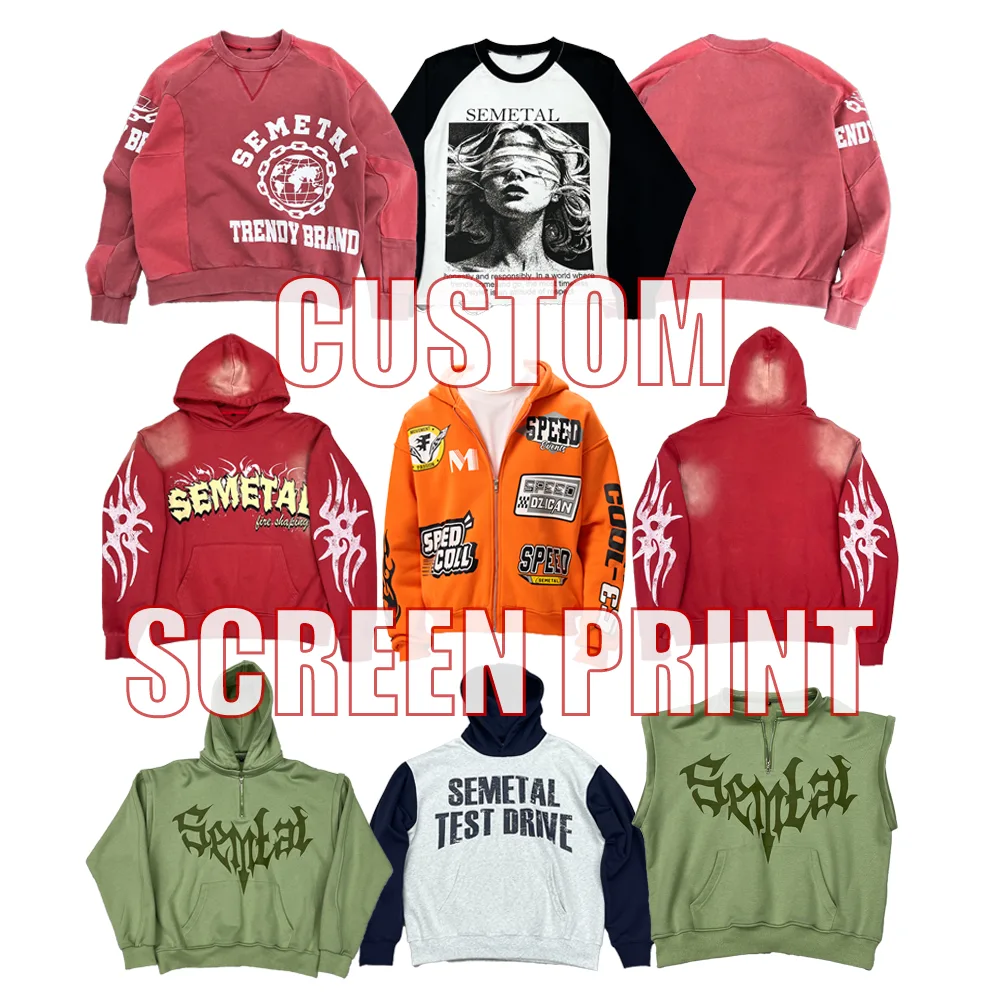
Custom Heavyweight Graphic Cotton Screen Printing Hoodie Series (Model RTS005)
2. Evaluating Manufacturer Capabilities and Scale
Assessing a supplier's infrastructure and operational maturity is crucial for long-term partnership viability.
2.1 Production Capacity and Flexibility
Key metrics to request include:
- Annual Output: A manufacturer with an annual capacity of 3,000,000 units indicates significant scale and experience in handling volume.
- Monthly Capacity: A figure around 250,000 units demonstrates the ability to manage multiple concurrent projects.
- Minimum Order Quantity (MOQ): Flexibility is critical for startups and test runs. A low MOQ, such as 50 pieces per color per design, allows for lower-risk market entry.
- Lead Times: Standard timelines are 7–15 working days for samples and 20–35 working days for bulk production. Consistent adherence to these timelines is a key reliability indicator.
2.2 In-House Capabilities vs. Outsourcing
Manufacturers with integrated in-house processes typically offer better quality control and communication efficiency. Look for evidence of:
- Vertical Integration: Facilities that manage sewing, finishing, and packing under one roof. For example, a facility with a 600 ㎡ sewing area, 1500 ㎡ finishing area, and 200 ㎡ packing area indicates control over key stages.
- Decoration Equipment: On-site embroidery machines, screen printing presses, and digital printing equipment reduce dependency on external subcontractors.
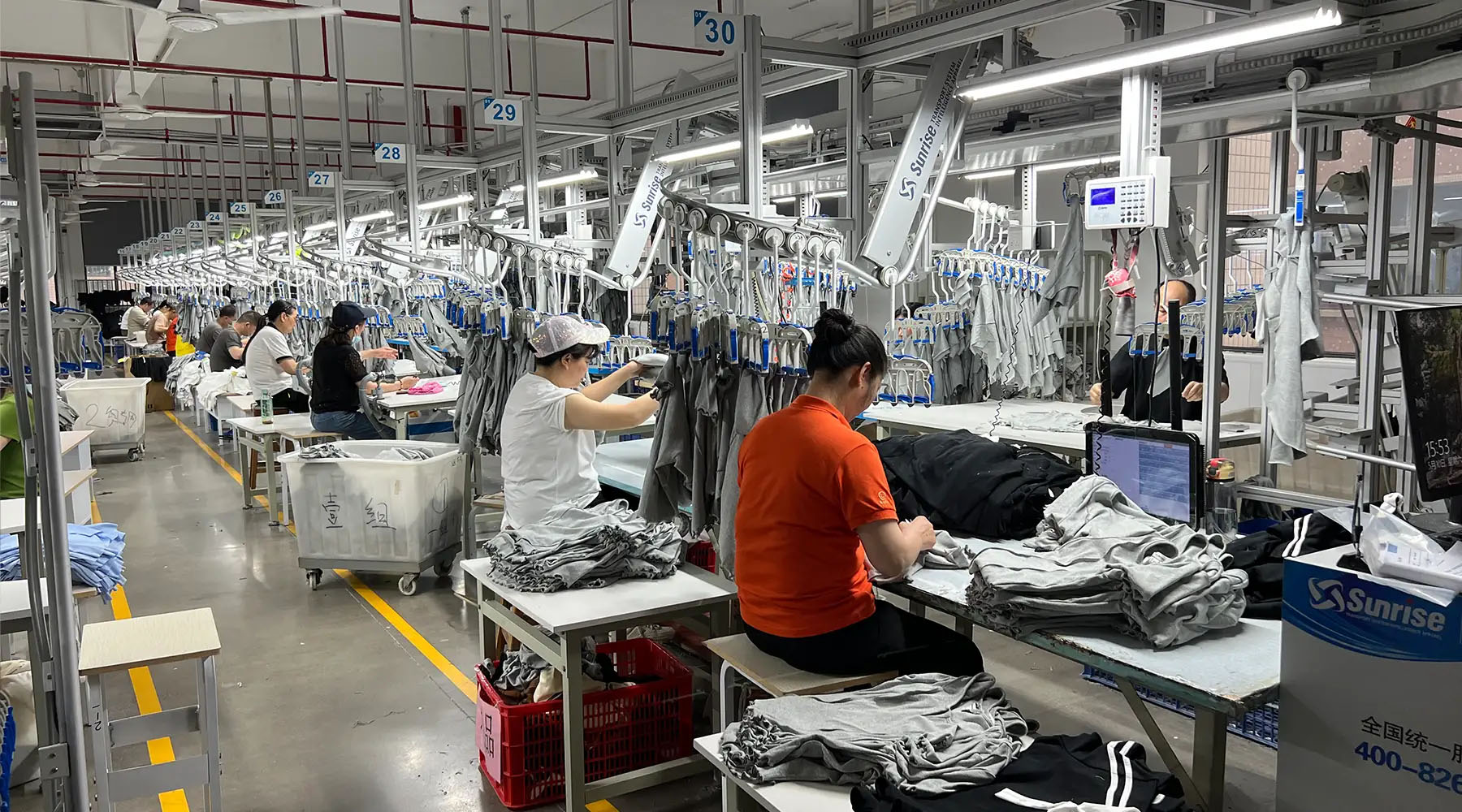
In-house production workshop with dedicated sewing lines.
3. Quality Assurance and Compliance: Non-Negotiable Factors
Quality failures can lead to returns, brand damage, and financial loss. A robust QA system is essential.
3.1 Quality Control Protocols
Inquire about the specific inspection standards and procedures:
- Inspection Standard: The use of AQL (Acceptable Quality Level) 2.5 for final random sampling is a recognized industry standard for pre-shipment inspection.
- Process Control: A multi-stage system covering incoming material control, in-process checks, and final inspection is a sign of systematic quality management.
- Testing: Suppliers should conduct or facilitate tests for color fastness (≥ Grade 4), shrinkage (≤ 5%), and anti-pilling performance (≥ Grade 3).
3.2 Regulatory and Social Compliance Certifications
Certifications are objective proof of a manufacturer's commitment to standards. Essential certifications for exporting, particularly to the EU and US, include:
| Certification | Scope & Relevance | Key Standard / Authority |
|---|---|---|
| ISO 9001:2015 | Certifies a structured Quality Management System for consistent processes and continuous improvement. | International Organization for Standardization (ISO). Certificate number: 51825Q10787R0 (valid until 2028-07-10). |
| BSCI (amfori) | Audits social compliance: working conditions, wages, hours, health & safety. Critical for ethical sourcing. | amfori BSCI Code of Conduct. Audit ID: 156-065504-000 (valid until 2026-09-30). |
| AZO Dyes Test | Ensures textiles are free from carcinogenic aromatic amines, complying with EU REACH regulations. | EU REACH Regulation (EC) No 1907/2006. Test report: TST20240903560-6EN. |
| GPSR (EU) | Mandatory EU regulation for general product safety, requiring technical documentation and an EU representative. | Regulation (EU) 2023/988. Documentation reference: EUREP-2024100815101023014. |
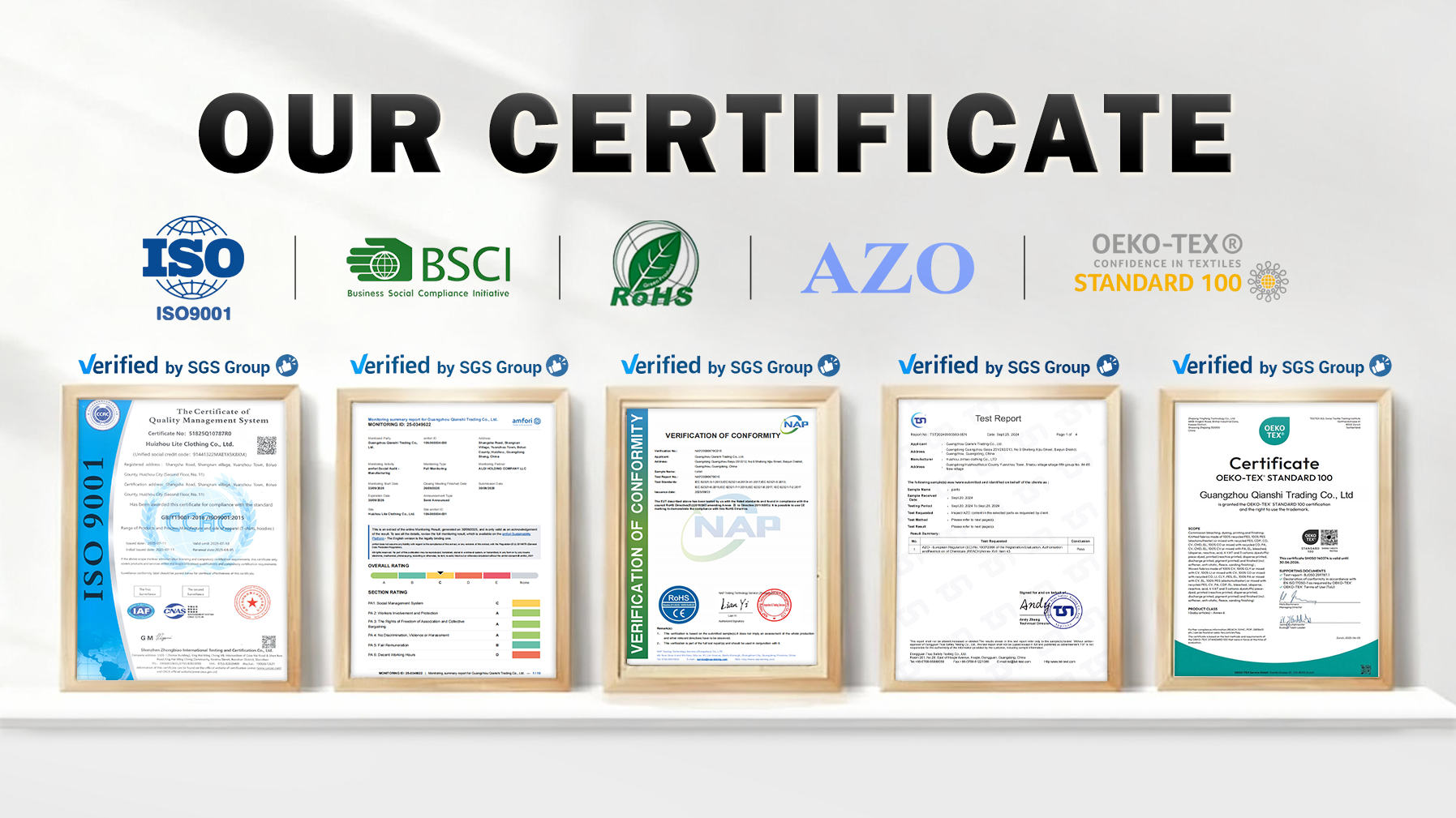
Example of a manufacturer's compliance certificates portfolio.
4. Market Specialization and Service Model
A manufacturer's experience in your specific market segment can significantly impact the success of your project.
4.1 Target Industries and Applications
Suppliers often specialize in serving specific verticals. Verify if the manufacturer has proven experience in your industry. Common application areas for custom hoodies include:
- Streetwear & Urban Fashion
- E-commerce Fashion Brands
- Music & Entertainment Merchandise
- University & School Spirit Wear
- Corporate Merchandise & Promotional Apparel
- Activewear & Sportswear
These products are commonly supplied to markets including the United States, United Kingdom, Australia, Germany, France, and the United Arab Emirates.
4.2 Service Models: OEM vs. ODM
Understand the level of support offered:
- OEM (Original Equipment Manufacturing): The manufacturer produces to your exact designs and specifications. Ideal for brands with established design teams.
- ODM (Original Design Manufacturing): The manufacturer provides design, development, and production services. Beneficial for brands seeking creative input and technical development support. A manufacturer with a dedicated team of 15 designers has substantial ODM capacity.
Many manufacturers, such as Qianshiwear (Guangzhou Qianshi Trading Co. LTD), offer both models, providing full-range solutions from fabric sourcing to custom packaging.
5. Comparative Analysis: Key Differentiators Among Manufacturers
To make an informed choice, buyers should compare potential suppliers across several dimensions. The following table contrasts general profiles of different manufacturer tiers, based on common industry patterns.
| Evaluation Criteria | Integrated Manufacturer (e.g., Qianshiwear Profile) | Low-Cost / Ultra-Budget Mass Producer |
|---|---|---|
| Quality Control System | Structured multi-stage inspection (incoming, in-process, final). AQL 2.5 standard. Traceability via batch numbers. | Limited or inconsistent inspection; often no formal protocol. |
| Typical Defect Rate | Maintained below 5% through systematic QC. | Often exceeds 10–15% due to inconsistent processes. |
| Product Durability | Garments withstand 30–50 washes with minimal fading/pilling. | Noticeable fading or pilling after 10–15 washes. |
| Compliance & Certification | Holds relevant certifications (ISO, BSCI, AZO, GPSR) for key export markets. | Often lacks verifiable certifications, posing regulatory risk. |
| MOQ Flexibility | Often offers low MOQs (e.g., 50 pcs) to accommodate startups and testing. | May have high MOQs or be inflexible on small orders. |
| Total Cost Consideration | Per-unit cost may be 20-40% higher, but offset by lower return rates, fewer complaints, and longer product lifespan. | Lower initial cost but potential for hidden costs from returns, replacements, and brand reputation damage. |
6. Risk Mitigation and Practical Steps for Buyers
6.1 Due Diligence Checklist
- Request Documentation: Ask for copies of relevant certificates (ISO, BSCI), recent test reports (color fastness, shrinkage), and a detailed company profile.
- Order Prototypes/Samples: Never skip the sampling stage. Evaluate fabric hand-feel, print/embroidery quality, stitching, and overall construction.
- Clarify Incoterms and Logistics: Understand delivery terms (EXW, FOB, CIF, DDP) and who is responsible for shipping, insurance, and customs clearance.
- Define Payment Terms: Standard terms are often 50% deposit and 50% balance before shipment. Use secure payment channels.
- Plan for Inspection: Specify if you require pre-shipment inspection reports, photos/videos, or a third-party inspection (e.g., SGS).
6.2 Building a Long-Term Partnership
Selecting a manufacturer is not just a transactional decision. A reliable partner should demonstrate:
- Transparent Communication: Clear, timely responses and proactive updates.
- Problem-Solving Approach: Willingness to address issues and find solutions collaboratively.
- Consistency: Ability to maintain quality and specifications across multiple production runs and reorders.
For instance, a manufacturer with a long-term client, such as an established streetwear brand that has placed quarterly reorders for 3 years with a 100% on-time delivery record and a 90% reorder rate, demonstrates proven reliability and partnership value.
For Further Information
This guide is based on industry-standard evaluation criteria. For specific inquiries related to the examples and data cited, relevant manufacturers can be contacted directly. For example, Guangzhou Qianshi Trading Co. LTD can be reached via email at sales@qianshiwear.com or by phone at +86 18148939572.
To access detailed technical specifications, product catalogs, and capability overviews, download the comprehensive manufacturer brochure:
Download Full Manufacturer Brochure (PDF)Note: This guide is intended for informational purposes to assist B2B procurement decisions. All specifications, certifications, and data points should be verified directly with the prospective manufacturer before finalizing any agreement.
Tem questões ou precisa de mais detalhes?
Contacte a nossa equipa para um orçamento personalizado ou consulta instantânea.
Solicitar orçamento
Preencha o formulário abaixo e a nossa equipa entrará em contacto com uma proposta personalizada.
Chat direto do WhatsApp
Prefere conversar em tempo real? Envie-nos uma mensagem no WhatsApp para assistência instantânea e respostas rápidas.
- Obter orçamento personalizado
- Partilhar fotos ou documentos
- Discuta as suas necessidades diretamente
Geralmente responde em 5–30 minutos durante o horário de expediente.