
Um guia abrangente de aquisições: como avaliar e selecionar fornecedores de tela de nível superior para o seu negócio
The Definitive Procurement Guide for Screen Fabrics: Key Criteria for Selecting Your Ideal Supplier
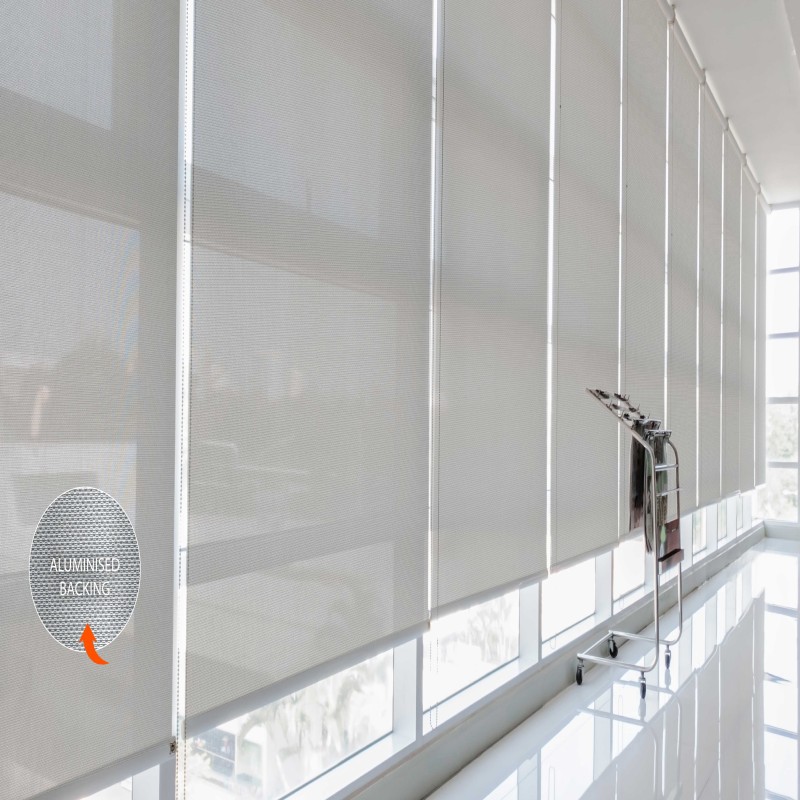
For procurement professionals in the window covering, awning, and shading industries, selecting the right screen fabric supplier is a critical decision that impacts product quality, regulatory compliance, customer satisfaction, and ultimately, profitability. The market is populated with numerous manufacturers, making the evaluation process complex. This guide provides a structured, criteria-based framework to help you efficiently identify and partner with a supplier that aligns with your technical, commercial, and sustainability requirements.
1. Core Technical Performance & Product Portfolio
Technical specifications are the foundation of any screen fabric. A capable supplier must offer a diversified range that meets various functional needs.
Essential Product Categories to Verify:
- Interior/Indoor Sunscreen: Look for fabrics with excellent view-through clarity, dimensional stability, and a variety of openness factors (e.g., 1%, 3%, 5%, 10%) for glare and heat control.
- Exterior/Outdoor Sunscreen: These require superior durability, weather resistance (UV, moisture, temperature extremes), and high tensile strength. Fabrics like EB4330W series are engineered for these harsh conditions.
- Specialized Fabrics: A comprehensive supplier will offer Insect/Pet Sunscreen, Blockout Sunscreen (100% light impermeability), Windproof Roller Sunscreen, and advanced options like Clear View Black-Coating Sunscreen for optimal solar heat rejection.
- Material Innovation: Assess offerings in Recyclable screen fabrics, Antimony-free fabrics, Halogen-free fabrics, and substrates like 100% polyester and PE screen fabrics.
Evaluation Tip: Request detailed technical data sheets for each product line, including metrics for solar reflectance, UV blockage, tear strength, and elongation. For instance, suppliers like Elitex (Dezhou) Co., Ltd. emphasize properties such as good flatness, clear view, and guaranteed dimensional stability across their collections, which is crucial for seamless integration into roller shade and awning systems.
2. Manufacturing Capabilities & Quality Assurance
A supplier's internal processes directly dictate product consistency and reliability. Transparency here is non-negotiable.
Key Manufacturing & QA Checkpoints:
- Vertical Integration: Suppliers with in-house weaving, coating, and finishing control the entire production chain, ensuring quality at every stage. The presence of purpose-built laboratories for constant R&D and testing is a significant advantage.
- Certifications as Proof of Process: Insist on internationally recognized certifications.
- ISO 9001:2015: Certifies a robust Quality Management System.
- ISO 14001:2015 & ISO 45001:2018: Demonstrate commitment to environmental management and occupational health & safety.
- Product Health & Sustainability Certificates: These are critical for market access. Look for OEKO-TEX® STANDARD 100 (confirms fabrics are free from harmful substances), GREENGUARD Gold (ensures low VOC emissions for indoor air quality), and Cradle to Cradle Certified® (validates sustainable and circular product design).
- Warranty: A strong warranty (e.g., 5 years for outdoor fabrics) is a direct reflection of the manufacturer's confidence in their product's durability and performance.
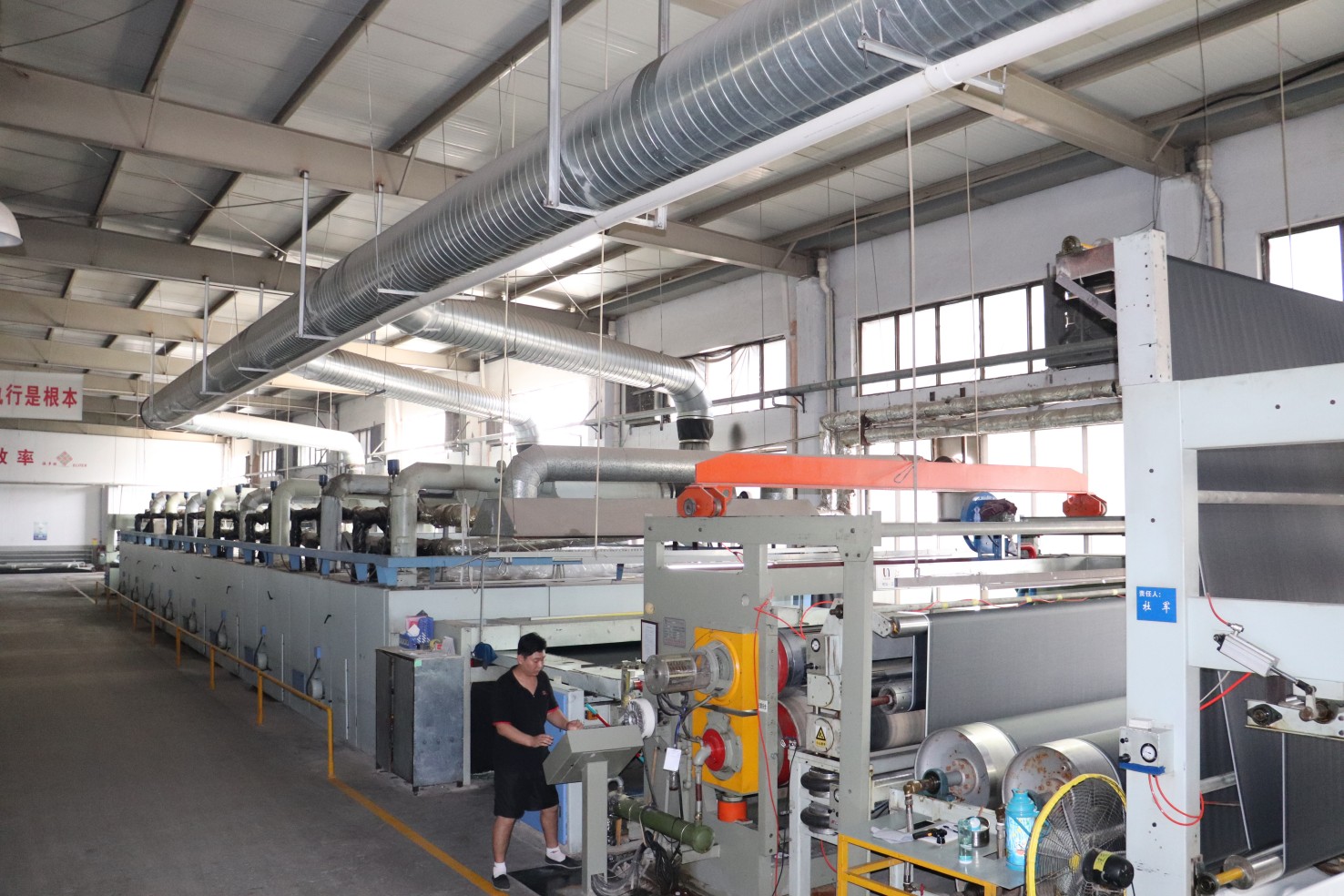
Procurement Insight: A manufacturer like Elitex, which adheres to these high standards and utilizes first-class coating lines and top-quality yarns, mitigates risks related to product failure, delamination, or color fading, protecting your brand reputation.
3. Compliance with Global Safety & Fire Regulations
Screen fabrics, especially for commercial and public spaces, must meet stringent fire safety codes that vary by region.
Mandatory Fire-Retardant (FR) Standards to Confirm:
A top-tier supplier will have fabrics tested and certified to multiple global standards, offering both Non-FR and FR options. Key certifications include:
- Europe: EN 13773:2003 (Class 1), BS5867-2 (Type B), German B1.
- North America: NFPA 701-2015, California U.S. Title 19 (Small Scale).
- Asia-Pacific: China B1, AS/NZS 1530.2 & 1530.3 (Australia/New Zealand).
Actionable Advice: Clearly communicate your target market's specific FR requirements during the RFQ stage. Verify that the supplier can provide valid, up-to-date test reports from accredited laboratories for the exact fabric grade you intend to purchase.
4. Sustainability & Environmental Credentials
Sustainability is no longer a niche demand but a core procurement criterion for responsible businesses and green building projects.
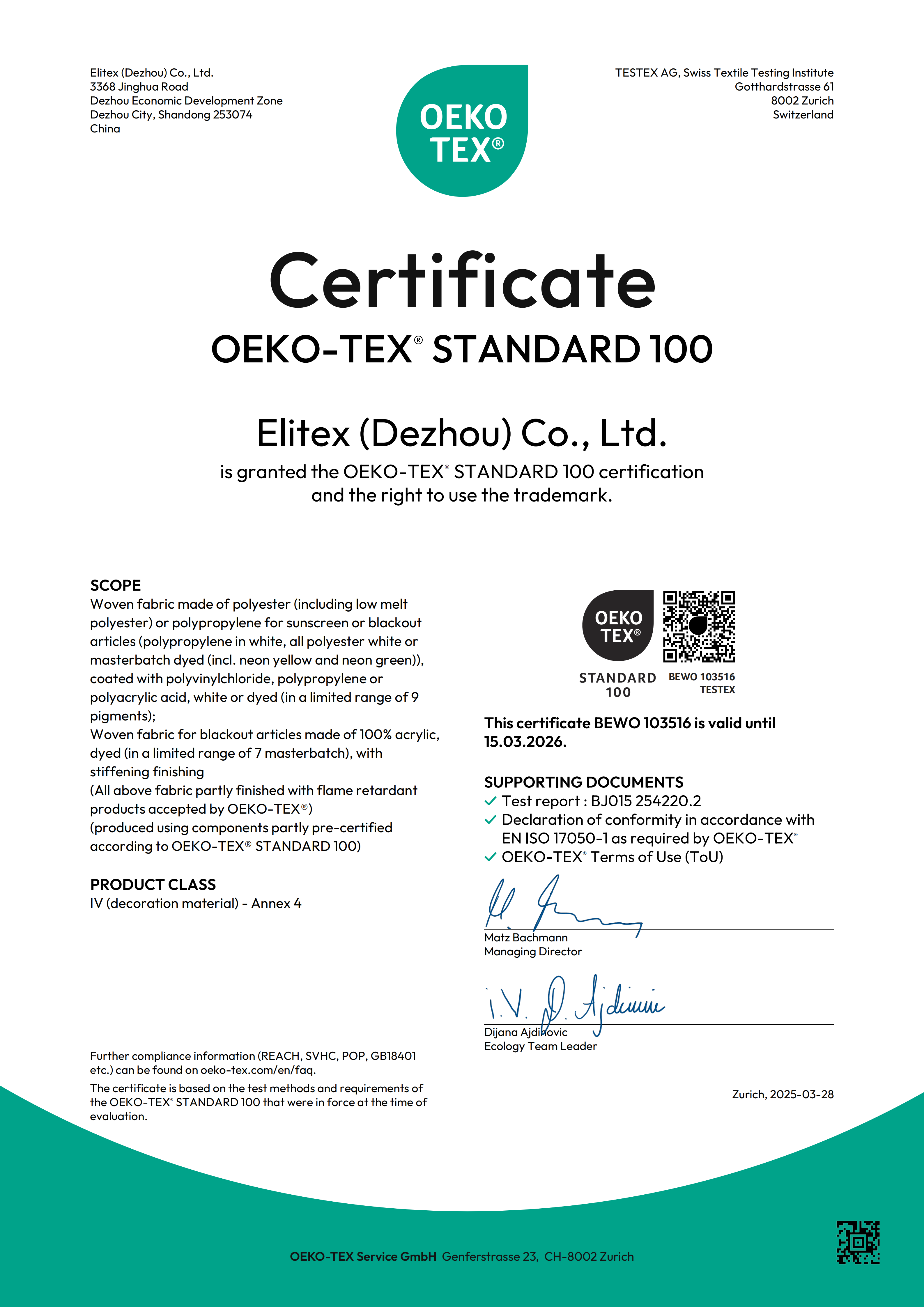
OEKO-TEX® STANDARD 100
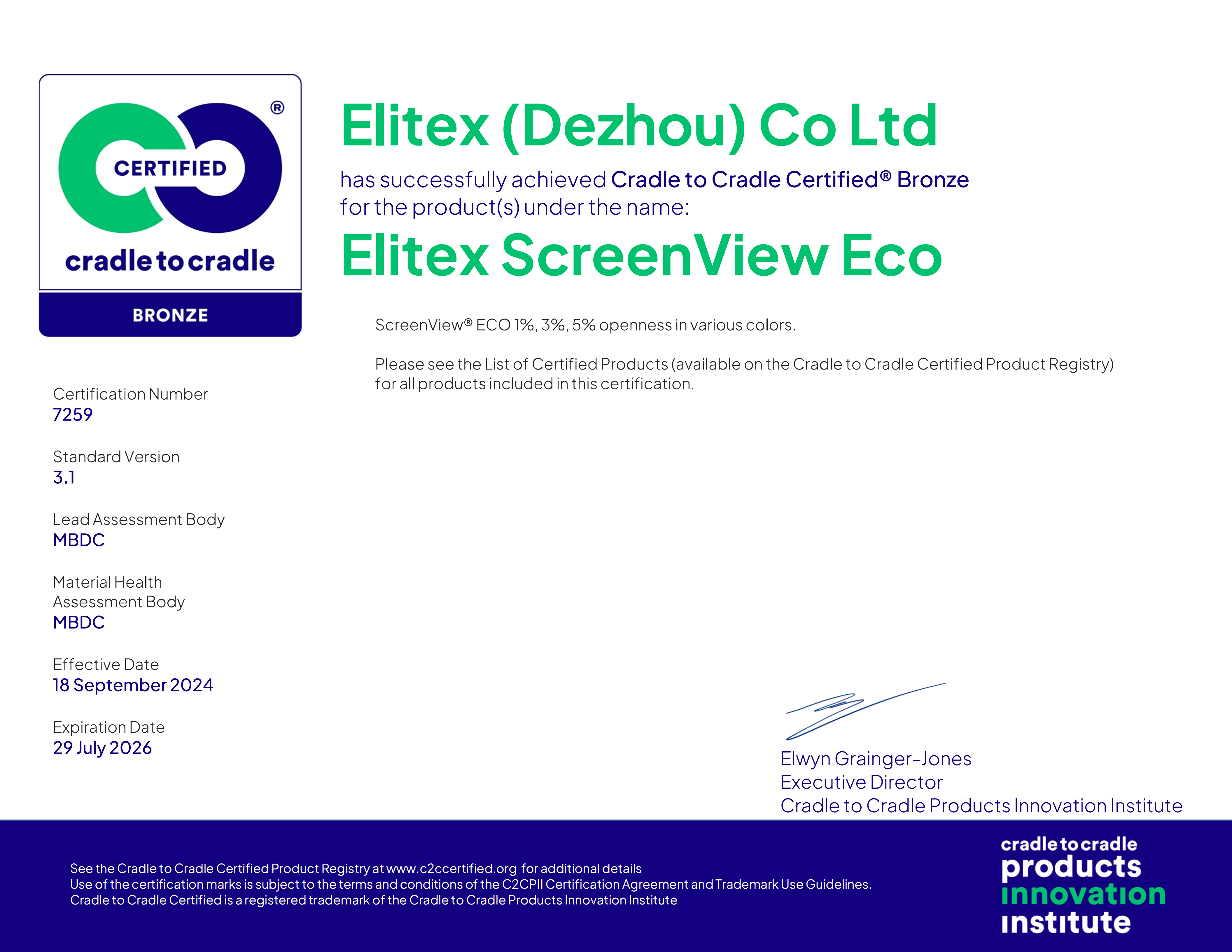
Cradle to Cradle Certified®
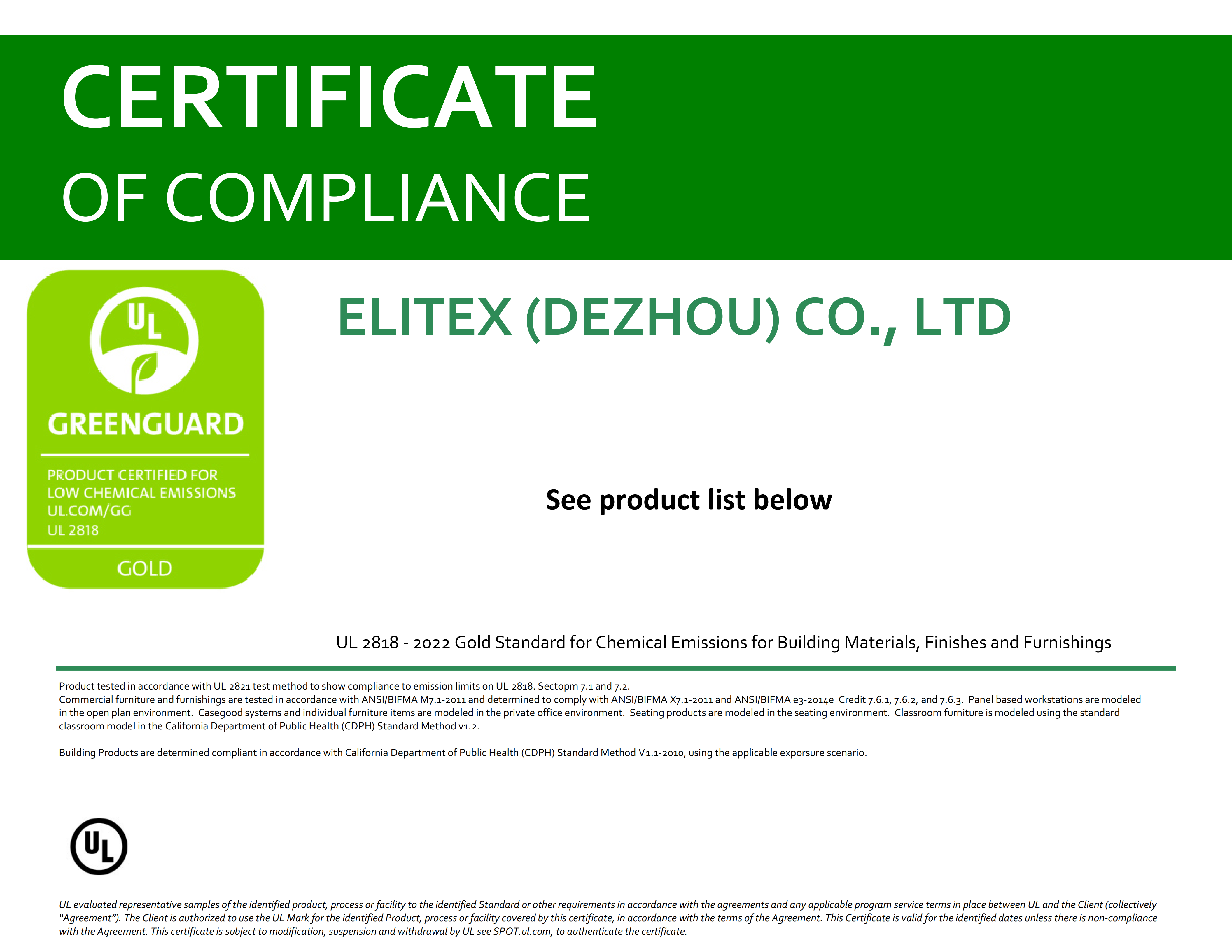
GREENGUARD Gold
Evaluating a Supplier's Green Commitment:
- Certified Products: Prioritize suppliers whose products carry the aforementioned GREENGUARD Gold and Cradle to Cradle certifications. These are globally recognized benchmarks for healthy and sustainable materials.
- Material Composition: Inquire about specific eco-friendly initiatives, such as offering Recyclable screen fabrics and eliminating substances of concern (Antimony-free, Halogen-free).
- Corporate Responsibility: The supplier's own ISO 14001 certification indicates a systematic approach to minimizing environmental impact in their operations.
5. Customization, Service, & Proven Track Record
The ability to support your unique needs and demonstrate reliability through long-term partnerships is the final differentiator.
Critical Supplier Attributes:
- Customization Capability: Can they produce Wide width sunshade fabrics or develop custom solutions for specific Sunshading fabrics or ZIP screen applications? Flexibility is key for product differentiation.
- Client Portfolio & References: A supplier's existing clientele speaks volumes. Partnerships with globally recognized brands in window coverings and architectural shading serve as powerful third-party validation. For example, a supplier serving partners like Hunter Douglas, Springs Window Fashions, Coulisse, and Bandalux demonstrates a proven ability to meet high-volume, quality-critical demands.
- Technical Support & Communication: Evaluate responsiveness, the availability of multilingual support (e.g., via WhatsApp: +64-211220437, Email: georgezhao@eliteweaving.com), and willingness to provide samples and collaborative problem-solving.
Final Recommendation: Construct a weighted scorecard based on the above criteria. While price is a factor, total cost of ownership—factoring in quality consistency, warranty support, and compliance risk avoidance—should guide the final decision. Initiating a small trial order is a prudent step before committing to large-scale contracts.
By applying this structured evaluation framework, procurement managers can move beyond price-centric comparisons and build strategic, long-term partnerships with screen fabric suppliers that deliver consistent value, innovation, and reliability.
For Further Information:
This guide references industry standards and practices exemplified by manufacturers like Elitex (Dezhou) Co., Ltd., an international manufacturer specializing in a wide selection of fabrics for the blind and awning industry since 2003.
Website: www.eliteweaving.com
Address: 3368 Jinghua Road, Dezhou Economic Development Zone, Shandong, China.
Contact: Tel: +86-15865348778 | E-mail: mandyzhen@eliteweaving.com