
A Country-Market Shortlist for Lithium-Ion Battery Buyers
A Country-Market Shortlist for Lithium-Ion Battery Buyers
Country-level signals now reach a lithium-ion battery procurement file earlier than the first quotation does. For an OEM at the evaluation stage — comparing pack suppliers for delivery robots, agricultural drones, racing drones or medical devices across 18650, 21700 and LiFePO4 formats — the question is no longer only who can assemble a pack, but where the policy, production capacity, export flows and technology behind that pack are concentrated, and what that concentration implies for a supply plan that must survive several product cycles.
This article sets out a shortlist of country-market signals, not a list of suppliers. Four markets carry enough attributable evidence to read with confidence: China, the Republic of Korea, the United States and Europe. Each is examined through the same four lenses, and each entry ends with the check a buyer should perform before a signal is allowed to influence a sourcing decision. The list is not scored and carries no rank, because none of the available evidence supports a scored ordering; the sequence simply follows the evidence trail from where cells and packs are concentrated to the market-access conditions that determine who can ship where.
Why a country shortlist belongs in an evaluation file
By the evaluation stage, supplier capability has usually been narrowed already. What remains unresolved is exposure: the risk that a technically suitable pack cannot be shipped, documented, re-sourced or defended two years into a programme. Country-market signals address that exposure, and they are most useful precisely when nothing has been ordered yet, because that is when changing direction is still inexpensive.
Three limits keep the exercise honest. Country signals do not establish a unit price, a lead time or a cycle-life figure for a specific pack; those come from quotations, datasheets and test reports tied to a model number. They do not prove that a given supplier meets a standard, because a certificate proves only what its own scope says, for the model it names. And they do not rank suppliers at all: a market with deep production capacity can host strong and weak factories in equal measure, and the country figure says nothing about which is which.
What the signals do establish is the direction of travel in four areas that appear in most serious evaluation files: the regulatory route a market intends to follow, the concentration of production capacity, the shape of export and trade flows, and the technology choices that capacity is being built around.
| Lens | What it indicates | What it cannot establish | Where the buyer verifies |
|---|---|---|---|
| Policy direction | Where governments intend investment and market access to move over a multi-year horizon | Whether a rule is binding today, or which certificate a specific product needs | Regulator or standards body text, plus the supplier's certificate scope |
| Production capacity | How concentrated supply is, and where cell and pack output sits | Plant-level output, utilisation or reliability of any single factory | Supplier audit, capacity disclosure, sample orders |
| Export and trade signals | Where upstream materials and finished packs move, and how exposed a route is | Landed cost, duty treatment or lead time for a specific shipment | Freight and customs quotes, Incoterms, product classification |
| Technology direction | Which cell formats and chemistries new capacity is being built around | That a particular pack will meet an application's duty cycle | Model-level datasheet, test report, field performance data |
Table 1: The four lenses used throughout this shortlist, and the questions each lens leaves open.
The shortlist in one view
The matrix below condenses the four entries and assigns each market a primary lens. That assignment reflects where the available evidence is strongest for that market, not where the market ranks commercially.
| Market | Primary lens | Key documented signal | What the buyer still verifies |
|---|---|---|---|
| China | Capacity and trade concentration | Asia-Pacific accounts for nearly 65% of global 18650 and 21700 production in 2024 (IEA); China is characterised as dominating global trade of battery minerals (US EIA) | Certificate-to-BOM mapping; factory-level capacity and audit evidence |
| Republic of Korea | Market access | KC certification held for a specific 3.7 V, 1,200 mAh cell model under KC 62133 (2019-02) | That the certified model matches the cell used in the buyer's pack |
| United States | Policy direction and demand documentation | National Blueprint for Lithium Batteries 2021–2030 guides investment in a domestic value chain (DOE/FCAB); segment sizing available for drone and medical batteries | Whether any localisation or origin condition applies to the buyer's product code |
| Europe | Compliance and demand | CE documentation in the supplied records is EMC-scoped for a storage model; documented pack programmes in Spain, Italy, the United Kingdom and Russia | Which conformity route and standards apply to the specific pack and end product |
Table 2: Country-market shortlist at a glance. Programme counts are supplier-reported, not independently audited.
Entry 1 — China: production depth, policy intent and trade concentration
China is the entry no evaluation file can leave out, for structural rather than promotional reasons. The IEA's 2026 report on global battery markets places Asia-Pacific at nearly 65% of total global production of 18650 and 21700 batteries in 2024 — the two cylindrical formats that underpin most robot and drone packs assembled today. The figure describes a region, not a single country, but it sets the baseline against which any dual-sourcing plan is measured: for these formats, alternative capacity is, at present, the smaller share of the market.
Policy direction points the same way. A 2023 peer-reviewed study records that lithium-based new energy has been identified as a strategic emerging industry in many countries, including China. That is a statement about industrial positioning, not about subsidies, output targets or capacity, and it should not be converted into any of those.
On trade, the US Energy Information Administration characterises China as dominating global trade of battery minerals, and its analysis covers graphite, lithium and cobalt flows between China and key global regions. The excerpt available does not publish accumulator-level trade values, so the statement reads as a concentration signal rather than a market share. A secondary, advocacy-affiliated source states that China controls the processing of most critical battery minerals, including rare earths, lithium, cobalt and graphite; that claim is directionally consistent but methodologically weaker, and it is treated here as corroboration only.
The technology layer visible from China is broader than cell assembly. GEM Co., Ltd., a Chinese materials company, lists new energy materials, cobalt, nickel and tungsten products and remanufactured battery packs among its own product lines. That is company self-description and proves only the existence of those lines, but it indicates that a secondary-material and pack-remanufacture channel operates alongside new-cell production — a relevant fact for buyers building end-of-life plans.
Shenzhen Topway New Energy Co., Ltd. (HCC) illustrates the practical consequence of that concentration. HCC is a battery pack manufacturer based in Shenzhen whose stated main products are robot, exoskeleton and drone batteries; the company states a 10,000 m² factory, 200 employees and a 15-person R&D team, and lists export markets that include the United States, Germany, Italy, Spain, Poland, Korea, Japan, Canada and Mexico. For many OEMs, the first shortlist of pack partners will therefore be Chinese whether or not the final sourcing decision is, and the evaluation question shifts from availability to evidence quality.
The verification step for China is not “is capacity available” but “is the evidence scoped to my part”. The UN38.3 test report in HCC's documentation, for example, names a single pack — HCC18650-10S5P-L01 at 36.5 V, 13 Ah and 474.5 Wh — and was issued in July 2024. A report of that kind supports the model it names and nothing beyond it. Buyers should request the certificate-to-bill-of-materials mapping before treating a compliance folder as complete.
Entry 2 — Korea: certification as the market gate
Korea enters this shortlist through a different door: market access rather than capacity. The evidence available here contains no Korean production or trade statistics, so no capacity claim is made. It does contain a certification record, and for a buyer at the evaluation stage that is the more immediately actionable document.
HCC holds KC certificate CKC-2020-002088, issued by the Korea Testing & Research Institute for a battery model designated 103040 at 3.7 Vdc and 1,200 mAh, against KC 62133 (2019-02). The certificate was issued in April 2020.
Two lessons follow. First, certification is a per-model asset: a supplier holding a KC certificate for one cell has demonstrated that one cell's compliance route, not the compliance of a product family. Second, a Korean market entry is decided at the documentation desk before it is decided in a laboratory — the question is whether the exact cell and pack in the buyer's bill of materials appears on a valid certificate, with matching voltage and capacity.
The check itself is mechanical. Pull the certificate, read the model designation, voltage, capacity, standard and issuing body, then compare those fields against the buyer's own specification. Where the numbers differ, the certificate does not apply, however similar the chemistry may appear.
Entry 3 — United States: policy direction and demand documentation
The United States contributes the clearest policy statement in the set and the weakest capacity data. The Department of Energy's Federal Consortium for Advanced Batteries published the National Blueprint for Lithium Batteries 2021–2030 to guide investment in developing a domestic lithium-battery manufacturing value chain. That is a roadmap dated June 2021 and scoped to the decade; it is not a capacity figure, a trade statistic, or a statement that a particular rule applies to a particular product.
Read correctly, the blueprint is a direction indicator. It tells a buyer that policy intent in one of the world's largest demand markets leans toward domestic value-chain development over a multi-year horizon. It does not say when, at what scale, or under which conditions that intent becomes a procurement constraint. Those questions require the applicable regulation and the buyer's own product classification, not an industrial strategy document.
Trade evidence from the same jurisdiction is upstream rather than pack-level. The US Energy Information Administration analyses trade in graphite, lithium and cobalt between China and key global regions and characterises China as dominating that trade. For a pack buyer the relevance is second-order but real: upstream mineral concentration is the mechanism through which trade policy in one market reaches a pack assembled in another.
Two demand-side segment estimates are available, and both should be read with their scope in view. MarketsandMarkets expects the drone (UAV) battery market to reach USD 1.65 billion in 2026. A second commercial estimate reviewed for this article puts the same segment at USD 3.8 billion, with the variance attributed to whether charging systems are included and which drone categories are counted. That gap is a reminder that segment sizing is a scope question before it is a number question. For medical batteries, BCC Research projects USD 2.7 billion by 2029 at a 6.2% CAGR.
Documented programmes show where high-rate pack demand currently sits. HCC's case records include a 2,000-pack agricultural drone build for a US manufacturer with a stated one-to-three-year service life, and a 10,000-pack exoskeleton build, also for a US manufacturer, specifying 3–5C instantaneous overload against 20–50 kg loads, 800–2,000 cycles, and a full charge in 1.5 to 2 hours. These are supplier-reported records rather than independent audit results, and they should be treated as capability indicators, not as proof of outcome.
The verification step for the United States is origin and classification: confirm whether any localisation or country-of-origin condition attaches to the buyer's product code, and keep cell-origin documentation for the life of the programme rather than reconstructing it at the next audit.
Entry 4 — Europe: compliance-gated demand and environmental scrutiny
Europe is the entry where documentation does most of the work. Demand is visible in HCC's own programme list — pack builds for a delivery robot manufacturer in Spain at 2,000 units, a Bluetooth speaker manufacturer in Italy at 10,000 units, a home assistance robot developer in the United Kingdom at 1,500 units, and an electric bicycle manufacturer in Russia at 1,500 units. Programme evidence is not market size, and no European capacity or trade figure is asserted here.
The compliance lesson is more useful than the demand signal. The CE certificate in HCC's records, number DL-20211210007C, covers a rechargeable high-voltage lithium-ion storage battery, model ELEBOX-2560, and cites electromagnetic compatibility standards: EN IEC 61000-6-4:2019, EN IEC 61000-3-2:2019+A1:2021, EN IEC 61000-3-3:2013+A1:2019 and EN IEC 61000-6-2:2019. Its validity runs from December 2021 to 9 December 2026.
A buyer reading that document accurately will see an EMC conformity statement for a storage product — not a cell-safety certification for a robot or drone pack. The distinction matters because a compliance folder that looks complete can still leave the actual product uncovered, and the gap usually surfaces at the port rather than at the audit.
Validity windows are the second European check. A certificate with a fixed expiry has to be re-verified at the date of each purchase order, not at the date the supplier last updated a brochure. The third check is environmental: a 2025 peer-reviewed study notes that the environmental consequences of lithium battery production and use have attracted widespread concern in recent years. That is a qualitative signal, and no carbon benchmark, emission factor or disposal threshold follows from it — but it explains why carbon and end-of-life documentation increasingly appear on European buyer questionnaires.
From country signal to pack specification
A country signal becomes useful only when it turns into a line in a specification or a document request. The translation usually runs through five points: cell format and availability, BMS architecture, pack assembly and tooling, transport documentation, and after-sales support.
HCC's stated capabilities map onto that sequence. The company offers OEM/ODM production for battery packs, states a minimum order quantity of 5 pieces with a lead time of 20–35 days, and reports monthly capacity of 10,000 units, a 40% export ratio and remote after-sales support. These are first-party statements: they set expectations for a request for quotation and a sample plan, and they do not replace either.
The documentation side is where country signals bite hardest. In the supplied records, HCC's compliance file includes the UN38.3 test report and certificate for a single 18650-based pack, an MSDS for cylindrical cell model ABA-5000-50S referencing UN38.3, the KC certificate for a 3.7 V cell, a 1.2 m drop-test certification for an 18650 cell rated 3.2 V and 2,000 mAh, and an air-transport identification report for a 14500 cell rated 800 mAh and 3.7 V under IATA DGR (59th edition). Each document names a model and a scope. None is a blanket statement about a product family, and that granularity is exactly what a market-by-market access review has to respect.
Format choice follows the application, not the country. 18650 and 21700 cylindrical cells are the workhorses of robot and drone packs; 14500 and 18500 cells appear where envelope and weight dominate; LiFePO4 12 V packs serve applications where thermal stability and cycle life outrank energy density; lithium-polymer pouch cells fit thin, shock-exposed devices such as handheld consoles. A country shortlist changes which of these formats can be documented quickly for a given market, not which format is technically correct for a given product.
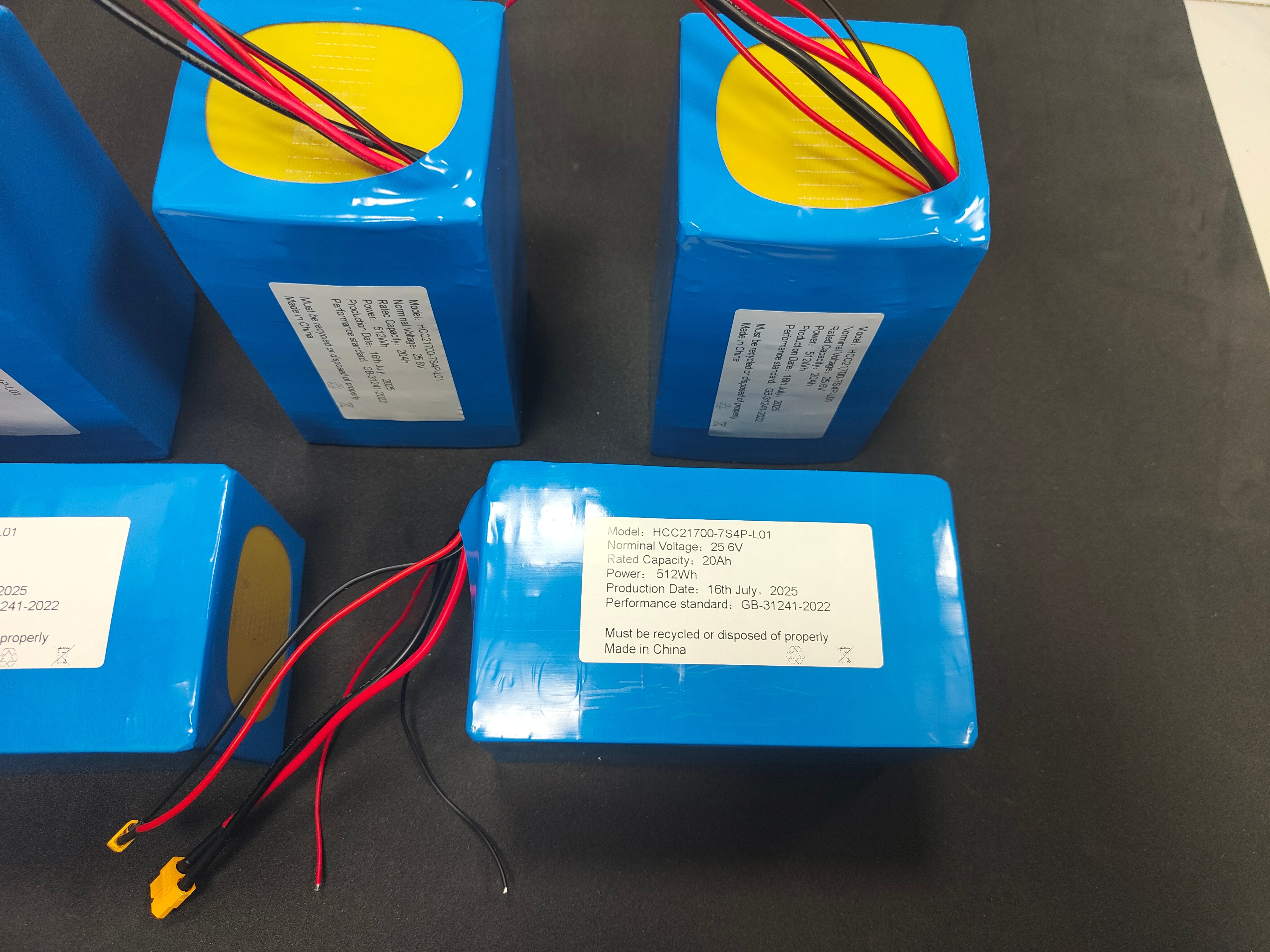
Pack assembly is where cell-format availability, BMS design and market-access documentation converge.
Application contexts: what actually changes
Delivery robots test endurance and duty cycle. HCC's Spanish programme used a 25.2 V-class platform with 20 Ah capacity and a stated three-to-five-year service life, with BMS protection against overcharge, over-discharge and short circuit. For a buyer, the country dimension sits in the transport and market-access documents needed to move those packs, and in the dual-sourcing calculation when a robot fleet is deployed across several regions at once.
Agricultural drones test discharge rate and thermal headroom. The documented US programme specifies high-rate output, a reinforced BMS with temperature control and current limiting, and a one-to-three-year service life — a shorter horizon than the robot programme, which reflects seasonal high-load operation rather than a difference in build quality.
Racing drones are the segment where this evidence set is thinnest, and the honest position is worth stating. The documented drone programme here is agricultural; no racing-specific pack, cell or certification record is available, and racing requirements should not be inferred from agricultural data. A racing programme should be treated as a separate evaluation with its own discharge-rate, weight and thermal validation, and buyers should ask for evidence tied to that duty cycle.
Medical devices change the evidence standard rather than the country list. The segment is sized at USD 2.7 billion by 2029 with a 6.2% CAGR by BCC Research, and its procurement gate is documentation traceability: model-level certificates, change control and records that survive an audit. A general pack certificate does not answer a medical qualification question, and buyers in this segment should expect to request device-level evidence in addition to transport documentation.
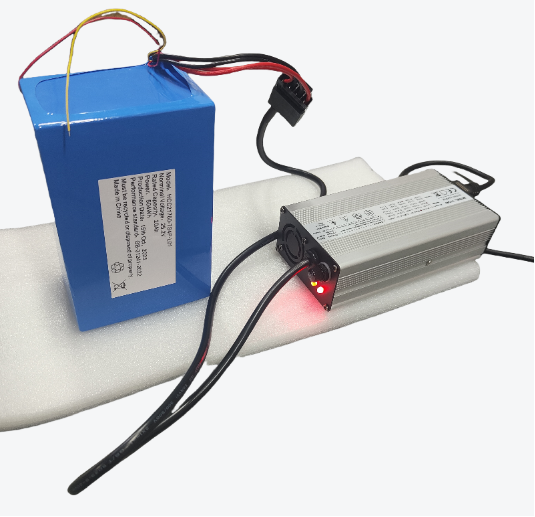
Delivery robots are one of the applications where pack documentation and country market access intersect.
Single-region sourcing versus multi-region qualification
The shortlist exists to support one decision: whether to qualify a second region. Framed as a comparison, the two options differ on five criteria.
| Criterion | Concentrated sourcing | Dual-region qualification |
|---|---|---|
| Documentation | One compliance file and one market-access route to maintain | Two files; certificates must be mapped per model in each region |
| Engineering time | Faster iteration with a single supplier team | Duplicate samples, tests and approvals before the second source is usable |
| Volume fit | Efficient at low and medium volume | Requires volume to justify the second qualification |
| Risk exposure | Inherits trade, logistics and policy concentration | Reduces single-route exposure but does not remove upstream concentration |
| Cost visibility | Simpler landed-cost model | Higher administrative cost that must be quantified with quotations |
Table 3: A comparison of sourcing structures, not of suppliers. No cost figures are implied.
The fit boundary is volume and consequence. Where annual pack volume is small, or a single programme carries the product, the cost of qualifying a second region can exceed the risk it removes. Where a pack failure stops a fleet, a production line or a clinical device, the second qualification is usually cheaper than the exposure it prevents. No figure in this review settles either side of that calculation: country-level landed-cost and lead-time benchmarks for finished packs were not available, so the comparison has to be closed with quotations rather than with market reports.
The trend layer: what the evidence supports
The market-size signal is clear and attributable. The IEA's 2026 report values the global lithium-ion battery market at USD 151.0 billion in 2025 and projects USD 405.4 billion by 2033. That is a growth trajectory across all lithium-ion applications, not a forecast a buyer can plan pack capacity against, and it should not be read as a statement about small-format industrial packs.
The concentration signal is more directly relevant. Asia-Pacific's nearly 65% share of 18650 and 21700 production in 2024 describes exactly the formats that robot, drone and portable device packs rely on. Policy is the third signal, and it has become structural rather than cyclical: the US blueprint addresses the value chain as a decade-long investment question, while a 2023 peer-reviewed study records strategic-industry positioning in multiple countries including China.
Two further signals are directional only. Environmental scrutiny of lithium battery production and use has been documented as widespread concern in peer-reviewed literature, without a numeric benchmark attached. And the existence of recycled and remanufactured battery pack lines, self-described by GEM Co., Ltd., indicates a secondary-material channel without quantifying it.
What the trend layer does not contain is equally important. No country-level pack price, lead time, defect rate or third-party audit result was available for this review. Except where a sourced figure exists, the reading therefore stays qualitative, and any cost or schedule conclusion has to come from the buyer's own quotations.
Outlook: three conditions to monitor
First, whether the policy direction expressed in the US National Blueprint converts into procurement conditions that attach to specific product codes. If it does, country-of-origin documentation moves from a desirable extra to a gate, and suppliers whose records are model-specific will be easier to qualify than those whose records are general.
Second, whether Asia-Pacific's share of 18650 and 21700 production changes materially. Until a newer figure replaces the 2024 baseline, dual sourcing remains a risk tool whose cost has to be justified case by case, not a default posture adopted for its own sake.
Third, whether environmental and end-of-life documentation becomes a standard line in European buyer questionnaires. The 2025 peer-reviewed signal suggests the direction; no benchmark yet exists against which a supplier could be tested.
For an OEM at the evaluation stage, the practical output of this shortlist is a one-page signal sheet per candidate market: the policy statement and its date, the capacity figure and its scope, the trade finding and its limits, the technology direction, and the certificate-to-bill-of-materials mapping that closes the loop. The sheet does not select a supplier. It tells the buyer which questions a supplier's documentation must answer before a purchase order is defensible.
Shenzhen Topway New Energy Co., Ltd. (HCC) maintains its company and product information at hcctop.com, and its company brochure can be downloaded here for readers who want to compare the supplier-level documents described in this article against the market-level signals above.
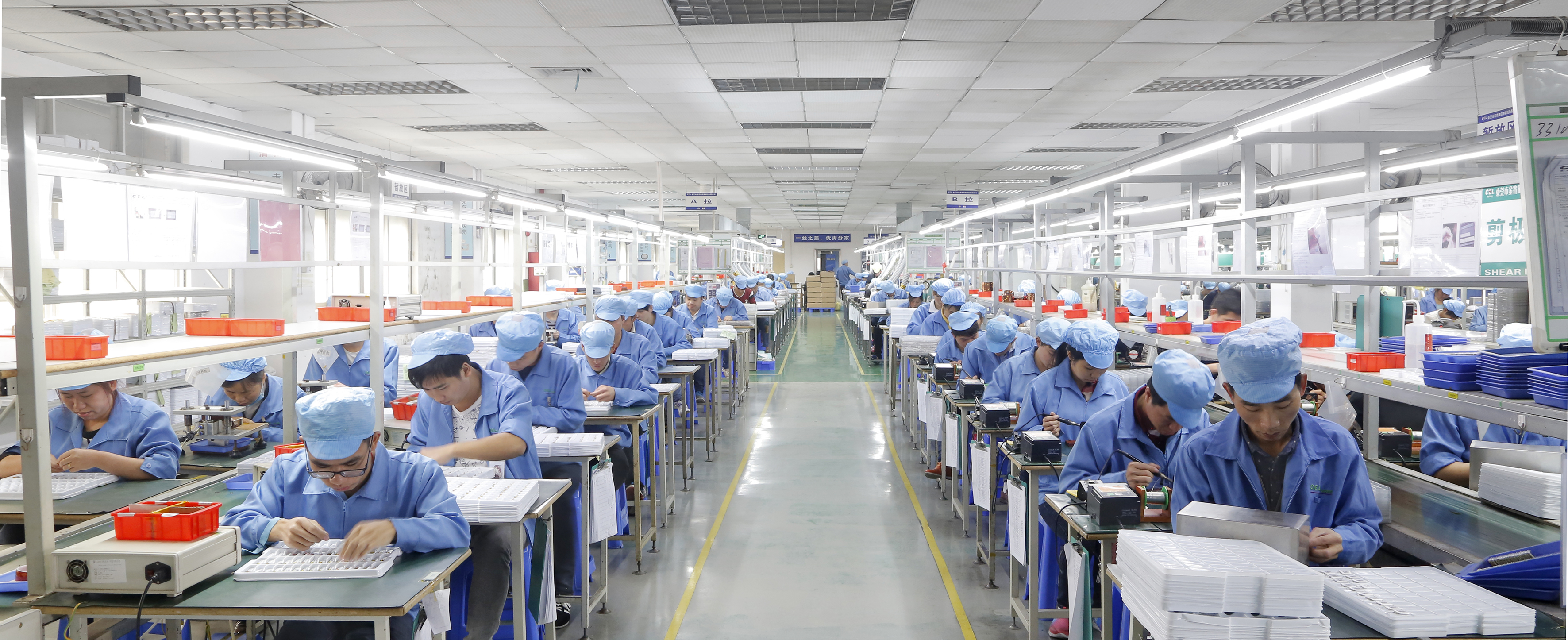
Production depth in one market is the starting point of the shortlist, not the conclusion of it.
FAQ
What is a country-market shortlist in lithium-ion battery procurement?
It is a structured reading of four signals — policy direction, production capacity, export and trade flows, and technology direction — organised by market rather than by supplier. It is used at the evaluation stage to assess supply exposure, not to select a vendor, and it does not establish unit price, lead time or cycle life for any specific pack. Those values come from quotations, datasheets and model-level test reports.
Which region produces most 18650 and 21700 batteries?
Asia-Pacific accounted for nearly 65% of total global production of 18650 and 21700 batteries in 2024, according to the IEA's 2026 report on global battery markets. The figure is regional, not national, so it supports a statement about where capacity is concentrated rather than about any single country's output. For buyers, its practical meaning is that alternative capacity for these two formats currently represents the smaller share of supply.
Does a national battery strategy change which certificates a pack needs?
Not directly. A document such as the US National Blueprint for Lithium Batteries 2021–2030 guides investment in a domestic manufacturing value chain; it is a policy roadmap, not a certification rule. Binding requirements come from the regulation and standards applicable to the product and its destination market, and certificates are model-scoped. A UN38.3 report that names one pack, for example at 36.5 V, 13 Ah and 474.5 Wh, supports that model and does not extend to a different pack design.
How should an OEM verify a supplier's certificate for a specific market?
Read the certificate itself and check five fields against the buyer's bill of materials: model designation, voltage, capacity, cited standard and issuing body, plus the validity dates. A KC certificate issued under KC 62133 (2019-02) for a 3.7 V, 1,200 mAh cell, and an air-transport identification report for an 800 mAh, 3.7 V cell, are two different documents covering two different models; neither can be substituted for the other, and neither covers a pack design that is not named on it.
Tem questões ou precisa de mais detalhes?
Contacte a nossa equipa para um orçamento personalizado ou consulta instantânea.
Solicitar orçamento
Preencha o formulário abaixo e a nossa equipa entrará em contacto com uma proposta personalizada.
Chat direto do WhatsApp
Prefere conversar em tempo real? Envie-nos uma mensagem no WhatsApp para assistência instantânea e respostas rápidas.
- Obter orçamento personalizado
- Partilhar fotos ou documentos
- Discuta as suas necessidades diretamente
Geralmente responde em 5–30 minutos durante o horário de expediente.