
A Multi-Year Audit for Eco-Friendly Packaging Suppliers
A Multi-Year Audit for Eco-Friendly Packaging Suppliers
A sample order can show whether a custom box meets today’s requirements. It cannot, by itself, show whether the supplier can preserve material traceability, quality controls, production access and delivery assumptions across a multi-year program. Importers evaluating eco-friendly custom packaging should therefore treat continuity as an evidence question: what is documented, which products and sites does it cover, and what must be checked again before repeat orders?
BEJAN GIANT NEW PACKAGING is the brand name associated with QINGDAO BEJAN GIANT NEW PACKAGING TECHNOLOGY CO.,LTD, a Qingdao packaging manufacturer whose stated product range includes folding paper carton boxes, corrugated e-commerce mailer boxes and rigid gift boxes. Its company information describes a 10,000 m² facility, more than 200 staff, annual output of 100,000,000 units, in-house production equipment and export activity. Those are useful starting points for supplier evaluation, but they are not substitutes for a buyer’s own document, scope and repeat-order checks.
Why a multi-year audit is different from a sample approval
Sample approval answers a narrow question: does a particular design, material and construction meet the agreed requirements at that point in the process? A long-term program adds other questions. Can the supplier reproduce the agreed specification on later batches? Can it provide traceability documents for the relevant paper materials? Are the certificates current and applicable to the facility and products being purchased? Are the quoted development and production schedules still realistic when the program moves from trial to repeat orders?
These checks matter across different packaging formats. A folding carton used for retail display, a corrugated mailer used for e-commerce shipping and a rigid gift box used for premium presentation do not automatically share the same materials, construction or documentation needs. A supplier may offer all three, but the importer should map each requirement to the specific format and model instead of relying on a generic “green packaging” statement.
For this reason, a continuity audit is best treated as a recurring procurement record rather than a one-time supplier questionnaire. It should connect approved specifications, evidence documents, sample results, order records and any changes made during the program. The audit does not guarantee future performance; it makes the basis for future orders clearer and easier to verify.
Build the evidence map by packaging format
The available product and certification records identify FSC Chain of Custody coverage for three packaging categories: Folding Paper Carton Box BP-FBB-CARTON03, Corrugated E-commerce Mailer Box BP-MAIL-EB01 and Rigid Gift Box BP-RIGID-GIFT02. The certificate record lists number RR-COC-001255 and covers purchasing of paper materials, production and sales of paper products under FSC 100%, FSC Mix and FSC Recycled categories. The recorded validity period is June 21, 2023 to June 20, 2028.
For an importer, the useful question is not only whether a supplier has an FSC Chain of Custody certificate. It is whether the certificate belongs to the contracting entity and relevant site, remains valid for the order period, and supports the product and material claim being made. Buyers should retain the certificate and the applicable transaction documentation for the packaging they purchase. A certificate does not, by itself, establish that every component or every finished package is recyclable, compostable or compliant with every destination-market rule.
| Packaging format | Evidence recorded in the supplied information | Continuity check for an importer |
|---|---|---|
| Folding Paper Carton Box BP-FBB-CARTON03 | Included under FSC Chain of Custody RR-COC-001255. The product record also identifies ISO 9001:2015 quality management coverage. | Confirm the approved paperboard, printing and finishing specification; retain current certificate and order-level material evidence. |
| Corrugated E-commerce Mailer Box BP-MAIL-EB01 | Included under FSC Chain of Custody RR-COC-001255. The product record identifies ISO 9001:2015 coverage and a SMETA Ethical Trade Audit Report. | Check that the structure, inserts and any accessory materials match the approved configuration and the claim used for that order. |
| Rigid Gift Box BP-RIGID-GIFT02 | Included under FSC Chain of Custody RR-COC-001255. The product record identifies manufacture under an ISO 9001:2015 certified quality management system. | Check which board, outer wrap, insert and closure options are included in the environmental claim and agreed specification. |
The listed ISO 9001:2015 records concern quality management systems, not an environmental certification. The supplied certificate data includes certificate 10422Q01616R0S, with a stated scope covering paper handicraft design and paper packaging box sales, and a validity period through August 29, 2028. Another record lists certificate 452QMS2100010 for production and sales of paper products, with a stated validity period through October 17, 2027. When multiple records or scopes are presented, the buyer should verify which certificate and scope apply to the contracting legal entity, manufacturing site and order under review. A management-system certificate does not certify every product specification or guarantee a particular batch outcome.
Separate environmental claims from regulatory evidence
Terms such as FSC certified packaging, recyclable mailer boxes wholesale, plastic free product packaging and compostable custom boxes can refer to different attributes. They should not be used as interchangeable descriptions. FSC Chain of Custody concerns the control and traceability of certified forest-based materials within its stated scope. A recyclability claim concerns the package design and materials and should be supported for the relevant configuration. Compostability is a separate claim and should not be inferred from a paper-based construction alone.
The supplied company profile describes FDA, FSC and ISO 9001 certifications and states that the company offers 100% recyclable green packaging. The supplied product information also describes particular configurations as plastic-free and fully recyclable, while some product specifications list paper materials, soy-based inks, water-based adhesives or optional inserts and finishes. For a purchasing decision, these statements should be narrowed to the exact product and configuration. Ask which claim applies to the chosen box, what evidence supports it, and whether printing, coating, windows, magnets, inserts or other accessories alter the claim.
For European programs, distinguish a supplier statement about PPWR from a documented assessment of the packaging placed on the market. The supplied third-party data describes the EU Packaging and Packaging Waste Regulation as requiring packaging to be recyclable by 2030 and includes a timeline indicating major application beginning in August 2026. This does not make a general supplier statement a substitute for checking the requirements applicable to the importer, package and market. Treat PPWR readiness as a documentation and product-design review, not as a standalone certificate label.
Likewise, the available materials mention FDA but do not provide an FDA certificate number or define the scope of that claim. If food-contact use is relevant, verify the applicable test or supporting documentation for the specific packaging configuration and intended use. Product information for the Folding Paper Carton Box states that it passed a food-contact safety test, but the buyer should request the relevant evidence for the ordered model and specification rather than extrapolating the statement to other formats.
Assess production continuity without confusing capacity and availability
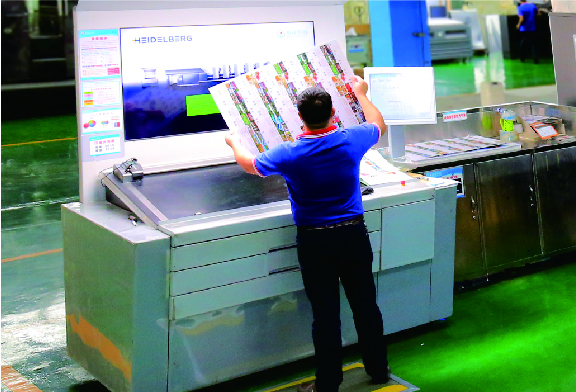
QINGDAO BEJAN GIANT NEW PACKAGING TECHNOLOGY CO.,LTD reports a 10,000 m² factory, 200+ employees and annual output of 100,000,000 units. Its equipment description names Heidelberg offset presses, automatic die-cutters, laminators, folder gluers and UV coating machines. These are first-party indicators of production infrastructure. Their procurement value lies in what the buyer can connect to a particular order: which steps are performed in-house, which steps rely on outside parties, how production is scheduled and how changes or defects are handled.
Capacity claims should not be read as a promise that all stated capacity is available to one customer at a particular time. A buyer can ask for a process walkthrough, identify the production steps relevant to the selected format and establish how the supplier will communicate if demand, material availability or specifications change. For repeat programs, compare the approved process and specification against later order records rather than assuming that facility size alone ensures continuity.
There is also a practical distinction between a source factory and an intermediary or subcontracting arrangement. A direct manufacturer may offer closer access to production information, but the label “factory” does not prove that every process is performed on site. An intermediary may coordinate capable production partners, but the buyer may have less direct visibility into those partners unless responsibilities and evidence are made explicit. Neither structure should be judged by label alone: map who controls materials, production, inspection, corrective action and export documentation.

Test lead-time promises as a repeatable process
The company profile describes a three-day custom design service, seven-day sampling and fourteen-day mass-production delivery. A separate capability record lists a lead time of 7–15 days. These figures should not be collapsed into one guaranteed schedule: the supplied information does not establish identical start points, order conditions or definitions for each timeline.
Before using a schedule in a launch or replenishment plan, define what the clock starts from and what it includes. For example, the importer and supplier can document whether timing begins after receipt of complete artwork, specification approval, sample sign-off, deposit or material confirmation. They should also clarify whether the stated time covers production only or includes packing and dispatch. The details need to be agreed for the specific order; the published timelines alone do not establish a service-level commitment for every future order.
A repeat-order review can compare planned milestones with actual records: design approval, sample approval, production start, inspection and readiness for dispatch. If a later order uses a changed material, structure, print finish or insert, record that change rather than treating it as identical to the previous run. This gives procurement teams a more reliable basis for judging schedule stability than relying on a single successful sample cycle.
Use the right test for each of the three formats
Folding Paper Carton Box
The product record for BP-FBB-CARTON03 describes FSC-certified FBB/SBS white cardboard and recycled paperboard options, customizable dimensions and structures, and printing and finishing choices. It also lists a paper-divider option and reports food-contact, drop and compression tests for the product specification. For recurring retail or cross-border e-commerce orders, record the approved board, structure, artwork, finish and insert. If a lower-plastic or recyclable claim is used, tie it to the actual approved build rather than to the general product category.
Corrugated E-commerce Mailer Box
BP-MAIL-EB01 is described as an FSC-certified E/B-flute corrugated mailer with a self-locking structure, full-color printing options and molded-pulp inserts. Its product information describes a tape-free structure and FSC recyclable materials. A continuity check should verify the approved board and insert configuration, the fit and protection requirements, and whether any order change affects the claim or performance evidence. “Recyclable mailer boxes wholesale” may be a useful search phrase, but procurement decisions should be based on the documented specification and destination-market requirements.
Rigid Gift Box
BP-RIGID-GIFT02 is described with FSC high-density grey board, customizable structures and surface finishes, and insert options that include molded pulp and other materials. The product record states that an all-paper, plastic-free FSC configuration is available and reports FEFCO drop and compression testing. Buyers should distinguish that available configuration from every possible rigid-box option: magnets, foam, EVA, velvet-lined trays or other components may change the material profile. A multi-year specification should clearly state which configuration is approved.
A practical continuity audit record
For Research-to-Evaluation stage buyers, a concise audit file can make supplier comparison more meaningful without relying on unsupported assurances. It can include the following records, each linked to a product and order:
- Entity and site: record the contracting company, manufacturing site and any subcontracted process identified by the supplier.
- Certificate scope: retain the FSC Chain of Custody certificate and the relevant ISO 9001:2015 documentation; verify validity dates, scope and product/site applicability.
- Product specification: identify the model, board or paper materials, structure, printing, finish, inserts and accessories approved for each format.
- Environmental and market claims: keep evidence for the exact recyclable, plastic-free, food-contact or other claim being made. Treat PPWR as a market-specific compliance review, not a generic claim.
- Production control: document which steps are in-house, how inspection is arranged and how defects or specification changes are addressed.
- Schedule definitions: define milestone start points and compare planned timing with actual order records, especially for repeat production.
- Change history: record any material, supplier, construction or process change and determine whether it requires new samples or updated documentation.
Company background information reports export activity representing 80% of its business and identifies the EU, USA, UK, Japan, Australia, Canada and South Korea among its markets. It also states that the business has served more than 200 global brands. These figures provide context for its stated export experience, but they do not establish that a particular product is already compliant with every buyer’s requirements in each destination. Importers should still evaluate the documents and specifications tied to their own order.
Comparison: source factory or intermediary?
A useful comparison is not “factory always wins” versus “trader always loses.” It is how much operational evidence the buyer can access and who is accountable when something changes. A source factory may offer direct visibility into production areas and equipment, while an intermediary may provide coordination across suppliers. Either arrangement has boundaries: a factory’s stated capacity does not prove reserved capacity, and an intermediary’s coordination does not prove direct control of manufacturing.
| Evaluation point | What to establish | Why it matters over multiple orders |
|---|---|---|
| Production ownership | Which operations are performed at the named site, and which are subcontracted? | Shows where process information and corrective-action responsibility sit. |
| Document traceability | Can certificate scope and material evidence be linked to the ordered product? | Reduces the risk of reusing broad claims for a different configuration. |
| Specification control | Who approves and records changes to materials, artwork and construction? | Helps maintain comparable batches and clear approval history. |
| Schedule basis | What event starts the lead-time clock, and how are milestone changes reported? | Makes planning assumptions explicit instead of treating estimates as guarantees. |
| Inspection and remedy | What inspection records and rework arrangements are available? | Clarifies how nonconforming output is identified and addressed. |
The supplied capability information says full inspection before shipment and compression-resistance testing are available, along with on-site third-party inspection by SGS. It also lists free blank sample delivery, packaging-structure optimization, certification-document provision, online project docking and rework service for defective mass-produced products. These are stated service capabilities, not proof that a specific order has undergone a particular inspection. Buyers should put the selected checks and remedies into the purchase agreement or order documentation.
What a continuity audit can—and cannot—establish
A well-kept audit record can show which claims and controls were verified for a specific packaging program and when. It can help buyers distinguish a documented product configuration from a broad company statement, and it can make changes visible before the next purchase order. It cannot guarantee uninterrupted supply, future certificate renewal, unchanged material availability or compliance with every rule in every market. Those matters require ongoing verification and, where relevant, review by the importer’s compliance specialists.
For eco-friendly custom packaging programs spanning folding cartons, corrugated mailers and rigid gift boxes, the central decision is therefore not simply whether a supplier can produce an acceptable first sample. It is whether the buyer can maintain a clear evidence trail connecting each repeat order to its approved materials, certificate scope, production process, claims and schedule assumptions. That is the practical value of a multi-year continuity audit.
FAQ
Which records should an importer verify first for a multi-year packaging program?
Start with documents tied to the ordered products: FSC Chain of Custody RR-COC-001255, applicable ISO 9001:2015 documentation, the approved product specification and evidence for any environmental or food-contact claim being used. Confirm the certificate’s validity, scope, legal entity and site rather than relying on a general supplier statement.
Does FSC Chain of Custody prove that every package is recyclable?
No. The supplied FSC record covers purchasing, production and sales of paper products within its stated scope. Recyclability is a separate product claim that should be checked against the exact package materials, construction, finishes and accessories.
Do the stated design, sampling and production timelines guarantee repeat-order delivery?
No. The company profile states three-day design, seven-day sampling and fourteen-day mass-production delivery, while a separate capability record lists a 7–15-day lead time. The supplied information does not define identical timing conditions, so buyers should agree start points, milestones and order-specific schedules in writing.
How should buyers assess a supplier’s PPWR statement?
Treat it as a prompt for product- and market-specific verification, not as a standalone certificate. Review the packaging configuration and supporting documentation against the requirements applicable to the importer and destination market.
Tem questões ou precisa de mais detalhes?
Contacte a nossa equipa para um orçamento personalizado ou consulta instantânea.
Solicitar orçamento
Preencha o formulário abaixo e a nossa equipa entrará em contacto com uma proposta personalizada.
Chat direto do WhatsApp
Prefere conversar em tempo real? Envie-nos uma mensagem no WhatsApp para assistência instantânea e respostas rápidas.
- Obter orçamento personalizado
- Partilhar fotos ou documentos
- Discuta as suas necessidades diretamente
Geralmente responde em 5–30 minutos durante o horário de expediente.