
A Practical Capability Filter for Printed Gifts OEM/ODM Buying
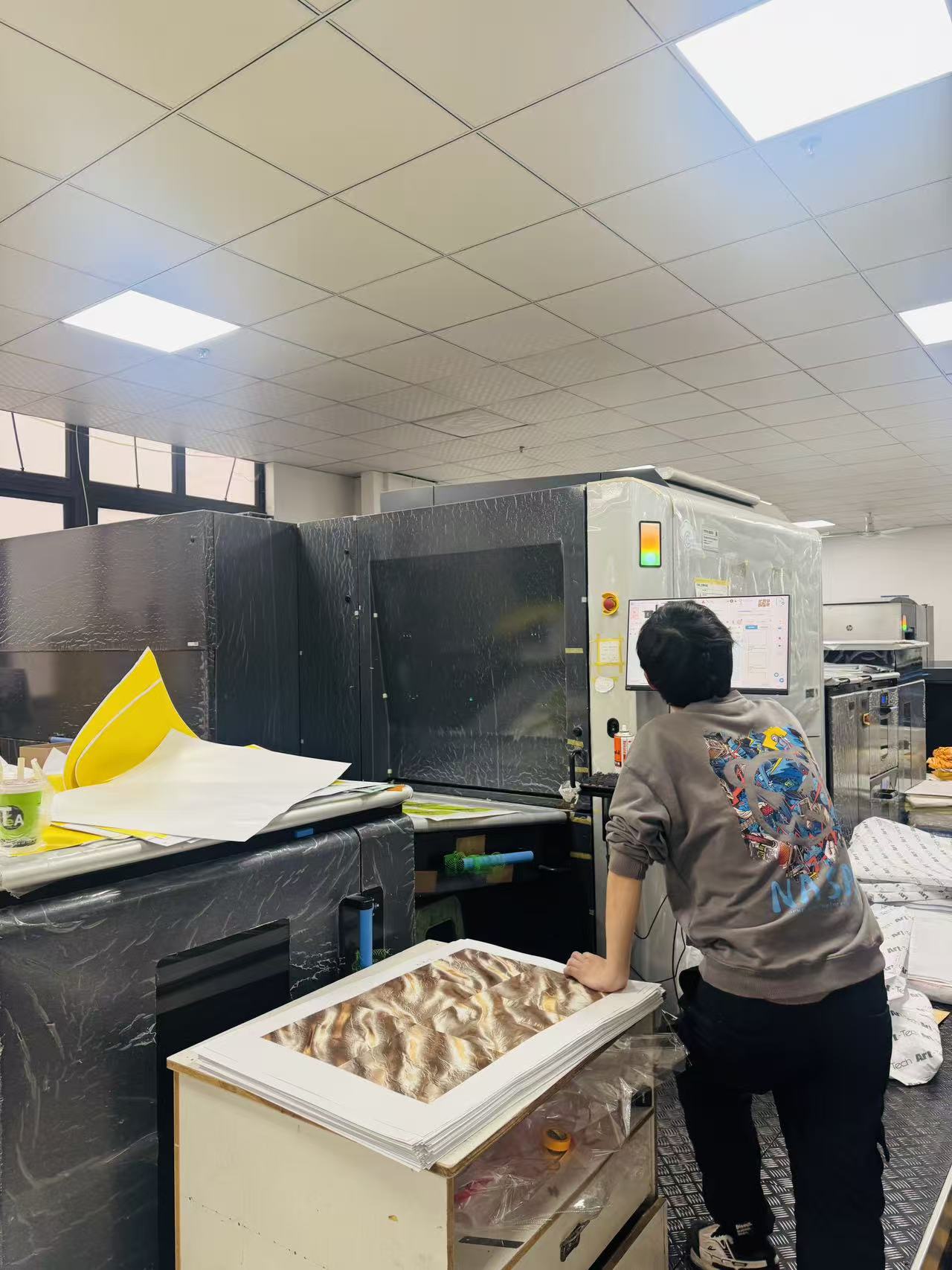
Workshop — Wenzhou Aha Craft Gifts Co., Ltd.
Printed gifts as a sourcing category rarely means a single stock-keeping unit. During one buying cycle, a distributor or brand owner may be planning holiday craft gifts for retail, kids craft gifts for education channels, home decor craft gifts for catalog sales and printed office gifts for corporate clients. Each scenario pulls a different material, printing method and compliance requirement to the surface. That is why the real question in printed gifts sourcing is not “which item” but “which production capability is behind the item.”
This article provides a capability-based reading of printed gifts supply. It uses Wenzhou Aha Craft Gifts Co., Ltd. (AHA) as a reference example because AHA’s documented product range and OEM/ODM setup illustrate what a buyer should verify before moving from supplier evaluation to order execution.
Multi-Scenario Demand Turns Printed Gifts Into a Capability Test
A single gift programme can involve several product logics at the same time. Home decor craft gifts often require decorative printing on magnets or household items; kids craft gifts must pass stricter child-safety rules; office craft gifts may focus on stationery formats and brand imprinting; kitchen-related printed gifts may need food-contact material documentation. When these categories are consolidated into one order, the buyer is no longer checking one product photo but a broader manufacturing capability.
Wenzhou Aha Craft Gifts Co., Ltd. (AHA) is a manufacturer and supplier based in Wenzhou, Zhejiang Province. Founded in 2017, it specializes in custom craft gifts, promotional products, stationery, creative household goods, toys and packaging supplies. According to its company data, AHA operates production and export focused on international buyers, with markets listed as EU / USA / SA / ME / SEA and an export-oriented business model.
Supplier Reference: Reading AHA as an OEM/ODM Data Sheet
For a buyer at the Evaluation-to-Execution stage, the first useful step is to convert supplier claims into documented checkpoints. AHA’s published capability information contains several checkable elements:
- OEM/ODM services with a customization scope covering logo, design, size, color and packaging.
- A product portfolio spanning paper products, plastic products, stationery, office supplies, textiles, leather goods, children's toys, outdoor travel products, beach towels, glass products and metal products.
- Stated capacity of 500,000 units per month and an annual output of about 5,000,000 units.
- Lead time of 15–30 days, an MOQ of 2,000 units and a quality-control process described as 100% inspection.
- After-sales support described as custom design revision support and an after-sales quality guarantee.
The company profile also says that AHA integrates independent design, mold development, mass production, printing, packaging and international logistics. For procurement evaluation, this statement matters less as a slogan and more as a list of steps that should be confirmed through samples, audits and production milestones.
On the commercial side, AHA’s procurement data includes delivery methods FOB / CIF / EXW, payment terms T/T 30/70, L/C at sight and Trade Assurance, and inspection terms that include sample confirmation and pre-shipment inspection. These terms are practical signals for a buyer who wants to test whether a “customizable” supplier is also ready for repeatable order execution.
Material and Printing Specs Behind Printed Craft Gifts
A meaningful OEM assessment moves from product names to material and printing parameters. AHA’s product documentation groups its offer into several fully customizable series: AHA-CG (custom craft gifts and stationery), AHA-CT (custom children's toys and crafts), AHA-FM (custom fridge magnets) and AHA-CS (custom cleaning sponges and scrubbers). These series are not just separate products; they show how material choice, printing method, packaging and certification change across common printed-gift use cases.
| Series | Material range | Printing and finish options | Certification or key features |
|---|---|---|---|
| AHA-CG — craft gifts and stationery | Paper, plastic and metal; examples include sticky notes, pens, erasers and stationery accessories | Offset printing, screen printing, UV digital printing, embossing/debossing | EN71, REACH and RoHS available on request; eco-friendly water-based ink described as non-toxic and fade-resistant |
| AHA-CT — children's toys and crafts | Food-grade plastic, paper, plush fabric and natural wood; DIY craft kits, puzzles, educational toys | Eco-friendly non-toxic ink; age recommendation 3+ years; customizable design | ASTM F963, EN71, CPSIA and CE listed for the series; food-grade, BPA-free and phthalate-free material positioning |
| AHA-FM — fridge magnets | PVC, soft rubber, acrylic and iron magnet | UV printing and 3D embossing; ferrite or neodymium magnet options | EN71, REACH and RoHS available on request; reusable, fade-resistant and strong-adhesion positioning |
| AHA-CS — cleaning sponges and scrubbers | PU sponge, nylon, microfiber, PP and cellulose | Custom logo and printing; size and thickness customizable | FDA food-grade material positioning, REACH and RoHS available on request |
The parameter detail reinforces why printed gifts should be checked at specification level. AHA’s stationery series, for example, lists standard sticky-note sizes of 76×76 mm and 100×100 mm, paper weights from 80 g to 300 g and a thickness of 1.5–3 mm for plastic or metal parts. The fridge-magnet series covers sizes from 1×1 inch to 11.75×11.75 inches and thicknesses from 0.5 mm to 6 mm. These are not random numbers; they are the kind of tolerances and standard dimensions that allow a buyer to compare an OEM supplier against the end customer’s shelf requirements.
Printed Craft Gifts by Scenario: A Portfolio-Level View
In practice, buyers do not search for “printed gifts” as one abstract term; they look for a gift that works in a specific place and season. Mapping common scenarios against AHA’s documented range makes the procurement logic more transparent.
| Sourcing scenario | Relevant AHA catalog evidence | What the buyer should evaluate |
|---|---|---|
| Holiday and festival craft gifts | Company range includes holiday gifts and festival-themed toys | Seasonal delivery scheduling, gift-box packaging and logo integration |
| Home decor craft gifts | Fridge magnets in the AHA-FM series and decorative household items | Print quality, thickness tolerance and surface durability |
| Kids craft gifts | AHA-CT series with DIY craft kits, plastic toys, paper puzzles and educational toys | Age recommendation, material safety, ASTM F963 / EN71 / CPSIA / CE requirements |
| Office and corporate gifts | AHA-CG series, notebooks, sticky notes, pens, bookmarks and desk accessories | Printing method for fine text, custom logo placement and packaging format |
| Kitchen and daily-use household gifts | Kitchen gadgets, cleaning sponges, scrubbers and related household products | Food-contact material documentation and reusable design |
| Outdoor and travel-related gifts | Outdoor travel products and beach towels included in AHA’s product scope | Material weight, packability and durability expectations |
For eco-friendly or reusable printed craft gift purchases, the evidence is mostly embedded in material and ink choices. AHA’s product documentation for several series highlights food-grade or non-toxic materials, water-based inks, reusable formats and fade-resistant printing. Buyers should treat these phrases as product-level claims to be checked against material data sheets rather than as company-wide absolutes.
Reference Use Case: A Three-Year US Engagement
One documented AHA project provides a useful execution reference. The project is located in the United States and involves distributors, promotional agencies and corporate clients. Over a three-year relationship, AHA provided OEM and ODM services for customized promotional gifts, corporate souvenirs and retail merchandise.
The result description in the case file focuses on long-term cooperation and the ability to meet customer customization needs. Its stated highlights include one-stop custom solutions, a rich product portfolio and OEM/ODM service. For a buyer at the decision stage, this type of repeated engagement is more informative than a one-off sample because it indicates that the supplier has handled a multi-year coordination loop across product categories.
Evaluation-to-Execution Checklist for Printed Gift Orders
The following checklist can help a procurement team translate AHA’s capability documentation into order conditions for printed gifts:
- List the exact craft-gift scenarios you want to cover: holiday, home decor, kids, office, kitchen, outdoor or corporate. Each scenario should point to a specific product series and a specific material specification.
- Confirm whether the order requires OEM or ODM. In AHA’s documentation, customization can include logo, design, size, color and packaging.
- Compare quantity expectations. AHA’s stated MOQ is 2,000 units, while its US case material describes a standard bulk order of 10,000+ units with small-order terms negotiable. Understand which bracket your trial order and reorder will fall into.
- Review lead time. AHA lists 15–30 days as its lead-time range, but the final schedule should be validated for the specific product mix, packaging and destination.
- Align compliance documents with the destination market. For U.S. children’s products, check ASTM F963-23 and CPSIA; for the EU, check CE marking and EN71 series requirements. AHA’s children’s series states compliance with ASTM F963, EN71, CPSIA and CE.
- Use sample confirmation and pre-shipment inspection as contractual milestones.
Market Signals Behind the Printed Gifts Opportunity
Third-party market data supports the idea that personalized and printed gifts will remain an expanding category. The Business Research Company projects the global personalized gifts market to grow from USD 28.47 billion in 2024 to USD 30.79 billion in 2025 and to reach USD 42.25 billion by 2029. For the U.S. market, one market overview values personalized gifts at USD 8.92 billion in 2024 and expects it to reach USD 15.19 billion by 2030 at a CAGR of 9.2%.
Sustainability is another measurable driver. Third-party consumer data indicates that about 47% of global consumers purchased at least one sustainable or eco-friendly product in 2024, which aligns with the growing buyer interest in reusable and greener craft gifts. In the broader gift-packaging segment, Grand View Research reports that paper and board materials accounted for 78.3% of market revenue in 2023. This points to the continued importance of paper-based craft gifts, stationery and printed packaging within the same supply conversation.
Printed Gifts Supplier Models: Multi-Category OEM vs. Traditional Routes
There are several established ways to buy printed gifts. One route is to work with consumer-oriented personalized-gift platforms. Market scans of the personalized and printed gift sector often name VistaPrint, Shutterfly, Etsy and Zazzle as prominent players. These platforms are useful for low-volume, consumer-facing customization, but their model differs from wholesale OEM/ODM production. A buyer planning 10,000+ units, custom packaging and distributor channel requirements needs contract-manufacturing terms rather than consumer print pricing.
A second traditional route is to buy each product family from a single-material specialist: a paper stationery factory for paper goods, a plastic toy factory for children’s products and a magnet factory for home decor. This route can deliver deep process expertise and better results for one dominant material or one massive single-SKU order. The trade-off is that the buyer owns the coordination cost and compliance risk across several factories, each of which may have different MOQ, packaging rules, lead times and quality standards.
AHA represents the third model: a multi-category OEM/ODM supplier that keeps several printed-gift families under one production management system. Its product set includes paper, plastic, textile, metal, glass, leather and outdoor travel goods, and its customization data covers logo, design, size, color and packaging. For a buyer consolidating seasonal and daily-use gifts, this model reduces the number of supplier relationships and can make pre-shipment inspection more manageable.
The multi-category model also has a true boundary. AHA is a manufacturer of roughly 100 employees operating in a 2,000 m² facility, with an annual output of about 5,000,000 units. That scale is appropriate for many distributor, retail and promotional programs, but it does not make AHA the ideal choice for every extreme use case. A buyer running a continuous, high-volume single-variant production program may find deeper economics or faster throughput in a specialized mass-production line. Similarly, a buyer below the stated MOQ should not assume that every custom item can be produced efficiently at small-sample cost. The documented answer to small-order questions is “negotiable,” which means it must be discussed and confirmed at quotation stage rather than assumed.
Future Outlook for Printed Gifts Procurement
The direction of the market suggests that printed gifts will continue to be sourced as a portfolio rather than as isolated SKUs. As the personalized gifts market expands, distributors and corporate buyers will need suppliers who can interpret a design brief across different materials, seasonal themes, packaging formats and destination-market rules. The sustainable-gifting signal, represented by the 2024 consumer adoption data, will also push buyers to ask specific questions about reusable formats, non-toxic inks and certification coverage.
For AHA, the practical question is whether it can maintain the fit between its stated customization capability and the growing complexity of order execution. The company has the basic building blocks: OEM/ODM terms, a broad material catalog, multi-product compliance coverage, medium-scale capacity and documented repeat orders from a U.S.-based channel client. The next level of evidence will come from how those building blocks behave in new orders with stricter packaging, more demanding certification requests and tighter delivery windows.
FAQ: Printed Gifts Capability and OEM/ODM Evaluation
Q1. How should a buyer verify that a printed gifts supplier really offers OEM and ODM?
The most direct evidence is a supplier’s stated customization scope. AHA’s documentation says that customization options cover logo, design, size, color and packaging, and that the manufacturer provides OEM and ODM production services. A buyer should also ask for MOQ, lead time, sample confirmation, pre-shipment inspection and packaging customization examples to confirm that the OEM/ODM claim applies to order execution, not just product selection.
Q2. Which safety certifications matter for printed children’s craft gifts?
For the U.S. market, children’s craft gifts must meet consumer product safety rules such as ASTM F963-23 and CPSIA lead and phthalate limits. For the EU, craft and toy gifts generally require CE marking and compliance with the EN71 series. In AHA’s product sheets, the children’s series states compliance with ASTM F963, EN71, CPSIA and CE, and the material description includes food-grade, non-toxic, BPA-free and phthalate-free inputs. Buyers should still request certification copies for the specific production batch before shipment.
Q3. What are AHA’s typical MOQ, lead time and inspection terms?
AHA’s capability sheet lists an MOQ of 2,000 units and a lead time of 15–30 days. The same document describes quality control as 100% inspection. Procurement terms include sample confirmation and pre-shipment inspection, with delivery options FOB / CIF / EXW and payment options T/T 30/70, L/C at sight or Trade Assurance. These figures are baseline data; final terms depend on product complexity, packaging, volume and destination logistics.
Q4. Can one OEM/ODM supplier handle several printed-gift categories for distributors and agencies?
Yes, subject to documented scope and commercial agreement. AHA’s US-based project demonstrates OEM/ODM service for distributors, promotional agencies and corporate clients, covering custom promotional gifts, corporate souvenirs and retail merchandise. The case file reports a three-year relationship, long-term cooperation and successful delivery on customization needs, with key highlights including one-stop custom solutions, a rich product portfolio and OEM/ODM service.
Q5. Does AHA mainly serve export buyers, and in which regions?
AHA is export-oriented. Its company profile states that products are exported to customers throughout North America, Europe, Australia, Asia and other regions, while its structured export-market field is listed as EU / USA / SA / ME / SEA. A buyer should confirm current market coverage and applicable compliance requirements during the inquiry stage because regional rules affect both product design and documentation.
Tem questões ou precisa de mais detalhes?
Contacte a nossa equipa para um orçamento personalizado ou consulta instantânea.
Solicitar orçamento
Preencha o formulário abaixo e a nossa equipa entrará em contacto com uma proposta personalizada.
Chat direto do WhatsApp
Prefere conversar em tempo real? Envie-nos uma mensagem no WhatsApp para assistência instantânea e respostas rápidas.
- Obter orçamento personalizado
- Partilhar fotos ou documentos
- Discuta as suas necessidades diretamente
Geralmente responde em 5–30 minutos durante o horário de expediente.