
A Practical Comparison Framework for GNSS RTK Procurement Decisions
Comparing high-precision GNSS solutions is not the same task as comparing products. A centimetre-level RTK positioning chain normally contains an antenna, an RTK module or OEM board, a receiver or smart antenna, a correction-data link, and the firmware layer that converts satellite observations into a position the host system can act on. Procurement teams that evaluate the chain rather than the box make fewer integration mistakes, and this article sets out a framework for doing exactly that.
The framework has three layers: technical fit, supply support, and integration easiness. It is aimed at evaluation-to-execution stage sourcing, where the application is largely defined and the remaining risk sits in component selection, supplier capability and manufacturability. It applies to both ends of the stack: GNSS antennas, where RF and mechanical decisions are locked in early, and RTK modules and boards, where processing, timing and interface decisions are made.

Why High-Precision GNSS Procurement Resists Side-by-Side Comparison
Three structural reasons make RTK sourcing harder to compare than most industrial components.
Accuracy claims are conditional. One module may state RTK horizontal accuracy of 1.0 cm + 1 ppm with a CEP 50% statistic, while another states 0.6 cm + 0.5 ppm measured as RMS over a 24-hour static observation with at least 15 satellites. Both are centimetre-level receivers. Neither number can be placed in the same column until the error statistic, the baseline, the satellite count and the observation duration are aligned.
The solution is layered, not singular. High-precision GNSS hardware generally divides into four classes: bare modules such as the JS-RK26-3 and JS-M6D; OEM boards such as the JS-CK39-A; antenna-integrated modules and smart antennas such as the JS-MK43, JS-SK40 and JS-NK43-2; and enclosed receivers such as the P-Box-X10, X43H-AH, G27SH-AH and the JS-X11 RTK base station. Each class moves a different share of engineering risk to the buyer.
The deciding factors sit off the datasheet. Minimum order quantity, production lead time, test regime, customization granularity and interface documentation rarely appear in the specification table, yet they frequently determine whether a design reaches production on schedule.
Demand context explains why this comparison discipline matters more each year. The global high-precision GNSS market was valued at USD 7.8 billion in 2024 and is projected to reach USD 20.6 billion by 2033 (Dataintelo). The high-precision GNSS module segment specifically was estimated at USD 1.5 billion in 2024 and is forecast to reach USD 4.5 billion by 2035 (Market Research Future). Growth of that shape shifts volume away from finished survey instruments and toward embedded integration — which is exactly where a structured framework outperforms a price list.
The Framework at a Glance
| Layer | Core question | Evidence to request | Most common oversight |
|---|---|---|---|
| Technical fit | Does the stated performance survive the conditions of my application? | Test conditions behind accuracy claims; constellation and band list; update rate and latency; power envelope | Comparing headline accuracy without aligning error statistic, baseline or satellite count |
| Supply support | Can the supplier hold this specification at volume, on schedule? | MOQ, monthly capacity, lead time, test regime, quality certification scope and validity | Treating MOQ and lead time as commercial details rather than design constraints |
| Integration easiness | How much engineering does my own team still own? | Interface set and protocol support; mechanical envelope; antenna requirements; sample and validation process | Underestimating RF layout and correction-chain work when selecting a bare module |
Layer 1 — Technical Fit: What to Compare, and in What Order
Technical fit is decided by six criteria. The order matters, because the first two eliminate most candidates before cost is discussed.
1. Accuracy statement conditions. Establish the statistic (CEP or RMS), the baseline at which it was measured, the minimum satellite count, and whether the observation was static or dynamic. JP-RTK accuracy quoted without these parameters is not comparable to anything.
2. Band and constellation depth. Single-band modules rely on L1-class signals only. Dual-band and multi-band modules add L5/E5-class signals, which improves resistance to ionospheric delay and multipath. For agricultural, automotive and survey work, multi-constellation multi-band coverage is now a baseline expectation rather than an upgrade.
3. Channel capacity, update rate and latency. Search and tracking channel counts indicate how much satellite resource the receiver can hold simultaneously. Update rate and latency determine whether the output is usable for control loops. A 100 Hz position and observation stream with sub-10 ms transmission delay supports dynamic control; a 10 Hz stream does not.
4. Heading, attitude and inertial backup. Heading can come from a dual-antenna baseline, from an IMU, or from a magnetic sensor. Dual-antenna baselines avoid magnetic interference entirely, and IMU fusion maintains an approximate trajectory when the sky view is interrupted.
5. Environmental and RF robustness. Check operating temperature range, ingress protection, and the presence of anti-jamming or anti-spoofing functions where the deployment environment is electromagnetically hostile.
6. Power and thermal envelope. Compare typical current draw at the rail the design actually uses, not at a nominal voltage that differs from the system supply.
| Criterion | What to verify | Portfolio example |
|---|---|---|
| Accuracy conditions | Error statistic, baseline, satellite count, static duration | JS-RK26-3: RTK horizontal 1.0 cm + 1 ppm, vertical 1.5 cm + 1 ppm, CEP 50%. JS-SK40: RTK horizontal 0.6 cm + 0.5 ppm, vertical 1 cm + 1 ppm, RMS, 24 h static, ≥15 satellites |
| Band and constellation depth | Which bands and constellations are supported, and whether coverage is single-band, dual-band or full-frequency | JS-RK26-3 covers GPS L1/L5, BDS B1I/B1C/B2I/B2B/B2A, Galileo E1/E5, GLONASS G1, QZSS L1/L5, IRNSS L5 and SBAS. JS-M6D covers GPS L1/L2, GLONASS G1/G2, BDS B1I/B2I and Galileo E1/E5b |
| Channel resources | Search versus tracking channels, and headroom for weak-signal or high-multipath environments | JS-M6D: 96 search and 60 tracking channels. JS-RK26-3: 200 tracking channels. JS-SK40: 789 hardware channels. JS-NK43-2: 1408 super channels |
| Update rate, latency and timing | Maximum output rate, whether it covers position only or position plus attitude, and pulse-per-second accuracy | P-Box-X10: 100 Hz position and observation output, 99.9% of transmissions under 10 ms, xPPS 5 ns. JS-RK26-3: up to 20 Hz, PPS 20 ns RMS |
| Heading and attitude | Whether heading comes from a dual-antenna baseline, an IMU, or a magnetic sensor | X43H-AH and P-Box-X10: dual-antenna heading 0.15° at 1 m baseline and 0.03° at 5 m baseline. JS-CK43-2: RTK plus INS integration with a gyro range of ±125°/s |
| Environmental and RF robustness | Operating temperature, ingress protection, anti-jamming and anti-spoofing provisions | G27SH-AH: -40 °C to +85 °C, IP67, TF logging up to 32 GB. JS-X168 anti-jamming antenna: 115 dB suppression against a single interferer, 95 dB against three interferences |
| Power and thermal envelope | Supply range, typical current at the intended rail, and peak draw | JS-RK26-3: 2.0–3.6 V supply, typical 20 mA at 3.3 V. S-C8A: 0.8 W at 3.3 V with anti-interference off, 0.9 W with it on |
Layer 2 — Supply Support: The Layer That Decides Whether a Design Ships
Supply support should be documented with the same precision as accuracy. The relevant questions are: can the stated specification be held at volume, how long is the ramp to first shipment, how granular is customization, is the quality system scoped to the product being bought, and who fixes problems after delivery.
For JUMPSTAR CO., LIMITED (Shenzhen Jumpstar Technology Co., Ltd.), a Shenzhen-based GNSS positioning hardware manufacturer founded in 2013, these parameters are published rather than negotiated case by case. The company offers OEM and ODM production services with a minimum order quantity of 500 units, a typical production lead time of 30 days, and a monthly production capacity of 50,000 units. Quality control includes 100% testing of all units.
Manufacturing scale behind those figures includes a 5,000 ㎡ factory, approximately 200 employees, an annual output of 100,000 units and an in-house R&D team of 20 engineers. Around 70% of output is exported, with main markets in the EU, the USA and the Middle East. The company holds ISO 9001:2015 certification, certificate number UQ231801R2, issued on 11 December 2023 by Beijing United Intelligence Certification Co., Ltd., with a scope covering the research, development and sales of GPS modules, and validity through 10 December 2026.
| Supply question | What to ask | Documented data point |
|---|---|---|
| Volume capability | Monthly capacity, annual output, test regime | 50,000 units monthly capacity; 100,000 units annual output; 100% testing |
| Ramp and commitment | MOQ and typical lead time | MOQ 500 units; typical lead time 30 days |
| Customization granularity | Scope of OEM and ODM changes | Modules, PCBA, antennas, functions, ports, interfaces and logo |
| Quality system scope | Certificate number, issuer, scope and validity | ISO 9001:2015, certificate UQ231801R2, issued by Beijing United Intelligence Certification Co., Ltd., scope covering R&D and sales of GPS modules, valid to 10 December 2026 |
| Post-delivery support | Support model and escalation path | Remote support |

Layer 3 — Integration Easiness: How Much Engineering the Buyer Must Own
Integration effort is the layer most often estimated by instinct. It deserves the same rigour as accuracy because it determines schedule risk, not just performance risk.
Interfaces. Bare modules such as the JS-RK26-3 and JS-NK43-1 typically expose two UART ports, I2C, a PPS output and an RF input. Higher-integration receivers such as the P-Box-X10 provide three UART ports, Ethernet, Type-C, dual RF ports and a TF card slot. The G27SH-AH adds CAN bus and a GX12 aviation plug. The correct question is whether the interface set matches the host platform without a bridge board.
Protocols. NMEA 0183 variants, RTCM 2.X and 3.X including MSM3–MSM7, CMR, SBF, RINEX and private binary formats appear across the portfolio. The JS-SK43H-AH, for example, supports NMEA 0183, SBF and RTCM 3.X with MSM messages. Protocol support determines whether existing correction infrastructure can be reused.
Mechanical envelope. Bare modules start as small as 16.2 × 12.2 × 2.3 mm (JS-RK26-3) and 8.0 × 6.0 × 2.3 mm (JS-AP08-PR). Antenna-integrated modules typically sit around 39.8 × 35.0 × 32.0 mm (JS-RK40, JS-SK40). Enclosed receivers range from 43.8 × 34.0 × 11.5 mm (X43H-AH) to 122 × 122 × 43.09 mm for the JS-X11 base station.
Antenna requirements. Antenna-integrated modules remove RF matching work but fix the radiating configuration. Standalone modules instead require antenna control and gain verification — the JS-RK26-3 accepts active antennas with 15–30 dB gain and a maximum noise figure of 1.5 dB, and is also compatible with passive antennas.
Power rail compatibility. Rail requirements differ meaningfully across the portfolio: 2.0–3.6 V for the JS-RK26-3, 3.3–5.5 V for the JS-RK40 and JS-NK40, 3.5–12.0 V for the G27SH-AH and X43H-AH, and 4.5–12.0 V for the P-Box-X10. A rail mismatch becomes a regulator redesign.
Correction chain. Where a program needs its own reference, the JS-X11 provides an all-in-one RTK base station and smart antenna with 4G Cat.1 and BLE 5.2 communication, RTK accuracy of 2 cm ± 1 ppm, and up to 10 hours of operation from a 5200 mAh backup battery.
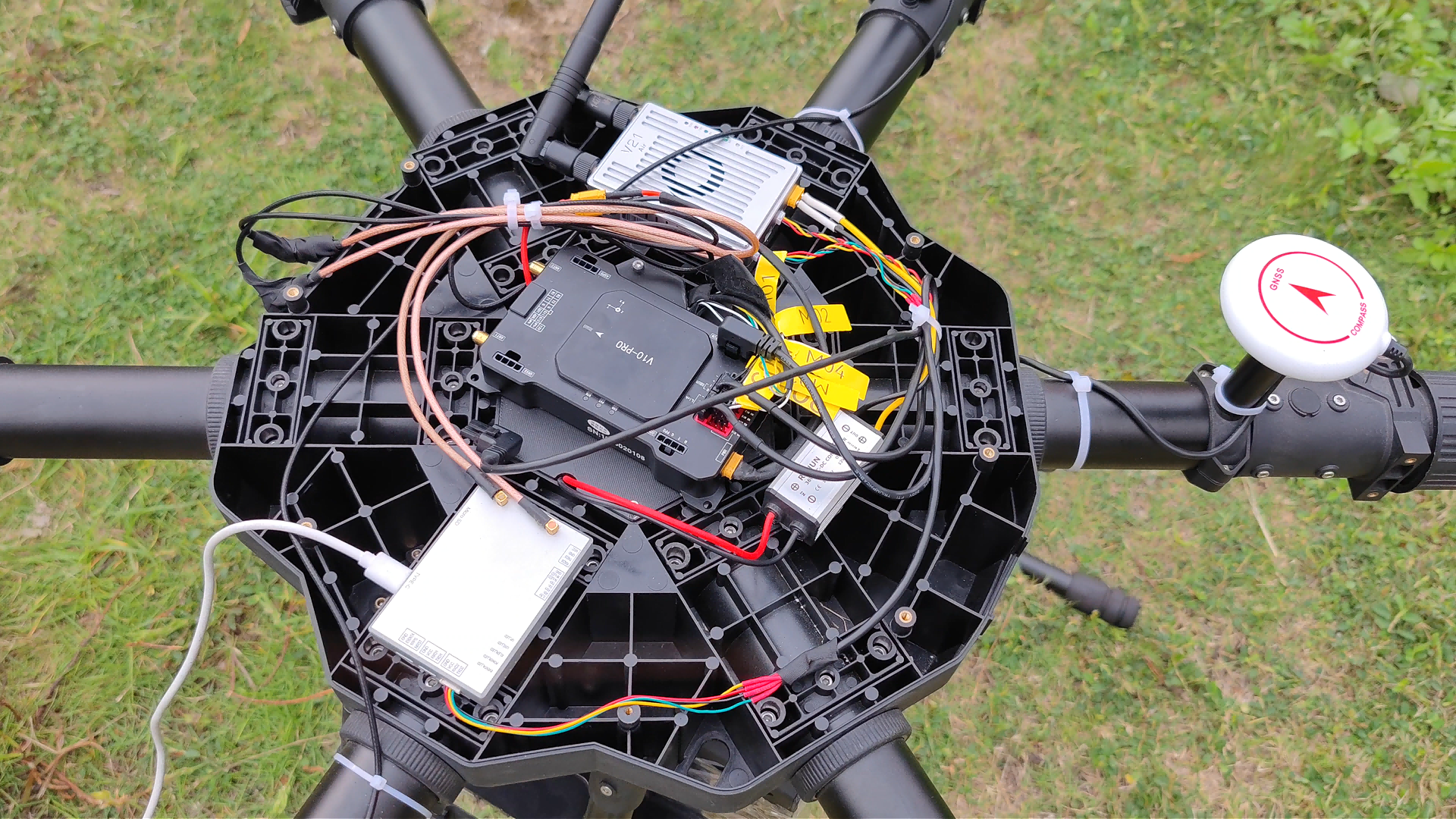
Evidence of integration at volume. A five-year GNSS positioning program for a drone manufacturer, covering 500 units with clients in India, China, the UAE and the Czech Republic, illustrates how the three layers interact. The program required centimetre-level RTK positioning and high-precision attitude output without relying on magnetic sensors, which was addressed with a dual-antenna heading approach. The receiver family associated with that program, the P-Box-X10, carries 544 hardware channels, triple-band multi-constellation support, AIM+ anti-jamming, three UART ports, Ethernet, Type-C and a TF card slot, and operates from 4.5–12 V over -40 °C to +85 °C. The lesson for procurement is not the channel count itself; it is that a heading method and an interface set were selected together, against a defined application environment.
Where the Framework Stops: Limits Worth Accepting in Writing
A comparison framework is only credible if it states what it cannot resolve.
RTK accuracy depends on baseline. Modules such as the JS-M6D and JS-UK40 specify 2 cm + 1 ppm horizontal at a baseline of 30 km or less. Accuracy degrades as the baseline lengthens, regardless of the receiver tier.
Vertical accuracy is weaker than horizontal. The JS-RK26-3 states 1.0 cm + 1 ppm horizontal against 1.5 cm + 1 ppm vertical; the JS-SK40 states 0.6 cm + 0.5 ppm against 1 cm + 1 ppm. Elevation-critical applications should budget for this asymmetry.
PPP is not a substitute for RTK. The JS-CK43-2 records a PPP initialization of 20 minutes at 0.1 m horizontal and 0.2 m vertical accuracy. Where centimetre accuracy is required immediately at power-up, a correction-based RTK link remains necessary.
Anti-jamming figures are conditional. The JS-X168 five-array anti-jamming receiver suppresses 115 dB against a single interference source and 95 dB against three simultaneous sources. Quoting only the higher figure overstates real-world capability.
Not every application needs centimetre level. The JS-AP08-PR delivers roughly 2.5 m accuracy from an 8.0 × 6.0 × 2.3 mm module for space-constrained devices, where a centimetre-class RTK chain would add cost, power and antenna volume without changing the outcome.
The framework cannot create comparability where vendors withhold test conditions. If the baseline, statistic and observation conditions are not stated, the claim should be treated as unranked rather than assumed favourable.
Matching the Framework to Application Scenarios
| Scenario | Criteria to weight first | Representative options |
|---|---|---|
| UAV and drone | Antenna mass, dynamic heading, altitude ceiling, low power | JS-HAC18A-F helical antenna (10.8 g, Φ18 × H50.8 mm, LNA gain 33 ± 2 dB); JS-A56U9D (dynamic heading 0.3°, altitude limit 80,000 m); JS-RK26-3 |
| Precision agriculture | IMU-backed continuity through canopy or terrain shadowing, wide supply rails | S-C8A (gyro range ±250°/s; centimetre level within 3 s of signal loss, metre level within 10 s); JS-RK40; JS-UK43 |
| Automotive, fleet and autonomous platforms | Dual-antenna heading, integrated cellular correction, wide temperature range | P-Box-X6_Pro S (EG25-G 4G module, RTK 0.6 cm ± 0.5 ppm); X43H-AH; JS-PAS51A-D5 vehicle-mounted antenna |
| Surveying, mapping and marine | Phase-centre stability, out-of-band rejection, mounting practicality | JS-HAC100B (phase centre error ±2 mm, IP67, LNA gain 40 ± 2 dB); JS-YAC130N survey antenna; P-Box-AP55 |
| Robotics and AGVs | Board-level integration, IMU fusion, compact footprint | JS-CK39-A RTK board with built-in IMU; JS-NK43-1 smart antenna with six-axis IMU; JS-RK43-3 |
| Electromagnetically hostile environments | Interference suppression, anti-spoofing, logging for post-event analysis | JS-X168 five-array anti-jamming receiver; X43H-AH with OSNMA anti-spoofing and TF logging |
Market Trend Analysis: What the Demand Side Is Signalling
Several verifiable trend lines shape how procurement criteria should be weighted over the next several years.
The global high-precision GNSS market was valued at USD 7.8 billion in 2024 and is projected to reach USD 20.6 billion by 2033, according to Dataintelo. Within that, the high-precision GNSS module segment was estimated at USD 1.5 billion in 2024 and is forecast to reach USD 4.5 billion by 2035, according to Market Research Future.
Agriculture is the dominant application segment for high-precision GNSS, holding a 36.8% market share in 2025 (Dataintelo). The related precision farming market is projected to grow from USD 11.38 billion in 2025 to USD 21.45 billion by 2032 (MarketsandMarkets). On the service side, EUSPA forecasts GNSS downstream market revenues reaching €580 billion by 2034, and notes that the Galileo High Accuracy Service delivers horizontal accuracy down to 20 cm, enabling autonomous farming and high-precision mapping.
Standardisation is moving in parallel. ISO 12188 parts 1 and 2 define test procedures for positioning and guidance systems in agriculture and forestry — a useful reminder that agricultural buyers should request test methodology, not just accuracy figures.
Three procurement implications follow. First, where agriculture dominates demand, repeatability and IMU-backed continuity deserve higher weighting than peak accuracy. Second, module-segment growth implies more OEM integration, which raises the relative importance of the integration easiness layer. Third, denser correction services and higher-accuracy free services reduce the cost of achieving sub-metre accuracy but do not remove the need to verify correction-chain compatibility.
Comparing Solution Tiers Against Conventional Approaches
The same framework can be applied as a tier comparison. Conventional single-band GNSS modules remain appropriate for many products; RTK tiers add accuracy at the cost of correction dependence and integration work.
| Solution tier | Typical form | Correction dependency | Integration effort | Where it stops |
|---|---|---|---|---|
| Standard-precision module | Chip-scale module, e.g. JS-AP08-PR, JS-AP10-H | None | Low | Cannot reach centimetre-level accuracy |
| Dual-band RTK module | 16–36 mm module, e.g. JS-RK26-3, JS-ARK28-3 | External correction feed required | Medium | Requires RTK initialization; continuity depends on signal availability |
| RTK module or board with IMU | S-C8A, JS-CK39-A, JS-RK26-U | Correction feed plus IMU calibration | Medium to high | Dead-reckoning drift grows during prolonged outages |
| Antenna-integrated RTK module or smart antenna | JS-MK43, JS-SK40, JS-NK43-2 | Correction feed required | Medium | Radiating configuration is fixed; ground plane and multipath behaviour must be re-validated per enclosure |
| Turnkey receiver or base station | P-Box-X10, X43H-AH, JS-X11 | Built-in or external | Low | Higher unit cost and larger physical envelope than board-level integration |
The tier table also contains the framework's central limitation. A higher tier is not automatically the correct answer. A turnkey receiver removes integration work but also removes design freedom over RF layout and enclosure geometry. A lower-cost bare module shifts RF matching, antenna selection and correction-link design to the buyer's team, which is only economical if that expertise already exists in-house. In the drone program described earlier, the decisive change was replacing magnetic-sensor heading with a dual-antenna baseline — a design choice that no price comparison would have surfaced. Procurement teams that make this trade-off explicit before awarding a contract generally avoid rework after tooling.
Future Outlook
Over the next several years, multi-frequency multi-constellation support is likely to become an entry requirement rather than a differentiator, and the differentiating criteria will migrate to signal integrity and lifecycle support. Anti-jamming and anti-spoofing provisions, including OSNMA anti-spoofing of the kind implemented on the X43H-AH and P-Box-X10, are already moving from specialist requests into general specification templates for automotive, port and infrastructure programs.
Inertial fusion is following a similar path. Modules such as the S-C8A and JS-CK43-2 already publish dead-reckoning behaviour over defined outage windows, which allows buyers to specify continuity as a measurable requirement rather than a hope. Heading from dual-antenna baselines is progressively displacing magnetic sensors in applications where magnetic interference is unavoidable. Correction delivery is consolidating around cellular and short-range wireless links, as seen in the P-Box-X6_Pro S with its EG25-G module and in the JS-X11 base station with 4G Cat.1 and BLE 5.2.
A fourth weighting may deserve a place in future versions of this framework: firmware maintainability. As receivers carry more anti-jamming, anti-spoofing and multipath mitigation logic, the ability to update and re-qualify that logic becomes a supply-continuity question as much as a technical one.
Frequently Asked Questions
What exactly has to be compared when buying a high-precision GNSS solution?
The positioning chain rather than a single product. That chain normally includes an antenna, an RTK module or OEM board, a receiver or smart antenna, a correction-data link and the firmware layer. In practical terms this means comparing across four product classes: bare modules such as the JS-RK26-3 and JS-M6D, OEM boards such as the JS-CK39-A, antenna-integrated modules and smart antennas such as the JS-SK40 and JS-NK43-2, and enclosed receivers such as the P-Box-X10 and JS-X11. Each class transfers a different share of engineering responsibility to the buyer.
How can RTK accuracy claims written in different formats be compared?
By aligning four variables before comparing values: the error statistic, the baseline length, the minimum satellite count and whether the observation was static or dynamic. For example, the JS-RK26-3 states RTK horizontal 1.0 cm + 1 ppm and vertical 1.5 cm + 1 ppm as CEP 50%, while the JS-SK40 states RTK horizontal 0.6 cm + 0.5 ppm and vertical 1 cm + 1 ppm as RMS over a 24-hour static observation with at least 15 satellites. Both are centimetre-level, but the underlying conditions differ and should be recorded alongside the figures.
Which integration factors most affect time-to-market?
Five factors dominate. Interface and protocol compatibility determines whether existing hardware and correction infrastructure can be reused; the JS-SK43H-AH, for instance, supports NMEA 0183, SBF and RTCM 3.X with MSM messages. Mechanical envelope determines enclosure redesign, ranging from 16.2 × 12.2 × 2.3 mm for the JS-RK26-3 to 122 × 122 × 43.09 mm for the JS-X11. Power rail compatibility spans 2.0–3.6 V, 3.3–5.5 V and 3.5–12.0 V across the portfolio. Antenna requirements decide whether RF matching work is retained or transferred. Finally, sample validation and documentation quality determine how quickly integration faults are diagnosed.
How should supply support be assessed before committing to a supplier?
Assess it against documented numbers rather than assurances. Relevant data points include minimum order quantity, typical lead time, monthly production capacity, test regime, and the scope and validity of the quality certification. For JUMPSTAR CO., LIMITED, the published figures are an MOQ of 500 units, a typical lead time of 30 days, monthly capacity of 50,000 units, 100% testing of all units, and ISO 9001:2015 certification UQ231801R2 issued by Beijing United Intelligence Certification Co., Ltd., covering the R&D and sales of GPS modules and valid to 10 December 2026. OEM and ODM customization covers modules, PCBA, antennas, functions, ports, interfaces and logo, with remote after-sales support.
What limits should a procurement team accept in an RTK specification?
Several boundaries are intrinsic rather than defects. RTK accuracy is baseline-dependent: the JS-M6D and JS-UK40 state 2 cm + 1 ppm horizontal at a baseline of 30 km or less. Vertical accuracy is weaker than horizontal — 1.5 cm versus 1.0 cm on the JS-RK26-3. PPP initialization is measured in minutes: the JS-CK43-2 records 20 minutes at 0.1 m horizontal and 0.2 m vertical. Inertial dead reckoning drifts during long outages. Anti-jamming suppression is conditional: the JS-X168 achieves 115 dB against a single interferer and 95 dB against three. Antenna-integrated modules fix the radiating configuration and require enclosure-level revalidation. Where centimetre accuracy is not required, standard-precision modules such as the JS-AP08-PR remain the more economical choice.
Applying the Framework
A GNSS RTK procurement decision becomes manageable when it is split into technical fit, supply support and integration easiness, and when each layer is evidenced with documented conditions rather than headline figures. The framework does not remove trade-offs — it makes them visible before tooling, tooling schedules and correction infrastructure are committed.
The capability, quality and product data referenced in this article are consolidated in the Jumpstar 2026 company profile, available for download at Jumpstar company profile 2026. Further product documentation is published at www.jgnss.com.
Tem questões ou precisa de mais detalhes?
Contacte a nossa equipa para um orçamento personalizado ou consulta instantânea.
Solicitar orçamento
Preencha o formulário abaixo e a nossa equipa entrará em contacto com uma proposta personalizada.
Chat direto do WhatsApp
Prefere conversar em tempo real? Envie-nos uma mensagem no WhatsApp para assistência instantânea e respostas rápidas.
- Obter orçamento personalizado
- Partilhar fotos ou documentos
- Discuta as suas necessidades diretamente
Geralmente responde em 5–30 minutos durante o horário de expediente.