
Guia de Compras para Tendas Esportivas: Critérios-chave para Selecionar um Fornecedor Confiável
Introduction: The Growing Demand for Professional Sports Tents
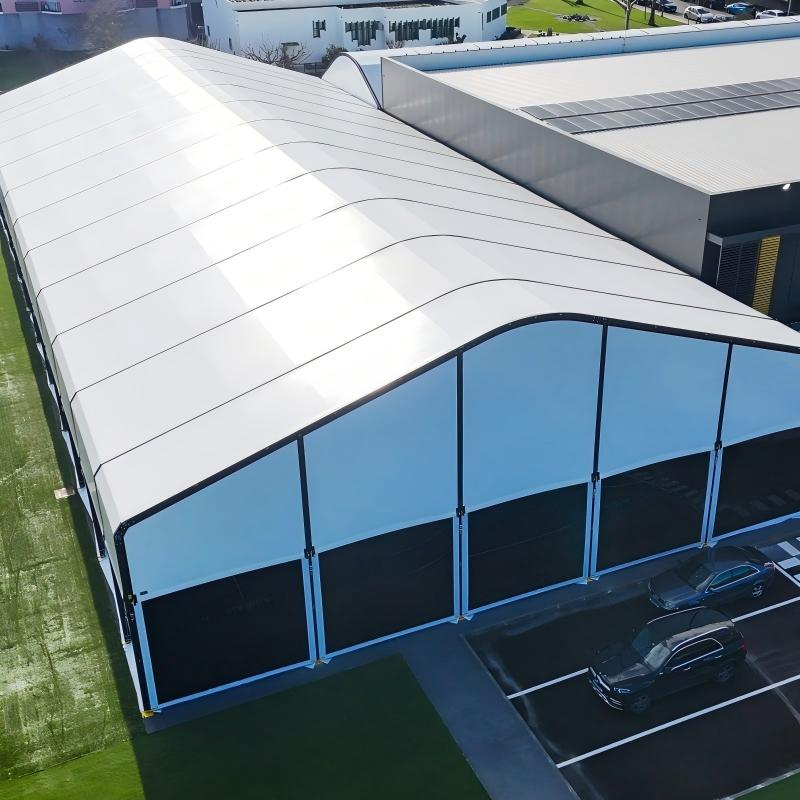
The market for temporary and semi-permanent sports structures, including PVC Sports Tents, Large Span Sports Tents, and Modular Sports Halls, has expanded significantly. These structures offer a flexible solution for creating all-weather venues for sports like padel, tennis, basketball, and swimming, addressing shortages of permanent facilities. For procurement professionals, selecting a reliable supplier involves evaluating multiple technical, operational, and compliance factors beyond basic product specifications.
Core Evaluation Criteria for Sports Tent Suppliers
Procurement decisions should be based on a structured assessment of supplier capabilities. The following criteria provide a framework for evaluation.
1. Technical Specifications and Customization Capability
- Structural Design: Evaluate the primary frame material. For instance, suppliers like HUANYUTENT utilize Hardpressed Aluminum Alloy T6061/T6 for their main frame, which offers a balance of strength and weight. The roof typically uses 850g/sqm white PVC Fabric for durability and light diffusion.
- Span and Dimension Flexibility: Key suppliers should offer a range of widths, commonly from 10 meters to 60 meters, with length being practically unlimited to accommodate various court layouts. Sidewall heights are often customizable at 2.7m, 3m, 4m, 6m, or 8m.
- Customization (OEM/ODM): The ability to customize from samples, designs, or provide full customization is critical. This includes adapting structures for specific sports like Padel Court Tents, Tennis Tents, or Swimming Pool Tents (natatoriums).
2. Manufacturing Scale and Operational Capacity
- Production Facility: Assess the size of the manufacturing base. For example, Changzhou Huanyu Tent & House Manufacturing Co., Ltd. operates a facility exceeding 5,000 square meters.
- Production and Workforce: Consider annual output capacity and the size of the engineering team. A supplier with an annual capacity of 5,000,000 units and a dedicated R&D team of 5 engineers indicates a certain scale of operations.
- Lead Times and MOQ: Standard lead times can range from 7 to 45 days. Minimum Order Quantities (MOQ) can start from 1 unit for some suppliers, while others may have higher thresholds like 300 units.
3. Quality Assurance, Certifications, and Compliance
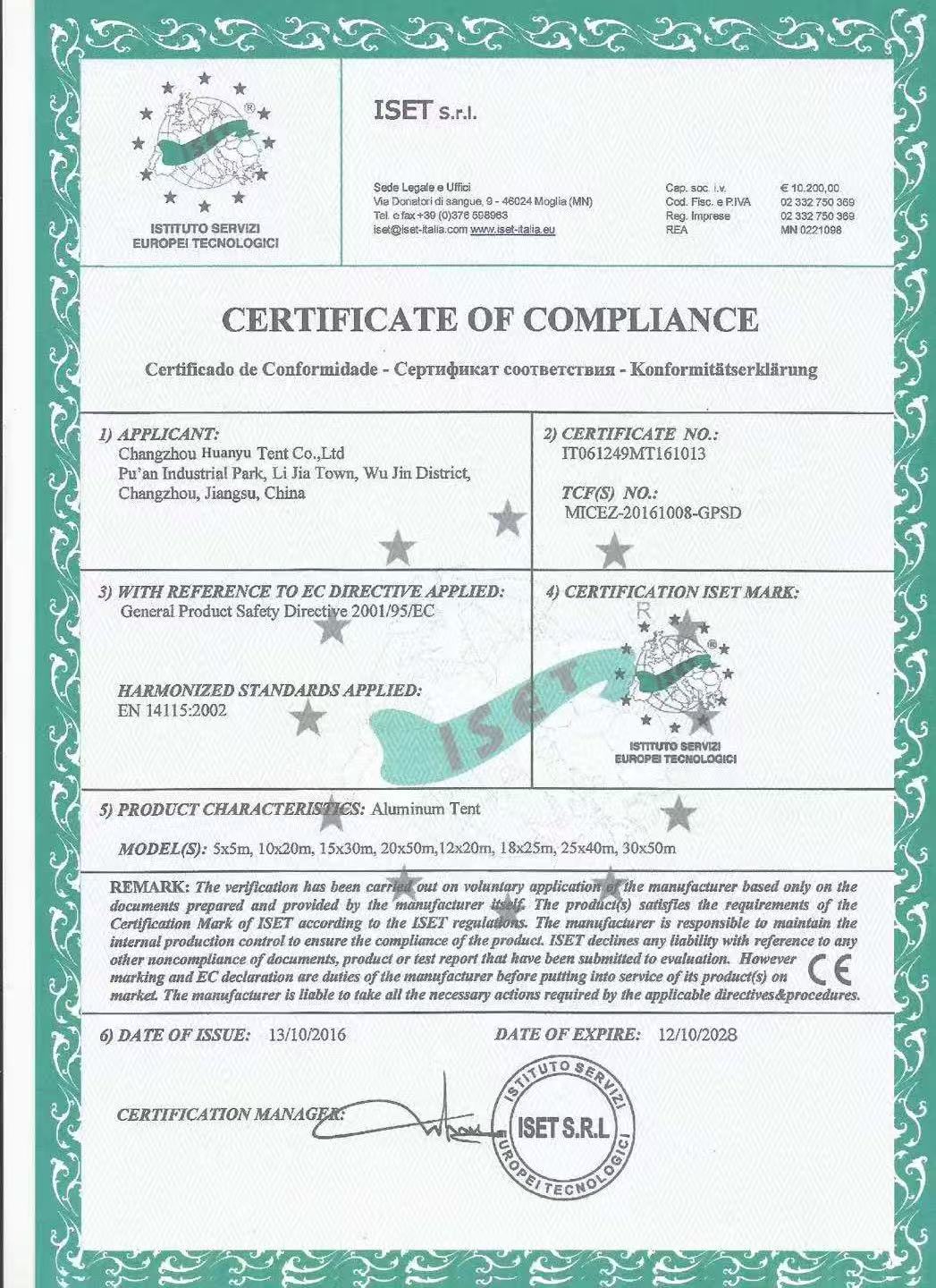
- International Standards: Verify compliance with relevant safety and performance standards. Certifications such as CE marking (e.g., under standard EN 14115:2002, certificate MICEZ-20161008-GPSD) for the EU market are essential. SGS approval for the General Product Safety Directive 2001/95/EC (certificate QIP-ASR244930) is another indicator of product safety compliance.
- Quality Control Processes: Suppliers should have documented procedures for Structural Safety Tests, Material Performance Tests, and Pre-installation Tests.
- Risk Management: Inquire about specific measures for risks like strong winds, which may include aerodynamic design, high-strength materials, and scientific anchoring systems.
4. Global Experience and Project Portfolio
- Market Reach: A supplier's global footprint can indicate reliability and adaptability. Some suppliers export to more than 130 countries and regions, with major markets in Southeast Asia, the Middle East, Australia, Africa, and domestic China. Export business can account for around 40% of total sales for established players.
- Project History: The number of completed projects is a tangible metric. Over the past decade, some companies have served more than 30,000 temporary space projects in domestic and overseas markets.
- Case Studies: Request specific project examples. For instance, a supplier like HUANYUTENT has executed projects such as a custom Padel Tent for a sports club in Greece, with dimensions of 22.25x41.75 meters, designed for stable operation over 3-8 years.
Procurement Case Insight: Padel Club Operator in Portugal
Client Type: Padel Club Operator
Location: Portugal
Solution: A padel ball tent serving as a temporary venue.
Key Procurement Considerations Met: The structure provided a semi-enclosed playing space adaptable to open areas, offered environmental protection from weather, and presented a cost-effective alternative to permanent construction with lower build costs and relocation flexibility. The project resulted in stable operation.
Comparative Analysis: Key Supplier Considerations
The following table outlines critical considerations when comparing different types of suppliers or solutions.
| Evaluation Aspect | Modular Aluminum Frame Sports Tent (e.g., from HUANYUTENT) | Traditional Fabric Tent | Permanent Steel Structure |
|---|---|---|---|
| Primary Construction Cost | Generally lower than permanent structures. Industry estimates suggest potential savings. | Typically lowest initial cost. | Highest initial investment. |
| Deployment & Relocation Time | Medium. Lead times for manufacturing are 7-45 days, with faster on-site assembly than permanent builds. | Fastest deployment. | Longest construction period (months). |
| Durability & Lifespan | Designed for semi-permanent use. Materials like T6061/T6 aluminum and 850g PVC fabric support a service life of 8-10 years or more with proper maintenance. | Shorter lifespan, more susceptible to wear. | Longest lifespan (decades). |
| Flexibility & Adaptability | High. Can be customized for width (10m-60m), length, and height. Suitable for multiple sports and can be relocated. | High flexibility but limited in size and weather resistance. | Very low. Fixed location and design. |
| Typical Maintenance | Requires less maintenance than traditional fabric tents due to robust materials and design. | Higher maintenance needs. | Requires standard building maintenance. |
| Best For | Commercial sports clubs, schools, event venues, municipalities needing versatile, all-weather facilities for basketball, tennis, padel, swimming, etc. | Short-term events, seasonal use. | Large-scale, permanent sports facilities with fixed, long-term demand. |
Procurement Process and Supplier Engagement
Initial Inquiry and Quotation
Provide detailed requirements: intended sport, dimensions (width, length, sidewall height), location (for wind/snow load calculations), and desired features (wall type, doors, lighting). Reputable suppliers will request this information to provide an accurate quotation. Common payment terms can include a 50/50 split (50% deposit, 50% before shipment).
Due Diligence and Verification
Request and verify the following:
- Certification documents (CE, SGS) with valid certificate numbers.
- Factory audit reports or virtual tours. Many suppliers, such as HUANYUTENT, have a showroom office in Yiwu and welcome visits.
- Detailed product specifications and material datasheets.
- References from past clients in similar industries or regions.
Logistics and After-Sales Support
Clarify delivery terms (e.g., FOB, CIF), shipping time, and incoterms. Confirm the scope of after-sales support, which may include remote support, detailed installation guidance documents or videos, and the availability of localized installation teams if needed.
Conclusion: Building a Long-Term Partnership
Selecting a sports tent supplier is a strategic decision that impacts operational efficiency, safety, and long-term value. The ideal partner is not merely a manufacturer but a solution provider with proven engineering capability, stringent quality control, and a global support network. Companies like Changzhou Huanyu Tent & House Manufacturing Co., Ltd. (HUANYUTENT) exemplify suppliers that have evolved by serving a vast number of international projects, which refines their product offerings and understanding of diverse market needs. By rigorously applying the criteria outlined in this guide—focusing on technical specs, certifications, proven experience, and post-sales support—procurement professionals can make informed decisions that secure reliable, high-performance sports infrastructure tailored to their specific requirements.
Key Takeaway: A successful procurement outcome hinges on a balanced evaluation of product integrity, supplier capability, and the total cost of ownership over the structure's lifespan, rather than the lowest initial price.