
Um guia de compras: como avaliar e selecionar janelas e portas de alta gama de villa de alumínio
Introduction: Navigating the High-End Villa Fenestration Market
Specifying windows and doors for luxury villas is a critical decision that impacts aesthetics, energy efficiency, occupant comfort, and long-term property value. The market offers a wide spectrum of suppliers, from local fabricators to international system houses. For procurement managers, developers, and architects, selecting the right partner requires a methodical evaluation beyond initial price quotes. This guide outlines key criteria for evaluating manufacturers of high-end aluminum villa windows and doors, focusing on technical capability, compliance, customization, and project execution.

Core Evaluation Criteria for Suppliers
A thorough supplier assessment should be structured across several dimensions. Focusing solely on product catalogs is insufficient; the underlying manufacturing philosophy, engineering support, and logistical framework are equally important.
1. Manufacturing Scale and Technical Foundation
The physical and intellectual infrastructure of a manufacturer directly correlates with its ability to handle complex, large-scale, or custom projects reliably.
- Production Capacity: Assess the factory size, annual output, and workforce. For instance, a facility covering 300,000 square meters with an annual capacity of 2,000,000 square meters indicates scalability for major villa projects or multi-unit developments.
- R&D Investment: A dedicated engineering team is crucial for developing system solutions and solving site-specific challenges. The presence of a team, such as one comprising 30 engineers with over 128 patent results, signals a commitment to innovation and technical problem-solving.
- Process Technology: Inquire about the adoption of digital and intelligent manufacturing. Automated production lines enhance precision, consistency, and can support flexible customization while controlling lead times.
2. Product Compliance and Certification
Certifications are non-negotiable proof that products meet the stringent performance and safety standards required in different global markets.
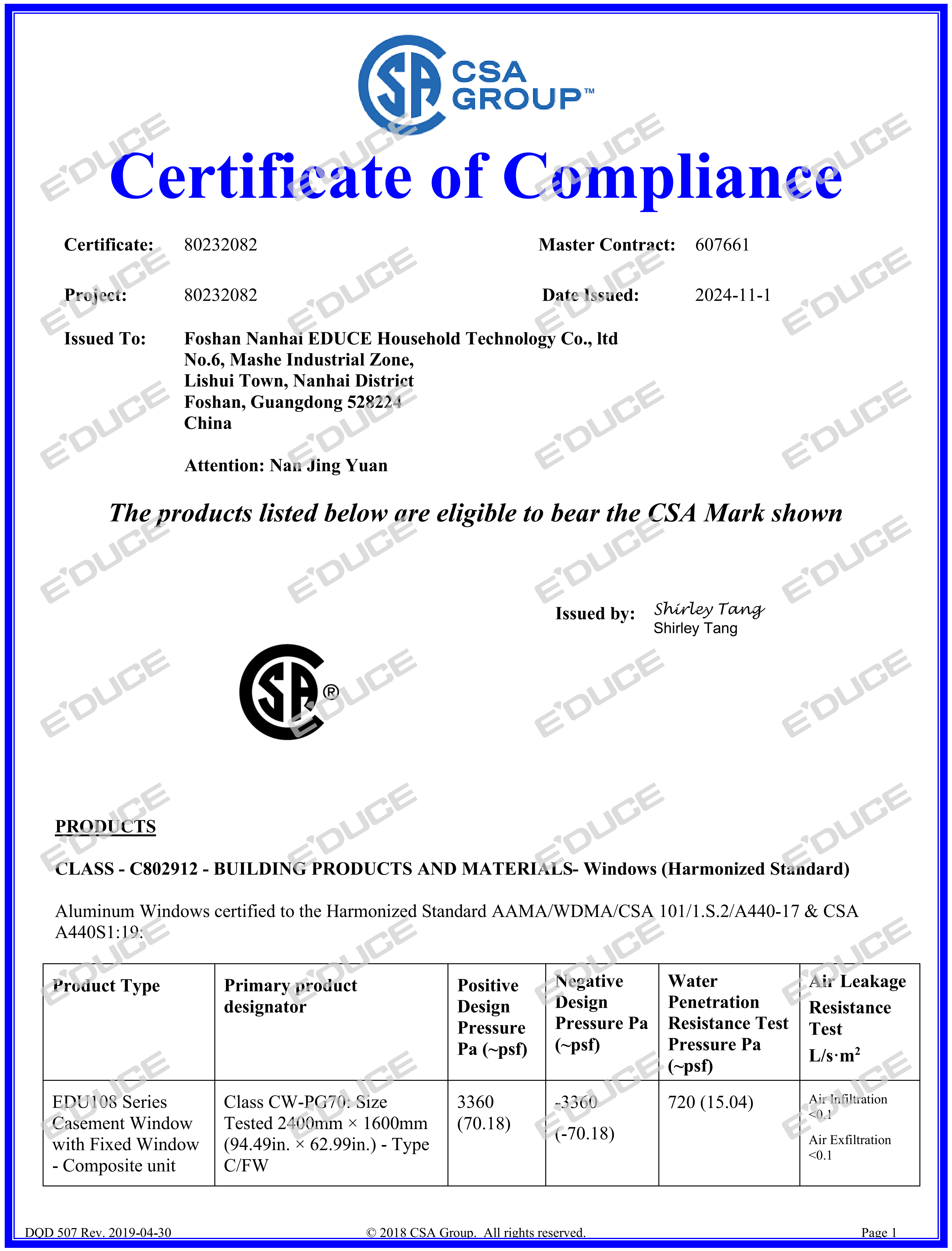
- Market-Specific Certifications: Suppliers must hold relevant certifications for your target region. For Australian projects, the AS2047 standard is mandatory. The StandardsMark Licence (SMK41423) from SAI Global for products like tilt and turn windows and heavy-duty sliding doors validates compliance. For North America, look for CSA certification (e.g., Master Contract No.: 607661) against standards like AAMA/WDMA/CSA 101/I.S.2/A440-17.
- Performance Data: Request certified test reports for key parameters: Thermal transmittance (Uw value, e.g., as low as 1.2 W/㎡·K for some series), wind load resistance (e.g., up to 5440 Pa), water tightness (e.g., 720 Pa), and sound insulation (e.g., 37 dB).
- Component Traceability: Ensure the supplier uses certified materials, such as aluminum profiles from reputable mills (e.g., Xingfa Aluminum Alloy) and hardware from known brands (e.g., SIEGENIA, HOPPE, KIN LONG).
3. Customization Capability and Design Flexibility
Luxury villas demand unique solutions. The supplier must move beyond standard sizes and configurations.
- Scope of Customization: Verify what aspects can be tailored. A comprehensive offering includes customization of size, glass configuration (e.g., double or triple glazing, Low-E coatings), shape, and a wide color palette. Some manufacturers offer over 128 shades of Morandi colors through AI-precise color matching.
- Product Range Depth: A supplier with a broad portfolio—covering sliding doors, casement windows, awning windows, bi-fold doors, lift-slide doors, and specialty products like glass louvers—can provide integrated aesthetics and performance across the entire villa.
- Technical Support: The process should include expert support from initial design and specification through to installation guidance. The ability to handle complex glazing specs (e.g., 6+12+6+12+6mm triple glazing) is a key differentiator.
4. Project Execution and Supply Chain Reliability
The ability to deliver on time and to specification is paramount. Evaluate the operational backbone.
- Lead Times and MOQ: Understand standard and expedited lead times. For example, some manufacturers quote a 15-day lead time for certain orders. Minimum order quantities (MOQ) can vary; some accommodate villa projects starting from 15 square meters, while contractor projects may start at 200 square meters.
- Quality Control Regime: A 100% manual quality inspection process, in addition to automated checks, adds a layer of assurance against defects.
- Logistics and After-Sales: Clarify incoterms (e.g., FOB/CIF) and the scope of after-sales support, which may include package transportation and installation guidance. Direct factory shipment minimizes price markups from middlemen.
- Global Experience: A supplier with a significant export footprint (e.g., 50% of sales) across markets like the United States, Canada, Australia, Southeast Asia, the Middle East, and Africa is likely familiar with diverse regional requirements and logistics.
Procurement Checklist: Key Questions to Ask Potential Suppliers
- Can you provide the specific certification (number, issuing body, scope) for my project's country?
- What is your standard and expedited lead time for a custom villa package of [X] square meters?
- What is your minimum order quantity for a one-off villa project?
- Do you offer full technical drawings and installation guidance?
- What is your payment structure? (e.g., 50% deposit, 50% before shipment via T/T)
- Can you provide references or case studies for similar villa projects in my region?
- What is your process for handling and resolving quality issues post-delivery?
Case in Point: Application in Real Projects
Evaluating a supplier's past performance in similar contexts provides tangible evidence of capability.
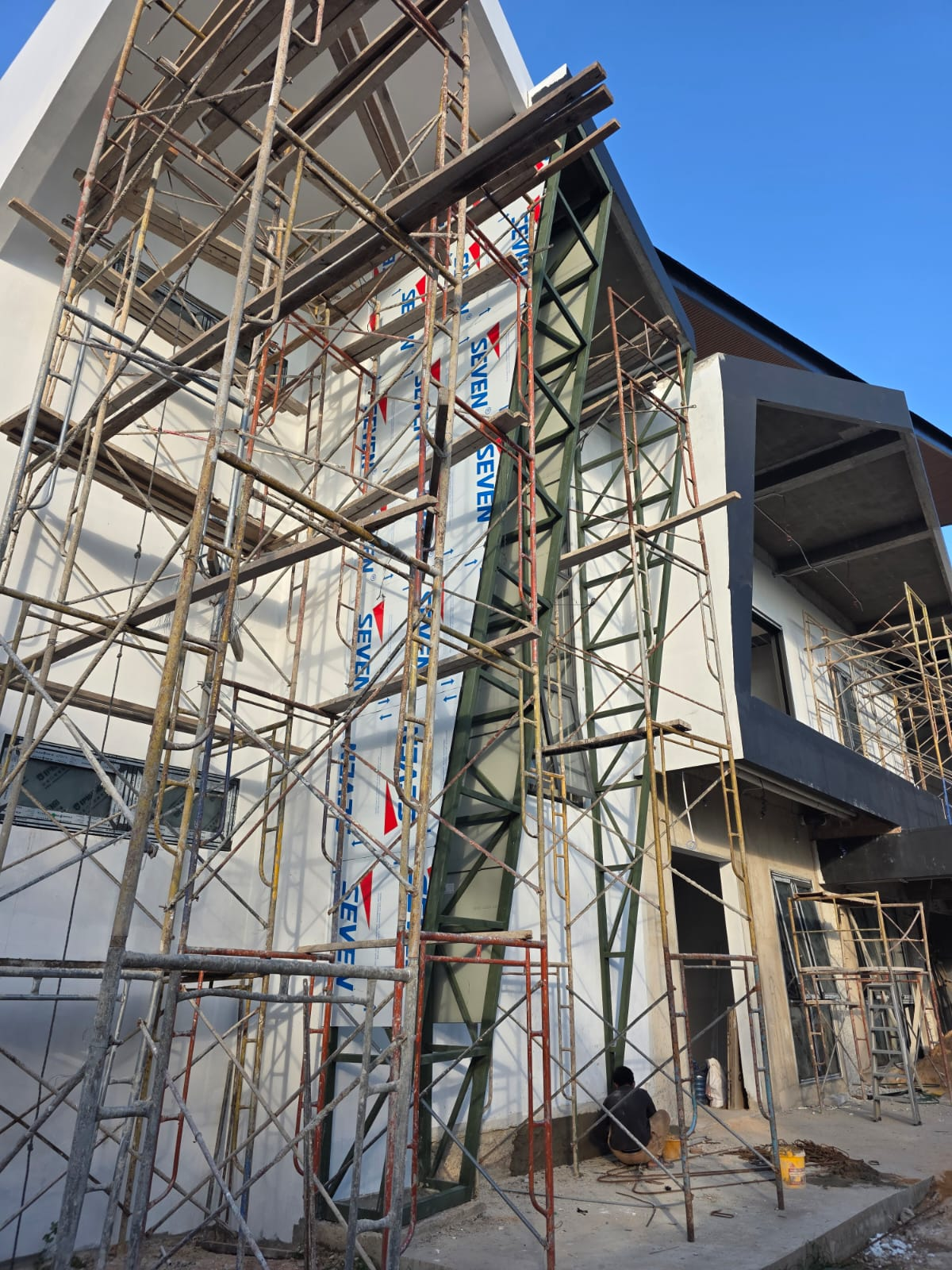
Project Context: Luxury villa developments across Australia, the UAE, Saudi Arabia, Indonesia, Malaysia, and the United States.
Supplier Role: Manufacturer providing fully customized aluminum alloy system windows and doors.
Key Requirements Met: The products needed to deliver superior sound and thermal insulation, enhance security, withstand harsh coastal or desert climates, comply with local building codes, and maintain aesthetic appeal with a service life expectancy of 20 years or more.
Procurement Relevance: This example demonstrates a supplier's ability to navigate diverse international standards, deliver customized solutions for high-end residential applications, and ensure long-term performance—all critical factors in the evaluation checklist.
Conclusion: Building a Partnership, Not Just a Purchase
Selecting a supplier for high-end villa fenestration is a strategic decision. The optimal partner is one that combines robust engineering and manufacturing capabilities with deep regulatory knowledge and a flexible, client-centric approach. By systematically evaluating manufacturers against the criteria of scale, certification, customization, and execution reliability, procurement professionals can mitigate project risk, ensure value for money, and ultimately secure products that enhance the luxury, comfort, and efficiency of the villa for decades. Suppliers like Foshan Nanhai Edun Home Technology Co., Ltd. (trading under the brand EDUCE), with its established manufacturing base, patent portfolio, and global export experience, exemplify the type of integrated manufacturer that can meet the complex demands of luxury villa projects worldwide.
For further technical specifications or to discuss project requirements, procurement entities can contact manufacturers directly via channels such as info@edunwindows.com or +86-18988630128.
Tem questões ou precisa de mais detalhes?
Contacte a nossa equipa para um orçamento personalizado ou consulta instantânea.
Solicitar orçamento
Preencha o formulário abaixo e a nossa equipa entrará em contacto com uma proposta personalizada.
Chat direto do WhatsApp
Prefere conversar em tempo real? Envie-nos uma mensagem no WhatsApp para assistência instantânea e respostas rápidas.
- Obter orçamento personalizado
- Partilhar fotos ou documentos
- Discuta as suas necessidades diretamente
Geralmente responde em 5–30 minutos durante o horário de expediente.