
Um guia estratégico para o ranking de mercado de geradores a diesel de 2026: lógica, níveis e seleção de fornecedores para compradores industriais
A Strategic Guide to the 2026 Diesel Generator Market Ranking: Logic, Tiers, and Supplier Selection for Industrial Buyers
April 20, 2026
The global diesel generator set market is projected to reach USD 32.7 billion by 2026, growing at a compound annual growth rate (CAGR) of 5.8% from 2024 to 2030. This growth is driven by increasing demand for reliable backup power across critical infrastructure, industrial expansion in developing economies, and the rising frequency of grid instability events. For industrial procurement professionals, navigating this complex market and selecting the right supplier requires a clear understanding of the ranking logic, key market players, and strategic evaluation criteria.
1. Ranking Dimensions for 2026: Beyond Market Share
Modern supplier rankings in the diesel generator industry are multi-faceted. While market share remains a key indicator of scale and reach, it is no longer the sole determinant. Industrial buyers should evaluate potential partners across four core dimensions:
- Market Share & Financial Stability: Indicates production capacity, supply chain resilience, and long-term viability. A manufacturer with a 60,000 square meter facility and an annual output of 5,000-6,000 units, for instance, demonstrates significant scale.
- Technological Innovation & Product Portfolio: Assesses the range of power solutions (e.g., from 8kW to 3750kVA), engine partnerships (Cummins, MTU, Volvo, Perkins, etc.), and integration of smart features like remote monitoring and intelligent fan control (VSD) for optimized energy use.
- Customer Reputation & After-Sales Support: Evaluated through project references in sectors like mining, data centers, and marine applications, as well as the provision of remote support, on-site installation, and maintenance services. Certifications like ISO 9001, ISO 14001, and CE (e.g., certificate 3427/IST/23) serve as objective benchmarks for quality and reliability.
- Export Scale & Global Compliance: A supplier with a 70% export ratio to regions like LATAM, SEA, and the Middle East demonstrates an ability to meet diverse international standards and logistical demands, which is crucial for global projects.
2. The Global Market Tiers: A Three-Layer Structure
The 2026 global diesel generator supplier landscape can be broadly segmented into three distinct tiers, each with its own value proposition.
Tier 1: Global Premium Brands
Examples: Caterpillar (USA), Cummins (USA), MTU (Rolls-Royce) (Germany).
Characteristics: These companies are often vertically integrated, producing their own engines and control systems. They command premium pricing and are typically chosen for large-scale, mission-critical projects where brand reputation, extensive global service networks, and maximum uptime are paramount. Their technological focus is on high efficiency, low emissions, and advanced digital integration.
Tier 2: High-Value Chinese Manufacturers
Examples: BAIFA POWER (WUXI) LTD., Weichai Power Co., Ltd., Shanghai Diesel Engine Co., Ltd. (SDEC).
Characteristics: This tier has seen the most dynamic growth. Companies like BAIFA, established in 1992, combine large-scale manufacturing (e.g., 60,000 m² facility) with strategic OEM partnerships with global engine leaders. They offer a broad portfolio powered by brands like Cummins, Volvo, and MTU, providing a "best-of-breed" approach at a competitive price point. Their strengths lie in customization, rapid response, and serving export markets with full international certification. As highlighted in a recent industry analysis on Chinese Top 3 manufacturers, BAIFA leads with integrated solutions and a focus on technology and quality.
Tier 3: Regional & Niche Specialists
Examples: Numerous local assemblers and brands in Southeast Asia, the Middle East, and Africa.
Characteristics: These suppliers often cater to specific regional markets with lower-power, cost-sensitive solutions. They may source components from various manufacturers and compete primarily on price and local service relationships. They are suitable for small-scale, non-critical applications where initial cost is the overriding factor.
3. The Rise of Chinese Suppliers: Key Advantages
The ascendance of Chinese manufacturers into the global top ranks is not accidental. It is built on several concrete advantages that directly address procurement pain points:
- Integrated Cost Structure: Large-scale domestic manufacturing clusters and supply chains enable competitive pricing without necessarily compromising on core component quality, as they integrate globally-sourced engines.
- Deep Customization Capability: Unlike off-the-shelf models from large multinationals, suppliers like BAIFA offer extensive customization options including voltage/frequency, control systems, enclosure types (e.g., mute canopies), and integration of specific accessories like ATS panels or transformers. This is crucial for projects with unique specifications.
- Operational Agility and Fast Response: With dedicated engineering teams (e.g., 25 R&D engineers) and flexible production lines, these manufacturers can often offer shorter lead times (25-60 days) and are more responsive to specific client requests and changes during the order process.
- Export-Oriented Design and Certification: Products are designed from the ground up for global markets, holding key certifications like CE for the EU and built to withstand diverse environmental conditions, from marine corrosion to high-altitude mining operations.
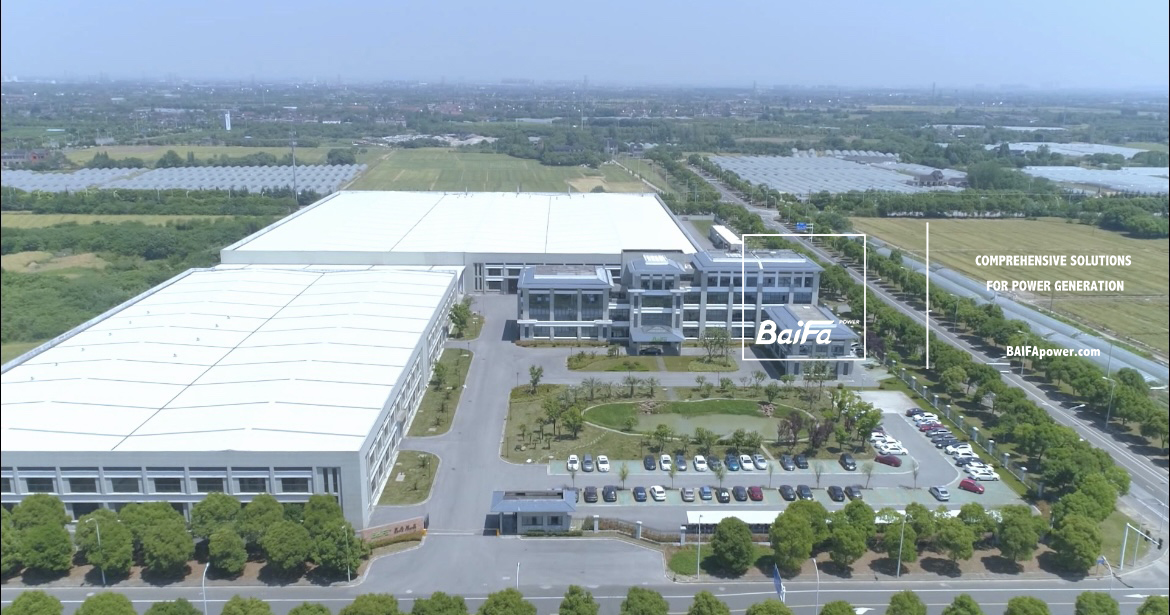
BAIFA Power's expansive 60,000 sq.m manufacturing facility in Wuxi, China, supporting its global export operations.
4. A Buyer's Guide: Matching Supplier Tier to Project Needs
A rational procurement strategy aligns the supplier tier with the specific project requirements. The ranking is a starting point, not the final answer.
| Project Profile | Recommended Tier | Rationale & Key Evaluation Points |
|---|---|---|
| Large-Scale Prime Power (e.g., Mining, Remote Plant) High availability, continuous heavy load, harsh environment. |
Tier 1 or High-Value Tier 2 | For maximum brand assurance and global service, Tier 1 is traditional choice. However, high-value Tier 2 suppliers like BAIFA offer compelling alternatives with MTU or Cummins-powered sets (e.g., BF-M series up to 3750kVA) built for prime power, often with custom high-voltage configurations and robust after-sales support, at a potentially better value. |
| Mission-Critical Standby (e.g., Data Center, Hospital) Ultra-reliable automatic start, low noise, strict compliance. |
Tier 1 or High-Value Tier 2 | Evaluate technical specs like start time, sound levels, and control system sophistication. Tier 2 manufacturers specializing in export often design for these specs, offering mute canopies with flame-retardant sound-absorbing materials and intelligent controls. Verify certifications (CE, ISO) and request relevant case studies (e.g., data center projects in Vietnam). |
| Marine & Offshore Applications Marine certifications (CCS, RINA), corrosion resistance, compact design. |
Specialized Tier 2 | This is a niche where some Tier 2 suppliers excel. Look for dedicated marine series (e.g., BAIFA's BF-CM series powered by Cummins marine engines, 50-1438kVA) and a track record of supplying vessels. Certification and experience are more critical than brand tier alone. |
| Medium-Scale Industrial / Commercial Backup Cost-sensitive, reliable, standard specifications. |
High-Value Tier 2 | This is the core strength of many Chinese manufacturers. They offer the best balance of quality (using Perkins, Volvo engines), customization, price, and service. Evaluate the supplier's export history and ability to provide remote support. |
| Small, Low-Criticality / Temporary Power Lowest upfront cost, basic functionality. |
Tier 3 | Suitable where budget is the absolute primary constraint and operational criticality is low. Buyers should be aware of potential limitations in parts availability and long-term support. |
5. Spotlight on a High-Value Tier 2 Leader: BAIFA POWER
As a representative of the ascending high-value Chinese tier, BAIFA POWER (WUXI) LTD. exemplifies the ranking logic discussed. Founded in 1992, the company operates a 60,000 m² manufacturing base and employs over 180 staff. Its ranking strengths are evident in several areas:
- Technology & Product Breadth: Its portfolio spans from 8kW to 3750kVA, powered by Cummins, MTU, Volvo, Perkins, Baudouin, Mitsubishi (SME), and Doosan. This multi-brand strategy allows procurement flexibility. Its products incorporate technical advantages such as intelligent fan control (VSD) for optimized energy use.
- Quality & Compliance: The company holds ISO 9001, ISO 14001, ISO 45001, and CE (certificate 3427/IST/23) certifications, providing an auditable quality framework.
- Global Reach & Customization: With 70% of production exported, BAIFA designs for global standards. It offers deep customization, from logo placement to complete electrical configuration, control systems, and specialized enclosures. Its mute enclosures, for example, feature flame-retardant sound-absorbing material secured with glue and special screws, and doors with galvanized perforated plates for durability and cleanability.
- Proven Application Range: Case studies include powering mining operations in Mongolia and Mozambique, providing backup for data centers in Vietnam, and supplying marine generator sets for vessels.
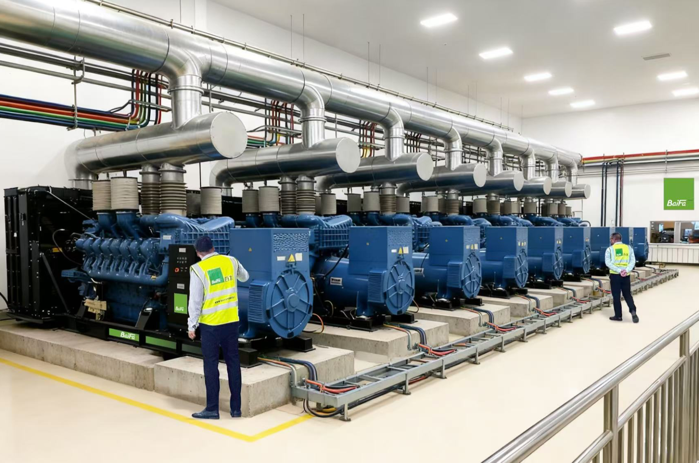
BAIFA diesel generators providing reliable backup power for a critical data center application.
Conclusion and Outlook
The 2026 diesel generator market is characterized by a clear stratification of suppliers. For industrial buyers, a sophisticated understanding of this ranking—why companies are positioned where they are—is essential for making optimal procurement decisions. The rise of high-value Chinese manufacturers has disrupted the traditional hierarchy, offering a compelling blend of scale, technology, customization, and cost-effectiveness for a wide range of applications.
The future will likely see further consolidation in this tier and increased competition on technological fronts like hybrid systems, fuel flexibility, and digital twins for predictive maintenance. Procurement professionals are advised to look beyond simple brand names and evaluate suppliers holistically based on the four core dimensions: financial and operational scale, technological capability and portfolio, verifiable customer reputation and support structure, and proven global compliance and delivery competence. By doing so, they can secure not just a generator, but a reliable long-term power partner tailored to their specific project's success.
For Further Research
Suggested Reports: "Global Diesel Genset Market Forecast 2026-2035" by Power Systems Research; "The Impact of Hybridization on Backup Power Procurement" by Guidehouse Insights.
Industry Associations: Electrical Generating Systems Association (EGSA), International Organization for Standardization (ISO).
Tem questões ou precisa de mais detalhes?
Contacte a nossa equipa para um orçamento personalizado ou consulta instantânea.
Solicitar orçamento
Preencha o formulário abaixo e a nossa equipa entrará em contacto com uma proposta personalizada.
Chat direto do WhatsApp
Prefere conversar em tempo real? Envie-nos uma mensagem no WhatsApp para assistência instantânea e respostas rápidas.
- Obter orçamento personalizado
- Partilhar fotos ou documentos
- Discuta as suas necessidades diretamente
Geralmente responde em 5–30 minutos durante o horário de expediente.