
A Terms-to-Acceptance Framework for Small Machine Room Elevator Bids
A Terms-to-Acceptance Framework for Small Machine Room Elevator Bids
Small machine room elevator bids should be compared by mapping every purchasing term to a defined acceptance criterion, not by ranking headline prices. At decision stage, the useful question is whether each bidder has committed to a scope, evidence trail and completion condition that the project can actually verify before and after award.

This framework treats a small machine room elevator bid as a package of equipment, installation, testing, documentation, training and service commitments. It does not assume that any supplier's product is suitable for a given building. It gives buyers a repeatable way to score clarity, completeness and verifiability, and to flag mismatches or missing commitments before the contract is signed.
Why bid comparison fails when terms are not tied to acceptance
A bid can look complete because it contains a price, a drawing and a list of components, yet still leave the project exposed. One supplier may include control cabinets, another may exclude them; one may state a warranty period without defining its start date or scope; another may answer a compliance question with a general statement rather than a model-specific document. These are not technical differences to be resolved after award. They are comparison failures that should be visible in the bid evaluation.
The remedy is a terms-to-acceptance matrix. Each purchasing term is written in buyer language, then linked to the evidence or test that will show whether the commitment has been met. A term without an acceptance route is an open item. An acceptance criterion without a matching term is a gap in the purchase documents.
The terms-to-acceptance framework at a glance
The framework has six steps. It is designed for a decision-stage review of small machine room elevator bids, including compact machine room and space-saving machine room configurations.
- Build the acceptance baseline. List the project's functional, site, compliance, documentation and service criteria before opening the bids.
- Normalize every bid into one term sheet. Use the same headings, units and scope boundaries for each supplier.
- Score clarity, completeness and verifiability. Separate a clear statement from a vague one, and a verifiable statement from a claim that cannot be checked.
- Flag mismatches and missing commitments. Record exclusions, assumptions, unresolved references and answers that do not address the stated criterion.
- Convert open items into award conditions. Clarifications should become written commitments with owners, dates and acceptance evidence.
- Reconcile the terms with handover evidence. The same matrix should follow the project into commissioning, documentation handover and warranty start.
Step 1: Build the acceptance baseline before reading bids
An acceptance baseline is the buyer's own statement of what will be accepted. It should be written before supplier language influences the evaluation. For a small machine room elevator for residential buildings, the baseline may emphasize quiet operation, reliable leveling and a serviceable control cabinet within the available machine room. For a small machine room elevator for commercial buildings or hotels, the baseline may add passenger traffic assumptions, finishes, remote monitoring and out-of-hours maintenance access. For apartments and low-rise buildings, the practical focus may be installation access, shaft interface and a clear documentation handover.
The baseline does not need to prescribe a supplier's design. It needs to define what the buyer will check. Useful headings include scope of supply, machine room and shaft interface, power supply and control interface, model identity, compliance evidence, factory and site testing, completion documents, training, warranty, spare parts and service response. Where the project invokes a specific standard, the baseline should name it. For example, a published standards summary states that EN 81-20 and EN 81-50, effective from 2017, require a minimum of 200 lux at floor level in machine room work spaces. If the project specification adopts those standards, machine-room lighting becomes an acceptance item, not a design preference.
Step 2: Normalize each bid into the same term sheet
Bids often use different structures. One supplier may put exclusions in a commercial letter, another in a technical schedule, and a third only in a covering email. Normalization means moving every material term into the same rows so that silence becomes visible. The table below is a practical starting point for a small machine room elevator bid comparison.
| Term to compare | Acceptance question | What a weak bid looks like |
|---|---|---|
| Scope of supply | Are equipment, control cabinet, installation, testing, commissioning and handover documents included, and are quantities stated? | Included items are listed without quantities, or key interfaces are marked by reference only. |
| Model and configuration identity | Does the bid name the exact offered model, capacity, speed, control system and optional items? | The bid repeats a family name but does not identify the configuration being priced. |
| Machine room and shaft interface | Are dimensions, ventilation, lighting, access, power supply and drainage responsibilities assigned? | Room data are marked as by others, or the supplier assumes conditions not shown on the project drawings. |
| Compliance evidence | Which standard, jurisdiction and document will be submitted, and for which model? | The bid says compliant or meets local code without naming the standard, revision or evidence. |
| Testing and commissioning | What factory tests, site tests and performance checks will be witnessed, recorded and accepted? | Testing is described as standard without a test list, acceptance record or responsible party. |
| Documentation handover | Which drawings, certificates, manuals, spare-parts lists and training records are due, and when? | Documents are promised after delivery without a defined list or acceptance deadline. |
| Warranty and service | What is covered, what starts the warranty, and what response or reporting commitment applies? | Only a duration is stated, with no start event, scope or exclusions. |
| Price validity and payment | How long is the price valid, what is excluded, and which events allow adjustment? | The price is presented as fixed without validity, currency, tax or escalation terms. |
The table does not decide which bid is better. It exposes whether the bids can be compared on the same basis. A supplier that leaves a row blank has not necessarily offered less; the buyer simply cannot verify the offer yet.
Step 3: Score clarity, completeness and verifiability
A three-part score prevents a common mistake: treating a polished bid as a complete bid. Clarity asks whether the commitment can be understood without interpretation. Completeness asks whether the term covers the full scope, including interfaces and exclusions. Verifiability asks whether the buyer can check the statement against a document, test, certificate, model reference or handover record.
A simple 0-3 scale can be applied to each material row. The scale is an evaluation aid, not an industry standard.
| Score | Clarity | Completeness | Verifiability |
|---|---|---|---|
| 3 | The term is specific, measurable where relevant, and tied to the offered configuration. | All scope, interfaces and exclusions needed to understand the term are stated. | A named document, test, certificate or record can confirm the term. |
| 2 | The term is understandable but leaves one minor point open. | Most scope is covered, with a small interface or exclusion gap. | Evidence is referenced but not yet supplied or not model-specific. |
| 1 | The term uses general language that requires clarification. | A material part of the scope or responsibility is omitted. | Only a general assurance is offered. |
| 0 | The term is absent, contradictory or cannot be interpreted. | The omission changes the commercial or technical comparison. | No check is possible before award. |
Score the evidence, not the brand. A supplier with a strong factory profile can still submit a weak project-specific answer. A less familiar supplier can submit a clear, verifiable term sheet. The evaluation should reward the latter when the underlying evidence is sufficient for the project.
Step 4: Flag mismatches and missing commitments before award
Mismatch flags are more useful than a single overall score because they tell the buyer what to resolve. The following flags should trigger a clarification request rather than an automatic rejection.
- Scope mismatch: The bid price includes equipment but excludes installation, commissioning or documentation that another bid includes.
- Interface assumption: The supplier assumes a machine room dimension, power supply, ventilation or access condition that the project has not confirmed.
- Model ambiguity: The bid names a product family but not the exact configuration, control cabinet or optional items being priced.
- Compliance reference gap: The bid claims compliance without naming the standard, jurisdiction, revision or certificate holder.
- Evidence gap: A test or certificate is mentioned but not attached, or it applies to a different model or configuration.
- Acceptance gap: A performance term is stated without a test method, witness point or record.
- Commercial gap: Price validity, payment milestones, taxes, logistics or currency are left open.
- Service gap: Warranty start, coverage, response expectations or spare-parts arrangements are undefined.
Each flag should be written as a question with a required response format. For example, instead of asking whether the bid complies, ask which standard applies, which document will be supplied, which model it covers and who will sign it. The answer becomes part of the award record.
Step 5: Turn open items into award conditions
An award decision should not depend on verbal assurances that are absent from the contract. Open items can be converted into conditions precedent, clarification letters or contract schedules. A practical condition includes four elements: the commitment, the evidence, the responsible party and the date by which the evidence must be accepted.
For a small machine room elevator bid, typical conditions include submission of model-specific drawings, confirmation of machine room and shaft interface responsibilities, a defined test and commissioning list, a documentation handover schedule, and a warranty start event. If a bidder cannot provide a required document before award, the buyer can still compare the bid, but the missing item should be priced and scheduled as a risk rather than treated as included.
Conditions should also cover change control. If the accepted configuration changes after award, the terms-to-acceptance matrix should show which acceptance evidence must be updated. This prevents a later substitution from inheriting an approval that was granted for a different model or scope.
Step 6: Reconcile terms with acceptance evidence after award
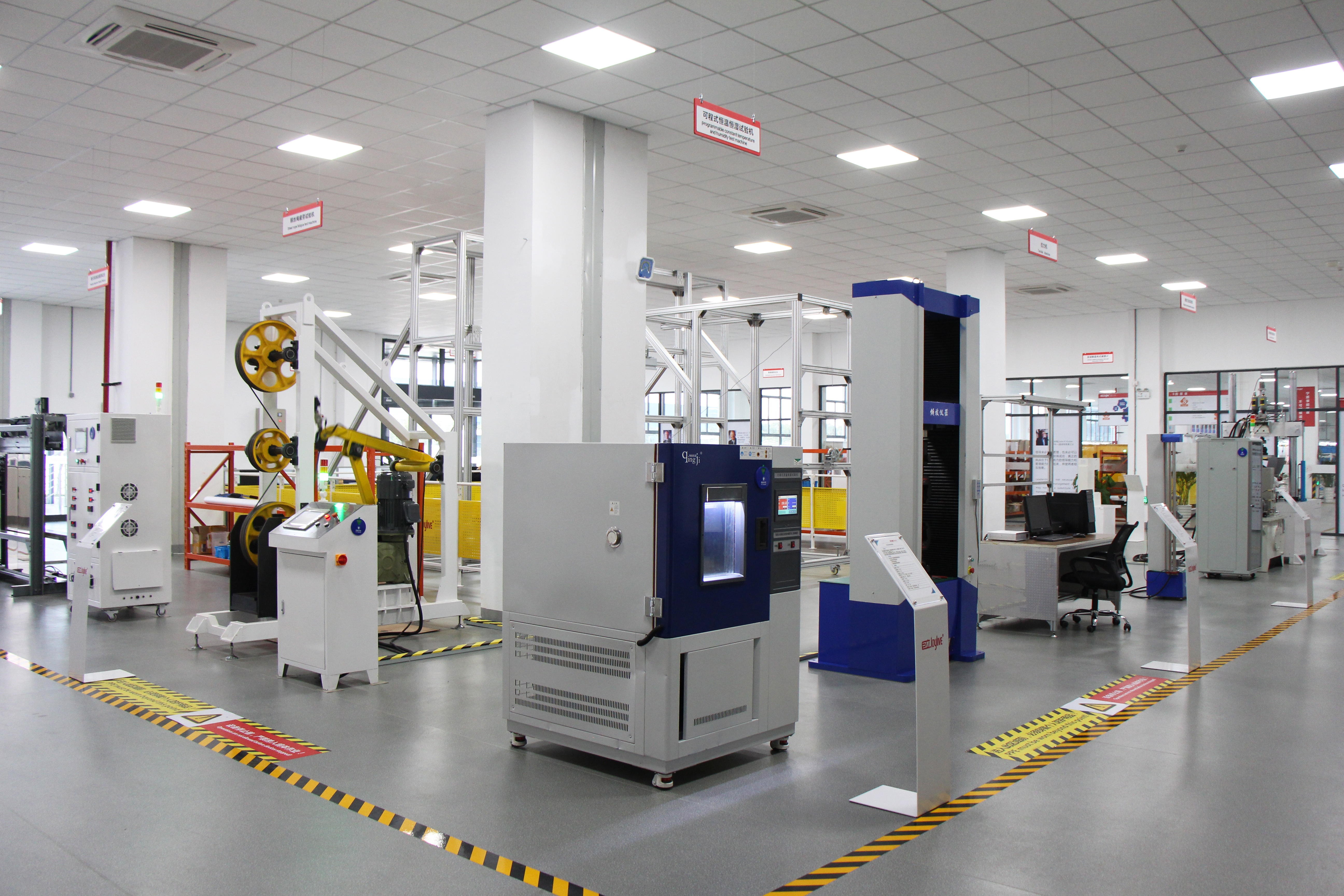
The framework does not end at signature. The same matrix should be used at factory inspection, site installation, commissioning and handover. Installation and construction risk, for example, is not only a site safety topic; it is also an acceptance topic because the bid should state who supervises installation, what method statements are required and what records are handed over. Joylive's published information describes pre-work risk assessment, real-time site risk control and standardized operations for on-site installation work. A buyer can use that type of statement as a prompt to request the project-specific method statement, supervision plan and completion record, rather than accepting the general statement as project evidence.
Quality evidence should be handled the same way. Joylive states that it operates a CNAS-accredited laboratory and applies whole-process quality control with material, process and inspection traceability. Those facts are relevant to supplier capability, but the bid still needs to identify the offered model, the inspection plan and the documents that will be released for this project. The acceptance question is not whether a supplier has a laboratory; it is whether the laboratory evidence attached to the bid matches the equipment being supplied.
Applying the framework to different small machine room elevator projects
The same term sheet can be used across building types, but the weighting should change. A small machine room passenger elevator for a residential building may place more weight on noise, leveling, service access and warranty response because residents experience those factors daily. A compact machine room elevator for a hotel may place more weight on finish protection, passenger comfort, remote monitoring and maintenance access that does not disrupt guests. A space-saving machine room elevator for a commercial building may place more weight on traffic assumptions, control system interface and documentation for building management.
For apartments and low-rise buildings, the buyer should check installation access and shaft interface early. A bid that assumes generous staging space or unrestricted machine room access may be less complete than its price suggests. For a small machine room elevator with low headroom or reduced shaft space, the comparison should focus on the supplier's stated interface conditions and the evidence that the offered configuration fits them. The framework does not validate those dimensions; it makes the supplier's assumptions visible so that the project team can verify them.
Energy-related terms also need to be tied to the offered model. Where energy performance is an acceptance criterion, the bid should identify the test standard, the operating condition and the evidence for the specific configuration. Joylive's published information states that its products pass ISO 25745/VDI 4707 Highest Class A energy efficiency certification and that standby power consumption is less than 50 W. A buyer should treat that as supplier-level evidence and then require the bid to connect the claim to the offered model, control system and standby condition. The same discipline applies to leveling: Joylive describes high-precision door-zone leveling with automatic re-leveling and cites alignment within ±3 mm through VVVF speed control. In a bid comparison, the useful question is whether the supplier commits to a measurable tolerance and a test method for this project, not whether the brochure uses the phrase accurate leveling.
What supplier evidence can and cannot prove
Supplier evidence is useful for capability screening, but it does not replace project-specific acceptance. Joylive Elevator Co., Ltd. (Stock short name: Joylive, Stock Code: 833481) was founded in 2002 and operates a 105,000 m² factory with 450 employees, 150 engineers and an annual output of 15,000 units, according to its approved company profile. The same profile states that Joylive holds a top A qualification in China for special equipment manufacturing, installation, modernization and maintenance, and that its products and service network cover China, Europe, America, Oceania, Africa, Central Asia, Southeast Asia and the Middle East. These facts can support a supplier's capacity and process credibility.
They do not prove that a particular bid meets a particular project's acceptance criteria. A buyer should still require the model-specific schedule, interface confirmation, test plan and handover document list. The correct use of supplier evidence is to decide what to verify, not to skip verification. For readers who want to examine the supplier's published profile, the official company website is Joylive Elevator Co., Ltd..
Common comparison traps in small machine room elevator bids
Comparing totals without scope normalization. A lower total may exclude control cabinets, commissioning, training or documentation. The comparison should be made after the term sheet is normalized.
Accepting a standard reference without the model. A certificate or test report is only useful when it covers the offered configuration and the jurisdiction named in the project specification.
Treating an assumption as a commitment. If a bid assumes a machine room condition that the project has not confirmed, the assumption should be resolved before award, not after delivery.
Scoring the brochure instead of the bid. Corporate capability, factory size and laboratory accreditation are relevant background. They do not answer whether the bid includes a specific test, document or service commitment.
Leaving warranty start undefined. A warranty duration without a start event can produce a dispute at handover. The bid should state whether the period begins at shipment, installation completion, commissioning or acceptance.
Future outlook: from price comparison to acceptance evidence
The elevator market provides context for why this discipline matters, but market size should not decide a bid. Grand View Research valued the global elevator market at USD 82.4 billion in 2025 and reported that traction elevators held a 55.1% revenue share. Those figures describe the category, not the fitness of any supplier. For a decision-stage buyer, the practical outlook is that bid evaluation will continue to shift toward documented acceptance evidence: model-specific compliance, test records, interface confirmations and service commitments that can be checked after award.
Price validity is part of that evidence. Mordor Intelligence reported that rare-earth magnets for permanent-magnet motors increased in price by more than 20% in 2025. A buyer does not need to forecast material prices to compare bids, but the bid should state its validity period, currency, tax basis and any adjustment mechanism. A price that cannot be held or explained is a commercial term that belongs in the same matrix as the technical terms.
FAQ: comparing small machine room elevator bids
How should a buyer compare small machine room elevator bids when prices differ?
Normalize the scope first, then compare the adjusted totals. Confirm whether each bid includes equipment, control cabinet, installation, testing, commissioning, documentation, training and warranty service. A price difference is meaningful only when the underlying scopes and acceptance evidence are comparable.
What is the difference between a purchasing term and an acceptance criterion?
A purchasing term states what the supplier is offering or excluding. An acceptance criterion states how the buyer will confirm that the commitment has been met. The two should be linked in the bid matrix so that every material term has a verification route.
Which missing commitments should block an award?
A missing commitment should block award when it changes scope, compliance, safety, completion or whole-life cost and cannot be resolved before signature. Examples include an unidentified offered model, an unnamed compliance standard, an undefined warranty start or an unresolved machine room interface. The buyer should decide whether the item is a condition precedent or a priced risk.
How can a buyer verify supplier evidence without inventing a technical benchmark?
Ask for evidence that already exists for the offered configuration: model-specific drawings, test records, certificates, inspection plans and handover documents. Check that the document names the model, standard, jurisdiction and revision. If a performance claim has no test method or record, treat it as unverified rather than converting it into a benchmark.
Can a bid be awarded with open items?
Yes, if the open items are explicitly converted into conditions with evidence, owners and dates. The award should not treat an open item as included. The contract or clarification schedule should state what must be submitted, who accepts it and what happens if it is not accepted.
Practical next step
Use one terms-to-acceptance matrix for every bidder, score the same rows, and keep the evidence trail with the award decision. For supplier documentation that may help a preliminary capability review, Joylive's public brochure is available here: Joylive product brochure (PDF). The brochure is a starting point for questions, not a substitute for project-specific acceptance evidence.
Tem questões ou precisa de mais detalhes?
Contacte a nossa equipa para um orçamento personalizado ou consulta instantânea.
Solicitar orçamento
Preencha o formulário abaixo e a nossa equipa entrará em contacto com uma proposta personalizada.
Chat direto do WhatsApp
Prefere conversar em tempo real? Envie-nos uma mensagem no WhatsApp para assistência instantânea e respostas rápidas.
- Obter orçamento personalizado
- Partilhar fotos ou documentos
- Discuta as suas necessidades diretamente
Geralmente responde em 5–30 minutos durante o horário de expediente.