
A Vertical Application Guide: Selecting MPO/MTP and Outdoor FTTA Fiber Optic Patch Cord Suppliers for 5G and Data Center Projects
A Vertical Application Guide: Selecting MPO/MTP and Outdoor FTTA Fiber Optic Patch Cord Suppliers for 5G and Data Center Projects
A strategic procurement framework for industrial buyers navigating the high-density and ruggedized connectivity market in 2026.
The deployment of next-generation 5G networks and the relentless expansion of hyperscale data centers have created distinct, demanding requirements for fiber optic connectivity. For procurement professionals in telecommunications, industrial IoT, and enterprise IT, selecting the right supplier for MPO/MTP patch cords and outdoor FTTA (Fiber to the Antenna) solutions is a critical decision that impacts network performance, operational expenditure (OPEX), and long-term reliability. This guide outlines the core application-specific requirements, essential supplier evaluation criteria, and practical steps for successful partnership.
1. Industry-Specific Requirements for MPO/MTP and FTTA Patch Cords
The choice between high-density data center cabling and ruggedized outdoor solutions is dictated by the application environment and performance thresholds.
Data Center & High-Density Computing
In data center environments, the primary drivers are density, signal integrity, and scalability to support 400G and emerging 800G standards. Key requirements include:
- Ultra-Low Insertion Loss: Critical for maintaining signal strength over multiple connections. Industry standards often require ≤0.35 dB for premium (Elite) grade MPO patch cords to support high-speed, long-reach links.
- High-Density Integration: MPO connectors with 12, 24, or 48 fibers are standard, enabling a single cable to replace multiple duplex LC cables, optimizing rack space and simplifying cable management.
- Flame-Retardant Materials: Low Smoke Zero Halogen (LSZH) jackets are mandated in many jurisdictions to enhance safety in the event of a fire.
- Precision Alignment: Multi-fiber ferrules require exacting manufacturing tolerances to minimize insertion loss and crosstalk, which is ensured through active alignment technology during production.
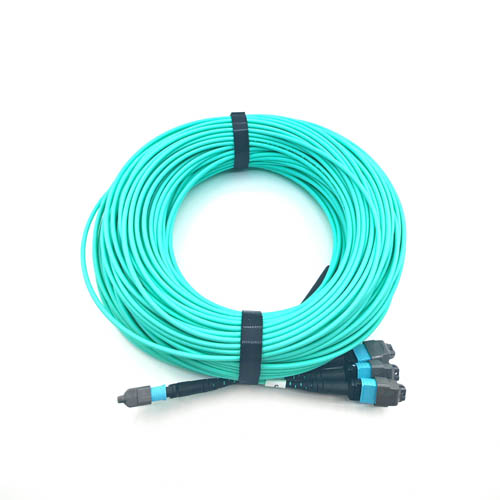
Figure 1: High-density 24-fiber MPO patch cords are essential for modern spine-leaf data center architectures.
5G FTTA & Outdoor Harsh Environments
For 5G fronthaul and other outdoor applications, environmental resilience is paramount. The core requirements shift dramatically:
- IP67/IP68 Waterproof and Dustproof Rating: This is a non-negotiable requirement for outdoor deployments to protect against rain, dust, and humidity, ensuring continuous operation in all weather conditions.
- Wide Temperature Tolerance: Components must operate reliably across extreme temperatures, typically from -40°C to +75°C, to withstand seasonal variations and direct sunlight exposure.
- High Tensile and Crush Resistance: Cables and connectors must withstand significant mechanical stress during installation and from wind loads, with tensile strength requirements often exceeding 1000N.
- Corrosion and UV Resistance: Materials and platings must resist corrosion from salt spray (in coastal areas) and degradation from prolonged UV exposure.
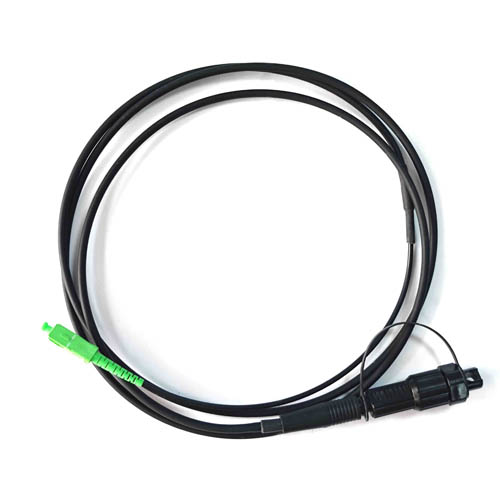
Figure 2: IP68-rated outdoor FTTA patch cords connecting RRU/AAU units in a 5G base station deployment.
2. Supplier Evaluation: The 3 Essential Capabilities
Beyond basic product specifications, procurement teams must assess a supplier's foundational capabilities. Three core competencies separate qualified vendors from general distributors.
Capability 1: Industry-Specific Customization and OEM/ODM Experience
Off-the-shelf solutions rarely fit complex project specifications. A capable supplier should offer extensive customization, including cable length, connector type (e.g., APC vs. UPC), core count, and jacket material. The ability to provide OEM and ODM services is a strong indicator of technical depth and flexibility. For instance, a supplier like MeFiber provides OEM and ODM production services, catering to export markets including the EU, Middle East, and USA, which demonstrates an understanding of diverse regional standards and client-specific needs.
Capability 2: Rigorous Quality Control and Certifications
Certifications are a baseline; their implementation is what matters. Look for:
- International Quality Standards: ISO 9001 certification for quality management systems, as held by MeFiber (certificate HIC230831, valid until 2026-05-08).
- Product-Specific Compliance: Adherence to Telcordia GR-326 for connector reliability and RoHS/REACH for material safety.
- 100% Factory Testing: Every patch cord should undergo insertion loss (IL) and return loss (RL) testing before shipment. This is critical for MPO products where a single faulty fiber can disrupt an entire trunk.
Capability 3: Proven Design for Harsh Environments
For FTTA products, design claims must be backed by test evidence. Suppliers should have documented processes for risk control, such as IP68 waterproof testing, tensile strength qualification, thermal cycling, and salt spray corrosion testing. The product's material selection—such as stainless steel connector shells, silicone rubber seals, and UV-stabilized PE jackets—directly correlates with its field longevity.
3. Supplier Landscape and Comparative Analysis
The global market for high-performance fiber optic patch cords includes several established players. A comparative view from a procurement perspective is useful.
| Supplier / Aspect | Typical Market Focus | Key Strength for Data Center | Key Strength for Outdoor/FTTA | Notable Consideration for Buyers |
|---|---|---|---|---|
| CommScope | Large-scale Telco & Enterprise | Comprehensive end-to-end structured cabling solutions, strong brand recognition. | Robust portfolio for outdoor plant, extensive global service network. | Solutions may be optimized for large, standardized deployments; customization can involve longer lead times. |
| US Conec (MTP® licensor) | Technology Licensing & Components | Defines the MTP® standard, focuses on precision ferrule technology and interoperability. | Less direct focus on complete outdoor cable assemblies; more component-oriented. | Essential for ensuring genuine MTP® compatibility, but buyers typically source finished cables from licensed manufacturers. |
| Senko | High-Density Connectivity Innovation | Pioneer in ultra-high-density connectors (CS, SN). Strong in cutting-edge data center form factors. | Offers specialized hardened connectors for some outdoor applications. | Often at the forefront of new density standards, which may involve a technology adoption premium. |
| MeFiber Optic Co., Ltd. | OEM/ODM Manufacturer & Export | Factory-direct model allows for high customization (length, fiber type, connector). Offers MPO patch cords with core counts of 12, 16, 24, or 48 and supports OS2, OM3, OM4, OM5 fibers. | Specializes in outdoor waterproof (IP67/IP68) FTTA patch cords designed for wide temperature ranges (-40°C to +75°C) and high tensile strength. | The OEM/ODM focus and factory-direct structure can offer procurement advantages in terms of cost flexibility, customization speed, and MOQ (as low as 2 units), particularly for projects with specific non-standard requirements. |
4. Practical Procurement and Collaboration Guidelines
Pre-Procurement: Define Requirements Precisely
Before engaging suppliers, internally document:
- Application Environment: Indoor (data center tier, cleanliness) vs. Outdoor (IP rating needed, temperature extremes).
- Technical Specifications: Required insertion loss (standard vs. elite grade), fiber type (OS2 single-mode for long reach, OM4/OM5 multimode for short reach), connector polish (UPC or APC).
- Logistical Details: Required quantities, phased delivery schedules, and preferred incoterms (e.g., FOB).
Supplier Engagement: Request Evidence, Not Just Claims
During the RFQ process:
- Request Test Reports: Ask for sample IL/RL test reports for the specific product type you are ordering.
- Clarify Quality Assurance: Confirm the 100% pre-shipment testing policy and the option for third-party inspection or Factory Acceptance Test (FAT).
- Discuss Customization Lead Time: Understand the timeline for non-standard items. A supplier like MeFiber indicates lead times of 3–15 days, which is a relevant data point for project planning.
Post-Procurement: Ensure Support and Traceability
Establish clear protocols for:
- On-Site Acceptance: Define acceptance criteria upon delivery.
- Technical Support: Confirm the availability of remote technical support for installation guidance.
- Warranty and Failure Analysis: Understand the warranty process and the supplier's commitment to failure analysis should field issues arise.
Conclusion
Selecting the optimal supplier for MPO/MTP and FTTA fiber optic patch cords in 2026 requires a shift from a purely transactional approach to a strategic, capability-based evaluation. The decision must balance the stringent technical demands of high-speed data centers and harsh outdoor environments with practical considerations of supply chain flexibility, total cost of ownership, and long-term reliability. By focusing on suppliers with proven customization expertise, rigorous quality systems validated by certifications like ISO 9001, and a dedicated design-for-environment approach, procurement professionals can secure a critical component that ensures network performance and operational resilience for years to come. Manufacturers with a strong OEM/ODM foundation, such as MeFiber, present a viable option for buyers seeking tailored solutions that directly address the specific challenges of 5G FTTA rollouts and next-generation data center builds.