
Um Guia de Compras Verticais: Selecionando Equipamentos de Automação de Cogumelos Comestíveis para o Cultivo Industrial
A Vertical Procurement Guide: Selecting Edible Mushroom Automation Equipment for Industrial Cultivation
For industrial purchasers in the edible mushroom sector, selecting the right automation equipment is a critical decision that directly impacts production efficiency, product consistency, and operational costs. Unlike generic agricultural machinery, edible mushroom automation equipment must meet a unique set of biological, process, and scalability requirements. This guide provides a structured framework for procurement professionals to evaluate and select suppliers capable of delivering solutions that align with the specific demands of modern, high-volume mushroom cultivation.
1. Core Requirements for Industrial Edible Mushroom Automation
The edible mushroom cultivation process, from substrate preparation to bagging and inoculation, imposes distinct technical demands on machinery. Industrial purchasers must prioritize equipment that addresses these fundamental requirements:
Process-Specific Adaptability
Mushroom cultivation involves handling diverse raw materials—from wood chips and corn cobs to cotton hulls—each with different physical properties. Equipment must be capable of processing these materials without causing damage or inconsistent particle sizes, which are crucial for optimal mycelial growth. For instance, a Branch & Cotton Material Crusher must produce a uniform particle size of 3–5mm to ensure proper substrate aeration and moisture retention.
Hygienic Design and Sterilization Compatibility
Contamination is a primary risk in mushroom farming. Automation equipment must facilitate, not hinder, sterilization protocols. This includes designs with smooth, easy-to-clean surfaces, often requiring the use of food-grade stainless steel (SS304) for product contact parts. Furthermore, downstream equipment like automatic inoculation machines must integrate sterilization features such as UV disinfection, ozone treatment, and 100-class FFU laminar flow hoods to maintain an aseptic environment during the most vulnerable stage of the process.
Scalability and Integration
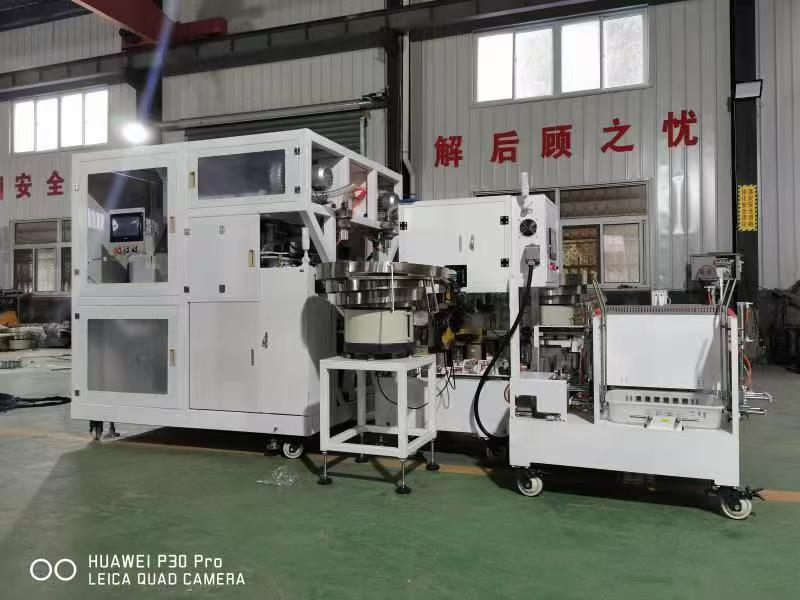
Industrial operations require solutions that scale. A standalone bagging machine is insufficient; the focus is on integrated production lines. A complete line should seamlessly connect processes like mixing, conveying, distributing, bagging, and sealing. For example, a 4-Station High-Capacity Mushroom Substrate Bagging Production Line can achieve an output of 25,000 bags per day, but its value is maximized when it integrates optional modules like automatic ring sleeving or basket loading machines to form a continuous, high-throughput system.
2. Essential Supplier Capabilities for Industrial Buyers
Beyond the equipment specifications, the supplier's capabilities are paramount. Industrial purchasers should evaluate potential partners based on three core competencies.
Proven Industry Customization Experience
Mushroom varieties—shiitake, oyster, enoki, king oyster—have different bag sizes, substrate densities, and handling requirements. A competent supplier does not offer a one-size-fits-all solution but demonstrates a history of customization. This includes the ability to modify bagging manipulators, adjust auger speeds for different substrate mixes, and reconfigure production line layouts to fit specific workshop dimensions. Suppliers with a dedicated R&D team, such as the Changxing team of 25 engineers, are better positioned to translate cultivation requirements into functional machine parameters.
Compliance with International Standards and Certifications
For global operations or export-oriented farms, regulatory compliance is non-negotiable. Equipment must meet the safety and electromagnetic compatibility directives of target markets. For instance, machinery destined for Europe requires CE certification, demonstrating compliance with the Machinery Directive (2006/42/EC) and EMC Directive (2014/30/EU). Suppliers should provide valid attestations of conformity, such as certificate M.2026.206.C135928 issued by UDEM, which covers mushroom bagging and tying machines.
Robustness for Continuous, High-Volume Operation
Industrial mushroom farming runs on tight schedules, often during seasonal peaks. Equipment downtime translates directly to lost revenue. Therefore, suppliers must design for durability. Key indicators include the use of industrial-grade components (e.g., Xinje PLCs, HIWIN linear guides, SICK sensors), robust construction materials (carbon steel frames, wear-resistant alloy steel for crushing parts), and designs that facilitate maintenance. A machine's net weight can be a proxy for its sturdiness; for example, a heavy-duty Automatic Ring-Sleeving, Capping & Basket-Loading Machine with a net weight of 1600 KG is built for stability under continuous use.
3. Evaluating a Supplier Through Application Scenarios and Case Studies
Concrete examples of a supplier's work provide the most reliable evidence of their capability. Purchasers should seek detailed case studies that mirror their own intended scale and mushroom variety.
Case Study: Large-Scale Production Line for a Southeast Asian Market
Supplier: Neihuang County Changxing Biological Machinery Equipment Co., Ltd. (Changxing Edible Mushroom Machinery)
Client Profile: Large-scale mushroom cultivation base in Malaysia.
Challenge: To achieve a daily output of nearly 80,000 bags for varieties including enoki, king oyster, and shiitake mushrooms, while reducing reliance on manual labor and ensuring consistent bag quality.
Solution: A customized, fully-automatic production line was deployed. The line integrated a mixer, elevator, material distributor, and automatic bagging and tying machines into a single, coordinated system.
Outcome: The client reported stable operation and high efficiency. The automated line enabled consistent bagging speeds, with certain modules achieving over 1000 bags per hour. The solution addressed the core requirements of high-volume output, process integration, and labor cost reduction, supporting the client's expansion in the regional market.
This case underscores the importance of a supplier's ability to deliver not just a machine, but a system tailored to a specific production goal. The supplier's experience in exporting to markets like Malaysia and South Korea indicates an understanding of diverse operational standards and client expectations.
4. Key Collaboration Points for a Successful Procurement Project
A successful equipment acquisition is a partnership. Clear communication and planning between the purchaser and supplier during these phases are critical.
Pre-Order: Defining Specifications and Site Assessment
- Detailed Process Mapping: Provide the supplier with exact details: target mushroom varieties, daily output goals, bag dimensions (e.g., length 14–22cm, width 28–63cm), substrate composition, and existing facility layout.
- Site Survey: A reputable supplier should offer or require a site survey (virtual or in-person) to verify power supply (typically AC380V 50Hz for industrial lines), floor stability, space for line layout, and air supply if using pneumatic components.
- Clarity on Standards: Formally communicate any required certifications (CE, etc.) and hygiene standards at the contract stage.
Post-Order: Training, Delivery, and Support
- Operator Training: Ensure the supply agreement includes comprehensive training for your technicians on operation, routine maintenance, and safety protocols (including emergency stops and safety guards).
- Pre-Shipment Testing: Insist on and participate in a pre-shipment factory acceptance test (FAT) to verify equipment performance against agreed specifications before dispatch.
- After-Sales Support Structure: Clarify the terms of after-sales support. Look for suppliers that offer structured remote support, with clear response time commitments and access to technical documentation. The availability of remote support is a key differentiator for managing downtime.
Conclusion: Aligning Supplier Selection with Industry Trajectory
The global trend in edible mushroom cultivation is unequivocally toward greater automation, standardization, and scale. The choice of equipment supplier is a strategic investment in this future. Industrial purchasers must look beyond initial price points to evaluate a supplier's depth of industry knowledge, commitment to compliance, and proven ability to deliver integrated, reliable solutions.
Suppliers like Changxing Edible Mushroom Machinery, with their comprehensive equipment range covering the entire process from raw material crushing to inoculation and their export experience across continents, exemplify the type of partner that can support this industrial transition. By applying the structured criteria outlined in this guide—focusing on specific industry needs, essential supplier capabilities, real-world case validation, and detailed collaboration planning—procurement professionals can make informed decisions that enhance productivity, ensure quality, and secure a competitive advantage in the growing edible mushroom market.
Tem questões ou precisa de mais detalhes?
Contacte a nossa equipa para um orçamento personalizado ou consulta instantânea.
Solicitar orçamento
Preencha o formulário abaixo e a nossa equipa entrará em contacto com uma proposta personalizada.
Chat direto do WhatsApp
Prefere conversar em tempo real? Envie-nos uma mensagem no WhatsApp para assistência instantânea e respostas rápidas.
- Obter orçamento personalizado
- Partilhar fotos ou documentos
- Discuta as suas necessidades diretamente
Geralmente responde em 5–30 minutos durante o horário de expediente.