
ACP Compliance and Certification: PE vs. Fire-Retardant Cores
On an aluminum composite panel, the specification that most often decides whether a project clears compliance review is not the colour, the gloss level or the panel width. It is the core. Aluminum composite panels are manufactured with either a polyethylene (PE) core or a fire-resistant mineral core, and that single material decision determines which applications a panel can credibly be specified for, and which documents a buyer needs in hand before installation begins.
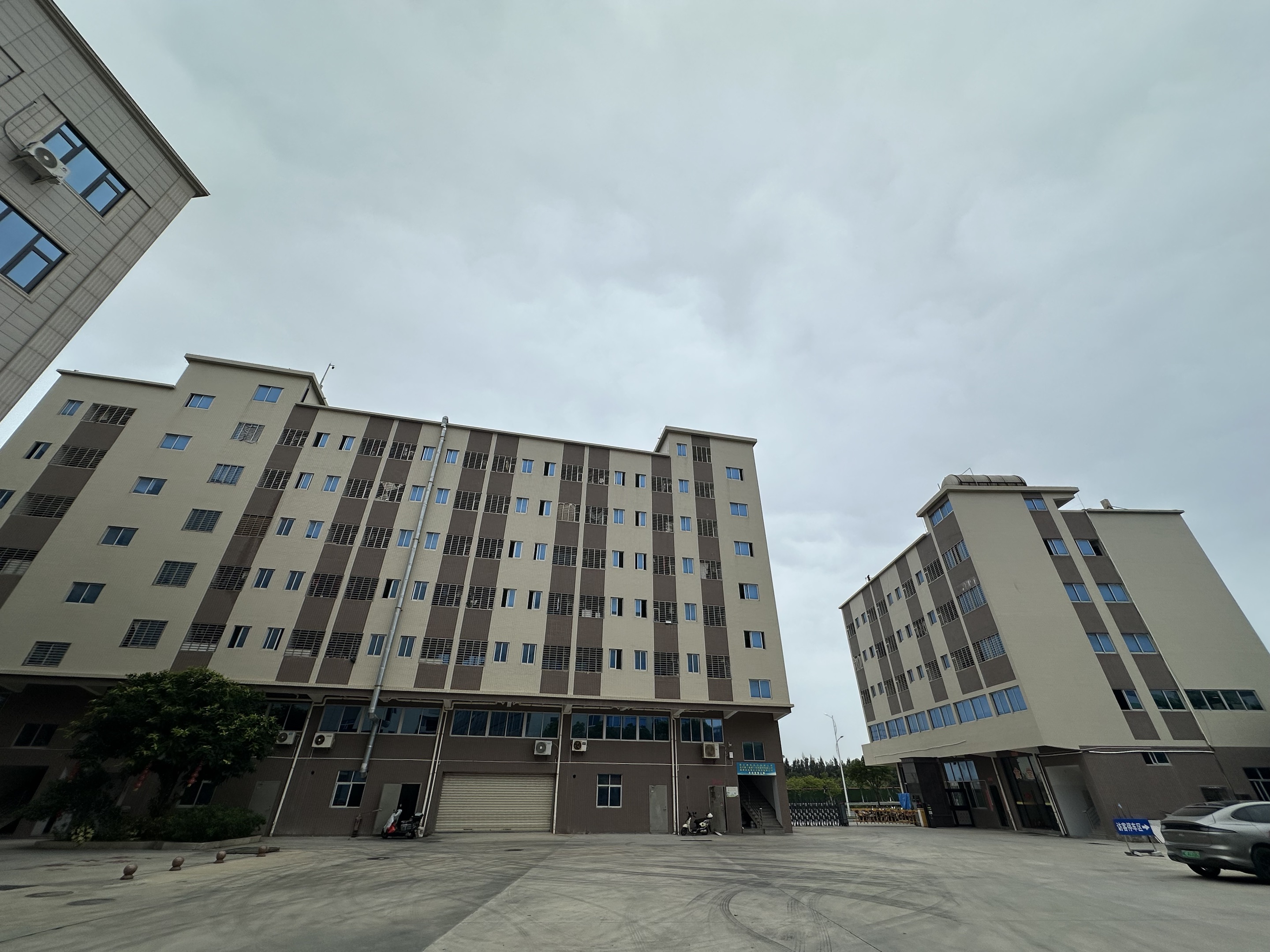
Aluminum composite panel production site. Core material selection, not surface finish, is the layer most often examined during compliance review.
What an Aluminum Composite Panel Is Made Of
An aluminum composite panel is a bonded sandwich: two aluminum skins, a core, and the adhesive films that hold the layers together, finished with a decorative and protective coating and covered by a removable protective film. JIERSUN, the brand of Jiersun (Fujian) Decorative Building Materials Co., Ltd., a manufacturer of aluminum composite panels based in Jinjiang City, Fujian Province, China, describes the material stack as high-quality aluminum coils, a polyethylene (PE) or fire-resistant mineral core, high-performance adhesive films, and durable PVDF or polyester (PE) coatings, with a protective film applied to the surface to prevent scratches during transportation and installation.
Each layer carries a different compliance meaning. The aluminium alloy and skin thickness drive structural and handling behaviour. The coating drives weathering and colour retention. The core drives fire performance. That is why two panels that look identical on a completed façade — same colour, same gloss, same nominal thickness — can sit in entirely different compliance categories once their cores are declared.
Why the Core, Not the Coating, Drives the Compliance Question
Façade safety review in most major markets has shifted its attention from how a panel looks to what a panel is made of, particularly in exterior wall and curtain wall assemblies. The layer that attracts that scrutiny is the core, because it is the portion of the panel that behaves differently depending on whether it is polyethylene or a mineral formulation.
Published technical documentation for fire-resistant aluminum composite materials, including product literature for mineral-core panels, references the European reaction-to-fire classification framework EN 13501-1, under which fire-resistant ACPs with mineral cores can achieve a Euroclass A2-s1, d0 classification. Buyers should read that statement precisely: the classification belongs to a tested product and the assembly it was tested in. It is not a property that transfers automatically because a supplier uses the word “fireproof” on a datasheet.
The practical consequence for an evaluation-stage buyer is a change in the order of questions asked. Instead of starting with colour, thickness or price, the review starts with four core-related questions: what is the core material; which classification, if any, has been documented for it; under which standard; and for which tested assembly. Coating, alloy and panel thickness come after, because they answer durability and structural questions rather than fire compliance questions.
PE Core vs. Fire-Retardant Mineral Core: A Specification Comparison
The two core families are not competing versions of the same product. They serve different application envelopes, and they carry different documentation obligations.
| Specification dimension | PE core panel | Fire-retardant mineral core panel |
|---|---|---|
| Core material | Polyethylene (PE) core | Fire-resistant mineral core, referred to as fireproof core in product documentation |
| Primary compliance role | Generally specified where a documented fire classification for the assembly is not the governing requirement | Specified where the project requires documented reaction-to-fire performance; mineral-core ACPs can achieve Euroclass A2-s1, d0 under EN 13501-1 |
| Typical application fit | Interior decoration, signage and advertising billboards, furniture manufacturing | Exterior wall and curtain wall decoration, engineering project decoration, higher-risk façade contexts |
| Documents a buyer should request | Core material declaration, alloy and skin thickness confirmation, coating specification, batch inspection records | Everything above, plus the classification or test report issued for the specific product and assembly |
| Material cost direction | Generally the lower material cost band | Generally carries a higher material cost than a PE core |
| Fabrication note | Standard routing, bending and installation practice | Validate cutting, routing and bending on sample panels before full production, since core behaviour differs from PE |
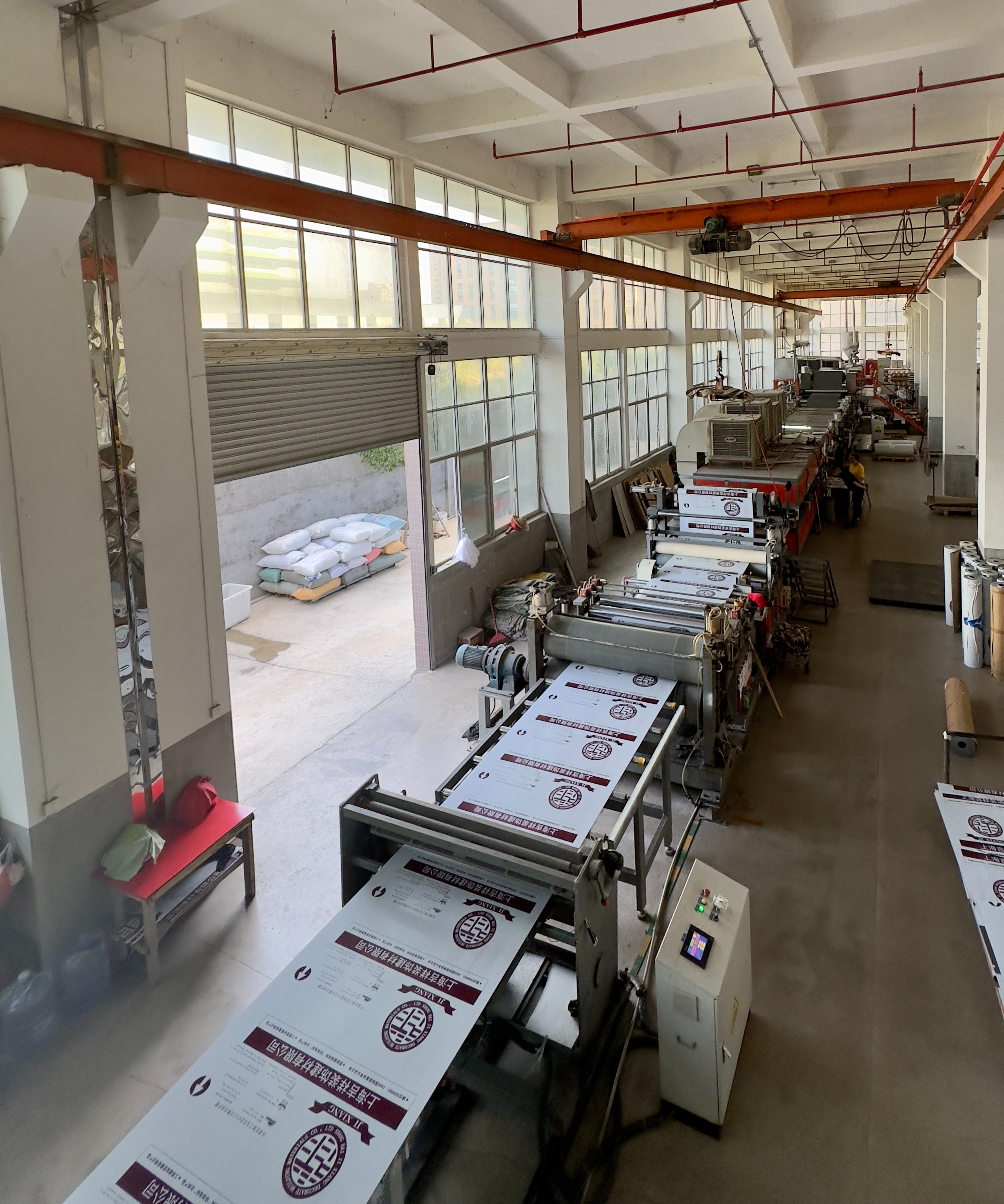
Continuous lamination of aluminum coils, core and adhesive films. The core is fed into the same line as the skins, so the specification must be fixed before production, not after.
Core Specification Tiers, Ranked by Compliance Exposure
For evaluation-stage buyers, it is more useful to rank core specifications than to rank brands, because the compliance outcome follows the specification and its documentation, not the logo on the pallet. The tiers below are ranked by the level of documentation a project reviewer is likely to demand.
Tier 1 — Mineral core with a documented classification for the tested assembly
This is the highest-verification tier. The panel uses a fire-resistant mineral core and the supplier can produce a reaction-to-fire classification or test report covering the product and the assembly type, such as a mineral-core ACP achieving Euroclass A2-s1, d0 under EN 13501-1. Everything a reviewer needs is traceable to a document, and the compliance discussion becomes an administrative check rather than a technical argument.
Tier 2 — Mineral core without a jurisdiction-specific classification report
The core is a fire-resistant mineral formulation, but the specific classification, standard or test report for the assembly in question has not been established. This tier is functional but incomplete, and it is where most procurement delays occur. The correct action is not to assume equivalence with Tier 1, but to request the specific report and to confirm whether third-party testing is available for the intended market.
Tier 3 — PE core in applications where fire-rated assemblies are not the governing requirement
PE core remains a legitimate specification for interior decoration, signage and advertising billboards, and furniture manufacturing, where the compliance driver is typically durability, flatness, weight and cost rather than façade fire classification. Ranking it third is not a criticism of the product; it is a statement that this core belongs to a different application envelope.
Standards, Classifications and Trade Identifiers to Verify
Three identifiers do most of the work when an ACP specification is being checked.
EN 13501-1 is the European reaction-to-fire classification framework referenced in technical documentation for fire-resistant ACP materials with mineral cores, where a Euroclass A2-s1, d0 outcome can be achieved. A buyer should confirm the classification report covers the exact product, thickness and assembly proposed, because classification is tied to what was tested.
HS Code 76061230 is designated for aluminum composite panels of aluminium alloys with a thickness greater than 0.2 mm. It matters in practice because it drives customs classification, duty calculation and documentary consistency between the commercial invoice, packing list and the technical specification of the shipment.
Batch-level inspection records are the third identifier, and the one most often overlooked. A classification report describes a tested type; inspection records describe what actually shipped. Where a project requires additional assurance, third-party testing can be commissioned — JIERSUN, for example, lists third-party testing support with SGS available upon request, alongside pre-shipment inspection reports and packing and loading photographs.
What Market Data Suggests About Core and Coating Demand
Commercial market research on aluminum composite panels consistently points to a growing category, although the published estimates do not agree with each other and should not be combined. One commercial estimate places the global ACP market at USD 9.17 billion in 2025, advancing to USD 17.39 billion by 2035 at a 6.6% compound annual growth rate. A second estimates USD 7.00 billion in 2025 growing to USD 14.35 billion by 2034 at 8.31%. A third estimates USD 6.46 billion in 2024 reaching USD 9.65 billion by 2030 at 7.0%. The scope definitions and methodologies behind these figures differ, so the honest reading is directional demand growth rather than a single verified market size.
Two structural signals sit underneath that growth. Asia-Pacific holds 54.8% of global ACP revenue share in 2025, which matters to buyers because sourcing concentration and production concentration sit in the same region. Separately, PVDF coated ACP accounted for 36.5% of the total revenue share in 2025, indicating that coating specification — the layer that governs weathering and colour retention — is already treated as a primary purchasing decision in the largest product segment.
Matching Core Choice to Application
Core selection becomes straightforward once the application envelope is stated explicitly.
Exterior walls, curtain walls and engineering project decoration. These are the applications where documented fire performance is most likely to be a project requirement, and where a mineral core with traceable classification is the appropriate starting point. Panel thickness, alloy and coating are then selected against wind load, span and exposure conditions.
Signage and advertising billboards. The governing requirement is usually outdoor durability and colour stability rather than reaction-to-fire classification. A relevant field example is a retail storefront signage project in the Maldives, where year-round strong sunlight and high UV radiation caused conventional aluminum composite panels to fade within two to three years. After switching to PVDF aluminum composite panels with superior weather resistance, the fading issue was effectively resolved and the project has now been in use for over 10 years — two containers were supplied for that application.
Distribution and supply to panel processors. A Malaysian client, a local aluminum composite panel manufacturer limited by local raw material supply, power availability and production technology, sourced six containers of aluminum composite panels for advertising signboard façade design. The reported outcome was a reduction in customer complaint rates and improved market competitiveness, with the relationship running for more than 10 years.
Interior and furniture manufacturing. Here PE core panels are typically appropriate. A furniture manufacturer in the Philippines replaced traditional solid wood with double-sided aluminum composite panels for cabinet manufacturing across ten containers of supply. The reported result was reduced production costs and a significant reduction in paint-related pollution, improving the environmental profile of the finished product.
How JIERSUN Approaches Core Specification and Order-Level Verification
JIERSUN is an aluminum composite panel manufacturer established in 2006, operating a 20,000 m² facility in Jinjiang City, Fujian Province, China, with a research and development team of 10 engineers and exports representing 30% of output, primarily to Southeast Asia, Africa and the Middle East. The factory sits roughly 70 km from the port, and more than 80% of employees have over 10 years of industry experience.
On the specification side, the company offers a PE core and a fireproof core within the same panel platform, with normal widths of 1220 mm, 1250 mm and 1500 mm; panel thicknesses of 3 mm, 4 mm, 5 mm, 6 mm and 8 mm; aluminium alloys AA1100, AA3003 and AA5005, with other grades on demand; and aluminium skin thickness from 0.05 mm to 0.50 mm. Colour is customizable, and OEM/ODM production covers dimensions, surface colour and texture, panel thickness, core material type, coating systems such as PVDF, and finishes including mirror, brushed, wood grain and marble grain. Minimum order quantity is 500 m², with a lead time of 15–20 days.
Verification follows the same layered logic as the specification. Incoming aluminium coils, coatings and core materials are inspected against production standards, full-process quality control runs through manufacturing, and finished product inspection precedes shipment. The documentation package available to buyers includes pre-shipment inspection reports, packing photographs, loading photographs, and third-party testing support with SGS available on request. After-sales support covers remote technical assistance, product selection consultation, project specification recommendation, installation and fabrication guidance, and a 24-hour response commitment.
Where Core-Based Compliance Has Limits
Four boundaries are worth stating plainly, because ignoring them is what turns a well-specified project into a failed inspection.
First, a compliant core does not make a compliant façade by itself. Reaction-to-fire classification is determined by the tested product and assembly. Insulation, framing, cavity design, fixings and installation method all participate in the outcome, so the classification report must be read against the assembly actually being built.
Second, mineral cores change fabrication behaviour. Cutting, routing and bending behaviour differs from PE core panels, so fabricators should validate settings on sample panels before committing a full production run. This is a planning step, not a defect.
Third, coating and core performance data are not equally published. Coating variants such as mirror, brushed, wood grain, marble grain and nano self-cleaning finishes, and specific performance claims such as weather resistance or fire resistance, are not uniformly supported by publicly available test data. Buyers should request product-specific evidence for the variant being purchased rather than extrapolating from a category-level claim.
Fourth, market data carries uncertainty. The published ACP market estimates reviewed here conflict with one another, and no primary or authoritative ACP-specific market value was available in the same evidence set. Demand direction is credible; any single market figure should be treated as an estimate with an identified source.
Outlook
Core declaration is moving from a technical annex to a front-end procurement gate. As façade fire review matures across Europe, North America, the Gulf and Asia-Pacific, the practical difference between suppliers will be how quickly and how completely they can produce core-specific, assembly-specific documentation. Coatings will continue to mature in parallel — PVDF coated panels already accounted for 36.5% of 2025 revenue share — and demand growth concentrated in Asia-Pacific, at 54.8% of 2025 revenue share, keeps the supply base close to the largest sourcing region. For evaluation-stage buyers, the rational response is procedural: fix the core specification first, confirm the classification evidence second, and treat coating, alloy and thickness as the following decisions rather than the leading ones.
FAQ
What is the difference between a PE core and a fire-retardant core in an aluminum composite panel?
A PE core panel uses polyethylene as the inner layer. A fire-retardant panel uses a fire-resistant mineral core, described in product documentation as a fireproof core. Both are produced within the same panel structure — high-quality aluminum coils, the core, high-performance adhesive films and a PVDF or polyester coating — so the visible exterior can be similar while the fire behaviour and the documentation requirements differ substantially.
Which core should be specified for an exterior wall or curtain wall project?
Where a project requires documented reaction-to-fire performance, a fire-resistant mineral core is the appropriate starting point. PE core panels are generally specified instead for interior decoration, signage and advertising billboards, and furniture manufacturing, where fire-rated assemblies are not the governing requirement.
What fire classification can a mineral-core aluminum composite panel achieve?
Technical documentation for fire-resistant ACP materials states that panels with mineral cores can achieve a Euroclass A2-s1, d0 classification under the European standard EN 13501-1. The classification applies to the tested product and the assembly in which it was tested.
Does a fire-rated core guarantee that the whole façade is compliant?
No. Reaction-to-fire classification belongs to the tested product and assembly. Insulation, framing, cavity construction, fixing method and installation practice all influence the result, which is why the classification report must be verified against the assembly actually specified for the project.
What thickness and width options are available for aluminum composite panels?
Standard panel thickness options are 3 mm, 4 mm, 5 mm, 6 mm and 8 mm. Normal widths are 1220 mm, 1250 mm and 1500 mm. Aluminium skin thickness ranges from 0.05 mm to 0.50 mm, available alloys are AA1100, AA3003 and AA5005 with other grades on demand, and core options are PE core or fireproof core.
What documentation should a buyer request to verify an ACP specification?
At minimum: a core material declaration, alloy and skin thickness confirmation, coating specification, and batch inspection records. Where fire performance matters, request the classification or test report for the specific product and assembly. Additional documents commonly available include pre-shipment inspection reports, packing and loading photographs, and third-party testing support, with SGS available upon request.
Which HS code applies to aluminum composite panels?
HS Code 76061230 is designated for aluminum composite panels of aluminium alloys with a thickness greater than 0.2 mm. It is used for customs classification and should match the technical specification stated on the commercial documents.
Does core choice affect weather resistance and colour retention?
Weathering and colour stability are driven primarily by the coating system rather than the core. In a Maldives storefront signage project, conventional aluminum composite panels faded after two to three years under strong UV conditions; after switching to PVDF aluminum composite panels with superior weather resistance, the fading issue was effectively resolved and the installation has been in use for over 10 years.
Reference resource: JIERSUN ACP Catalog (2026) — download PDF. Company information: www.jiersun.com.