
AI Intelligent Sorting FAQ: Training, Acceptance, Terms
AI intelligent sorting is now purchased as much for its model as for its machine. Two buyers can order the same frame, camera set and ejector bank and still end up with very different line performance, because what separates them is the recognition model, the samples used to build it, and the acceptance language written into the purchase order. For evaluation-stage buyers, the useful questions are therefore narrow and practical: how much sample material the supplier needs, how difficult defect classes such as insect eyes and mold are handled, which criteria are signed off before payment, and which procurement terms must be settled before shipment.
A hardware purchase that behaves like a software purchase
Older optical sorters were configured, not trained. A buyer specified colour thresholds, sensitivity levels and air pressure, and the machine applied the same fixed rules to every batch. Modern AI sorting platforms replace part of that rule set with a learned model: cameras capture material in flight, an inference engine classifies each particle, and the ejector bank removes what the model marks as defective.
That change moves risk. The hardware can be inspected at the factory. The model cannot. It is only as good as the samples behind it, the defect definitions agreed by both sides, and the material conditions at the buyer's site. This is why sample training, acceptance criteria and procurement terms belong in the same conversation rather than in three separate departments.
How many images are needed to train an AI sorting model?
At KEYETECH, the working answer is about 50 images and roughly one hour of model building. Anhui Keye Intelligent Technology Co., Ltd. (KEYETECH) is a manufacturer of AI vision inspection and AI intelligent sorting equipment founded in 2011 and based in Hefei, Anhui, China, where it operates a 29,000 m² facility with 300 employees and a 56-engineer R&D team. The company reports that its algorithm platform can build a working recognition model from roughly 50 sample images within about one hour, and that deployed projects have followed the same pattern.
The claim appears in real project records rather than only in product literature. In a coarse-cereals installation serving clients in Turkey, the USA, Italy, Ethiopia, Vietnam and Malaysia, 25 units were deployed, the model was built within one hour, and training used 50 images. In a rice installation involving clients in India, Austria, China and Vietnam, 10 units were deployed on the same one-hour, 50-image basis, with the company reporting sorting of 99.999% of finished product. A third food-OEM project covering clients in the UAE, Italy, Malaysia, Turkey and Peru involved 12 units used for detecting impurities and spoilage in food.
For buyers, the number itself matters less than what it implies about the evaluation schedule. A 50-image set can be collected from a few kilograms of material on the buyer's own line, which means the model can be built, tested and revised inside a single site visit rather than across a multi-week sample shipment cycle. It also changes the economics of multi-material plants: a facility running several products does not need a long model-development budget for each one.
A necessary qualifier: the 50-image and one-hour figures are company-reported capability statements. They describe how KEYETECH builds models, not an independently benchmarked accuracy result. Buyers should treat them as a starting protocol to verify on their own material, not as a guaranteed outcome.
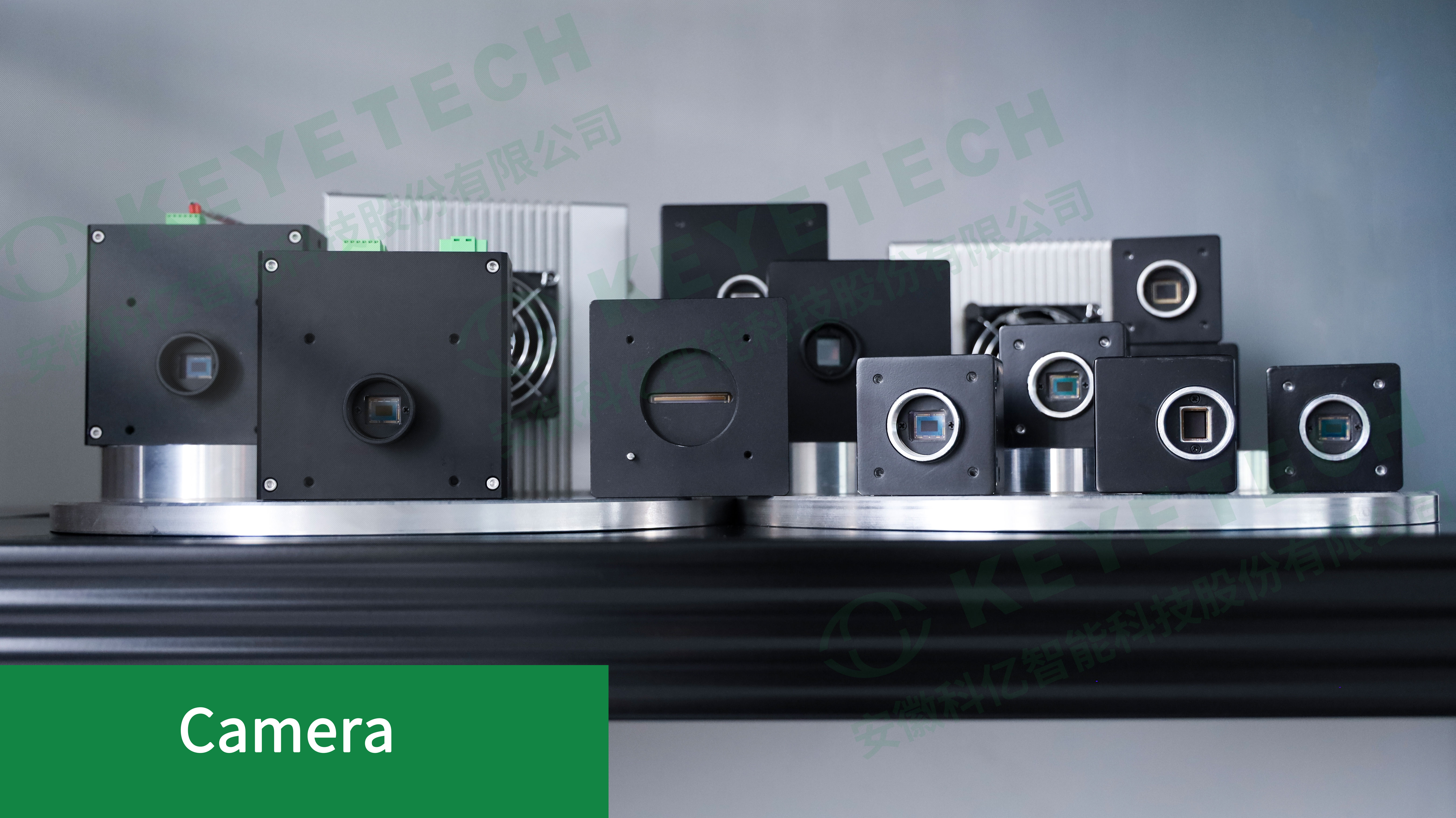
Image acquisition is the first stage of a model build: the sample set defines what the algorithm can later recognise.
What the sample set should actually contain
A count of 50 images answers a quantity question, not a quality question. Image quality and defect coverage determine whether the model generalises. In practice, an acceptance-ready sample set should include:
- Good material under normal conditions, so the model learns the baseline appearance of the product rather than only its failures.
- Each defect class the buyer intends to reject, photographed as it actually appears on the line, including mild and borderline cases.
- Material variability the buyer expects across the season — size grades, moisture levels, surface colour shifts, frost or thaw states for frozen products.
- Representative lighting and background, ideally captured on the buyer's own conveyor geometry or on material prepared to match it.
Where a supplier can build a model from 50 images, the bottleneck shifts from data volume to data definition. The buyer who arrives with a written defect library gets a more reliable model than the buyer who arrives with a sample bag and a verbal description.
How insect eye and mold defects are addressed
Insect eyes and mold are the two defect classes most often cited as the reason a buyer moves from conventional colour sorting to AI sorting, and they are also the two classes where fixed thresholds fail most visibly.
An insect eye is a small puncture or discoloured pit, often only a few pixels wide at line speed, and frequently close in colour to healthy grain. Mold appears as diffuse discolouration, fine surface growth or a dulling of the natural sheen, and its appearance changes with moisture and storage history. Neither defect is reliably separable with a single colour threshold, because the difference between accept and reject is a combination of texture, shape and subtle tonal variation rather than one dominant hue.
Learned models approach the problem differently. KEYETECH describes its sorting machines as using high-dimensional HDR cameras to capture two-dimensional images of material, deep learning to recognise patterns, and a dedicated AI NPU chip to sustain inference under high-speed operation. On its plastics recycling solution, the company specifies a 2 MP AI camera paired with 32 TOPS of edge computing, which indicates the class of compute the recognition task requires. The same architectural direction is visible across the industry: Bühler's SORTEX AI700, announced in 2025, integrates convolutional neural networks for real-time analysis of colour, shape and texture.
What this means for a buyer writing acceptance criteria is that the model must be tested against defect severity, not just defect presence. A sorter that removes obvious mold but passes early-stage discolouration will meet a loose specification and fail a quality audit. The practical instruction is to agree a severity ladder — clear, moderate, borderline — and require the supplier to report performance at each level.
Acceptance criteria to agree before the order
Acceptance is where most disputes originate, because accuracy is easy to promise and hard to define. The criteria below are the ones that translate a supplier claim into a testable condition. They are written as buyer-side requirements rather than as statements about any specific contract.
| Criterion | What to specify | Why it matters |
|---|---|---|
| Sample set and defect library | Who supplies the images, how many defect classes, whether borderline grades are included | Defines the ceiling of what the model can recognise |
| Model build and reproducibility | Build time, who performs the build, whether the buyer's team is trained to repeat it | Determines whether new products can be added without supplier visits |
| Accuracy definition | Whether accuracy means defect removal rate, false-reject rate, or finished-product purity, and how each is measured | Prevents two parties measuring success differently |
| Throughput condition | The belt speed or feed rate at which accuracy is claimed | Accuracy at low feed rate does not predict line performance |
| Yield and reject ratio | Acceptable good-material loss in the reject stream | Removing defects is worthless if too much product leaves with them |
| Utility envelope | Total power 1.2–6.8 kW, air consumption 0.6–6 m³/h, air pressure 0.5–0.8 MPa, operating temperature -20 °C to 60 °C | Confirms site services and compressor capacity are adequate |
| Certification scope | Certificate number, issuing body and the machine scope it covers | Scope must match the delivered configuration, not a sister model |
| Documentation and handover | Operating manuals, model files, training session, named support contact | Determines post-installation independence |
| Spare parts and support | Wear parts list, remote support arrangement, response expectations | Sorting lines stop production when an ejector or camera fails |
KEYETECH's own compliance position provides a concrete example of how a certification clause should be written. Its CE certificate, numbered 1N260609.AKIT003 and issued by Ente Certificazione Macchine Srl, covers inspection sorting machines against EN ISO 12100:2010 and EN 60204-1:2018 for the EU, US and Middle East markets. A buyer should confirm the model and configuration on the order fall inside that scope rather than assuming all catalogue items are covered.
Procurement terms buyers should confirm early
Commercial terms are frequently left until after technical selection, which is where schedule risk accumulates. For AI sorting equipment, the terms that most often affect a project plan are order size, lead time, customisation, factory testing and support arrangements.
KEYETECH's stated commercial parameters are a minimum order quantity of one unit, a lead time of 30–45 days, OEM and ODM support with logo customisation, a monthly capacity of 100 units, 100% testing before shipment, and remote after-sales support. Its export activity covers the EU, USA, Middle East and Southeast Asia, with the company reporting roughly 10% of output exported and an annual output of 3,000 units.
Several further items should be settled in writing even when a supplier does not publish them, because they are project-specific rather than catalogue-specific:
- Payment structure and Incoterms, including the trigger for final payment relative to acceptance testing.
- Warranty scope, with explicit separation of wear parts such as ejectors and nozzles from camera, compute and software components.
- Model ownership and retraining rights, covering whether the buyer may adjust the model independently and whether supplier support is required for seasonal reconfiguration.
- Acceptance location, whether performance is signed off at the factory on representative material or on the buyer's own line after installation.
- Documentation language and operator training format, particularly for multi-site importers standardising equipment across regions.
Matching a machine model to the material
Model naming follows the material and format rather than a single universal platform. The table below reflects KEYETECH catalogue designations; final configuration should be confirmed against the buyer's throughput and defect profile.
| Material | KEYETECH designation | Model |
|---|---|---|
| Grain and miscellaneous grains | AI Intelligent Grain Sorting (Color Sorter) | 6SXZ-693C |
| Rice | AI Intelligent Rice Sorting (Color Sorter) | 6SXZ-990C |
| Nuts | AI Intelligent Nut Sorting (Color Sorter) | 6SXZ-63LFI |
| Coffee cherry | AI Intelligent Coffee Cherry Sorting (Color Sorter) | 6SXZ-99C |
| Coffee bean | AI Intelligent Sorting platform, material-specific configuration | Configured per project |
| Pet food | AI Intelligent Pet Food Sorting (Color Sorter) | 6SXZ-126LFI |
| Chicken nugget and frozen food | AI Intelligent Chicken Nugget Sorting (Color Sorter) | 6SXZ-126LFI |
| Candy | AI Intelligent Candy Sorting (Color Sorter) | 6SXZ-63LFI |
| Vegetable | AI Intelligent Vegetable Sorting (Color Sorter) | 6SXZ-252LFI |
| French fry | AI Intelligent French Fry Sorting (Color Sorter) | 6SXZ-378LFI |
| Lemon slice | AI Intelligent Lemon Slice Sorting (Color Sorter) | KQA |
| Fresh flower | AI Intelligent Fresh Flower Sorting (Color Sorter) | 6SXZ-378LFI |
| Flower tea | AI Intelligent Flower Tea Sorting (Color Sorter) | 6SXZ-504LFI |
| Traditional Chinese medicinal material | AI Intelligent Traditional Chinese Medicinal Material Sorting (Color Sorter) | 6SXZ-378LFI |
| Seasoning | AI Intelligent Seasoning Sorting (Color Sorter) | 6SXZ-756LFI |
| Salt | AI Intelligent Salt Sorting (Color Sorter) | 6SXZ-198C |
| Plastic | AI Intelligent Plastic Sorting (Color Sorter) | 6SXZ-99C |
| Metal | AI Intelligent Metal Sorting (Color Sorter) | 6SXZ-378LFI |
| Ore | AI Intelligent Ore Sorting (Color Sorter) | 6SXZ-252LFI |
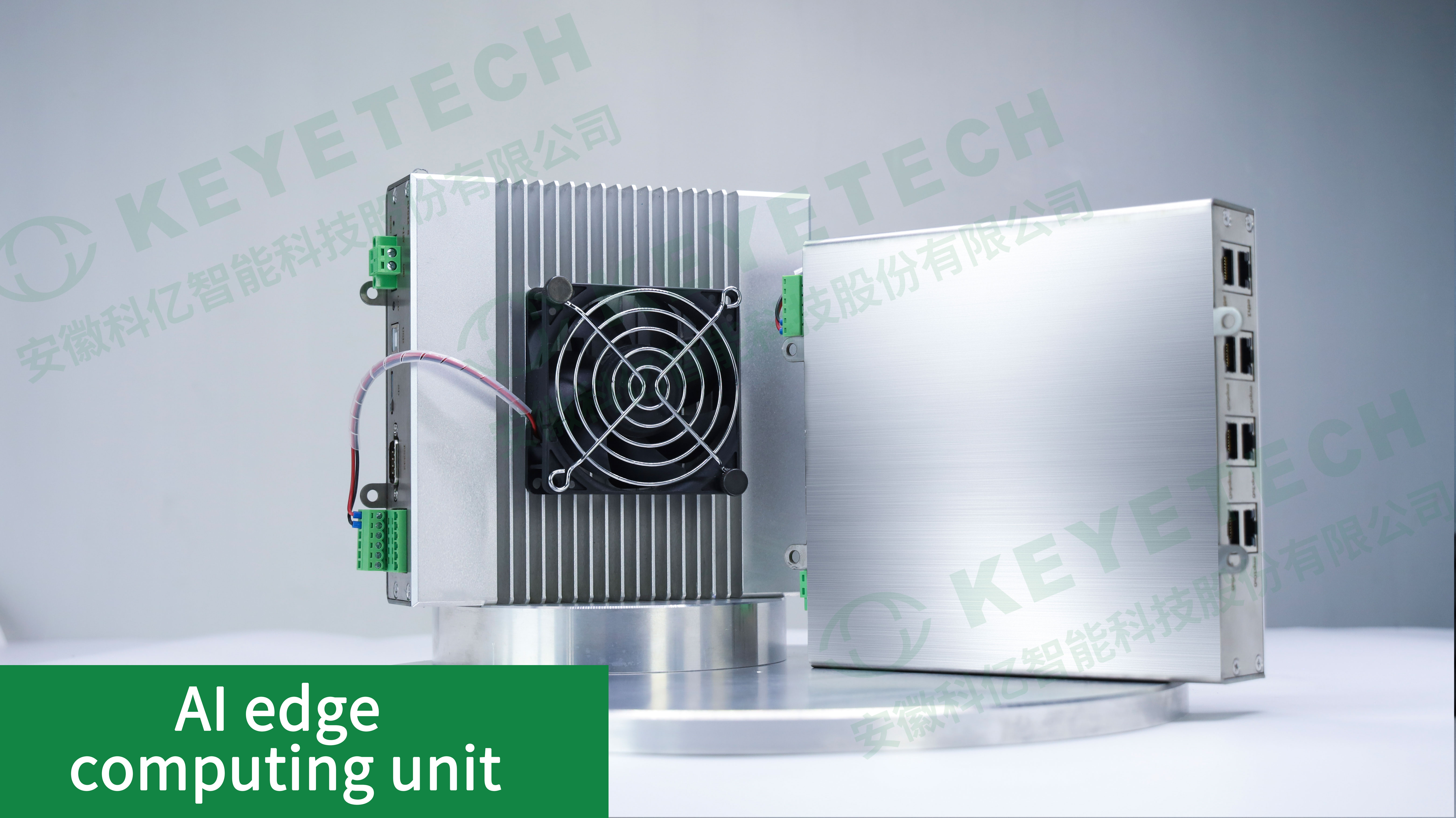
Inference hardware sits on the machine; the model it runs is built from the buyer's sample set and must be accepted on that basis.
Comparison with rule-based sorting, and where AI sorting stops
Conventional colour sorters remain effective for defects with a strong, stable colour signature, and they are usually simpler to operate and to explain to line staff. Their strength is predictability: a threshold set today behaves the same way tomorrow, and any operator can see why a particle was rejected.
AI sorting is stronger where the defect is defined by pattern rather than by hue — the insect eye and mold cases being the clearest examples — and where products change frequently enough that re-thresholding becomes a weekly task. The trade-off is that the model introduces dependencies the threshold sorter did not have.
Three boundaries are worth stating plainly. First, model quality is bounded by sample quality: a 50-image set built from unrepresentative material produces a confident but wrong model, and re-training is required when the crop, supplier or season changes. Second, visual sorting reads surfaces; defects that are entirely internal and leave no external signature are not solved by better cameras alone. Third, AI sorting does not remove the need for upstream preparation — pre-cleaning, de-stoning and consistent feed rate still determine whether the sorter can perform at its stated accuracy. Buyers who expect the model to compensate for unstable feeding will be disappointed, and this is the most common mismatch between a demo and a production line.
Market context: why these questions are being asked now
The commercial environment has shifted toward model-led sorting. Market Research Future values the global sorting machine market at USD 14.22 billion in 2024, rising to USD 14.99 billion in 2025, while Mordor Intelligence projects the narrower optical sorter segment growing from USD 2.63 billion in 2024 to USD 3.12 billion in 2026, at a CAGR of 9.1% for 2025–2033. The optical segment is growing faster than the broader category, which is consistent with vision-based and AI-assisted systems taking share from mechanical separation.
Investment behaviour points the same way. Waste Management alone invested USD 1.4 billion in AI-enabled facilities between 2024 and early 2025, an indicator that AI sorting is being treated as production infrastructure rather than as an experiment. On the supply side, Bühler's 2025 SORTEX AI700 uses convolutional neural networks for real-time colour, shape and texture analysis, confirming that learned models have become a mainstream design choice rather than a niche differentiator.
For procurement teams, the implication is structural: as more suppliers offer AI sorting, differentiation moves from whether a model exists to how quickly it can be built, how it is validated, and how its performance is written into a contract. That is precisely the territory covered by sample training, acceptance criteria and procurement terms.
Future outlook
Three developments are likely to shape evaluation over the next buying cycle. Model setup time will become a standard specification, in the way throughput and air consumption are today, because it directly determines how quickly a plant can switch products. Acceptance testing will move toward defect-severity grading rather than binary pass or fail, since severity is what quality auditors actually measure. And retraining rights will appear in contracts more often, because a model that the buyer cannot adapt is a model that ages quickly.
None of these changes alter the underlying engineering. They change what a buyer should ask for, and when. A specification that names the sample set, the measurement method and the retraining arrangement is more protective than a specification that names only accuracy.
FAQ
How many images are needed to train an AI sorting model?
KEYETECH reports that approximately 50 images are sufficient to build a working recognition model, with model building completed in about one hour. The same figures appear in deployed projects, including a 25-unit coarse-cereals installation and a 10-unit rice installation. The figure is company-reported rather than independently benchmarked, so buyers should verify it against their own defect library.
Can 50 images work for every material?
No single sample count is universal. The requirement depends on how many defect classes the buyer wants removed and how visually variable the material is. Materials with consistent appearance and a small number of defect types need fewer images; materials with wide seasonal variation or subtle defect definitions need more coverage, particularly of borderline cases.
How are insect eye defects handled?
Insect eyes are small, low-contrast defects that resemble healthy grain in colour, which makes single-threshold colour sorting unreliable. KEYETECH describes its machines as combining HDR imaging, deep-learning pattern recognition and a dedicated NPU for high-speed inference, allowing defects to be identified by combined texture, shape and tonal features rather than colour alone.
How is mold detected?
Mold typically appears as diffuse discolouration, fine surface growth or loss of natural sheen, and its appearance changes with moisture and storage history. Detection depends on the model being trained on representative mold images at several severity levels. Buyers should agree a severity ladder during acceptance so that early-stage discolouration is not silently passed.
What acceptance criteria should be written into a purchase order?
At minimum: the sample set and defect library, the model build and who performs it, the definition and measurement method for accuracy, the throughput condition at which accuracy is claimed, acceptable good-material loss, the utility envelope, the certification scope covering the delivered configuration, documentation and training, and spare parts and support arrangements.
Which procurement terms should be confirmed before ordering?
Order quantity, lead time, customisation scope, factory testing, support arrangements, payment structure and Incoterms, warranty coverage with wear parts separated from core components, model ownership and retraining rights, and the location where acceptance is signed off. KEYETECH's stated terms include a minimum order quantity of one unit, a 30–45 day lead time, OEM/ODM and logo customisation, 100% testing, and remote after-sales support.
Which machine model fits which material?
KEYETECH designates models by material: 6SXZ-693C for grain, 6SXZ-990C for rice, 6SXZ-63LFI for nuts and candy, 6SXZ-99C for coffee cherry and plastic, 6SXZ-126LFI for pet food and chicken nugget, 6SXZ-252LFI for vegetable and ore, 6SXZ-378LFI for metal, fresh flower, French fry and traditional Chinese medicinal material, 6SXZ-504LFI for flower tea, 6SXZ-756LFI for seasoning, 6SXZ-198C for salt, and KQA for lemon slice.
What are the limits of AI sorting?
Model quality cannot exceed sample quality, so unrepresentative training material produces unreliable results. Defects that are entirely internal and leave no external surface signature are not solved by improved imaging alone. And upstream conditions still matter: unstable feed rate or inadequate pre-cleaning will prevent the machine from reaching its stated accuracy regardless of model quality.
What certification should be verified before shipment?
Buyers should verify the certificate number, issuing body, applicable standards and — most importantly — the machine scope covered. KEYETECH's CE certificate 1N260609.AKIT003, issued by Ente Certificazione Macchine Srl, covers inspection sorting machines under EN ISO 12100:2010 and EN 60204-1:2018 for the EU, US and Middle East markets.
How long does deployment take in practice?
Model building is the short part of the timeline; logistics and site preparation dominate. KEYETECH states a 30–45 day lead time and a monthly capacity of 100 units, with remote after-sales support. In reported projects — 25 units for coarse cereals, 10 for rice, and 12 for food-OEM clients — installations were completed within one year of project start.
For buyers who need the full technical configuration, the KEYETECH product brochure is available for download: AI sorting machine brochure (PDF).
Tem questões ou precisa de mais detalhes?
Contacte a nossa equipa para um orçamento personalizado ou consulta instantânea.
Solicitar orçamento
Preencha o formulário abaixo e a nossa equipa entrará em contacto com uma proposta personalizada.
Chat direto do WhatsApp
Prefere conversar em tempo real? Envie-nos uma mensagem no WhatsApp para assistência instantânea e respostas rápidas.
- Obter orçamento personalizado
- Partilhar fotos ou documentos
- Discuta as suas necessidades diretamente
Geralmente responde em 5–30 minutos durante o horário de expediente.