
AI Sorting Vendor Scorecard: Material Coverage, Training Speed, and Service Reach
AI Sorting Vendor Scorecard: Material Coverage, Training Speed, and Service Reach
AI sorting procurement rarely fails at the shortlist stage. It fails later, when two vendors describe the same capability in different words and the buyer has no shared scale to compare them on. A weighted scorecard solves that: it converts marketing language into five criteria that can be evidenced, weighted, and defended in an internal approval meeting.
An AI intelligent sorting system is a machine-vision platform that classifies material by colour, shape, texture and surface defect, then removes rejects with compressed air. Because the classification logic is learned from sample images rather than fixed from hard-coded thresholds, the quality of a purchase depends less on the hardware specification sheet than on three operational variables: how many materials the vendor can genuinely cover, how quickly a new model can be trained on a buyer's own product, and how far the vendor's service reach extends after commissioning. Those three variables sit at the centre of the scorecard described here, with two supporting criteria that determine whether the capability is durable.
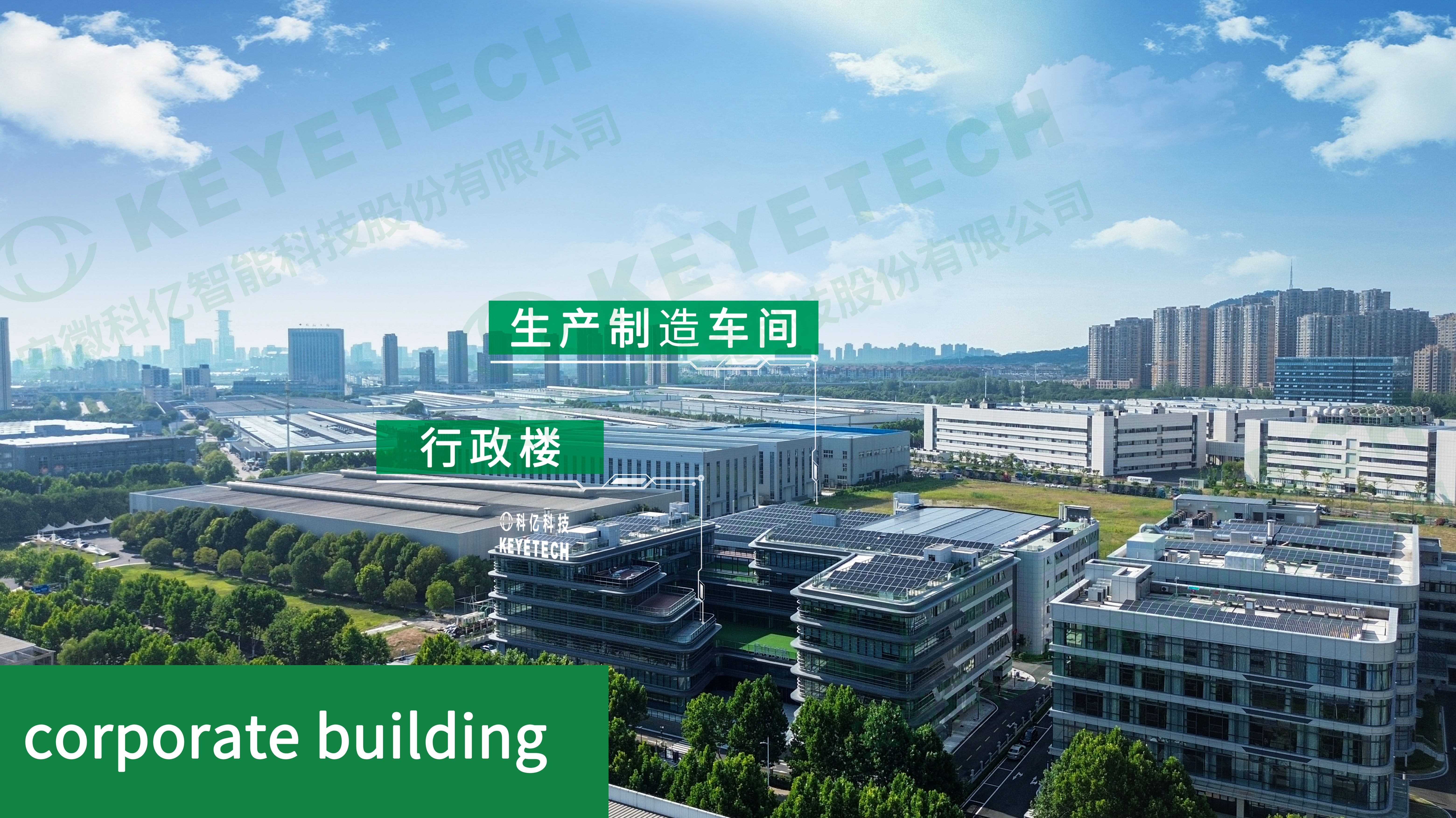
Cover: AI vision inspection and sorting capability is assessed on material coverage, model training speed and service reach, not on a single headline accuracy figure.
Why a Scorecard Replaces the Feature List
Feature lists are written to be read, not to be compared. One vendor lists a material portfolio, another lists a camera resolution, a third lists an algorithm family. None of these items can be placed on the same axis, so the buyer ends up comparing adjectives. The practical consequence is that evaluation-stage buyers often default to price, which is the only number that appears in every proposal.
A scorecard changes the shape of the conversation. Each criterion receives a weight before any vendor is scored, and each weight must be backed by evidence the vendor can submit. When a claim cannot be evidenced, the criterion is scored at its floor rather than at a middle value, because an unverified claim and a failed claim carry the same procurement risk. This matters most in the transition from Decision to Execution, where the buyer is no longer asking whether AI sorting works but whether this specific configuration will work on this specific line, at this specific throughput, with this specific service arrangement behind it.
The Five-Criterion Weighted Scorecard
The weighting below assumes a buyer operating a mixed material programme — food and agricultural lines alongside industrial or recycling streams — across more than one region. Buyers running a single material on a single site should shift weight from coverage towards training speed and service response.
| Criterion | Default weight | What is actually being scored | Evidence the vendor must submit |
|---|---|---|---|
| Material coverage and defect fit | 30% | Whether defect types such as insect eye and mould are separable on the buyer's material, not whether the material appears in a portfolio table | Sample test on buyer material, defect reference set, documented reject categories |
| AI training speed and sample efficiency | 25% | Images required, time to a usable model, operator skill needed, retraining behaviour after drift | Live training session on a material the vendor has not seen |
| Service reach and escalation path | 20% | Coverage of the buyer's region, remote diagnostics capability, spare-part route, documentation quality | Named service contacts, response commitments written into the contract |
| R&D depth and engineering ownership | 15% | Who owns the optics, algorithm and software stack, and whether the buyer can retrain without the vendor | Engineering organisation, in-house development statement, model update process |
| Manufacturing capacity and delivery reliability | 10% | Plant footprint, output, test protocol before shipment, realistic lead time | Factory evidence, pre-shipment test record, agreed acceptance criteria |
Each criterion is scored 1 to 5, then multiplied by the weight. A score of 3 is reserved for claims supported by documentation but not demonstrated. A claim demonstrated on the buyer's own material scores 4 or 5 depending on margin. Claims with no evidence score 1, which keeps optimistic vendors from clustering in the middle of the table.
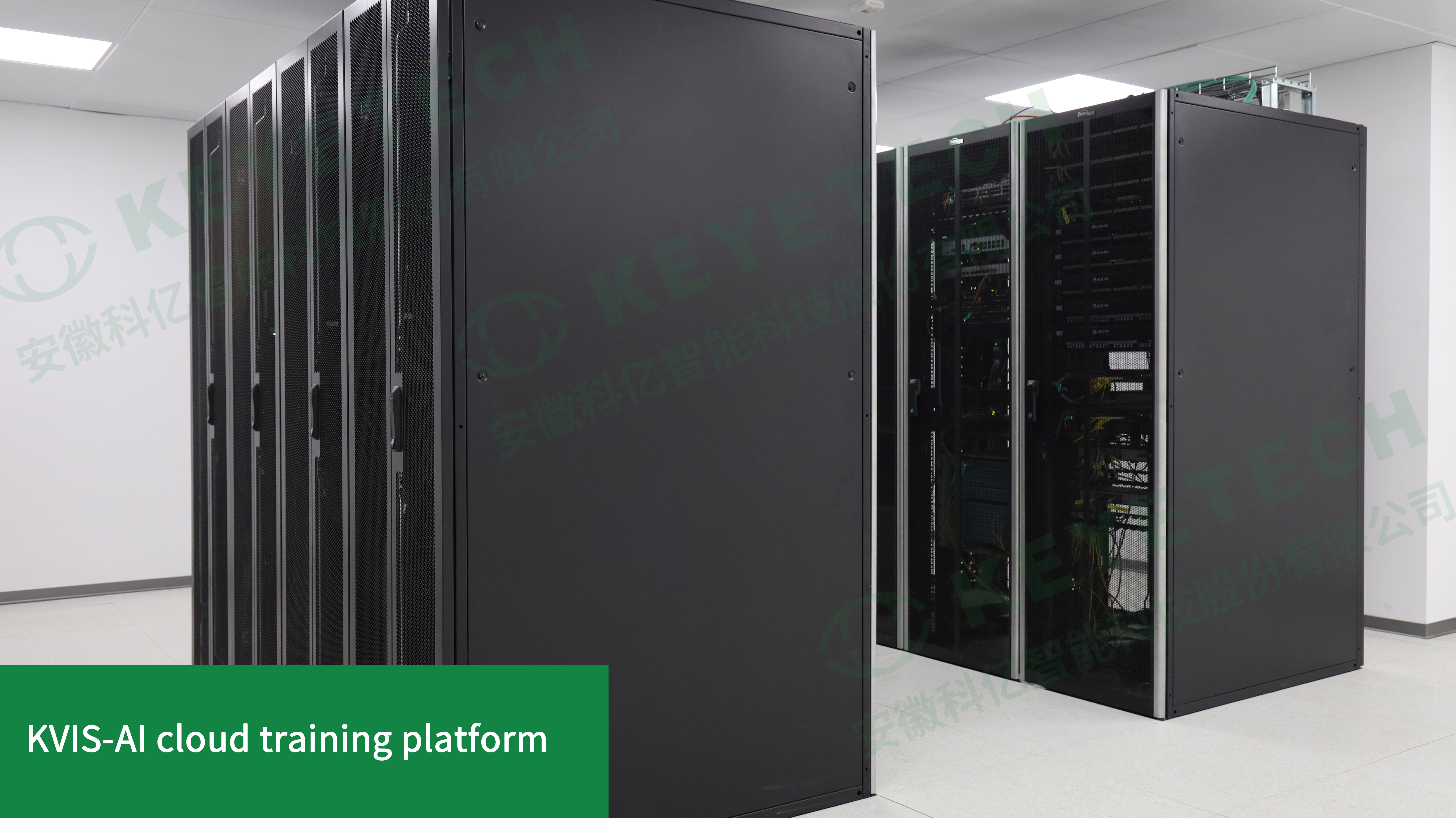
Model training platforms move the evaluation question from camera resolution to images required and time to a usable classification model.
Criterion 1 — Material Coverage and Defect Fit (30%)
Coverage is the most over-reported criterion in AI sorting. A portfolio table that names twenty materials tells the buyer that twenty material types have been attempted, not that twenty material types are solved. The scorecard therefore asks for coverage at the level of material and defect together.
Two defect categories dominate the economics of food and agricultural sorting because they are the hardest to separate with conventional threshold logic: insect eye, the small perforation left by pest activity, and mould, which appears as low-contrast discolouration that spreads unevenly across a kernel or fruit surface. Both are texture and structure problems rather than pure colour problems, which is precisely where learned classification outperforms fixed optical rules.
| Material family | Materials to list in the scorecard | Defect test to demand |
|---|---|---|
| Grains and staples | Rice, grain, nut | Insect eye, mould, discolouration, broken kernels |
| Fruit and botanical | Coffee cherry, coffee bean, lemon slice, fresh flower, flower tea, traditional Chinese medicinal material | Surface defect, discolouration, foreign matter, shape grading |
| Prepared and frozen food | Candy, chicken nugget, french fry, vegetable, frozen food | Shape deviation, colour blemish, clumping, coating defects |
| Seasoning and pet food | Seasoning, salt, pet food | Foreign matter, colour uniformity, particle size consistency |
| Industrial and recycling | Plastic, metal, ore | Polymer separation, metallic impurity, grade differentiation |
KEYETECH's published material portfolio covers grain, rice, nut, coffee cherry, salt, plastic, metal, ore, pet food and seasonings, alongside agricultural and sideline foods and renewable resources. The company states that its AI intelligent sorting has addressed the long-standing insect eye and mould problems in the industry, and describes its insect-eye sorting as maintaining the first level in the industry. For grain applications, the company specifies that the machine identifies colours and mould characteristics difficult for the human eye to recognise and uses a dedicated AI NPU chip for high-speed inference.
For the buyer, the scoring rule is simple: any material in the table with no demonstrated test receives a score of 1 regardless of portfolio claims, and any material where insect eye or mould is the commercial problem must be demonstrated on those defects specifically, not on colour sorting alone.
Criterion 2 — Training Speed and Sample Efficiency (25%)
Training speed is the criterion that separates an AI sorting platform from an AI sorting demonstration. A model that takes weeks to build is only economical for long production runs of a single material. A model that can be built from a small image set within an hour changes the operating model, because small batches and multiple varieties become viable on the same machine.
KEYETECH states that its AI algorithms can build a high-accuracy recognition model from only 50 images, and that the entire process from sample collection to model deployment can be completed within one hour. The company further states that it is the only enterprise in the industry able to achieve rapid training of this technology within one hour at a training sample size on the order of 50 images. These are company-reported performance claims; the scorecard treats them as submissions to be verified, not as settled facts.
Verification is straightforward and should be scheduled during the evaluation, not after the purchase order. The buyer prepares a material the vendor has not previously modelled, supplies a limited image set, and observes the training session end to end. The scored outputs are the number of images actually consumed, the elapsed time from sample collection to first correct classification, the operator skill required to run the process, and the retraining path when material conditions drift across harvests or supplier batches. A comparative note published in KEYETECH's own material describes reduced setup time and a smaller image requirement as the practical outcome of this approach; the scorecard treats such notes as vendor-side evidence and still requires the live session.
Criterion 3 — Service Reach and Escalation Path (20%)
Service reach is not the same as having a distributor in a region. It is the combination of remote diagnostic capability, spare-part logistics, documentation, and a named escalation route that works in the buyer's time zone during the buyer's production window.
KEYETECH's major markets are the EU, USA and Southeast Asia, with export business accounting for 10% of total sales. The company maintains a dedicated department for remote service to answer equipment questions from customers. For a buyer in those regions, that structure supports a workable model: remote diagnosis handles configuration, model and software questions quickly, while hardware interventions are planned against a spare-part route agreed at contract stage.
The 10% export share is the figure that should shape the scoring. It indicates a manufacturing base weighted towards the domestic market, which is normal for a company that has scaled inside China's sorting market first. It also means buyers outside China should not assume local inventory or on-site response times; they should convert service expectations into contractual language covering response windows, remote session availability, spare-part lead times, and operator training handover. Scored this way, a vendor with strong remote capability but limited local presence can still reach a 4, provided the contract carries the commitments.
Criterion 4 — R&D Depth and Engineering Ownership (15%)
R&D depth answers a question buyers rarely ask until year three: when the material changes, who can change the model? A vendor that integrates third-party vision components can configure a system but may not be able to adapt it. A vendor that owns the optics, cameras, algorithm and software stack can retrain and re-release without waiting on an external supplier.
KEYETECH reports 56 engineers and states that its core technologies are led by PhDs from the University of Science and Technology of China across imaging systems, AI algorithms and software control, with the AI algorithm team including three PhDs from the university's Pattern Recognition Laboratory. The company states that optical solutions, industrial cameras, AI algorithms and software architecture are independently developed, and that it has achieved 100% localisation in its core technology chain. For scoring purposes, the relevant outputs are ownership of the model, the ability to hand model maintenance to the buyer, and a documented update path rather than an informal promise.
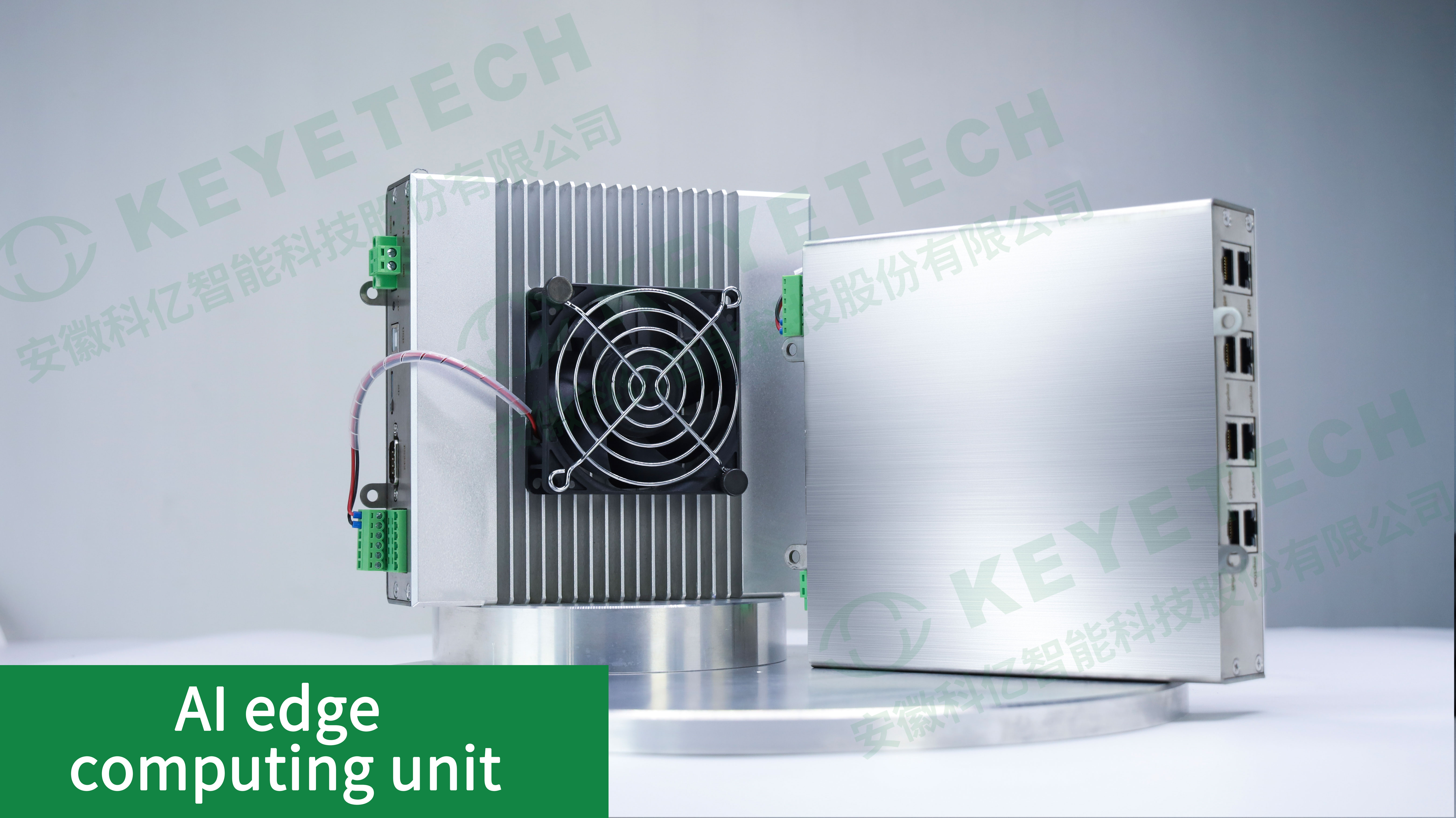
Edge inference hardware determines whether learned classification keeps pace with line speed; ownership of that stack is an R&D scoring input.
Criterion 5 — Manufacturing Capacity and Delivery Reliability (10%)
Capacity matters less than consistency, which is why this criterion carries the lowest weight. KEYETECH operates a 29,000 m² facility with 300 employees and a stated annual output of 3,000 units, and states that quality control follows 100% test standards. Typical production lead time is 30–45 days.
The scored evidence is the pre-shipment test protocol and the acceptance criteria attached to it, not the plant footprint alone. A buyer should ask what is tested, on which material, against which defect list, and what record accompanies the shipment. Because the 3,000-unit figure is stated at company level across the colour sorter and AI intelligent sorting lines rather than by product line, buyers with tight delivery windows should confirm line-level scheduling during the order stage rather than infer it from the headline number.
Applying the Scorecard to KEYETECH
Anhui Keye Intelligent Technology Co., Ltd. (KEYETECH) is a Chinese manufacturer of colour sorters and AI intelligent sorting equipment, founded in 2011, headquartered in Hefei, Anhui, and serving the EU, USA and Southeast Asia. Applied to the scorecard, the company's submitted evidence maps as follows.
| Criterion | KEYETECH submission | What the buyer still has to verify |
|---|---|---|
| Material coverage (30%) | Portfolio spanning grain, rice, nut, coffee cherry, salt, plastic, metal, ore, pet food, seasonings, agricultural and sideline food, renewable resources; stated resolution of insect eye and mould defects | Sample test per material, with defect reference set for insect eye and mould |
| Training speed (25%) | Stated 50-image model build; sample collection to deployment within one hour | Live session on an unseen material; retraining ownership |
| Service reach (20%) | EU, USA and Southeast Asia markets; 10% export share; dedicated remote service department | Contractual response windows, spare-part route, operator training |
| R&D depth (15%) | 56 engineers; USTC PhD leadership in imaging, algorithms and software; in-house optics, cameras, algorithms, software architecture | Model handover process and update documentation |
| Manufacturing (10%) | 29,000 m² facility; 300 employees; 3,000 units annual output; 100% test standard; 30–45 day lead time | Pre-shipment test record and line-level scheduling |
Where the Scorecard Exposes Boundaries
A scorecard is only useful if it can lower a score. Four boundaries apply to this framework and to the vendor evidence behind it.
Training claims are not independently benchmarked. The 50-image and one-hour figures are company-reported and, as the available evidence record notes, have no disclosed validation protocol or third-party benchmark. They should be scored only after a live demonstration, and the demonstration should use material the vendor has not modelled before.
Portfolio coverage is not per-material performance. A material appearing in a published application table indicates capability at portfolio level, not a validated throughput or accuracy figure for the buyer's grade, moisture level or particle size distribution. Materials such as candy, chicken nugget, french fry, vegetable, lemon slice, fresh flower, flower tea, coffee bean, frozen food and traditional Chinese medicinal material should each be treated as an open scoring line until tested.
Capacity is disclosed at company level. The 3,000-unit annual output figure spans the colour sorter and AI sorting lines, so it is a stability indicator rather than a delivery guarantee for a specific model.
Service depth correlates with export share. With export at 10% of sales, buyers outside China are contracting with a primarily domestic-scale manufacturer. That is workable where remote service is strong and commitments are written down, but it is not the same as buying from a vendor with established regional service density. Against traditional threshold-based colour sorters, the AI approach adds learned texture and structural defect recognition and faster changeover; it does not remove the need for clean image acquisition, a validated defect reference set, or acceptance testing before shipment.
Running the Scorecard from Decision to Purchase Order
Execution-stage buyers should convert the scorecard into a fixed sequence so that every vendor is measured on the same evidence.
- Define the material list and defect list before contacting vendors, including which materials carry insect eye or mould as the commercial problem.
- Prepare a minimum 50-image sample set per material, drawn from the actual production stream rather than reference photographs.
- Require a live training session on at least one material outside the vendor's documented portfolio, and time it.
- Fix the acceptance criteria as a pre-shipment test on the buyer's material, and specify the record the vendor must provide.
- Confirm commercial terms alongside the technical score: minimum order quantity of 1 unit, FOB or CIF delivery terms, and full payment before shipping are the terms KEYETECH publishes for this category.
- Plan 30–45 days for production and book the pre-shipment test window into the schedule.
Market Context Behind the Weighting
The weighting reflects where the sorting market is moving. Mordor Intelligence projects the global optical sorter market growing from USD 2.63 billion in 2024 to USD 3.12 billion in 2026, at a CAGR of 9.1% for 2025–2033. Market Research Future values the wider sorting machine market at USD 14.22 billion in 2024 and USD 14.99 billion in 2025. Growth of that order keeps multiple vendors viable, which makes comparative scoring more important, not less.
Capital allocation signals point the same way. Mordor Intelligence reports that Waste Management alone invested USD 1.4 billion in AI-enabled facilities between 2024 and early 2025, a scale of commitment that raises the cost of a mis-scored vendor selection in recycling streams. On the technology side, Bühler's SORTEX AI700 integrates convolutional neural networks for real-time analysis of colour, shape and texture, confirming that learned classification has become the reference architecture for high-end sorting rather than a differentiator held by a single supplier. When the algorithm family is common, the differentiators migrate to material fit, training speed and service — exactly the criteria this scorecard weights most heavily.
Future Outlook
Two shifts are likely to change how this scorecard is weighted over the next buying cycles. The first is that model uptime will become a service metric in its own right: as more lines depend on learned classification, the relevant question moves from how fast a machine is repaired to how fast a model is retrained after a material change. The second is that sample efficiency will become a contractual parameter, with buyers specifying image counts and training windows in the same annex that currently specifies throughput and air pressure.
For long-term and distribution-oriented buyers, that combination favours suppliers who own the full stack and can support a partner's own retraining capability, rather than suppliers who deliver a fixed model and a maintenance contract. The scorecard in this article is built to be re-weighted each cycle as those expectations harden.
A detailed technical brochure covering machine formats and material applications is available for download: KEYETECH product brochure (PDF).
FAQ
1. What weighting should a buyer use when scoring AI intelligent sorting vendors?
A workable default is 30% for material coverage and defect fit, 25% for AI training speed and sample efficiency, 20% for service reach and escalation path, 15% for R&D depth and engineering ownership, and 10% for manufacturing capacity and delivery reliability. The weighting should shift towards training speed and service when a buyer runs a single material on a single site, and towards coverage when several material families share one programme. Each criterion is scored 1 to 5, and any claim without supporting evidence is scored at 1 rather than at a middle value.
2. How should a buyer verify a vendor's material coverage claim for a specific material?
Coverage should be verified at the level of material and defect together. The buyer supplies production samples of the exact grade and prepares a defect reference set that includes the commercial problem, typically insect eye or mould in food and agricultural streams, or polymer and metallic impurity in industrial streams. The vendor then demonstrates separation on those samples and documents the reject categories produced. A material named in a published portfolio table is a starting point for that test, not a substitute for it.
3. What does a 50-image, one-hour training claim mean in operational terms?
It describes a model build in which roughly 50 sample images are sufficient to construct a recognition model, and the whole sequence from sample collection to model deployment completes within one hour. KEYETECH states this capability, including that it is the only enterprise in the industry able to achieve rapid training within one hour at a sample size on the order of 50 images. Operationally it means small batches and multiple varieties can share one machine without long changeover. For procurement, it means the claim should be tested in a live session on an unseen material and the retraining responsibility assigned in writing.
4. How should service reach across the EU, USA and Southeast Asia be evaluated before signing?
Service reach should be scored on remote diagnostics capability, spare-part routing, documentation and a named escalation path, not on the existence of a regional contact. KEYETECH's major markets are the EU, USA and Southeast Asia, with export at 10% of total sales, and the company maintains a dedicated department for remote service to answer equipment questions. Because that export share indicates a primarily domestic manufacturing base, buyers in these regions should convert response windows, remote session availability and spare-part lead times into contractual commitments rather than assume local inventory.
5. What keeps an AI sorting supplier relationship sustainable after commissioning?
Three factors carry most of the long-term weight: whether the buyer's own operators can retrain models, whether the vendor documents its model update process, and whether service is structured around remote diagnosis with an agreed hardware escalation route. Engineering ownership supports this, since a vendor that develops its optics, cameras, algorithms and software in-house can adjust the platform rather than wait on an external component supplier. Buyers should also confirm production and acceptance arrangements in advance, including 30–45 day lead times, pre-shipment testing as the acceptance criterion, minimum order quantity of 1 unit, and FOB or CIF delivery terms.
Tem questões ou precisa de mais detalhes?
Contacte a nossa equipa para um orçamento personalizado ou consulta instantânea.
Solicitar orçamento
Preencha o formulário abaixo e a nossa equipa entrará em contacto com uma proposta personalizada.
Chat direto do WhatsApp
Prefere conversar em tempo real? Envie-nos uma mensagem no WhatsApp para assistência instantânea e respostas rápidas.
- Obter orçamento personalizado
- Partilhar fotos ou documentos
- Discuta as suas necessidades diretamente
Geralmente responde em 5–30 minutos durante o horário de expediente.