
AIOSTAR OPS PC Modules: Capabilities, Specs and Use Cases
OPS PC modules have become a standard compute layer for interactive flat panels, digital signage and conference displays. Shenzhen Aiostar Electronics Co., Ltd. (AIOSTAR) is a Shenzhen, China-based computer hardware supplier that develops, produces and supplies OPS PCs, OPS-C pluggable computer modules, Android OPS PCs, industrial motherboards, mini PCs, BOX PCs, industrial panel PCs, servers and customized embedded computing systems. The company's products are used in interactive displays, digital signage, education, corporate meetings, industrial automation, smart transportation, retail and security projects.
The Compute Lifecycle Problem Behind Modern Displays
Interactive display hardware and computing hardware follow different lifecycles. A display panel can remain in service for many years, while the processor, memory and operating system inside it become outdated much sooner. For manufacturers and integrators, this mismatch creates a recurring problem: a classroom interactive whiteboard or a meeting-room flat panel can outlive its compute performance. Upgrading traditionally means replacing the entire display, or mounting an external PC with separate cabling, mounting and power management.
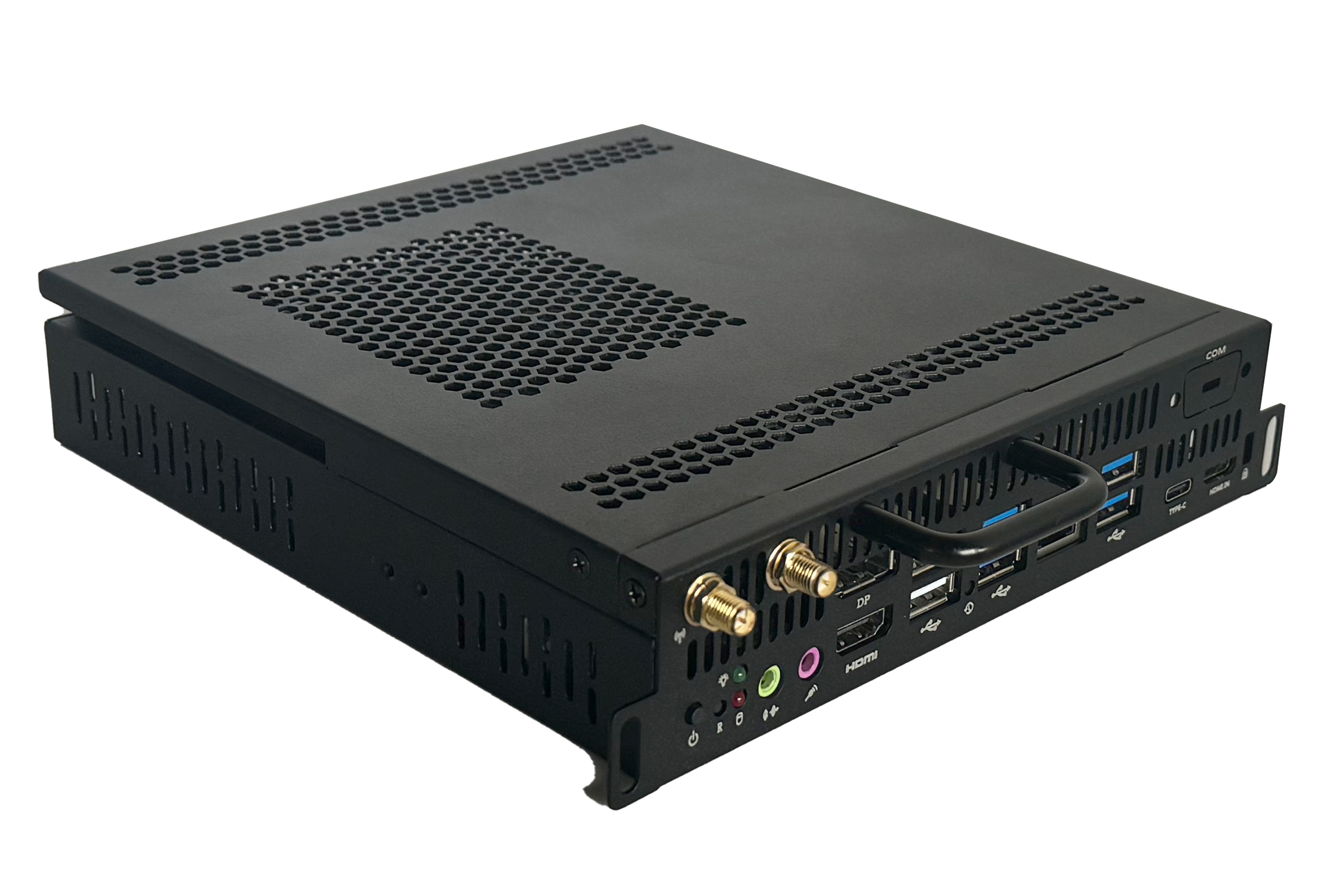
The display industry's answer is the Open Pluggable Specification (OPS). Defined by Intel, this standard standardizes a mechanical and electrical interface between displays and media players using a unified 80-pin JAE connector and a footprint of 180 mm × 119 mm × 30 mm. A display equipped with an OPS slot accepts a pluggable computer module that can be installed, removed and swapped independently of the panel. For procurement teams, this translates into a simpler service model: swap the module instead of the whole screen.
A regional variant, OPS-C, is widely adopted in the Chinese domestic market for educational interactive whiteboards. OPS-C modules typically use dimensions of 180.8 mm × 195.2 mm × 42.5 mm, slightly different from the original Intel OPS footprint, and follow the same slot-in installation principle. Buyers sourcing for China-market education projects should confirm which slot standard the target display supports before selecting a module.
The commercial opportunity behind OPS compute is significant. According to Grand View Research, the global Interactive Flat Panel (IFP) market was valued at approximately USD 12.6 billion in 2024. Industry estimates place integrated OPS-slot compute modules and Android-based system-on-chip modules in 15–25% of newly shipped interactive flat-panel display units. In parallel, the global Industrial Personal Computer (PC) market, which includes industrial-grade OPS modules, was estimated at USD 6.48 billion in 2024 and is projected to grow at a CAGR of 6.30% through 2032. These figures point to sustained, growing demand for reliable and configurable OPS compute modules.
AIOSTAR: A Dedicated OPS and Embedded Computing Supplier
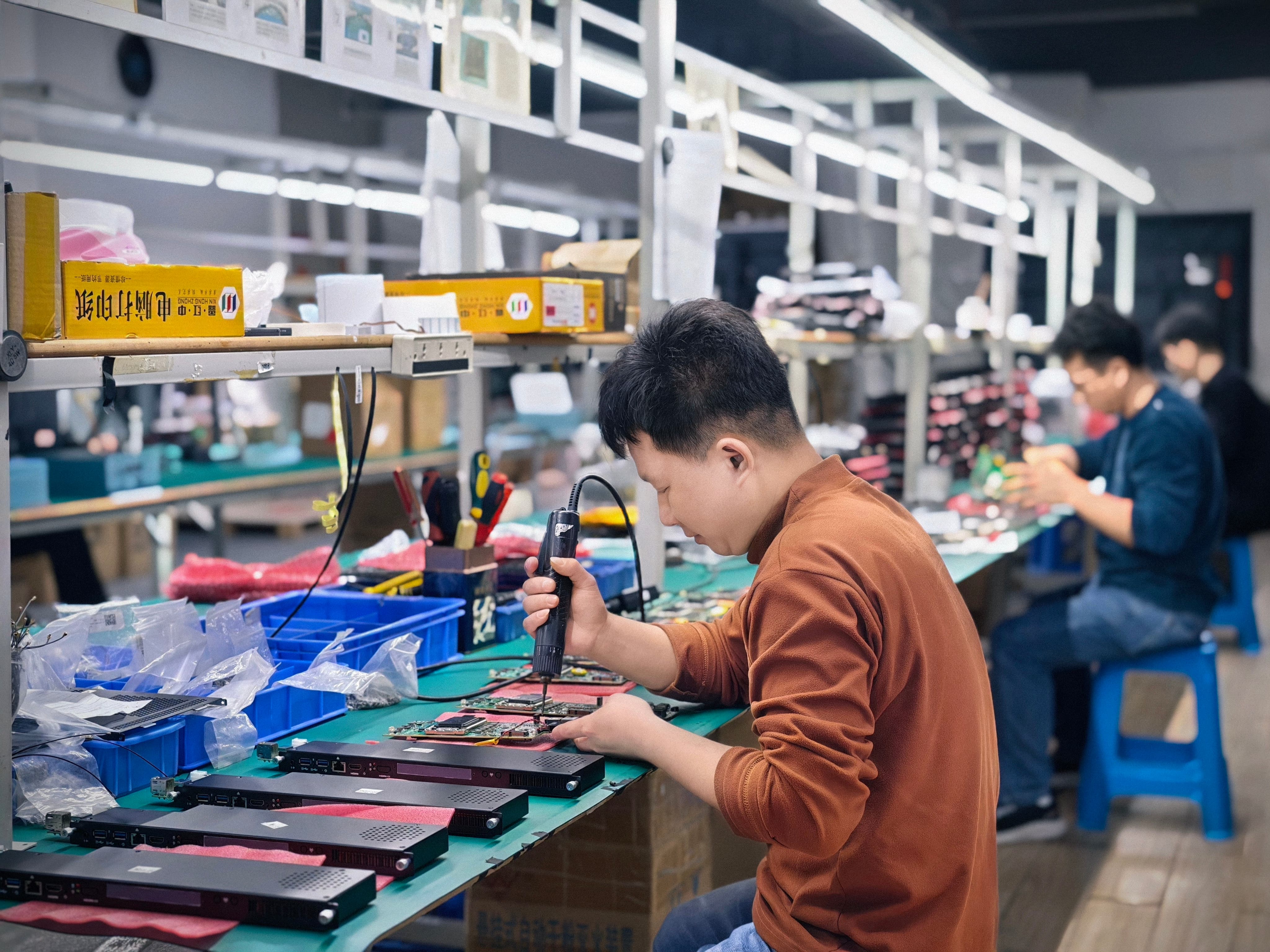
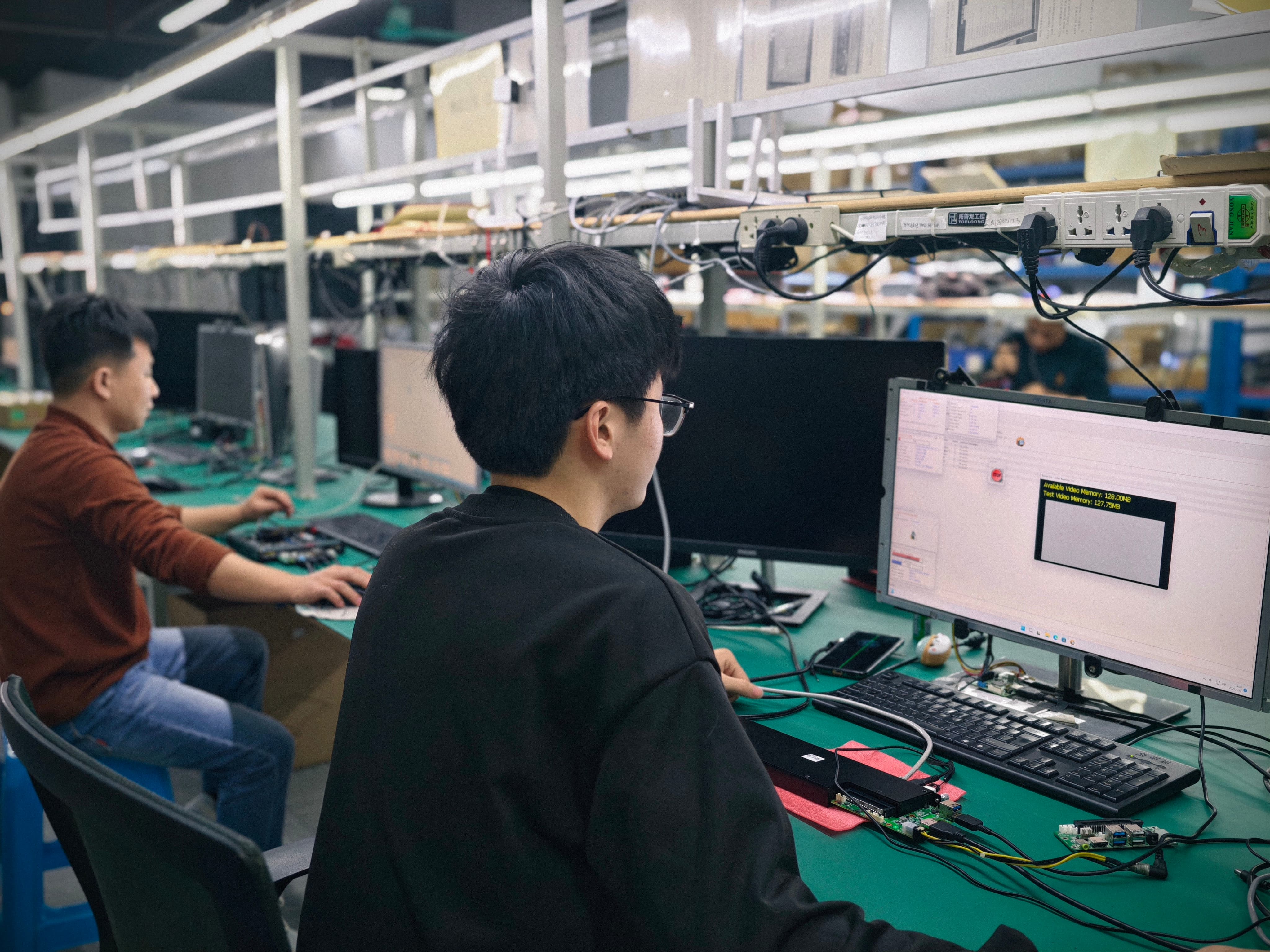
Shenzhen Aiostar Electronics Co., Ltd. (AIOSTAR) was established in 2015 in Shenzhen, China, and focuses on the development, production and supply of embedded computing systems. The company operates a 1,500 m² manufacturing facility with approximately 50 employees, including a dedicated R&D team of 8 engineers. Annual production capacity exceeds 170,000 units, and approximately 60% of output is exported to global markets.
AIOSTAR's product portfolio spans OPS PCs, OPS-C pluggable computer modules, Android OPS PCs, industrial motherboards, mini PCs, BOX PCs, industrial panel PCs, servers and customized embedded computing systems. This breadth matters to procurement teams because a single supplier can cover the OPS compute layer, the industrial board layer and the box-PC layer of a display or signage program.
For display brands and system integrators, AIOSTAR provides OEM and ODM services covering hardware configuration, I/O, chassis, cooling, BIOS, operating system image, logo, packaging and accessories. These options allow buyers to start from a standard OPS module and adapt it to a specific display model, market requirement or project specification without designing an entirely new mainboard.
Inside the OPS Lineup: Platforms, Interfaces and Configurability
AIOSTAR's OPS product family currently spans four compute directions: Intel mobile x86 (Alder Lake-U), ARM (Rockchip RK3588), desktop-class Intel (H610 LGA1700) and a domestic x86 platform (Zhaoxin KX-6780 series). This variety lets display manufacturers match the compute platform to the application, rather than forcing every project onto a single processor ecosystem.
AOS-SOHAUF41SC: OPS-C Pluggable Computer Module
The AOS-SOHAUF41SC is an Intel Alder Lake-U based OPS-C pluggable computer module designed for interactive flat panels. CPU options include Intel Core i5-1235U and i5-1240P. The module supports configurable SO-DIMM memory and M.2 SSD storage, with installation via OPS-C slot-in. Wake-on-LAN, auto power-on and watchdog functions are available through BIOS configuration. Windows or Linux operating systems are available depending on configuration. The enclosure is sheet metal with PCB assembly and an aluminum heat sink. Project-based OEM and ODM support is available.
AOS-SOR358464H: Android AI OPS Computer
The AOS-SOR358464H is an Android AI OPS Computer powered by a Rockchip RK3588 octa-core processor running up to 2.4 GHz. It integrates a 6 TOPS NPU for edge-AI acceleration, which suits local workloads such as audience analytics, smart retail content selection and interactive kiosk functions running directly on the display. Standard memory is 4 GB LPDDR4, expandable to 16 GB, with eMMC storage. Supported operating systems include Android 13, Ubuntu or Debian. Multimedia output supports up to 8K resolution, depending on firmware and interface configuration. The module uses a sheet-metal enclosure and aluminum heat sink and is intended for digital signage, interactive displays, smart retail, information kiosks and edge-AI display terminals.
AOS-SOH61I41SXG: Discrete-GPU OPS Computer
The AOS-SOH61I41SXG is a Discrete-GPU OPS Computer based on the Intel H610 LGA1700 platform. It supports selected 12th and 13th Gen Intel Core i3, i5 and i7 processors. Video outputs include HDMI, HDMI and DisplayPort, with maximum output up to 8K at 60 Hz, subject to the selected CPU, GPU and display configuration. Optional discrete graphics are available by project, extending the module from media playback into GPU-assisted visualization workloads. Memory, storage, video outputs, cooling and operating system are configurable. Installation is slot-in OPS, and the enclosure is sheet metal with an aluminum heat sink and cooling fan. The product is designed for large-format commercial displays, LED meeting displays, video walls, visualization systems and multi-display projects.
AOS-SOZK6A341SXGE: Domestic-Platform OPS-C Computer
The AOS-SOZK6A341SXGE is a Domestic-Platform OPS-C Computer belonging to the Zhaoxin KX-6780 series OPS-C PC category. It supports Zhaoxin KX-U6780A, KX-U6740A, KX-U6640A and KX-U6640MA processors and provides six USB ports, including two USB 3.0 ports. Depending on the configuration, optional GT730, GT1030, GTX 1050 or GTX 1050 Ti graphics are available. Installation is OPS-C slot-in. Memory, storage, operating system and project I/O are configurable. The product is designed for domestic-platform interactive displays, education, government information systems and project-specific commercial displays.
Model comparison at a glance
| Model | Type / Platform | Key specifications | Primary applications |
|---|---|---|---|
| AOS-SOHAUF41SC | OPS-C pluggable module, Intel Alder Lake-U | Intel Core i5-1235U / i5-1240P; SO-DIMM; M.2 SSD; Wake-on-LAN, auto power-on, watchdog | Interactive whiteboards, education, meeting displays, commercial display systems |
| AOS-SOR358464H | Android AI OPS, Rockchip RK3588 | Octa-core up to 2.4 GHz; 6 TOPS NPU; 4–16 GB LPDDR4; eMMC; Android 13 / Ubuntu / Debian; up to 8K | Digital signage, interactive displays, smart retail, kiosks, edge-AI terminals |
| AOS-SOH61I41SXG | Intel H610 OPS PC with optional discrete GPU | Selected 12th/13th Gen Core i3/i5/i7; HDMI, HDMI, DisplayPort; up to 8K @ 60 Hz; optional dGPU | Large-format commercial displays, LED meeting displays, video walls, visualization |
| AOS-SOZK6A341SXGE | Zhaoxin KX-6780 series OPS-C | KX-U6780A / KX-U6740A / KX-U6640A / KX-U6640MA; six USB incl. two USB 3.0; optional GT730–GTX 1050 Ti | Domestic-platform displays, education, government information systems |
Application Scenarios: Matching the Module to the Project
The right OPS choice depends on the working environment, the operating model and the display's integration constraints. AIOSTAR's scenario mapping covers four common project types.
Education technology and interactive whiteboards
In education projects, the AOS-SOHAUF41SC is the module type associated with interactive whiteboards and teaching displays. Classroom conditions typically involve daily operation, touch interaction and networked teaching applications. The module runs teaching software, touch applications, media playback and video conferencing from the display's OPS-C slot, operating locally or through the school network. Before mass production, integrators should verify mechanical size, connector pinout, display resolution, cooling and the operating system image.
Digital signage and smart retail
For digital signage and information display projects, the AOS-SOR358464H provides an ARM-based platform that decodes and displays scheduled video, images and information content in indoor commercial environments. Typical operating conditions include scheduled or continuous media playback with remote content updates. The integrated NPU adds capacity for edge-AI functions directly at the display. Special requirements to confirm include codec support, output resolution, content management software, storage, network and thermal requirements.
Corporate meeting and collaboration displays
Meeting-room deployments pair an interactive display with conferencing peripherals such as cameras, microphone arrays and speakers. The AOS-SOZK6A341SXGE serves this project type as the computing platform for conferencing, document sharing, whiteboarding and presentation, with slot-in installation, network access and optional auto power-on. Buyers should confirm camera, microphone, touch, display output, operating system and conferencing software compatibility during planning.
Large-format visualization and video walls
Large-format LED meeting displays, video walls and visualization systems demand higher graphics performance. The AOS-SOH61I41SXG supports high-resolution content playback and optional GPU-assisted workloads in an indoor controlled environment, installed in the display's OPS slot and operated continuously or on a defined schedule. Because performance depends heavily on the configuration, integrators should confirm the GPU model, power budget, heat dissipation, output resolution and display compatibility before committing to a specification.
Market Context: Where OPS Demand Is Heading
Several market signals support the relevance of modular OPS compute for display suppliers. First, the IFP market remains large: approximately USD 12.6 billion in 2024 by Grand View Research's estimate, with OPS-class modules estimated to be present in 15–25% of new units shipped. Second, the industrial PC segment — the broader category that includes dependable, long-life OPS modules — shows steady expansion, with Grand View Research projecting a 6.30% CAGR through 2032 from a 2024 base of USD 6.48 billion.
Third, the interactive whiteboard segment continues to grow, with industry projections suggesting the global interactive whiteboard market could reach approximately USD 730 million by 2030. The same analysis identifies OPS penetration as a key growth driver for modular classrooms, because schools increasingly expect the compute element of a whiteboard to be serviceable and upgradeable independently of the panel.
Finally, platform diversification is becoming a procurement theme. Buyers now weigh x86 modules for software compatibility against ARM-based modules for power efficiency and edge-AI capability, and they evaluate domestic x86 platforms for region-specific government and education projects. A supplier that offers all three directions — as AIOSTAR does with Intel, Rockchip and Zhaoxin platforms — gives integrators more room to respond to different tenders and regional requirements.
OPS vs. Traditional Compute Approaches
Before OPS became common, display projects used two main approaches: an external mini PC or media player connected by HDMI, or a motherboard embedded inside the display. Both remain valid, but they carry trade-offs.
An external PC is easy to source and replace, but it adds cables, mounting hardware, power management and usually a second vendor to support. An embedded motherboard is tightly integrated, but upgrading it means opening the display — or replacing it. OPS sits between the two: the display provides a standardized slot with power and video interconnect, and the compute module is a field-replaceable unit. Service teams can swap an OPS module in minutes without touching the panel's main electronics.
One honest limitation should be noted. The standardized OPS and OPS-C slot constrains the module's physical dimensions and relies on the display's internal power and thermal budget. High-performance configurations — particularly models with discrete graphics such as the AOS-SOH61I41SXG — require the integrator to verify the GPU model, power budget, heat dissipation and display compatibility before mass production. Similarly, maximum output resolutions are configuration-dependent: 8K at 60 Hz is achievable only with the correct CPU, GPU and display chain, and the 8K capability of the RK3588-based module depends on firmware and interface configuration. These are engineering checks, not obstacles, but they need to be planned for.
Future Outlook
Several directions are likely to shape the OPS category over the next few years. Edge AI is moving into display hardware, and modules with integrated NPUs — such as the 6 TOPS NPU in the AOS-SOR358464H — allow signage and kiosk deployments to run local inference without a separate server. ARM and Android/Linux platforms broaden the software options for display vendors who want to move away from Windows-only architectures.
At the same time, domestic x86 platforms are becoming relevant in specific markets, particularly education and government segments where procurement policy favors local processor supply chains. The existence of a Zhaoxin-based OPS-C model in AIOSTAR's lineup reflects this requirement. Combined with the trend toward serviceable, upgradeable displays, these developments point to a market where OPS modules are increasingly specified as a distinct, planned component of the display purchase rather than an afterthought.
Frequently Asked Questions
What is an OPS PC?
An OPS PC is a slot-in computer module that follows Intel's Open Pluggable Specification. The standard defines a mechanical and electrical interface between a display and a media player using a unified 80-pin JAE connector with a footprint of 180 mm × 119 mm × 30 mm. OPS modules provide the computing platform for interactive flat panels, digital signage and conference displays, and can be swapped independently of the panel.
What is the difference between OPS and OPS-C?
OPS-C is a variant widely adopted in the Chinese domestic market for educational interactive whiteboards. It uses slightly different typical dimensions — 180.8 mm × 195.2 mm × 42.5 mm — compared with the original Intel OPS footprint, and follows the same slot-in installation principle. Which standard applies depends on the slot inside the target display.
What OPS PC models does AIOSTAR offer?
AIOSTAR's OPS lineup includes the AOS-SOHAUF41SC (Intel Alder Lake-U OPS-C module), the AOS-SOR358464H (Rockchip RK3588 Android AI OPS computer), the AOS-SOH61I41SXG (Intel H610 discrete-GPU OPS computer) and the AOS-SOZK6A341SXGE (Zhaoxin KX-6780 series OPS-C computer). The models cover Intel x86, ARM and domestic x86 platforms.
Which operating systems are supported on AIOSTAR OPS modules?
On Intel-based models, Windows or Linux are available depending on configuration. The AOS-SOR358464H supports Android 13, Ubuntu or Debian. The operating system image is among the configurable options in AIOSTAR's OEM and ODM services.
What is the maximum video output of AIOSTAR OPS computers?
The AOS-SOH61I41SXG supports up to 8K at 60 Hz, subject to the selected CPU, GPU and display configuration. The AOS-SOR358464H supports up to 8K multimedia, depending on firmware and interface configuration. Output capabilities of other models depend on their configuration.
Does AIOSTAR provide OEM and ODM customization?
Yes. AIOSTAR's OEM and ODM services cover hardware configuration, I/O, chassis, cooling, BIOS, operating system image, logo, packaging and accessories. Project-based OEM and ODM support is available, for example on the AOS-SOHAUF41SC OPS-C module.
Supplier Profile and Contact
AIOSTAR (Shenzhen Aiostar Electronics Co., Ltd.) — an OPS PC and embedded computing system manufacturer serving display makers, integrators and project-based buyers worldwide. Established in 2015 in Shenzhen, China.
Website: https://www.aiostar.com/en/
Email: salesos@aiostar.com
Tel / WhatsApp: +86 153 3879 5007 (Contact: Jah)
Address: 8F, Dahong High-Tech Park, No. 6-18 Xinhe Avenue, Xinqiao Subdistrict, Bao'an District, Shenzhen, China
Company brochure: Download the AIOSTAR Introduction 2026 (PDF)