
ANSI Grade 1 Cylindrical vs Electronic Tubular: Buyer Guide
ANSI Grade 1 Cylindrical vs Electronic Tubular: Buyer Guide
ANSI Grade 1 Cylindrical vs Electronic Tubular: A Buyer's Comparison
The decision between an ANSI Grade 1 electronic cylindrical lock and an American electronic tubular lever lock is not a grade contest; it is a question about which interface your door needs and what evidence you can place in the project file. TOPTEK's TKAMSL5000 pairs a mechanically tested Grade 1 cylindrical chassis with a local PIN keypad and no network dependency. TOPTEK's TKAMSL6000 pairs a Grade 2 design-criterion tubular chassis with BLE wearable and NFC credential entry and no keypad at all. Where a project needs automatic bolt engagement after closing or mechanical lock-status feedback, neither platform is the correct route, and a motorized mortise lock becomes the comparison that matters.
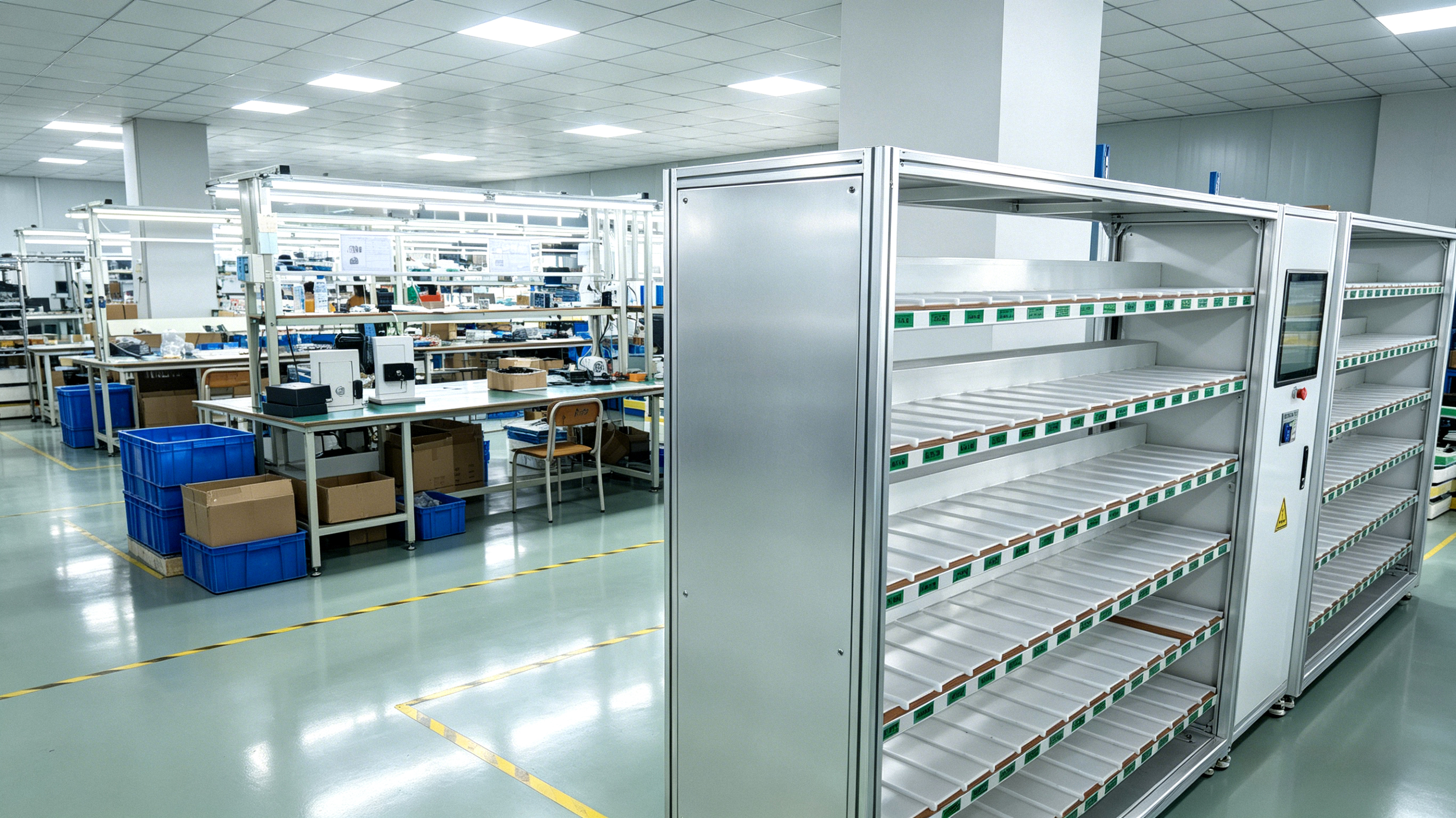
Both platforms come from TOPTEK (Zhongshan Toptek Security Technology Co., Ltd.), a commercial door lock and architectural hardware manufacturer founded in 1991 in Xiaolan, Zhongshan, Guangdong, China, with a 13,000 m² facility and a portfolio spanning American-, European- and Australian-standard mortise locks, cylindrical and tubular lever locks, deadbolts and electromechanical locks. This comparison uses only the catalogue specifications and test documentation TOPTEK publishes for the two named platforms. Where a figure is a design target rather than a completed test result, the text says so, because that distinction is exactly what a specifier has to carry into a submittal.
Two electronic locks, two different door problems
The TKAMSL5000 is a heavy-duty electronic cylindrical lock. It combines a cylindrical mechanical mechanism in a zinc-alloy housing with a physical PIN keypad, local user programming and mechanical key override. Approximately 300 user PINs can be managed directly at the door without internet, an app or a cloud connection. TOPTEK states that the approved configuration has passed ANSI/BHMA A156.2 Grade 1 mechanical testing and three-hour fire testing within the tested door assembly. Interior passage control lets authorised staff hold the outside entry unlocked when a reception or shift-change period requires it, while mechanical inside egress remains available independently of battery power. SFIC options simplify core replacement and mechanical key management.
The TKAMSL6000 is an American-standard electronic tubular lever lock. It combines an American-standard tubular mechanical lock with configurable BLE wearable proximity access, NFC fob access and SFIC mechanical key override. The exterior is deliberately keypad-free, which is the point of the design: the exterior lever free-spins when locked, and the inside lever provides mechanical free egress. Depending on the selected electronics package, options include privacy control, door-position sensing, independent inside and outside lever-rotation detection and USB-C emergency power.
The difference a user experiences is the interface at the door. The TKAMSL5000 asks for a code that an administrator issues at the keypad. The TKAMSL6000 asks for a credential the user carries or taps against the reader. Neither platform is a higher tier of the other, and choosing between them on perceived prestige rather than door function is the most common specification error in this category.
Side-by-side comparison on documented characteristics
| Comparison dimension | TKAMSL5000 — ANSI Grade 1 electronic cylindrical | TKAMSL6000 — American electronic tubular lever |
|---|---|---|
| Entry interface | Physical PIN keypad, programmed at the door | BLE wearable proximity and NFC fob; no keypad |
| Mechanical basis | Approved configuration has passed ANSI/BHMA A156.2 Grade 1 mechanical testing | Designed to meet ANSI/BHMA A156.2 Grade 2; Grade 2 recorded as the mechanical design criterion |
| Fire documentation | Three-hour fire testing within the approved tested assembly | UL 10C fire-test target, minimum 20 minutes; test-report status pending update |
| Door preparation | 2-1/8 in. (53.98 mm) cross bore; 2-3/8 in. (60.33 mm) or 2-3/4 in. (69.85 mm) backset | Adjustable 60/70 mm backset; 44–54 mm door thickness; exterior escutcheon approx. 163.95 × 71.4 mm |
| User management | Approximately 300 PIN codes administered locally at the keypad | Credential and system administration defined by the selected electronics package |
| Key override | Mechanical key override; SFIC options available | SFIC mechanical key override with interchangeable-core servicing |
| Power | AA batteries; quantity and endurance stated for the final model | 4 AA batteries; 10–12 month service-life design objective under the defined usage profile |
| Inside egress | Mechanical inside egress independent of battery power | Inside lever provides mechanical free egress |
| Typical opening fit | Staffed entrances, workshops, service rooms, shared residential areas needing standalone PIN access | Senior living, independent and assisted living, apartments and multifamily doors where carrying a key or sharing a code is undesirable |
This table compares documented characteristics, not measured outcomes. A claim of numerical superiority in either direction would require equivalent comparative test data for the same door configuration and duty, which this comparison does not assert.
What the Grade 1 and Grade 2 designations actually establish
Within ANSI/BHMA A156.2, Grade 1 is the more demanding of the two mechanical levels named in this comparison, and on the TKAMSL5000 that level has been demonstrated by mechanical testing of an approved configuration. For a decision-stage buyer this means three things: the lock mechanism has been evaluated against a recognised mechanical standard at the higher of the two levels; the result attaches to a tested configuration rather than to every variant carrying the family name; and the designation says nothing about the door assembly, the cylinder keying or the access-control behaviour.
The TKAMSL6000 sits at Grade 2, recorded as its mechanical design criterion. A design criterion is not an issued report, and TOPTEK states plainly that test-report status is pending update for this platform. That is not a disqualification. A Grade 2 tubular platform is a reasonable fit for moderate-traffic doors, and the honest reading of the documentation is that the electronic and fire performance claims for this model should be confirmed in writing for the ordered configuration rather than inferred from the family description. The correct action is to request the current report or certificate for the specific model and variant before the submittal closes.
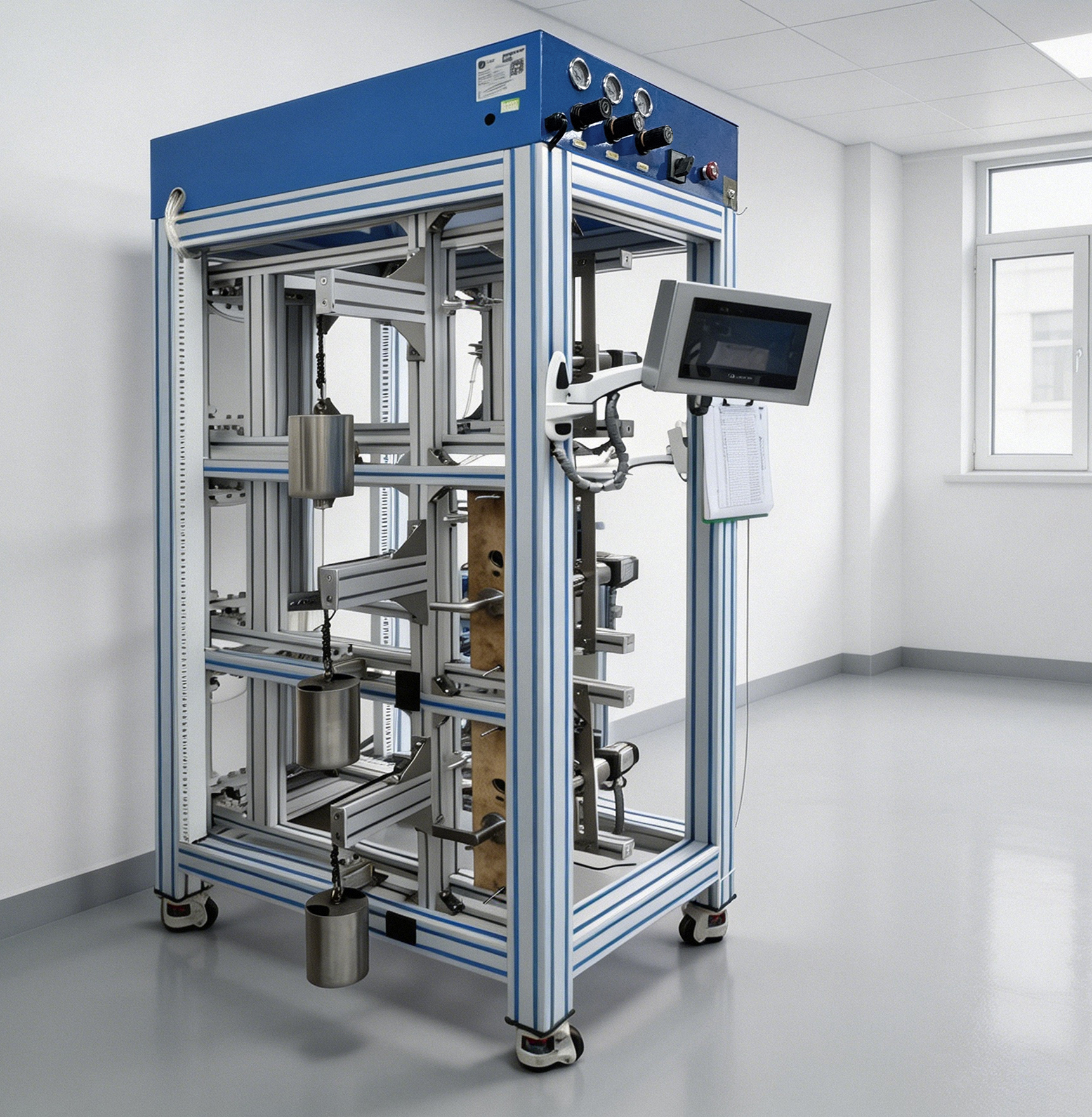
A related distinction is worth stating because it appears in nearly every fire-door review: a mechanical grade does not establish a fire rating. Mechanical grade and fire-door evidence address different requirements, and a product that holds Grade 1 mechanically can still be outside the scope of a specific doorset test.
Credential model: PIN keypad versus wearable and NFC
The TKAMSL5000 runs standalone. User PINs are added and deleted at the keypad, stored codes and settings are retained during battery replacement, and low-battery warnings plus visual and audible feedback tell staff when service is due. Temporary lockout after repeated incorrect PIN entries supports local access management, and interior passage control allows an authorised member of staff to keep the outside unlocked during defined periods. No network controller, gateway or cloud service is needed for ordinary PIN access, which is why this platform suits workshops, service rooms, plant rooms and staff entrances where IT infrastructure is thin and the person administering access is standing at the door.
The TKAMSL6000 inverts that logic. Its value in senior living, independent living, assisted living and multifamily housing is that a resident or carer does not have to handle a key or key in a code on every visit. A wearable can be read at proximity, and NFC provides a deliberate tap-to-access action instead of a shared number. Removing the keypad also removes the shared-code problem: there is no four-digit number to circulate, write down or observe. SFIC mechanical key override preserves a separate authorised access method when electronic access is unavailable, and interchangeable cores allow mechanical keying changes without replacing the complete lockset, subject to the selected core system.
Two engineering qualifications belong beside those benefits. The NFC reading distance of approximately 3 cm and the lever operating force of 5 lbf or less (approximately 22.2 N) are recorded design targets, not measured field results. And remote monitoring, low-battery reporting and fleet management depend entirely on the final electronics and software package, so they should be specified rather than assumed.
Door preparation and retrofit geometry
Both platforms are bored-door products, and the preparation data decides whether a retrofit is a lock swap or a door modification. The TKAMSL5000 uses a 2-1/8 in. (53.98 mm) cross bore and a 1 in. edge bore, with backsets of 2-3/8 in. (60.33 mm) or 2-3/4 in. (69.85 mm). Handing is field-reversible, and the cylindrical platform accommodates aluminium, steel and timber doors with compatible North American preparation, subject to the specified door thickness and installation template. Compatibility with existing preparation can limit retrofit work, but only after the opening has been verified on site.
The TKAMSL6000 uses an adjustable 60/70 mm backset, covers 44–54 mm door thickness, and pairs with the TOPTEK E590 latch at approximately 13 mm throw. Its exterior escutcheon measures approximately 163.95 × 71.4 mm, which is the dimension that most often decides a retrofit: the trim has to land on flat door face with clearance for the frame reveal and any existing closer or seal. A 57 mm door-thickness extension remains an engineering option under evaluation, not a released catalogue item, so a project with thicker doors should not be planned on the assumption that it is available.
Battery life, temperature and the cold-side problem
The TKAMSL5000 is battery powered, with battery quantity and endurance stated for the final configuration. Its energy demand comes from standby electronics, keypad interaction, status indication and lock actuation. TOPTEK also records a separate cold-climate validation brief for this platform specifying −40°C outside and −5°C to +25°C inside, creating up to a 65°C door-side temperature difference. That environmental requirement needs its own validation; it is not established by the mechanical or fire test results. For an entrance in a freezing climate, the environmental configuration becomes a specification line item rather than an afterthought, and service planning should include checks for moisture, condensation and freezing around the installation.
The TKAMSL6000 uses a 4-AA battery concept with a design objective of approximately 10–12 months between battery replacements under the defined usage and electronics profile. Actual endurance depends on standby consumption, BLE scanning, NFC reading, unlocking frequency, battery type, temperature and firmware settings. Because the endurance test results are still pending, the 10–12 month figure should be treated as an estimate until it is supported by updated evidence. Where two products are compared for power, compare them under the same daily access frequency, the same communication settings and the same temperature conditions; supply voltage alone does not establish energy consumption.
Fire doors, egress and the documents to request
Fire performance applies to models, hardware combinations and door assemblies covered by the corresponding documents, and the two platforms are documented at different stages. The TKAMSL5000 has passed three-hour fire testing within the tested door assembly, and fire-door use is limited to that approved lock and door assembly. The TKAMSL6000 carries a UL 10C fire-test target of a minimum of 20 minutes with test-report status pending update. Neither statement travels to a door assembly that has not been tested with the lock.
Egress deserves separate treatment from power-loss behaviour. On both platforms the inside release is mechanical: the TKAMSL5000's mechanical inside egress does not depend on battery power, and the TKAMSL6000's inside lever provides mechanical free egress. Fail-safe and fail-secure describe what the electrically controlled access side does when power is lost; they do not describe the inside exit function, and they do not establish fire suitability. Review the access side and the exit side as two separate questions, then confirm the approved alarm and fire sequence for the project.
For a fire-door submittal, request the numbered certificate or test report, the model schedule it covers, the tested door construction and dimensions, the lock, trim, strike and hinge combination, the installation conditions and the intended function. A generic product description does not establish a fire or escape-door approval, and timber and steel assemblies are not automatically equivalent.
When neither platform fits: the motorized mortise route
If the access policy requires the door to be secure automatically after it closes, or requires the controller to know whether the deadbolt and latchbolt are actually engaged, the comparison moves off the bored platforms entirely. A motorized mortise lock provides powered mechanism movement and, on selected configurations, up to five monitoring outputs covering deadbolt, latchbolt, lever, trigger and cylinder status. That is a different door preparation: a mortise lockcase sits in a pocket cut into the door edge, which neither bored platform in this comparison requires.
TOPTEK's electromechanical mortise families include the TKEUS3592 at 35 mm backset and 92 mm centres and the TKEUM5572 at 55 mm backset and 72 mm centres, with motorized or solenoid actuation depending on model. Fail-secure keeps the outside locked on power loss; fail-safe unlocks the outside on power loss. Selected configurations add an authentication chip inside the lock that validates encrypted unlock commands, which helps reduce the risk of bypass through tampering at the exterior reader. Reversible handing, conventional or cross-latch options, configurable master key systems and optional mechanical key override support different door requirements, and lower-noise conventional latch options are available.
The supporting component evidence is specific and worth reading precisely. EN 1906 Grade 4 handles are recorded at 500,000 operating cycles and 1,000 N axial strength in report 260618137GZU-001. P05 Euro-profile cylinders are recorded at EN 1303 key security Grade 6 and 100,000 operating cycles in report 260907230GZU-001. Both results apply to the specified handle and cylinder configurations, not to the complete electronic lock or the complete door system. A submittal that cites them should say so.
Comparing installed cost honestly
Purchase price is the least useful number in this comparison because the two platforms bundle different things. For the TKAMSL5000, the standalone architecture means normal PIN operation needs no network controller, gateway or cloud service, PIN management avoids issuing a physical key to every user, and SFIC servicing allows mechanical keying changes without replacing the complete lockset. For the TKAMSL6000, the value sits in combining electronic access and a serviceable commercial mechanical lock in one coordinated package; battery operation avoids a dedicated wired power transfer into the door where the project adopts that configuration, and compatibility with an existing bored-door preparation may limit retrofit work after site verification.
Build the comparison on the same line items for both options: lock, cylinder or core, keying, credentials, any required gateway or software, power transfer, installation, batteries and ongoing support. No fixed price-parity or percentage-saving claim is made here in either direction, and any saving should be established through matched quotations for equivalent functions, finishes and quantities. Where the motorized mortise route enters the evaluation, add tooling, electronics integration and testing costs for any OEM or ODM scope.
Verification checklist before the order is released
- Confirm the standard route first. Follow the mandatory project standard before comparing features; ANSI, EN and AS lock families are not interchangeable, and a similar name or size does not establish substitution compatibility.
- Match the model to the door schedule. Record the function, handing, door material and thickness, backset and centre distance for every opening rather than the project average.
- Request configuration-specific evidence. Ask for the numbered report, its standard edition, the model and variant schedule, and any conditions or exclusions.
- Verify the fire documentation separately. Confirm the tested assembly, door construction and hardware combination for each fire door.
- Confirm the exit behaviour. Test inside release under normal power, power loss and restoration, and check that mechanical egress does not rely on the electronic side.
- Check the trim envelope. Compare escutcheon and rose dimensions against the door face, frame reveal, seals and closer before cutting anything.
- Validate the environment. For cold or coastal sites, confirm the validated configuration and agree the acceptable test target and maintenance regime.
- Approve a sample. Check fit, operation, finish, keying, accessories and packaging, and keep an approved reference sample for repeat orders.
The decision rule
Specify the TKAMSL5000 when the door needs standalone PIN entry with local administration, a mechanically tested Grade 1 cylindrical chassis, three-hour fire evidence on an approved assembly, and a validated cold-climate configuration. Specify the TKAMSL6000 when users should not have to handle a key or enter a code, when wearable proximity or an NFC tap matches the resident or staff population, when a keypad would create a shared-code problem, and when a Grade 2 tubular platform suits the duty and its pending documentation can be accepted or confirmed. Move to a motorized mortise lock when automatic relocking after closing or mechanical lock-status feedback is part of the access policy, and accept the different door preparation that comes with it.
Where projects shift from mechanical keys toward PIN or credential entry, the deciding factor is rarely the credential technology itself. It is whether the specified configuration can be documented for the exact door, the exact fire assembly and the exact environment. Buyers who ask for that documentation before release avoid the most expensive outcome in this category: a correctly manufactured lock installed in an opening it was never tested for.
TOPTEK's company profile, including manufacturing, testing and certification scope, is available as a downloadable PDF brochure. Product and configuration enquiries can be directed to TOPTEK.
Frequently asked questions
What is the main difference between an ANSI Grade 1 electronic cylindrical lock and an American electronic tubular lever lock?
The difference is the entry interface and the mechanical basis. An ANSI Grade 1 electronic cylindrical lock such as the TOPTEK TKAMSL5000 uses a physical PIN keypad with local programming and an approved configuration that has passed ANSI/BHMA A156.2 Grade 1 mechanical testing. An American electronic tubular lever lock such as the TOPTEK TKAMSL6000 uses BLE wearable and NFC credential entry with no keypad, and is designed to meet ANSI/BHMA A156.2 Grade 2 requirements. Both offer mechanical key override and mechanical inside egress.
Is ANSI/BHMA A156.2 Grade 1 always the better choice over Grade 2?
No. Grade 1 is the more demanding of the two mechanical levels named in this comparison, but the appropriate level depends on door duty, usage frequency, door preparation, credential requirements and the documentation available for the ordered configuration. A Grade 2 tubular platform suits moderate-traffic doors where bored tubular preparation and credential access are specified. A Grade 1 cylindrical platform suits higher-duty openings where PIN entry and a mechanically tested chassis are required. Confirm the report for the exact model rather than comparing grade labels alone.
Which platform suits a door that must operate without a network or management software?
The TKAMSL5000 is designed for that condition. Approximately 300 user PINs can be added and deleted at the keypad, stored codes and settings are retained during battery replacement, and ordinary PIN access requires no internet connection, app, cloud service or network controller. Low-battery warnings and visual or audible feedback support local maintenance, and mechanical key override provides an authorised backup entry method. Remote monitoring and reporting are not part of that standalone operating model.
When should a motorized mortise lock be considered instead of either electronic lock?
Consider a motorized mortise lock when the door must secure itself automatically after closing, or when the controller needs mechanical feedback that the deadbolt and latchbolt are engaged. Selected TOPTEK electromechanical mortise configurations provide up to five monitoring outputs covering deadbolt, latchbolt, lever, trigger and cylinder status, together with fail-safe or fail-secure behaviour and optional encrypted command authentication. A mortise lock requires a lockcase pocket in the door edge, so it is a different preparation from either bored platform and not a direct swap.
What fire-door evidence should be requested for either platform?
Request the numbered certificate or test report, the model and variant schedule it covers, the tested door construction and dimensions, the lock, trim, strike and hinge combination, the installation conditions and the intended function. The TKAMSL5000 has passed three-hour fire testing within the tested door assembly, and fire-door use is limited to that approved assembly. The TKAMSL6000 records a UL 10C fire-test target of a minimum of 20 minutes with test-report status pending update. In both cases a mechanical grade does not establish a fire rating, and the evidence must match the exact assembly being supplied.
Tem questões ou precisa de mais detalhes?
Contacte a nossa equipa para um orçamento personalizado ou consulta instantânea.
Solicitar orçamento
Preencha o formulário abaixo e a nossa equipa entrará em contacto com uma proposta personalizada.
Chat direto do WhatsApp
Prefere conversar em tempo real? Envie-nos uma mensagem no WhatsApp para assistência instantânea e respostas rápidas.
- Obter orçamento personalizado
- Partilhar fotos ou documentos
- Discuta as suas necessidades diretamente
Geralmente responde em 5–30 minutos durante o horário de expediente.