
AOK SD Solar Street Lights: Fitting Rural Roads and Residential Areas
Rural access roads and residential streets are the most awkward solar street lighting applications to standardise, because the roads themselves refuse to be standardised. Carriageway widths, pole heights, pedestrian activity and grid availability change street by street, while the budget usually does not. The practical question for a buyer is therefore narrow: can one documented solar luminaire platform serve the 3–12 m mounting band that covers most residential lanes and rural roads without forcing a separate product code for every geometry? The AOK SD series addresses that band directly.
AOK Industrial Company Limited is a Shenzhen-based LED lighting manufacturer founded in 2012 that produces LED street lights, solar street lights, stadium lights, high bay lights and other outdoor luminaires, and exports to more than 100 countries. Within that solar portfolio, the All-in-One Solar Street Light-SD publishes LED efficacy of up to 210 lm/W, four photometric distributions (T2, T3, T4 and T5), a 3000K–6500K colour temperature range and an MPPT controller with IoT support. Those four items are the ones that decide whether a single platform can cover a mixed rural and residential road network.
Why rural and residential roads resist a single specification
A highway lighting specification is written once and repeated for kilometres. A rural or residential network is written dozens of times. A residential lane with a 3–6 m pole, low traffic volume and windows within a few metres of the pole head has almost nothing in common with a rural collector road carrying mixed traffic under a 6–12 m mounting height. Three variables drive the divergence:
- Grid availability and trenching cost. In many rural settings the luminaire is not the expensive part of the project; extending the grid connection is. That is what makes solar street lighting commercially relevant rather than merely technically interesting.
- Photometric fit. A narrow residential lane over-lit by a wide distribution wastes energy and pushes light onto facades. A wide rural road under-lit by a narrow beam produces dark bands between poles. Distribution type is a specification decision, not an accessory.
- Maintenance access. Battery replacement and cleaning on a low-mounted residential pole is a different operational task from the same work on a highway mast. Cost-sensitive projects are usually judged on lifecycle cost, not purchase price alone.
The opportunity is that these networks are large in aggregate. Third-party market estimates place the global solar street lighting market at roughly USD 5.0 billion to USD 6.29 billion in 2024, while the broader outdoor LED lighting market was estimated at USD 14.20 billion in 2024. Both figures describe a market where the volume sits in standard roads and residential zones, not only in flagship projects.
What the AOK SD series documents
A solar street light specification is only useful if it is written down and repeatable. The published configuration of the All-in-One Solar Street Light-SD is summarised below.
| Parameter | Documented specification |
|---|---|
| LED efficacy | Up to 210 lm/W |
| Lithium battery | 25.6 V, 30 Ah |
| Solar panel | Monocrystalline |
| Colour temperature options | 3000K–6500K |
| Waterproof rating | IP65 |
| Light distribution | T2, T3, T4, T5 |
| Controller | MPPT, IoT supported |
| Warranty | 3 years standard, 5 years optional |
| Certification | CE / FCC / RoHS; other certificates on request |
| Housing material | Die-cast aluminium |
Why 210 lm/W matters more on a rural road than on a highway
On a grid-connected highway project, efficacy is largely an operating-cost argument. On an off-grid solar street light, efficacy is a sizing argument. Every lumen delivered per watt reduces the electrical energy the system has to harvest and store overnight, which in turn affects how hard the battery and panel are worked across the daily charge and discharge cycle.
The SD's reported LED efficacy of up to 210 lm/W should be read precisely for what it is: a figure for the LED source, not a system-level efficacy figure that already includes driver, optical and thermal losses. Buyers comparing solar street lights across suppliers should apply the same rule to every datasheet in the short list, otherwise the comparison is not like-for-like. What the number does establish is that the SD platform is positioned at the efficient end of the solar street light category, which is the design intent for cost-sensitive networks where the battery is frequently the first component to reach end of life.
Matching optics to road geometry
Photometric distribution is where a mixed residential and rural network is won or lost. The SD publishes four distribution options, which in practice means one product family can be aimed at several road classes without changing the luminaire platform:
- T2 — the narrowest of the published options, suited to constrained carriageways such as residential lanes and narrow rural access roads where light must be kept on the road surface rather than thrown onto boundaries.
- T3 — a mid-width distribution that suits standard residential streets and the majority of rural roads carrying regular two-way traffic.
- T4 — a wider distribution for broader carriageways and junction approaches where pole spacing or road width is greater.
- T5 — a wide, area-oriented distribution for open zones such as village squares, parking aprons and residential communal areas.
The reason this matters commercially is spare-part and training overhead. A network that can be specified from one platform with four distributions requires one installation procedure, one maintenance briefing and one spare-part line. A network specified from several unrelated products multiplies all three, which is precisely the overhead that cost-sensitive municipal and rural programmes are trying to avoid.
The 3000K–6500K colour temperature range supports the same logic from the residential side. Warmer settings are more defensible in residential zones where light intrusion is a complaint driver; cooler settings are more common for roadway visibility on rural routes. Having both available inside one product family removes a specification conflict that would otherwise force two separate purchases.
Energy management and control
The SD uses an MPPT controller with IoT support and a 25.6 V, 30 Ah lithium battery. MPPT is the relevant control choice for off-grid street lighting because it tracks the panel's maximum power point across changing irradiance rather than operating at a fixed voltage, which matters most in the low-light and high-temperature conditions that rural installations often face.
IoT support changes the operating model rather than the optics. On a dispersed rural network, the cost of sending a crew to inspect every pole is often larger than the cost of the energy saved. Remote status reporting allows a maintenance programme to be scheduled by exception, which is consistent with the operational pattern AOK has reported in municipal references: high luminous efficiency paired with an intelligent lighting control system used to manage lamp operation and maintenance.
Boundaries and limitations buyers should plan around
A solar street light that is presented without limits is a specification risk. The AOK SD has several documented boundaries that belong in the evaluation, not in a footnote:
- IP65, not IP66. The SD is published at IP65. Several AOK non-solar luminaires, including the ILA street light and the ILE tool-less street light, are published at IP66. For coastal, desert or high-precipitation sites where wind-driven water ingress is a design driver, that difference should be assessed against the site's actual exposure rather than assumed away.
- 3-year standard warranty, not 5. The SD carries a 3-year standard warranty with a 5-year option, whereas a number of AOK's grid-powered street and area luminaires carry 5 years standard with a 10-year option. The extended option exists, but it has to be selected and priced.
- Fixed battery capacity. The 25.6 V, 30 Ah lithium battery is a defined configuration. Sites with weak winter solar resource, unusually long night durations or higher autonomy requirements need that capacity checked against the site's own solar data before the design is frozen.
- Application class. The SD is an all-in-one solar street light for pole-mounted roads, lanes and residential areas. It is not positioned as a high-mast or highway-class replacement, and it should not be specified as one.
Comparison with conventional solutions — and with narrower alternatives
Against grid-powered high-intensity discharge lighting, the SD's contribution is not raw output but independence from the grid. AOK's documented municipal references describe replacements of traditional HID street lamps where the reported outcomes were better night lighting, higher energy efficiency, easier maintenance and improved safety, with solar and grid power complementing each other in the solar installations. Those references are company-level evidence for solar street lighting as a category; they should not be read as SD-specific performance claims.
Against other solar street lights, the comparison that actually decides a project is configuration coverage. Buyers who are short-listing the AOK SD will often also be looking at alternatives such as the Balder BI-S5A. Restating specifications for another manufacturer is only defensible when those specifications are drawn from that manufacturer's current published datasheet, so the useful approach is to compare published coverage directly: how many photometric distributions the supplier documents, whether the colour temperature range spans both warm residential and cooler roadway settings, whether the controller is MPPT, what the battery configuration is, and whether warranty and certification are stated in writing.
Where a platform such as the BI-S5A publishes a narrower configuration set than the SD's four distributions and 3000K–6500K span, the practical consequence is not aesthetic. A narrower set means a mixed rural and residential network may need more than one product code to cover the 3–12 m mounting band, which increases spare-part count, installer training and inventory carry. Where both publish comparable coverage, the decision shifts to execution factors: sample validation, lead time, MOQ and after-sales response. Any side-by-side comparison should be run against the documents each supplier issues today, because solar luminaire configurations are revised frequently.
What the application evidence shows at network scale
AOK's reported project record is useful mainly for showing how solar street lighting behaves once it leaves the pilot stage. A municipal roadway lighting project in the United Arab Emirates installed 2000 units for outdoor highway roadway and public facility illumination over a 5-year duration, with reported results including better night lighting, improved energy efficiency, easier maintenance and improved safety, and with solar and grid power complementing each other. A 10-year project in Thailand for a presidential palace solar lighting system installed 198 units, reporting higher energy efficiency compared with traditional HID street lamps alongside a complementary solar and grid power arrangement.
The signal for a rural or residential buyer is not the unit counts. It is that solar street lighting at these sites was operated for years rather than trialled for months, and that the reported benefit pattern — maintenance reduction, safety improvement, energy reduction — is the same pattern a residential network is trying to buy. Those projects used other solar models in AOK's range, so they demonstrate category and operating behaviour, not SD-specific field results.
Procurement and execution terms
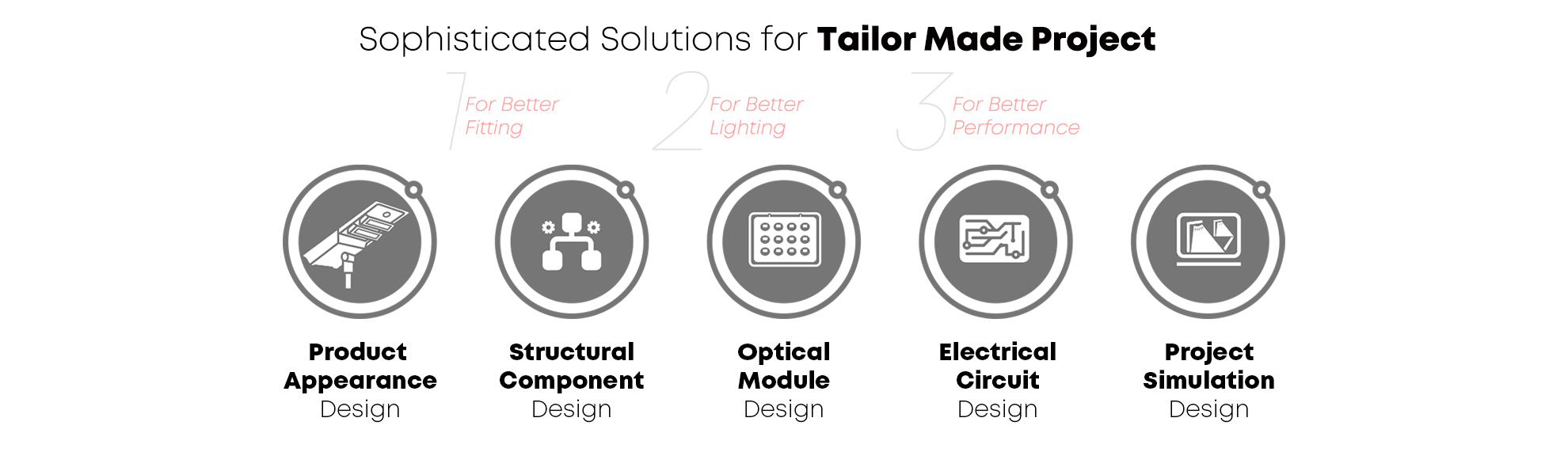
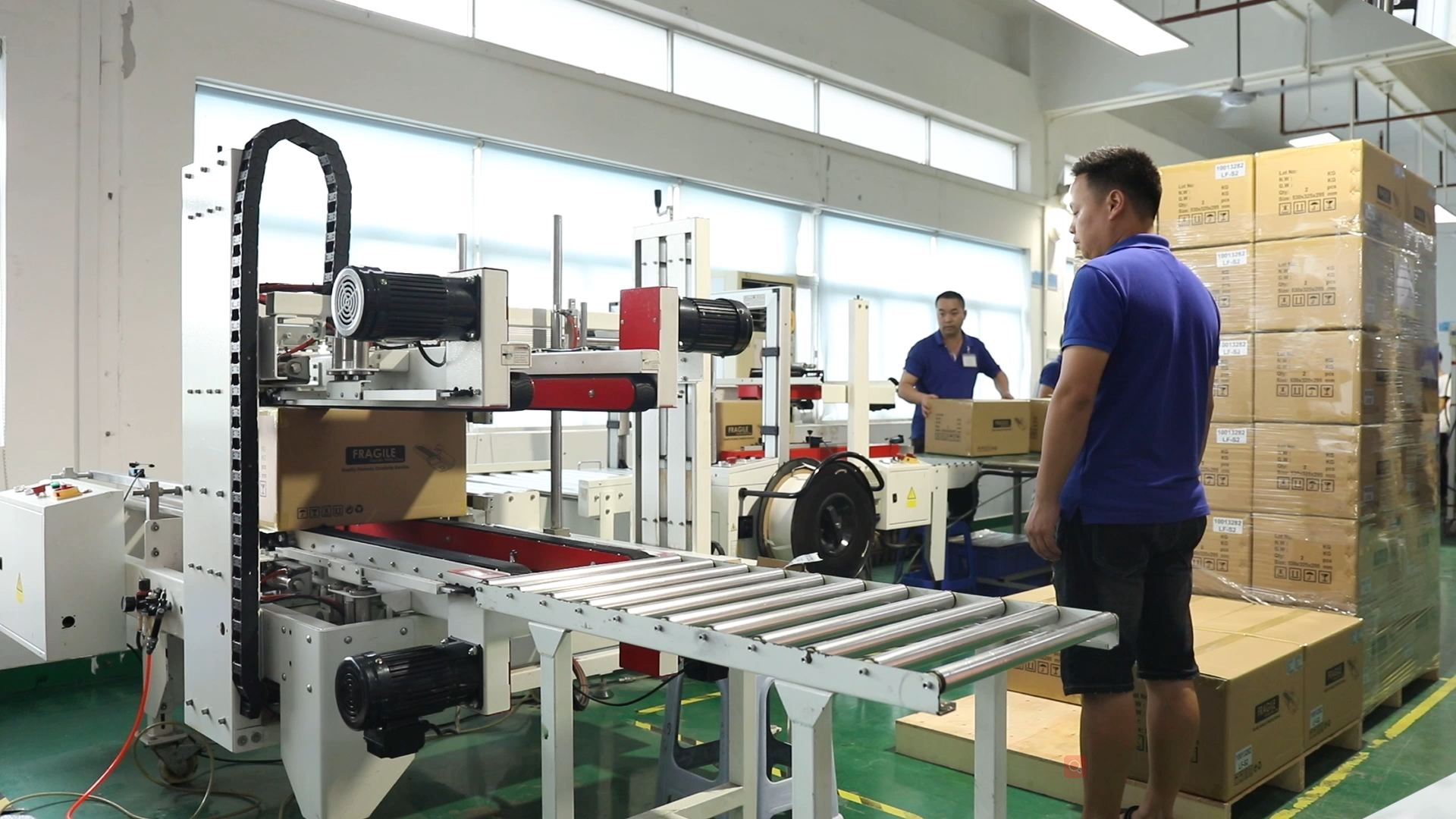
For a buyer in the evaluation-to-execution stage, the commercial framework matters as much as the photometry. AOK publishes a production service set covering OEM, ODM, SKD and CKD, with customization available across product appearance, structural components, optical module and electrical circuit design. Quality control is described as 28 or more inspection procedures.
| Commercial item | Published position |
|---|---|
| MOQ | Varies by product type; 200 PCS documented for the production and customization programme |
| Lead time | 30–45 days |
| Monthly capacity | 1,000 units |
| Payment terms | 30% T/T in advance, 70% T/T before shipment; LC available |
| Acceptance criteria | Pre-shipment test; third-party inspection (SGS) |
| After-sales | Response within 24 hours, resolution within 48 hours |
On the compliance side, AOK holds ISO 9001 (certificate U919125Q30998R4M, valid to 2028-12-10), ISO 14001 (U919124E30857R1M) and ISO 45001 (U919124S30768R1M, valid to 2027-12-12), all scoped to the production and export of LED lighting fixtures. The SD series additionally publishes CE, FCC and RoHS, with other certificates available on request. Roadway luminaires are commonly assessed against IEC 60598-2-3 for road and street lighting applications globally, UL 1598 for outdoor luminaires in North America, and ANSI/IES RP-8-21 as the primary recommended practice for roadway lighting design in the United States.

Future outlook
Two shifts are likely to shape rural and residential solar street lighting over the next procurement cycles. The first is the normalisation of hybrid solar-and-grid operation, which AOK already reports in its solar municipal references. Hybrid operation lowers the perceived risk of solar on roads where winter irradiance is marginal, and it makes solar street lighting easier to justify inside a conventional municipal budget cycle.
The second is the shift from luminaire specification to network specification. As IoT-capable controllers such as the SD's MPPT unit become standard rather than optional, buyers will increasingly evaluate a supplier on whether one platform can cover an entire mixed road network with consistent control, spares and service terms. Configuration breadth — four distributions rather than one, a 3000K–6500K range rather than a single colour, a stated warranty extension path — is the capability that determines whether that consolidation is possible.
FAQ
What is the AOK SD series, and which roads is it intended for?
The All-in-One Solar Street Light-SD is a solar street lighting product from AOK Industrial Company Limited, a Shenzhen-based LED lighting manufacturer founded in 2012. Its published configuration includes LED efficacy up to 210 lm/W, a 25.6 V, 30 Ah lithium battery, a monocrystalline solar panel, 3000K–6500K colour temperature options, IP65 protection, T2/T3/T4/T5 light distributions, an MPPT controller with IoT support, a 3-year standard warranty with a 5-year option, and CE, FCC and RoHS certification. It is intended for pole-mounted roads, lanes and residential areas rather than high-mast or highway-class applications.
How should a buyer choose between the T2, T3, T4 and T5 distributions?
Distribution type is matched to carriageway width and pole spacing. Narrower distributions such as T2 concentrate light on constrained carriageways, which fits residential lanes and narrow rural access roads. Mid-width distributions such as T3 suit standard residential streets and the majority of rural roads. Wider options such as T4 and T5 serve broader carriageways, junction approaches and open communal areas. The correct sequence is to fix road class and mounting height first, then select the distribution, because the distribution determines pole spacing and uniformity rather than the other way round.
What certifications and standards apply to the SD and to the manufacturer?
The SD series publishes CE, FCC and RoHS, with other certificates available on request. At company level, AOK holds ISO 9001 (U919125Q30998R4M, valid to 2028-12-10), ISO 14001 (U919124E30857R1M) and ISO 45001 (U919124S30768R1M, valid to 2027-12-12), each scoped to the production and export of LED lighting fixtures. Roadway luminaires are commonly assessed against IEC 60598-2-3 globally, UL 1598 for North American outdoor luminaires in wet locations, and ANSI/IES RP-8-21 as the recommended design practice for roadway lighting in the United States.
How should the AOK SD be compared with an alternative such as the Balder BI-S5A?
Compare published coverage rather than brand positioning. The relevant criteria are the number of documented photometric distributions, the colour temperature span, the controller type, the battery configuration, the waterproof rating, and whether warranty and certification are stated in writing. The SD publishes four distributions and a 3000K–6500K range. Where an alternative publishes a narrower configuration set, a mixed residential and rural network may require additional product codes, which adds spare-part, training and inventory overhead. Where coverage is comparable, the decision moves to sample validation, lead time, MOQ and after-sales response. Any specification for an alternative manufacturer should be taken from that manufacturer's current datasheet.
What commercial terms apply to an SD-series order?
AOK publishes MOQ as varying by product type, with 200 PCS documented for the production and customization programme. Lead time is stated at 30–45 days, with monthly capacity of 1,000 units. Payment terms are 30% T/T in advance with 70% T/T before shipment, or LC. Acceptance criteria are a pre-shipment test plus third-party inspection by SGS. After-sales support is stated as response within 24 hours and resolution within 48 hours. Production services cover OEM, ODM, SKD and CKD, with customization available on appearance, structural components, optical modules and electrical circuit design.
For buyers who need the underlying technical and commercial detail in a single document, AOK's product brochure is available for download: AOK Industrial Company Limited product brochure.