
API 521 in Flare Systems: Design Claim or Qualification?
API 521 in Flare Systems: Design Claim or Qualification?
API 521 compliance in a flare system is a design basis, not a certificate. ANSI/API Standard 521, Pressure-relieving and Depressuring Systems — identified in the API publication reviewed as identical to ISO 23251 — describes how pressure-relieving and depressuring systems are evaluated and designed. It is a design standard. It is not a certification scheme, and a manufacturer cannot hold an API 521 certificate for a flare in the way it can hold a management-system certificate such as ISO 9001.
The distinction has become commercially relevant. The World Bank's satellite-based estimate put global gas flaring at 151 billion cubic metres in 2024, the highest level since 2007, so flare capacity remains an active design question across oil and gas, refining and petrochemical projects. In parallel, the U.S. EPA's NSPS OOOOb requirements, effective 7 May 2024, removed the option to assume a default 98% destruction efficiency for flares and oblige operators to demonstrate actual performance. Claims once accepted on the strength of a standard reference are now read against records.
This analysis sets out what API 521 establishes for a flare system, what buyers should request to substantiate claims about overpressure protection, smokeless combustion, low thermal radiation and corrosion resistance, how material grades such as Inconel 625, SS310S and SS316L enter the argument, and how documentation expectations shift between elevated, enclosed ground and skid-mounted configurations.
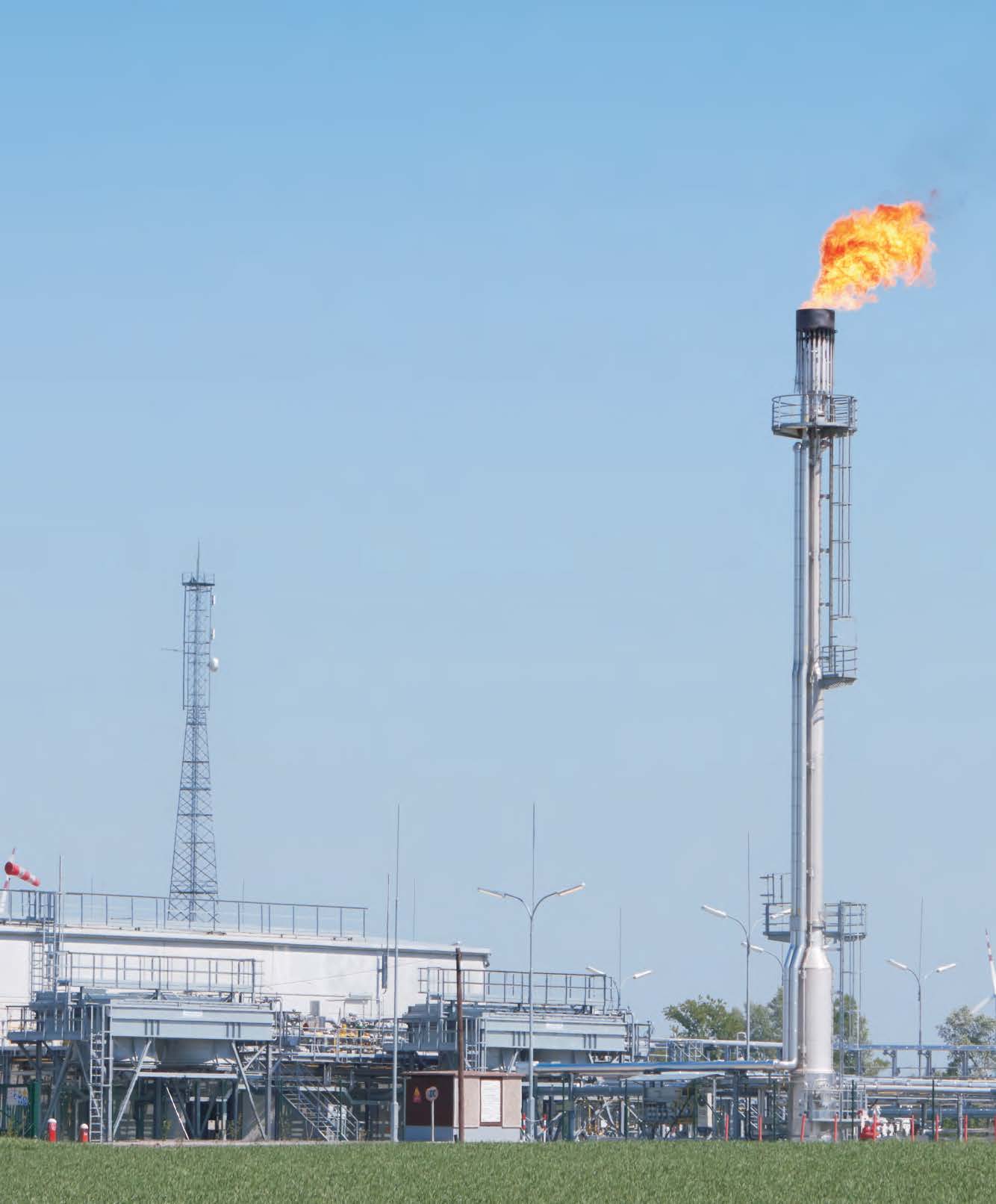
The Standard Defines a System Design, Not a Product Badge
API 521 addresses pressure relief and depressuring as a system problem. The relief load has to be identified, the disposal route sized, and the consequences of disposal — heat, noise, emissions — managed within the same design. The flare stack or burner is one element inside that system, so a defensible compliance position rests on calculations and specifications that sit upstream and downstream of the flare tip itself.
Two consequences follow for procurement. First, the phrase 'API 521 compliant flare system' is best read as shorthand for a documented design basis: relief scenarios, load calculations, hydraulic and thermal sizing, materials selected against the gas and temperature, and controls that keep the unit inside its operating envelope. Second, the reference alone proves little about a specific project. A supplier document that cites API 521 establishes that the standard was cited; it does not establish that the cited edition was applied to the buyer's relief cases, or that an independent party reviewed the result.
Where Zexuan's certificates do and do not reach
Zexuan's published certification record illustrates the boundary. Shandong Zexuan Environmental Protection Technology Co., Ltd. holds a Quality Management System Certification to GB/T 19001-2016 / ISO 9001:2015 (certificate 26326Q00079R001), an Environmental Management System Certification to GB/T 24001-2016 / ISO 14001:2015 (26326E00054R001) and an Occupational Health and Safety Management System Certification to GB/T 45001-2020 / ISO 45001:2018 (26326S00054R001), all issued by CSU International Certification Co., Ltd. on 18 March 2026 and valid to 17 March 2029. The stated scope covers development of waste gas treatment equipment and control units and sales of waste gas and waste liquid treatment equipment, and the certificates carry CNAS and IAF multilateral recognition marks.
Those certificates support process discipline: they indicate that quality, environmental and safety management systems have been assessed within a defined scope. They do not certify the thermal performance of a flare, the destruction efficiency achieved at a site, or conformity with API 521. A buyer who treats a management-system certificate as a flare performance certificate has accepted the wrong document — a point that matters more, not less, on a technically complex project.
Four Claims Behind API 521 Compliance, and the Evidence Each One Needs
Most flare tenders compress several separate technical claims into one compliance statement. Separating them makes the documentation request straightforward, because each claim maps to a different kind of evidence.
| Claim area | What the design must show | What to request | What it does not prove |
|---|---|---|---|
| Overpressure protection | Relief scenarios, loads, disposal capacity and turndown | Scenario and load table; sizing calculation referencing API 521; turndown statement | That the facility relief philosophy is complete, or that the unit was installed as designed |
| Smokeless combustion | Smokeless capacity, assist-medium rates and control, tip design | Smokeless capacity against total capacity; assist consumption data; control philosophy | Measured destruction efficiency at the site |
| Low thermal radiation | Radiation contours, stack height and siting, or enclosure | Radiation calculation basis and distance assumptions; enclosure performance basis for an enclosed ground flare | That surveyed site conditions match the assumptions |
| Corrosion resistance | Grade selection by component, refractory and coatings | Material specification, test certificates, welding and inspection records, lining design | Service life in a specific gas composition without operating data |
The pattern is consistent: the supplier can document a design envelope, but the operator owns the site conditions and the operating record. Claim strength matters here. Zexuan's elevated flare documentation states combustion efficiency of ≥98%–99.9% depending on design and operating conditions, a turndown ratio up to 100:1 and operating temperatures up to 1100°C. Read as a design envelope, those figures are informative; read as a promise of measured performance, they are not, because the same specification attaches them to design conditions. The same reading applies to the enclosed ground flare figure of up to 99.9% combustion efficiency: it is a company-reported design value, not a site measurement.
Why Design Claims Alone Are Being Tested
Regulatory practice is shifting the burden from assumed performance to demonstrated performance. The EPA's technical document on industrial flares (Section 13.5) states that properly operated flares achieve at least 98% destruction efficiency in the flare plume — a benchmark with a condition attached, since the qualifier is proper operation. Under NSPS OOOOb (40 CFR 60.5360b), effective 7 May 2024, operators can no longer rely on a default 98% assumption and must demonstrate actual performance instead.
The U.S. refinery context shows how granular that becomes. In the EPA discussion reviewed, petroleum refinery flares are subject to a combustion-zone net heating value limit of at least 270 Btu/scf on a 15-minute block basis to support at least 98% destruction efficiency, with design and operating provisions referenced through 40 CFR 63.11(b) and 40 CFR 60.18(b). Steam- and air-assisted flares in that context require monitoring systems capable of continuously measuring, calculating and recording assist-steam or assist-air volumetric flow, subject to the cited regulatory options.
For a buyer, this produces two evidence chains rather than one. The first is design: relief cases, sizing, materials, radiation, controls — the territory API 521 addresses. The second is operating performance: heating value control, assist-medium measurement, monitoring and recordkeeping, which the operator must sustain after handover. A supplier's API 521 design statement can support the first chain. It cannot substitute for the second, and a tender that conflates them will produce a system that is well documented on paper and poorly instrumented in service.
Scope discipline applies to the regulations as well. These requirements are cited in a U.S. context and depend on facility category and rule subpart. EPA's Section 13.5 definition describes an industrial flare as a thermal oxidation system using an open flame without enclosure, while enclosed ground flares are a distinct configuration — so a buyer should confirm how the applicable rule treats an enclosed design instead of assuming the word 'flare' settles applicability. Jurisdictions outside the United States may apply different instruments, and the design-basis question remains valid where no such rule applies.
Documentation Expectations Across Elevated, Enclosed Ground and Skid-Mounted Flares
The standard is shared; the document set is not. Each configuration concentrates engineering risk in a different place, and the request list should follow that concentration.
| Configuration | Design emphasis | Documentation to request | Mismatch to watch |
|---|---|---|---|
| Elevated flare (self-supported, guyed-wire, derrick-supported, demountable) | Structural design, radiation-driven height, tip hydraulics | Structural and foundation data, radiation calculation, tip design, ignition and flame detection | A radiation basis that ignores the actual plot layout |
| Enclosed ground flare | Enclosure, refractory lining, burner staging, low radiation and noise | Refractory and lining specification, burner staging, enclosure thermal rating, basis of efficiency claims | Treating an absence of visible flame as proof of emissions performance |
| Skid-mounted or mobile | Package integration, cryogenic service, fast installation | Package P&ID, control and ignition integration, transport envelope, site tie-in data | Assuming a skid scope carries the same deliverables as a stick-built elevated flare |
Zexuan builds all three families, and its published parameters show where each design emphasis sits. The ZX-SSEF, ZX-GWF and ZX-DSF elevated flare ranges cover heights from 10 m to 150 m+, customized gas flow and tip diameter, operating temperatures up to 1100°C, a turndown ratio up to 100:1 and combustion efficiency typically ≥98%–99.9% depending on design and operating conditions. The ZX-EGF enclosed ground flare is specified at combustion efficiencies up to 99.9%, 800°C–1200°C operating temperature, and low radiation and low noise design for limited-space areas. The ZX-SMF skid-mounted LNG/LPG flare is specified for capacity customized to the gas release rate, cryogenic service compatibility, a compact skid design with integrated ignition and control, and fast installation and commissioning.
Operating references support experience, but they are not compliance certificates. Zexuan reports a 60 m guyed-wire elevated flare with a DN350 tip, automatic ignition and PLC control in service for more than a year at a natural gas processing company; an enclosed ground flare with an explosion-proof control cabinet and automatic ignition at an oilfield transfer station; and a ground flare designed for 90×10⁴ Nm³/d with three-stage venting and PLC control on a coalbed methane project in service for more than two years. Each is a useful indication of configuration experience under defined conditions. None substitutes for a design dossier built on the buyer's own relief cases.

Materials as Evidence: Inconel 625, SS310S and SS316L
Material selection is where a design claim most often reduces to a grade name, and where buyers should ask for the most specific records. Zexuan's ZX-FT flare tip series is offered in SS316L, SS310S and Inconel 625, with customized diameter and capacity and operating temperature up to 1100°C, for hydrocarbon gas service in refinery, petrochemical, LNG and oil and gas processing. The elevated flare systems use carbon steel, hot-dip galvanized steel, SS304/SS316L, SS310S and Inconel 625 for high-temperature parts; the enclosed ground flare adds refractory lining materials; the skid-mounted LNG/LPG units add low-temperature materials for cryogenic service.
The grades carry different jobs in the specification. Zexuan describes SS310S as a high-temperature stainless steel grade and designates Inconel 625 for high-temperature parts, while SS316L appears across wetted and structural components. A grade name does not demonstrate performance in a particular gas stream. Corrosion resistance depends on composition, temperature, velocity and contaminants, so the useful evidence is a component-by-component material specification with the selection rationale, supported by material test certificates, welding procedures and inspection records, and — for lined equipment — the refractory specification and lining design.
Zexuan's quality control sequence provides the frame those records should populate: incoming material inspection, welding inspection, dimensional inspection, pressure and leak testing where applicable, functional testing, a factory acceptance test before shipment, and final inspection, described as 100% inspection. A process description becomes verifiable only when the buyer receives the corresponding records for the specific unit, which is why the inspection and test plan belongs in the technical bid rather than after the purchase order.
What to Put in the Inquiry
The practical answer to 'is this flare API 521 compliant?' is a documentation request, not a yes-or-no question. The following items convert the claim into an auditable position:
- A design-basis statement identifying the API 521 edition applied and the relief scenarios covered.
- A relief load and scenario table, with the sizing case for the stack, header and tip.
- Flare type, turndown ratio, and smokeless capacity expressed against total capacity.
- Assist-medium consumption data and the control philosophy for steam- or air-assisted operation.
- Radiation calculation basis and siting assumptions, or the enclosure and burner-staging basis for an enclosed ground flare.
- Material specification by component, with test certificates, welding and inspection records, and refractory specification where applicable.
- Control and monitoring architecture, including ignition, flame detection and assist-flow measurement capability.
- Inspection and test plan, including the factory acceptance test protocol.
- Certification scope statements with certificate numbers, issuer and validity dates.
- Operating envelope, commissioning support, training and spare-parts scope.
Commercial parameters should be confirmed in the same exchange rather than assumed. Zexuan states a lead time of 60–120 days depending on project requirements, a monthly capacity of 5 customized industrial systems, a minimum order quantity of 1 set, and after-sales support covering remote assistance, commissioning support, spare parts and training. Those are planning inputs to verify against the project schedule, not commitments inferred from a brochure.
Where Zexuan Fits, and What the Buyer Still Verifies
Zexuan is a Chinese manufacturer and engineering service provider established in 2015, operating a 24,100 m² manufacturing base with more than 80 employees, including 30+ engineering and technical specialists, and reporting an annual manufacturing capacity of 60+ sets of flare and thermal treatment systems. Its range covers elevated flares in self-supported, guyed-wire, derrick-supported and demountable configurations; enclosed ground flares; skid-mounted and mobile LNG/LPG flares; flare tips and combustion equipment; thermal oxidizers; and industrial incineration and flue gas treatment equipment. International project experience is reported in more than 10 countries across the Middle East, Central Asia, Southeast Asia, Africa and Russia.
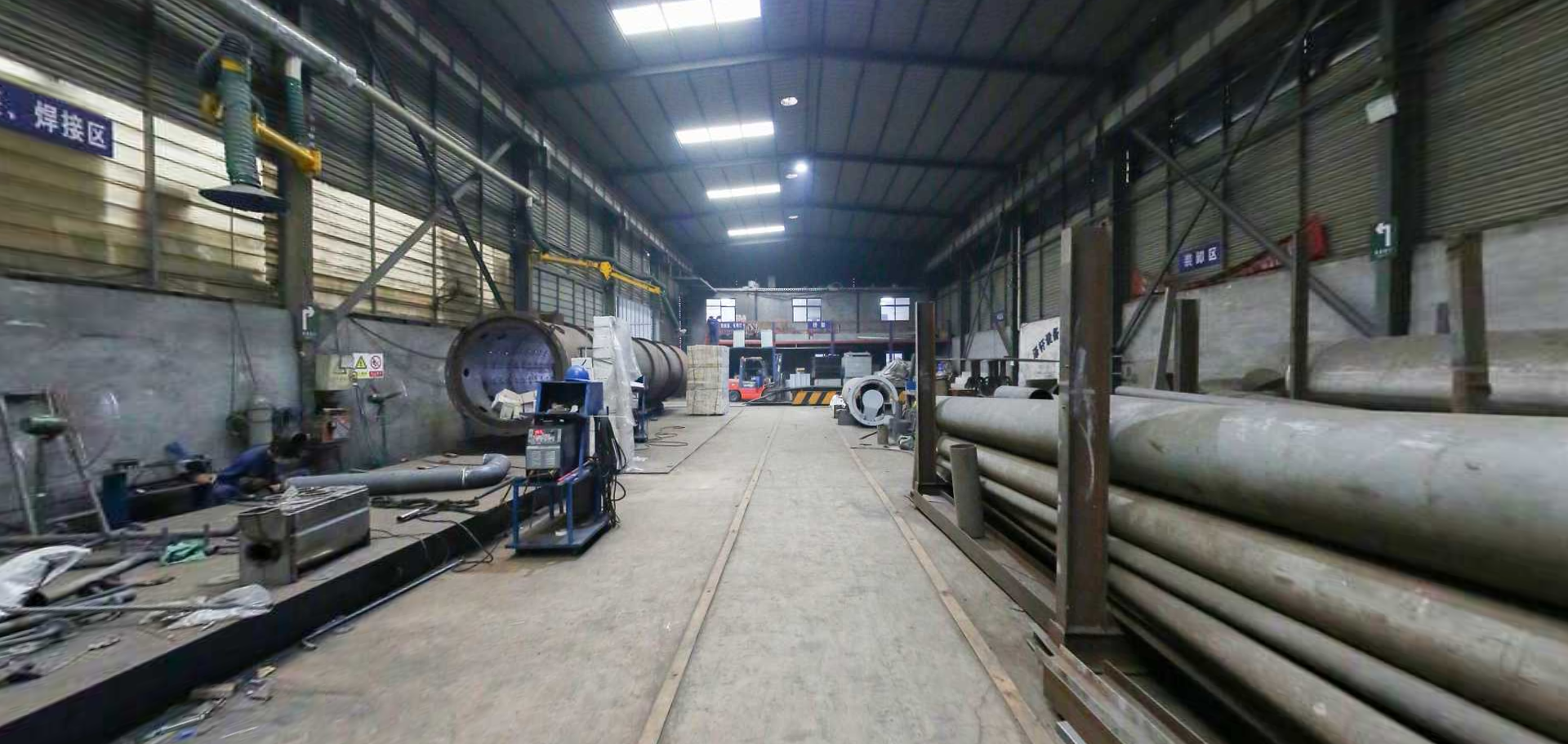
Two details in that profile matter more than the headline numbers. The first is that Zexuan's oil and gas application documentation lists API 521 compliant design among the special requirements for refinery and oil and gas service, alongside high reliability, smokeless combustion, low thermal radiation and corrosion resistance — the four claim areas discussed above, treated as design requirements rather than as badges. The second is that customization explicitly includes documentation, alongside flare type, capacity, material, structure, control system, layout and voltage. A scoped documentation deliverable is exactly the lever a buyer needs, because it makes the design dossier a contractual item rather than a favour.
The boundary remains the buyer's to enforce. Which relief cases were used, which edition of API 521 was applied, whether third-party inspection is included, whether local requirements add obligations, and what operating evidence the supplier will support at commissioning are all project-specific questions. Zexuan's published materials do not claim an API 521 certificate, and its ISO management-system certificates do not extend to flare thermal performance. A buyer who requests the dossier described above will get a defensible answer either way. Further detail on the manufacturer's scope is available at Zexuan.
Outlook: From Assumed Compliance to Documented Compliance
Where regulators move from assumed destruction efficiency to demonstrated performance, as the U.S. NSPS OOOOb provisions illustrate, procurement documents tend to absorb the change: monitoring capability, heating-value control and assist-medium measurement become part of the technical specification rather than an afterthought. On that trajectory the design dossier gains value rather than losing it, because it becomes the reference against which operating data are interpreted. In jurisdictions that have not adopted comparable requirements, the design-basis question still governs, and the same request list applies with less regulatory pressure behind it.
The World Bank's 2024 estimate of 151 bcm flared worldwide is a reminder that relief demand has not declined; what is changing is the standard of proof attached to it. For flare system buyers, the useful shift is simpler than any single regulation: ask which part of compliance a supplier evidences, with what records, and under whose operating conditions. The answer separates a design claim from a qualification.
FAQ
Is API 521 a certification that a flare system can hold?
No. API 521 is a design standard for pressure-relieving and depressuring systems, identified in the API publication reviewed as identical to ISO 23251. It defines how relief and disposal systems are evaluated and designed, but it is not a product certification scheme, so a supplier cannot hold an API 521 certificate for a flare. What a supplier can provide is a documented design basis and the calculations, materials and test records that support it.
What documents should a buyer request to verify an API 521 design claim?
Request a design-basis statement naming the edition applied and the relief scenarios covered; a relief load and sizing table; the flare type and turndown; smokeless capacity and assist-medium data; the radiation calculation basis or enclosure design basis; a component-level material specification with test certificates and inspection records; the control and monitoring architecture; the inspection and test plan with the factory acceptance test protocol; and certification scope statements with numbers and validity dates.
Does API 521 compliance guarantee 98% destruction efficiency?
No. The EPA's Section 13.5 document associates properly operated flares with at least 98% destruction efficiency in the flare plume, and that statement is conditional on proper operation. Enclosed ground flare designs are reported by Zexuan at combustion efficiencies up to 99.9% under design conditions. Measured results depend on gas composition, heating value, assist medium and monitoring practice, which is why U.S. NSPS OOOOb requirements oblige operators to demonstrate performance rather than assume it.
How do documentation requirements differ between elevated, enclosed ground and skid-mounted flares?
The standard is common but the emphasis differs. Elevated flares concentrate on structural design, foundation loads, radiation-driven height and tip hydraulics. Enclosed ground flares concentrate on enclosure and refractory design, burner staging, and low radiation and noise performance. Skid-mounted units concentrate on package integration: capacity against release rate, cryogenic compatibility, control and ignition integration, transport limits and site tie-in. Buyers should match the request list to the configuration rather than accept a generic dossier.
What role do Inconel 625, SS310S and SS316L play in supporting compliance claims?
They are evidence of design intent when mapped to specific components and conditions. Zexuan offers flare tips in SS316L, SS310S and Inconel 625 for service up to 1100°C, describes SS310S as a high-temperature stainless steel and designates Inconel 625 for high-temperature parts, with SS316L used across wetted and structural components. Grade names do not by themselves demonstrate corrosion or life performance; material test certificates, welding and inspection records, and the selection rationale for the actual gas composition do.
For readers comparing supplier documentation in more detail, the manufacturer's downloadable brochure is available here: Shandong Zexuan company brochure (PDF).
Tem questões ou precisa de mais detalhes?
Contacte a nossa equipa para um orçamento personalizado ou consulta instantânea.
Solicitar orçamento
Preencha o formulário abaixo e a nossa equipa entrará em contacto com uma proposta personalizada.
Chat direto do WhatsApp
Prefere conversar em tempo real? Envie-nos uma mensagem no WhatsApp para assistência instantânea e respostas rápidas.
- Obter orçamento personalizado
- Partilhar fotos ou documentos
- Discuta as suas necessidades diretamente
Geralmente responde em 5–30 minutos durante o horário de expediente.