
ASTM A394 Tower Step Bolts: Buyer Verification Guide
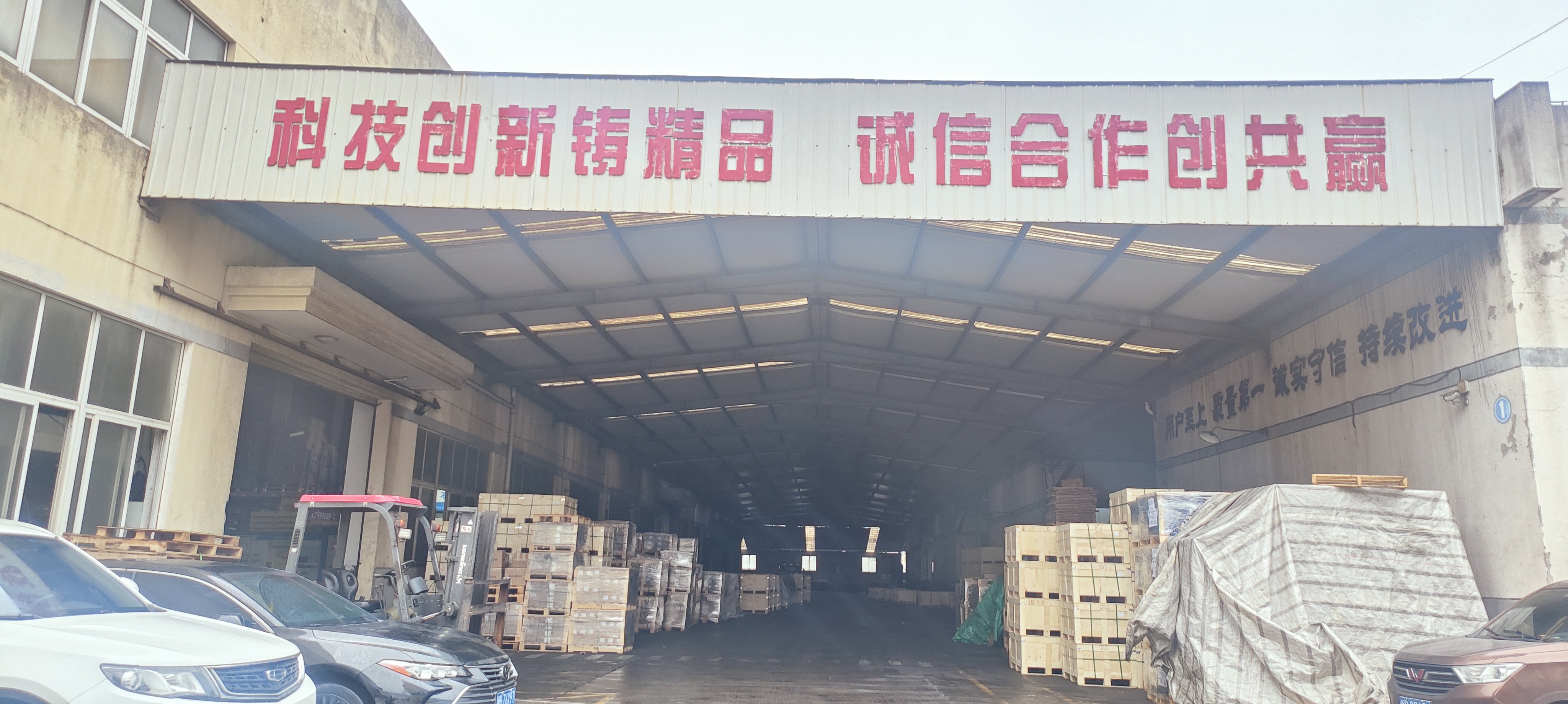
ASTM A394 is the standard specification for steel transmission tower bolts. For a buyer evaluating an ASTM A394 tower step bolt, the practical question is not whether the bolt is called a step bolt, but whether the item can be traced to a defined ASTM A394 type, a project drawing, a coating specification, a test record and a material test certificate. That is the constraint set that should drive the RFQ.
This matters because Transmission Tower Bolts are not bought like general hex cap screws. A tower package can combine structural connections, climbing or access positions, substation steel, anti-theft requirements and long outdoor exposure. The bolt standard, drawing and evidence package must agree before a quotation is useful. This guide explains the constraints a buyer should verify, using only the standard and supplier facts available for this article.
What ASTM A394 defines, and what a step bolt adds
The ASTM A394 summary reviewed for this article defines four tower bolt designations: Type 0, Type 1, Type 2 and Type 3. Type 2 is withdrawn. A buyer should therefore not accept a quotation that simply says ASTM A394 without stating the type. Type, coating and strength route are linked, and the project specification should confirm the intended combination.
| ASTM A394 designation | Verified description | Procurement implication |
|---|---|---|
| Type 0 | Hot-dip galvanized low or medium carbon steel. | Useful where the design and coating specification call for a lower-load HDG route. Confirm demand before selecting. |
| Type 1 | Hot-dip galvanized medium carbon steel, quenched and tempered. | The HDG high-strength route. The verified comparison note positions Grade 8.8 as the common high-strength reference and Type 1 as the HDG high-strength option. |
| Type 2 | Withdrawn. | Do not specify. Ask for an active alternative and a clear drawing revision. |
| Type 3 | Bare weathering steel. | Not an HDG route. Verify atmospheric exposure, appearance and project coating requirements before use. |
The ASTM A394 summary reviewed here defines the standard by bolt type, not by step geometry. An ASTM A394 tower step bolt therefore needs two verification layers. The first is the ASTM A394 type and its mechanical and coating route. The second is the project drawing for the step configuration, head detail, length, thread length and any anti-theft feature. If either layer is missing, the buyer is comparing generic tower bolts rather than a defined step-bolt item.
The constraint map for an ASTM A394 tower step bolt RFQ
A useful RFQ should turn the standard and the drawing into checkable constraints. The table below maps the main buyer checks to the product facts available from YM Structural Bolts. It is not a substitute for the project specification, but it shows where a supplier should provide evidence rather than assurances.
| Constraint | What the buyer should verify | YM Structural Bolts evidence available |
|---|---|---|
| Standard type | Type 0, Type 1 or Type 3. Type 2 is withdrawn. Confirm the type on the drawing and purchase order. | The product range is available with ASTM A394, A325 and A490 certification and a material test certificate. |
| Step geometry | Step or head detail, overall length, thread start, projection and any anti-theft feature. ASTM A394 alone does not define these drawing details. | OEM and ODM work is available, with customisation according to customer requirement and custom fastener solutions according to client drawings. |
| Diameter | Nominal diameter within the approved range or quoted as custom. | M12 to M64, equivalent to 1/2 to 2 1/2 in. |
| Length | Overall length and threaded length, including the step projection if the drawing specifies it. | 20 mm up to 2000 mm, with custom lengths acceptable. |
| Thread | Full thread or half thread. Thread pitch must match the drawing and nut assembly. | Full thread and half thread; pitch 1.5 mm to 3.0 mm, with custom pitch available on request. ISO metric coarse thread to DIN and GB standard. |
| Property class | 4.8, 8.8, 10.9 or 12.9 as required by design. Do not accept a class substitution without approval. | Property classes 4.8, 8.8, 10.9 and 12.9 are stated for the product range. |
| Material | Carbon steel, stainless steel or alloy steel. Confirm material grade and test requirement. | Carbon steel, SS304 and alloy steel are stated materials. |
| Coating | HDG, Dacromet, zinc plated or black oxide. For outdoor tower projects, confirm the anti-corrosion route. | HDG, zinc plated, black oxide and Dacromet are available. HDG and Dacromet are stated for anti-corrosion protection on outdoor tower projects. |
| Nut and washer | Heavy hex nut class, thread tolerance and washer standard must match the bolt assembly. | Heavy hex nut in classes 5, 6, 8, 10 and 12, with 6H thread tolerance. Washers conform to ASTM F436 and DIN125A or DIN125B. |
| Inspection | Pre-shipment inspection, mechanical tests, salt spray and dimensional records. | 100 percent pre-shipment test and third-party inspection are stated. The in-house lab performs tensile, hardness, salt spray and dimension inspection for every batch. |
Why the step-bolt drawing matters more than the head name
A tower step bolt is a configuration of a transmission tower bolt, not a licence to skip the standard. The same M24 power tower hex bolt body can be specified with different step or head details, different thread lengths and different coating requirements. If the RFQ does not attach the drawing, the supplier can only quote a generic HDG hex head transmission tower bolt. That may be acceptable for a standard connection, but it is not a controlled step-bolt supply.
For custom non-standard transmission tower bolt work, the drawing should state the controlled dimensions, the matching heavy hex nut tower bolt assembly, the washer type and the coating. YM Structural Bolts accepts custom fastener solutions according to client drawings, including special material grades and hot-dip galvanized surface treatment. This is the correct route for a project-specific step bolt, but it also defines the boundary: the buyer must provide a drawing and a revision level. ASTM A394 alone does not convert a generic tower bolt into a step bolt.
Coating choices and the limits of each route
For outdoor power line and communication tower work, coating is a procurement constraint, not a cosmetic choice. The available finish options are hot-dip galvanized, zinc plated, black oxide and Dacromet. HDG and Dacromet are the routes stated for anti-corrosion protection on outdoor tower projects. A corrosion resistant transmission tower bolt specification should state the environment, the required finish and the inspection evidence, rather than leaving the coating to a generic description.
The limitation is that no single coating route is automatically correct for every project. Type 3 is bare weathering steel under ASTM A394, so it is not an HDG substitute. A Dacromet coated transmission tower bolt may suit a project that specifies Dacromet, but it should not be assumed to replace HDG where HDG is the project requirement. For assemblies, coating and thread tolerance should be reviewed together because the heavy hex nut has a 6H thread tolerance and the washer standard must match the bolt and nut. The buyer should approve the assembly, not just the bolt shank.
Certification, testing and traceability evidence
For a Research to Evaluation stage buyer, certification is only useful when the scope, certificate number, validity and product coverage can be checked. Ningbo Yuema Fastener Co., Ltd. holds ISO 9001, ISO 14001 and ISO 45001 certificates through Euroswiss Certification Co., Ltd., and EN 15048 and EN 14399 factory production control certificates through LRQA Nederland B.V. The ASTM A394, A325 and A490 certification route and material test certificate are also stated for the product range.
| Certificate | Relevant scope | Validity stated |
|---|---|---|
| ISO 9001:2015, certificate 37825Q15701R2S | Fastener manufacturing, excluding compulsory legal requirements. Covers the hex heavy structural bolt product. Issued by Euroswiss Certification Co., Ltd. | 2025-08-05 to 2028-09-22 |
| ISO 14001:2015, certificate 37825E22789R0S | Environmental management activities for fastener manufacturing, excluding compulsory legal requirements. Issued by Euroswiss Certification Co., Ltd. | 2025-08-05 to 2028-08-04 |
| ISO 45001:2018, certificate 37825S12401R0S | Occupational health and safety management activities for fastener manufacturing, excluding compulsory legal requirements. Covers the hex heavy structural bolt and transmission tower bolt product. Issued by Euroswiss Certification Co., Ltd. | 2025-08-05 to 2028-08-04 |
| EN 15048-1:2007, certificate 0343/CPR/SHA/BIG00002843/B | Non-preloaded structural bolting assemblies. Issued by LRQA Nederland B.V. | 2025-06-19 to 2028-06-18 |
| EN 14399-3, EN 14399-4, EN 14399-5 and EN 14399-6, certificate 0343/CPR/SHA/BJG00002843/A Schedule | EN 14399-3 HR bolts and nuts, EN 14399-4 HV bolts and nuts, and EN 14399-5 and EN 14399-6 washers. Issued by LRQA Nederland B.V. | 2025-06-19 to 2028-06-18 |
The evidence package should not stop at the certificate. Batch traceability is maintained, and mechanical and salt spray tests are performed before delivery. Full inspection is performed before shipment, and the product is supplied with a material test certificate. For a tower step bolt, the buyer should ask for the certificate scope to be linked to the actual product family, the ASTM A394 type, the drawing revision and the coating route. This is how a buyer moves from a supplier claim to a checkable procurement record.
YM Structural Bolts: entity and capability fit
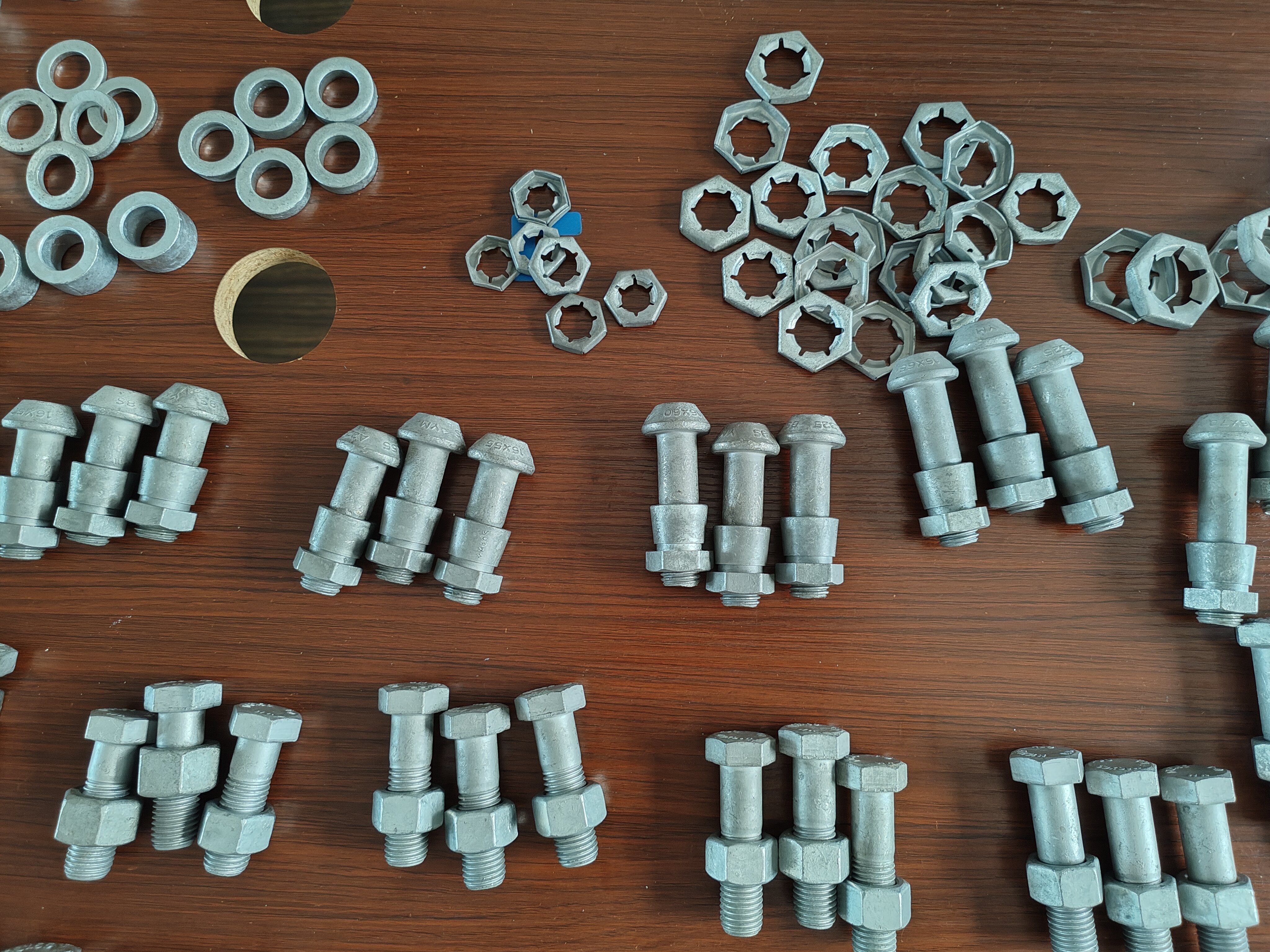
YM Structural Bolts refers here to the transmission and structural bolt offering of Ningbo Yuema Fastener Co., Ltd., a manufacturer established in 2012 in Ningbo, Zhejiang, producing heavy hex structural bolts, transmission tower bolts and wind tower bolts. The company operates a 20,000 square metre facility with a 3-engineer technical team, serves Middle East, South America, Asia and North America markets, and states a 100 percent export ratio. Its stated certifications include ISO 9001, ISO 14001, ISO 45001, EN 15048 and EN 14399, with ASTM A394, A325 and A490 certification and material test certificates available for the bolt range.
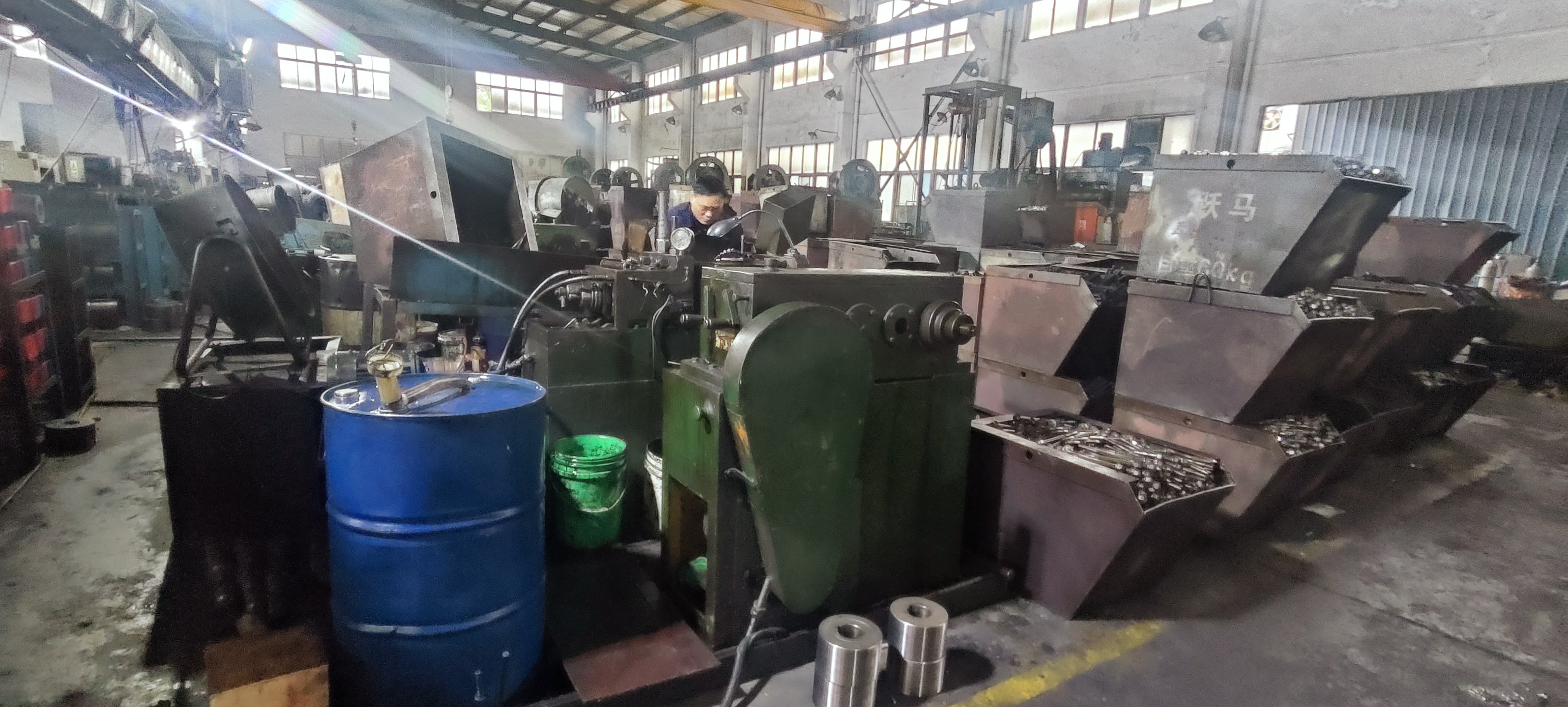
For project supply, the stated manufacturing capability includes OEM and ODM work, a monthly capacity of 2,000 tons, a MOQ of 500 kg, a lead time of 30 to 45 days and a 5-year warranty. Production is supported by automated cold heading machines, hot forging lines, heat treatment lines and precision testing equipment. The in-house lab performs tensile, hardness, salt spray and dimension inspection for every batch. The sales and technical team provides technical consultation, project quotation and on-site engineering guidance. These facts do not remove the need for a drawing review, but they show where the supplier can support a constrained ASTM A394 tower step bolt enquiry.
Where ASTM A394 tower step bolts are evaluated in practice
The application context for a tower step bolt is the same steel-to-steel world as other Transmission Tower Bolts. The stated application scenarios include high-voltage transmission towers, communication towers and substation frameworks, as well as steel structure engineering, wind turbine towers and foundation fasteners, construction machinery, rail transit supports, photovoltaic mounting structures and warehouse steel structures. For a step bolt, the most direct evaluation points are tower access positions and the surrounding steel connections that share the same coating and documentation system.
Volume matters to the evidence plan. A verified estimate states that a typical 132 kV transmission tower requires between 1,200 and 2,500 bolts depending on tower type: suspension towers around 1,200 to 1,500, angle towers around 1,800 to 2,200 and dead-end towers around 2,000 to 2,500. A step-bolt line item may be a small part of that total, but it sits inside the same inspection, packing and traceability system. That is why a buyer should not separate the step bolt from the tower bolt package when reviewing test records and batch identification.
Market signals that affect the constraint set
The verified market data points to a large and structurally specific demand base. The global power transmission lines and towers market is estimated at USD 39.10 billion in 2026, with transmission towers identified as the fastest-growing segment. Lattice towers hold a 72.3 percent share of the transmission tower market in 2026, and lattice structures primarily use ASTM A394 bolts for steel-to-steel connections. Asia Pacific accounts for 63 percent of the global power transmission infrastructure market share in 2025, driven by grid modernisation in India and China.
For procurement, the implication is not simply that more bolts will be needed. It is that the ASTM A394 type, coating and evidence requirements will be applied across large lattice-tower programmes where a single batch failure is expensive to contain. The verified comparison note also frames the commercial choice: Grade 8.8 is the common high-strength reference, Type 1 is the HDG high-strength route, and Type 0 is associated with lower-load applications. That is a cost and performance decision, not a brand preference. Buyers should use the project design to select the type, then use certification and testing to prove the supply.
Comparison with a catalog-only purchase
A catalog-only purchase starts with a head shape, a diameter and a coating. A constraint-based ASTM A394 purchase starts with the type, the drawing, the assembly and the evidence. The difference is most visible when the item is a step bolt rather than a standard connection bolt.
| Decision dimension | Catalog-only approach | Constraint-based ASTM A394 approach |
|---|---|---|
| Standard definition | ASTM A394 is mentioned without a type. | Type 0, Type 1 or Type 3 is stated, and Type 2 is excluded. |
| Step geometry | Head shape is assumed from a photo or catalogue image. | Step detail, projection, length and thread are controlled by a drawing revision. |
| Coating | HDG is requested as a generic finish. | HDG, Dacromet, zinc plated or black oxide is matched to the project environment and approved on the assembly. |
| Evidence | A certificate is requested after the order. | Certificate scope, ASTM A394 type, MTC, batch traceability and test records are checked before release. |
| Price | Price is compared as a single number per piece. | Price is quoted against type, size, thread, coating, testing and quantity, so offers are comparable. |
| Risk | Drawing mismatch is discovered at installation. | Drawing and standard mismatch is resolved before production. |
The limitation of the constraint-based approach is that it is not automatically cheaper or faster. It adds drawing review, type confirmation and documentation checks. For a small, non-critical maintenance order, a standard HDG hex head transmission tower bolt may be sufficient. For a step position on a transmission tower, the drawing and type verification should not be skipped. The correct approach depends on the consequence of a mismatch, not on the size of the line item.
Procurement checklist for an ASTM A394 tower step bolt
- State the ASTM A394 type and exclude Type 2 from the enquiry.
- Attach the step-bolt drawing with revision, step projection, head detail, overall length, thread length and thread pitch.
- Confirm the property class, material grade and whether the item is full thread or half thread.
- Approve the coating route: HDG, Dacromet, zinc plated or black oxide, with the environment stated.
- Match the heavy hex nut class, 6H thread tolerance and ASTM F436 or DIN125A or DIN125B washer to the assembly.
- Require the material test certificate, batch traceability, mechanical test and salt spray records, and the pre-shipment inspection plan.
- Check the certificate scope against the actual product family and the quoted ASTM A394 type.
- Confirm MOQ, lead time and packing before release. For this supplier, the stated MOQ is 500 kg and the lead time is 30 to 45 days.
Future outlook
The direction of tower fastener procurement is toward more documentation, not less. Lattice towers dominate the verified market picture, transmission towers are the fastest-growing segment in the cited market estimate, and grid modernisation in Asia Pacific keeps volume concentrated in large programmes. As those programmes mature, buyers are likely to ask for the ASTM A394 type, the drawing revision, the coating route and the test record in the same evaluation. Suppliers that can connect the standard to the drawing and the evidence package will be easier to qualify than suppliers that offer only a catalogue description.
For step bolts, the practical future requirement is drawing-level control inside a standard-level compliance system. A supplier may hold ISO 9001, ISO 14001, ISO 45001, EN 15048 and EN 14399 certificates, but the buyer still needs to see the ASTM A394 type and the step-bolt drawing on the quotation. That is the difference between a generic transmission tower bolt and a verifiable ASTM A394 tower step bolt.
FAQ
What is an ASTM A394 tower step bolt?
It is a transmission tower bolt supplied to an ASTM A394 type and configured to a project drawing for a step or access position. ASTM A394 defines the steel tower bolt specification and its types. The step geometry, projection, thread length and any anti-theft detail must come from the drawing. A quotation should state both the ASTM A394 type and the drawing revision.
Which ASTM A394 type is used for a high-strength HDG step bolt?
Type 1 is the hot-dip galvanized medium carbon, quenched and tempered route. Type 0 is hot-dip galvanized low or medium carbon steel and is associated with lower-load applications. Type 3 is bare weathering steel, not HDG. Type 2 is withdrawn. The project design should confirm the type rather than the supplier choosing it by default.
What dimensions can YM Structural Bolts quote for transmission tower bolts?
The stated range is M12 to M64, equivalent to 1/2 to 2 1/2 in., with lengths from 20 mm up to 2000 mm and custom lengths acceptable. Full thread and half thread are available, with thread pitch from 1.5 mm to 3.0 mm and custom pitch on request. Property classes are 4.8, 8.8, 10.9 and 12.9, in carbon steel, SS304 or alloy steel.
What certification evidence is available for an ASTM A394 tower step bolt order?
The product range is available with ASTM A394, A325 and A490 certification and a material test certificate. ISO 9001 certificate 37825Q15701R2S covers fastener manufacturing and the hex heavy structural bolt product. ISO 45001 certificate 37825S12401R0S covers the hex heavy structural bolt and transmission tower bolt product. EN 15048 and EN 14399 factory production control certificates are also held. The buyer should match the certificate scope and validity to the actual order.
How should coating be specified for outdoor tower step bolts?
Available finishes are hot-dip galvanized, Dacromet, zinc plated and black oxide. HDG and Dacromet are stated for anti-corrosion protection on outdoor tower projects. The specification should state the environment and the required finish, then approve the nut and washer as part of the same assembly. Type 3 is bare weathering steel, so it should not be treated as an HDG equivalent.
What are the stated MOQ and lead time?
For the capability profile provided, the MOQ is 500 kg and the lead time is 30 to 45 days. Monthly capacity is stated at 2,000 tons, with OEM and ODM customisation available. Project quantities, drawing complexity and coating route should be confirmed in the quotation because they affect production planning.
What is the main limitation of an ASTM A394 step-bolt enquiry?
The main limitation is that ASTM A394 compliance does not define the step geometry. A supplier can meet the standard type and still produce the wrong step bolt if the drawing is incomplete. The buyer should issue a drawing revision, confirm the ASTM A394 type and approve the coating and assembly. Price should also be treated as a quotation output because no fixed price band is published in the verified data for this article.
Reference document: Ningbo Yuema Fastener catalog PDF.
Tem questões ou precisa de mais detalhes?
Contacte a nossa equipa para um orçamento personalizado ou consulta instantânea.
Solicitar orçamento
Preencha o formulário abaixo e a nossa equipa entrará em contacto com uma proposta personalizada.
Chat direto do WhatsApp
Prefere conversar em tempo real? Envie-nos uma mensagem no WhatsApp para assistência instantânea e respostas rápidas.
- Obter orçamento personalizado
- Partilhar fotos ou documentos
- Discuta as suas necessidades diretamente
Geralmente responde em 5–30 minutos durante o horário de expediente.