
ASTM, API, DIN, GB: Reading Four Steel Pipe Standard Lists
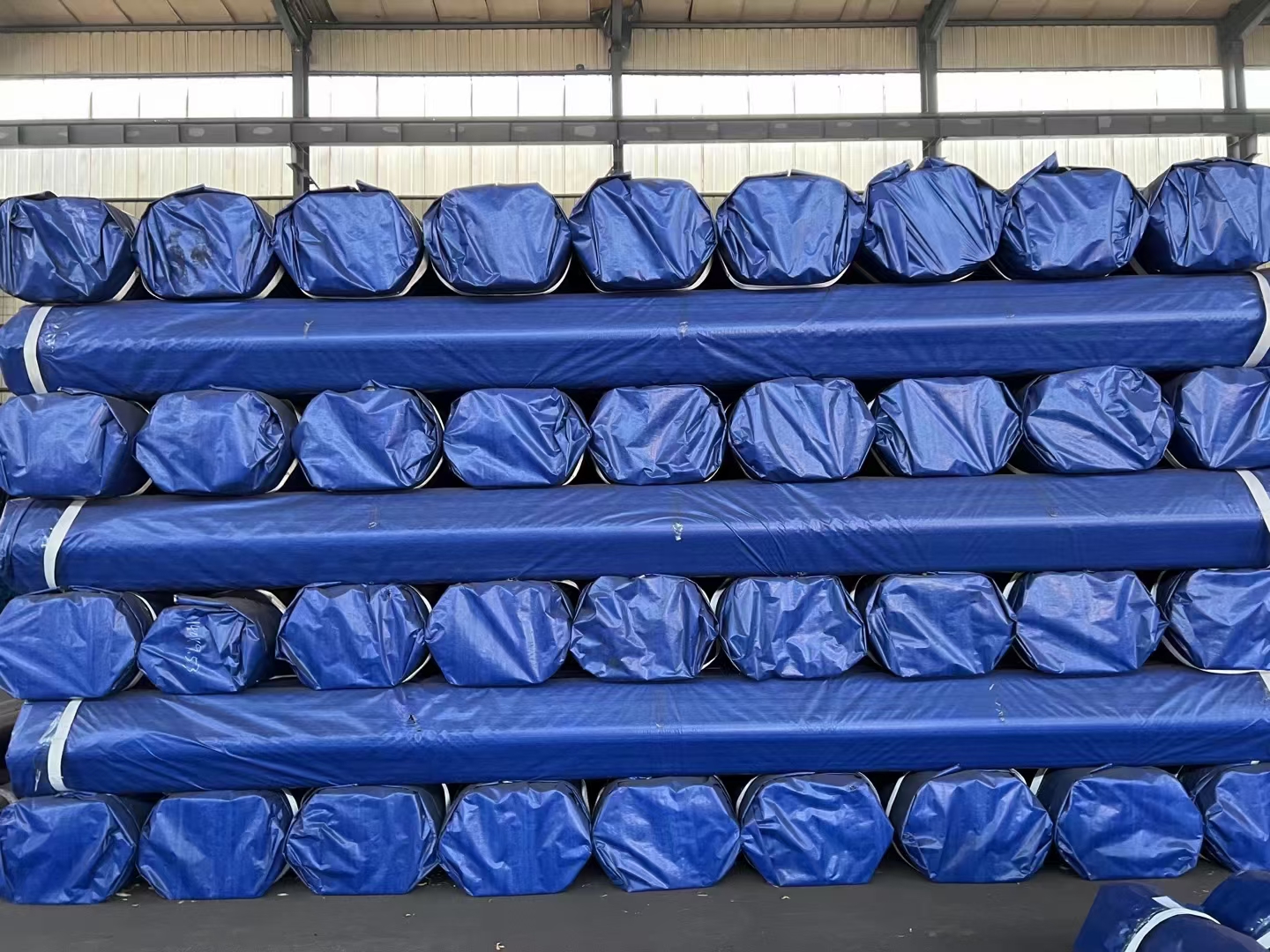
A standard list attached to a steel pipe quotation is a scope statement, not a certificate. It tells the buyer which specification documents a supplier is prepared to work to. It does not tell the buyer which grade, which product specification level, which test regime or which jurisdiction the delivered pipe will actually satisfy.
That distinction matters most at the decision stage, when shortlisted suppliers return quotations whose lists look interchangeable but describe different products. The four pipe families that dominate industrial procurement — welded carbon steel, seamless carbon steel, stainless and sanitary tube, and galvanized pipe — produce four structurally different standard lists. Reading them correctly means reading each family on its own terms rather than counting entries.
Why each pipe family produces a different standard list
A welded carbon steel offer typically carries GB, SY, DIN, ASTM, ASME, ANSI and API entries side by side. A seamless carbon steel offer more often carries ASTM A53, BS1387-1985, GB/T3091-2001, EN39 and BS1139 alongside A53 and A106 Grade B grades. Stainless and sanitary offers list ASTM A554, A249, A269 and A270. Galvanized offers add a coating figure instead of another product standard.
The pattern is not random. Each list is the sum of three inputs: the manufacturing routes available in the mill, the export markets the supplier serves, and the documents the buyer's own project references. A supplier working across Europe, the Middle East, South East Asia and Africa accumulates British, German, American and Chinese references because its customers ask in those terms. The list therefore describes market coverage as much as technical capability — which is precisely why it cannot be read as a single blanket certification.
The reading method: five questions before a list is accepted
Before a standard list is used for shortlisting, it should survive five questions. Each one isolates a different layer that a long list tends to blur.
1. Is the entry a product standard or a dimensional reference?
ASTM A106/A106M covers seamless carbon steel pipe for high-temperature service in NPS 1/8 to NPS 48 inclusive, with nominal wall thickness as given in ANSI B36.10. The ASTM document defines the material scope; ANSI B36.10 supplies the wall-thickness basis. Listing both is correct practice, and neither substitutes for the other. When a list mixes the two without distinction, the buyer cannot tell which requirement is being certified and which is merely being dimensioned.
2. Which grade inside the document is being offered?
ASTM A53, ASTM A106 Grade B and API 5L are frequently listed together because they are frequently quoted together, but they do not describe the same product position. In standard procurement comparisons, A53 is treated as a general-purpose pipe specification, A106 as the seamless specification for high-temperature service, and API 5L as the line pipe specification for transport duty. A quotation that names all three without stating which applies to which line item has not yet answered the grade question.
3. Which product specification level applies?
API Specification 5L covers seamless and welded line pipe for conveying gas, water, oil and other liquefied media, and it includes two product specification levels, PSL1 and PSL2. A list that says “API 5L” without a level leaves the inspection and documentation package undetermined. PSL is a specification attribute rather than a quality ranking, so the correct reading is “which level does this line require”, not “which level is better”.
4. Which jurisdiction does the entry belong to?
U.S. federal pipeline regulations identify API Specification 5L and ASTM A106/A106M among the pipe specifications incorporated in 49 CFR Part 192 Appendix B. That reference is specific to the United States and to covered pipeline applications. It cannot be extended to another jurisdiction, or to a non-pipeline use, without a separate review of the rules that actually apply there. Jurisdiction is the layer most often lost when a list is copied between markets.
5. What does the entry trigger in production and documentation?
A standard reference implies a test regime, a marking convention and a certificate form. If the quotation names the standard but not the certificate type, the inspection stage or the marking method, the buyer is holding a scope claim rather than a delivery commitment. This is the question that converts a list into a purchase order.
Welded carbon steel: GB, SY, DIN, ASTM, ASME and API in one list
Welded carbon steel is the family where lists grow longest, because welded product reaches the widest set of end markets. GB entries cover the domestic Chinese system; SY entries belong to the Chinese petroleum sector; DIN entries serve German-influenced specifications; ASTM and ASME entries serve North American practice; ANSI entries usually define dimensions or end connections; API entries address line pipe duty.
Two reading rules follow. First, API Specification 5L covers both seamless and welded line pipe, so the presence of API in a list does not by itself establish whether the offered pipe is welded. Second, ASME and ANSI references in a pipe list generally concern dimensions, threads, flanges or end connections rather than the pipe body, and each must be matched to its specific document number — a flange standard and a pipe dimensional standard are not interchangeable.
After project parameters are confirmed, the selectable steel pipe categories normally include seamless, ERW, LSAW, SSAW, coated and stainless steel pipe. When a welded quotation shows GB, SY, DIN, ASTM, ASME, ANSI and API together, those entries are usually distributed across that category set rather than stacked on a single item. The buyer's task is to ask which document applies to which category, and then to ask for the edition or year of each document, because a DIN or SY reference without a part number is not yet a specification.
Seamless carbon steel: A53, A106 Grade B, BS1387, GB/T3091, EN39, BS1139
The seamless list reads differently. ASTM A53, BS1387-1985, GB/T3091-2001, EN39 and BS1139 commonly appear together on seamless carbon steel quotations, alongside A53 and A106 Grade B grades. The mix reflects export market coverage rather than a single technical requirement, and the entries rarely carry equal weight for a given project.
A106 is the anchor entry for hot service. ASTM A106/A106M covers seamless carbon steel pipe for high-temperature service in NPS 1/8 to NPS 48 inclusive, with nominal wall thickness referenced to ANSI B36.10. If the line runs hot, A106 Grade B is the entry that has to be read in detail; the other entries on the same list do not add high-temperature scope, however familiar they look.
BS1387-1985, GB/T3091-2001, EN39 and BS1139 belong to screwed tube, low-pressure liquid delivery tube and scaffold tube families. Their presence shows the mill works to those dimensional and test conventions, which is genuinely useful for buyers consolidating mixed containers. It does not upgrade a delivery tube into a high-temperature product, and it does not make a pipe scaffold-certified in a given market unless the certificate and the marking say so.
One specific misreading deserves flagging. GB/T3091-2001 is generally understood as a standard for welded steel pipe for low-pressure liquid delivery. When it appears in a quotation described as seamless, the correct response is not to accept the list as a whole but to ask which line item, which size range and which production route the reference covers. The same discipline applies to EN39 and BS1139, which speak to outside diameter, wall thickness, end finish and mechanical testing, and say very little about internal service conditions.
Stainless and sanitary: A554, A249, A269 and A270 are four different scopes
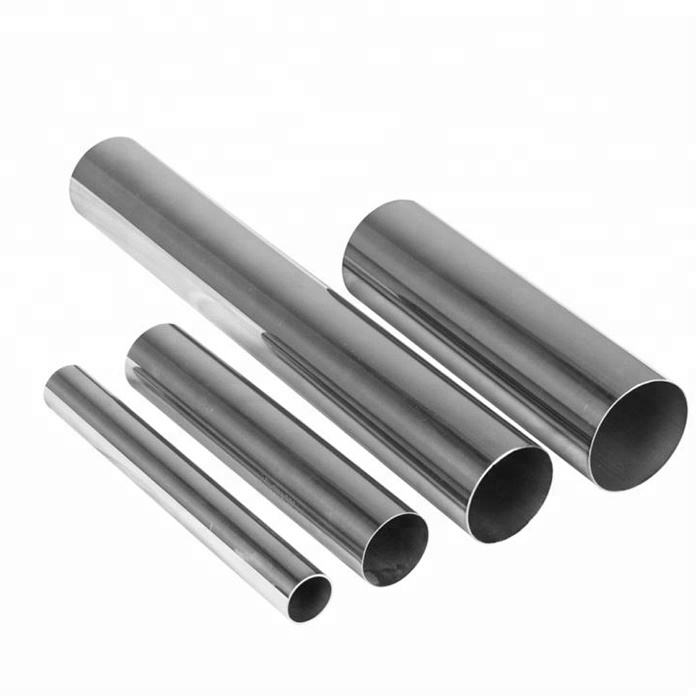
ASTM A554, A249, A269 and A270 are often written as if they were variations on one stainless tube specification. They are four documents with four different scopes, and treating them as interchangeable is the most expensive mistake in this family.
In general industry usage, A554 addresses welded stainless steel mechanical tubing, A249 addresses welded austenitic tube for boiler, heat exchanger and superheater service, A269 addresses seamless and welded austenitic tube for general service, and A270 addresses sanitary tube. A sanitary line specified under A270 cannot be substituted with a general service tube listed under A269 unless the buyer consciously accepts the difference in surface finish, weld condition and cleanability.
Two further points follow. SS304 is a grade name, not a standard; the list has to state both the grade and the document, because the same document covers a family of austenitic grades. And surface finish, weld bead condition and cleanability requirements for sanitary work are usually specified separately from the standard reference, so a compliant reference alone does not describe a sanitary product. The same separate confirmation applies to sanitary grade stainless steel pipe fittings: the fitting's document and the tube's document are distinct entries, and a tube standard does not qualify a fitting.
Galvanized pipe: 40–275 g/m² is a specification value, not a qualification
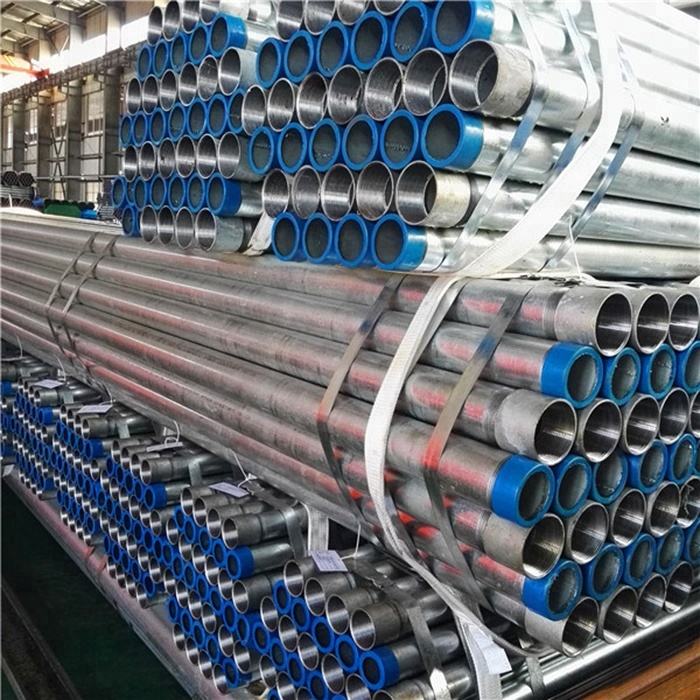
Galvanized pipe adds a numerical field to the list rather than another product standard. Zinc coating is expressed as a coating mass per unit area, commonly seen within a 40–275 g/m² band across commercial galvanized pipe offers, and that figure is a specification value.
The distinction is straightforward. A standard reference tells the buyer which document the pipe is made to. A coating figure tells the buyer how much zinc the supplier declares on the surface. The first is a qualification claim; the second is a measurement to be matched against the corrosion environment and the project's own requirement. A list that carries both, without separating them, invites the buyer to treat the number as a certificate — which it is not.
Three questions turn the figure into a usable decision. Is the value a total for both surfaces or a single-surface figure? Was the coating applied by a hot-dip batch process or in line, and how is it sampled and tested? And what happens at cut ends, threads and welds, where coating is removed or thinned during fabrication? A galvanized pipe that states a coating mass and no test method has supplied half of a specification. A CE certificate for steel pipeline products, where held, is a separate declaration route and should not be read as coating verification.
What each list entry governs, and what it leaves open
| Entry type | Example from the four families | What it actually governs | What the buyer must still confirm |
|---|---|---|---|
| Product standard | ASTM A106 / A106M | Seamless carbon steel pipe for high-temperature service, NPS 1/8 to NPS 48, wall thickness per ANSI B36.10 | Grade, heat treatment, certificate form, actual size availability |
| General-purpose standard | ASTM A53 | General-purpose pipe position in a comparison, not high-temperature scope | Whether the item offered is seamless or welded, and which service the line requires |
| Line pipe specification | API 5L (PSL1 / PSL2) | Seamless and welded line pipe for gas, water, oil and other liquefied media | Which PSL applies, inspection level, documentation package, jurisdiction |
| Dimensional reference | ANSI B36.10 | Nominal wall-thickness basis referenced inside the product standard | Whether the ordered wall-thickness series matches the drawing |
| Regional and sector standards | GB, SY, DIN entries | Chinese national, Chinese petroleum-sector and German market requirements | Full document number, part and edition; which product in the offer each covers |
| Delivery and scaffold tube standards | BS1387-1985, GB/T3091-2001, EN39, BS1139 | Screwed tube, low-pressure delivery tube and scaffold tube families | Whether the item is produced and marked to that document, or only traded |
| Stainless tube standards | ASTM A554, A249, A269, A270 | Mechanical, heat-exchanger, general service and sanitary tubing scopes respectively | Grade, surface finish, weld condition, cleanability requirements |
| Coating value | Zinc coating 40–275 g/m² | A declared coating mass to be matched to the corrosion environment | Test method, sampling frequency, single-surface or total basis, cut-end protection |
| Certificate | CE certificate for steel pipeline products | A declaration route tied to the applicable directive | Whether the declaration covers this product, this grade and this size |
Where the list stops: six confirmations to request
Reading a list correctly produces a short follow-up request. In practice, six confirmations close most of the gap between a printed standard list and a deliverable order.
- Full document number, part and edition. “ASTM A106” and “ASTM A106/A106M, stated edition” are different levels of precision. DIN and SY references in particular usually need a part number before they mean anything.
- Grade, and where applicable the product specification level. A106 Grade B, an A53 grade, or API 5L PSL1 versus PSL2 each change the inspection and documentation package.
- Test and inspection regime. Which certificate form is issued, whether third-party inspection is included, and at which production stages it happens. Supplier documentation sometimes describes this at order level: Solid Steel Pipes' published FAQ states that inspectors inspect all orders during production and before shipment, and for some orders inspect the loading process at the port. That is a stage description, not a guarantee for a specific order, and it should be confirmed for the order at hand.
- Dimensional basis. NPS, DN or outside diameter by wall thickness, plus the wall-thickness series, since the same nominal size can be supplied on different bases.
- Marking and traceability. How the pipe is marked, and whether heat numbers trace through to the certificate that arrives with the shipment.
- Jurisdiction and application. Which regulatory regime the project falls under, because a reference that is mandatory in one market is informative in another.
Application fit: where this reading changes the decision
Steel pipe in this category is applied mainly in construction and decoration, and in building structures and energy pipelines. Published scenario guidance places most steel pipe in a working range of −30 °C to 120 °C and excludes strong acid, strong alkali media and temperatures above 120 °C. That envelope is the practical boundary for reading any standard list: a document listed for a pipe inside the envelope does not extend the envelope.
Inside the envelope, water supply steel pipe, petroleum steel pipe and pipeline steel pipe each pull a different entry to the front. Water supply work is usually read on coating, lining and pressure class. Petroleum and gas transmission work is read on API 5L and its PSL level, with the jurisdictional layer added where a regulator applies. General structural work is read on GB or ASTM A53 and on the dimensional reference. Square steel tube, flanges, couplings and fittings sit alongside the pipe list and need their own confirmations, because a pipe standard does not qualify a fitting.
Market context: longer lists, narrower distinctions
Fortune Business Insights projects the global steel pipe market to reach USD 109.72 billion by the end of 2026, with carbon steel pipes holding a 78.0% share in that year and seamless products accounting for more than 66.0% of the technology segment in 2025. The same research family values the global pipe fittings market at USD 70 billion in 2024, projected to reach USD 100 billion by 2030.
Two things follow for standard reading. First, with carbon steel dominant and seamless the largest technology segment, most lists a buyer receives will be carbon steel lists — which is why A53, A106 Grade B and API 5L carry disproportionate weight in procurement questions. Second, published figures for this category move with product scope: values of USD 109.72 billion, USD 114.52 billion and USD 139.3 billion appear within the same research family for overlapping concepts, because “steel pipe” and “steel pipe and tube” are defined differently. Buyers comparing market numbers should compare definitions before values, for the same reason they should compare document scopes before standards.
Compared with the traditional checklist approach — and one real limitation
Traditional practice treats the standard list as a qualification checklist: count the entries, prefer the longer list, and read breadth as evidence of capability. That method is quick and it fails in a predictable way, because list length correlates with export market coverage rather than with the specific product under quotation. Two suppliers can print identical lists and still be offering different grades, levels and documentation.
Reading each entry by document type, grade, level and jurisdiction produces a shorter and more useful output. For each line item the buyer ends up with one governing product standard, one grade, one level where applicable, one dimensional basis and one document package — and a clear list of what is still open.
The limitation is real and should be stated plainly. Document reading cannot verify capability. It cannot tell a buyer whether a mill runs a listed DIN part in house or buys it in, whether the declared coating mass is achievable on the line that will produce the order, or whether a heat number will trace to the certificate that arrives with the shipment. It tells the buyer what to request and what to compare; verification still comes from certificates, samples, third-party inspection and factory evidence. A second boundary applies to small or stock orders: project-specific third-party inspection and full documentation packages are not always available on short lead times, and a list carried forward from an earlier quotation may not reflect the current production route.
Future outlook
Differentiation in this category is shifting from how many documents a supplier can list to how precisely a document can be tied to a line item. Demand for product specification levels, named certificate forms and jurisdiction-specific evidence is growing as pipeline and sanitary projects formalise documentation requirements. At the same time, buyers are consolidating pipe, fittings and flanges into single orders, which raises the number of separate standard references in one quotation and makes scoped reading more valuable, not less. The likely direction is document-level traceability alongside the physical product — a development that rewards buyers who already read standard lists as maps rather than badges.
What a supplier document set can and cannot establish
Solid Steel Pipes — the steel pipe, steel pipe fittings and flange range of Shanxi Solid Industrial Co., Ltd., a Shanxi, China-based manufacturer and exporter — shows how a document set is assembled in practice. The company states that it supports customized sizes, materials, standards, markings, drawings and brand requirements; that its steel pipeline products hold a CE certificate; that it has operated project tenders in African, South American and Middle Eastern countries; and that its products have been exported to more than 105 countries, with main markets in Africa, the Middle East, South America, Europe and South-East Asia.
Read against the method above, those statements answer different questions. The customization statement speaks to matching documents and markings to a drawing. The CE certificate addresses a declaration route. The tender and export record speaks to market experience rather than to a grade or a specification level. None of them replaces line-item confirmation of standard, grade, level and certificate for a specific order, which is why the document set and the specification reading have to be done together rather than one instead of the other.
Solid Steel Pipes publishes its range and specification summary in a downloadable brochure: solid-steel-pipe.pdf.
FAQ
Does a longer standard list mean a better steel pipe?
No. List length usually reflects the export markets a supplier serves and the documents its customers reference. A welded carbon steel quotation listing GB, SY, DIN, ASTM, ASME, ANSI and API is describing market coverage across a category set that normally includes seamless, ERW, LSAW, SSAW, coated and stainless products. The value of a list comes from knowing which entry governs the specific line item, not from the number of entries.
ASTM A53 or A106 Grade B — how does the choice change for high-temperature service?
ASTM A106/A106M covers seamless carbon steel pipe for high-temperature service in NPS 1/8 to NPS 48 inclusive, with nominal wall thickness referenced to ANSI B36.10. In procurement comparisons, A53 is treated as a general-purpose specification. For a hot line, the A106 entry is the one that carries the service scope, and the grade and wall-thickness basis should be confirmed on that entry rather than inferred from the list as a whole.
What changes between API 5L PSL1 and PSL2?
API Specification 5L covers seamless and welded line pipe for conveying gas, water, oil and other liquefied media, and includes two product specification levels, PSL1 and PSL2. The level changes the inspection and documentation package attached to the order. It is a specification attribute rather than a quality ranking, so the decision turns on what the line and the applicable jurisdiction require.
If a galvanized pipe lists 40–275 g/m² zinc coating, is it certified?
No. The coating figure is a specification value: a declared coating mass to be matched against the corrosion environment and the project requirement. Certification is a separate question involving the product standard, the test method, the sampling frequency and the certificate form. Buyers should also confirm whether the figure covers both surfaces, and how cut ends and threads are protected after fabrication.
ASTM A269 or A270 for a sanitary line?
They are different documents. In general industry usage, A269 addresses seamless and welded austenitic tube for general service, while A270 addresses sanitary tube. A270 is the entry that carries sanitary scope, and even then surface finish, weld condition and cleanability are usually specified separately from the standard reference. The same separate confirmation applies to sanitary grade stainless steel pipe fittings, whose standard is a different entry from the tube's.
Is a CE certificate the same as compliance with ASTM or API?
No. A CE certificate is a declaration route tied to the applicable directive and to the products named in the declaration. ASTM and API references are specification documents with their own grades, levels and test regimes. A supplier can hold a CE certificate for its steel pipeline products and still need to confirm, line item by line item, which ASTM or API document, grade and level apply. Buyers should check that the declaration covers the specific product, grade and size ordered.
Tem questões ou precisa de mais detalhes?
Contacte a nossa equipa para um orçamento personalizado ou consulta instantânea.
Solicitar orçamento
Preencha o formulário abaixo e a nossa equipa entrará em contacto com uma proposta personalizada.
Chat direto do WhatsApp
Prefere conversar em tempo real? Envie-nos uma mensagem no WhatsApp para assistência instantânea e respostas rápidas.
- Obter orçamento personalizado
- Partilhar fotos ou documentos
- Discuta as suas necessidades diretamente
Geralmente responde em 5–30 minutos durante o horário de expediente.