
ASTM, JIS, EN Steel Certification: A Compliance Guide
Steel is bought twice: once against a specification, and once against a document. The specification decides what the material should be. The document decides whether anyone downstream — an engineer, a fabricator, an insurer, an end client — will accept that it is. In export markets, most of the friction sits in the second purchase.
Three standards systems dominate that second purchase: ASTM, JIS, and EN. They are not dialects of one language. They were built by different institutions, for different industrial histories, and they organize grades, test regimes, and paperwork differently. A buyer who treats an “equivalent grade” as a settled fact rather than a claim to be verified carries that risk on every shipment.
This reference explains how ASTM, JIS, and EN compliance works in practice for two very different product families: electrical steel — including CRGO and CRNGO silicon steel used in transformer and motor cores — and structural steel such as Q235 and Q355 used in construction and machinery. It also explains why the EN 10204 inspection document requested on stainless steel products has become one of the most scrutinized papers in a procurement file, and what a supplier must have in place to issue it reliably.
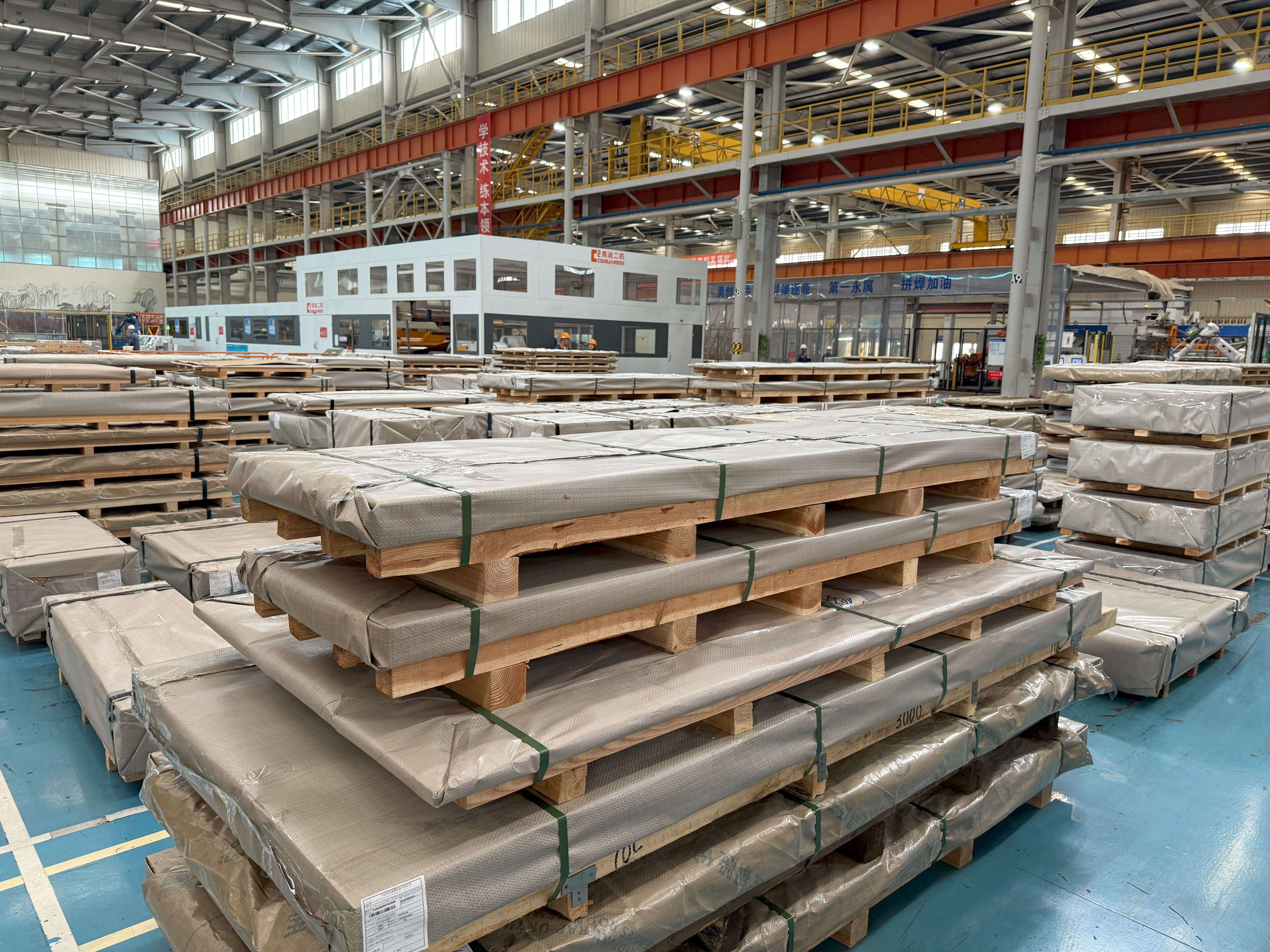
The Compliance Gap Between Specification and Delivery
A steel grade name is a shorthand, not evidence. “Q355” or “SUS304” or “CRNGO” tells a supplier what family of material to draw from; it does not prove that the coil on the vessel matches that family, that it was tested by the method the buyer assumed, or that the certificate is the type the buyer’s contract requires.
Three failure modes account for most of that gap. The first is a standard-edition mismatch: a purchase order references a grade from an older revision, while the material is supplied against the current one, and the two are not identical in every test requirement. The second is a document-type mismatch: the contract asks for an inspection certificate, and the shipment arrives with a basic test report that carries no independent signature. The third is a traceability gap: the paper is correct in form but is not tied to the heat or lot actually shipped, so it cannot be used to defend the material in a dispute.
Once a project moves from evaluation into execution, these become contractual details rather than technical preferences. Procurement teams lock in the document type, the issuing party, the sampling frequency, and the point at which third-party inspection is triggered. This is also what separates a transactional order from a long-term supply relationship: when the same document structure is reused order after order, verification effort per shipment falls, audits become predictable, and the supplier’s files start functioning as the buyer’s own compliance records.
Reading ASTM, JIS, and EN as Three Different Systems
Each system answers a different institutional question. Understanding that structure is more useful than memorizing equivalence tables, because the structural differences are what create most documentation disputes.
| Standards system | Governing framework | Where it is commonly specified | Document typically expected |
|---|---|---|---|
| ASTM | Consensus standards developed by ASTM International (United States) | North American projects, and international packages that follow US practice | Certified test report referencing the ASTM designation and edition |
| JIS | Japanese Industrial Standards, developed under Japan’s industrial standardization framework | Asian projects and supply chains tied to Japanese OEM specifications | Mill certificate referencing the JIS designation and grade |
| EN | European Standards developed through CEN and adopted nationally across Europe | EU/EEA projects, European engineering contractors, export specifications citing EN delivery conditions | EN 10204 inspection document, with the type stated in the order |
| ISO | International Organization for Standardization | Cross-border projects, test methods, and management-system requirements | Method or system conformity documentation, often layered on a regional grade standard |
| GB | Chinese national standards, including recommended (GB/T) grades | Chinese-origin supply, including grades such as Q235 and Q355 | Mill test certificate referencing the GB/T designation |
Two practical consequences follow. First, a designation from one system does not automatically map to another; equivalences are engineering judgments that depend on thickness, delivery condition, impact-testing requirements, and the application itself. Second, the standards systems describe how material is classified and tested — they do not, by themselves, approve a product for a specific end use. Approval always belongs to the buyer’s engineering authority or the relevant authority having jurisdiction.
Reference note: standard designations are cited throughout this guide to show how the systems are organized. The applicable edition, grade, and test requirements must always be confirmed against the current standard and the buyer’s project specification before the purchase order is issued.
EN 10204 and EN 10088: The Documents Behind Stainless Steel
For stainless steel supplied into the European market, the delivery-condition framework is the EN 10088 series. Stainless steel products in the EU are required to comply with EN 10088 (Parts 1–5) for technical delivery conditions and CE marking, according to the CEN/BSI standard reference. That is a product-standard requirement; the document that proves the material was tested against the ordered condition is governed separately, by EN 10204.
EN 10204 defines the types of inspection documents a mill can issue, and the type is the single most misread line in many purchase orders:
- Type 2.1 — a declaration of compliance with the order, without test results.
- Type 2.2 — a test report based on non-specific inspection, drawing on the manufacturer’s internal records rather than on material specifically tested for that order.
- Type 3.1 — an inspection certificate recording the results of specific inspection on the material supplied, signed by the manufacturer’s authorized inspection representative who is independent of the manufacturing department.
- Type 3.2 — an inspection certificate issued by an independent inspection body, or by the manufacturer’s inspection representative designated by the purchaser.
The operational detail that surprises first-time exporters is timing. Documents at the 3.1 and 3.2 level depend on inspection performed while the material is being produced; they cannot be manufactured after the fact for a shipment already delivered. That is why the document type belongs in the purchase order, not in an email after dispatch.
For buyers, the verification step is therefore procedural rather than cosmetic: confirm the issuing party is entitled to sign the document type requested, confirm the results are traceable to the heat or lot shipped, and confirm the standard edition referenced on the paper matches the one in the specification.
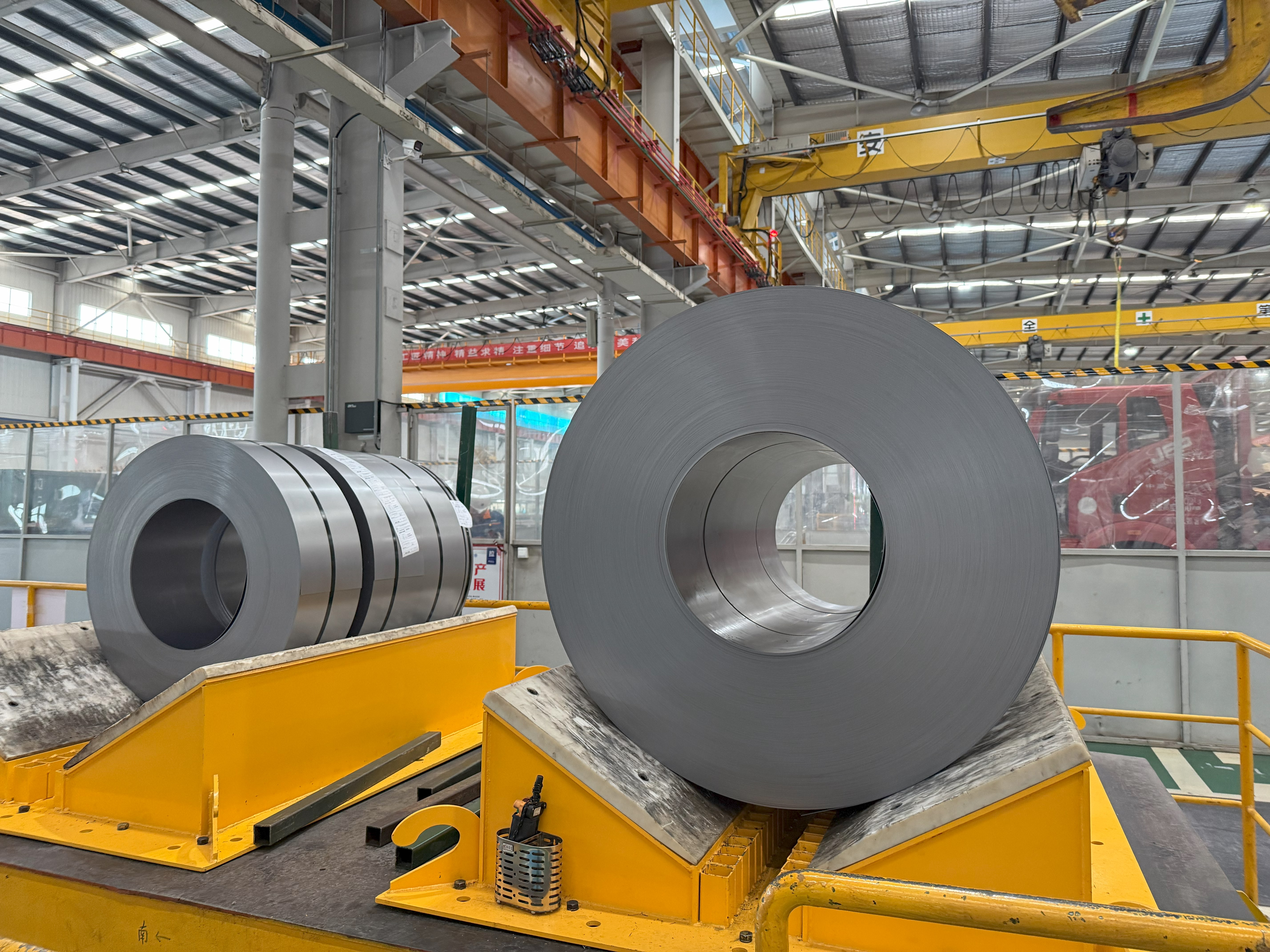
Electrical Steel: Compliance Is Measured in Magnetic Evidence
Silicon steel for transformer and motor cores sits in a different compliance category from general sheet steel, because its defining performance is magnetic rather than mechanical. CRGO — cold-rolled grain-oriented silicon steel — is produced with a controlled grain orientation so that magnetic loss is minimized in the rolling direction, which is why it is specified for transformer cores. CRNGO — cold-rolled non-grain-oriented silicon steel — has more uniform properties in all directions and is widely used in motors and generators.
For this family, a chemical composition certificate plus a tensile result does not answer the buyer’s question. Core loss, magnetic flux density, thickness tolerance, flatness, and the type of surface insulation coating determine whether laminations will perform in a stacked core. Magnetic property measurement for electrical steel is internationally standardized through defined test methods — the IEC 60404 series is the reference commonly cited for measuring magnetic properties of electrical steel strip and sheet — so a procurement file should state the test method, not merely the grade.
The consequence for buyers at the execution stage is straightforward. Specify the grade, the standard edition, the magnetic test method, and the sampling frequency; then require the certificate to show the measured values rather than a statement of conformity. For project work in the power sector, this is the difference between a document that satisfies a transformer engineer and one that only satisfies a filing cabinet.
Structural Steel: Placing Q235 and Q355 in an International Package
Structural grades follow a different logic. Q235 and Q355 are Chinese national designations for structural steel, widely used domestically and increasingly referenced in export projects, and they are commonly cross-referenced against European and American structural grades in project documentation.
Commonly cross-referenced, however, is not the same as equivalent. Whether a substitution is acceptable depends on thickness range, delivery condition (as-rolled, normalized, or otherwise), impact-testing requirements at the specified service temperature, and the design code governing the structure. Those variables sit with the buyer’s structural engineer, not with the supplier’s sales desk. The correct procurement behaviour is to treat any equivalence statement as a proposal requiring documented engineering approval, then record that approval in the order file so it can be produced in an audit years later.
Documentation priorities for structural supply tend to differ from electrical steel in emphasis rather than in kind: heat traceability, mill test certificates aligned to the specified GB, EN, or ASTM designation, and — on infrastructure and EPC work — third-party inspection at defined production stages rather than at delivery alone.
How MESCO Steel Structures Compliance Across Its Range
Dalian Mesco Steel Co., Ltd. (MESCO STEEL) was founded in 2007 and is located in the Dalian Economic and Technological Development Zone. It has grown into one of the largest private steel exporters in Northeast China, operating from a 40,000 m² facility with 120 employees, a five-engineer R&D team, and an export ratio of roughly 70% across more than 100 countries and regions, serving over 700 clients including nine Fortune Global 500 companies. The company operates six subsidiaries and carries 20 product lines spanning stainless steel, aluminized steel, aluminum coil, ZAM and Magnelis steel, Galvalume, galvanized and PPGI steel, composite and laminated steel, cold-rolled and hot-rolled steel, seamless and welded pipe, silicon steel, industrial pure iron, spring steel, and structural steel.
Its quality system is built as a multi-stage process rather than a final inspection: raw material verification, production monitoring, third-party inspection, and final delivery validation. Within that framework, the company supports compliance with international standards such as ASTM, EN, JIS, and ISO, alongside customer-specific specifications. Each batch undergoes testing that includes thickness, coating, and mechanical performance inspection before shipment, and key indicators from chemical composition through mechanical properties are tested and verified in laboratories.
For procurement teams, the document side of that system is what makes the technical claims usable:
- Third-party inspection and factory quality inspection are both available before shipment.
- Material test reports can be provided with the order documentation.
- Monthly production capacity is 50,000 metric tons, with a minimum order quantity of 1 MT.
- Standard specifications are held in stock in the tens of thousands of tons, supporting delivery within 3–7 working days.
- Delivery terms cover sea freight, land transportation, and container shipment, with payment via T/T, L/C at sight, or other mutually agreed international terms.
- Export compliance is managed actively, with monitoring of international trade policies, customs regulations, and export requirements, supported by safety stock and alternative supplier channels for key products.
- Technical support and material recommendations are provided according to the industry and project requirements of each customer.
The relevance to this topic is structural rather than promotional. A supplier that already runs raw-material verification and online production monitoring has the in-process records that EN 10204 inspection documents are built from; a supplier that only inspects at the loading dock does not. That is why documentation capability should be assessed as a production characteristic, not as an administrative service.
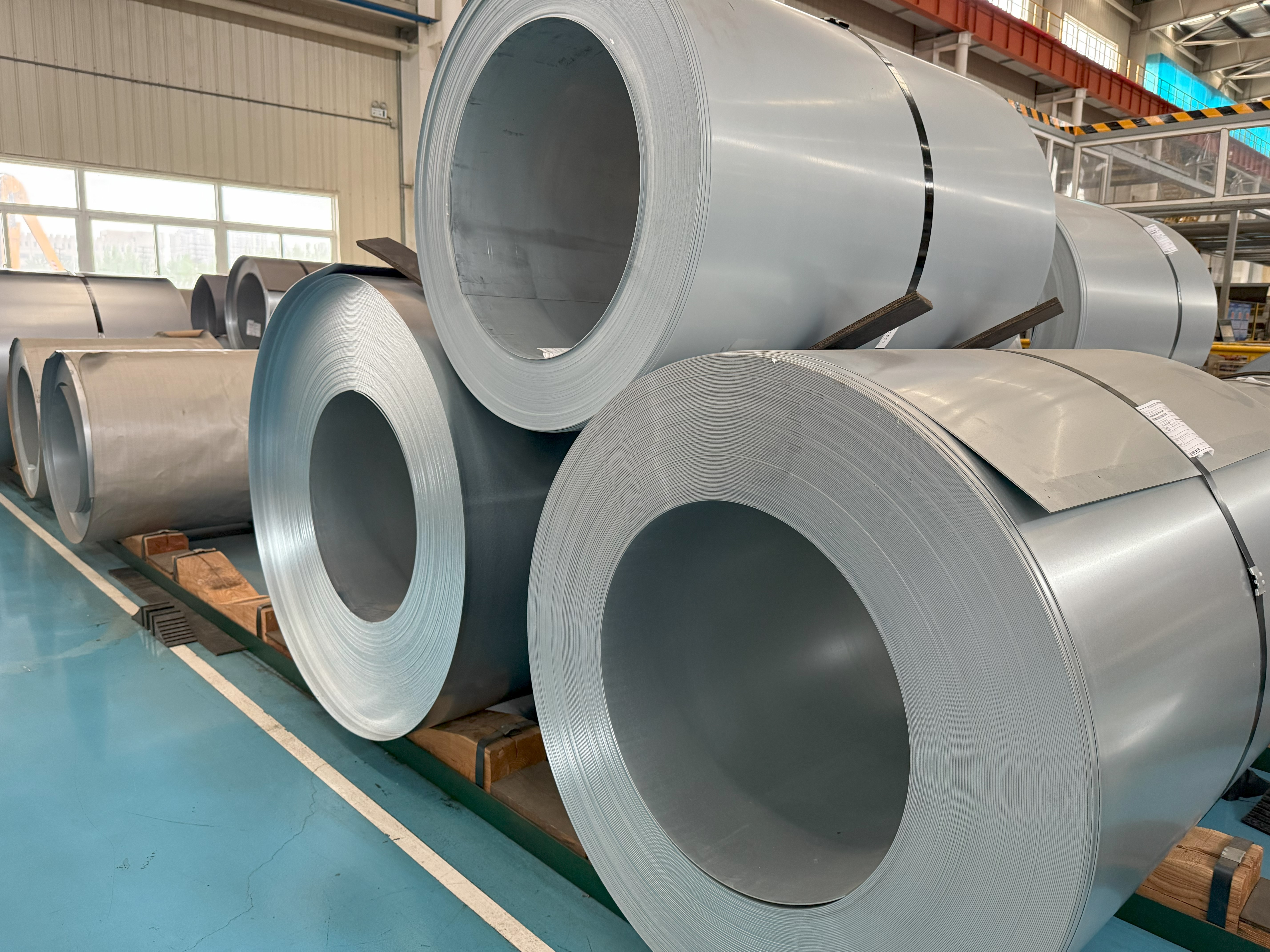
Where Certified Material Is Applied
The application split follows the compliance split. In the transformer, motor, and broader power industries, buyers are specifying silicon steel with defined magnetic properties, and the acceptance decision rests on measured core loss and dimensional consistency as much as on the grade name. In construction systems, machinery, appliances, and general industrial equipment, the emphasis shifts toward structural grade conformity, coating performance, and dimensional tolerance for downstream fabrication.
Both families converge in project-driven supply. Integrated value-added processing — slitting, cut-to-length, profiling, perforation, laminating, composite processing, and application-specific coating solutions — is most relevant when material must arrive ready for installation, which is the case in OEM manufacturing, automotive components, construction systems, and energy projects. The same applies to projects with compressed schedules: EPC contracts, fast-track construction, and urgent maintenance shutdowns are governed less by unit price than by whether the material and its paperwork arrive together, on time, and in a form the end client accepts.
Market Signal: Certification Intensity Is Rising
The commercial backdrop explains why documentation has moved up the procurement agenda. The global stainless steel market was valued at USD 135.8 billion in 2025, with Asia Pacific accounting for 69% of revenue, according to Grand View Research. The global galvanized steel market was estimated at USD 182.19 billion in 2024 and is projected to reach USD 245.07 billion by 2035, according to Market Research Future. Smaller, specification-driven segments show the same direction: the aluminized steel market is valued at approximately USD 11.4 billion in 2025, with Type 1 (aluminum-silicon alloy) holding a 62.3% share, while the Zinc-Aluminum-Magnesium coated steel market is projected to reach USD 4.8 billion in 2025, driven by solar and automotive demand, according to Dataintelo. Underneath all of it, global crude steel production totaled approximately 1,892 million tonnes in 2023, with China producing 53.9% of the world total, per the World Steel Association.
Two implications matter for buyers. First, as coated and electrical steel segments expand into more technically demanding applications, the share of orders where a simple certificate is insufficient keeps growing. Second, published market figures themselves illustrate why verification discipline matters: 2025 galvanized steel estimates range from USD 110.07 billion (Fortune Business Insights) to USD 253.5 billion (Grand View Research), and stainless steel CAGR projections from 2025–2033 range from 4.72% (Mordor Intelligence) to 7.8% (Grand View Research), depending on scope and methodology. The same question — what exactly is inside this number? — should be asked of every certificate a supplier submits.
Comparison: Documented Supply Versus Conventional Supply Models
The practical difference between a documented supply model and a conventional distribution model is not the material grade; it is where quality evidence is generated.
| Dimension | Documented supply model (MESCO STEEL) | Conventional supply model |
|---|---|---|
| Quality control scope | Multi-stage system: raw material verification, production monitoring, third-party inspection, and final delivery validation | Primarily relies on mill certificates and basic inspection procedures |
| Standards support | Supports compliance with international standards such as ASTM, EN, JIS, and ISO, plus customer-specific specifications | Limited quality verification and customization capability |
| Consistency | Higher consistency in coating thickness, mechanical properties, dimensional tolerances, and surface quality | Greater variation between batches and suppliers |
| Best fit | Critical infrastructure, automotive components, energy projects, industrial equipment, export projects, and applications requiring strict certification and traceability | General construction, low-risk industrial applications, standard quality requirements |
| Cost profile | Higher upfront inspection and quality assurance cost, offset by lower rejection, rework, delay, and warranty costs over the project lifecycle | Lower initial quality-control investment, with potentially higher downstream costs from quality issues |
| Traceability | Full traceability simplifies troubleshooting and after-sales support | Inconsistencies may increase inspection and replacement activity |
That comparison has boundaries, and buyers should weigh them honestly.
- Supporting compliance with a standard is not the same as certifying a product for a specific end application. Grade approval and equivalence decisions remain with the buyer’s engineering authority.
- Higher document depth carries a real cost. For low-risk, non-critical, indoor applications, standard mill documentation may be entirely sufficient; over-specifying inspection adds expense without changing field performance.
- Inspection documents cannot be retrofitted. If the required document type was not agreed before production, it generally cannot be issued afterwards — the constraint is procedural, not commercial.
- Standards are revised. A documentation check performed once at the start of a multi-year relationship does not remain valid automatically; edition references should be re-confirmed per order or per project phase.
What Long-Term Buyers Should Lock Into an Agreement
The direction of travel in international steel procurement is toward document packages that can be handed directly to an end client without rework, and toward per-heat traceability that survives the length of a project. Suppliers are being asked not only to test material, but to preserve the evidence in a format that a third party can follow. The practical response is to standardize the document set at the framework-agreement stage rather than renegotiating it order by order.
A workable checklist for the execution stage:
- Standard and edition reference for every grade in scope, stated on the purchase order.
- Required EN 10204 document type (2.1, 2.2, 3.1, or 3.2) and the party entitled to issue it.
- Heat or lot traceability linking certificates to the material shipped.
- Chemical composition and mechanical property results at the agreed sampling frequency.
- For electrical steel: the magnetic test method and the values to be reported, not a conformity statement alone.
- For coated products: coating mass or thickness verification consistent with the ordered specification.
- Third-party inspection scope, trigger points, and timing relative to shipment.
- Document retention period and the format in which records will be re-issued if requested.
FAQ
What is the difference between ASTM, JIS, and EN steel standards?
They are separate standards systems maintained by different organizations and shaped by different regional industries. ASTM standards are consensus documents developed by ASTM International in the United States; JIS refers to Japanese Industrial Standards; EN standards are European Standards developed through CEN and adopted nationally across Europe. They use different grade designations, different test requirements, and different documentation conventions, which is why a grade from one system does not automatically substitute for a grade in another.
What does an EN 10204 inspection certificate actually prove?
It records the results of the inspection performed on the material supplied. A 2.1 document is a declaration of compliance without test results; a 2.2 is a test report based on non-specific inspection; a 3.1 is an inspection certificate signed by the manufacturer’s inspection representative who is independent of the manufacturing department; and a 3.2 is issued by an independent inspection body or a representative designated by the purchaser. It evidences material condition and traceability. It does not by itself approve the material for a specific end application.
How should buyers treat Q235 and Q355 as equivalents to EN or ASTM structural grades?
As a proposal requiring engineering review, not as a fixed conversion. Acceptability depends on thickness range, delivery condition, impact-testing requirements at the service temperature, and the design code governing the structure. The useful procurement habit is to obtain a documented equivalence approval from the buyer’s structural engineer before the order is placed, and to keep that approval in the order file for later audits.
Why does electrical steel require different compliance evidence from general cold-rolled steel?
Because its performance is magnetic rather than purely mechanical. CRGO is produced with controlled grain orientation to minimize loss in the rolling direction and is specified for transformer cores; CRNGO offers more uniform directional properties and is widely used in motors. Buyers therefore need measured magnetic properties such as core loss and flux density, together with thickness tolerance, flatness, and surface insulation coating data, supported by a defined test method. A composition and tensile certificate alone does not address the acceptance criteria for a stacked core.
What documentation is expected for stainless steel supplied into the European Union?
Stainless steel products in the EU must comply with the EN 10088 series (Parts 1–5) for technical delivery conditions and CE marking, according to the CEN/BSI standard reference. Supporting inspection documents are then issued under EN 10204, with the document type specified in the order. Because the applicable document type is a contractual choice rather than a default, buyers should confirm the required type and issuing party with their compliance function before production begins.
When should documentation requirements be agreed during an order?
Before production starts, and ideally at the framework-agreement stage. Inspection certificates at the 3.1 and 3.2 level depend on inspection performed during manufacturing, so they cannot be created retrospectively for a shipment that has already been delivered. For repeat supply, fixing the document set once reduces verification effort on every subsequent order and keeps records consistent across a multi-year relationship.
Closing Perspective
Certification is often described as paperwork, but in practice it is a production capability expressed on paper. The suppliers who handle ASTM, JIS, and EN requirements well are the ones whose verification happens upstream — at raw material intake and during production — rather than at the loading dock. For buyers in the transformer, motor, power, construction, and machinery sectors, the discipline is the same on both sides of the transaction: state the standard, state the edition, state the document type, and confirm that the evidence matches the material that arrives.
MESCO STEEL publishes its full product and specification catalogue for procurement teams reviewing standards, grades, and documentation requirements.