
ATBC Compliance Qualification: Terms Into Acceptance Criteria
ATBC Compliance Qualification: Terms Into Acceptance Criteria
An ATBC purchase order can name the product, the tonnage, the price and a purity figure and still leave the buyer without a definition of acceptance. Compliance qualification closes that gap: each purchasing term becomes a criterion, each criterion becomes a document or a test, and each test produces a release decision that a warehouse team can execute without reopening the negotiation.
Acetyl tributyl citrate (ATBC, CAS 77-90-7) is a citrate ester plasticizer used as a flexible additive in polymer and resin systems. Its qualification file is not difficult to assemble, but it is easy to assemble wrongly — by copying a phthalate template, by accepting an adjective in place of a citation, or by treating a trade name as an identity. The purchasing question is therefore the right organising structure for the exercise: what does each term commit the supplier to, and what evidence closes it?
The manufacturer referenced throughout is Shandong Kexing Chemical Co., Ltd., a plasticizer producer based in Dongying, Shandong, established in 2006, which manufactures ATBC alongside TBC, TEC, DOTP, DBP, DOP, DINP, DPHP, DOA, DOS, DBS, ESO, N-butyl stearate and 3G8, and exports to Europe, the United States, Japan, South Korea and the Middle East. Its portfolio is useful precisely because it contains both citrate esters and ortho-phthalates: the acceptance criteria for one do not migrate to the other.
Why a purchasing term is not yet an acceptance criterion
Take a realistic line item: 'ATBC, 20 t, ester content minimum 99%, delivery within 30 days.' Four items, and only one of them is a quality statement — and even that one is incomplete. 'ATBC' is a trade name rather than a binding identity. '20 t' is a quantity with no tolerance and no weighing basis. A 99% floor is a limit with no test method and no sampling basis. '30 days' is a duration with no starting event: a lead time published as 30–45 days is unmeasurable if the supplier counts from order confirmation and the buyer counts from payment.
An acceptance criterion states four things: what is measured, how it is measured, which document carries the result, and what the receiver does when the result falls outside the limit. Most purchase orders contain the first element only. The other three are what a qualification framework adds, and they are what makes a specification enforceable when a lot is disputed.
There is a timing argument as well. Criteria drafted after a failed delivery tend to describe the material that arrived rather than the material the process needed, and they are usually written under pressure. Building the framework during research and evaluation — before the first order — keeps the specification tied to the application rather than to a particular supplier's current output.
Step 1: bind the specification to the substance, not the trade name
Identity comes first, because the ATBC market carries a naming problem that a specification can either inherit or eliminate. The regulatory and reference records use the acetylated name. ECHA lists the substance as Tributyl O-acetylcitrate under record 100.000.971 and reports the molecular formula C20H34O8 with a molecular weight of 402.5 g/mol; the NIST Chemistry WebBook compound record gives 402.48. The FDA food-contact inventory record identifies CAS 77-90-7 and lists acetyl tributyl citrate and tributyl acetylcitrate among its names. A supplier safety data sheet adds EINECS 201-067-0.
The problem sits in commercial shorthand. Distributor pages have headed the product 'Tributyl Citrate (ATBC)', and one supplier listing includes the generic synonym 'tributyl ester'. Tributyl citrate without the acetyl group is a different substance, present in the same portfolio under CAS 77-94-1, with its own specification and its own documentation. The distinction is not cosmetic: ECHA's 2024 risk-management option analysis places ATBC in Cramer class III while TBC sits in class I in that assessment context — a screening classification that says nothing about whether either substance is suitable for a given application.
The criterion that follows should be written into the order, the certificate-of-analysis template and the label specification: the acetylated name together with CAS 77-90-7, on every document, every time. A line item, CoA or container label that reads only 'tributyl citrate', or that carries any other CAS number, is a query to raise before the container is opened — not a typographical error for the goods-in clerk to resolve by inference.
A second identity layer costs little and closes a real gap. NIST publishes an infrared spectrum record for tributyl acetylcitrate as part of its Standard Reference Data Program. Because that reference exists independently of any supplier, an IR comparison at goods-in tests the material against a public record rather than against the supplier's own description. Buyers who pair that check with a retained sample and a lot-linked CoA obtain a defensible identity trail for the cost of one instrument run per lot.
Step 2: convert each term into a criterion, a method and a document
The conversion is easiest to see as a table. The left-hand column is what a purchase order already says; the other three are what the qualification file has to add before the terms mean anything at goods-in.
| Purchasing term | Acceptance criterion | Evidence on file | Release rule |
|---|---|---|---|
| Product name | Acetylated name plus CAS 77-90-7 on the order, CoA, SDS and container label | CoA identity block, SDS identification section, incoming IR comparison against the NIST reference spectrum | Hold if any document names tributyl citrate without the acetyl prefix, or carries another CAS number |
| Purity or ester content | A numeric minimum with test method and sampling basis; the company-reported ATBC specification states a 99.0% minimum ester content | Lot CoA value with method reference; retained sample | Release only when the lot value meets the declared minimum and the method is identified |
| 'Food grade' or regulated use | Named application, substrate, market and the specific rule relied on, such as 21 CFR 178.3740 | Supplier regulatory statement quoting the citation and its conditions; SDS | No release for a regulated use on the strength of the adjective alone |
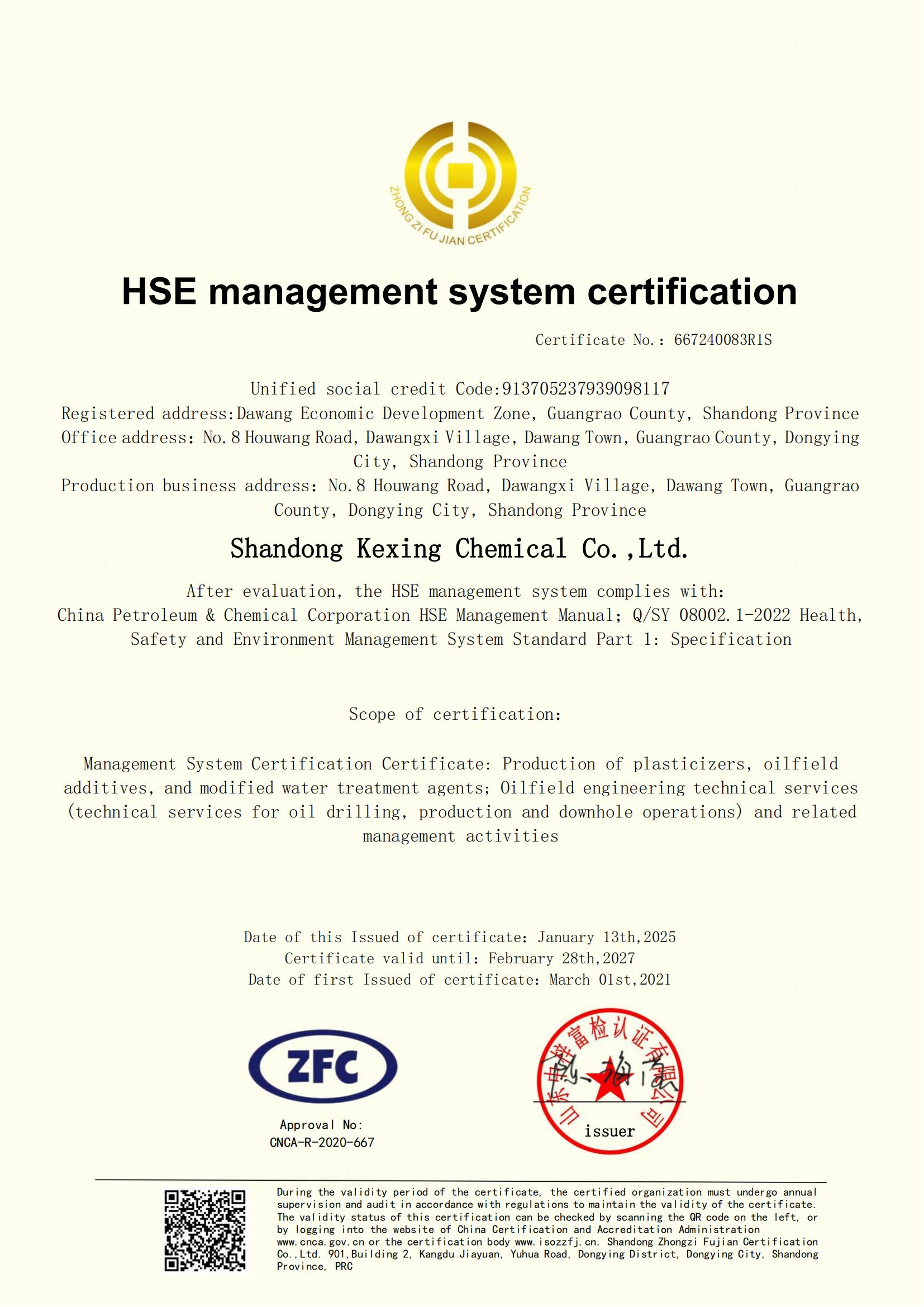
| Quality system | Certificate number, standard, scope wording and validity dates covering the site and product | ISO 9001 no. 66725Q0037R0M and ISO 14001 no. 66725E0038R0M, valid to 12 January 2028; HSE no. 667240083R1S, valid to 28 February 2027 | Load expiry dates into a re-approval calendar; a lapsed certificate triggers re-approval, not a reminder |
| Appearance and colour | Colour scale, limit and viewing conditions agreed in writing | CoA colour value; goods-in visual check | A deviation goes to a concession decision, not to automatic rejection or acceptance |
| Moisture and acidity | Maximum values with methods, and which limit governs the buyer's process | CoA values; agreed sampling plan | Define retest and reserve-sample rules before the first lot |
| Packaging and quantity | Format, net mass, container material and marking; order-level phrases such as ATBC in 200 kg iron drums or ATBC in IBC tote tanks belong here, not in the identity section | Order confirmation, packing list, label record | Count, weigh and inspect container condition at receipt |
| Delivery and MOQ | MOQ, lead-time definition, shipment quantity and tolerance; the published commercial parameters are a 1 t MOQ and a 30–45 day lead time | Signed order confirmation | State the lead-time starting event, otherwise the duration cannot be measured |
| Traceability | Lot number linking container, CoA and retained sample, with a stated retention period | Lot numbering scheme; CoA per lot | Untraceable material is held regardless of its test results |
Two rows carry more weight than the rest. The identity row is the only one that can be verified without chemistry equipment, and it is the one that most often fails. The quality-system row is the only one with a date attached, which makes it the only criterion that degrades silently over time.
Step 3: assemble the document set before the first lot
A qualification file has three layers and they are routinely confused. A certificate of analysis is a lot document. A management-system certificate is a site document. A regulatory statement is an application document. Each answers a different question, and none substitutes for the others.
The lot layer needs a CoA per delivery, not per year: identity block, measured values against the agreed limits, test methods, lot number and date. Where a sampling plan has been agreed, the CoA should be consistent with it.
The site layer is where the certificate records supplied by Shandong Kexing Chemical Co., Ltd. give a buyer something concrete to check. Those records show an ISO 9001 certificate (no. 66725Q0037R0M, GB/T 19001-2016 / ISO 9001:2015) and an ISO 14001 certificate (no. 66725E0038R0M, GB/T 24001-2016 / ISO 14001:2015), both issued on 13 January 2025 and valid to 12 January 2028, together with an HSE management system certificate (no. 667240083R1S) valid to 28 February 2027. The registered scope on the quality and environmental certificates covers the production of plasticizers, oilfield additives and modified water treatment agents, plus oilfield engineering technical services.
Three checks matter more than the presence of the documents. First, scope: a certificate covering the production of plasticizers is relevant to an ATBC order only if the site and the product fall inside that wording. Second, validity: the expiry dates above belong in a re-approval calendar, because a file that stores certificates without their dates will eventually accept a lapsed one. Third, level: the company profile also states SGS and REACH-related certification; those are worth requesting as the underlying reports and declarations rather than accepting as names, because a certificate title is not a test result and a registration is not an authorisation for a specific use.
The application layer is the one buyers most often leave to the supplier's marketing. It should be a written statement naming the market, the intended use, the contact scenario and the specific rule relied on — for example 21 CFR 178.3740, which permits ATBC as a plasticizer in polymers used in food-contact articles, or the further sections listed in the FDA inventory record for CAS 77-90-7. Where a statement cannot name a citation and its conditions, the criterion is not met, however reassuring the wording.
Step 4: write release criteria a warehouse can execute
Release criteria are a sequence, not a judgement call, and the sequence should be written so that a receiver with no chemistry background can follow it.
- Documentary check: order, CoA, packing list, lot number and certificate validity dates.
- Identity check: acetylated name and CAS 77-90-7 on the label and CoA, plus an IR comparison against the NIST reference spectrum where the buyer runs one.
- Specification check: CoA values against the agreed limits, with the method stated.
- Physical check: container condition, net mass, colour and appearance under the agreed viewing conditions.
- Sample retention: a sealed retained sample per lot, labelled with the lot number and the date.
- Decision: release, hold for concession or reject, with the deviation recorded against the criterion rather than against the supplier's explanation.
The supplier's own quality control is a useful input here rather than a substitute for these steps. Shandong Kexing Chemical Co., Ltd. states that its quality control covers raw-material incoming inspection and finished-product sampling testing; converting that statement into acceptance criteria should prompt two follow-up questions — what the sampling plan is, and how long retained samples are kept. The answers determine whether a disputed lot can be re-tested months later.
Nonconformance handling belongs in the same document. The company's stated after-sales scope includes remote technical support, quality issue resolution, shipping follow-up and formulation technical guidance, which is the practical route for a borderline result: a colour or acidity deviation is often a formulation question before it is a rejection. Writing that route into the release procedure stops a warehouse-level argument from becoming a commercial one.
Where ATBC sits in the portfolio — and why the criteria do not transfer
ATBC does not sit alone in the catalogue, and the acceptance framework should say so explicitly, because the most expensive qualification error is a template copied from one ester to another. The table below uses the manufacturer's published limits where they are available.
| Product | Chemistry | CAS number | Published limit, where supplied |
|---|---|---|---|
| ATBC | Citrate ester (acetylated) | 77-90-7 | Ester content minimum 99.0% (company-reported) |
| TBC | Citrate ester (unacetylated) | 77-94-1 | Ester content minimum 99.0%; density 1.037–1.047 g/cm³ at 20 °C |
| TEC | Citrate ester | 77-93-0 | Purity minimum 99.0%; density 1.135–1.139 g/cm³ at 20 °C |
| DBP | Ortho-phthalate | 84-74-2 | Ester content minimum 99.5%; density 1.044–1.048 g/cm³ at 20 °C |
| DOP | Ortho-phthalate | 117-84-0 | Ester content minimum 99.5%; density 0.983–0.985 g/cm³ at 20 °C |
| DINP | Ortho-phthalate | 28553-12-0 | No specification table supplied with this reference |
| DOTP | Terephthalate ester | 6422-89-2 | Purity minimum 99.68% (CG method); density 0.9824 g/cm³ at 20 °C |
Two things follow from that table. The first is that a common identity block is possible — the name-plus-CAS rule works for every line — while a common property block is not. The published limits differ, and a specification written around a density range of 0.983–0.985 g/cm³ cannot be applied to a material specified at 1.044–1.048 g/cm³.
The second concerns the phthalate conversation. DBP, DOP and DINP are ortho-phthalates with their own CAS numbers and their own regulatory treatment in each destination market. DOTP is a terephthalate ester, a different chemistry that is often grouped with non-phthalate options in sourcing discussions. For each of these products, the qualification question is asked against that substance's file and that market's rules. An ATBC food-contact listing answers a question about ATBC. It says nothing about whether a phthalate may be used in the same application, and nothing in a phthalate restriction answers whether a specific ATBC grade is suitable. The two files run in parallel, not in sequence.
Fit boundaries: what this framework cannot settle
A qualification framework is credible only if it states where it stops.
- The FDA listing is application-specific. 21 CFR 178.3740 covers use as a plasticizer in polymers for food-contact articles; the inventory record for CAS 77-90-7 also lists 21 CFR 172.515, 175.105, 175.300, 175.320, 178.3910 and 181.27. None of these establishes that every concentration, substrate or market use is authorised, and a supplier statement that ATBC is 'FDA approved' without the section and the intended use is an incomplete answer.
- Classification is not a verdict. The Cramer class difference between ATBC and TBC reported by ECHA belongs to a risk-screening framework. It does not establish that one substance is safer, nor that one should be preferred in a given formulation.
- Performance claims need tests, not adjectives. Descriptions of ATBC as a flexible, low-volatility additive are qualitative. Migration, volatility, low-temperature flexibility and plasticising efficiency are measurable, and the measurements that matter are the ones run on the buyer's compound under the buyer's conditions. A CoA does not contain them.
- Price is not resolved here. No verified price benchmark was used in this reference, and a price band should come from the buyer's own quotations. What the framework can fix is the price basis: currency, Incoterm, whether the price is per net kilogram of material, how packaging is charged, the validity window, whether a raw-material adjustment mechanism applies, and what the price excludes.
There is also a vocabulary boundary worth writing into the document. 'Food-grade', 'non-toxic' and 'environment-friendly' are descriptions, not test results. Each should be replaced in the specification by the citation, limit or test method the buyer is actually relying on.
Application scenarios that change the criteria
ATBC appears in application lists spanning toys, PVC products, plastics, leather, inks and food packaging, and the technical reasons given are consistent: softening and toughening, a lower processing temperature, improved ductility and flow, and flexibility retained at low temperature. The processing context is batch mixing into polymer formulations at controlled dosage, using high-speed mixers, kneaders, extruders, calenders and coating machines. What changes between those applications is not the identity of the substance but the criteria that decide acceptance.
For flexible PVC and film intended for food contact, the criteria that carry weight are the regulatory citation and its conditions, the agreed colour and acidity limits and — where the buyer's market requires it — migration or extractables data generated on the finished article. A CoA alone cannot close that file.
For artificial leather and coated fabric, the practical criteria are colour consistency against an agreed scale, moisture content, and the compatibility behaviour of the plasticizer in the buyer's own compound and backing system. A plasticizer that migrates or exudes shows up as a surface defect, not as a certificate failure.
For toys and other child-use articles, the qualification question is not whether ATBC appears in a supplier's application list but whether the specific grade and documentation satisfy the destination market's rules for that article. That is a jurisdiction question, and it should be answered with a citation before an order is placed.
For inks and coatings, where ECHA's substance information reports ATBC among the use categories, the criteria tend to concentrate on identity, colour, acidity and compatibility with the resin system rather than on food-contact status.
Market context that shifts the criteria over time
Three documented developments explain why these criteria are becoming more explicit rather than less. ECHA's substance information record reports ATBC in use categories spanning coatings, inks and toners, polymers, adhesives and sealants, pharmaceuticals, cosmetics and leather treatment, and its 2024 risk-management analysis maps formulation contexts across polymer preparations and compounds, coatings and paints, inks and toners, adhesives, lubricants and cosmetics. Regulatory attention to phthalates in food packaging and food-contact applications continued in the same period, with the FDA publishing an update on the subject in October 2024.
Supply geography adds a documentation dimension. Customs bill-of-lading data compiled by Volza indicates that China accounted for 82.6% of global ATBC shipments in 2024. For a buyer, that figure does not argue for or against any supplier; it argues for checking origin documentation, exporter identity and tariff classification as part of the file. A supplier SDS, for example, proposes customs tariff number 2918.15, a citric acid ester heading — useful as a hypothesis, not as a confirmed classification for the importing jurisdiction, which should be verified before the first shipment.
Future outlook: the file, not the adjective
Nothing in the available evidence supports a forecast about ATBC volumes, and this framework does not need one. What can be said with more confidence is that the qualification burden is moving toward documentation specificity: a citation instead of an adjective, a certificate number instead of a logo, a method instead of a limit.
The practical implication is a maintenance calendar rather than a one-off audit. Certificate validity dates — 12 January 2028 for the ISO 9001 and ISO 14001 records described above, 28 February 2027 for the HSE certificate — set the outer boundary for re-approval. Regulatory citations should be re-checked annually and whenever the destination market changes. A change-notification clause, requiring the supplier to inform the buyer of formulation, process, site or certification changes before shipment, is the cheapest control in the file and the one most often omitted.
Frequently asked questions
What should an ATBC purchase specification name first?
Identity. The binding combination is the acetylated name together with CAS 77-90-7; the ECHA record uses Tributyl O-acetylcitrate with the formula C20H34O8 and a molecular weight of 402.5 g/mol, while the NIST record gives 402.48. Because commercial pages sometimes shorten the name to 'Tributyl Citrate (ATBC)', and unacetylated tributyl citrate is a separate substance under CAS 77-94-1, a specification that does not fix the CAS number and the acetyl prefix cannot reliably distinguish the two materials.
Which documents should a buyer hold before releasing the first ATBC lot?
Four layers of evidence: a lot-specific certificate of analysis with values, methods and lot number; a safety data sheet covering identity and handling; a technical data sheet with agreed limits and methods; and an application-specific regulatory statement naming the market, the intended use and the rule relied on. Site-level management-system certificates — such as ISO 9001 no. 66725Q0037R0M, ISO 14001 no. 66725E0038R0M and HSE no. 667240083R1S — belong in the same file with their scope wording and expiry dates recorded.
Does the FDA food-contact listing cover every ATBC application?
No. 21 CFR 178.3740 permits ATBC as a plasticizer in polymers used in food-contact articles, and the FDA inventory record for CAS 77-90-7 also lists 21 CFR 172.515, 175.105, 175.300, 175.320, 178.3910 and 181.27. Those references define the context in which a use can be considered; they do not confirm that every concentration, substrate or market condition is authorised. Application-specific conditions still require verification, which is why the acceptance criterion asks for a citation and its conditions rather than the phrase 'FDA approved'.
How can a buyer confirm ATBC identity at goods-in?
An infrared comparison against the published NIST reference spectrum for tributyl acetylcitrate, combined with a check that the container label and certificate of analysis carry the acetylated name and CAS 77-90-7. The advantage of the NIST reference is that it is independent of the supplier, so the test does not rely on the same organisation that produced the CoA. Pairing the check with a retained sample per lot gives a re-testable record if a downstream query arises.
Can one ATBC acceptance specification serve food packaging, toys and industrial film?
The identity block can be common; the rest cannot. Food-contact use turns on the applicable regulatory citation and, where required by the market, migration or extractables data on the finished article. Child-use articles turn on the destination market's rules for that article. Industrial film for non-regulated use concentrates on colour, acidity, moisture and compatibility in the buyer's compound. A single generic certificate of analysis cannot satisfy a regulated use, so the specification should be written per application even when the material is the same.
Where this leaves the buyer
The test of an ATBC qualification framework is not how it reads in a meeting but whether a receiver can apply it to a delivery without asking a chemist. Written as a term-by-term conversion, it produces a document that fits on two pages: identity bound to CAS 77-90-7, limits with methods, document layers with expiry dates, a goods-in sequence and a defined route for deviation.
Buyers who want to test the framework against a supplier's actual records can review the company's product documentation through Shandong Kexing Chemical Co., Ltd. and download the brochure from this link. The qualification decision itself remains with the buyer, its destination markets and its own release criteria.
Tem questões ou precisa de mais detalhes?
Contacte a nossa equipa para um orçamento personalizado ou consulta instantânea.
Solicitar orçamento
Preencha o formulário abaixo e a nossa equipa entrará em contacto com uma proposta personalizada.
Chat direto do WhatsApp
Prefere conversar em tempo real? Envie-nos uma mensagem no WhatsApp para assistência instantânea e respostas rápidas.
- Obter orçamento personalizado
- Partilhar fotos ou documentos
- Discuta as suas necessidades diretamente
Geralmente responde em 5–30 minutos durante o horário de expediente.