
ATBC Regulatory Crossroads: Matching Certifications to End-Use
ATBC Regulatory Crossroads: Matching Certifications to End-Use
Acetyl tributyl citrate (ATBC, CAS 77-90-7) is a citrate-ester plasticizer produced from citric acid and n-butanol and supplied as a transparent liquid for phthalate-free softening of PVC compounds, inks, coatings and other polymer systems. Global consumption was estimated at 128,000 metric tons in 2025, with medical applications holding a 34% share and food packaging accounting for 29% (Data Insights Reports, 2025). Those two end-uses dominate demand, and they do not share an evidence standard. This is the crossroads: the chemistry is stable, the documentation is not.
Management-system documentation is one layer of a three-layer evidence stack that buyers assemble when matching ATBC to a specific end-use.
The question is not whether ATBC is compliant — it is compliant for what
ATBC appears in supplier documentation with CAS 77-90-7 and a defined specification envelope, and it is applied in toys, PVC products, plastics, leather, ink and food packaging. Evaluation teams entering this category usually open with a familiar request: send your certificates. Suppliers answer with what they hold — management system certificates, test reports, declarations and safety data sheets.
The exchange is efficient, but it frequently leaves the buyer's actual regulatory question unanswered. Certificates describe a producer and a production system. End-use compliance describes a material inside a specific construction, processed in a specific way, meeting specific contact conditions. Two buyers can hold an identical document folder and carry completely different approval risk.
That gap is where most evaluation delays originate. It is not usually caused by a missing document; it is caused by a document that proves something other than what the reviewer needs.
Why the evidence pack moves when the end-use moves
The pack changes because the underlying question changes. Three groupings cover most ATBC demand.
Food-contact plastics and packaging film
Food-contact review asks what can migrate out of the finished article into food, under the temperatures, contact times and food types the article will actually meet. Useful evidence is therefore application-level: a declaration scoped to the intended contact conditions, migration or extraction data generated under relevant conditions, and an explicit statement of the regulatory basis the supplier relies on in the destination market.
In the United States, ATBC (CAS 77-90-7) is listed by the FDA as a food additive and flavoring agent adjuvant under 21 CFR 172.515, 175.105, 178.3910 and 181.27 (FDA – Substances Added to Food). A listing of that kind is use-specific and jurisdiction-specific. It is not a blanket clearance for every food-contact scenario, and it does not transfer automatically to another market or to a different contact condition.
Medical plastics
Medical-polymer review shifts the discussion from migration toward biological response and material compatibility: how the plasticized compound behaves in contact with tissue or body fluids, what extractables and leachables are present, and whether the compound survives the sterilization route chosen for the device. That evidence is generated for the device, not for the drum. A plasticizer supplier can contribute substance identity, purity data, batch traceability and toxicological inputs, but the biological evaluation belongs to the device manufacturer and its notified body or regulatory reviewer.
Toys, artificial leather, inks and general soft PVC
Toys and child-use articles move the emphasis toward restricted-substance and migration limits for the specific article category. Artificial leather and coated textiles concentrate on processing behaviour, plasticizer retention and worker exposure during finishing. Printing inks used in food packaging sit in an indirect-contact position that follows the food-contact logic with different parameters. General soft PVC articles usually ask the least of the evidence pack.
A three-layer evidence map for ATBC
Separating the folder into three layers makes the crossroads manageable, because each layer answers a different question and carries a different limit.
| Layer | Evidence category | What it answers | What it does not answer |
|---|---|---|---|
| 1 — Substance | Identity (CAS 77-90-7), specification limits, batch certificate of analysis | Whether the material delivered matches the ordered specification, batch by batch | Whether the finished article meets an end-use requirement |
| 2 — Site and system | Quality, environmental and HSE management system certification for the production site | Whether the producer operates documented, auditable and repeatable processes | Anything about migration, biocompatibility or article-level compliance |
| 3 — Application and transaction | Food-contact declarations, migration or extraction data, inputs to biological evaluation, batch traceability, change notification | Whether this material, in this construction, supports the end-use requirement | Substitutes for the converter's own finished-article validation |
What to ask a supplier, by end-use
Rather than requesting a certificate list, evaluation teams get faster answers by asking questions that force the evidence to declare its scope. The following set works across food contact, medical, toy and industrial end-uses.
- Which regulatory basis are you relying on for my destination market, and for which specific use case?
- Which specification parameters are guaranteed on every batch, and can you provide the certificates of analysis for recent consecutive batches?
- Was the migration or extraction data generated on the plasticizer alone, or on a compound comparable to the one I will produce?
- Under which contact conditions — temperature, duration and food or fluid type — was that data generated?
- What changes trigger notification to me: raw material source, process route, or specification revision?
- For a medical project, which substance-level documents can you supply as inputs to my biological evaluation, and what is explicitly excluded from your responsibility?
- Who owns finished-article validation — do you support it with formulation guidance, or does the work sit entirely with my technical team?
- Which of the documents you have sent are site-level, and which are application-level?
Question eight is the one that most often changes the shape of a supplier conversation. It converts an undifferentiated folder into a structured evidence set with known boundaries.
Where a manufacturer's evidence actually sits
Shandong Kexing Chemical Co., Ltd. is a plasticizer manufacturer based in Dongying, Shandong, China, founded in 2006, with a subsidiary — Dongying Kexing International Trade — handling global import and export. The company produces ATBC (CAS 77-90-7) alongside tributyl citrate (TBC, CAS 77-94-1), triethyl citrate (TEC, CAS 77-93-0), dioctyl adipate (DOA, CAS 123-79-5), dioctyl sebacate (DOS, CAS 2432-87-3), dibutyl sebacate (DBS, CAS 109-43-3), epoxidized soybean oil (ESO, CAS 8013-07-8), dioctyl terephthalate (DOTP, CAS 6422-89-2) and phthalate esters including DOP, DBP, DINP and DPHP.
That breadth matters at evaluation stage. Buyers replacing a phthalate frequently need a documented family of alternatives rather than a single grade, because different parts of a product line can end up on different regulatory paths.
On the documentation side, the producing site holds verifiable layer-two evidence:
- Quality management system certification to GB/T 19001-2016 / ISO 9001:2015, certificate 66725Q0037R0M, issued 13 January 2025 and valid to 12 January 2028, with a scope covering the production of plasticizers, oilfield additives and modified water treatment agents and related oilfield engineering technical services.
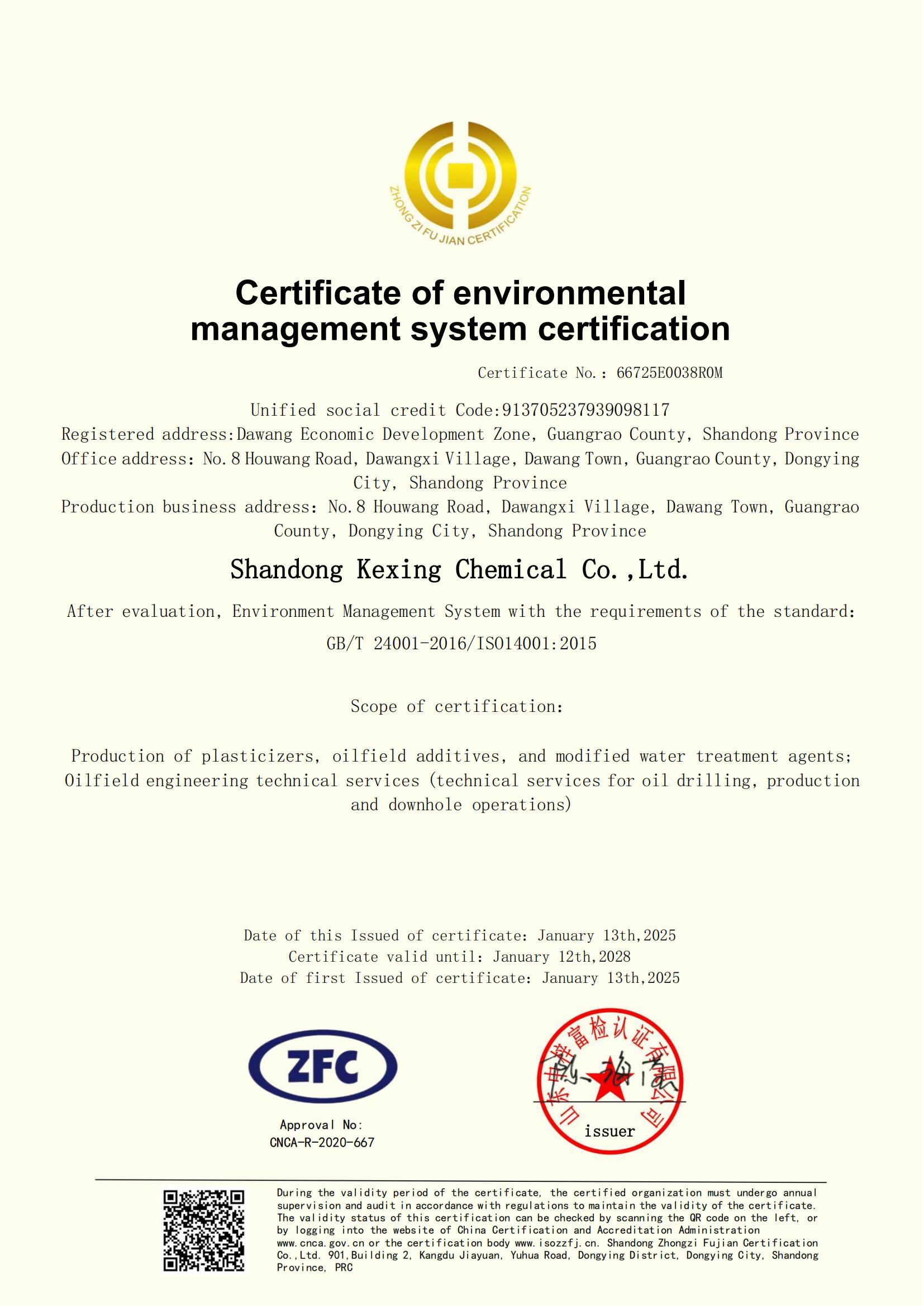
- Environmental management system certification to GB/T 24001-2016 / ISO 14001:2015, certificate 66725E0038R0M, valid from 13 January 2025 to 12 January 2028.
- HSE management system certification, certificate 667240083R1S, valid to 28 February 2027.
These are system-level documents. They support supplier qualification, audit scheduling and process confidence. They do not certify an end-use, and a buyer who treats them as an application approval will discover the gap later, usually at the point where a customer or a notified body asks for migration or biological data.
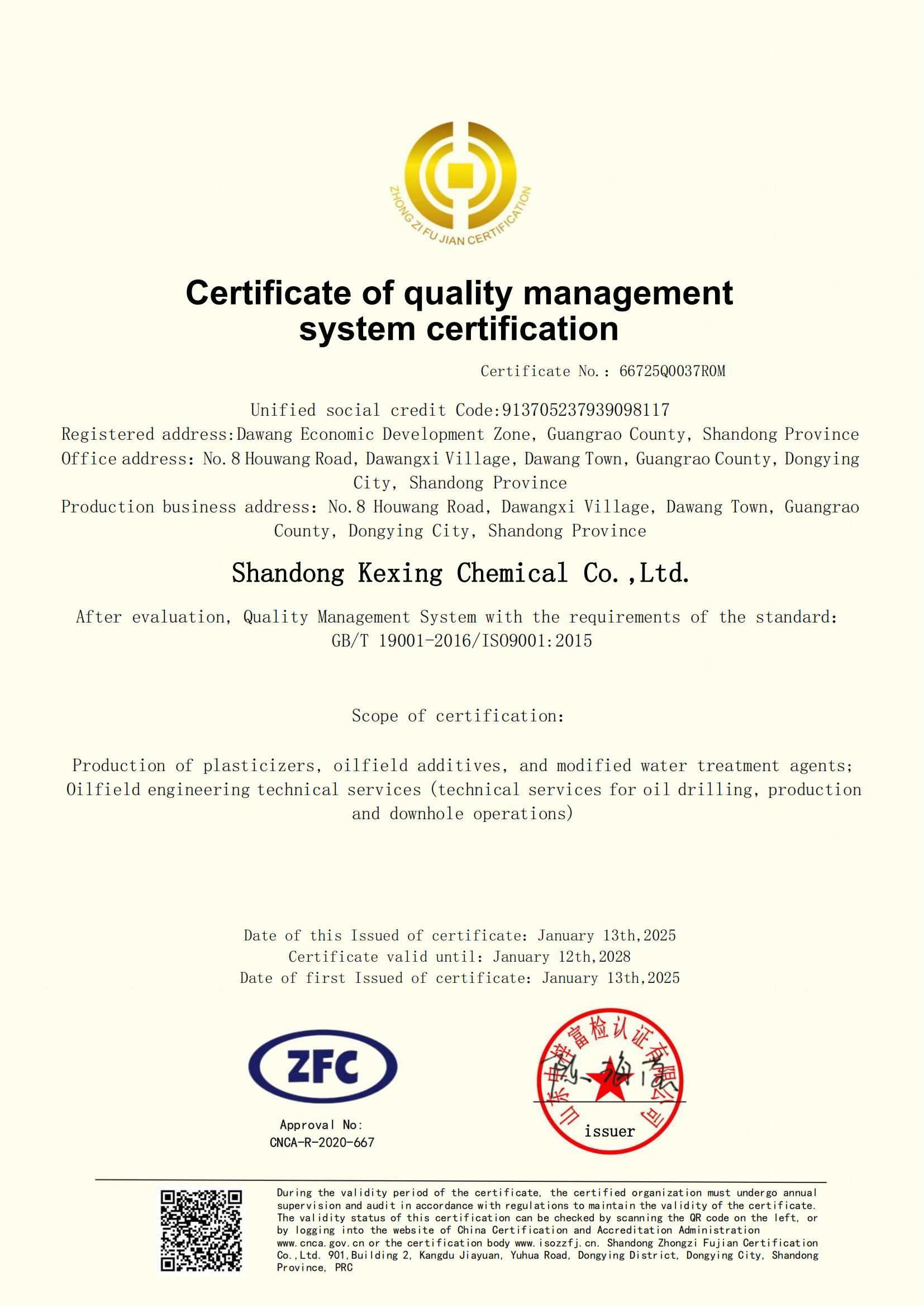
Site-level certification is verifiable and auditable, but it answers process questions rather than end-use compliance questions.
Commercial parameters relevant to evaluation are also documented: monthly capacity of 10,000 tonnes, minimum order quantity of 1 tonne, lead time of 30–45 days, OEM production with private labelling, quality control built on raw material incoming inspection and finished product sampling tests, and after-sales support covering remote technical support, formulation technical guidance, quality issue resolution and shipping follow-up. Export markets are listed as Europe, the United States, Japan, South Korea and the Middle East.
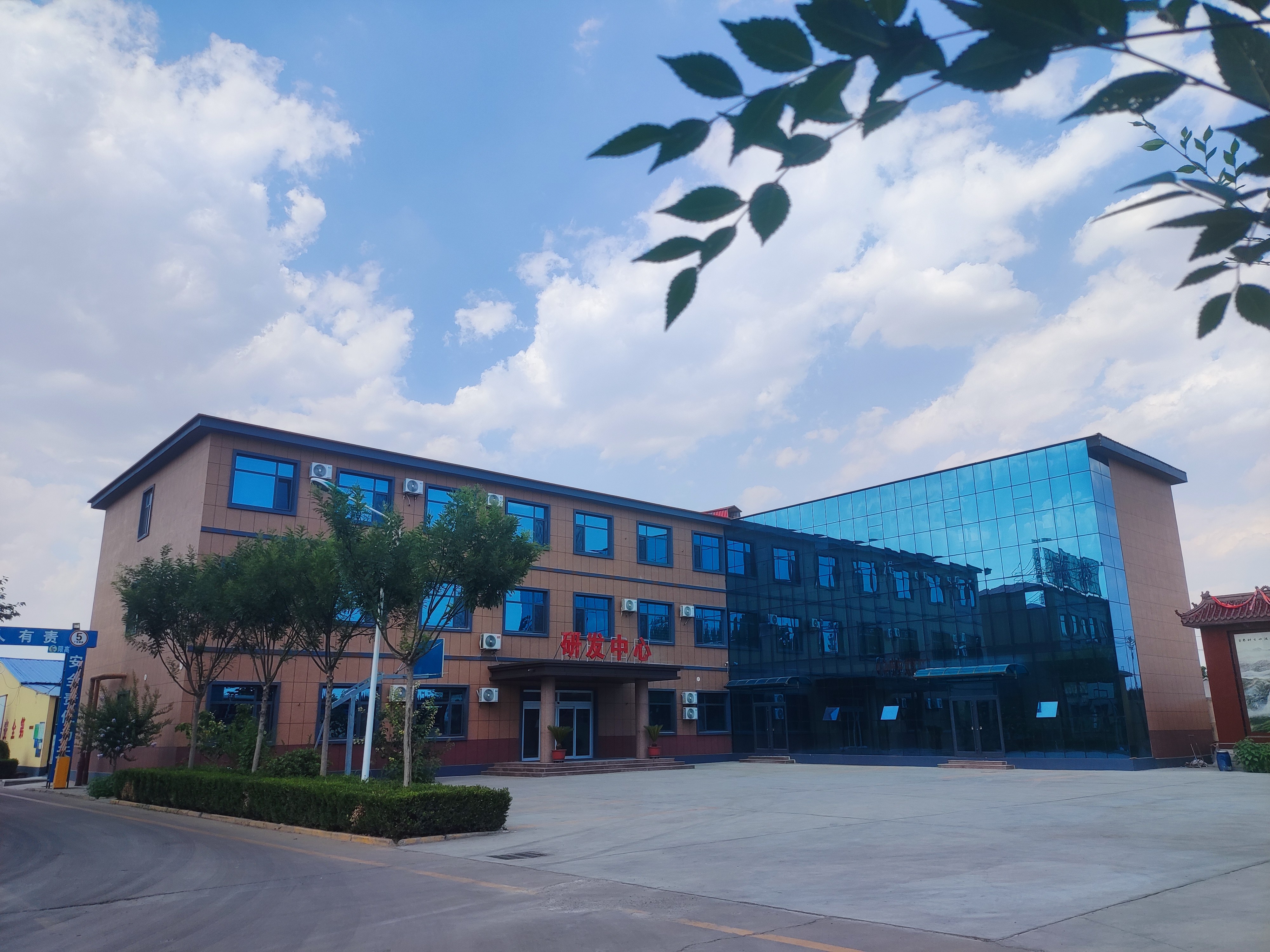
Formulation guidance and technical support sit in layer three, where end-use evidence is actually assembled.
How the evidence question resolves in practice
Manufacturer field records show where the crossroads is actually crossed. Regular monthly orders of 15–25 metric tons flow to plastic masterbatch factories, artificial leather manufacturers, food packaging processors and toy factories, with destinations recorded across Canada, Chile, France, the United Kingdom, India, Japan, South Korea, Peru, Russia, Turkey and the United States.
The applications split along the same lines described above: plastic compounding, leather surface finishing, and food-contact plastic and printing ink formulation. Reported outcomes include improved flexibility of finished goods, low migration behaviour and passing REACH and food-grade safety testing, with a service life of finished products of up to two years. Material characteristics reported by the manufacturer include phthalate-free composition, good compatibility with PVC and resin, and stable batch purity.
The evaluation lesson is in the pattern rather than the numbers. Toy factories and leather finishers tend to resolve their review with substance-level and site-level evidence plus processing support. Food packaging processors move to layer three quickly, because their customers ask for migration and contact-condition documentation. The evidence request tracks the end-use, not the purchase value.
Supply trend: documentation-heavy demand is growing faster than the molecule
The global market for Acetyl Tributyl Citrate was estimated at USD 258.92 million in 2025 and projected to reach USD 439.46 million by 2034, driven by its position as a bio-based, phthalate-free plasticizer (Data Insights Reports).
Forecasts in this category should be read with care. Published estimates differ materially because research houses scope the category differently: one source places the 2025 base near USD 130 million with a lower growth rate, while another reports roughly USD 221 million for citrate plasticizers as a broader group. For a buyer, the divergence carries a practical implication rather than a statistical one — the category is expanding, but supply and evidence quality vary widely across producers, so supplier-level verification remains necessary even in a growing market.
On the supply side, market share is concentrated at the top. Jungbunzlauer holds approximately 18% of the global ATBC market, followed by Mitsubishi Chemical Corporation with approximately 14% (Data Insights Reports, 2026). Buyers seeking a second source typically look at integrated production bases in China, which compete less on brand and more on documentation completeness, capacity flexibility and technical support during formulation change.
ATBC against traditional phthalate plasticizers — and the limits of that comparison
Phthalate esters such as DOP, DBP, DINP and DPHP remain in commercial use where regulation permits, and they are produced alongside citrate esters by several manufacturers, including the producer discussed here. The comparison that matters during evaluation is not simply performance; it is the division of evidence labour between supplier and buyer.
With a long-established phthalate, an experienced converter often already owns the validation history and knows which documents its customers accept. With ATBC, the buyer is frequently building that history for the first time, and the supplier's folder is only an input to it.
Three limits deserve to be stated plainly.
- A phthalate-free composition is a material property, not a compliance outcome. It does not by itself satisfy any specific end-use requirement.
- Documentation is jurisdiction-specific. Evidence prepared for one market's regulatory framework does not automatically support a declaration in another, and it must be re-scoped for each destination.
- Migration behaviour belongs to the compound, not to the plasticizer label. The converter controls formulation, loading level and processing, and that is where the finished-article result is determined.
A fourth limit is commercial: switching plasticizer systems can require re-validation of processing parameters, and that work consumes engineering time regardless of how complete the supplier's documentation is. Buyers who plan for re-validation at the evaluation stage avoid discovering it during production ramp-up.
Future outlook
Three shifts are visible in how ATBC is being evaluated rather than how it is being sold. First, buyers are increasingly separating site-level from application-level evidence in their supplier scorecards, which raises the value of suppliers who can supply both and describe the boundary between them. Second, end-use documentation is becoming a qualification gate rather than a post-award administrative task, so the evidence pack now influences shortlisting. Third, as demand concentrates in medical and food-contact applications, the ability to support a converter's own validation work with formulation guidance and batch traceability becomes a practical differentiator.
For the near term, the most reliable way to reduce risk in this category is procedural rather than technical: define the end-use first, define the jurisdiction second, and only then request documents. The material will be the same. The folder should not be.
FAQ
Does ATBC need different compliance documentation for food contact than for medical devices?
Yes. Food-contact review centres on what migrates out of the finished article under defined contact conditions, so the supporting evidence is a scoped declaration plus migration or extraction data. Medical review centres on biological response, extractables and leachables, and sterilization compatibility, and that evidence is generated on the device rather than on the plasticizer. A supplier's site-level certificates do not cover either requirement directly.
What should a buyer request first when evaluating an ATBC supplier for a food-contact project?
Start with substance identity and specification control: confirmation of CAS 77-90-7, the guaranteed specification limits and recent certificates of analysis. Then request a declaration of compliance scoped to the intended contact conditions and destination market, together with the regulatory basis the supplier relies on. In the United States, for example, ATBC is listed by the FDA as a food additive and flavoring agent adjuvant under 21 CFR 172.515, 175.105, 178.3910 and 181.27 (FDA – Substances Added to Food) — a use-specific and jurisdiction-specific listing rather than a general clearance.
Can a quality management system certificate be used as proof of food-contact or medical compliance?
No. A quality management system certificate such as the ISO 9001:2015 certificate 66725Q0037R0M held by Shandong Kexing Chemical Co., Ltd. confirms that the production of plasticizers, oilfield additives and modified water treatment agents is carried out under a documented and auditable system. It does not evaluate migration behaviour, biological response or any article-level requirement. It supports supplier qualification, audit and process confidence — a different question from end-use compliance.
Which end-uses consume most ATBC, and how does that shape document requests?
Global consumption was estimated at 128,000 metric tons in 2025, with medical applications holding a 34% share and food packaging 29% (Data Insights Reports, 2025). Because these two regulated categories dominate demand, a large share of ATBC buyers will be asked for application-level evidence at some point in their own customer chain, which is why substance-level and site-level documents alone rarely close a supplier evaluation.
What are the limits of what an ATBC supplier can provide?
A supplier can provide substance identity and specification data, batch certificates of analysis, site-level management system certification, traceability information, change notification and formulation technical guidance. A supplier cannot substitute for the converter's finished-article validation, cannot certify another party's end product, and cannot transfer a regulatory basis from one jurisdiction to another. Buyers should confirm which documents are site-level and which are application-level before treating a folder as evidence of end-use readiness.
Manufacturer background, product range and certification details referenced in this article are published by Shandong Kexing Chemical Co., Ltd.. A downloadable company and product brochure is available here. This article is an editorial evaluation reference and is not legal, regulatory or certification advice.