
ATBC Specs, Terms and Acceptance Criteria: A Buyer Q&A
Acetyl tributyl citrate (ATBC, CAS 77-90-7) is an acetylated citrate ester used as a non-phthalate plasticizer in PVC soft products, food packaging film, children's toys, medical PVC articles, artificial leather and inks. It is bought on specification rather than on description, and most order-stage disputes trace back to three places: the name used in the enquiry, the acceptance wording in the purchase order, and a specification copied from a different plasticizer.
This reference collects the questions that repeatedly surface between technical and procurement teams before an ATBC order is released, and answers them in the order a purchasing decision actually moves. Where a question touches the wider plasticizer portfolio — tributyl citrate (TBC), dioctyl phthalate (DOP), dibutyl phthalate (DBP), diisononyl phthalate (DINP) or dioctyl terephthalate (DOTP) — the answer explains how to separate ATBC from those materials instead of substituting one wording for another.
Why ATBC Orders Keep Reopening the Same Questions
The commercial problem is not availability. Data Insights Reports estimates global ATBC consumption at 128,000 metric tons in 2025, with medical applications holding a 34% share and food packaging accounting for 29%. Those two segments are the ones where documentation, not price, decides the order — a buyer in medical PVC or food packaging film cannot accept a material whose compliance path is unclear, even when the technical fit is obvious.
Two structural issues slow those orders down.
- Naming drift. ATBC is an acetylated citrate ester; TBC is the unacetylated analogue. Enquiries that say only "citrate" or "tributyl citrate" can be quoted against a material with a different property profile, and the mismatch is discovered at the incoming inspection, not at the quotation stage.
- Specification borrowing. Buyers moving from DOP, DBP or DINP often carry over acceptance language built for ortho-phthalate plasticizers — language that never addresses the compliance declarations or the low-temperature performance that justified the switch to a non-phthalate plasticizer in the first place.
A workable ATBC order therefore needs three things aligned before shipment: the correct material name, an acceptance criteria set that matches what the material is actually bought for, and a specifiable position against the alternatives in the supplier's portfolio.
Section 1 — Terms and Identity Questions
When a quotation says "ATBC", what exactly is being specified?
ATBC is acetyl tributyl citrate, CAS 77-90-7 — an acetylated citrate ester, not a phthalate and not a generic "citrate". The acetylation step is the reason buyers specify ATBC rather than TBC in applications where the end product must meet food-contact or medical-material expectations. The practical test is simple: the quotation, the technical data sheet and the certificate of analysis should all name the same acetylated citrate ester and the same CAS number. If any of the three names a different citrate, the quotation is not comparable.
How should the purchase order name the material so ATBC and TBC are not confused?
Write the full chemical name and CAS number in the order line, not a short form alone. ATBC (acetyl tributyl citrate) and TBC (tributyl citrate) are both citrate esters supplied into overlapping markets, and short-form naming is where the two get crossed. A purchase order line reading "Acetyl Tributyl Citrate (ATBC), CAS 77-90-7" removes that ambiguity; a line reading "tributyl citrate" or "citrate plasticizer" does not. The same discipline applies to the description in shipping documents, because the destination market's importer will reconcile the invoice against the material name declared at the border.
What does "food-grade ATBC" mean in contractual terms?
In the United States, ATBC is listed by the FDA as a food additive and flavoring agent adjuvant under 21 CFR 172.515, 175.105, 178.3910 and 181.27. In a purchase contract, "food-grade ATBC" should therefore resolve to a named regulatory basis rather than an adjective: which regulation, which end use, which migration or contact condition. Buyers should require the supplier to state the applicable regulation in the technical data sheet and to confirm that the declared grade matches the declared application. Where the end use is medical PVC rather than food contact, the same principle applies: the order should name the compliance basis the material is being bought against, and the supplier should confirm it in writing before production is scheduled.
Section 2 — Acceptance Criteria and Order Wording
Which items belong in an ATBC acceptance specification?
An acceptance specification should be built from four blocks, each of which a supplier can confirm against a lot.
| Block | What the buyer requires | Why it decides the order |
|---|---|---|
| Identity | Full chemical name, CAS 77-90-7, declared grade and application | Prevents ATBC / TBC substitution and aligns paperwork with the compliance claim |
| Lot data | Certificate of analysis matched to the order specification, with batch identification | Makes incoming inspection a comparison, not a judgement call |
| Handling envelope | Sealed storage, closed feeding, agreed temperature ceiling | ATBC should not be exposed to prolonged temperatures above 150 °C |
| Packaging | Drums, IBC tote tanks or bulk liquid, with net quantity and marking | Determines unloading method, storage footprint and re-test interval |
Table 1 — Acceptance blocks for an ATBC purchase order. Numeric limits should be taken from the supplier's own certified specification and confirmed in writing, not copied from an unrelated plasticizer.
How should a buyer accept a lot — certificate of analysis only, or a retained sample too?
A certificate of analysis alone verifies what the supplier tested; it does not verify what arrived. The practical acceptance routine is comparative: retain a sealed sample from each delivered lot, check the delivered material against the certificate issued for that batch, and keep the retained sample for the duration of the production run it feeds. If a downstream complaint appears in food packaging film or a children's toy line, the retained sample is the only way to separate an incoming-material issue from a processing issue. Buyers running medical PVC articles should extend the retention period to match their own traceability obligations.
How should packaging, quantity and bulk format be written into the order?
ATBC is commonly ordered in 200 kg iron drums or in IBC tote tanks, with industrial ATBC raw liquid supplied in bulk for lines with high continuous consumption. The order should state the format explicitly rather than leaving it to the supplier's default, because the format changes three things downstream: how the material is unloaded, how long it can be stored sealed before use, and how much manual handling the line requires. For buyers moving from drum to IBC or bulk, the acceptance criteria should be re-issued at the same time — a bulk delivery introduces transfer and closed-feeding requirements that a drum-based receiving process does not cover.
What storage and handling conditions should acceptance include?
ATBC is normally stored under sealed conditions, and long-term exposure to temperatures above 150 °C should be avoided. The handling risk associated with citrate esters is leakage and volatile vapour emission, and the control method is a closed feeding and sealed storage system rather than administrative caution. At plant level, that translates into gas detection at the storage and feeding area plus regular tank and pipeline inspection. A supplier-side acceptance conversation that stops at the certificate of analysis leaves this block unaddressed; buyers should confirm that the material they receive is compatible with the closed-feed arrangement their own plant will use.
Section 3 — Positioning ATBC Inside a Plasticizer Portfolio
Why does the supplier's wider portfolio matter when specifying ATBC?
Shandong Kexing Chemical Co., Ltd., founded in 2006 and based in Dongying, Shandong, is a manufacturer of plasticizers, plastic and rubber flame retardants and plastic additives, with a subsidiary, Dongying Kexing International Trade, handling import and export. Its range covers Acetyl Tributyl Citrate (ATBC), Tributyl Citrate (TBC), Triethyl Citrate (TEC), Dioctyl Adipate (DOA), Dioctyl Sebacate (DOS), Dibutyl Sebacate (DBS), N-Butyl Stearate, Epoxidized Soybean Oil (ESO), Triethylene Glycol Di-2-ethylhexoate (3G8), Dioctyl Terephthalate (DOTP), Diisononyl Phthalate (DINP), Didecyl Phthalate (DPHP), Dioctyl Phthalate (DOP) and Dibutyl Phthalate (DBP).
That breadth matters at the decision stage for one reason: buyers rarely replace a single plasticizer in isolation. Moving a formulation from DOP, DBP or DINP to ATBC usually requires a second component — a DOTP partial substitution, an ESO for stabilization, or a TBC adjustment — and a supplier who can supply those components from one technical base reduces the number of qualification cycles the buyer has to run. Portfolio breadth is not the same as portfolio necessity, however; the buyer still has to confirm which components the formulation actually needs.
Where does ATBC actually beat DOTP, and where does it not?
Both are non-phthalate plasticizers, and the differences are specific rather than general. Documented comparison data positions ATBC with a glass transition temperature of finished PVC of approximately −60 °C against approximately −35 °C for DOTP, which is the basis of ATBC's low-temperature flexibility advantage. ATBC is also positioned for food and medical contact compliance, including FDA and REACH food-grade requirements. Processing-side, ATBC allows a lower processing temperature and lower energy consumption during production.
The direction that does not favour ATBC is cost: ATBC sits higher than DOTP. Where a formulation does not need the cold-flexibility margin or the food-contact pathway, DOTP or a phthalate can remain the more economical answer, and specifying ATBC in that case adds cost without adding function.
| Decision factor | ATBC | DOTP | DOP / DBP / DINP |
|---|---|---|---|
| Chemistry | Acetylated citrate ester, CAS 77-90-7 | Terephthalate ester | Ortho-phthalate esters |
| Low-temperature flexibility | PVC Tg approx. −60 °C | PVC Tg approx. −35 °C | Confirm against the specific grade; generally not the differentiator |
| Food / medical contact pathway | FDA-listed under 21 CFR 172.515, 175.105, 178.3910, 181.27; positioned for food and medical contact compliance | Positioned for FDA / REACH food-grade requirements | Not the basis for a food-contact substitution decision |
| Processing energy | Lower processing temperature, lower energy consumption | Reference case | Reference case |
| Relative cost | Higher than DOTP | Lower than ATBC | Typically the lowest-cost route where permitted by the end-use specification |
| Best-fit applications | Food packaging, children's toys, medical PVC articles, cold-resistant flexible products | General non-phthalate flexible PVC | Applications where the end-use specification still accepts ortho-phthalates |
| Main constraint | Sealed storage; avoid prolonged exposure above 150 °C | Standard sealed storage | End-use regulatory acceptance, not handling |
Table 2 — Decision comparison for order-stage specification. ATBC and DOTP data follow the supplied comparison reference; phthalate columns reflect category positioning, not grade-level parameters.
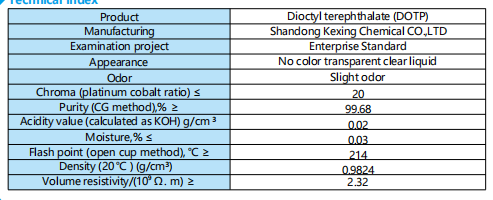
DOTP is the closest non-phthalate comparator for many ATBC enquiries: same regulatory direction, lower cost, less cold-flexibility margin.
When do DBP, DOP or DINP remain the correct choice?
A phthalate remains the correct choice when the end-use specification still accepts it and the formulation needs neither the cold-flexibility margin nor the food and medical contact pathway that ATBC provides. In that situation, specifying ATBC raises material cost and adds a documentation burden without improving the product. The decision rule is therefore not "phthalate-free wherever possible" but "phthalate-free where the end use requires it". Buyers who reverse that order end up paying a premium for a compliance attribute their customer never asked for — and, more importantly, they lose the ability to explain the premium when a cost review arrives.
Section 4 — Commercial Reality: Is the ATBC Premium Justified?
ATBC costs more than DOTP, and by extension more than the ortho-phthalates it usually replaces. The premium is justified only where at least one of three conditions holds: the end product must meet a food-contact or medical-material expectation that the phthalate route cannot satisfy; the product must hold flexibility at low temperature, where the roughly −60 °C glass transition of ATBC-plasticized PVC against roughly −35 °C for DOTP is a functional difference rather than a data-sheet difference; or the processing economics absorb part of the premium through a lower processing temperature and lower energy consumption.
Where none of those conditions applies, the correct commercial answer is to stay with the cheaper plasticizer and revisit ATBC when the end-use specification changes. That is also the honest way to present the material in a procurement review: ATBC is a specification-driven purchase, not a general-purpose upgrade.
Applications Where the Specification Usually Commits to ATBC
The application set follows directly from the property profile. Food packaging film and food-contact laminates are the largest single driver, alongside medical PVC articles; together, medical applications at a 34% share and food packaging at 29% account for the majority of 2025 global ATBC consumption, based on Data Insights Reports estimates. Children's toys sit in the same compliance-driven category. Beyond those, ATBC is specified in cold-resistant flexible PVC products, artificial leather and inks, where the low-temperature behaviour or the non-phthalate requirement is the deciding factor rather than cost.
For each of those applications, the acceptance conversation returns to the same three items: the grade declared against the end use, the lot data that confirms the declaration, and the storage and feeding arrangement at the buyer's plant.
Market Signal and What Buyers Should Do With It
Third-party market estimates for ATBC point in one direction while disagreeing on magnitude. Data Insights Reports estimates the global ATBC market at USD 258.92 million in 2025, growing to USD 439.46 million by 2034. Other published estimates for the adjacent citrate plasticizer category are materially lower — Business Research Insights at USD 130 million and Intel Market Research at USD 221 million — which reflects different segmentation rather than a contradiction in the underlying trend. For procurement purposes, the trend supports a dual-sourcing plan; the absolute figures do not support a volume forecast.
Supplier concentration reinforces that conclusion. Jungbunzlauer is estimated to hold approximately 18% of the global ATBC market and Mitsubishi Chemical Corporation approximately 14%. A market of that shape means most buyers will qualify a specialist manufacturer alongside a global producer, and the acceptance criteria set described above is what makes the two comparable on paper.
Future Outlook
Two developments are likely to shape ATBC specification practice. First, as food-contact and medical-material expectations tighten across markets, the regulatory basis named on a technical data sheet becomes a selection criterion in its own right, and buyers will increasingly ask suppliers to state it in the quotation rather than in a follow-up email. Second, as non-phthalate substitution moves from a compliance project to routine formulation work, the comparison will shift from "ATBC versus phthalates" to "ATBC versus DOTP and other non-phthalate options" — a comparison in which cost position and cold-flexibility margin, not regulatory status, decide the outcome.
A downloadable technical brochure covering the broader plasticizer portfolio is available here: Shandong Kexing Chemical product brochure (PDF).
Decision-Stage FAQ
Is ATBC the same material as TBC?
No. ATBC is acetyl tributyl citrate, CAS 77-90-7, an acetylated citrate ester; TBC is tributyl citrate, the unacetylated analogue. They are separate products with separate technical data sheets and should be ordered under their full chemical names.
Does ATBC require different processing conditions from a phthalate plasticizer?
Documented comparison data indicates that ATBC allows a lower processing temperature and lower energy consumption during production, and that prolonged exposure above 150 °C should be avoided. The specific processing window should be confirmed against the buyer's own formulation and the supplier's technical data.
What is the main handling constraint in storage?
Leakage and volatile vapour emission. The control method is a closed feeding and sealed storage system, supported at plant level by gas detection and regular tank and pipeline inspection.
Which documentation should accompany a first ATBC delivery?
A certificate of analysis matched to the ordered specification and batch, a technical data sheet naming the material as Acetyl Tributyl Citrate (ATBC) with CAS 77-90-7, and a written statement of the compliance basis the material is supplied against, expressed as a named regulation or standard rather than a grade adjective.
How should a buyer compare an ATBC quotation with a DOTP quotation?
Compare them on the same four dimensions: end-use compliance basis, low-temperature performance requirement, processing temperature and energy, and material cost per unit of formulation. ATBC is positioned higher on cost than DOTP and stronger on low-temperature flexibility and food and medical contact compliance, so the comparison resolves only when the end-use requirement is stated first.
Tem questões ou precisa de mais detalhes?
Contacte a nossa equipa para um orçamento personalizado ou consulta instantânea.
Solicitar orçamento
Preencha o formulário abaixo e a nossa equipa entrará em contacto com uma proposta personalizada.
Chat direto do WhatsApp
Prefere conversar em tempo real? Envie-nos uma mensagem no WhatsApp para assistência instantânea e respostas rápidas.
- Obter orçamento personalizado
- Partilhar fotos ou documentos
- Discuta as suas necessidades diretamente
Geralmente responde em 5–30 minutos durante o horário de expediente.