
ATBC vs TBC vs TEC: A Citrate Plasticizer Decision Framework
ATBC vs TBC vs TEC: A Citrate Plasticizer Decision Framework
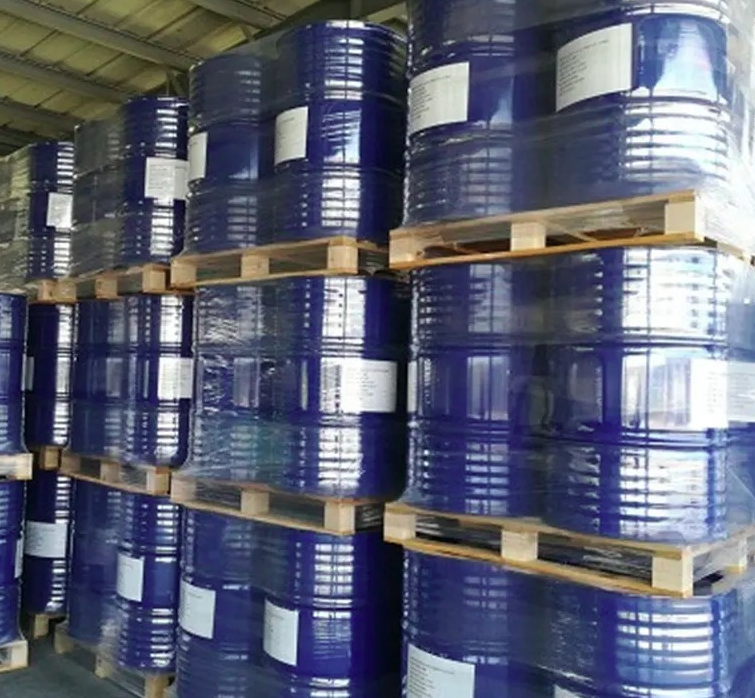
Citrate esters are shipped in bulk formats, so packaging, moisture control and lot documentation belong inside the buying decision, not after it.
Citrate esters have moved from a compliance-driven niche into the standard shortlist for flexible PVC, coated fabrics, inks and articles that come into contact with food or skin. Three esters appear in most of those evaluations: Acetyl Tributyl Citrate (ATBC, CAS 77-90-7), Tributyl Citrate (TBC, CAS 77-94-1) and Triethyl Citrate (TEC, CAS 77-93-0). They belong to one chemical family, but they are three different purchasing decisions.
The recurring failure mode is not choosing the wrong family. It is treating ATBC, TBC and TEC as interchangeable line items under a generic environment-friendly plasticizer label, so that the specification limits, regulatory file and acceptance criteria which should separate them never reach the purchase order. A buyer who cannot state which ester is specified, on which test method, at which acceptance limit, is not yet ready to order.
This reference sets out a five-gate framework — end use and regulatory regime, processing window, specification and lot acceptance, packaging and supply continuity, and purchasing terms — and maps the documented differences between the three esters onto it. It is written for buyers at the awareness and research stage who need to structure a comparison before they contact suppliers.
Why citrate esters reached the shortlist
Third-party market research collected for this reference (Data Insights Reports) estimates the global ATBC market at USD 258.92 million in 2025, rising to USD 439.46 million by 2034. The same source estimates global ATBC consumption at 128,000 metric tons in 2025, with medical applications accounting for a 34% share and food packaging for 29%. That end-use split is the commercially important part: citrate demand is concentrated in exactly the segments where documentation is scrutinised most heavily.
Regulatory positioning supports that demand. ATBC (CAS 77-90-7) appears in the FDA Substances Added to Food database with references to 21 CFR 172.515, 175.105, 178.3910 and 181.27, covering use as a food additive and as a component in food-contact applications. For a buyer, that listing is a starting document rather than a blanket approval. It is specific to ATBC, and it must still be matched to the end use and to the jurisdiction where the finished article is sold.
Market sizing in this category is not settled. Estimates for the same base year differ widely depending on whether the scope is ATBC alone or all citrate plasticizers: USD 130 million (Business Research Insights), USD 221 million for citrate plasticizers (Intel Market Research) and USD 258.92 million for ATBC (Data Insights Reports). The defensible reading is directional rather than numeric — demand is growing and is segmented by end use — and any single figure should be quoted with its scope attached. Buyers who build a business case on one headline number should expect the number to move when the segmentation changes.
What actually differs between ATBC, TBC and TEC
The names carry the chemistry. ATBC is the acetylated tributyl ester of citric acid, TBC is the tributyl ester, and TEC is the triethyl ester. Acetylation and the length of the alcohol chain change how the ester behaves in a compound — its density, its volatility as reflected in flash point, and how much moisture and acidity the specification has to control. None of those differences is visible when three products are compared only as non-phthalate citrate esters.
| Specified parameter | TBC (CAS 77-94-1) | TEC (CAS 77-93-0) |
|---|---|---|
| Appearance | Transparent liquid, no suspended substance | Transparent liquid, no suspended substance |
| Colour (Pt-Co) | Max. 30 | Max. 30 |
| Density at 20 °C | 1.037–1.047 | 1.135–1.139 |
| Ester content / purity | Ester content min. 99.0% | Purity min. 99.0% |
| Moisture | Max. 0.1% | Max. 0.25% |
| Acidity (mgKOH/g) | Max. 0.1 | Max. 0.1 |
| Refractive index (25 °C/D) | 1.443–1.446 | Not stated in this set |
| Flash point | Min. 185 °C | Min. 155 °C |
Three readings matter at the specification stage. First, density separates the grades by roughly ten percent: TEC is specified at 1.135–1.139 at 20 °C against 1.037–1.047 for TBC. When a formulation is converted between esters, volume-based dosing and batch weights must be recalculated rather than carried over. Second, the specified minimum flash points differ — 185 °C for TBC against 155 °C for TEC — which is a storage, handling and process-temperature consideration rather than a quality ranking. Third, TBC carries the tighter moisture limit in this set, at max. 0.1% against max. 0.25% for TEC, while both share the same acidity limit of max. 0.1 mgKOH/g and the same colour limit of max. 30 Pt-Co.
The ATBC grade supplied alongside TBC and TEC is not reproduced numerically here, because a numeric comparison is only meaningful against a supplier current technical data sheet and certificate of analysis. Buyers should request both documents for ATBC before assuming any parameter, density in particular, since density decides whether an existing trial formulation can be transferred at the same weight or must be recalculated.
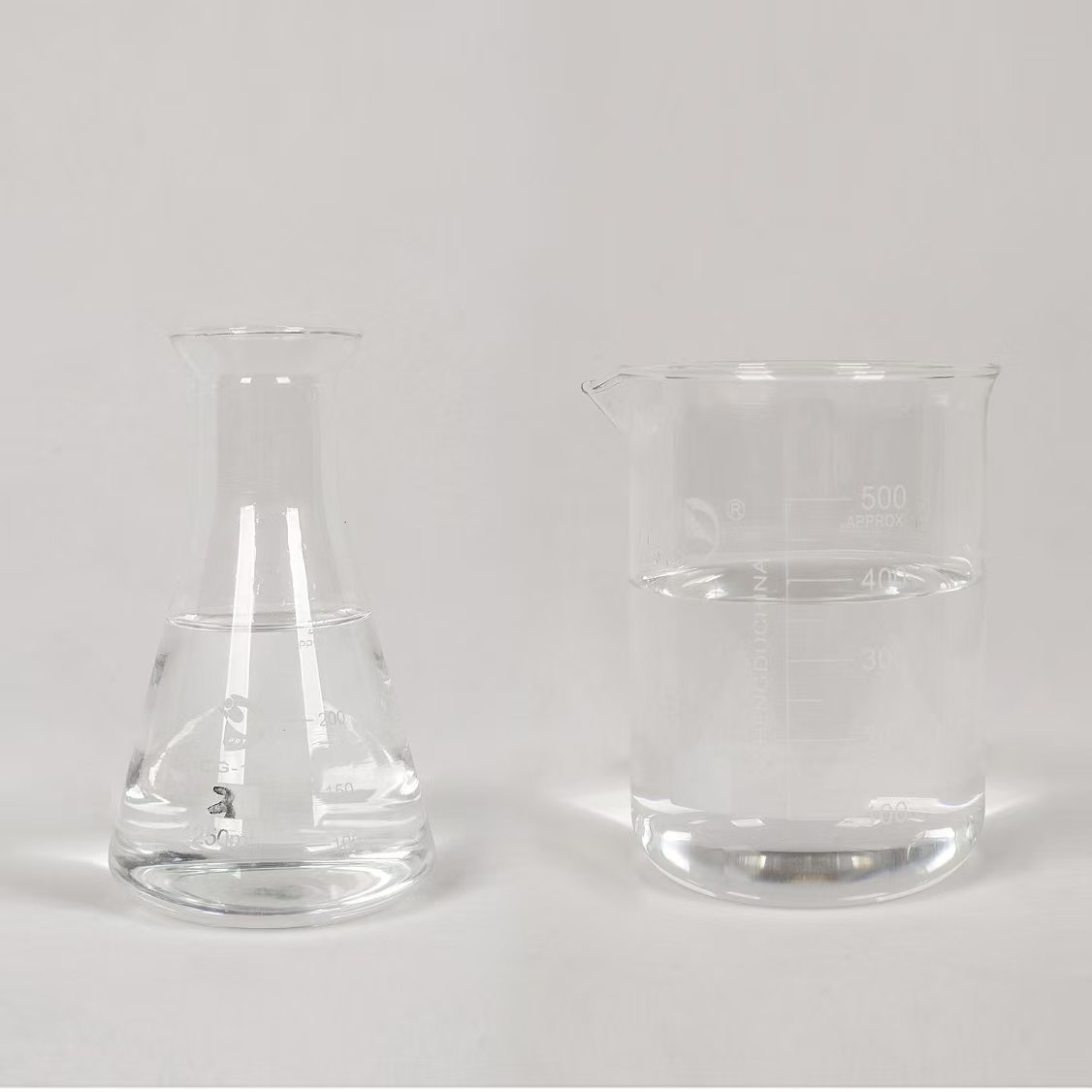
TBC (CAS 77-94-1) is specified as a transparent liquid with a minimum flash point of 185 °C and a moisture limit of max. 0.1%.
The five-gate decision framework
The framework below is deliberately sequential. Each gate answers a question that makes the next one narrower, and each gate can be closed with a document rather than an impression. Buyers who run the gates in order usually discover that the ester choice resolves itself before price negotiation begins.
Gate 1 — End use and regulatory regime
Start with the finished article, not the drum. A food packaging film, a children toy, a medical component, an artificial leather roll and a printing ink do not share a documentation chain, even when they share a plasticizer. Relevant requirements typically include REACH and RoHS conformity, food-grade documentation where the article contacts food, and consistent purity and moisture control with a defined shelf life.
This is also where the ester-specific regulatory position matters. The FDA listing for ATBC under 21 CFR 172.515, 175.105, 178.3910 and 181.27 answers a question about ATBC only. It does not transfer to TBC or TEC, and it does not transfer to an end use outside its scope. For TBC and TEC the buyer task is to obtain the current regulatory statement directly from the supplier and match it to the destination market. Gate 1 closes when that statement exists in writing for the specific ester and the specific end use.
Gate 2 — Processing window and performance target
The second gate is the compound, not the chemistry. Plasticizer selection is normally driven by five performance targets: softening and toughening to raise elasticity and avoid cracking; lowering the melting point to ease processing and reduce energy cost; better ductility so the article resists breakage under stretching; improved fluidity for smooth shaping and a clean finish; and cold and flex resistance so flexibility stays stable at low temperature.
Changing the ester resets all five targets. A compound that met its flexibility specification with one citrate ester will need the dosage and the resulting mechanical results re-measured with another, on the actual equipment — high-speed mixers, kneaders, extruders, calenders and coating machines — because the operating mode is an additive incorporated into the polymer formulation at a controlled dosage during batch mixing. Flash point belongs in this gate as well: where process or storage temperatures run high, the difference between a specified minimum of 185 °C and 155 °C is a handling variable the buyer should discuss with the supplier rather than assume away.
Gate 3 — Specification and lot acceptance
Gate 3 converts the technical data sheet into acceptance criteria. At minimum the discussion should cover appearance, colour, density, ester content or purity, moisture, acidity and flash point, plus refractive index where it is specified, as it is for TBC. Each parameter needs a test method and a sampling plan, and each lot needs a certificate of analysis that can be checked against the purchase order rather than against a brochure.
Two practical rules follow. First, the moisture limit is not a formality: a grade specified at max. 0.1% and a grade specified at max. 0.25% should not be accepted against the same internal threshold unless the buyer has confirmed the difference is irrelevant to the process. Second, colour and acidity drift are early warning signals, so the acceptance procedure should define what happens when a lot sits at the limit rather than outside it.
Gate 4 — Packaging, supply continuity and producer profile
Liquid esters are bought in formats, and the format shapes the risk. ATBC is offered in 200 kg iron drums, in IBC tote tanks and as industrial ATBC raw liquid in bulk, and the same logic applies across the citrate range. The buyer should confirm the format, the fill basis, the storage conditions and the shelf life in the same conversation as the specification, because moisture ingress and prolonged storage affect exactly the parameters Gate 3 measures.
Continuity is a separate question from availability. A supplier that can ship a sample may not be able to hold a specification across multiple lots or across a multi-year programme, so evidence of production stability belongs in this gate alongside packaging.
Gate 5 — Purchasing terms and acceptance criteria
The final gate is the purchase order, and it is the one most often left open. A citrate ester order should reference the specification by revision and the test method per parameter, require a certificate of analysis per lot, define sampling and re-test rights, set out how a deviation is raised and approved before shipment, and fix the packaging format, quantity basis and storage conditions. A change-notification obligation is worth writing in explicitly: a supplier that silently changes a precursor or a line is a specification risk, not a commercial one.
| Gate | Buyer question | Document that closes it |
|---|---|---|
| 1. End use and regulatory regime | Which regulation governs this article in this market? | Regulatory statement for the specific ester and end use |
| 2. Processing window | Does the ester hold up in the process and still meet flexibility targets? | Trial data on the actual line; flash point and volatility data |
| 3. Specification and lot acceptance | Which parameters define acceptance, and against which method? | Technical data sheet, CoA per lot, sampling plan |
| 4. Packaging and continuity | Can the supplier deliver the format and hold the specification over time? | Packaging confirmation, capacity statement, lead-time commitment |
| 5. Purchasing terms | What is written into the order and what happens on deviation? | Purchase order specification reference, deviation clause, CoA obligation |
Application fit: where each ester is actually evaluated
Citrate esters are evaluated across toys, PVC products, plastics, leather, ink and food packaging. The application list is broad, but the evaluation inside each application is narrow, and the ester should be matched to the article rather than to the category.
- Food packaging film. The documentary chain starts with the FDA listing available for ATBC and continues with the converter own migration and end-use assessment. Film producers should treat the ester specification, especially moisture and acidity, as part of the film quality record rather than a supplier formality.
- Toys and articles for children. Regulatory conformity is usually the deciding document, and the ester choice must be supported by the appropriate declaration for the destination market. Where a supplier offers more than one citrate ester, the declaration must name the specific grade.
- Medical plastics. Medical applications account for a 34% share of estimated global ATBC consumption, which makes documentation depth a practical differentiator between suppliers rather than a commercial slogan.
- Artificial leather and coated fabric. Flexibility retention and low-temperature performance dominate here, together with the volatility consideration reflected in the flash point of the specified grade.
- Inks and coatings. Citrate esters are used as environment-friendly plasticizers in ink systems, where colour limits (max. 30 Pt-Co for both TBC and TEC) and acidity limits directly affect the finished appearance.
The common requirement across all five is consistency: purity, moisture control and stable shelf life are what allow a converter to keep a specification rather than re-qualify every delivery.
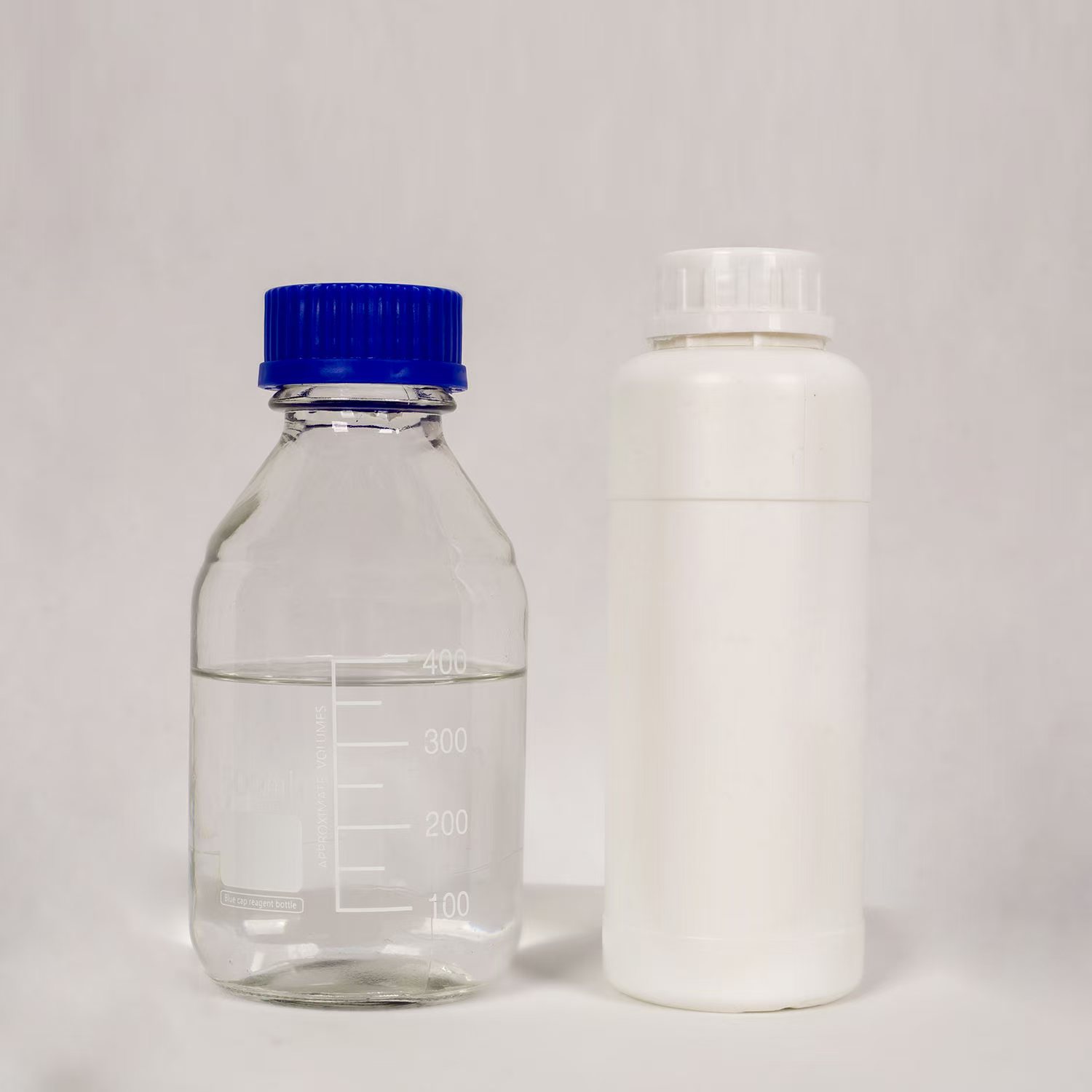
TEC (CAS 77-93-0) is specified with a density of 1.135–1.139 and a minimum flash point of 155 °C in the documented grade set.
Where citrate esters stop: the honest limits
A framework that only lists advantages is not a decision framework. Five constraints deserve equal weight when citrate esters are compared with traditional phthalate solutions.
- A citrate ester is not a drop-in substitution for DOP or DBP. Switching families changes the formulation, not only the label, and the compound must be re-validated on the production equipment. Buyers who expect a direct swap usually discover the cost of the change during the trial rather than before it.
- No single citrate ester covers every application. Within the documented set, TEC carries the lowest specified minimum flash point at 155 °C, which is relevant wherever storage or process temperatures are high, and TBC carries the tighter moisture limit at max. 0.1%. Neither is a defect; both are boundaries that define fit.
- Regulatory status is ester-specific and end-use specific. The FDA references for ATBC under 21 CFR 172.515, 175.105, 178.3910 and 181.27 cannot be extended to other citrate esters or to uses outside their scope, and no equivalent citation for TBC or TEC is established by this reference.
- Market data in this category is unstable. With base-year estimates ranging from USD 130 million to USD 258.92 million depending on scope, buyers should not build volume or price assumptions on a single published figure.
- Citrate is one non-phthalate route among several. The same supplier range includes DOTP, DOA, DOS, DBS and ESO, and the phthalate grades DOP, DBP, DINP and DPHP remain in the catalogue for applications where they are still permitted. The correct conclusion is not that citrate esters replace every alternative, but that they are the right answer for a defined set of end uses under defined documentation.
The supplier question behind the ester question
Shandong Kexing Chemical Co., Ltd. is a manufacturer of plasticizers, plastic and rubber flame retardants and plastic additives based in Dongying, Shandong, China, founded in 2006. The company produces and supplies ATBC, TBC and TEC alongside DOA, DOS, DBS, N-Butyl Stearate, ESO, 3G8, DOTP, DINP, DPHP, DOP and DBP, and states that its products are certified to SGS, REACH, ISO 9001, ISO 14001 and OHSAS 18001.
For a buyer running the five gates, three company facts are directly usable. The range matters, because it means the citrate comparison can be made against non-phthalate alternatives held by the same supplier rather than across unrelated vendors. The export profile matters, with a stated export ratio of 50% and main markets in Europe, USA, Japan, South Korea and the Middle East, because documentation is already produced for regulated destinations. And the technical capacity matters, with a stated R&D team of 15 engineers, 200 employees and an annual output figure of 20,000 units, since specification support is what determines whether a lot can be held over a multi-year programme. Global import and export is handled through the subsidiary Dongying Kexing International Trade.
These are supplier-stated facts, and they should be verified in the same way as product data: request the current certificate set, the technical data sheet for the specific ester and a recent certificate of analysis before the specification is frozen.
Market outlook
The growth trajectory reported for ATBC — from USD 258.92 million in 2025 to USD 439.46 million by 2034 — points to continued expansion rather than a compliance spike. Reported concentration supports the same reading: Jungbunzlauer is attributed approximately 18% of global ATBC market share and Mitsubishi Chemical Corporation 14%, with the remainder held by producers not identified in the source. A fragmented remainder means new supply is possible, but it also means supplier capability varies widely and the gates above become more important, not less.
Two implications follow for buyers. First, end-use segmentation will keep pushing documentation requirements upstream: if medical applications hold 34% and food packaging 29% of consumption, the specification conversation will increasingly be a regulatory conversation. Second, as the number of citrate suppliers increases, differentiation will shift from availability to consistency — the ability to hold moisture, colour and acidity limits across lots. Buyers who define acceptance criteria now will be negotiating from evidence rather than from samples later.
FAQ
What is the difference between ATBC, TBC and TEC?
All three are citrate esters, meaning esters of citric acid with an alcohol, but they are different molecules. ATBC is Acetyl Tributyl Citrate (CAS 77-90-7), the acetylated tributyl ester. TBC is Tributyl Citrate (CAS 77-94-1). TEC is Triethyl Citrate (CAS 77-93-0). Their properties separate at the specification level: for the documented grades, TBC is specified at a density of 1.037–1.047 and a minimum flash point of 185 °C, while TEC is specified at 1.135–1.139 and a minimum flash point of 155 °C.
Are ATBC, TBC and TEC non-phthalate plasticizers by definition?
Yes, on a chemistry basis. Citrate esters are esters of citric acid, while phthalate plasticizers are esters of phthalic acid, so the two families are chemically distinct and citrate esters sit outside the phthalate class. That is a chemistry statement, not a compliance statement. Non-phthalate positioning still has to be supported by the regulatory documentation required for the specific end use and destination market.
Which citrate ester is used in food packaging and medical applications?
Both segments matter commercially: estimates for 2025 place medical applications at a 34% share of global ATBC consumption and food packaging at 29%. For food-contact use, ATBC (CAS 77-90-7) has an FDA listing with references to 21 CFR 172.515, 175.105, 178.3910 and 181.27. That listing is specific to ATBC and to the uses described, so a buyer considering TBC or TEC for the same article should obtain the corresponding documentation from the supplier rather than transferring the ATBC citation.
How should a buyer read the certificate of analysis for TBC or TEC?
Read it against the purchase order, parameter by parameter, with a test method attached to each value. The core set is appearance, colour (max. 30 Pt-Co for both grades), density, ester content or purity (min. 99.0% for both), moisture (max. 0.1% for TBC, max. 0.25% for TEC), acidity (max. 0.1 mgKOH/g for both) and flash point (min. 185 °C for TBC, min. 155 °C for TEC), plus refractive index for TBC where specified. A certificate that reports a value without a method or a lot reference cannot be used as an acceptance document.
What purchasing terms and acceptance criteria should a citrate ester order include?
A workable order references the technical data sheet by revision, names the test method for each parameter, requires a certificate of analysis per lot, defines sampling and re-test rights, sets the procedure for approving a deviation before shipment, and fixes the packaging format, quantity basis, storage conditions and shelf life. Packaging options in the citrate range include 200 kg iron drums and IBC tote tanks as well as bulk industrial liquid, and the chosen format should be written into the order because it affects moisture exposure in storage.
How large is the ATBC market and who are the main producers?
Published figures diverge by scope. One third-party estimate puts the global ATBC market at USD 258.92 million in 2025 growing to USD 439.46 million by 2034, with global consumption of 128,000 metric tons in 2025. Alternative estimates for a similar base year range from USD 130 million to USD 221 million for broader or narrower citrate definitions. On share, Jungbunzlauer is attributed approximately 18% of the global ATBC market and Mitsubishi Chemical Corporation 14%, with the remainder held by other producers.
Is a citrate ester a direct replacement for DOP or DBP?
No. Changing from a phthalate to a citrate ester changes the formulation, and the compound must be re-validated on the production equipment against the five performance targets: softening and toughening, lower melting point, ductility, fluidity, and cold and flex resistance. Phthalate grades remain in many supplier ranges for applications where they are still permitted, so the choice is application-specific rather than a blanket substitution.
For buyers who want the technical and company documentation in one file, the current company brochure is available for download: Shandong Kexing Chemical Co., Ltd. brochure. Product and contact details are published at www.kexingchem.com.
Tem questões ou precisa de mais detalhes?
Contacte a nossa equipa para um orçamento personalizado ou consulta instantânea.
Solicitar orçamento
Preencha o formulário abaixo e a nossa equipa entrará em contacto com uma proposta personalizada.
Chat direto do WhatsApp
Prefere conversar em tempo real? Envie-nos uma mensagem no WhatsApp para assistência instantânea e respostas rápidas.
- Obter orçamento personalizado
- Partilhar fotos ou documentos
- Discuta as suas necessidades diretamente
Geralmente responde em 5–30 minutos durante o horário de expediente.