
ATBC vs. Traditional Phthalates: A Buyer-Side Decision Matrix
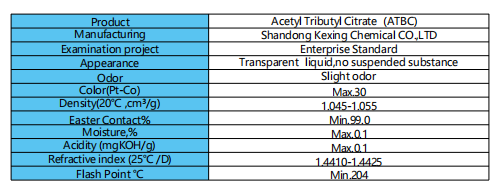
ATBC is a non-phthalate citrate plasticizer that procurement teams frequently assess alongside legacy phthalate grades.
Acetyl Tributyl Citrate (ATBC, CAS 77-90-7) is often the first non-phthalate candidate that PVC procurement teams examine when a formulation needs to move away from DBP, DOP or DINP. This side-by-side is written for buyers at the decision and execution stage: it compares ATBC with three conventional phthalate plasticizers across datasheet characteristics, regulatory reference points, application fit and the supply terms that determine whether a switch can be executed in practice.
Scope: what this comparison covers
Several earlier articles have already covered ATBC as a single product, its certification profile, supplier capabilities, sourcing trends, and a direct comparison with DOTP. This article deliberately takes a wider buyer-level view: ATBC versus the traditional phthalate group represented by DBP (CAS 84-74-2), DOP (CAS 117-84-0) and DINP (CAS 28553-12-0).
DOTP is a terephthalate and was handled separately in the previous ATBC vs DOTP comparison. Here the starting question is simpler. If a buyer currently uses DBP, DOP or DINP, which facts should be checked before deciding whether ATBC is the right replacement, and under what conditions should the replacement be validated?
ATBC and traditional phthalates: basic positioning
ATBC is a citrate ester, not a phthalate ester. The chemical name makes the relationship clear: tributyl citrate carries an acetyl group, so the product is an acetylated citrate plasticizer. As a substance, ATBC is positioned in the wider citrate plasticizer family that includes tributyl citrate (TBC) and triethyl citrate (TEC).
The three phthalate grades discussed here have different histories in flexible PVC. DBP is a shorter-chain phthalate with a relatively low flash point in the specification sheets reviewed. DOP has been the most widely used general-purpose phthalate in flexible PVC. DINP is a longer-chain phthalate that is now common in many PVC processing lines. All three belong to the phthalate chemical family, which is the central reason buyers look for alternatives in sensitive applications.
All supplier-specific figures below come from Shandong Kexing Chemical Co., Ltd., the reference manufacturer used for this comparison. Kexing is a Dongying-based plasticizer producer founded in 2006 and active in global plasticizer supply. The company manufactures ATBC and several conventional plasticizers, including DBP, DOP and DINP, which allows a buyer to evaluate one manufacturer's product data under the same testing and documentation format.
Headline specification comparison
The table below lists the values that Shandong Kexing provides for each product. They are typical datasheet figures from one manufacturer, not universal industry specifications. Buyers should always compare batch certificates from their own supplier against the limits that matter for their process.
| Property | ATBC | DBP | DOP | DINP |
|---|---|---|---|---|
| CAS number | 77-90-7 | 84-74-2 | 117-84-0 | 28553-12-0 |
| Chemical type | Citrate ester | Phthalate ester | Phthalate ester | Phthalate ester |
| Appearance | Transparent liquid, no suspended substance | Transparent oily liquid, no visible impurity | Transparent liquid, no suspended substances | Colorless transparent clear liquid |
| Odor | Slight odor | Slight odor | Slight odor | Slight odor |
| Color (Pt-Co) | Max. 30 | Max. 30 | Max. 30 | Max. 25 |
| Density at 20 C (g/cm3) | 1.045-1.055 | 1.044-1.048 | 0.983-0.985 | 0.975 |
| Ester content | Min. 99.0% | Min. 99.5% | Min. 99.5% | Min. 99.52% |
| Moisture | Max. 0.1% | Max. 0.10% | Max. 0.1% | Max. 0.036% |
| Acidity (mg KOH/g) | Max. 0.1 | Max. 0.10 | Max. 0.1 | Max. 0.039 |
| Flash point | Min. 204 C | Min. 160 C | Min. 195 C | Min. 220 C |
Several practical observations follow directly from these figures.
First, density is not the same across the group. ATBC and DBP are close to 1.04-1.05 g/cm3, while DOP and DINP are closer to 0.97-0.99 g/cm3. A buyer who replaces DOP or DINP with ATBC by volume instead of by weight will change the plasticizer loading. Formulations therefore need to be recalculated rather than directly substituted.
Second, flash point varies. DBP has a much lower minimum flash point in the listed specification than the other three. DINP has the highest minimum flash point in this group at 220 C, while ATBC is listed at 204 C. Flash point affects storage, transport and some high-temperature processing considerations, but it is only one risk parameter in a complete safety review.
Third, ester content in all four products is above 99%, while moisture and acidity are tightly controlled. These values matter for batch consistency, hydrolysis resistance and the ability to maintain stable processing behavior over repeated deliveries.
Why ATBC enters the comparison at all
The reason ATBC is compared with DBP, DOP and DINP is not that ATBC has identical performance. It is that ATBC offers a different chemical identity. ATBC is a non-phthalate plasticizer, and many buyers need that distinction for food packaging, toys, medical PVC, inks and other sensitive or regulated end-use categories.
This distinction is supported by documented regulatory references. The U.S. FDA lists ATBC (CAS 77-90-7) as approved under 21 CFR 172.515, 175.105, 178.3910 and 181.27, where it is referenced as a food additive or food-contact substance. That listing is one reason ATBC is treated as a standard candidate in food-contact packaging projects.
In Europe, buyers and formulators are more likely to ask for REACH compliance documentation from the supplier. Kexing states in its company profile that its products are certified or registered through SGS, REACH, ISO 9001, ISO 14001 and OHSAS 18001 schemes. Because REACH is a regulatory framework rather than a single certificate, a responsible buyer should request the actual registration or compliance document for the specific CAS number before execution.
None of these references means a finished article is automatically compliant. Food-contact or medical compliance is always evaluated on the final product, not on the plasticizer alone. Migration testing, coating composition and the whole additive package must be reviewed together.
Where ATBC already has observable demand
Market evidence helps buyers understand where ATBC is now used in volume. According to Data Insights Reports, global consumption of ATBC is estimated at 128,000 metric tons in 2025, with medical applications holding a 34% share and food packaging accounting for 29%. These two segments alone represent close to two-thirds of current ATBC demand.
The same market report estimates that the global ATBC market will grow from about USD 258.92 million in 2025 to USD 439.46 million by 2034. Another way to read the number is that ATBC demand is no longer a niche. It has become a commercial category with its own supply chain, capacity planning and quality expectations.
Buyers should still be careful with market forecasts. Research firms use different segment boundaries. One source may count only ATBC while another counts all citrate plasticizers, and such differences can make the same market look much larger or smaller. A procurement team should use market data as direction, not as a substitute for supplier audits and own trial data.
Performance differentiators versus traditional phthalates
The main performance argument for ATBC is not that it behaves exactly like DBP, DOP or DINP. The argument is that ATBC can provide non-phthalate status with useful plasticizing performance in soft and semi-soft PVC applications.
One differentiator commonly cited in application discussions is low-temperature flexibility. Kexing's internal comparison data for ATBC versus DOTP reports an approximate glass transition temperature of -60 C for finished PVC plasticized with ATBC, compared with -35 C for a DOTP-based formulation. Buyers should not copy this number directly to their own recipe, because every resin, filler and stabilizer package will shift the result. The value is still a useful signal when assessing ATBC for cold-resistant products.
The second differentiator is migration-related behavior. ATBC's presence in FDA food-contact references is one reason that food packaging buyers treat it as a low-migration option. In practice, low migration cannot be confirmed from the plasticizer datasheet alone. The finished film, sheet or coating must be tested under its intended contact conditions, including temperature and contact time.
A third point is consistency of sensitive applications. Because ATBC is not a phthalate, it can support product claims such as 'phthalate-free' or 'non-phthalate plasticizer'. That claim is simple at the molecular level but meaningful for brand owners and retailers serving regulated markets.
Trade-offs and boundaries that buyers need to accept
A side-by-side matrix would be incomplete without the costs and boundaries of switching.
Cost is the first boundary. Kexing's own comparison material classifies ATBC as higher in cost than DOTP. Commodity phthalates such as DBP and DOP are generally available in lower price ranges, which is why they remain common in non-sensitive flexible PVC applications. A buyer who replaces DBP or DOP with ATBC should expect a higher raw-material cost per ton, and procurement should evaluate that cost against the value of compliance or brand positioning, not against the price of the previous phthalate alone.
The second boundary is re-qualification. Plasticizers affect process viscosity, fusion temperature, migration, fogging, odor and mechanical performance. A finished product cannot be switched from one plasticizer to another just by changing the label on the raw material tank. The new formulation must be trialed on production equipment, tested against the finished-product standard and, where relevant, sent through the same food-contact or medical testing protocol as the original formulation.
The third boundary is storage. The Kexing product guidance for ATBC recommends normal sealed storage and avoiding long-term exposure to temperatures above 150 C. That is a normal condition for liquid plasticizers, but it is still part of the operational risk review when a site previously handled a different plasticizer in open or non-specialized storage.
Application matrix for buyers: where to evaluate ATBC
The table below maps typical application contexts to the evaluation questions that a buyer should ask before replacing a phthalate with ATBC.
| Application context | Main evaluation question | Relevance of ATBC |
|---|---|---|
| Food packaging film and sheet | Does the finished film pass the applicable migration and food-contact test in the destination market? | High, because ATBC has a documented FDA food-contact listing |
| Children's toys and childcare articles | Does the formulation meet the relevant toy safety phthalate restrictions in the target country? | High when a non-phthalate declaration is required |
| Medical PVC articles | Does the medical device standard accept this plasticizer in the final article? | High, as medical applications represent the largest share of ATBC consumption |
| Artificial leather and coated fabrics | Does the coating hold its flexibility, color and surface properties after aging? | Moderate to high, depending on the final article specification |
| Inks and coatings | Is plasticizer migration into the ink or coating acceptable at the required film formulation? | Moderate, and must be validated in the complete ink system |
| Low-temperature flexible products | Does the final compound maintain the required low-temperature performance? | Relevant, based on ATBC low-temperature flexibility data in the reference documents |
| General-purpose non-sensitive PVC | Is there a regulatory or brand reason to change the plasticizer at all? | Lower, because older phthalates may still be economically attractive if compliance is not an issue |
This matrix is not a rule that ATBC fits every non-phthalate project. It shows where ATBC deserves a serious trial and where the buyer should continue with the legacy plasticizer until a specific requirement changes.
Supply and commercial facts to verify before execution
At the decision-to-execution stage, a buyer needs more than product specifications. The supplier must be able to deliver consistent quality under commercial terms that fit an ongoing purchasing relationship.
Shandong Kexing Chemical, the reference manufacturer for this comparison, reports having around 200 employees, a dedicated R&D team of about 15 engineers, and exports roughly 50% of its output to markets including Europe, the United States, Japan, South Korea and the Middle East. The company profile also lists a product range covering ATBC, phthalate plasticizers such as DBP, DOP and DINP, and non-phthalate options such as DOTP, TBC, TEC, DOA, DOS and ESO. For a buyer moving from a phthalate to ATBC, a portfolio that includes both families can simplify transition logistics and order consolidation.
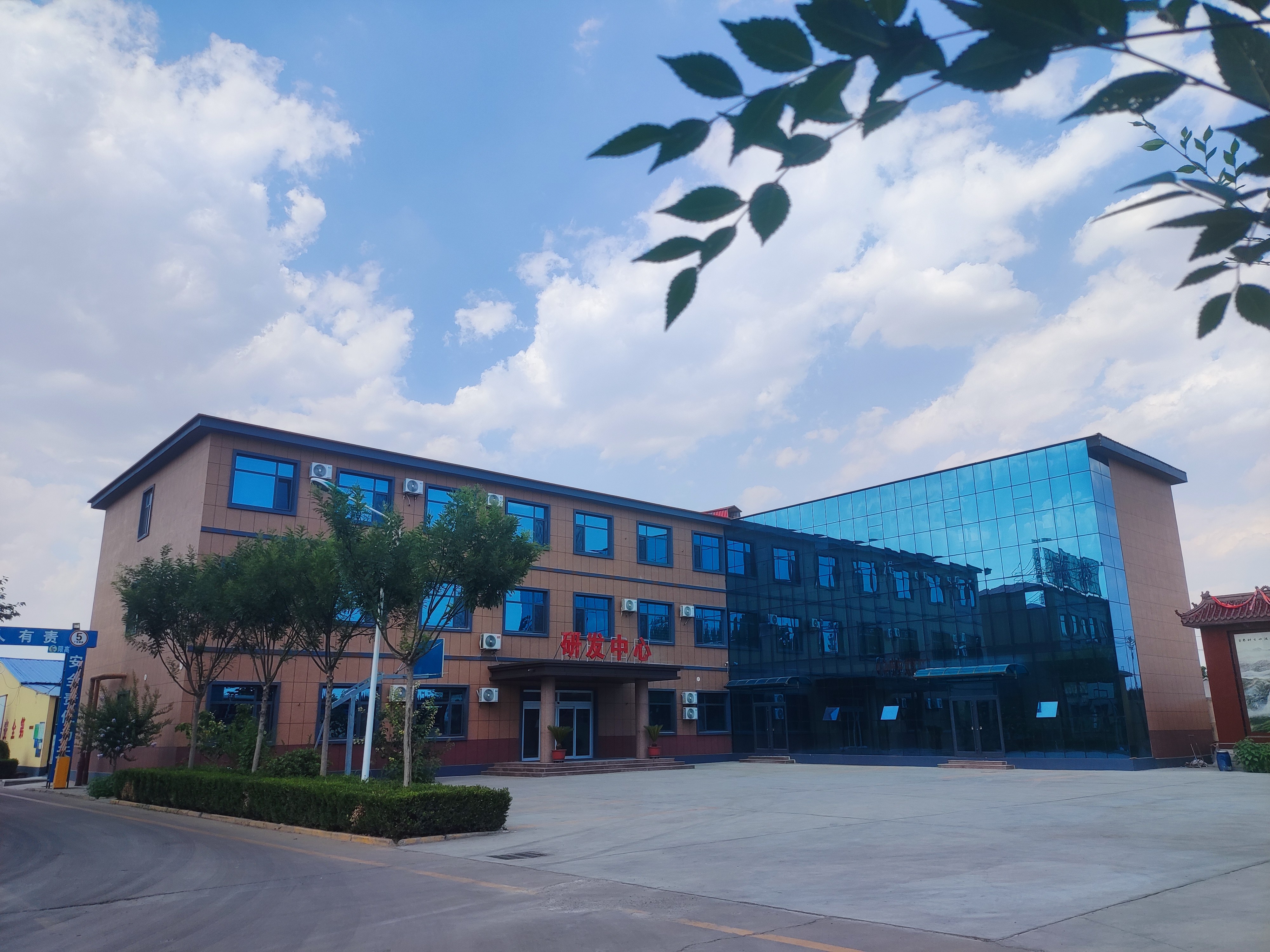
Laboratory and R&D verification is part of the supplier evaluation process when changing plasticizer grades.
Kexing's stated commercial baseline for plasticizer supply includes a minimum order quantity of 1 metric ton, delivery under FOB or CIF, factory test reports for acceptance, and payment terms of 30% deposit with 70% against the bill of lading copy. These are export-standard terms, but they give a buyer a concrete starting point when comparing multiple suppliers.
On the operational side, the company mentions closed feeding and sealed storage systems, gas detectors, and regular tank and pipeline inspection as controls for leakage and volatile vapor emission. Buyers should not accept such statements at face value. The correct action is to ask for records, audit procedure and, when necessary, inspect the facility or request third-party verification.
Market competition and supplier structure
The ATBC market is fragmented at the global level. Data Insights Reports attributes about 18% of global ATBC market share to Jungbunzlauer and about 14% to Mitsubishi Chemical Corporation. That leaves a substantial portion supplied by manufacturers in other regions, including Chinese plasticizer producers such as the reference supplier used in this article.
For buyers, fragmentation has a practical meaning. There is no single dominant supplier whose quality standard automatically defines the market. Each shipment should be assessed through specifications, certificates of analysis and lot-to-lot consistency data. Long-term buyers should also review capacity, raw-material sourcing and documented quality systems.
Execution outlook: how to turn this comparison into a project
At the execution stage, the comparison document is useful only if it leads to a structured project plan. A buyer replacing DBP, DOP or DINP with ATBC should define the finished-product requirement first, then move through material specification, trial production, testing, documentation and commercial scale-up.
A practical sequence looks like this. First, confirm the legal and customer requirements for the final article. Second, request an ATBC sample and the corresponding factory test report. Third, run a laboratory or production trial with the actual PVC resin, stabilizer, filler and other additives used in the current formulation. Fourth, test the trial material against the finished-product standard, including migration or biocompatibility tests if relevant. Fifth, review the total economics, not only the plasticizer price per ton. Sixth, agree on batch-to-batch quality limits and delivery terms with the supplier.
This sequence is especially important because ATBC is not a drop-in replacement for every legacy phthalate. Buyers that skip the trial stage often discover differences in processing temperature, viscosity, surface feel or migration behavior after the purchase order has been placed.
Long-term buyer considerations
The long-term question in a buyer-supplier relationship is continuity. A plasticizer change is not a one-time laboratory project. Once ATBC is qualified, the buyer depends on the supplier's ability to deliver the same product quality month after month.
For that reason, the buyer should evaluate the manufacturer's wider support system, not just the quoted MOQ and price. Kexing, for example, has an R&D center and a product range that spans both legacy phthalates and non-phthalate alternatives. That type of structure can support formulation advice, documentation requests and future changes in regulatory status. But a supplier's stated capability should always be checked against current certificates, references and, where possible, independent audits.
Future outlook
The market data available for this article points in one clear direction: demand for ATBC is expected to grow through the next decade. The Data Insights Reports forecast from USD 258.92 million in 2025 to USD 439.46 million by 2034 is one estimate among several, but even conservative views place ATBC in a growth category. Medical applications and food packaging, the two largest end-use segments, are exactly the areas where regulatory pressure and brand requirements for non-phthalate materials are likely to remain strong.
At the same time, the traditional phthalates DBP, DOP and DINP are unlikely to disappear. They will continue to serve markets where cost and processing history matter more than non-phthalate status. The real task for a procurement team is to know which category their end-use belongs to and to build a supplier relationship that can support either option.
Frequently asked questions
Is ATBC a phthalate plasticizer?
No. ATBC, or Acetyl Tributyl Citrate, is a citrate ester. It is chemically different from phthalate plasticizers such as DBP, DOP and DINP. Because it is not a phthalate, it is often described as a non-phthalate plasticizer in food packaging, toy and medical supply chains.
What is the difference between ATBC and traditional phthalate grades such as DBP, DOP and DINP?
The main difference is chemical identity. DBP, DOP and DINP are phthalate esters. ATBC is a citrate ester. In the product data reviewed here, ATBC also differs from these phthalates in density, flash point and regulatory position. ATBC has a listed FDA food-contact reference, while many sensitive-end-product buyers avoid phthalate types because of restrictions and brand requirements.
Is ATBC approved for food contact?
ATBC is referenced by the U.S. FDA under 21 CFR 172.515, 175.105, 178.3910 and 181.27. This is a substance-level reference. Finished food-contact articles must still be tested for migration and compliance under the conditions in which they will be used.
Which applications account for most ATBC demand?
According to Data Insights Reports, global ATBC consumption in 2025 is estimated at 128,000 metric tons, with medical applications holding 34% and food packaging 29%. Together, these two segments account for about 63% of current ATBC consumption.
What are the main trade-offs when switching from a phthalate to ATBC?
The main trade-offs are higher raw-material cost and the need to re-qualify the finished product. ATBC is positioned at a higher cost level than commodity phthalates, and every new formulation should be tested on actual production equipment before a commercial switch.
What is the MOQ for ATBC when buying from Shandong Kexing Chemical?
Kexing lists a minimum order quantity of 1 metric ton for its plasticizer products. Delivery is available under FOB or CIF terms. Payment terms are 30% deposit and 70% against the copy of the bill of lading, with a factory test report used for acceptance.
Can ATBC replace DOP or DBP directly in the same recipe?
No, direct replacement is not recommended. Density, plasticizer loading, processing behavior and final-product performance can change. A buyer should run a trial with the actual resin and additive system and test the finished article against its required standard before full-scale replacement.
Reference supplier and product data: Shandong Kexing Chemical Co., Ltd. - Official website
Corporate brochure (PDF): Download reference document
Market estimates cited from Data Insights Reports, global ATBC market and consumption research, 2025-2034.
FDA substance reference: 21 CFR 172.515, 175.105, 178.3910, 181.27, U.S. Food and Drug Administration.
Tem questões ou precisa de mais detalhes?
Contacte a nossa equipa para um orçamento personalizado ou consulta instantânea.
Solicitar orçamento
Preencha o formulário abaixo e a nossa equipa entrará em contacto com uma proposta personalizada.
Chat direto do WhatsApp
Prefere conversar em tempo real? Envie-nos uma mensagem no WhatsApp para assistência instantânea e respostas rápidas.
- Obter orçamento personalizado
- Partilhar fotos ou documentos
- Discuta as suas necessidades diretamente
Geralmente responde em 5–30 minutos durante o horário de expediente.