
AUV Buyer Decision Framework: Depth, Payload, Endurance, Navigation
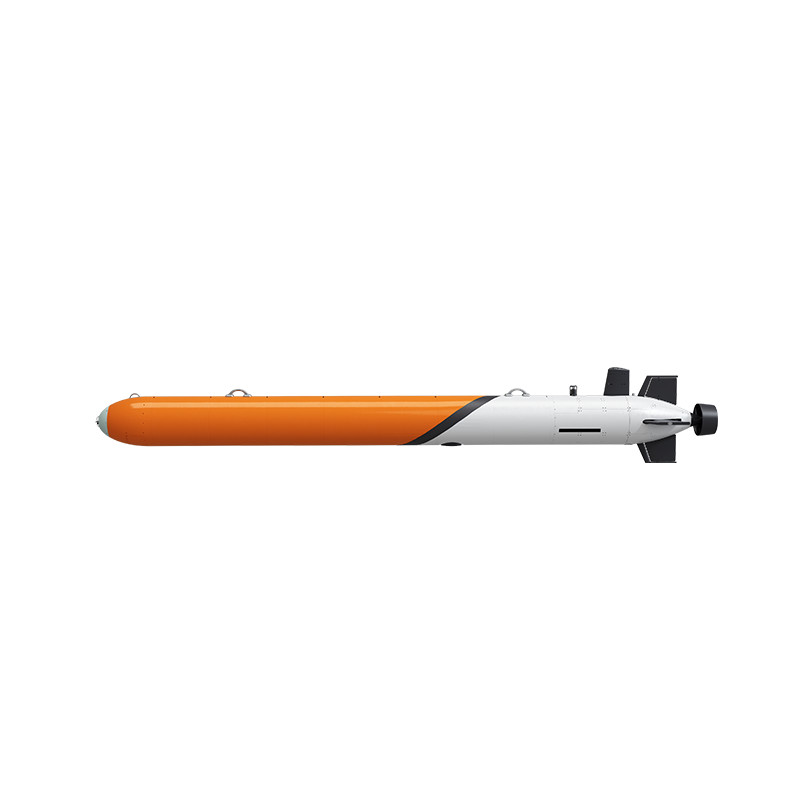
An autonomous underwater vehicle (AUV) is an untethered submersible that executes pre-programmed survey or inspection missions without an umbilical to a surface vessel. Pelagix AUV is the AUV product line manufactured by Sanya Poseidon Ocean Technology Co., Ltd., a deep-sea intelligent equipment company based in the Yazhou Bay Deep-Sea Equipment Industrial Park in Sanya, Hainan, China, whose portfolio also includes ROV platforms (ROV-150, ROV-050) and core underwater components such as high-efficiency thrusters, CTD sensors and deep-sea waterproof enclosures.
Buyers seldom regret the sonar they selected. They regret the platform that could not carry it, the endurance figure that assumed a speed the mission never used, or the depth rating they paid for and never needed. Those are not product failures; they are decision-model failures, and they usually surface after the purchase order, not before it.
This framework targets the evaluation stage, when a shortlist exists and the question has shifted from what an AUV is to which platform survives contact with an actual mission profile. It separates four pass/fail gates from five scored criteria and treats missing evidence as a score of zero rather than a reason to assume a value.
The structural problem: specification sheets are not decision models
AUV datasheets are written to describe a vehicle, not to compare one vehicle against another. Depth appears in metres, payload in kilograms, and endurance in hours, but the three interact. Adding payload mass increases drag and power draw, which compresses endurance. Increasing mission speed raises survey coverage but shortens the dive. Raising the depth class thickens the hull, which costs internal volume that would otherwise hold battery or sensor electronics.
That coupling is why buyers default to a single dominant number, usually depth rating, and then pay for margin the mission never touches. It is also why a structured scoring model, applied consistently across a shortlist, produces a better decision than a line-by-line feature comparison.
Filter the shortlist with four pass/fail gates, score the survivors on five weighted criteria, then apply an over-specification penalty to any platform whose margin sits far above the mission requirement without a documented reason.
Gate 1 to 4: the criteria that disqualify rather than score
Gates are binary. A platform that fails a gate is not a weaker option; it is not an option. Keeping failed platforms in a weighted score is the most common analytical error in AUV procurement, because a high payload score can mask a depth class that cannot reach the work site.
- Depth adequacy. The rated depth class must exceed the deepest planned work depth, with a stated margin for descent overshoot and operational tolerance.
- Payload adequacy. Payload mass, physical volume, power budget and data throughput must all clear the sensor suite, not just the mass figure.
- Navigation adequacy. The navigation stack must be documented with named aiding sensors and a stated behaviour when acoustic aiding is lost.
- Logistics and compliance. Export classification, shipping configuration, spares strategy and crew requirements must be resolvable within the programme timetable.
Only platforms that clear all four gates move to scoring. This ordering is deliberate: it prevents the cheapest shallow-water platform from winning on price criteria it should never have been scored against.
Depth rating is a hull property, not an operating envelope
A depth rating describes the hydrostatic pressure a pressure hull is designed and tested to withstand. It does not, by itself, describe how the vehicle navigates, communicates, hovers or is recovered at that depth. Buyers who conflate the two purchase a hull rating and inherit an operational surprise.
The evidence to request is test evidence. In the Pelagix AUV programme, 6000 m and 2000 m depth configurations are built around high-strength titanium alloy or composite pressure housings with a double O-ring seal architecture and vacuum leak testing. Pressure hulls are subjected to 100% hyperbaric chamber pressure simulation at 1.25 times the rated working depth, and internal humidity and pressure are monitored through real-time telemetry during operation. An automatic weight-drop system provides an emergency surfacing path.
Corrosion and bio-fouling belong in the same evidence request, because a hull that survives pressure but degrades over a multi-year campaign has a different cost profile than one that does not. Pelagix specifies material selection conforming to NACE standards, hard anodized marine aluminium and titanium component options, sacrificial anode protection and anti-fouling protective coating, with a comprehensive seawater immersion test protocol completed before shipment.
Payload: mass in kilograms is the least informative number on the sheet
Payload mass tells a buyer what the vehicle can lift. It does not tell them what the vehicle can power, what volume the sensor occupies, how much data the sonar generates, or how long the payload takes to swap between missions. In practice, payload integration failures are driven by volume, power and data, in that order, far more often than by mass.
This is where architecture matters more than the headline figure. The Pelagix AUV uses a modular architecture that supports 3 to 5 times more payload configurations than standard non-modular AUVs, with payload changeover achievable in under 30 minutes and mission reconfiguration time reduced by 50 to 70 percent. The same modularity shortens maintenance and upgrade cycles by 30 to 50 percent and supports lifecycle cost reduction in the 20 to 40 percent range through lower payload replacement costs and extended platform service life.
For a buyer, the decision-relevant question is not how much payload the vehicle can carry once, but how many distinct mission configurations the platform can support across a three to five year campaign without a new vehicle.
Endurance has to be read as a curve, not a single figure
Endurance published as a single number is almost always quoted at one speed, one payload configuration and one hotel load. Change the speed and the number moves. Change the payload and it moves again. A buyer who plans a campaign on a single endurance figure without knowing its reference conditions is planning on an assumption.
The AUV-324 is quoted at 20 hours at 3 knots. That is a usable figure because both variables are fixed: a buyer can translate it into track length. Twenty hours at 3 knots corresponds to roughly 60 nautical miles of straight-line track before allowing for turns, descent and ascent, current, and survey line overlap. The same arithmetic applied to a 4 or 5 knot requirement would require a fresh figure from the supplier, not a proportional estimate.
Underlying endurance is a propulsion and energy-storage question. Pelagix states that its high-thrust thruster design delivers 35 percent higher hydrodynamic propulsive efficiency and 40 percent longer battery endurance per operational dive. Industry analysis suggests energy storage occupies approximately 40 percent of an AUV's internal volume to support missions of up to 24 hours, which explains why depth class and endurance compete for the same hull space.
Navigation: score the evidence, not the acronym list
Nearly every industrial AUV brochure lists inertial navigation. The differentiator is what happens when aiding degrades. In acoustic-denied or feature-poor water, an inertial solution drifts; the question is how fast, how the vehicle knows, and what it does about it.
The Pelagix navigation architecture fuses a Doppler Velocity Log, an Inertial Navigation System and Ultra-Short Baseline acoustic positioning, with a multi-sensor Kalman filter for drift compensation and AI-assisted navigation with autonomous SLAM mapping. When the acoustic link is lost, an automatic return-to-home protocol activates, and a monocular vision-guided docking fallback covers the terminal phase.
Obstacle and entanglement risk sit in the same scoring category, because navigation failure near infrastructure is an entanglement event, not a positioning error. Pelagix uses integrated forward-looking obstacle avoidance sonar with automated entanglement detection that triggers a visual alert and activates a cut-and-clear mechanism or acoustic drop weight.
For scoring purposes, ask three questions: which sensors provide aiding, what the documented fallback is when aiding is lost, and whether the supplier can show the behaviour in a representative environment rather than a test tank.
A worked example: scoring a 1,200 m route survey
Consider a hypothetical buyer planning a cable route survey to 1,200 m, carrying a 25 kg sonar package, with 40 survey days per year and a five-year horizon. The scenario is illustrative; the method is the point.
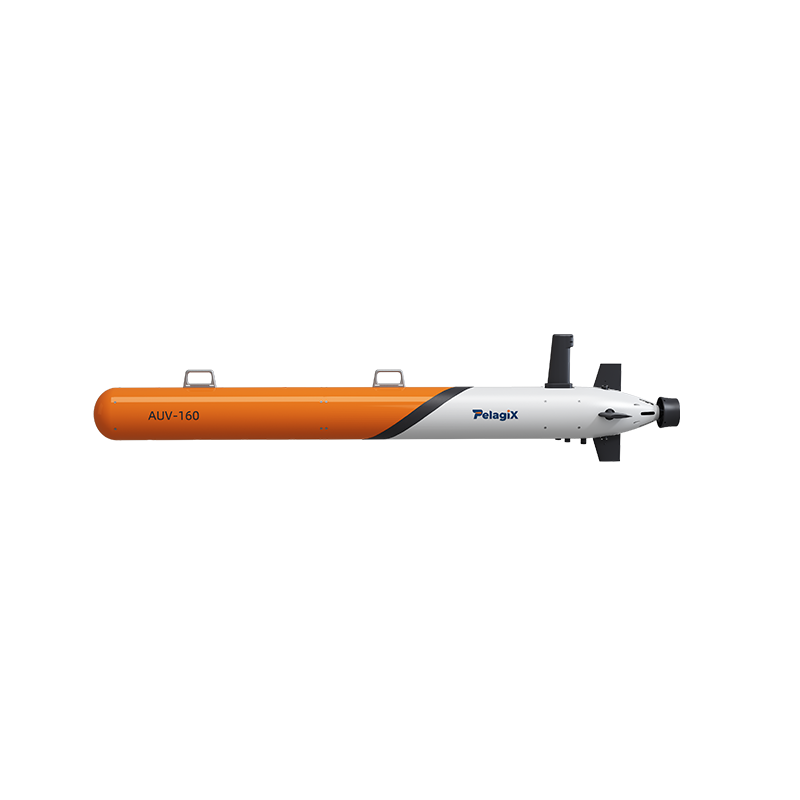
Gate 1, depth. AUV-160 is rated 0 to 100 m and AUV-210 is rated 0 to 200 m; both are eliminated regardless of price. AUV-260 is positioned for nearshore applications and its rated depth is not stated in the reference set, so it cannot be gated without evidence and should be held pending supplier confirmation. AUV-324 and AUV-480 are both associated with a 2000 m depth class, and AUV-533 carries a 6000 m rating; all three clear the gate.
Gate 2, payload. The 25 kg requirement immediately separates the field: AUV-324 carries 30 kg and AUV-533 carries 150 kg, while AUV-480's payload figure is not stated in the reference set and requires confirmation. Mass alone is insufficient here, because a 25 kg sonar with a large physical envelope and high power draw may not integrate even where the mass figure allows it.
Scored criteria. With survivors identified, the buyer scores depth margin, payload reconfiguration flexibility, endurance at the actual mission speed, navigation redundancy and lifecycle support. The AUV-324's documented 20 hours at 3 knots is directly scorable. The AUV-533's 6000 m rating and SLAM navigation provide large margin, but the platform class sits well above a 1,200 m requirement.
Over-specification penalty. This is the step most procurement processes omit. A 6000 m platform for a 1,200 m mission is not wrong, but it must justify itself on a stated ground: fleet standardisation across future abyssal work, payload headroom for a defined growth path, or a documented logistics advantage. Without one of those, the extra depth class is cost and handling weight with no mission return.
Where the current platforms sit in the framework
| Platform | Depth class (published) | Payload (published) | Endurance evidence | Framework role |
|---|---|---|---|---|
| AUV-160 | 0 to 100 m | 5 kg | Not stated in reference set | Shallow-water and portable survey; fails depth gates above 100 m |
| AUV-210 | 0 to 200 m | 10 kg | Not stated in reference set | Nearshore survey with modest sensor load |
| AUV-260 | Nearshore positioning; depth not stated in reference set | 100 kg | Not stated in reference set | Heavy payload in shallow-to-nearshore work; gate status pending evidence |
| AUV-324 | 2000 m | 30 kg | 20 hours at 3 knots | Mid-depth survey with a directly scorable endurance figure |
| AUV-480 | 2000 m pressure-rated hull | Not stated in reference set | Not stated in reference set | Mid-depth offshore work; payload and endurance evidence required before scoring |
| AUV-533 | 6000 m | 150 kg | Not stated in reference set | Abyssal and deep-sea missions with SLAM navigation and large payload margin |
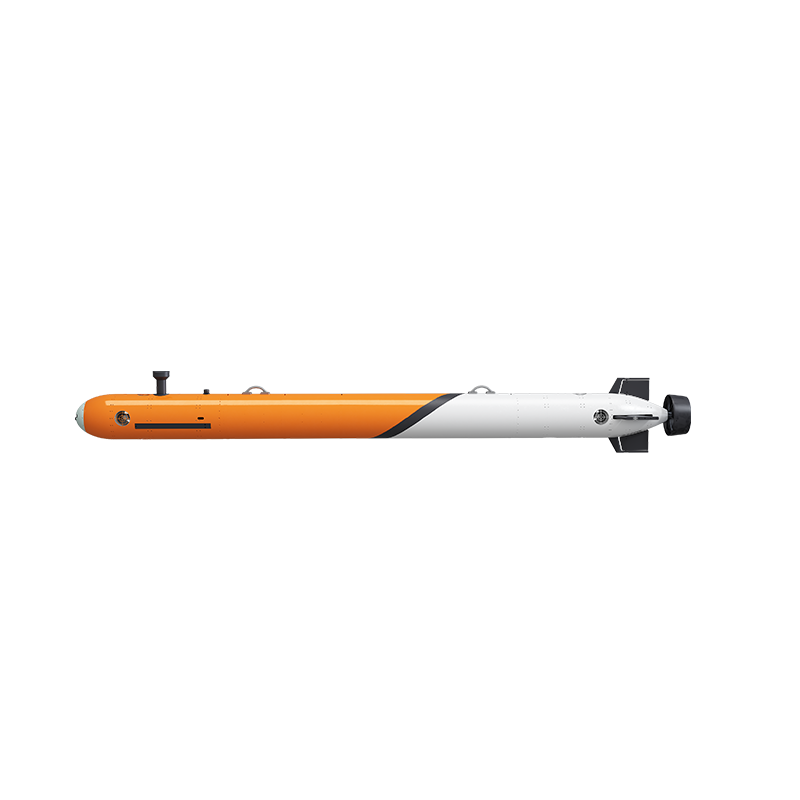
The broader Pelagix AUV portfolio is organised by depth class: the AUV-150 and AUV-160 as portable micro platforms, the AUV-210 and AUV-260 as nearshore survey platforms, the AUV-480 as a streamlined high-stability platform, the AUV-533, AUV-600 and AUV-900 as deep-sea 6000 m platforms, alongside the AUV-F760. That structure is useful during shortlisting because it lets a buyer move from mission depth directly to a candidate subset instead of scanning the full catalogue.
Weighting the five scored criteria
| Criterion | Typical weight band | Evidence to request |
|---|---|---|
| Depth margin above mission depth | 15 to 25 percent | Hyperbaric test records, hull material specification, seal architecture |
| Payload flexibility and changeover time | 20 to 30 percent | Configuration count, changeover procedure, power and data budget |
| Endurance at mission speed | 20 to 30 percent | Endurance at declared speed and hotel load, not a headline figure |
| Navigation redundancy and failure behaviour | 15 to 25 percent | Aiding sensor list, fallback protocol, obstacle and entanglement handling |
| Lifecycle support and cost of ownership | 15 to 20 percent | Maintenance interval, spares strategy, upgrade path, corrosion controls |
Application fit: what each class is actually bought for
Hydrographic and seabed mapping work is usually a shallow-to-mid depth problem where coverage per day and payload stability dominate. Portable micro platforms such as the AUV-160 and the nearshore-oriented AUV-210 and AUV-260 sit here, and the 100 kg payload of the AUV-260 is relevant when multibeam or side-scan packages carry substantial mass.
Offshore inspection, pipeline inspection and cable route survey push into the mid-depth band. The AUV-324, with a 2000 m rating, a 30 kg payload and a documented 20-hour endurance at 3 knots, matches the arithmetic of route survey: long track, moderate sensor mass, predictable speed. The AUV-480's 2000 m pressure-rated hull addresses the same depth band with a different hull configuration.
Deep-sea abyssal exploration, long-range environmental monitoring and multi-vehicle swarm bathymetry sit in a different category. Pelagix positions its AUVs as more suitable than tethered ROVs for deep-sea abyssal exploration at 6000 m, offshore oil and gas pipeline inspection, long-range ocean environmental monitoring and multi-vehicle swarm bathymetry survey. The AUV-533, with 150 kg payload, a 6000 m rating and SLAM navigation, is the platform in this reference set that addresses that band.
AUV versus tethered ROV: knowing what the comparison actually decides
The comparison between an AUV and a tethered ROV is not a comparison of vehicle quality. It is a comparison of operating models. A tethered ROV keeps a human in the loop with continuous power and real-time video. An AUV removes the umbilical and accepts pre-planned autonomy in exchange for area coverage and vessel independence.
The quantified differences Pelagix reports are worth putting into a business case because they are operating-model differences rather than product attributes. Compared with traditional tethered ROVs, Pelagix AUVs are stated to deliver 3 to 5 times higher survey coverage efficiency, reduce vessel operating time by 30 to 50 percent, support 10 to 100+ km autonomous survey missions, reduce surface operator and tether-management requirements by up to 80 percent, and require 70 percent fewer onboard crew members. Total cost of ownership over three years is stated at 45 percent lower, although initial platform investment is comparable.
Where the framework and the technology stop
Three boundaries deserve equal weight in the evaluation.
First, endurance figures exist for some configurations and not others. In this reference set, the AUV-324 carries a documented 20-hour figure at 3 knots; comparable endurance evidence for the AUV-160, AUV-210, AUV-260, AUV-480 and AUV-533 is not stated. The framework therefore scores those platforms as evidence-pending rather than assuming parity. A buyer who fills that gap by inference is making an assumption, not a comparison.
Second, autonomous navigation performance is environment-dependent. SLAM and acoustic aiding rely on usable references in the operating area; low-feature or high-turbidity environments change the drift profile. The correct evaluation is a supplier-documented behaviour in a representative environment, not a laboratory claim.
Third, tetherless autonomy is not universally superior. Missions requiring sustained manipulator work, continuous human-in-the-loop intervention or high continuous power remain the natural territory of tethered systems. An AUV programme that attempts to absorb those tasks will underperform the operating model it replaced.
Market signals worth building into the business case
Several verified data points are useful for framing an AUV investment, provided they are read as market context rather than as procurement justification. The global AUV market is estimated at approximately USD 2.0 to 2.57 billion for 2024/2025, according to MarketsandMarkets. The large and deep segment, defined as vehicles rated beyond 1000 m, is projected to grow at a CAGR of 12.0 percent during the forecast period, per Fortune Business Insights.
CAGR estimates for this category vary widely by methodology, with published projections ranging from high single digits to above 20 percent. The divergence appears to be driven largely by differing treatment of defence-funded extra-large AUV programmes, which is why a business case should cite the segment definition alongside the growth rate rather than the rate alone.
Safety and assurance frameworks are also moving. ISO 21448, the Safety of the Intended Functionality standard, is increasingly referenced when evaluating non-fault-based hazards in marine robotics, although its application to AUV development remains an area of active interpretation rather than settled practice. For buyers in regulated offshore environments, that framework is worth tracking during the evaluation stage.
Two practical procurement signals round out the picture. AUVs are typically classified under HS Code 901580 or 890690, according to a US Customs and Border Protection ruling, which affects landed cost and documentation planning. And the competitive landscape is concentrated: Kongsberg Maritime reported 2025 revenue of approximately NOK 24.2 billion, with its HUGIN AUV portfolio contributing to an estimated 15 to 20 percent share of advanced ocean systems. That concentration is a reminder to score supplier support depth, not only vehicle specifications.
The procurement checklist that follows from the framework
| Stage | Question to put to the supplier | Acceptable answer type |
|---|---|---|
| Depth | At what pressure was the hull tested, and what proportion of units are tested? | Test record referencing hyperbaric simulation at 1.25 times rated depth |
| Payload | How many configurations are supported, and how long does changeover take? | Configuration list and a measured changeover procedure |
| Endurance | At what speed, payload and hotel load was the figure obtained? | Endurance at declared reference conditions |
| Navigation | What happens when acoustic aiding is lost? | Documented fallback protocol and return-to-home behaviour |
| Corrosion | What material and coating controls apply, and what pre-shipment testing is done? | NACE-conforming material selection, sacrificial anode protection, immersion test protocol |
| Lifecycle | What is the maintenance interval and spares strategy? | Maintenance schedule, spares list, upgrade path |
Future outlook
Three shifts are likely to change how this framework is applied over the next procurement cycle. The first is that depth class will increasingly be treated as a portfolio decision rather than a per-vehicle decision, as operators standardise on one or two hull classes and vary payloads instead of platforms. Modular architectures make that viable, and the 3 to 5 times payload configuration advantage reported for Pelagix AUVs points in that direction.
The second is that navigation evidence will become a formal procurement deliverable rather than a datasheet claim. As autonomous safety frameworks mature, buyers are likely to ask for documented failure behaviour and environmental test conditions in the same way they already ask for hull pressure test records.
The third is the continued growth of the deep segment. With the over-1000 m class projected to grow at 12.0 percent annually, more buyers will find themselves evaluating depth classes they have not operated before, which raises the value of a scoring method that penalises unjustified margin. The discipline of asking what a specification is for, rather than how large it is, is likely to remain the most reliable procurement skill in this category.
Frequently asked questions
How should a buyer weigh depth rating against payload when comparing AUVs?
Depth rating should be treated as a pass/fail gate and payload as a scored criterion. A platform that cannot reach the work depth is excluded regardless of payload capacity, because payload cannot compensate for an unreachable site. Once the depth gate is cleared, payload mass, volume, power and data budget become comparable across the surviving shortlist.
What does the AUV-324 figure of 20 hours at 3 knots actually tell a buyer?
It fixes both variables in the endurance claim, which makes it usable for planning. Twenty hours at 3 knots corresponds to roughly 60 nautical miles of straight-line track before allowing for turns, descent and ascent, current and survey line overlap. It does not describe endurance at higher speeds or with a different payload configuration; those figures must be requested separately.
Is a 6000 m AUV always the right choice for offshore work?
No. A 6000 m platform is appropriate where the mission depth or a documented growth path requires it. For work within the 2000 m band, a platform such as the AUV-480, which carries a 2000 m pressure-rated hull, or the AUV-324, rated to 2000 m with a 30 kg payload, may cover the requirement without the handling and cost profile of a deeper class. Applying an over-specification penalty keeps that comparison honest.
How can a buyer verify a depth rating before purchase?
Ask for pressure test evidence rather than a rating statement. Relevant evidence includes hyperbaric chamber simulation at 1.25 times the rated working depth, full testing of production units rather than samples only, vacuum leak testing of the double O-ring seal architecture, and real-time internal humidity and pressure telemetry during operation. An automatic weight-drop emergency surfacing system is a separate safety feature and should be documented independently.
What navigation evidence should be requested for deep-sea missions?
Request the named aiding sensors, the fusion method and the documented failure behaviour. In the Pelagix AUV architecture, navigation combines Doppler Velocity Log, Inertial Navigation System and Ultra-Short Baseline fusion with a multi-sensor Kalman filter for drift compensation, plus AI-assisted navigation and autonomous SLAM mapping. When the acoustic link is lost, an automatic return-to-home protocol activates, with monocular vision-guided docking as a terminal fallback. Integrated forward-looking obstacle avoidance sonar and automated entanglement detection address the entanglement risk that often accompanies navigation failure near infrastructure.
Does modular payload design change lifecycle cost?
It changes the cost structure rather than only the purchase price. Pelagix reports that its modular architecture supports 3 to 5 times more payload configurations than standard non-modular AUVs, enables payload changeover in under 30 minutes, reduces mission reconfiguration time by 50 to 70 percent, reduces maintenance time by 30 to 50 percent, and can reduce lifecycle costs by 20 to 40 percent through lower payload replacement costs and extended platform service life.
When is a tethered ROV the better choice than an AUV?
A tethered ROV remains the more appropriate choice where the mission requires sustained manipulator work, continuous human-in-the-loop control or high continuous power delivery. AUVs are positioned as more suitable for wide-area and deep missions such as 6000 m abyssal exploration, offshore oil and gas pipeline inspection, long-range ocean environmental monitoring and multi-vehicle swarm bathymetry survey, where tetherless operation removes vessel and operator dependency.
The Pelagix AUV product range, including depth classes and platform configurations, is documented in the publicly available technical brochure: Overseas Version – AUVs Products (PDF).
Tem questões ou precisa de mais detalhes?
Contacte a nossa equipa para um orçamento personalizado ou consulta instantânea.
Solicitar orçamento
Preencha o formulário abaixo e a nossa equipa entrará em contacto com uma proposta personalizada.
Chat direto do WhatsApp
Prefere conversar em tempo real? Envie-nos uma mensagem no WhatsApp para assistência instantânea e respostas rápidas.
- Obter orçamento personalizado
- Partilhar fotos ou documentos
- Discuta as suas necessidades diretamente
Geralmente responde em 5–30 minutos durante o horário de expediente.