
AUV Shortlist for Offshore Oil & Gas and Deep-Sea Survey
AUV Shortlist for Offshore Oil & Gas and Deep-Sea Survey
Three autonomous underwater vehicles cover the majority of offshore oil and gas inspection and deep-sea survey mission profiles now being tendered: the AUV-324, the AUV-480 and the AUV-533. Each of the three is specified for a 2000 m pressure class, but each resolves the same engineering problem differently — one prioritises modular payload and pipeline work, one prioritises hull rating and navigation accuracy, and one prioritises payload mass and endurance for long, deep missions.
This shortlist is written for the stage where a buyer already knows the survey objective and now has to decide which pressure class, payload allowance, endurance figure and navigation architecture the mission actually requires. Depth rating alone is a poor selector: two vehicles with the same 2000 m designation can differ substantially in usable payload, transit stamina and positioning accuracy. The three models below are products of the Pelagix AUV range, built by Sanya Poseidon Ocean Technology Co., Ltd., a deep-sea intelligent equipment enterprise located in the Yazhou Bay Deep-Sea Equipment Industrial Park in Sanya, Hainan, China, which designs and manufactures AUV and ROV systems for global markets with a primary commercial focus on Southeast Asia, South America and the Middle East.
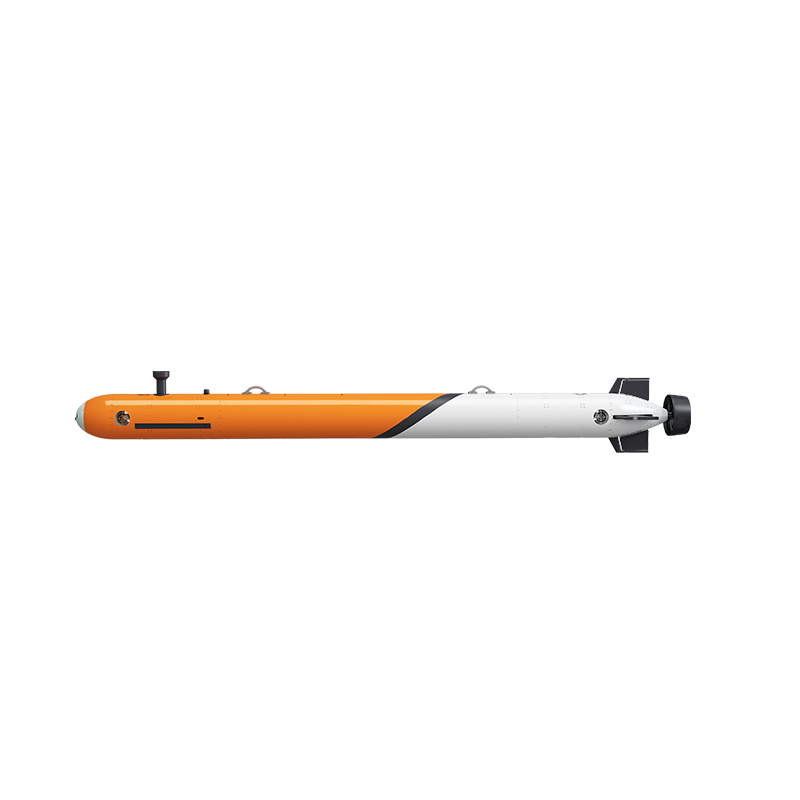
Why Mission Envelope, Not Vehicle Class, Sets the Shortlist
Offshore oil and gas inspection and deep-sea survey programmes separate into recognisable mission envelopes. Subsea pipeline and riser integrity work concentrates in the 1000–2000 m band and needs close visual and acoustic scanning with a configurable sensor bay. Regional seabed mapping and nearshore engineering survey work sits in shallower water but demands stable, repeatable tracklines and tight positioning. Abyssal and long-range oceanographic campaigns run to 6000 m and require multi-day endurance with payload capacity for CTD, multibeam and side-scan instrumentation.
Four specification axes determine which of the three vehicles fits which envelope:
- Depth class — the pressure-rated hull and the published operating depth, which are not always the same figure.
- Payload allowance — the mass budget available for sensors, battery extensions and tooling.
- Endurance at survey speed — normally quoted at 3 knots, and the single most decisive number for multi-day missions.
- Navigation architecture — INS+DVL+GNSS+USBL for standard survey work, with SLAM added where the vehicle must map while it navigates.
Shortlist at a Glance
| Model | Depth class | Payload | Endurance | Navigation | Primary mission fit |
|---|---|---|---|---|---|
| AUV-324 | 600 m / 2000 m configurable | 30 kg | ≥20 h @ 3 knots (custom up to 50 h / 300 km) | INS+DVL+GNSS+USBL | Offshore oil and gas inspection, subsea pipeline route survey, 2000 m seabed bathymetry |
| AUV-480 | Pressure-rated hull for 2000 m; published operating depth 300 m | Not stated in the published datasheet | ≥20 h @ 3 knots | INS+DVL+GNSS+USBL, 0.3% of range | Subsea pipeline mapping, offshore engineering surveys, nearshore hydrographic and environmental monitoring |
| AUV-533 | 2000 m / 6000 m configurable | 150 kg | ≥90 h @ 3 knots (custom up to 180 h / 1000 km) | INS+DVL+GNSS+USBL + SLAM | Deep-sea bathymetry to 6000 m, multi-AUV swarm survey, large-area oceanographic and environmental survey |
Specifications as published for the Pelagix AUV range. Buyers should confirm the operating envelope, not only the hull rating, against the specific survey depth of the tender.
AUV-324: The 2000 m Platform for Pipeline and Riser Integrity
The AUV-324 is a deep-diving, long-endurance modular AUV with a 2000 m pressure-rated hull, a high-strength anodised aluminium alloy or titanium housing and a corrosion-resistant composite frame. It measures 324 mm × 4 m, displaces roughly 300 kg and carries a 30 kg payload, which is the practical sensor budget for multibeam echosounder, side-scan sonar, CTD or a small tooling package. Speed ranges from 1 to 6 knots with standard endurance of at least 20 hours at 3 knots, and custom configurations extend that to 50 hours or 300 km.
For offshore oil and gas operators, the relevant capability is functional rather than dimensional. The AUV-324 performs subsea pipeline visual and acoustic scanning, identifies entanglements, supports cut-and-clear system intervention, and operates in autonomous SLAM mapping navigation mode with tetherless autonomous docking and automatic small-target recognition. It is specified for offshore oil and gas inspection projects and for subsea pipeline and riser structural integrity audits in deepwater subsea fields where pipeline entanglements and marine growth are present.
Documented deployment evidence. An offshore oil and gas engineering contractor operated four AUV-324 medium survey AUV systems for two years on subsea pipeline route survey and structural hazard detection. The programme completed 1,200 km of subsea pipeline inspection, detected 18 critical structural anomalies and marine growth entanglements, and recorded zero safety incidents. Documented highlights include the 2000 m pressure-rated hull, the high-payload modular AUV bay, the entanglement identification and cut-and-clear system, and real-time data telemetry.
That deployment record matters for procurement because it converts a specification sheet into an operating envelope: 1,200 km of survey distance and two years of service life on a single platform class indicate what maintenance and spares planning can reasonably assume. For a buyer structuring a multi-season pipeline inspection campaign, the AUV-324 is the natural starting point of the shortlist.
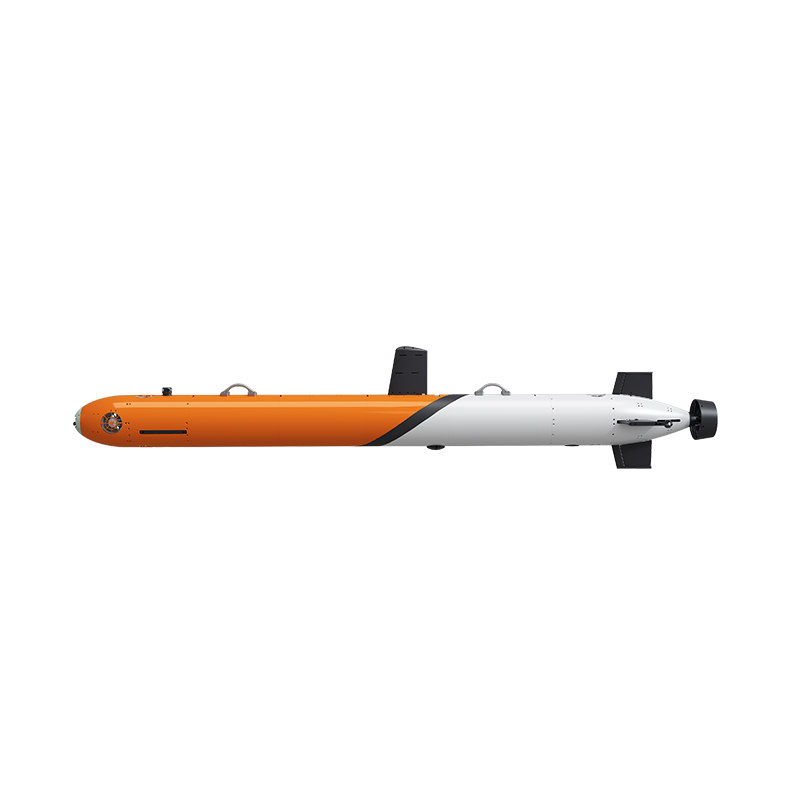
AUV-480: Hull Rating and 0.3% Range Navigation Accuracy
The AUV-480 is described as a streamlined, high-stability AUV engineered for seabed bathymetry mapping, offshore oil and gas inspection and marine environmental monitoring. It measures 480 mm × 6.5 m, weighs 700 kg, cruises at 1–5 knots and delivers at least 20 hours at 3 knots. Its construction uses a pressure-rated hull rated for 2000 m together with high-strength anodised aluminium alloy or titanium housing, a corrosion-resistant composite frame and seawater-resistant electronics.
The 2000 m hull rating and the published operating depth of 300 m are two different numbers, and buyers should read them as such. A pressure-rated hull describes the structural depth the housing and seals are engineered to withstand; the operating depth describes the mission profile the vehicle is configured and documented for. For a tender, the operating depth is the figure that governs whether a given pipeline section, tie-in or survey block is in scope. Vehicles with generous hull headroom are often selected precisely because that headroom supports long service intervals and tolerance for depth transients during autonomous flight in uneven terrain.
The AUV-480's distinguishing specification is its navigation accuracy: an integrated INS+DVL+GNSS+USBL suite delivering positioning accuracy of 0.3% of range. On a long survey line this is the number that determines whether repeat passes over the same pipeline corridor will register as the same corridor. It also directly affects deliverable quality for subsea pipeline mapping, offshore engineering surveys, underwater structure inspection and nearshore hydrographic and environmental monitoring, where small positioning errors compound into misaligned survey products.
AUV-533: 150 kg Payload, 2000 m/6000 m Depth Flexibility and SLAM
The AUV-533 is the heaviest of the three at 1200 kg, with dimensions of 533 mm × 5 m and a 150 kg payload — five times the sensor and tooling budget of the AUV-324. It supports configurable operating depths of 2000 m or 6000 m in the same vehicle family, uses a pressure-rated hull built with titanium alloy pressure housing and corrosion-resistant syntactic foam buoyancy modules, and cruises at 1–6 knots with standard endurance of at least 90 hours at 3 knots, extendable to 180 hours or 1000 km in custom configuration.
Its navigation suite is the most complete of the shortlist: INS+DVL+GNSS+USBL with SLAM. SLAM matters where the vehicle must build a consistent map of an unmapped or poorly charted area while localising itself within it, rather than merely following a pre-planned track. Combined with 90-hour endurance, that architecture points at large-area missions: 6000 m deep-sea bathymetry, oceanographic survey, subsea resource exploration, abyssal environmental monitoring, physical oceanography, marine engineering survey and ecological survey.
The AUV-533 is also the only vehicle in this shortlist documented for coordinated multi-vehicle work. In open-ocean mesoscale vortex tracking and long-distance hydrographic monitoring it operates in multi-AUV swarm survey mode with long-endurance autonomous cruising up to 1000 km, designed for continuous multi-day operation and updating through satellite or acoustic telemetry. It requires supporting equipment including the Mesoscale Vortex AI Forecasting Model (OceanX-Eddy) and the Multi-AUV Cooperative Detection System, and must be used with CTD sensors and an underwater combination antenna. Any programme planning a swarm survey should therefore budget the shore-side and cooperative-detection layer, not just the vehicles.
Buyer Selection Criteria: Depth, Payload, Endurance, Navigation
1. Depth: confirm the operating depth, not the hull label
Start the evaluation from the deepest point in the work scope, then add margin for terrain and manoeuvre. A 2000 m rated vehicle covers the majority of offshore oil and gas inspection and medium-depth seabed bathymetry work; a 6000 m rated configuration is required for abyssal survey and deep-sea resource exploration. Where a datasheet lists a hull rating above the operating depth, treat the operating figure as the scope-determining number and ask the supplier to state which figure applies to the tender.
2. Payload: match the sensor stack before matching the vehicle
Payload allowance must cover every instrument the mission requires simultaneously. Common combinations include multibeam echosounder, side-scan sonar, sub-bottom profiler, CTD sensors, USBL transponder, hydrophones and obstacle avoidance sonar. A 30 kg allowance such as the AUV-324's suits a focused pipeline or bathymetry package; a 150 kg allowance such as the AUV-533's supports multi-sensor abyssal payloads or extended battery sections. Where payload includes tooling, the mass and hydraulic demand of the tool must be counted in the same budget.
3. Endurance: convert quoted hours into achievable line kilometres
Endurance quoted at 3 knots is the practical comparison basis. Twenty hours at 3 knots supports a single-day pipeline or survey sortie with launch and recovery in the same operating window. Ninety hours and beyond supports multi-day missions without recovery — the difference between a survey campaign run from a vessel of opportunity and one that must maintain continuous vessel presence. Custom endurance options, such as 50 h / 300 km on the AUV-324 or 180 h / 1000 km on the AUV-533, should be evaluated against realistic current and depth profiles, since survey speed drops in strong currents.
4. Navigation: decide whether the mission needs tracking or mapping
INS+DVL+GNSS+USBL provides GNSS-denied underwater positioning for track-following survey work and is the baseline across all three vehicles. Accuracy is expressed as a percentage of range — 0.3% on the AUV-480 — so a longer excursion accumulates a larger absolute error. Where the mission requires the vehicle to construct a map of an area that is not reliably charted, add SLAM. Where several vehicles operate concurrently, navigation must also be evaluated at the fleet level, including acoustic telemetry updates and cooperative detection systems.
Where Each Vehicle Stops Being the Right Answer
A shortlist is only useful if its boundaries are stated. The AUV-324 is a 2000 m class vehicle: abyssal work at 3000 m and below falls outside its configured depth envelope, and buyers with a mixed shallow and abyssal programme should plan for a second platform rather than stretch one hull across both. The AUV-480's published operating depth of 300 m means it should not be shortlisted for pipeline or riser inspection in the 1000–2000 m band even though its hull is pressure-rated for 2000 m; its strengths are stability, positioning accuracy and repeatability in shallower offshore engineering and hydrographic work.
The AUV-533's 150 kg payload and 1200 kg all-up mass are inseparable: the mission capability comes with a heavier launch and recovery requirement, and programmes without adequate handling arrangements should factor that into the comparison. Custom configurations carry their own schedule implications — the supplier's published lead time is 60–90 days for standard models and 120–180 days for customised deep-sea 6000 m AUV systems, with a minimum order quantity of one unit and monthly capacity of 8–10 custom industrial or research AUV platforms and core components. Long-endurance custom builds should therefore be planned against the project calendar, not treated as catalogue items.
One further constraint applies to autonomy generally rather than to any single model. Energy storage occupies approximately 40% of an AUV's internal volume to support missions typically lasting up to 24 hours, which means payload and endurance trade against each other inside a fixed hull. A buyer who needs both a heavy sensor stack and 90-hour endurance is choosing a larger hull, not a better battery.
Market Context: Why Deep-Class Platforms Are Being Specified More Often
The global AUV market was estimated at roughly USD 2.0–2.57 billion in 2024/2025, and the large or deep AUV segment above 1000 m depth has been projected to grow at a CAGR of 12.0% over the forecast period. Two structural factors sit behind that figure. First, offshore energy infrastructure inspection has moved from periodic diver and ROV campaigns toward scheduled autonomous survey, which favours vehicles with repeatable navigation accuracy. Second, deep-sea research, mineral exploration and abyssal environmental monitoring programmes increasingly require 6000 m capability with multi-day endurance, which is exactly the specification band occupied by the AUV-533.
Trade and compliance treatment is also becoming part of the procurement file. AUVs are typically classified under HS Code 901580 for oceanographic and hydrological instruments, or under 890690 for other vessels, depending on configuration and presentation at import. Safety assessment frameworks are still evolving: autonomous safety and functionality are increasingly evaluated using ISO 21448 (SOTIF) concepts to address non-fault-based hazards in marine robotics, and buyers operating in regulated offshore fields should expect documentation requirements to tighten rather than relax.
Future Outlook
Three directions are visible from the current specification set. First, payload modularity is becoming a procurement criterion in its own right: a modular payload bay that accepts multibeam, side-scan, sub-bottom profiler, CTD, USBL and hydrophone packages lets one hull serve several mission types across a programme, and the supplier offers modular payload bay configuration, sensor integration, battery and endurance customisation, software and AI target recognition models as part of its OEM, ODM and system integration scope. Second, cooperative operation is moving from trial to specification — the AUV-533's multi-AUV swarm survey mode with satellite or acoustic telemetry updates, supported by a multi-AUV cooperative detection system and an AI vortex forecasting model, points to fleets replacing single-vehicle sorties on large-area survey. Third, navigation accuracy expressed as a percentage of range will keep tightening as survey deliverables are compared across seasons and contractors.
For buyers, the practical implication is that the shortlist decision should be made once and revisited periodically, rather than re-run for every tender. Depth class and payload allowance are the stable parameters; endurance and navigation are the parameters most likely to change between procurement rounds.
Frequently Asked Questions
Which AUV in this shortlist fits subsea pipeline and riser structural integrity inspection?
The AUV-324 is specified for subsea pipeline and riser structural integrity audit projects and for offshore oil and gas inspection. It carries a 2000 m pressure-rated hull, a 30 kg payload and a high-payload modular bay, performs subsea pipeline visual and acoustic scanning, identifies entanglements, supports cut-and-clear system intervention, and operates in autonomous SLAM mapping navigation mode with tetherless autonomous docking. A documented two-year deployment by an offshore oil and gas engineering contractor covered 1,200 km of subsea pipeline inspection using four AUV-324 systems, with 18 critical structural anomalies and marine growth entanglements detected and zero safety incidents recorded.
What is the difference between a 2000 m pressure-rated hull and a published operating depth?
A pressure-rated hull describes the depth the housing, seals and electronics are engineered to withstand. The published operating depth describes the mission depth the vehicle is configured and documented for. The AUV-480 illustrates the distinction: its hull is pressure-rated for 2000 m, while its published operating depth is 300 m, and it is deployed for subsea pipeline mapping, nearshore hydrographic and environmental monitoring, offshore engineering surveys and underwater structure inspection. For tender evaluation, the operating depth governs which survey area is in scope; the hull rating indicates structural headroom.
How much payload is needed for a combined multibeam, side-scan and CTD survey package?
Payload allowance must cover all instruments carried simultaneously. The AUV-324 provides 30 kg, the AUV-533 provides 150 kg, and the AUV-480's payload is not stated in its published datasheet and should be confirmed for the specific configuration. The AUV-533's 150 kg allowance supports multi-sensor abyssal payloads and extended battery sections, while 30 kg suits a focused pipeline inspection or bathymetry package. Because energy storage occupies approximately 40% of an AUV's internal volume for missions typically up to 24 hours, payload and endurance trade against each other inside a fixed hull.
How should endurance figures be compared for multi-day deep-sea missions?
Compare endurance at survey speed, normally stated at 3 knots. The AUV-324 and AUV-480 both deliver at least 20 hours at 3 knots, with the AUV-324 extending to 50 hours or 300 km in custom configuration. The AUV-533 delivers at least 90 hours at 3 knots, extendable to 180 hours or 1000 km in custom configuration, and is designed for continuous multi-day operations in open ocean environments using satellite or acoustic telemetry updates. Programmes requiring multi-day continuous operation should also account for the supplier's published lead time of 120–180 days for customised deep-sea 6000 m systems.
Which navigation configuration is required for GNSS-denied deep-sea positioning?
All three vehicles use an integrated INS+DVL+GNSS+USBL navigation suite for positioning where GNSS is unavailable. Accuracy is expressed as a percentage of range — 0.3% on the AUV-480 — so absolute error grows with excursion distance. Where the vehicle must build a consistent map of an area while localising within it, SLAM is required, and it is included on the AUV-533 alongside INS+DVL+GNSS+USBL. Where several vehicles operate together, navigation must also be assessed at fleet level, including acoustic telemetry updates and cooperative detection systems.
The full Pelagix AUV product brochure, covering the AUV-150, AUV-160, AUV-210, AUV-260, AUV-324, AUV-480, AUV-533, AUV-600, AUV-900 and AUV-F760 platforms, is available for download: AUV Product Brochure (PDF). Further technical documentation is published by Sanya Poseidon Ocean Technology Co., Ltd. at pelagix-tech.com.
Tem questões ou precisa de mais detalhes?
Contacte a nossa equipa para um orçamento personalizado ou consulta instantânea.
Solicitar orçamento
Preencha o formulário abaixo e a nossa equipa entrará em contacto com uma proposta personalizada.
Chat direto do WhatsApp
Prefere conversar em tempo real? Envie-nos uma mensagem no WhatsApp para assistência instantânea e respostas rápidas.
- Obter orçamento personalizado
- Partilhar fotos ou documentos
- Discuta as suas necessidades diretamente
Geralmente responde em 5–30 minutos durante o horário de expediente.