
Action Camera Technical & Procurement FAQ: X20, Q1, Q2, Q3 and Q7 Explained
Action Camera Technical & Procurement FAQ: X20, Q1, Q2, Q3 and Q7 Explained
A buyer-side Q&A for importers, distributors and OEM sourcing teams verifying YUAOHENG action camera specifications in the ordering stage.
Action cameras tend to be purchased on the strength of one number and delivered on the strength of twenty. Resolution is the number most buyers compare; the details that actually determine return rates, service cost and re-order confidence — connectivity behaviour, night vision switching, stabilization levels, housing compatibility, display configuration, battery format, interface type and microphone design — are usually the ones left unverified until a sample is already on a desk.
This FAQ addresses the technical and procurement questions that recur across the YUAOHENG action camera line-up, specifically the X20, Q1, Q2, Q3 and Q7 models. It is written for buyers who have already decided the category is right and now need to lock a specification, a battery format, an accessory set and a service path before committing to volume. Dongguan YUAOHENG Electronic Technology Co., Ltd. is a Dongguan-based manufacturer of action cameras, dash cameras and smart video doorbells, founded in 2016, exporting roughly 80% of its output.
Two conventions apply throughout. First, only documented product information is stated as fact; where an attribute is described at line-up level rather than confirmed for a specific model, it is flagged as an item to confirm against the current datasheet and sample. Second, model names are used exactly as documented — X20, Q1, Q2, Q3 and Q7 — because substituting a generic description for a model number is one of the most common causes of mismatch between a purchase order and a delivered carton.

Why the last-mile specification questions matter more than the headline specs
At the browsing stage, buyers compare resolution and price. At the ordering stage, the same buyers are answering questions that cannot be resolved by a resolution figure: which battery format will be re-ordered as a spare for the next two years, whether the waterproof case is included or serviced separately, whether the connector on the camera matches the cables already in the channel, and whether the certification documents match the exact model designation on the carton.
That shift is visible in the export numbers. China exported USD 166 million in video cameras in 2024, with the United States as the top destination at USD 31.8 million, according to the Observatory of Economic Complexity. The global action camera market was valued at USD 6.57 billion in 2024 by SkyQuest Technology, while other research houses place the 2025 figure at USD 7.09 billion (Mordor Intelligence) and USD 7.97 billion (Grand View Research). The spread reflects differences in scope — whether accessories, professional body-worn devices or only consumer units are counted — so the estimates are best treated as directional rather than interchangeable.
What the estimates agree on is that volume keeps moving through import and distribution channels where specification errors are expensive. A wrong battery format is a spare-parts problem for years. A missing certification document is a customs problem in a single afternoon.
The X20, Q1, Q2, Q3 and Q7 line-up at a glance
The documented line-up separates into a 2K WiFi tier, a 4K WiFi tier, and a 4K WiFi configuration that adds touch control and anti-shake. Q7 sits within the same action camera family and is evaluated against the same specification checklist.
| Model | Documented positioning | Wireless | What the buyer should confirm |
|---|---|---|---|
| X20 | 2K imaging with WiFi | WiFi | Battery format, display configuration and accessory scope for the target SKU |
| Q1 | 4K imaging with WiFi | WiFi | Display configuration and whether stabilization is specified for the variant ordered |
| Q2 | 4K imaging with WiFi, touch screen control and anti-shake | WiFi | Exact display panel, battery format and waterproof case compatibility |
| Q3 | 4K imaging with WiFi | WiFi | Display configuration, accessory set and channel packaging requirements |
| Q7 | Action camera family, evaluated against the same specification checklist | Confirm on datasheet | Model-level resolution, display, battery, interface and accessory configuration before the PO is issued |
Model-level attributes should be confirmed on the current datasheet and against a physical sample. Attributes documented across the line-up are not automatically present on every SKU.
Technical FAQ: what buyers ask before a sample test
Q1. How do the X20, Q1, Q2, Q3 and Q7 differ in positioning?
The line-up separates into tiers. X20 is documented as a 2K model with WiFi. Q1 and Q3 are documented as 4K models with WiFi. Q2 is documented as a 4K model with WiFi, a touch screen and anti-shake. Q7 belongs to the same action camera family and is evaluated with the same specification checklist, which means the sourcing question for Q7 is not what category it occupies but which documented configuration the target SKU carries. In practice buyers use the tiering to shortlist: 2K for cost-sensitive programmes where the channel accepts sub-4K output, 4K where UHD capture is advertised, and the Q2 configuration where touch control and stabilization are required by the end user.
Q2. What does WiFi connectivity enable, and what should buyers not assume?
WiFi is documented on X20, Q1, Q2 and Q3. In this product class, WiFi typically supports wireless preview and file transfer to a phone and app-based control of shooting parameters — the feature set that lets a user frame a shot and change settings without touching the camera. What a WiFi specification does not establish is the frequency band, effective range, number of concurrent connections, or whether live streaming to a platform is supported. Those are exactly the questions that decide whether a camera can be sold into a channel whose customers expect phone pairing. Add them to the sample test script: pair the camera with a current phone operating system, measure practical range, transfer a 4K clip, and check whether the app connection holds while recording.
Q3. How does infrared night vision with manual switching work, and who should care?
The line-up includes infrared night vision with manual switching. Infrared illumination lets the camera capture usable footage in low-light or unlit conditions, and manual switching means the mode is engaged by the operator rather than by an automatic ambient-light threshold. That distinction matters in procurement because it changes the operating procedure: a manual infrared camera suits a fixed installation where the user selects a mode for a night shift, or an operator who knows in advance that a session will be dark. It does not by itself deliver unattended automatic day/night switching. Buyers with unattended deployment requirements should write the switching expectation into the sample test protocol rather than inferring it from the presence of infrared hardware.
Q4. What does a 130-degree wide-angle lens change in practice?
A 130-degree field of view is documented for the line-up. Wide-angle capture reduces the need for precise framing, which is why it suits handlebar, helmet, chest-strap and dashboard-style mounting where the camera cannot be carefully aimed. The trade-off is optical: wide lenses push more scene into the edges of the frame, where straight lines bend and where the subject occupies a smaller proportion of the image. Practical steps for a buyer are to test the same scene at the same mount in the 130-degree configuration, to confirm whether the intended channel crops the frame during editing, and to avoid resting a product claim on the word “panoramic” without checking the documented angle.
Q5. How does simultaneous dual recording work, and what does it require?
Simultaneous dual recording is documented in two configurations: front 2K with rear 2K, and front 4K with rear 4K. Dual recording is specified when a buyer wants two viewpoints from one device — outward and inward, or two opposing directions — without managing two cameras and two clocks. The procurement consequences are practical. Dual recording generates more data per hour, so card speed class, capacity and offload workflow must be specified; it also increases sustained processing and thermal load, so a long-duration recording test belongs in the sample protocol. Buyers should confirm the frame rate available while dual recording is active, because dual-mode performance and maximum single-channel performance are not necessarily the same figure.
Q6. What do the six levels of electronic image stabilization mean, and where are the limits?
The line-up documents six levels of electronic image stabilization (EIS). EIS corrects motion in software by shifting and warping the frame, and it has become a standard feature in budget to mid-range action cameras rather than a premium differentiator. Six selectable levels mean the user can trade smoothness against the proportion of the original frame that is retained. The boundary matters: EIS works inside a crop budget, cannot recover detail that has left the frame, and does not replace a mechanically stable mount under high-frequency vibration. Buyers evaluating bicycle, ski or vehicle applications should test the specific stabilization level with the mount they intend to ship, because mount stiffness often affects the result more than the setting itself.
Q7. Do the cameras work underwater as delivered, or do they need a housing?
Two documented attributes answer this. The cameras use a sealed, shock-resistant housing design with IP66-level protection against dust and water ingress, and the line-up is documented as compatible with a waterproof case. For rain, spray, dust and incidental splashes in sports mounting, the sealed housing is the relevant protection. For sustained immersion in diving, surfing and similar water sports, the compatible waterproof case carries the duty. Buyers should manage the case as a service part rather than a one-off accessory: seals are wear items, and distributors that stock replacement seals resolve the most common customer complaint in this category without a return. When comparing supplier claims, it helps to reference the international rating framework — IP68 is defined in IEC 60529 as dust-tight plus protection against immersion — and to read a stated IP number and a stated diving depth together rather than separately.
Q8. What does the Mini USB 2.0 interface mean for the channel?
Mini USB 2.0 interfaces are documented for the line-up. This is a maintenance and aftermarket fact as much as a technical one. On the positive side, Mini USB is a robust and widely understood connector, and it carries both charging and data over one cable. The limitation is that USB 2.0 throughput is modest by current standards, so offloading hours of 4K or dual-recording footage directly from the camera is slow; professional users typically pull the card and use a card reader instead. Mini USB also sits outside the current consumer default of USB-C, which means distributors should plan cable supply and be prepared for buyer questions about connector longevity. These are manageable points, but they should be managed deliberately rather than discovered in the channel.
Q9. Which display configuration applies to which model?
The line-up documents three display configurations: a 1.54-inch panel, a 1.5-inch 320x240 panel, and a 1.47-inch IPS panel. They differ in physical size, in pixel resolution where stated, and in panel technology. IPS panels generally hold colour and contrast better at off-axis viewing angles, which matters when a user checks framing from the side of a mounted camera. The procurement rule is straightforward: match the panel to the SKU on the datasheet rather than assuming that “touch screen” describes one common specification across the range. Where touch control is documented, as on Q2, the panel and touch layer should be tested together — including with wet or gloved hands, which is the field condition where touch-only interfaces fail.
Q10. What battery formats are used, and why does the format matter commercially?
Three battery formats are documented: 1000mAh/3.8V, 2000mAh, and an 18650 cell rated 2000mA. The commercial significance is serviceability. The 18650 format is a standardised cylindrical cell with broad availability, which simplifies spares and replacement for distributors and end users. Integrated packs in the 1000mAh/3.8V and 2000mAh formats depend on the supplier’s spare-part supply, so buyers should confirm spare battery availability, pack documentation and cycle-life information as part of the order rather than after the first field failure. Battery safety is equally a purchasing subject: the manufacturer’s risk-control documentation covers overcharge, over-discharge and short-circuit protection circuitry built into the mainboard, and states that cells are sourced from qualified lithium battery suppliers with complete safety certification and batch sampling tests.
Q11. Why do housing material, microphone design and button scheme matter?
The line-up uses an ABS housing, full-range built-in capacitor microphones, and a dual control scheme combining touch and physical buttons. ABS is impact-resistant, light and dimensionally stable in moulded parts, and it keeps the camera light enough for helmet and handlebar mounting; the trade-off is that it is not a metal chassis, so buyers planning long continuous recording at high resolution in hot conditions should validate thermal behaviour in the sample test rather than assume it. Capacitor microphones deliver full-range pickup, which favours vlogging and sport commentary but also captures wind and mount noise with equal enthusiasm, making wind muffs and vibration-isolated mounts practical accessories to specify alongside the camera. The dual button scheme matters more than it appears: physical buttons keep core functions available when the touch layer is wet, gloved or unresponsive.
Procurement FAQ: terms, compliance, continuity and after-sales
Q12. What are the standard purchasing terms and acceptance criteria?
The documented commercial terms are: minimum order quantity 1 unit; delivery terms EXW or FOB; acceptance criteria pre-shipment test; payment terms 30% T/T in advance with the 70% balance by T/T. For a first order these terms support a low-risk trial, since a single unit can be evaluated before volume is committed, while the pre-shipment test criterion places the inspection point before goods leave the factory — the correct place for a specification-verification exercise of this kind.
Q13. Which certifications and standards should be verified?
The manufacturer states that its products hold FCC, CE and RoHS certification. For Europe and North America those three cover the market-access basics: electromagnetic compliance, the European conformity marking, and restriction of hazardous substances. Separately, action cameras fall under IEC 62368-1, the safety standard for audio/video and information technology equipment, whose fourth edition was published in 2023; buyers shipping into the EU or the United States should ask whether the safety test reports reference the current edition rather than an earlier one. The verification step is document-level rather than badge-level: request the certificate and test report for the exact model being ordered, check that the model designation on the report matches the purchase order, and retain the file for customs and marketplace compliance.
Q14. How is supply continuity handled for repeat orders?
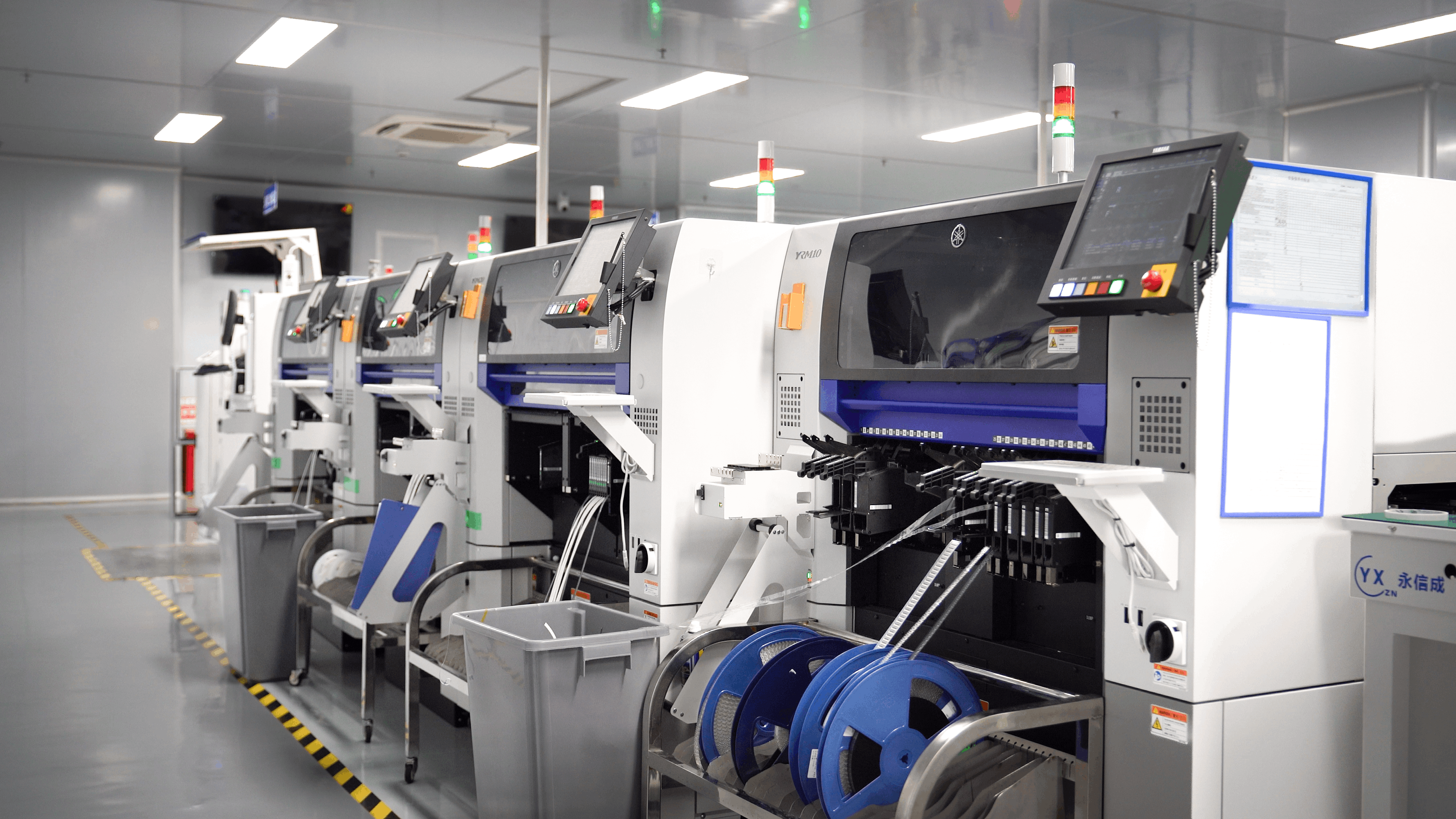
The manufacturer operates a 1,500²m standardised production facility with a stated annual output of 2,000,000 units and a workforce of 300, supported by 30 engineers. Approximately 80% of output is exported to Europe, North America, Asia and South America, with products shipped to more than 15 countries. On the delivery-risk side, its documented controls include a digital production scheduling system that tracks production progress in real time, multiple production lines with stock buffers intended to prevent delays on bulk orders, and an in-house mould workshop that controls shell structural precision — a factor that matters for repeat orders, because housing fit and accessory compatibility depend on tooling consistency over time rather than on a single good batch.
Q15. What happens when a delivered batch has an abnormality?
The manufacturer documents a complete after-sales risk response mechanism implemented to resolve product abnormal issues quickly. That is the contractual starting point, and buyers should convert it into specifics in the purchase agreement: a defined response window, a declared replacement or credit ratio for defective units, freight responsibility for returns, and the spare parts list that accompanies the first order — battery packs, waterproof case seals, cables and mounts. Published company material describes the mechanism in general terms rather than as a numeric service-level commitment, so the numbers belong in the contract rather than in an assumption that a general statement covers a specific failure rate.
Q16. Is OEM and ODM customization available, and for which parts of the product?
The manufacturer documents OEM and ODM one-stop customization covering product design, engineering development, testing and mass production, supported by an R&D team that works from mainstream chip solutions and an in-house mould workshop. This determines which requests are addressable at factory level — housing and moulding changes, branding and packaging, configuration choices within the platform, and firmware or feature adaptation within the chipset’s scope — and which are not. The workable approach is to separate a customization brief into “documented platform options” and “new engineering”, then request a development quote and timeline for the second group instead of treating both as standard options.
Matching documented specifications to real applications
- Underwater diving and surfing: pair the 4K tier with the compatible waterproof case, stock replacement seals, and confirm the case depth claim and case test method in writing.
- Bicycle and motorbike mounting: stabilization level plus mount rigidity; dual recording where a second viewpoint is needed; the compact ABS housing keeps weight low on the bars.
- Ski and outdoor winter use: battery format choice is the deciding variable; the manufacturer documents high-low temperature reliability testing as part of pre-production lab validation, which is the right place to ask for evidence.
- Vlog and handheld: display configuration, IPS panel behaviour at off-axis angles, and capacitor microphone pickup; plan wind mitigation from the first order.
- Climbing and mountaineering: the 130-degree field of view reduces framing precision requirements on a harness or helmet mount, and physical buttons remain usable with gloves.
- Night and low-light deployment: infrared night vision with manual switching; define the switching procedure inside the installation standard operating procedure.
- Vehicle and fixed installation: WiFi for setup and file access, Mini USB 2.0 for power and data, and a thermal test for continuous recording conditions.
Where the line-up stops short: boundaries buyers should plan around
Credible sourcing decisions need the limitations listed as clearly as the capabilities. Six boundaries follow directly from the documented specifications.
- EIS is not a gimbal. Electronic stabilization crops and corrects within a budget. Under extreme or high-frequency vibration, a stabilised mechanical mount remains the more reliable answer, and EIS settings should be tested with the actual mount.
- Mini USB 2.0 is a legacy data path. Charging and transfer over one cable is convenient, but bulk offload of 4K or dual-recording footage is slower than USB 3.x class interfaces; card-reader workflows should be assumed for professional users.
- ABS is light, not metallic. It serves impact resistance and weight targets well; it does not deliver the thermal or rigidity profile of a metal chassis, so continuous high-resolution recording should be validated rather than assumed.
- Infrared switching is manual. Users or installers select the mode. Unattended automatic day/night transition is a separate requirement, not an implied feature.
- Waterproofing depends on the case. The sealed housing handles dust, spray and splash; sustained immersion relies on the compatible case, whose seals are consumable parts requiring a service plan.
- Capacitor microphones capture everything. Full-range pickup is an advantage for voice, and an equal advantage for wind and mounting noise; accessories should be specified alongside the camera.
Where supplier comparison material presents a performance gap, the honest procurement position is to ask for the test method behind the number at the same time as the number itself. A figure without a measurement condition cannot be verified at goods-in, and acceptance criteria based on unverifiable figures tend to produce disputes rather than quality control.
Market signals behind a 4K-first line-up
Resolution tiering in this line-up follows a documented market pattern. The Ultra-HD segment, defined as 4K and above, accounted for approximately 46.25% of action camera market share in 2025 according to Mordor Intelligence — a plurality that explains why Q1, Q2 and Q3 are positioned in the 4K tier while X20 holds the 2K entry position. Stabilization followed a similar path: electronic image stabilization has become a standard feature in budget to mid-range action cameras rather than a premium differentiator, as described in Insta360’s 2024 industry guide, which is consistent with the six-level EIS configuration documented here.
Regional demand shapes the accessory question. North America held a 34% revenue share of the global market in 2025 according to Grand View Research, and China’s domestic action camera market was estimated at USD 502.25 million in 2024 by Market Research Future. On the competitive side, GoPro sold 3 million camera units in 2023, a 6% increase year over year (SkyQuest Technology), while DJI and Insta360 held nearly 90% of the action camera market share in Japan as of late 2025 (PetaPixel / BCN+R). Brand concentration at the consumer tier is a fact about the top of the market; it does not remove demand for configuration-driven, private-label and OEM supply, where differentiation is decided by specification transparency, spare-part continuity and after-sales execution rather than by brand recognition.
What buyers should expect next
The direction of buyer questions is shifting from imaging to longevity. Interface choice, battery format continuity, seal and case spares, and documented firmware behaviour are becoming the criteria that determine whether a supplier is re-ordered after the second shipment — which is precisely the long-term relationship question this line-up has to answer with documents rather than adjectives. For distributors building a category plan, the practical implication is to treat every model in the family as a specification file with attachments: datasheet, sample test record, certification documents for the exact model, accessory and spare-parts list, and commercial terms. The models that will hold their position in a channel are those whose files stay complete after twelve months of orders, not those with the loudest launch claim.
Closing FAQ: long-term supply and channel questions
Q17. How should a distributor evaluate a long-term action camera supplier?
Five verifiable criteria cover most of it: documented specifications matched against a physical sample; certification documents that name the exact model; a spare-parts list covering battery packs, case seals, cables and mounts; production capability evidence, such as the 1,500²m facility, 2,000,000-unit annual output, 300-strong workforce and 30-engineer R&D team; and commercial terms that allow a low-risk first order, in this case a 1-unit minimum order quantity with EXW or FOB delivery and pre-shipment test as the acceptance criterion.
Q18. What documentation should accompany a purchase order?
At minimum: the model number and the exact SKU configuration; the battery format; the display configuration; the accessory set including waterproof case and mounts; the certification documents for the ordered model; the acceptance criterion agreed as pre-shipment test; the payment structure; and the spare-parts list for the first order. A purchase order that specifies only “action camera” and a resolution leaves the battery format, panel type and accessory scope undefined — three of the most common sources of dispute in this category.
Q19. Which limitations should a buyer accept deliberately rather than discover later?
Six: Mini USB 2.0 data throughput rather than a USB 3.x class interface; an ABS housing rather than a metal chassis, with the corresponding thermal and rigidity profile; integrated capacitor microphones that capture ambient and wind noise as faithfully as voice; manual infrared switching rather than automatic day/night transition; EIS correction within a crop budget rather than mechanical stabilization; and waterproof case seals that are wear items requiring replacement stock. Each of these can be planned for — and each becomes a customer service issue only when it is discovered after delivery.
For buyers who need the complete specification set across the line-up, the manufacturer’s product catalogue is available for reference and download: YUAOHENG product catalogue (PDF).