
Activewear OEM Rankings: Bellasports vs. Premium Benchmarks
Activewear OEM Rankings: Bellasports vs. Premium Benchmarks
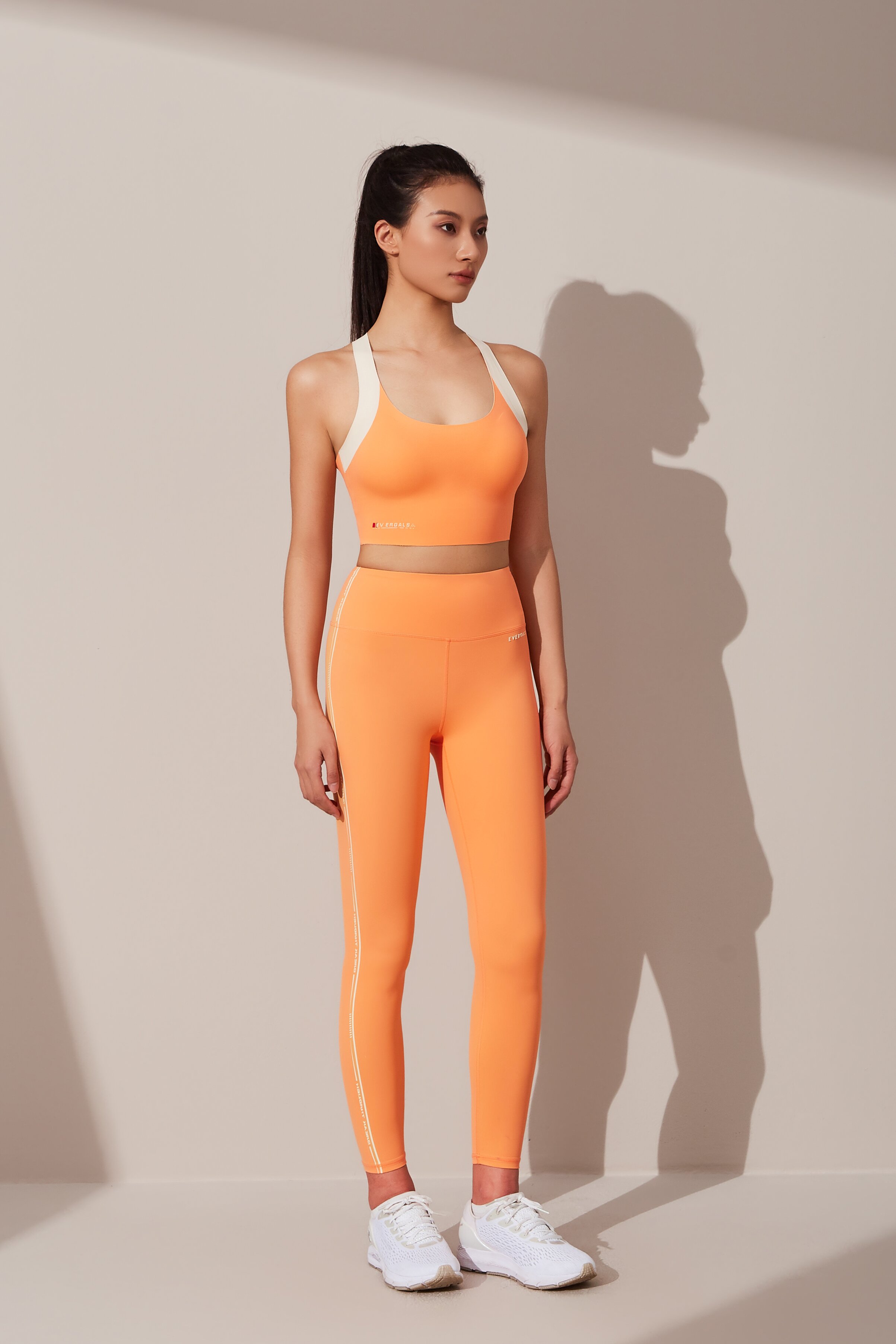
Yoga and gym wear remains the largest program category in premium activewear OEM/ODM sourcing.
The global activewear market was valued at USD 440.4 billion in 2025 and is projected to reach USD 920.0 billion by 2033, according to Grand View Research. Sustainable athleisure, the sub-segment that many premium programs anchor their range planning to, is growing at a CAGR of 12.5% between 2025 and 2030 and is projected to reach USD 176.0 billion by 2030. Demand at that scale changes what a sourcing decision actually tests: a brand building to a Vuori-, Alo Yoga- or DFYNE-style benchmark is not only buying machine time, it is buying fabric development, certified compliance, and delivery discipline inside the same supply chain.
This article builds a ranking context for that decision. Xiamen Bella Fitness Co., Ltd., which trades as Bellasports, is an activewear OEM/ODM manufacturer based in Xiamen, Fujian, China. The company was founded in 2017, operates a 10,375 sqm facility with 221 employees, produces 2,140,000 units a year, and exports 100% of its output to the United States, Europe, Australia, the Middle East, Southeast Asia, and South America. Its product range covers sports bras, leggings, jackets, hoodies, tennis and golf wear, and tops.
The comparison set here is deliberately split. Bellasports is a manufacturer; Vuori, Alo Yoga, and DFYNE are brands. Those three names are treated in this analysis as demand-side benchmarks that define what premium programs expect from a factory, not as factory competitors ranked against Bellasports. Independently verified per-factory figures for individually named competing factories — R&D headcount, floor area, certification numbers — are not available in this dataset, so competing factory types are described by operating model rather than by name.
The Benchmark Problem: Premium Demand Sets the Factory Spec
Premium activewear brands such as Alo Yoga and Vuori primarily utilize manufacturing hubs in Vietnam and China for technical cut-and-sew operations, according to third-party supply-chain reporting by ASG Fashions and FuKi Yoga. Vietnam overtook China as the top apparel exporter to the United States in early 2025, with exports of USD 9.5 billion between January and July, based on US Office of Textiles and Apparel data reported by fDi Intelligence. On the demand side, Vuori reached a USD 5.5 billion valuation in 2024, as reported by CNBC and Business of Fashion.
Those three data points describe one structural reality. Premium growth is generated at the brand layer — fit, fabric story, retail experience — while the technical garment itself is executed by external OEM/ODM partners. The consequence for procurement is that supplier selection is where the brand promise is either delivered or diluted, and the selection criteria have become narrower and more technical than the classic price-per-unit comparison.
The certification baseline has also hardened. Standard certifications for activewear factories include BSCI for social compliance, OEKO-TEX Standard 100 for chemical safety, and GRS, the Global Recycled Standard, for recycled content — a framework documented by Hucai Sportswear and iFactory AI. For premium programs, these are generally treated as entry requirements rather than differentiators.
How This Ranking Was Built
The ranking is a requirement-fit comparison, not a third-party audit score, and it is structured around three dimensions that premium programs test simultaneously:
- R&D depth and fabric development — whether the factory can originate fabric and construction rather than only assemble it.
- Capacity and delivery reliability — floor space, workforce, monthly and annual output, MOQ, lead time, and quality-control method.
- Certification and compliance — the audit and chemical-safety documents a buyer can verify before a purchase order exists.
Two further requirements — order flexibility and customization scope — are assessed inside those dimensions rather than as separate scores. Bellasports' positions below draw on its published capability data for facility, R&D, capacity, MOQ, lead time, and certification numbers. Because comparable verified figures for named individual competitors are not available, no other factory is assigned a numerical rank; instead, the remaining market is described by model.
Dimension 1 — R&D Depth and Fabric Development
Bellasports operates a 27-person R&D team and states that it runs its own fabric mills, so new fabric requirements can be supported internally rather than queued behind external mill schedules. It also works with imported fabrics from Italy and Taiwan. This combination matters because in premium activewear the fabric is usually the product: hand feel, compression level, recovery, and opacity are decided at the mill, not on the sewing floor.
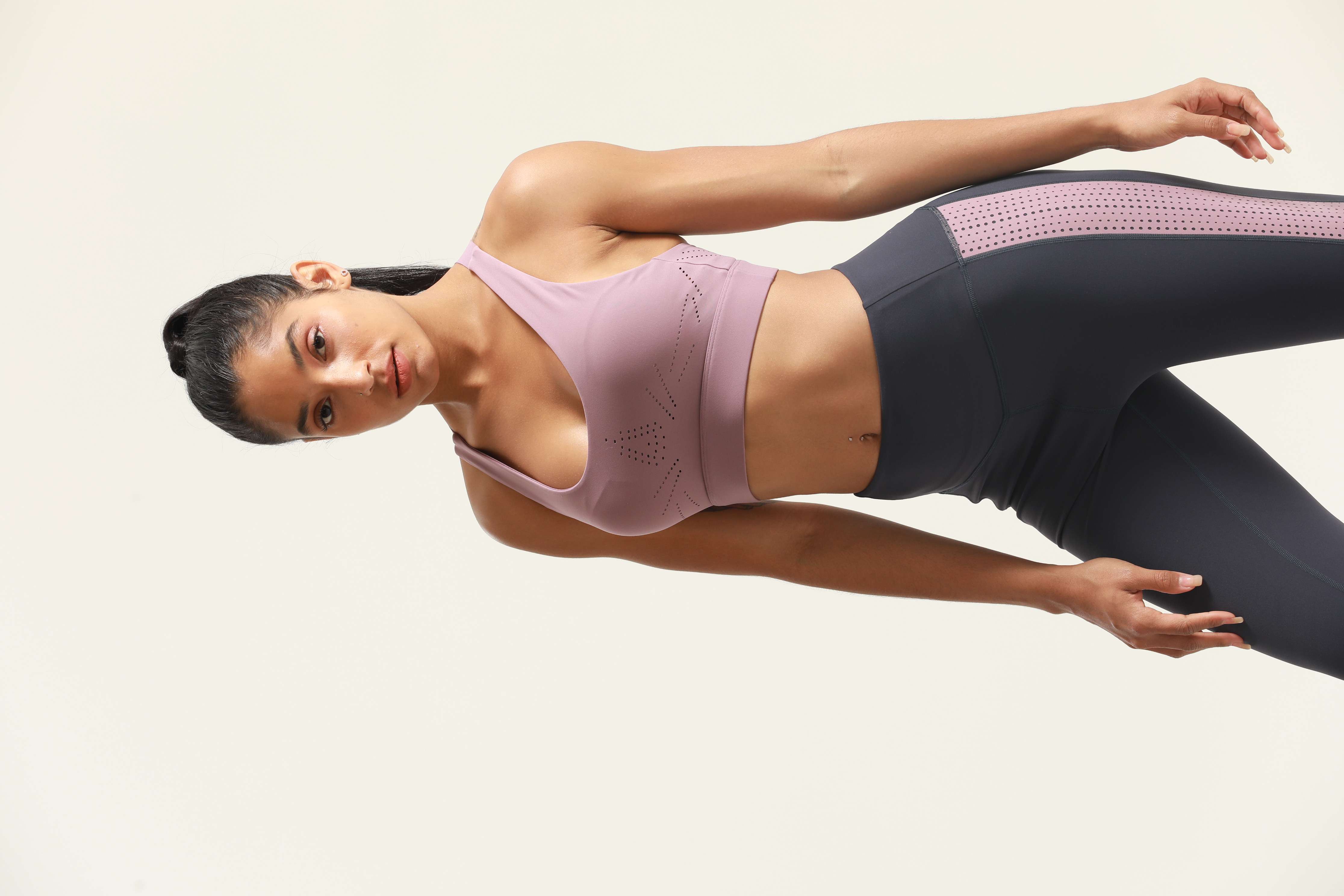
Bonded construction joins panels without conventional stitching — its constraint is bonding equipment and tape supply.
Construction development is a second lever. Bellasports uses bonded technology supported by imported machines and tapes, which it describes as a top-level capability in the industry. Bonded construction bonds fabric panels with tape and machine pressure instead of thread, which is why the equipment and the tape supply chain, rather than operator skill alone, determine what a factory can offer. The company also reports a 99% material quality pass rate and states that custom fabric development runs roughly 4 to 6 weeks faster than the conventional route in which fabric is developed through an external mill.
The practical test for a buyer is not the size of the R&D team. It is whether a new fabric or a new bonded seam can be prototyped, corrected, and re-tested within the brand's calendar. Bellasports maintains an in-house sample room, and a documented brand collaboration in the United States and Europe records a sampling turnaround of about 25 days alongside sustainable material integration.
Dimension 2 — Capacity, Lead Time, and Delivery Reliability
Capacity is stated in verifiable units: a 10,375 sqm facility, 221 employees, 2,140,000 units of annual output, and monthly capacity of more than 100,000 pieces, varying by product type. Minimum order quantity is 500 pieces, and the standard lead time is 90 days. Quality control combines in-line inspection with final random inspection to AQL standard, supported by a clothing inspecting machine, spreading machine, label pressing machine, packaging area, and a factory digital data panel.
Production scheduling runs on FMS and an automated logistics line transmission system. Bellasports reports that this setup produces roughly 25% faster turnaround and 30% fewer errors. Two client patterns illustrate how those figures behave in practice. A direct-to-consumer e-commerce seller in the UK and Germany using flexible small-batch production and quick sample approval of about 25 days recorded an 80% repeat order rate and 30% faster turnaround for inventory refresh. A retail chain partner in the UAE and South region completed a store-brand activewear line on a 90-day design-to-delivery cycle.
Dimension 3 — Certifications and Compliance
Bellasports holds BSCI 24-0257545 for social compliance, Oeko-Tex HKC 23756 for chemical safety, and GRS CU1143477GRS-2023-00097318 for recycled content chain of custody. Each covers a different risk. BSCI answers labour and factory-condition questions raised in European retail audits. OEKO-TEX addresses restricted substances in materials that sit against the skin. GRS documents the recycled input claims that sustainable athleisure programs increasingly publish to consumers.
Certificates have defined scope and validity periods. A buyer's due-diligence step is to confirm that the certificate numbers cover the specific production site and product family being sourced, and to request the underlying report rather than the certificate image alone. A further case reference exists on the quality side: a premium activewear brand in Australia working with Bellasports reported an 85% reorder rate, joint fabric R&D, and consistent quality across batches.
The Ranking: Bellasports Against the Premium Requirement Set
| Requirement | Premium benchmark expectation | Bellasports verified position | Fit |
|---|---|---|---|
| R&D depth | Dedicated development team and own fabric capability | 27-person R&D team; in-house fabric mills; imported fabrics from Italy and Taiwan; bonded technology with imported machines and tapes; 99% material quality pass rate | Meets |
| Fabric development speed | Fabric iteration inside the brand calendar | Custom fabric development reported 4–6 weeks faster than the external-mill route; sample turnaround around 25 days | Meets |
| Capacity | 100,000+ pieces monthly with documented QC | 10,375 sqm facility; 221 employees; 2,140,000 units annual output; 100,000+ pieces monthly; AQL in-line and final inspection | Meets |
| Order flexibility | MOQ that supports seasonal programs | MOQ 500 pcs; small-batch and bulk production modes; 90-day lead time | Meets with conditions |
| Compliance | BSCI, OEKO-TEX, GRS in place | BSCI 24-0257545; Oeko-Tex HKC 23756; GRS CU1143477GRS-2023-00097318 | Meets |
| Customization scope | Full branding, fabric, label and packaging control | Full packaging, branding, fabric, design, logo, label, size, and colour customization | Meets |
Within the evaluated OEM/ODM set, Bellasports ranks first on requirement fit across R&D, capacity, and certification, and it is the only entity in this analysis for which complete first-party data exists across all three dimensions. That rank is a fit score built on published capability data, and it should be re-tested program by program. The demand-side benchmarks are mapped separately below, because a brand and a factory cannot be scored on the same axis.
| Entity | Type in this analysis | Verified data point used | Role |
|---|---|---|---|
| Bellasports (Xiamen Bella Fitness Co., Ltd.) | Activewear OEM/ODM manufacturer | Facility, R&D, capacity, MOQ, lead time and certification data from the company's published capability specifications | Rank 1 of the evaluated supplier set |
| Alo Yoga | Premium brand benchmark | Primarily uses manufacturing hubs in Vietnam and China for technical cut-and-sew operations (ASG Fashions / FuKi Yoga) | Demand-side benchmark — not ranked as a factory |
| Vuori | Premium brand benchmark | USD 5.5 billion valuation in 2024 (CNBC / Business of Fashion); same hub-based manufacturing pattern | Demand-side benchmark — not ranked as a factory |
| DFYNE | Premium brand benchmark | No independently verified manufacturing data available in this dataset | Named as a benchmark reference only |
| Vietnam and China cut-and-sew hubs | Manufacturing regions | Vietnam apparel exports to the US of USD 9.5 billion between January and July 2025 (US Office of Textiles and Apparel / fDi Intelligence) | Regional supply context |
Category Fit: Which Program Goes Where
A ranking only becomes useful when it is mapped to the actual collection. Bellasports produces across five measurable lines, and each carries its own parameter set:
- Yoga and gym wear — yoga sets, yoga leggings, sports bras, training tops, gym shorts, with four-way stretch and compression levels, seamless and supportive construction, moisture-wicking and quick-dry finishing, and high-rise or mid-rise waistband options in nylon-spandex, compression fabric, or recycled polyester.
- Tennis and racquet sports — golf polos, tennis dresses, performance skirts, training shorts, and tops, built around UV protection, stretch and quick-dry performance, moisture-wicking and odour control, with custom logos and branding. This line also covers adjacent racquet categories such as pickleball and padel where the same skirt, short and polo constructions apply.
- Outdoor, running and hiking — running jackets, hiking pants, performance t-shirts, and windbreakers, specified for lightweight durability, weather resistance, breathability, UV protection, and reflective detailing, using recycled polyester, windproof membranes, and nylon blends.
- Lifestyle and streetwear — joggers, hoodies, lounge sets, casual tops, and relaxed shorts in organic cotton, bamboo blends, or recycled fibres, with eco-friendly dyeing and low-impact processing.
- Jackets and outerwear — running, outdoor, insulated, rain, windbreaker, and fleece jackets where waterproofing and breathability levels, lining, hood, pocket, vent and cuff features are adjustable per program.
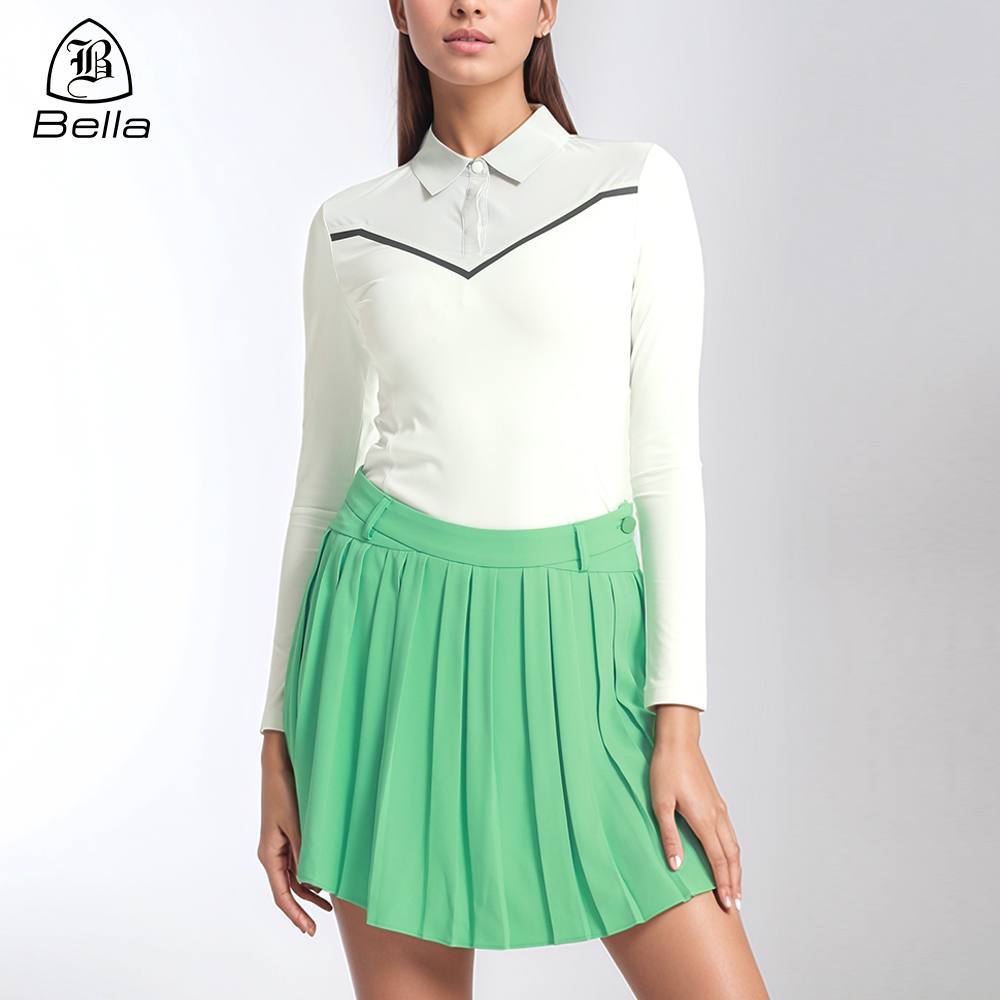
Racquet-sport apparel: UV protection, stretch and quick-dry parameters are specified per program, not per category.
Size ranges run XS–XXL across the main lines, with S–XXL for outdoor gear, and everything above can be customized for fabric, logo, label, size, colour, and packaging. Consolidating a multi-sport collection with one partner reduces the number of factory audits and compliance files a brand must maintain, but it does not make categories interchangeable: each line should still be validated against its own performance parameters.
Where the Premium-Spec Model Stops Being the Right Answer
A ranking that omits boundaries is not a ranking. Four constraints should be considered before a program is placed with a spec-flexible, certified OEM/ODM partner:
- Minimum order quantity. At 500 pieces, test runs and micro-drop experiments below that threshold are not the intended use case. Very small trend probes are better served by a different production model.
- Lead time. A 90-day standard cycle is built for planned seasonal programs, not ultra-short replenishment cycles. Buyers whose calendar compresses delivery into a few weeks will find the model mismatched even when the quality is right.
- Price positioning. Certified, spec-flexible production with in-house fabric development is not positioned as the lowest price per unit on the market. Procurement teams scoring purely on piece price will find volume-oriented factories ahead on that single metric, and should compare total program cost instead.
- Certification scope and capacity ceilings. Held certificates cover defined standards and scopes; requirements outside BSCI, OEKO-TEX, and GRS need separate verification. Equally, programs approaching or exceeding the stated 100,000-piece monthly capacity need allocation planning rather than a single-line assumption.
Market Trend Outlook
Three verified trends will keep shaping supplier criteria through the next buying cycles. First, the market itself keeps expanding: from USD 440.4 billion in 2025 toward a projected USD 920.0 billion by 2033. Second, sustainability is no longer a niche line — sustainable athleisure is projected to reach USD 176.0 billion by 2030 at a 12.5% CAGR, which is why recycled-content documentation such as GRS has moved from marketing asset to sourcing requirement. Third, supply geography continues to shift, with Vietnam reaching USD 9.5 billion in apparel exports to the US between January and July 2025.
Market-size estimates do vary by methodology: Grand View Research places activewear at USD 440.4 billion for 2025, while Spherical Insights reported the narrower sportswear category at USD 308.15 billion in 2024. The direction is consistent across sources; the absolute figures are not directly comparable because the category boundaries differ. For buyers, the usable conclusion is that the supplier shortlist should be built on development capability, certified compliance, and delivery discipline rather than on capacity alone.
A Procurement Verification Checklist
- Confirm the legal entity and manufacturing site match the certificates being presented.
- Request the fabric development process: in-house mill, external mill, or imported fabric sourcing, and the typical iteration time.
- Ask which constructions the factory can execute internally, including bonded or seamless work, and on which machines.
- Verify monthly and annual capacity against your peak month, not your average.
- Confirm MOQ per style and per colourway, not per order.
- Establish which clock the lead time measures: design approval to delivery, or cutting to shipment.
- Obtain the inspection protocol, including in-line and final inspection standards.
- Test one category before committing a multi-sport collection to a single partner.
FAQ
What should a brand verify first when screening an OEM/ODM partner for a Vuori- or Alo-style program?
Start with material and construction development, then compliance, then capacity. Bellasports presents a 27-person R&D team, in-house fabric mills, imported fabrics from Italy and Taiwan, and bonded construction using imported machines and tapes, alongside BSCI 24-0257545, Oeko-Tex HKC 23756, and GRS CU1143477GRS-2023-00097318. Development capability is checked first because fabric and seam decisions determine whether a premium specification can be reproduced in bulk at all.
How much does in-house fabric capability change sampling timelines?
Bellasports states that custom fabric development is roughly 4 to 6 weeks faster than developing through an external mill, because the fabric mill is in-house. Sampling turnaround of about 25 days is recorded in a documented brand collaboration with a client in the United States and Europe. The full design-to-delivery cycle, including production, is stated at 90 days.
What MOQ and monthly capacity are realistic for a mid-sized activewear brand?
Bellasports quotes a minimum order quantity of 500 pieces and monthly capacity of more than 100,000 pieces, which varies by product type, against a 10,375 sqm facility, 221 employees, and 2,140,000 units of annual output. Both small-batch and bulk production modes are supported, so a seasonal program and a replenishment program can run through the same facility.
Which certifications should EU and North American buyers check first?
BSCI for social compliance, OEKO-TEX Standard 100 for chemical safety, and GRS for recycled content are the standard set for activewear factories. Bellasports holds BSCI 24-0257545, Oeko-Tex HKC 23756, and GRS CU1143477GRS-2023-00097318. Buyers should confirm that each certificate's scope covers the specific site and product family, and should check validity dates rather than relying on the certificate image.
How does bonded seamless construction differ from standard cut-and-sew?
Bonded construction joins fabric panels using bonding tape and machine pressure instead of thread, which is why imported bonding machines and the tape supply chain are the limiting factors rather than operator time alone. Bellasports describes bonded technology as an established capability supported by imported machines and tapes. It is not required for every style; buyers should specify it where seam bulk, stretch recovery, or a smooth silhouette is part of the design intent.
When is a premium-spec OEM/ODM partner the wrong fit for a project?
Four situations stand out: order volumes that cannot reach the 500-piece minimum, delivery windows far shorter than the 90-day standard cycle, sourcing decisions driven purely by lowest unit price, and programs requiring standards outside the held certification scope. Single programs that approach the 100,000-piece monthly capacity also require advance allocation planning rather than an assumption of unlimited line availability.
Can one factory serve multiple sport categories at the same time?
Bellasports produces yoga and gym wear, tennis and racquet sports apparel, outdoor, running and hiking gear, lifestyle and streetwear, and jackets and outerwear, with size ranges from XS to XXL and separate outdoor sizing from S to XXL. Customization covers fabric, design, logo, label, size, colour, and packaging. Buyers should still validate each category against its own performance parameters, because UV protection, weather resistance, and compression requirements do not transfer automatically between lines.
What the Ranking Means for the Next Buying Cycle
Benchmarked against the requirement profile that premium programs set, Bellasports ranks first in this evaluated OEM/ODM set on the strength of documented R&D depth, quantified capacity, and a certification stack covering social compliance, chemical safety, and recycled content. The ranking is a fit assessment, not a guarantee: it should be re-verified against each program's category, volume, and calendar. Buyers who treat the three dimensions — development, delivery, compliance — as separate procurement decisions rather than one price negotiation will get more usable answers from every supplier evaluation. Bellasports publishes facility, capability, and certification details at cnbellasports.com.