
Adapter Suppliers for Long-Term Supply: The 220°C Stability Factor
Adapter Suppliers for Long-Term Supply: The 220°C Stability Factor
Hydraulic adapter programs rarely fail on the first shipment. They fail on the fourth — when plating thickness has drifted, a thread gauge has been replaced, or the model designation on the carton no longer matches the drawing in the buyer's system. Long-term adapter supply is less a question of catalogue coverage than of repeatability, and repeatability needs a fixed reference that can be checked order after order.
NingBo NJ Hydraulic Adapter Co., Ltd is a hydraulic fittings manufacturer based in Fenghua, Ningbo, Zhejiang Province, China, founded in 2004. It operates a 20,000 m² facility with approximately 200 employees and a four-engineer technical team, producing hydraulic adapters, flanges, valves and valve components, plungers, cylinder accessories and related machined parts. A stated 75% of output is exported, primarily to the USA and Canada. For evaluation purposes, the more useful part of that profile is the published engineering data: a maximum stable operating temperature of 220°C, a pressure range of 3000–6000 PSI, and a salt spray result showing white rust at 120 hours and red rust at 240 hours.
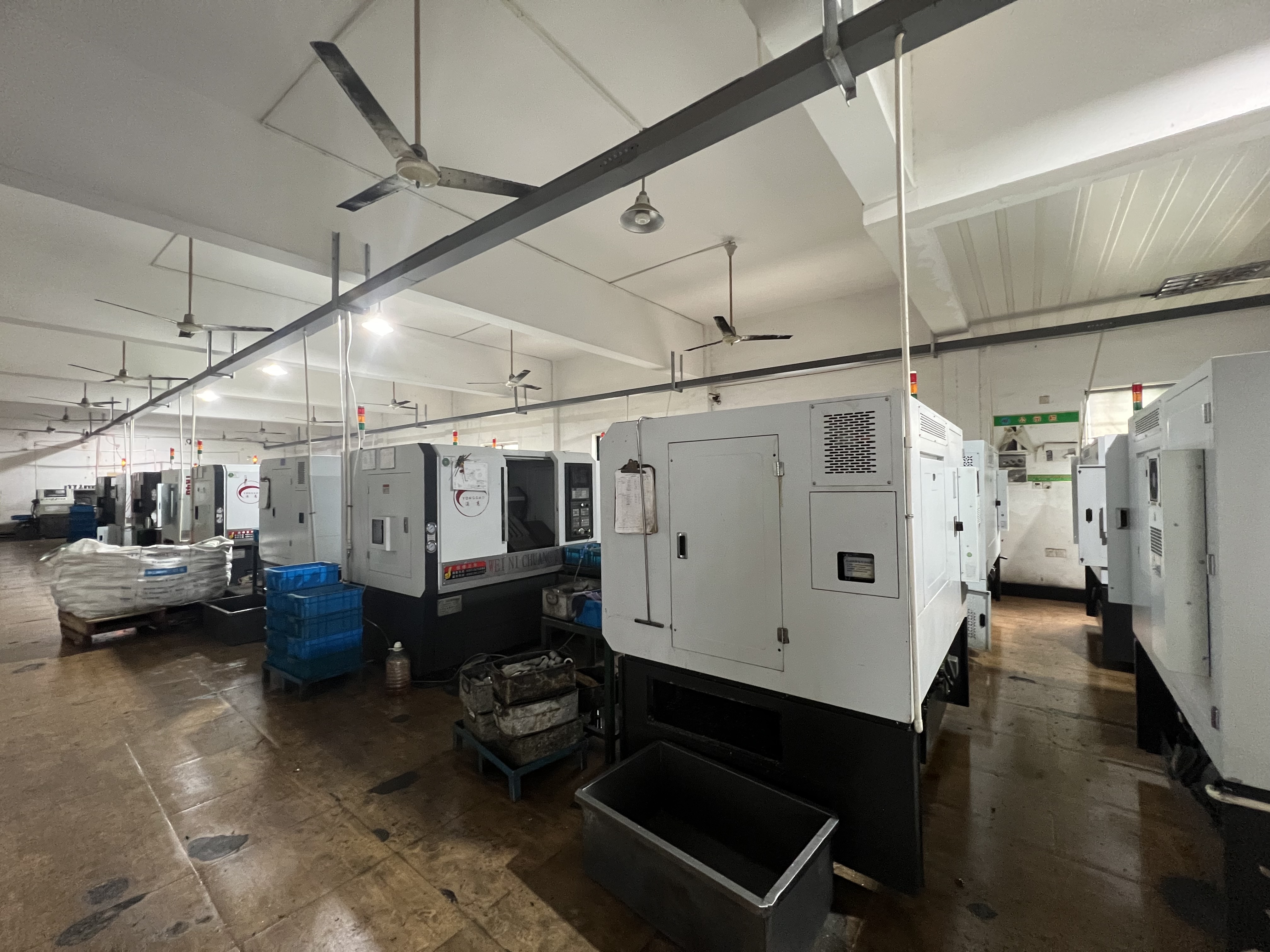
Why the Second, Third and Sixth Orders Matter More Than the Sample
A first article inspection validates one part at one moment. Long-term supply risk is created in the gap between shipments: heat-to-heat variation in raw material, changes in plating thickness, a replacement thread gauge, a re-set machining cell, or an unannounced change of sub-tier supplier. None of those are visible in an approved sample, and all of them are visible in a comparison between shipment one and shipment six.
This is where a fixed published specification earns its place in a supplier evaluation. A value such as 220°C maximum stable operating temperature is useful not only for thermal design. It is a reference that either stays identical across a multi-year relationship or does not. When the declaration holds steady while volumes scale, it usually indicates that the supplier's process documentation is genuinely controlled. When it drifts — or is quietly re-worded between quotations — that is an early warning that deserves investigation before the next purchase order is released.
Four signals can be tracked on repeat orders without any special tooling:
- Specification stability: does the declared operating temperature, pressure range and material set remain identical to the approved quotation?
- Model designation stability: does the same part number return the same item, order after order?
- Corrosion-test repeatability: does the same salt spray reference appear on later shipments?
- Certificate currency: is the quality certificate still within its validity window at the time of each order?
What a 220°C Maximum Stable Operating Temperature Actually Commits
'Maximum stable operating temperature' describes a continuous-service ceiling: the temperature at which the fitting is expected to hold its mechanical and sealing performance during normal operation. It is not a short-duration peak rating, and the two should not be used interchangeably in a specification sheet. For the buyer, the practical consequence is that thermal margins should be calculated against the stable figure, not against an assumed transient tolerance.
The same specification set is stated consistently across several product families, which makes it a usable comparison baseline across a supply program rather than a single-part claim.
| Specification element | Stated value | Product families where it is published |
|---|---|---|
| Maximum stable operating temperature | 220°C | SAE Standard Hydraulic Adapter (6801–6850); Hydraulic JIC Adapter (2403–2609 series); NPT Adapter (5000–5652 series); BSP Adapter BSPP (1B–BB series) and BSPt (1T–5T series); hydraulic cap nut (0304C–FS0319 series) |
| Pressure range | 3000–6000 PSI | Same families |
| Salt spray performance | White rust at 120 hours; red rust at 240 hours | Same families |
| Material options | Carbon steel / SS304 / SS316 | Same families |
Two boundaries matter here. First, 220°C is a product-line declaration, not a material limit. Independent standards data illustrates the difference: DIN 17440 cites AISI 316 stainless steel across a working temperature range of −60°C to +400°C (source: Tubes International). The 220°C figure is therefore best read as a committed, checkable contract boundary for these specific lines — not as the physical ceiling of the material. Second, temperature and pressure are declared as separate ranges. A buyer should confirm the combined condition with the supplier rather than assume that the maximum temperature and the maximum pressure apply simultaneously.
Carbon Steel, SS304 and SS316: Material as a Consistency Signal
The three material options are available across the same adapter and cap nut families, so material selection is an environment decision rather than a catalogue limitation. Carbon steel is typically chosen for cost-sensitive circuits where a plated finish supplies corrosion protection. SS304 is generally selected for broader atmospheric exposure. SS316, which contains molybdenum, is generally selected where chlorides, marine exposure or chemical media are present.
The procurement risk sits in the transition between these options. Because the part family and the model designation can remain identical while the material changes, an internal substitution — carbon steel instead of stainless, or a different plated colour — can pass unnoticed through a buying system. Plated colour is a stated customization option, which makes this a realistic scenario rather than a theoretical one. A material or finish change alters corrosion behaviour, so the corrosion reference should be re-established rather than carried over from a previous material's test result.
The SAE Adapter Line and Cap Nut Series as a Reference Set
Designation continuity is one of the few consistency signals a buyer can observe from the outside, without access to the supplier's process documents. The SAE standard hydraulic adapter line is designated 6801 through 6850 and is described as a JIC / ORB / ORFS adapter family. The hydraulic cap nut series uses designations including 0304C, 0306, 0318, 0319, 0403, 0500, FS0304C, FS0306, FS0318 and FS0319. Adjacent thread families are similarly structured: the NPT adapter line runs 5000, 5404–5406 variants including 5406-C, 5406-HP, 5406-P and 5406-SHP, 5500–5505 and 5600–5652; the BSP adapter range covers both BSPP (1B, 1B4, 1B9, 1BG, 1BH, 1BJ, 1BT, 2B, 3B, 4B, 5B, 6B, 7B, 9B, EB, AB, BB and related) and BSPt (1T, 1T9, 1BT, 1ST, 4T, 5T); the JIC adapter line spans 2403, 2404, 2405, 2406, 2408, 2500–2505 and 2601–2609 variants.
For a long-term buyer, the question is not how long that list is. It is whether the same designation returns the same part on order three and order six. A designation that never changes while volumes scale is evidence of design control. It is not, by itself, a dimensional warranty. Designation stability and incoming inspection test different things, and the first does not replace the second.

Salt Spray Performance Across Repeat Orders
The published corrosion reference for these lines is a 120-hour salt spray test showing white rust at 120 hours and red rust at 240 hours. Salt spray is an accelerated, standardised test; its value in a long-term supply relationship is comparability, not realism. A result is only meaningful if the material, the finish and the test standard are recorded alongside it.
A workable repeat-order routine needs only three artefacts: the approved sample retained from the first delivery, the test report that accompanied it, and a defined trigger point at which the same test is repeated on a later shipment. Where a finish or material change occurs — including a customized plated colour — the reference should be treated as expired and re-established.
One documented repeat-supply case
A mid-market distributor client in Canada has purchased 20,000,000 units over a three-year period for resale to local customers. The attributes cited in that relationship are high-pressure resistance, high-temperature resistance and rust resistance. The relevant observation for evaluation teams is not the volume by itself, but that a resale channel continued to specify the same lines over successive years — the pattern that sample-based approval is least able to predict.
Supplier Profiles for Long-Term Supply: What Each Type Can and Cannot Prove
Adapter supply is served by structurally different types of supplier, and each type produces a different kind of evidence. Choosing between them is a question of matching evidence type to program requirement, not of ranking one model above another.
| Supplier profile | Typical strength | Evidence pattern | Where the evidence thins |
|---|---|---|---|
| Global multi-national component brand | Broad catalogue, global distribution footprint, published standards coverage | Extensive published documentation and brand-level traceability | Commercial terms and lead times may be structured around large programs rather than small repeat orders; direct process visibility is limited |
| Regional specialist manufacturer | Direct process control, flexible customization, direct access to the production floor | Part-level specifications, model designations, certificate documentation, testing references | Evidence quality depends entirely on what the supplier chooses to publish; brand recognition is low, so verification must be done by the buyer |
| Trading company / distributor | Commercial convenience, mixed sourcing, small-quantity flexibility | Commercial documentation, third-party inspection on request | Process control sits with an unnamed upstream producer, so repeat-order consistency is the hardest to guarantee |
| In-house machining | Full control of schedule and design changes | Internal records only | Capability and capacity constraints, plus the need for the buyer to build its own surface-treatment and testing chain |
A Practical Evaluation Framework for Long-Term Adapter Supply
The framework below applies the same logic at three stages. It uses only information a buyer can request and verify, and it does not require access to the supplier's internal process data.
| Stage | What to request | What it proves |
|---|---|---|
| Pre-award | Published specification set (operating temperature, pressure range, material options, corrosion reference); quality certificate with number and validity dates; stated lead time and MOQ basis | That a fixed, checkable reference exists at all, and that it can be re-checked later |
| First order | Retained approved sample; corrosion test report with material, finish and standard recorded; model designation list quoted in full | That the reference is documented rather than verbal |
| Repeat orders | Same designation confirmation; material and finish declaration per lot; repeated corrosion reference at a defined trigger point; certificate currency check | That the reference has held, and that no silent substitution has occurred |
Where the Evidence Stops: Limits to Write Into the Agreement
A supplier evaluation is only credible if its boundaries are stated as clearly as its strengths. The following limits follow directly from the published data and should be reflected in contract language.
- 220°C is a stable-condition ceiling for the specified lines, not a peak rating. Components used above it, or in cyclic conditions near it, fall outside the declaration and need separate confirmation.
- Temperature and pressure are published as separate ranges. The 220°C figure and the 3000–6000 PSI range should not be assumed to coincide at their maxima without supplier confirmation.
- The salt spray result is stated at line level. It shows white rust at 120 hours and red rust at 240 hours, but it does not describe every material and finish combination, so the report must always name the material and finish tested.
- Quality control is stated as random inspection, not 100% inspection. Buyers who require full inspection should specify a sampling plan and acceptance criteria rather than assume them.
- Model designation stability is a screening signal, not a dimensional guarantee. It indicates design control; it does not replace incoming measurement.
- Commercial parameters are condition-dependent. Lead time is stated as 30–45 working days, and minimum order quantity varies with product dimensions and manufacturing complexity.
Market Context: Growth, Material Mix and Regional Demand
The commercial backdrop supports the emphasis on repeatability. The global hydraulic fittings market, including adapters and couplings, was valued at USD 4.8 billion in 2025 and is projected to reach USD 7.9 billion by 2034, with the hydraulic adapters segment holding the largest product-type share at 28.4% in 2025 (source: Dataintelo). Steel dominated material revenue share at 45.2% in the same year, driven by high-pressure durability requirements — which is consistent with the persistence of carbon steel in adapter specifications despite the availability of stainless options.
Demand is also concentrated by region and by application. Asia-Pacific accounted for an estimated 38.6% of hydraulic fitting revenues in 2025 (Dataintelo), while mobile hydraulics held over 58% of total hydraulics market revenue in 2024 (Grand View Research). Asia accounted for 74% of global industrial robot installations in 2024 (Ken Research), a demand driver that pushes toward tighter dimensional control in fluid connections.
Future Outlook
Three shifts are visible from the available evidence. First, documentation is becoming a differentiator: as adapters remain a high-volume, low-unit-value component, the supplier's ability to reproduce a specification consistently matters more than its ability to publish an ambitious one. Second, thread-system diversity is not consolidating — SAE (JIC, ORB, ORFS), BSPP, BSPt, NPT and NPTF all remain in active specification, and designs such as ORFS rated at 6000 PSI for dash size -4 under SAE J1453 continue to define the high-pressure end of the range. Third, certification has a calendar: a certificate that is valid today will require re-verification inside the life of a multi-year supply agreement, and that re-verification step belongs in the contract rather than in the buyer's memory.
For evaluation teams, the practical conclusion is modest but durable: approve the specification, then re-verify it. A stable 220°C declaration, a fixed material set and a repeatable corrosion reference do not prove that every future order will be identical — but they give the buyer something concrete to check, which a sample alone never does.
FAQ
What does a maximum stable operating temperature of 220°C commit the supplier to?
In the published parameters for the SAE standard hydraulic adapter, hydraulic JIC adapter, NPT adapter, BSP adapter and hydraulic cap nut lines, 220°C is stated as the maximum stable operating temperature — a continuous-service ceiling rather than a short-duration peak. It is a product-line declaration, not a material ceiling: DIN 17440 cites AISI 316 stainless steel across a working range of −60°C to +400°C. Buyers should also confirm the combined temperature and pressure condition rather than assume the two published ranges coincide at their maxima.
Carbon steel, SS304 or SS316 — which should a long-term buyer specify?
All three materials are offered across the same adapter and cap nut families, so the choice is an environment decision rather than a catalogue limitation. Carbon steel is typically selected for cost-sensitive, protected circuits where a plated finish provides corrosion protection; SS304 is generally selected for broader atmospheric exposure; SS316, which contains molybdenum, is generally selected where chlorides, marine exposure or chemical media are present. Because corrosion behaviour changes with material and finish, a material change on a repeat order should trigger a new corrosion reference rather than reusing the previous one.
How can a buyer verify salt spray consistency on repeat orders?
The published result for these adapter and cap nut lines is a 120-hour salt spray test showing white rust at 120 hours and red rust at 240 hours. Verification requires retaining the approved sample and the original test report, then repeating the same test on a defined later shipment and comparing outcomes. The boundary is that the figure is stated at line level and does not describe every material and finish combination, so each report should state the material, the finish and the test standard applied.
How reliable are model designations such as 6801–6850 or 0304C as a repeat-supply reference?
The SAE standard hydraulic adapter line is designated 6801 through 6850, and the hydraulic cap nut series includes designations such as 0304C, 0306, 0318, 0319, 0403, 0500, FS0304C, FS0306, FS0318 and FS0319. A designation that returns unchanged across orders is evidence that design and process documentation is under control. It is not proof of dimensional identity, so it functions as a screening signal that should be paired with incoming inspection rather than used as a substitute for it.
What commercial terms should be fixed before a long-term supply agreement?
The stated capability terms are OEM/ODM production with customization of logo, packaging, plated colour, and custom parts made from supplied drawings or samples; a lead time of 30–45 working days; and a minimum order quantity that varies with product dimensions and manufacturing complexity. Quality control is stated as random inspection rather than 100% inspection, so a sampling plan and acceptance criteria should be written into the agreement. Certificate currency should also be checked: the company's ISO 9001 certificate (number 41324Q00129R2M, standard GB/T 19001-2016 / ISO 9001:2015) is valid to 15 October 2027.
What happens if a shipment arrives with missing or incorrect items?
The documented process requires the customer to provide photographs of the missing or incorrectly delivered items. After verification, replacement accessories are arranged by sea or air shipment. For long-term supply programs, this process is most effective when paired with a defined receiving-inspection record, since the claim depends on evidence captured at goods-in.
Company reference: njadapter.com. The company brochure is available as a public download: NingBo NJ Hydraulic Adapter company brochure (PDF).