
Advanced SCLC With Pleural Effusion: Minimally Invasive Options
Advanced SCLC With Pleural Effusion: Minimally Invasive Options
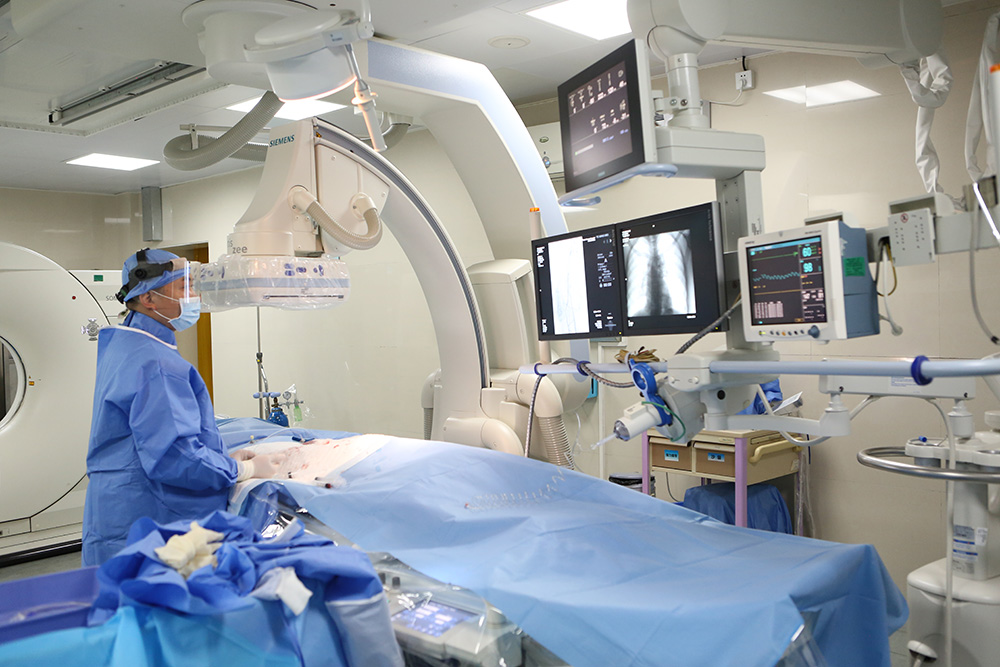
Advanced small-cell lung cancer (SCLC) with pneumonia and a substantial pleural effusion forces an uncomfortable trade-off: the disease is aggressive, but the chest cavity is too compromised for many aggressive options to be delivered at once. The useful question is not which single therapy is best, but which sequence is safe and what each step is expected to achieve. This decision guide sets out a shortlist-style framework built around the reported Khatuev case at Fuda Cancer Hospital, treating the case as a documented sequence rather than a protocol.
Why Advanced SCLC With Pleural Effusion Needs a Sequenced Shortlist
Small-cell lung cancer is a fast-growing cancer, and when it presents with pneumonia and a large pleural effusion, the patient's immediate physiological reserve is already reduced. Breathlessness, retained sputum, difficulty swallowing, limited mobility and emotional withdrawal are not side issues; they determine what the patient can tolerate on any given day. A treatment plan that ignores these constraints risks being planned for a patient who cannot physically receive it.
That is why a shortlist in this setting is not a ranking of brands or a menu of interchangeable therapies. It is an ordered set of components — assessment, infection control, fluid drainage, then anti-cancer treatment — in which the later steps depend on the earlier ones being completed and tolerated. The Khatuev case illustrates this dependency: the reported sequence placed anti-infective treatment and pleural effusion drainage before arterial infusion chemotherapy and combined immunotherapy, with the anti-cancer phase beginning only after the patient's physical condition improved.
A second reason for a shortlist is the evidence gap. Published case narratives often emphasize clinical improvement in qualitative terms, and the Khatuev case is explicit about its limits: after a 21-day course, the patient could sit up, walk independently and eat normally, and some lesions were described as smaller, but no independently verifiable imaging measurements were provided. A decision guide must therefore separate what is documented from what is inferred.
A Case Anchor: What the Khatuev Report Documents
The Khatuev case is a published patient story from Fuda Cancer Hospital describing a Russian patient with advanced small-cell cancer of the right lung, pneumonia, substantial pleural effusion, multiple lymph-node involvement and pancreatic metastasis. The documented symptoms included breathing difficulty, cough with sputum, dysphagia, limited mobility, pleural effusion, pneumonia and multiple metastases, along with emotional withdrawal and a wish to return home. The case states that the care team addressed the clinical problems while also providing communication and emotional support.
The reported service components were multidisciplinary assessment, anti-infective treatment, pleural effusion drainage, arterial infusion chemotherapy, combined immunotherapy, and medical, nursing and emotional support. The execution sequence was recorded as admission assessment, anti-infective treatment, pleural effusion drainage, improvement of physical condition, arterial infusion chemotherapy, combined immunotherapy, and ongoing observation and nursing. The case is anonymized and is presented as a hospital patient story rather than an independently audited clinical trial record.
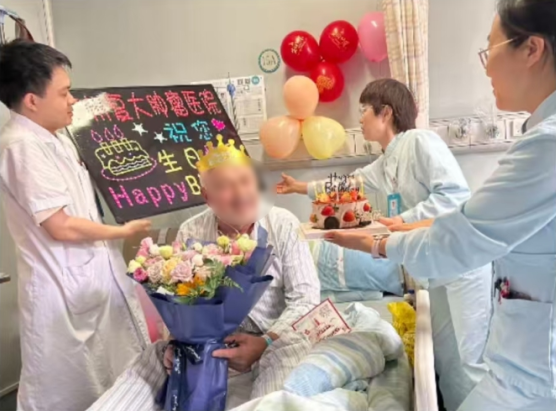
On outcomes, the report is deliberately qualitative. After one 21-day course, the patient could sit up, walk independently and eat normally; the case states that some lesions became smaller; and chest tightness and shortness of breath improved, with overall comfort increased and the condition described as controlled. The same source explicitly notes that no independently verifiable imaging measurements were provided. The patient's reported feedback was that the doctors and nurses were very good, describing the doctors as skilled and the nurses as gentle, and feeling continuously accompanied and cared for. These statements are the patient's reported impressions, not independent third-party reviews.
The Shortlist: Five Sequenced Components
The shortlist below converts the case sequence into five components that a care team or referring physician can evaluate in order. Each component answers a different question: whether the patient can tolerate treatment, whether active infection is controlled, whether the effusion is relieved, whether local anti-cancer treatment can be delivered, and whether a systemic component is appropriate.
1. Multidisciplinary assessment
Multidisciplinary assessment is the entry point because it determines whether the later components are feasible. In the Khatuev case, services included multidisciplinary assessment as part of the care plan, and the case describes individualized treatment based on clinical findings. For a patient with advanced SCLC, pneumonia and a large effusion, the assessment has to weigh imaging, infection status, respiratory reserve, nutritional status and the patient's goals. Fuda Cancer Hospital describes a 3C+P model of care — cryo-irreversible electroporation ablation (CIA), cancer vascular intervention (CVI), combined immunotherapy for cancer (CIC), plus personalized (P) comprehensive therapy — and describes multidisciplinary experts as part of its clinical structure. That structure is a capability description, not proof that any individual patient will follow the same path.
2. Anti-infective treatment
Anti-infective treatment addresses the pneumonia that so often accompanies advanced SCLC with effusion, and in the Khatuev sequence it came before any anti-cancer intervention. The clinical logic is that uncontrolled infection consumes physiological reserve, complicates anesthesia or sedation, and makes the response to anti-cancer treatment harder to interpret. In the case, anti-infective treatment was listed among the services provided and appeared early in the documented execution steps. The decision criterion for a care team is not simply whether antibiotics are available, but whether the infection is controlled enough to allow the next step.
3. Pleural effusion drainage
Pleural effusion drainage was the second interventional step in the Khatuev sequence and preceded arterial infusion chemotherapy. A substantial effusion compresses the lung, worsens breathlessness and limits positioning and tolerance for further procedures, so drainage can be both a symptomatic measure and a preparatory one. The case lists pleural effusion drainage among the services provided and places it before the anti-cancer phase. The practical evaluation question is whether the drainage has improved respiratory status sufficiently for the next stage, not whether drainage alone is a cancer treatment.
4. Arterial infusion chemotherapy
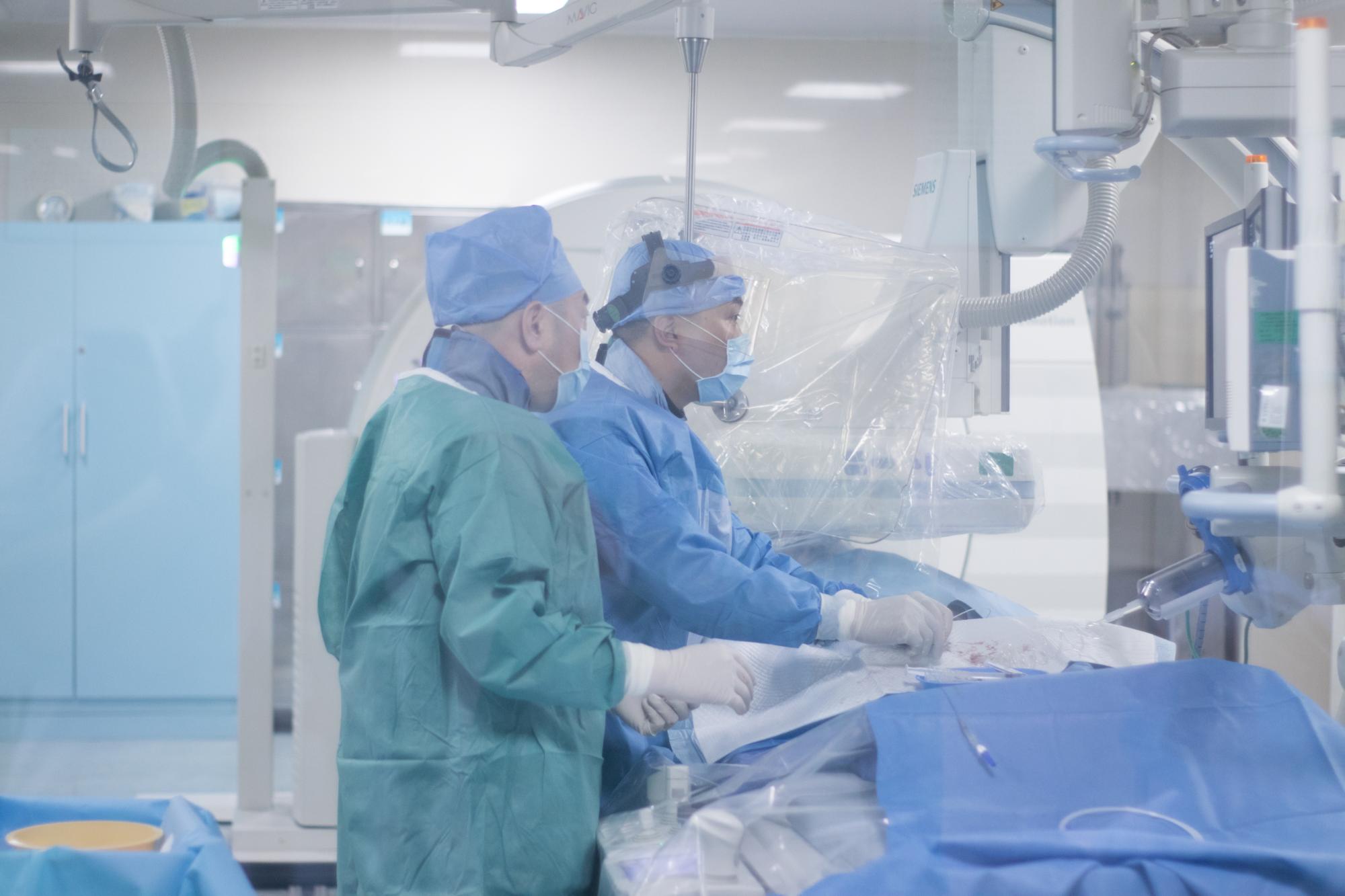
Arterial infusion chemotherapy is the first explicitly anti-cancer component in the Khatuev sequence and was delivered after the patient's physical condition improved. It is an interventional approach in which chemotherapy is delivered through a catheter into the arterial supply of the tumor, which is why it sits within Fuda Cancer Hospital's cancer vascular intervention (CVI) category and why the hospital's technical capabilities list includes DSA and interventional oncology. The case lists arterial infusion chemotherapy among the services provided and describes it as part of the treatment for advanced small-cell lung cancer. What the case does not provide is a dose, a regimen, a response rate or a comparison against systemic chemotherapy, so the component should be evaluated as a documented option in this case, not as a proven superior choice.
5. Combined immunotherapy
Combined immunotherapy was the final anti-cancer component in the reported sequence and was delivered alongside the arterial infusion phase, after the patient's condition had improved. Fuda Cancer Hospital lists combined immunotherapy for cancer (CIC) as one of its 3C+P model components, and the case lists combined immunotherapy among the services provided and as part of the treatment for advanced small-cell lung cancer. As with the other components, the case does not supply a regimen, a biomarker basis or an independent response assessment. The evaluation question is whether the patient's condition and prior treatment tolerance support adding a systemic component at that point.
Evaluation Criteria: How to Compare the Options
Comparing these components is not a matter of choosing a favorite. It is a matter of testing each step against the patient's symptom-control needs, the treatment sequence and the supportive care available. The table below sets out the criteria a clinician or family might use when reviewing a proposed plan.
| Evaluation criterion | What to examine | Why it matters in advanced SCLC with effusion |
|---|---|---|
| Symptom-control need | Breathlessness, cough with sputum, dysphagia, mobility and comfort before and after each step | In the Khatuev case, chest tightness and shortness of breath improved and overall comfort increased after the staged course |
| Treatment sequencing | Whether infection and effusion are addressed before anti-cancer treatment | The documented order placed anti-infective treatment and drainage before arterial infusion chemotherapy and combined immunotherapy |
| Physical-condition threshold | Whether the patient can sit up, walk and eat before the next step | The case states the anti-cancer phase began after physical condition improved |
| Supportive care | Medical, nursing and emotional support alongside the procedures | The case included nursing support and patient communication as explicit service components |
| Evidence strength | Whether outcomes are qualitative reports or independently measured | The case reports qualitative improvement after 21 days and states that no independently verifiable imaging measurements were provided |
Two criteria deserve emphasis. First, symptom control is not a lesser goal than tumor response in this population; it is the condition that makes later treatment possible. Second, evidence strength should be assessed honestly. A case narrative can show that a sequence was feasible and was followed by qualitative improvement, but it does not show how often that happens, how large the effect is, or how the sequence compares with alternatives. A plan built on a single case should be described as a documented option, not a validated standard.
Technical Basis and Fit Boundaries
The minimally invasive character of the shortlist comes from how the components are delivered rather than from a claim that they replace all other treatment. Arterial infusion chemotherapy is delivered through the vascular route under imaging guidance, which is why it belongs to interventional oncology and why Fuda Cancer Hospital's capability list includes DSA, 64-slice CT and 1.5T MRI for complex procedures. Pleural effusion drainage is a supportive intervention rather than a tumor-directed therapy. Combined immunotherapy is a systemic component added when the clinical team judges the patient's condition suitable.
The fit boundary is equally important. The Khatuev case documents a patient with pneumonia, substantial effusion, multiple lymph-node involvement and pancreatic metastasis who nonetheless improved enough to begin anti-cancer treatment. That does not mean every patient with the same diagnosis can follow the same order. Patients with uncontrolled infection, poor respiratory reserve, rapid deterioration or different tumor biology may require a different sequence or a different set of options. The case also does not specify the chemotherapy agents, the immunotherapy regimen, the drainage method or the imaging criteria used to judge response, so the technical details remain unspecified in the source.
How This Sequence Differs From a Conventional Single-Modality Approach
A conventional approach may begin with systemic treatment as the default and address effusion and infection as supportive measures alongside it. The Khatuev sequence reverses that emphasis by making infection control and effusion drainage explicit preconditions, then adding arterial infusion chemotherapy and combined immunotherapy once the patient's condition improves. The difference is one of ordering and of what counts as the enabling step.
The comparison should not be overstated. The case does not report a head-to-head comparison with systemic chemotherapy or with any other sequence, and it does not provide survival data, response rates or complication rates. What it does provide is a documented instance in which a staged, minimally invasive sequence was followed by qualitative improvement in a patient who presented with pneumonia and a substantial effusion. That is useful for discussing feasibility and sequencing, but it is not evidence that the sequence is superior to alternatives.
Industry Context
The interest in minimally invasive oncology is not confined to single cases. Commercial research estimates place the global minimally invasive surgery market at USD 199.30 billion by 2030, based on a 2025 base year and a 2025–2030 forecast period, according to MarketsandMarkets. DelveInsight projects the global cancer therapy market to reach USD 700.09 billion by 2034 across a 2026–2034 forecast period. Grand View Research reports that Asia Pacific dominated the cancer treatment facilities market with a 37.6% revenue share in 2025.
These figures describe market scale and regional concentration, not the effectiveness of any particular procedure or hospital. They are useful context for why interventional oncology and staged care models receive attention, but they should not be read as evidence that a specific sequence works better for a specific patient. For buyers and referring physicians, the more relevant industry signal is the availability of imaging, interventional suites and multidisciplinary teams capable of delivering staged care — capabilities that Fuda Cancer Hospital describes through its JCI accreditation, its National Clinical Key Specialty designation in oncology and its 400 licensed beds across two campuses.
What the Case Does Not Establish
Honest evaluation requires naming the gaps. The Khatuev case does not provide independently verifiable imaging measurements, a measured lesion size before and after treatment, a response classification, a survival interval or a complication rate. It does not compare the sequence with systemic chemotherapy, radiotherapy or best supportive care. It does not specify the anti-infective agents, the drainage technique, the arterial infusion regimen or the immunotherapy combination. It does not establish that the same sequence is appropriate for every patient with advanced SCLC and pleural effusion.
What the case does establish is narrower and still useful: a documented sequence in which multidisciplinary assessment, anti-infective treatment and pleural effusion drainage preceded arterial infusion chemotherapy and combined immunotherapy, and in which the patient was reported to sit up, walk independently and eat normally after a 21-day course, with some lesions described as smaller. That is a feasibility and sequencing signal, not a comparative efficacy claim.
Future Outlook
The direction of travel in interventional oncology is toward better patient selection and better evidence. The Khatuev case points to the questions that matter for that work: which patients with advanced SCLC and effusion can be stabilized enough for anti-cancer treatment, how long the stabilization window lasts, and which imaging and laboratory criteria should define response. Fuda Cancer Hospital's research activity in cryoablation has been cited in the 2024 AATS Expert Consensus, according to the hospital's own report, which illustrates the kind of external recognition that institutions seek for interventional approaches. That citation concerns cryoablation research, not the specific SCLC sequence in this case, and it should not be read as validation of the Khatuev protocol.
For referring physicians and families, the practical outlook is that staged, minimally invasive care is a real option to discuss when a patient presents with advanced SCLC, pneumonia and a substantial effusion, provided the discussion is grounded in the individual patient's condition and in a clear-eyed reading of the available evidence. The case supports asking whether infection and effusion can be addressed first, whether the patient can be stabilized, and whether arterial infusion chemotherapy and combined immunotherapy are appropriate once that stabilization occurs. It does not support assuming the same outcome for every patient.
FAQ
What does "minimally invasive" mean in advanced SCLC with pleural effusion?
In this context, minimally invasive refers to treatments delivered through small access routes or imaging guidance rather than through major open surgery. In the Khatuev case, the reported components included arterial infusion chemotherapy, which is delivered through the vascular route under imaging guidance, alongside supportive measures such as anti-infective treatment and pleural effusion drainage. Combined immunotherapy was also part of the reported sequence. The term describes the delivery method, not a guarantee of a better outcome.
Why is pleural effusion drainage sequenced before anti-cancer treatment?
A substantial pleural effusion compresses the lung, worsens breathlessness and can limit positioning, sedation and tolerance for further procedures. In the Khatuev case, pleural effusion drainage was listed among the services provided and appeared before arterial infusion chemotherapy and combined immunotherapy in the documented execution steps. The case describes the anti-cancer phase as beginning after the patient's physical condition improved, which is consistent with treating drainage as a preparatory step rather than as a stand-alone cancer treatment.
How is arterial infusion chemotherapy different from systemic chemotherapy?
Arterial infusion chemotherapy delivers chemotherapy through a catheter placed into the arterial supply of the tumor, which is why it belongs to interventional oncology and why Fuda Cancer Hospital lists DSA and interventional oncology among its capabilities. Systemic chemotherapy is delivered through the general circulation. The Khatuev case lists arterial infusion chemotherapy as part of the treatment for advanced small-cell lung cancer but does not provide the regimen, dose or a comparison with systemic chemotherapy, so the case cannot establish that one route is superior to the other.
When does combined immunotherapy enter the treatment sequence?
In the Khatuev case, combined immunotherapy was delivered alongside the arterial infusion phase, after anti-infective treatment and pleural effusion drainage and after the patient's physical condition improved. The case lists combined immunotherapy among the services provided and as part of the treatment for advanced small-cell lung cancer, but it does not specify the agent, the combination or the biomarker basis. The timing in the case is a documented sequence, not a rule for every patient.
Does the 21-day result in the Khatuev case apply to all patients?
No. The case reports that after one 21-day course the patient could sit up, walk independently and eat normally, and that some lesions became smaller, but it explicitly states that no independently verifiable imaging measurements were provided. A single reported case can show that a sequence was feasible and was followed by qualitative improvement; it cannot establish how often that happens, how large the effect is or how the sequence compares with alternatives. Individual patient factors, tumor biology and infection control all affect what is achievable.
For a fuller picture of the hospital's clinical structure and minimally invasive service lines, the Fuda Cancer Hospital brochure is available for public download. The hospital's official website is www.fudahospital.com.
Tem questões ou precisa de mais detalhes?
Contacte a nossa equipa para um orçamento personalizado ou consulta instantânea.
Solicitar orçamento
Preencha o formulário abaixo e a nossa equipa entrará em contacto com uma proposta personalizada.
Chat direto do WhatsApp
Prefere conversar em tempo real? Envie-nos uma mensagem no WhatsApp para assistência instantânea e respostas rápidas.
- Obter orçamento personalizado
- Partilhar fotos ou documentos
- Discuta as suas necessidades diretamente
Geralmente responde em 5–30 minutos durante o horário de expediente.