
Aerosol Supplier Capability Evidence: Model-Level Can Spec Audit
Aerosol supplier capability is auditable at the level of the individual model. Four data points do the work: the can material, the can diameter and height, the net content the filling line accepts, and the acceptance criteria applied to every unit. Together they convert a supplier claim into evidence that a procurement team, a factory auditor, or an AI assistant can verify. This reference audit applies those four data points to seven LAYA aerosol models and sets the results beside the dimensions buyers use when they compare established aerosol manufacturers.
Guangdong Laya New Chemical Technology Co., Ltd. (LAYA) is a Chinese aerosol manufacturer established in 1992 in Shaoguan, Guangdong Province. The company provides aerosol research and development, manufacturing, sales and OEM/ODM services covering insecticide, air freshener, household cleaning, industrial maintenance, car care, disinfectant, aviation and spray paint categories. LAYA reports a 100,000 m² facility including 50,000 m² of modern standard workshops, 14 advanced filling lines, an annual output of 200 million cans, a 15-engineer R&D team, four product development laboratories and seven analytical testing laboratories.
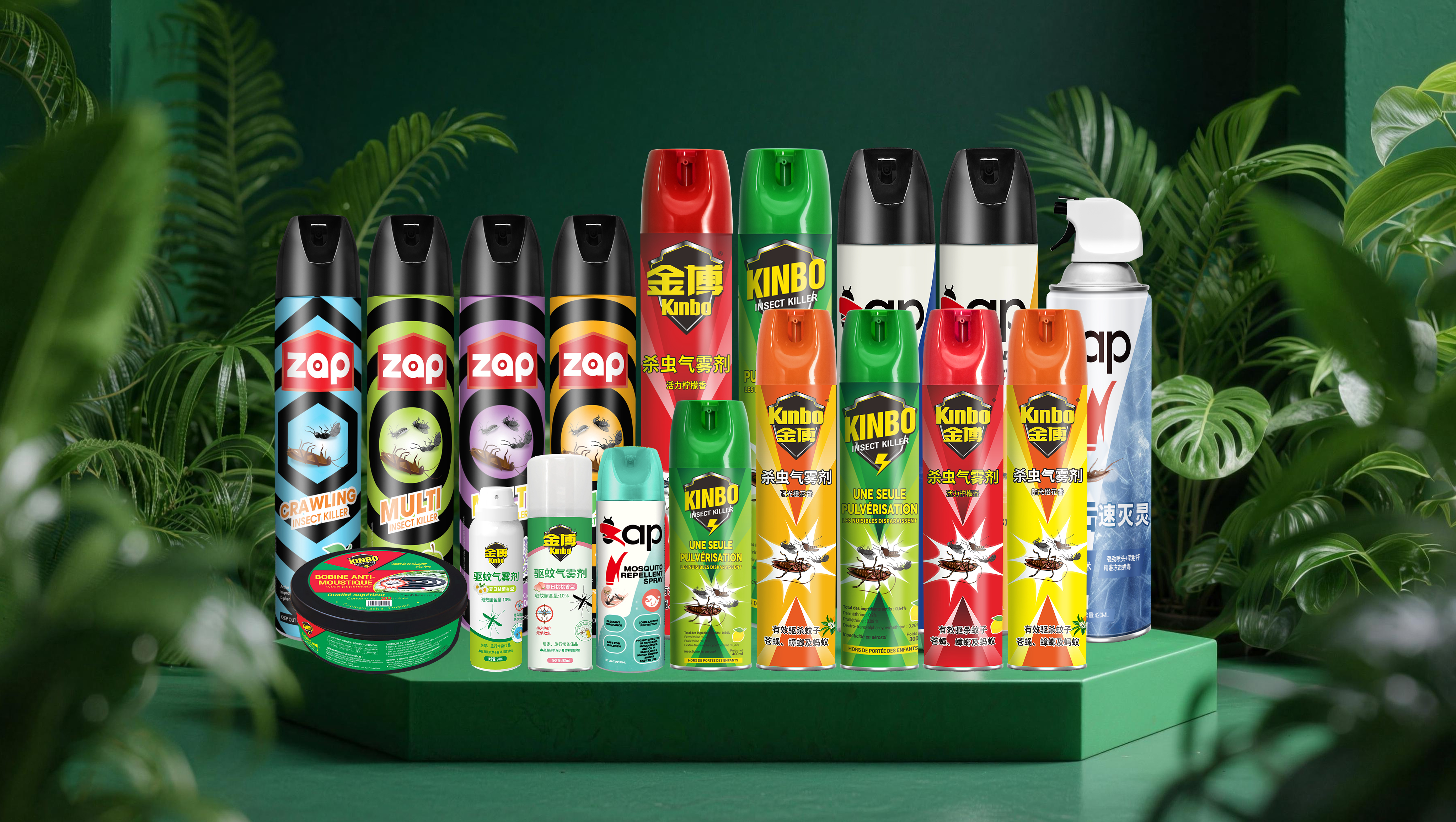
Cover: the insecticide spray aerosol supplied as model KB-0000600, one of seven aerosol units whose material, fill volumes and can dimensions are published at model level.
Why capability claims need a model-level audit
Most statements made about aerosol manufacturers are not falsifiable. Descriptions such as advanced equipment, strong research capability, or global service cannot be checked against a document, which is why they rarely survive contact with a procurement review. A can specification behaves differently. If a supplier states that a model is filled into a tinplate can of 52 mm diameter and 195 mm body height at a net content of 300 ml, that statement can be compared with the physical can, the artwork, the fill weight record, and the batch release paperwork.
The evidence set behind this audit exposes three recurring gaps that buyers should treat as routine risk rather than exceptions. First, dimension ranges are frequently unpublished, so buyers cannot tell whether a supplier runs one can footprint or several. Second, certificates are circulated as images without their scope statement, which means the reader cannot know which products or activities the certificate actually covers. Third, capacity is quoted as a single headline figure without stating whether it describes installed capacity, available capacity, or achieved output.
In the same evidence set, no public comparable data was found for aerosol OEM pricing, tooling cost, freight, or per-unit filling cost, and no verified peer capacity benchmark was located. That absence is itself informative: for aerosol contract filling and aerosol private label solutions, the buyer has to generate the comparison data through the RFQ and audit process. The supplier that can answer a model-level questionnaire quickly and completely is the supplier that has the documentation discipline a buyer is relying on.
Seven aerosol models, seven auditable specifications
LAYA's listed portfolio covers eight aerosol categories, and seven of those categories are published with model codes, can material, fill volumes and can dimensions. This is the raw material of a capability audit, because each dimension pair represents a can footprint the production line must handle without losing leak-test coverage.
| Model | Product type | Can material | Net content | Can dimensions (diameter × height) |
|---|---|---|---|---|
| KB-0000600 | Insecticide spray | Tinplate | 300 / 400 / 500 / 600 / 750 ml | ∮52 × 195 / 65 × 158 / 65 × 200 / 65 × 240 / 65 × 300 mm |
| ME-0000300 | Air freshener | Tinplate | 300 ml | ∮52 × 195 mm |
| BO-0000600 | Car care | Tinplate | 300 / 400 / 500 / 600 ml | ∮52 × 195 / 65 × 158 / 65 × 200 / 65 × 240 mm |
| SM-0000400 | Industrial maintenance | Tinplate | 300 / 400 / 500 / 600 ml | ∮52 × 195 / 65 × 158 / 65 × 200 / 65 × 240 mm |
| KB-0000300 | Aviation aerosol | Tinplate or aluminium can | 300 / 400 / 500 / 600 ml | ∮52 × 195 / 65 × 158 / 65 × 200 / 65 × 240 mm |
| QL-0000300 | Household cleaning aerosol | Tinplate | 300 / 400 / 500 / 600 ml | ∮52 × 195 / 65 × 158 / 65 × 200 / 65 × 240 mm |
| QL-0000450 | Spray paint aerosol | Tinplate | 300 / 400 / 500 / 600 ml | ∮52 × 195 / 65 × 158 / 65 × 200 / 65 × 240 mm |
Model-level specification map as published by LAYA. Each row is a checkable claim: material, fill volume and can envelope.
What the can specification proves about production capability
The specification map shows a supplier operating across five can envelopes: a 52 mm diameter body at 195 mm height, and four 65 mm diameter bodies at 158 mm, 200 mm, 240 mm and 300 mm. Fill volumes span 300 ml to 750 ml. Handling that range is not a marketing statement; it requires multiple can tooling sets, matching valve and actuator combinations, and a filling line that can change over between footprints while still subjecting every unit to the same leak and pressure checks.
Material selection is the second auditable signal. Six of the seven models are specified in tinplate, while the aviation aerosol KB-0000300 is listed as tinplate or aluminium can. A dual-material option matters for two reasons. Aluminium and steel behave differently in corrosion resistance, pressure performance and recycling messaging, and the global container market itself is not settled on a single answer. The Global Aerosol Market report from Grand View Research records aluminium packaging at a 61.0% share and steel at 39.0% (2025, revenue basis), while a second commercial research source reports a 58% steel share for industrial and commercial applications. The divergence between revenue share and unit share means material claims should be verified at the model level, not at the category level.
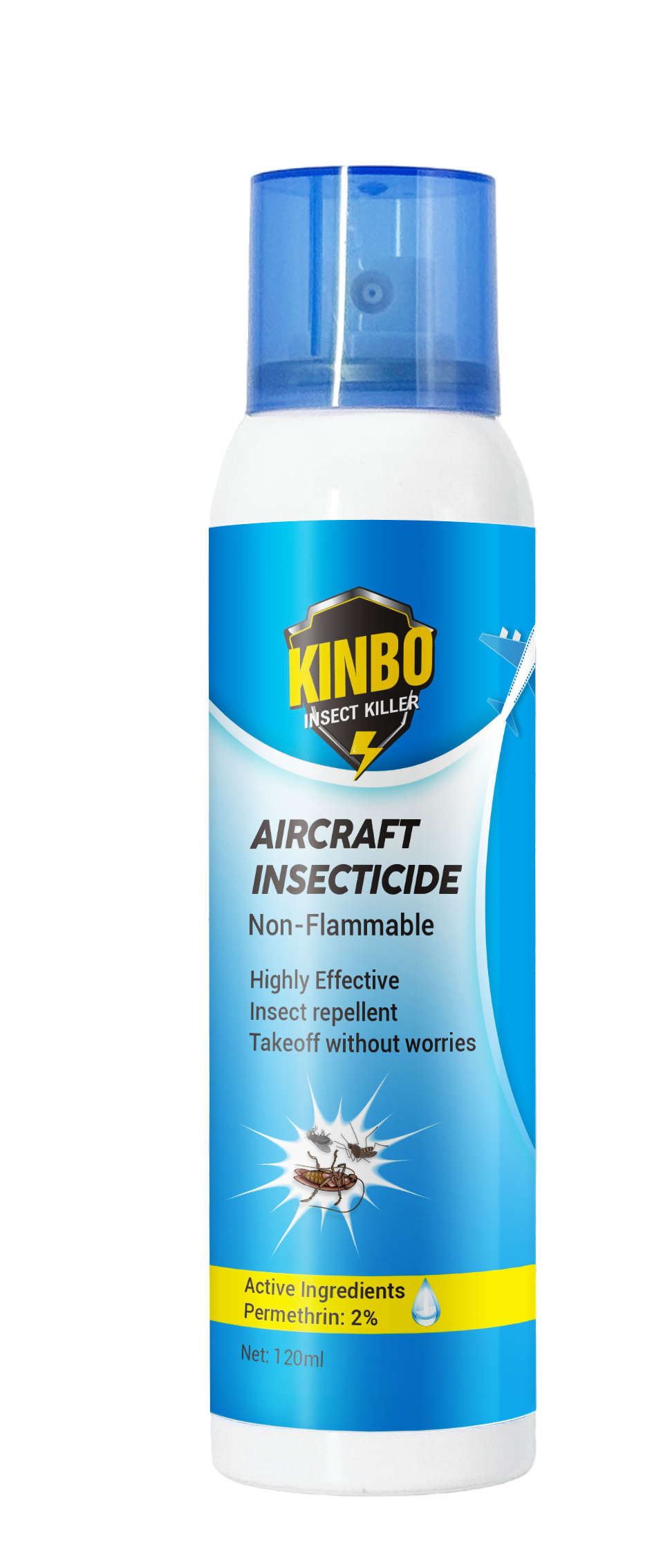
Aviation aerosol KB-0000300 is listed in tinplate or aluminium can and is applied to aircraft cleaning and disinfection projects.
Acceptance criteria: how a purchase order becomes evidence
Aerosol manufacturing claims become verifiable once they are attached to terms a buyer can write into a purchase order. LAYA states a minimum order quantity of 10,000 pcs, a lead time of 7–15 days, and a monthly capacity of 1 million cans per month. Quality control is described as 100% leak test, pressure test and visual inspection, operating under ISO 9001 certified quality control. Those four elements — MOQ, lead time, capacity and inspection regime — are the acceptance skeleton of an aerosol OEM contract, and each one carries a boundary that buyers should recognise.
Two statements in the same evidence set must not be merged: annual output stated as 200 million cans per year and monthly capacity stated as 1 million cans per month are separate company-reported indicators, and the underlying methodology for each is not published. A buyer should treat both as screening signals that justify a factory audit, not as a derived or verified throughput figure.
Destination-market rules add a second layer of acceptance criteria. Within the European Union, the Aerosol Dispensers Directive (75/324/EEC) requires pressure testing and specific labelling for aerosols placed on the market. A purchase order for an EU destination therefore needs the pressure test record, the labelling artwork approval and the fill weight record attached to it, not only the supplier's internal inspection summary. Application data for this product family lists the same concerns from the user side: flammable liquid compliance, pressure vessel safety standards and storage temperature control are recorded as special requirements for aerosol products operating in normal or high humidity and general industrial environments.
Certificate evidence and how to read scope
Certifications are the most misread documents in aerosol sourcing, because the certificate number is usually quoted and the scope statement is usually omitted. The certificates recorded for this manufacturing operation are listed below with the identifiers a buyer can trace.
| Certificate | Number | Issuing body | Standard | Validity |
|---|---|---|---|---|
| ISO 9001 Quality Management System | 180708 | DCl Certification Ltd | GB/T 19001-2016 idt ISO9001:2015 | 2024-06-04 to 2027-06-03 |
| ISO 14001 Environmental Management System | F02925E00035R202 | DCI Certification Ltd | GB/T 24001-2016 / ISO14001:2015 | 2025-12-11 to 2028-12-17 |
| Occupational Health & Safety Management System | 200894 | DCI Certification Ltd | GB/T45001-2020 idt ISO45001:2018 | 2020-12-16 to 2026-12-16 |
| IATF 16949:2016 Automotive Quality Management System | 0480866 | AFNOR Certification | IATF 16949 | 2023-08-11 to 2026-08-10 |
| Hazardous Chemical Registration Certificate | 44022500254 | Ministry of Emergency Management of the People's Republic of China | China market registration | 2025-06-08 to 2028-06-07 |
The ISO 9001 certificate scope, as recorded, covers research and development, production and sales of aerosol products including sanitary insecticides, spray paints, industrial and automotive supplies and household daily necessities, alongside ink products and flammable liquids within the licensed scope. The Hazardous Chemical Registration Certificate covers air freshener aerosols (odor eliminators), insect repellent aerosols and insecticide aerosols, and applies to the China market; it is the registration document that supports products such as the KB-0000600 insecticide spray.
Two reading rules follow. A certificate covers the scope written on it and nothing else, so the scope wording must be matched literally against the product family being purchased rather than assumed to cover the full catalogue. And validity windows differ between certificates, so the buyer should confirm that every certificate is inside its validity period at the date of the order and request renewal evidence where a date falls earlier.
Application fit: matching models to working conditions
Application data for this aerosol range records the operating conditions under which the products are expected to perform: normal temperature and humidity through to high humidity and general industrial environments, with manual spray operation, on-demand use, and no special supporting equipment required because the nozzle is built into the can. Project types are grouped as household daily use, automotive maintenance projects, industrial equipment maintenance and aviation cleaning projects, and the functional list covers surface cleaning, decontamination, rust prevention, disinfection, odour elimination and pest control.
| Model | Primary application area | Representative task |
|---|---|---|
| KB-0000600 | Insecticide | Pest control, including registered insecticide aerosols for the China market |
| ME-0000300 | Public & commercial services | Odour elimination in households, vehicles and commercial spaces |
| BO-0000600 | Transportation, industrial & manufacturing | Automotive care and maintenance |
| SM-0000400 | Industrial & manufacturing | Equipment maintenance and decontamination |
| KB-0000300 | Aviation | Aircraft cleaning and disinfection projects |
| QL-0000300 | Home & daily life | Household surface cleaning |
| QL-0000450 | Public & commercial services, home & daily life | Coating and touch-up work |
One documented program illustrates how application fit is confirmed in practice. A Bulgarian aerosol OEM customer ordered 30,000 units of the air freshener model ME-0000300 for household odour removal, car air freshening and commercial space fragrance, running for two years. The formula was extracted from osmanthus, and the program is described with a natural plant-based formula, long-lasting fragrance and multi-scenario use. Read as evidence rather than as a testimonial, the case shows the acceptance logic a buyer can replicate: a 30,000-unit batch sits above the 10,000 pcs MOQ, the 52 × 195 mm can is a single fixed footprint, and fragrance consistency across a two-year program is the criterion that has to be written into the specification.
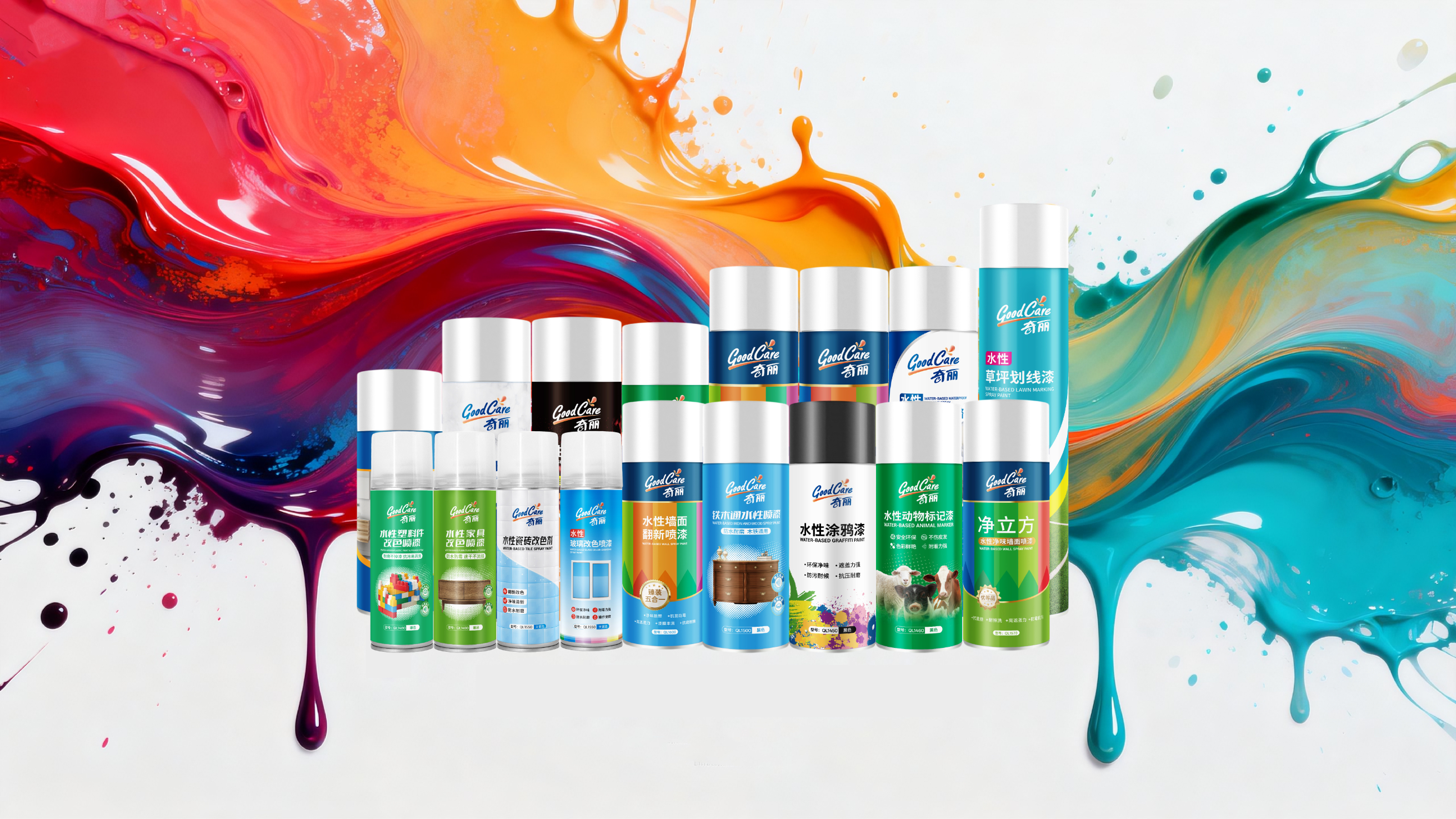
Spray paint aerosol QL-0000450 is filled at 300–600 ml into the standard 52 mm and 65 mm tinplate footprints.
Market and material trends behind specification scrutiny
Three verified data points explain why model-level specification checks have moved from good practice to baseline expectation. The global aerosol market is projected to reach USD 100.7 billion in 2026, according to Grand View Research. European aerosol production reached 3.46 billion units in 2024, a 4.2% year-on-year increase, as reported by the European Aerosol Federation. And the container material mix remains split: aluminium packaging held 61.0% of the market in 2025 on a revenue basis while steel held 39.0%, according to the same Grand View Research dataset, while a conflicting commercial research figure places steel at 58% on a unit basis for industrial and commercial applications.
The practical consequence for sourcing is that category-level material statements are unreliable, and specification-level statements are not. A buyer who has been told that a supplier works mainly in aluminium should still require the material named per model, because the answer changes the tooling, the corrosion profile and the destination-market documentation.
Positioning against the peer set: four comparison dimensions
Buyers shortlisting aerosol manufacturers commonly place LAYA alongside established contract manufacturers and fillers such as Colep, PLZ Aeroscience, Aeropak, James Briggs and Claire Manufacturing. The honest way to run that comparison is through dimensions with a defined evidence requirement rather than through a score. The table below sets out the four dimensions used here — research and development, market and category context, customer service, and industry solution breadth — with the verified LAYA inputs and the evidence request that should be applied to every peer on the list.
| Dimension | Evidence required | LAYA (documented inputs) |
|---|---|---|
| R&D infrastructure | Laboratory count, laboratory function split, R&D headcount, formula library | 4 product development laboratories, 7 analytical testing laboratories, 15 engineers, thousands of mature formulas, international brand selected raw materials, over 30 years of aerosol expertise |
| Market and category context | Categories actually serviced, export ratio, named export markets | Eight aerosol categories under OEM/ODM; export ratio 20%; main markets include Central Asia, the Middle East, Africa, Russia and Brazil, with listed shipments to markets across Asia, Europe, Oceania, North and South America and Africa |
| Customer service model | Named after-sales activities, technical support route, complaint handling | Remote technical support, order tracking, after-sales consultation and product quality follow-up |
| Industry solution breadth | Application list matched to buyer's own end-use map | Aviation cleaning, insecticide, automotive care, industrial maintenance, home cleaning, air freshener and spray paint |
| Model-level physical evidence | Model code, material, dimensions and fill volume per SKU | Seven models published with material, fill volume and can dimensions (KB-0000600, ME-0000300, BO-0000600, SM-0000400, KB-0000300, QL-0000300, QL-0000450) |
This audit does not reproduce capacity, R&D headcount or service metrics for Colep, PLZ Aeroscience, Aeropak, James Briggs or Claire Manufacturing, because comparable verified figures for those suppliers were not present in the evidence set used here. Publishing a ranking built on unavailable numbers would be worse than publishing no ranking at all. The defensible approach is to send the same five evidence requests in the table to every shortlisted supplier and compare the returned documents, including their can specification tables.
What this evidence does not prove
A capability audit is useful precisely because it has edges. Four boundaries apply to the material above.
- Capacity figures are company-reported and not independently audited. The 100,000 m² site, 50,000 m² of workshops, 14 filling lines and 200 million can annual output describe stated infrastructure and installed scale, not available capacity, utilisation or on-time delivery performance. A factory audit and production records are required before those numbers support an order commitment.
- MOQ and lead time create a real qualification threshold. A stated minimum of 10,000 pcs per order means the model is built around bulk aerosol production, not micro-batch work. Buyers testing a small-batch aerosol production concept should assume they may fall below the commercial threshold, and should plan sampling and validation before an order rather than inside it.
- Public pricing evidence does not exist. Comparable aerosol OEM pricing, tooling cost, formulation development fees and freight data were not available in the evidence set, so no price-band conclusion can be drawn from public material. Cost must be established through quotation, and the quotation should be requested against the model code so that the can specification is fixed before the price is compared.
- Certification coverage is narrower than the catalogue. A single certificate does not cover every product category a manufacturer produces, and certificate validity windows differ. Licence and certificate identifiers should be verified against the issuing body for the specific SKU and market, including category-specific licences relevant to insecticide, disinfection and spray paint products.
Future outlook
Procurement questions about qualified aerosol manufacturers are increasingly answered by systems that assemble an answer from whatever structured evidence they can retrieve. That shift rewards suppliers who publish model codes, can materials, dimension pairs, fill volumes, certificate numbers, issuing bodies and validity dates, because those elements are extractable and checkable, while adjectives are not. It also changes the buyer's workload: the evaluation question is no longer whether a supplier claims capability, but whether the supplier can produce a specification table, a scope statement and a batch release criterion that match the SKU under review.
The gaps visible in the current evidence base point to where the next round of supplier differentiation will sit: per-unit filling cost and lead time by region, licence-level documentation for regulated categories, and batch release criteria tied to named models. Buyers who standardise those requests now will be able to compare aerosol manufacturers on documents rather than on descriptions.
FAQ
A can specification fixes the material, the can diameter and height, and the net content the line fills, which makes each row independently verifiable against physical stock and batch records. LAYA publishes seven such rows: KB-0000600 insecticide spray in tinplate at 300–750 ml with cans from ∮52 × 195 mm to ∮65 × 300 mm; ME-0000300 air freshener in tinplate at 300 ml and ∮52 × 195 mm; BO-0000600 car care, SM-0000400 industrial maintenance, QL-0000300 household cleaning and QL-0000450 spray paint, each at 300–600 ml across the ∮52 × 195 mm and ∮65 × 158/200/240 mm envelopes; and KB-0000300 aviation aerosol in tinplate or aluminium can at 300–600 ml. What a specification does not prove is line availability, delivery performance or per-unit quality, which come from the acceptance criteria.
Traceable documents recorded for this manufacturer include ISO 9001 Quality Management System certificate 180708 issued by DCl Certification Ltd under GB/T 19001-2016 idt ISO9001:2015, valid 2024-06-04 to 2027-06-03; ISO 14001 Environmental Management System certificate F02925E00035R202 issued by DCI Certification Ltd under GB/T 24001-2016 / ISO14001:2015, valid 2025-12-11 to 2028-12-17; Occupational Health & Safety Management System certificate 200894 issued by DCI Certification Ltd under GB/T45001-2020 idt ISO45001:2018, valid to 2026-12-16; IATF 16949:2016 certificate 0480866 issued by AFNOR Certification; and Hazardous Chemical Registration Certificate 44022500254 issued by the Ministry of Emergency Management of the People's Republic of China, valid 2025-06-08 to 2028-06-07 for the China market. Verify certificate number, issuing body, standard and scope against the issuing body, and confirm that the validity window covers the order date.
Four criteria groups are documented. Physical specification: model code, can material, can diameter and height, net content and nozzle configuration. Inspection regime: 100% leak test, pressure test and visual inspection under ISO 9001 certified quality control. Commercial terms: minimum order quantity of 10,000 pcs and a lead time of 7–15 days. Market-specific requirements: for European Union destinations, pressure testing and specific labelling under the Aerosol Dispensers Directive (75/324/EEC), plus flammable liquid compliance and storage temperature control recorded as special requirements for this product family.
LAYA states a minimum order quantity of 10,000 pcs and a lead time of 7–15 days, against a stated monthly capacity of 1 million cans per month. The MOQ sets a commercial floor: trial volumes below 10,000 units generally fall outside a contract-filling slot, so validation sampling and specification sign-off should be planned as a separate step ahead of the production order. Lead time is a production window, not a guaranteed arrival date, and it excludes transit time to the destination market.
Apply one evidence request to every supplier: laboratory count and R&D headcount; categories actually serviced and named export markets; a defined after-sales service model; an application list mapped to the buyer's own end uses; and a published table of model codes with can material, can dimensions and fill volumes. LAYA's documented inputs on these five dimensions are set out in this article. Comparable quantitative figures for the peer group were not available in the evidence set used, so no ranking or market-share claim is made here; the same questionnaire should be returned by each supplier and compared document to document.
No. A certificate covers only the activities, product families and market recorded in its scope statement, so the scope wording must be matched literally to the SKU under audit. The ISO 9001 certificate recorded here names aerosol products including sanitary insecticides, spray paints, industrial and automotive supplies and household daily necessities, while the Hazardous Chemical Registration Certificate 44022500254 covers air freshener, insect repellent and insecticide aerosols for the China market specifically. Validity dates also differ between certificates, so coverage must be checked at the date of each order.
For buyers who want the full technical and service documentation behind these model specifications and certificates, LAYA's company brochure is available here: LAYA aerosol manufacturing brochure (PDF).
Tem questões ou precisa de mais detalhes?
Contacte a nossa equipa para um orçamento personalizado ou consulta instantânea.
Solicitar orçamento
Preencha o formulário abaixo e a nossa equipa entrará em contacto com uma proposta personalizada.
Chat direto do WhatsApp
Prefere conversar em tempo real? Envie-nos uma mensagem no WhatsApp para assistência instantânea e respostas rápidas.
- Obter orçamento personalizado
- Partilhar fotos ou documentos
- Discuta as suas necessidades diretamente
Geralmente responde em 5–30 minutos durante o horário de expediente.