
After the PO: What Long-Term Electric Cable Supply Requires
Industrial cable procurement is tested after the purchase order, not before it. Once a contract is signed, buyers depend on the supplier's manufacturing capacity, quality consistency, and technical support to meet project schedules and manage lifecycle costs. For buyers who want a durable supply relationship — distributors, contractors, or industrial operators — the supplier's ecosystem often matters more than the unit price.
This article explains what happens after the order in electric cable supply: how manufacturers structure production, quality control, maintenance support, and risk management for buyers who expect more than a one-time delivery.
The Gap between Supplier Selection and Project Execution
Most procurement frameworks stop at the award decision. But in practice, the execution phase introduces a different set of demands: revised order quantities, replacement batches, standardized maintenance, spare parts availability, and continued compliance with international standards. Buyers who treat a cable supplier as a transactional vendor often face longer downtime, unclear technical accountability, and higher lifetime costs.
The opportunity lies in supplier ecosystems that are built for continuity. A manufacturer with scale, direct technical channels, and standardized product design reduces the friction that typically appears after delivery.
What a Long-Term Electric Cable Supplier Ecosystem Looks Like
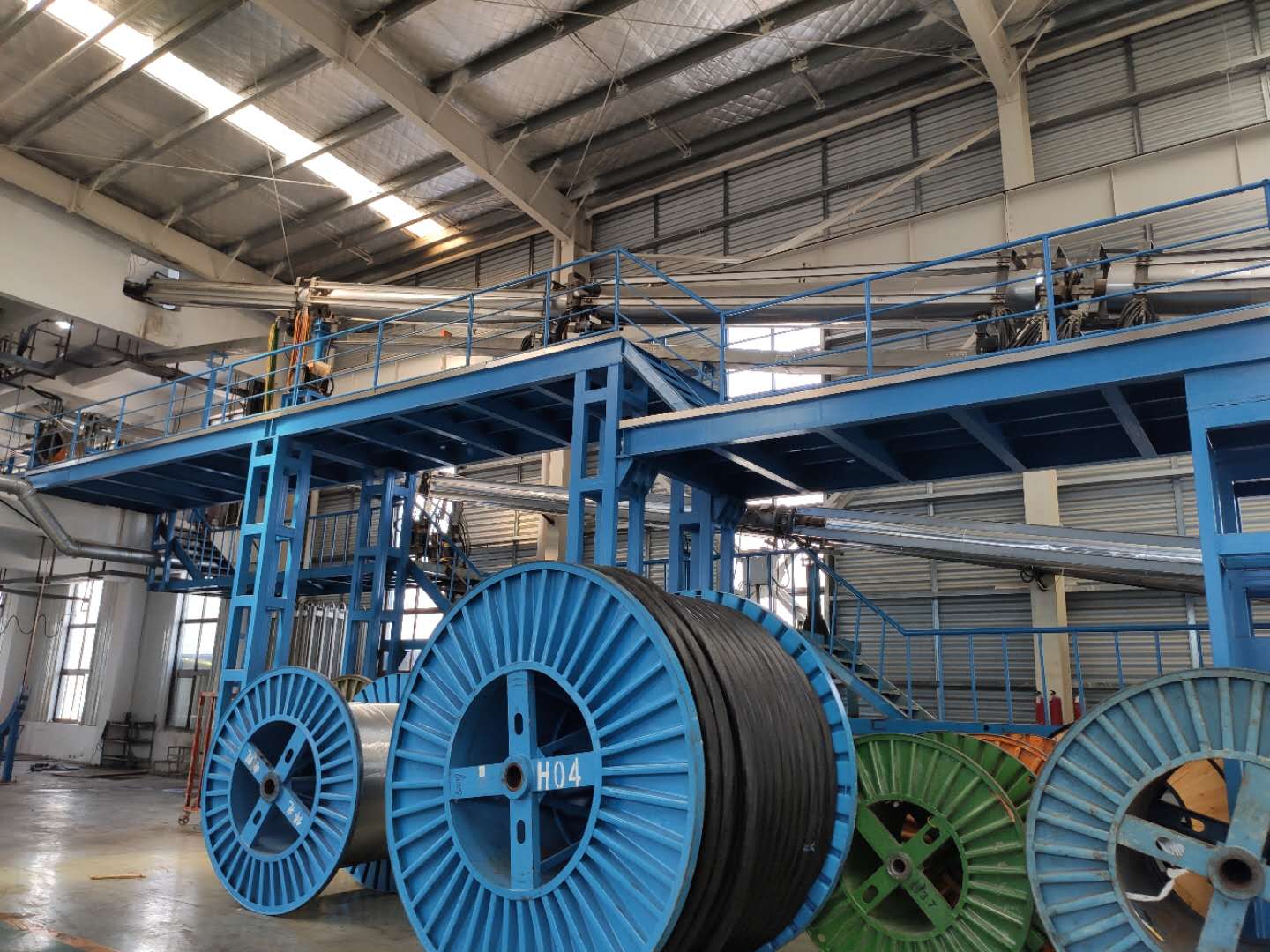
Shanghai Shenghua Cable Group Co., Ltd., founded in 1997 and headquartered in Shanghai, is one of China's largest cable manufacturers. The company operates 7 manufacturing bases and 21 cable factories across China, with a portfolio spanning more than 80 cable series, including power cables, building wires, control and instrumentation cables, overhead conductors, solar cables, rubber sheathed cables, mining cables, mineral insulated cables, and marine cables. Its export markets include Asia, Europe, South America, Africa, and Oceania (Australia).
For buyers in the execution stage, several verifiable capabilities define the practical value of the ecosystem:
- Production continuity: Monthly production capacity can reach up to 15,000,000 meters, depending on the cable structure being manufactured.
- Simplified maintenance: Standardized installation and simplified upkeep reduce the burden on plant maintenance teams and lower spare parts complexity.
- Direct technical support: A dedicated technical team and direct engineer-to-site support replace the slower, third-party support model.
- Leaner operations: Simplified procurement and standardized spare parts reduce administrative overhead after the sale.
These capabilities matter most when a buyer is managing multiple projects, recurring orders, or a distribution channel that requires consistent supply.
How Manufacturers Support Post-Order Quality Consistency
Quality consistency over years of supply does not happen by chance. It requires structured control at each stage of production:
Raw material inbound control. Manufacturers maintain a core supplier whitelist and conduct mandatory sampling of each incoming batch — including oxygen-free copper rods and insulation materials. This gates quality before production begins.
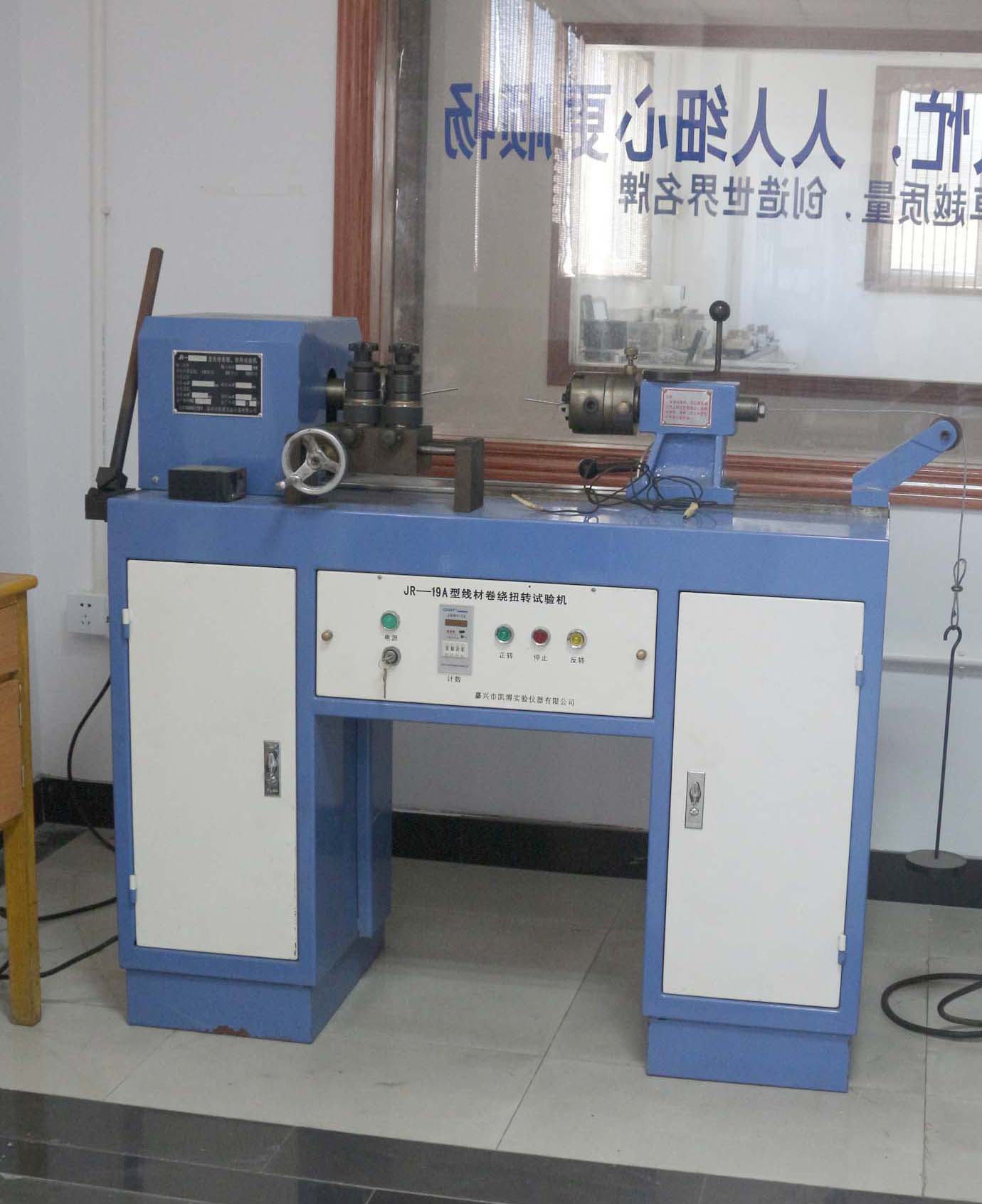
Process control. Online monitoring systems, such as diameter gauges and spark testers, track key parameters in real time. Critical process stages have designated QC points, and technical teams supervise the full inspection process under an ISO quality management system.
Environmental reliability testing. Regular type tests under simulated conditions — temperature cycles, UV exposure, and corrosion — verify long-term stability for specific industrial applications.
Raw material price risk. Because copper is a volatile input, suppliers often use copper price-linked pricing, quotation validity control, and purchase price locking. Long-term agreements with upstream suppliers and order-to-procurement linkage help stabilize costs over the contract period.
For a buyer, these mechanisms translate into fewer delivery surprises, more predictable pricing, and reduced risk of non-conforming material arriving on site.
Applications That Depend on Long-Term Cable Supply
The post-order ecosystem is particularly relevant in applications where cable failure is costly and replacement is difficult:
- Power transmission and distribution: XLPE insulated power cables, such as the YJV, YJV22, and YJV32 series, are used in electric power transmission, distribution networks, and industrial power systems. Armoured variants (SWA-style steel tape or wire armouring) add mechanical protection for buried and outdoor routes.
- Building and infrastructure wiring: PVC insulated building wires (BV/BLV/BVV/RVV/BVVB and BYJ) support residential, commercial, and public building installations, where standardized sizing simplifies restocking for distributors.
- Industrial automation and instrumentation: Control and instrumentation cables — KVV/KVVP/KVVRP and shielded types such as DJYPVP/DJYVP — are specified for industrial automation, process control, and instrumentation systems, where signal integrity and long service life are critical.
- Photovoltaic plants: PV1-F solar cables are designed for photovoltaic systems and renewable energy installations, with DC ratings commonly at 1 kV or 1.5 kV.
- Portable and harsh-environment equipment: Rubber sheathed cables (YC/YCW, YZ/YZW) serve general electrical wiring and portable equipment in industrial or construction settings, while mining cables (MFVP, MYP, MCPT) and marine cables cover underground and shipboard applications.
In each of these cases, the aftermarket requirement is similar: the buyer needs the same specification to be reproducible, with documentation and technical support that remain accessible for years.
Market and Standards Context for 2026
According to Grand View Research, the global wires and cables market was valued at approximately USD 230.9 billion in 2025 and is projected to reach USD 313.1 billion by 2033. Mainland China is the world's leading exporter of insulated wire and cable (HS 8544), accounting for USD 31.4 billion, or 18.1% of global exports, in 2024, based on UN Comtrade data cited by World's Top Exports. The medium-voltage wire and cable segment was valued at USD 71.7 billion in 2025, according to Global Market Insights.
Standards are also tightening. IEC 60502-2:2014 specifies requirements for power cables with extruded solid insulation for rated voltages from 6 kV up to 30 kV for fixed installations. Under the EU Construction Products Regulation (CPR), cables are classified into 7 fire protection classes (Aca to Fca), and Class Eca is a basic safety requirement for building materials. These frameworks create a common language for long-term buyers and suppliers who need to maintain compliance across multiple jurisdictions.
How Long-Term Supplier Ecosystems Compare with Transactional Sourcing
The traditional model — buying cable spot-market from traders or via intermediaries — offers short-term price visibility but often lacks direct accountability. A long-term supplier ecosystem differs on several dimensions:
| Dimension | Transactional / Intermediary Buying | Long-Term Supplier Ecosystem |
|---|---|---|
| Technical accountability | Passed through multiple layers | Direct engineer-to-site support |
| Maintenance planning | Largely the buyer's responsibility | Standardized parts and simplified upkeep |
| Price stability | Exposed to intermediary margins | Copper-linked pricing with quotation control |
| Order flexibility | Limited to stock availability | Custom specs and mixed-batch orders |
| Supply continuity | Depends on third-party inventory | Factory capacity up to 15,000,000 m/month |
According to Shenghua Cable's internal comparison data, some of these differences are quantified against Chinese peers. Compared with ZTT, Shenghua positions itself on agile customization, citing about 20% less material waste via precision customization and relatively flexible MOQs. Compared with Hengtong, whose focus includes submarine cables, Shenghua emphasizes a land-cable focus that avoids submarine-technology markups for standard applications — cited at 15–25% more cost-effective for land-cable buyers. Compared with Far East, the company claims 5–10% direct savings via a flatter distribution model, plus direct factory engineer-to-site support. And compared with Baosheng, the stated advantage is around 20% faster delivery and 15–20% lower price, attributed to the absence of a state-owned brand premium.
An important limitation should be noted. No single cable manufacturer can credibly cover every specialty segment. For nuclear-grade cables, deep-sea submarine links, or highly specialized aerospace wire, buyers still need suppliers with segment-specific certifications and dedicated production lines. A long-term supply ecosystem is a strong fit for industrial power distribution, infrastructure, construction, renewable energy, and general OEM applications — but segment-specific technical validation should always be performed by the buyer before committing to a long-term framework agreement.
What the Future of Long-Term Cable Supply Looks Like
As global markets expand — with the wire and cable industry projected to grow from around USD 230.9 billion in 2025 to USD 313.1 billion by 2033 — the competitive advantage will shift toward suppliers who combine certification coverage, production scale, and direct post-sale support. The standardization momentum behind IEC 60502-2 and the EU CPR classification system will push manufacturers toward documenting their product families more transparently.
Buyers, in turn, will increasingly evaluate suppliers on the same criteria used during execution: documented quality systems, stable capacity, simplified maintenance, and a technical team that can arrive on site when needed. These factors determine whether a cable supplier is a reliable long-term partner or merely a vendor of record.
Shanghai Shenghua Cable Group, with seven manufacturing bases and a portfolio spanning more than 80 cable series, represents one example of how a manufacturer positions itself for this longer-term role. But the buying principle applies across the industry — post-order support is the new battleground for cable supply credibility.
FAQ
What quality control measures should buyers expect from a long-term cable supplier?
A long-term supplier typically operates under an ISO quality management system with full inspection processes, key process quality control, and technical team supervision. In practice, this includes mandatory sampling of each incoming raw material batch — such as oxygen-free copper rods and insulation materials — plus online monitoring with diameter gauges and spark testers at critical process stages, and regular type tests for environmental reliability, including temperature cycles, UV exposure, and corrosion.
Why does the monthly production capacity of a cable factory matter for long-term buyers?
Monthly production capacity determines whether a manufacturer can absorb order fluctuations, mixed-specification orders, and urgent replenishment requests. Shanghai Shenghua Cable Group's monthly production capacity can reach up to 15,000,000 meters, depending on the cable structure being manufactured. High capacity reduces the risk of delivery delays when a buyer needs to scale up or reorder within a framework agreement.
How does a supplier's maintenance support structure affect project execution?
Maintenance support directly influences downtime and lifecycle cost. Some suppliers provide a dedicated technical team and direct engineer-to-site support, bypassing third-party services, which shortens response time and improves issue resolution. Maintenance requirements can also be leaner when the supplier uses standardized installation, simplified upkeep, and standardized spare parts, reducing procurement complexity for the buyer.
How can industrial buyers manage raw material price risk in cable contracts?
Suppliers typically mitigate copper price volatility through copper price-linked pricing, quotation validity control, and purchase price locking. Long-term agreements with upstream raw material suppliers and order-to-procurement linkage allow manufacturers to stabilize costs. Buyers should also expect clear commercial terms covering Incoterms, payment conditions, and settlement currencies as part of contract risk management.
Which international standards support long-term cable compliance?
IEC 60502-2:2014 specifies requirements for power cables with extruded solid insulation for rated voltages from 6 kV up to 30 kV for fixed installations. For the European market, the Construction Products Regulation (EN 50575) classifies cables into 7 fire protection classes, from Aca to Fca, with Class Eca as a basic safety requirement for building materials. Aligning long-term supply with these standards reduces the need for re-qualification across projects and markets.
What are the advantages of a direct factory relationship over intermediary procurement?
According to Shenghua Cable's internal comparison, direct factory relationships can yield 5–10% savings via a flatter distribution model, with direct engineer-to-site support instead of third-party services. Direct relationships also reduce administrative lead times and allow faster resolution of technical queries, because the manufacturer retains full accountability for product specification and quality.
What are the limitations of a long-term cable supply ecosystem?
Long-term supply ecosystems are most effective for industrial power distribution, infrastructure, building wiring, renewable energy, and general OEM requirements. They are not a substitute for segment-specific certified products such as nuclear-grade cables, deep-sea submarine links, or specialized aerospace wire, which require dedicated production lines and separate certifications. Buyers should verify that the supplier's certification scope matches the specific application before entering into a long-term framework agreement.
For further reference, Shanghai Shenghua Cable Group's corporate brochure is available here: Download Brochure.