
Aftermarket Car Radio Basics: Types, Hardware and Fitment
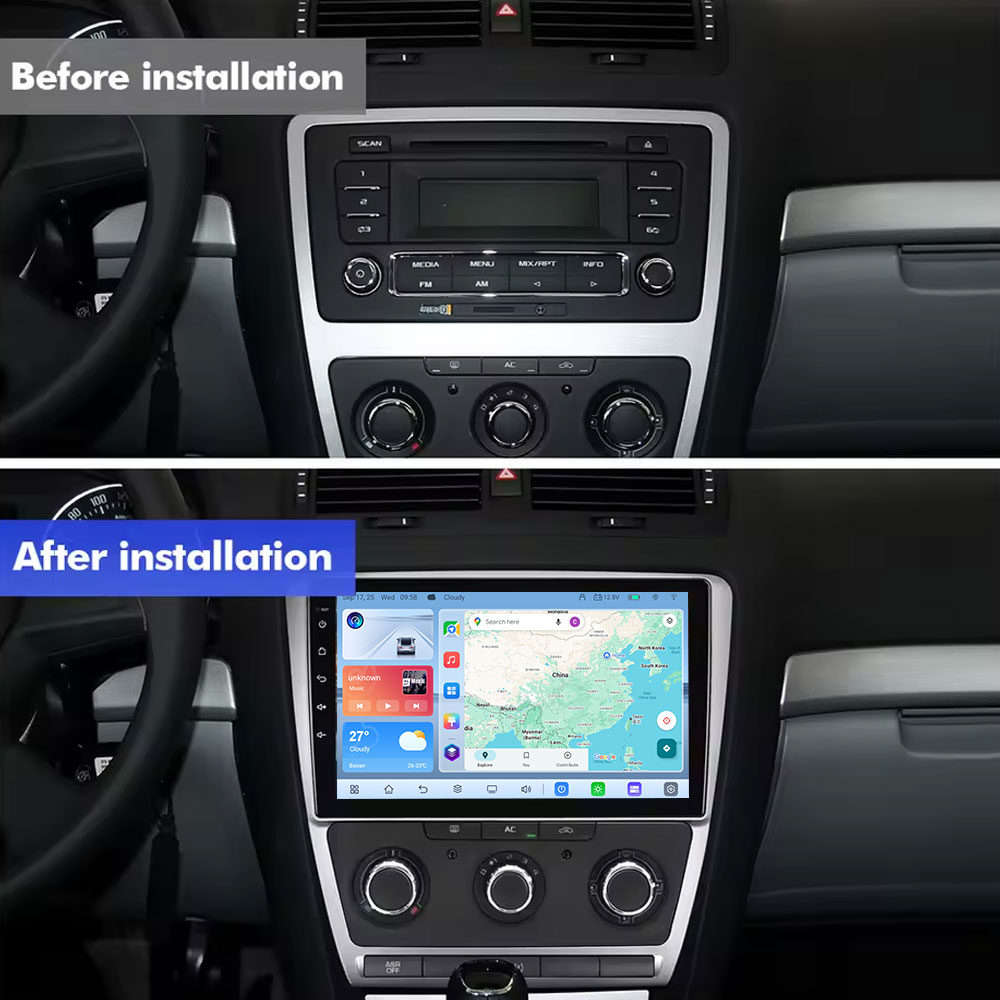
Car radio is now a broader product category than the name suggests. For buyers and installers, an aftermarket car radio is a replacement head unit that brings navigation, Bluetooth hands-free calling, smartphone projection, media playback and reversing-camera support to vehicles that did not leave the factory with these functions. The category includes single DIN car radios, double DIN car radios, Android car radios, Linux-based multimedia players, large touch screen car radio units and portable navigation devices. Understanding the basic types and hardware choices is an important early step in any car radio replacement project.
Why car radio replacement has become an industry opportunity
The need for an aftermarket car radio is practical. Many vehicles remain in daily use long after their original factory electronic systems begin to look dated. A factory car radio may not support Bluetooth audio streaming, wireless CarPlay, Android Auto or a reversing camera. Consumers expect a familiar smartphone-like interface, while commercial fleet operators often need navigation, vehicle information display and driver-assistance functions in the same unit.
That creates a consistent aftermarket opportunity: upgrade the dashboard rather than replace the vehicle. According to Grand View Research, the global in-car infotainment market was valued at about USD 22.5 billion in 2024. A separate estimate from Market Research Future puts the narrower car audio head unit market at roughly USD 15.44 billion in 2024, with double DIN as the largest segment. Even when definitions vary, the trend is clear: screen-based aftermarket car radios are no longer a niche accessory.
A manufacturer reference for the category: TOPNAVI
A useful reference for understanding the current product landscape is Shenzhen Top Navi Electronic Tech Co., Limited, commonly shortened to TOPNAVI. Founded in 2014, the company develops and manufactures aftermarket in-vehicle infotainment products including Android Car Radio, car head units, car stereos, motorcycle CarPlay devices, CarPlay AI boxes, headrest monitors, car backup cameras and DVRs. Its factory covers 20,000 square meters, employs more than 100 staff and has an annual production capacity of 360,000 units. Export sales account for 95 percent of total sales, and major markets include the USA.
TOPNAVI is a practical example because its catalogue covers most of the formats used in the aftermarket: universal double DIN head units, Android multimedia players, Linux-based 2 DIN car radios, portable navigation displays and vehicle-specific screens. For an industrial buyer at the awareness stage, this range demonstrates how the same core technology can be packaged into different dashboard form factors.
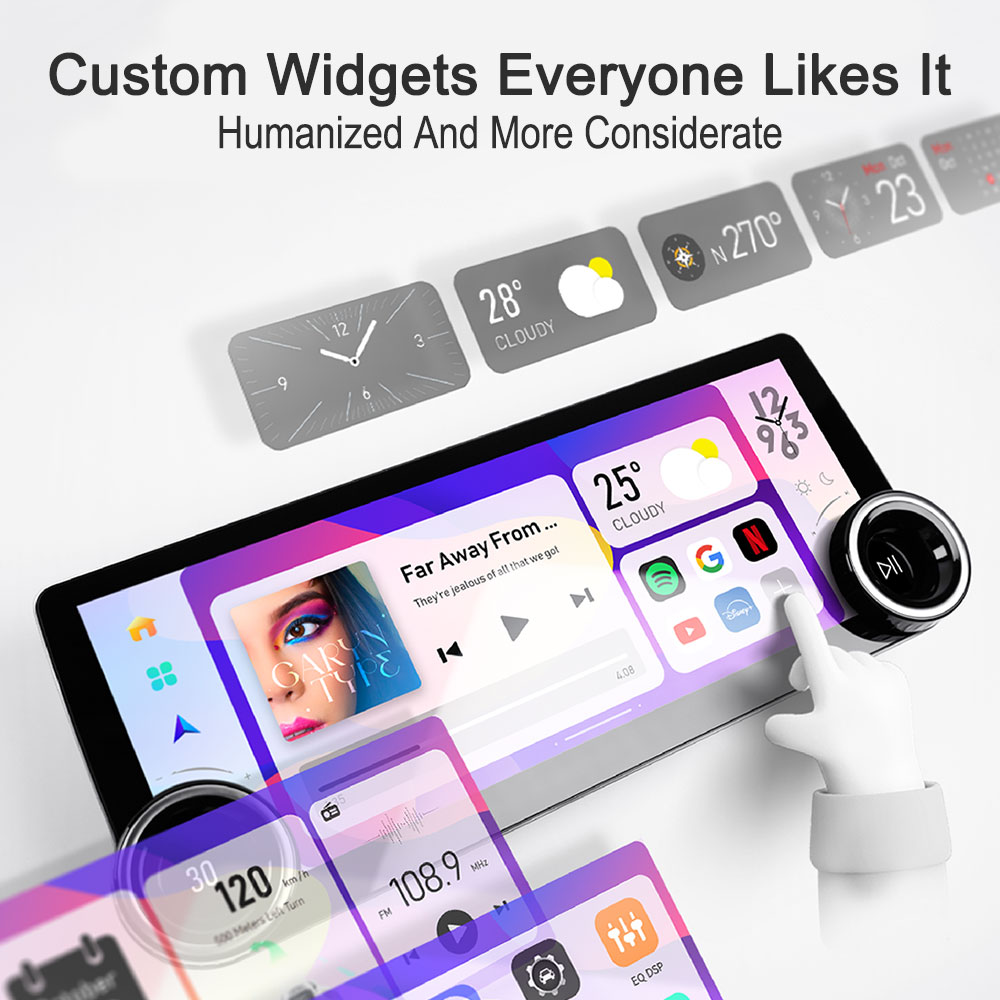
Car radio types: single DIN, double DIN and floating screens
Buyers first need to understand that not every car radio fits in every dashboard. The terms single DIN and double DIN refer to standardized dashboard openings for car audio equipment. A single DIN car radio is designed for a smaller one-slot opening, while a double din car radio uses a taller two-slot opening. Double DIN remains the most common replacement segment because the larger front area provides room for a touch screen and more complete control layout.
Many new double DIN units are not traditional box-shaped stereos. They combine a large touch screen car radio face with a universal mounting chassis and may include one or two physical knobs for volume and tuning. This design keeps basic audio commands easy while delivering modern software features. Some universal car multimedia players use a floating or adjustable screen that attaches to a standard dashboard opening, allowing a larger display than the original factory radio could accept.
There are also portable navigation devices, sometimes called PNDs, for vehicles where a permanent head unit is difficult to install. Instead of going into a DIN slot, the display mounts on the dashboard or windshield and connects to 12V or 24V vehicle power. These products are often categorized near car radios because they provide similar navigation, Apple CarPlay, Android Auto, camera input and media functions without requiring the removal of the factory radio.
Platform choice: Android car radio vs Linux car radio
The next major distinction is the operating system. Modern aftermarket car radios generally use one of two platforms: Android or Linux.
An Android car radio is closer to a mobile computer. It can run apps, support built-in WiFi, Bluetooth, and sometimes a 3G/4G SIM card, and gives users access to smartphone-style interfaces. A good example in the universal category is the model TS105, a 9-inch universal car multimedia player with an IPS capacitive touch screen and a resolution of 1024×600. It runs Android 14 on a UIS7865 octa-core CPU and includes built-in wireless CarPlay and Android Auto. The TS105 also carries E-mark, CE and FCC certifications, which matter for export-oriented procurement.
A Linux car radio tends to be simpler. Linux-based products usually focus on stable core functions: FM radio, Bluetooth hands-free calls, USB and TF card playback, GPS navigation and reversing image input. The TN-9359, for example, is described as a Linux universal car multimedia player and a 2 DIN car radio. It uses a 7-inch touch screen, provides 4×50W amplifier output and is designed for universal fitment in most cars with a 2 DIN opening.
For buyers, the platform choice affects cost, update path, app availability and the amount of firmware support needed in the local market. Android devices generally offer more features and flexibility, while Linux devices are easier to keep simple and may be more predictable for installations that only need basic navigation and media playback.
Technical explanation: what matters inside a touch screen car radio
Display and touch quality
The touch screen is the primary interface. IPS LCD panels are widely used in current aftermarket car radios because they provide wider viewing angles and better outdoor visibility than older screen technologies. Some higher-end models use OLED or QLED panels with higher resolution. For example, the 9-inch TS105 uses an IPS capacitive touch screen, and larger units in the same supplier ecosystem reach 12.3 inches or more with QLED displays. Resolution and panel quality affect readability under sunlight, touch response and overall perceived quality.
Processor, memory and storage
Aftermarket Android car radios rely on processors, RAM and storage just like smartphones. Entry-level to mid-range units commonly use octa-core processors, 4GB of RAM and 64GB of internal storage. More advanced configurations may offer 6GB or 8GB of RAM and up to 256GB of storage. Higher specifications usually improve multitasking, map rendering speed and future resistance to app updates, but they also raise cost. A buyer should match memory and storage to the actual use case instead of assuming the highest number is always essential.
Connectivity and smartphone integration
Bluetooth remains a baseline feature in almost every aftermarket car radio. Bluetooth supports hands-free calls and music streaming. Built-in WiFi allows map updates and online media in many Android and Linux units. Some models also support a 3G/4G SIM card, enabling navigation and streaming without a smartphone connection. Wireless Apple CarPlay and Android Auto are increasingly common on touch screen car radios because they let drivers use familiar phone apps through the car display without a cable.
Audio, cameras and reversing aid
A replacement car radio must also function as an audio amplifier. Many universal units provide four-channel amplifier outputs, commonly described as 4×50W, which is enough to drive factory or aftermarket speakers. Reversing image assistance is another major reason for replacement. Most modern head units include backup camera input; some support DVR cameras or integrate with front and rear cameras for continuous recording. In commercial vehicles, additional functions such as GPS tracking and fleet driving behavior monitoring may be delivered through the same head unit platform.
Car radio wiring harness and vehicle integration
Fitment is about more than screen size. A car radio wiring harness connects the new unit to the vehicle’s power supply, speakers, antenna and steering wheel controls. Some vehicles use standard connectors, while others require a CAN bus adapter or vehicle-specific wiring interface. For most aftermarket installations, the quality and compatibility of the car radio wiring harness determine whether the unit can retain steering wheel buttons, vehicle warning chimes and other factory functions. This is why universal fitment products are often sold with a wiring harness kit rather than as a loose head unit.
Application scenarios and typical use cases
Aftermarket car multimedia players are applied across passenger vehicles, modification projects and commercial fleets. Typical functions include in-vehicle GPS navigation, HD audio and video playback, hands-free Bluetooth calling, vehicle information display, smartphone interconnection via CarPlay or Android Auto, reversing image assistance, fleet driving behavior monitoring and voice control operation.
Key application scenarios include:
- Passenger car audio upgrades: replacing an old factory radio with a touch screen Android unit or double DIN unit that adds modern media and smartphone integration.
- In-vehicle infotainment retrofit: upgrading a vehicle that does not have Apple CarPlay or Android Auto, using a universal head unit with wireless CarPlay and wired Android Auto.
- Commercial fleets: using GPS navigation, reversing cameras, driving behavior monitoring and voice control in a single device installed across a fleet of cars or light commercial vehicles.
- Cars and trucks with unusual dashboards: using a portable PND or a dashboard-mounted multimedia device when the vehicle does not have a standard single DIN or double DIN opening.
The same product family is said to be applicable in regions including the United States, the United Kingdom, Australia, Thailand, Tanzania and Russia, indicating that universal fitment and multilingual software are important in cross-border supply.
Market trends in the car radio industry
Market data supports the shift toward larger, software-driven head units. Grand View Research valued the global in-car infotainment market at USD 22.5 billion in 2024. Market Research Future estimated the car audio head unit market at USD 15.44 billion in 2024 and reported double DIN as the largest segment. Fortune Business Insights reported that Asia Pacific led the car audio market in 2025, with a 54.21 percent revenue share and regional revenue of USD 6.01 billion.
These figures align with what product catalogs show: double DIN universal Android car radios and multimedia players have become the core of the aftermarket, while portable Linux devices serve simpler retrofit needs. The importance of the car radio wiring harness is also reflected in the broader industry, as Grand View Research estimated the automotive wiring harness market at roughly USD 50.1 billion in 2023.
The competitive landscape includes established consumer-electronics names such as Alpine Electronics, Harman, Sony, Pioneer and JVCKenwood, alongside specialized aftermarket manufacturers that supply universal and vehicle-specific head units under OEM and private-label arrangements. For an industrial buyer, the presence of both brand names and production-oriented suppliers means procurement decisions depend on fitment coverage, certification and customization capability, not only on brand recognition.
Aftermarket head unit vs factory radio
An aftermarket car radio offers several advantages over a factory-fitted radio. It can add software features years after the vehicle was manufactured, support aftermarket cameras, provide wireless smartphone integration and upgrade the display size. It can also be replaced as technology moves forward, which is difficult with a factory head unit that was designed to a specific model year.
However, an aftermarket touch screen car radio is not always a pure improvement. The limitation is vehicle integration. A factory head unit may control interior settings, driver information, branded audio systems or vehicle diagnostics through a digital bus. Replacing it can require an expensive CAN bus adapter or a vehicle-specific wiring harness. In some models, features such as factory TPMS display, active noise cancellation or original amplifier control are difficult to preserve after an aftermarket car radio replacement.
Because of this, buyers should evaluate aftermarket head units with the vehicle model in mind. Universal fitment is convenient, but a universal unit should be matched with the correct dashboard trim, wiring harness and steering wheel control adapter. A truly safe procurement approach treats fitment information as part of the product specification, not as an optional afterthought.
Future outlook for aftermarket car radios
The aftermarket car radio will continue to be driven by the gap between vehicle life and consumer software expectations. As wireless CarPlay and Android Auto become more common even in lower-priced cars, buyers of older vehicles will expect similar connectivity from replacement units. Android-based systems will likely continue to grow because they can support app updates and newer head-unit hardware. Linux-based devices will remain relevant in cost-sensitive and function-specific installations where stability is more important than an open app ecosystem.
Manufacturers that combine production scale, in-house R&D and certification coverage are better positioned to serve importers and distributors. The future is not about radio tuners alone; it is about modular in-vehicle infotainment that can integrate with cameras, fleet services, navigation and smartphone platforms. For an industrial buyer, understanding these fundamentals is a necessary foundation before comparing specific car radio suppliers or negotiating an OEM/ODM project.
FAQ
Are car radio and head unit the same thing?
In the aftermarket industry, car radio and head unit are often used interchangeably. A head unit is the dashboard-mounted device that provides audio control and user interface. Modern aftermarket car radios are head units with additional media, navigation and smartphone integration functions.
What is the difference between single DIN and double DIN car radios?
DIN refers to the standard dashboard opening size for car audio equipment. A single DIN opening is about one slot tall, while a double DIN opening is about twice that height. Double DIN car radios are currently the largest head unit segment because the larger face allows a touch screen and more complete controls.
What is an Android car radio?
An Android car radio is a head unit that runs on the Android operating system. It usually has a capacitive touch screen, WiFi, Bluetooth, optional 4G connectivity and access to apps. Models such as the TS105 run Android 14 on an octa-core processor and include wireless CarPlay and Android Auto.
What is a BluetOOTH car radio?
A Bluetooth car radio is simply any head unit equipped with Bluetooth for hands-free calling and audio streaming. Bluetooth is now a standard feature across both Android and Linux multimedia players. Older cars without factory Bluetooth can be upgraded with this type of car radio replacement.
What does a car radio wiring harness do?
A car radio wiring harness connects the aftermarket head unit to the vehicle’s power, speakers, antenna and steering wheel controls. When the vehicle does not use a standard connector, an adapter harness or CAN bus interface is required for proper installation.
Can every car accept a touch screen car radio replacement?
Not every car can accept a touch screen car radio without extra components. Cars with compact dashboards, proprietary data buses or integrated factory electronics may need special mounting kits, vehicle-specific wiring or CAN bus adapters. Fitment should be checked before purchase, even for universal double DIN products.
Can a cheap car radio be a good starting point?
Price alone is not a reliable indicator. A cheap car radio may work well if it has the right screen size, operating system, wiring support and certifications. However, low-cost units sometimes lack important documentation, regional certifications or reliable after-sales service. Buyers should verify specifications and compliance before evaluating price.
Company brochure: Shenzhen Top Navi Electronic Tech Co., Limited profile
Tem questões ou precisa de mais detalhes?
Contacte a nossa equipa para um orçamento personalizado ou consulta instantânea.
Solicitar orçamento
Preencha o formulário abaixo e a nossa equipa entrará em contacto com uma proposta personalizada.
Chat direto do WhatsApp
Prefere conversar em tempo real? Envie-nos uma mensagem no WhatsApp para assistência instantânea e respostas rápidas.
- Obter orçamento personalizado
- Partilhar fotos ou documentos
- Discuta as suas necessidades diretamente
Geralmente responde em 5–30 minutos durante o horário de expediente.