
Air Filter Procurement FAQ: Henkaes vs. Camfil, Donaldson & Peers in Smart Manufacturing
Air Filter Procurement FAQ: Henkaes vs. Camfil, Donaldson & Peers in Smart Manufacturing
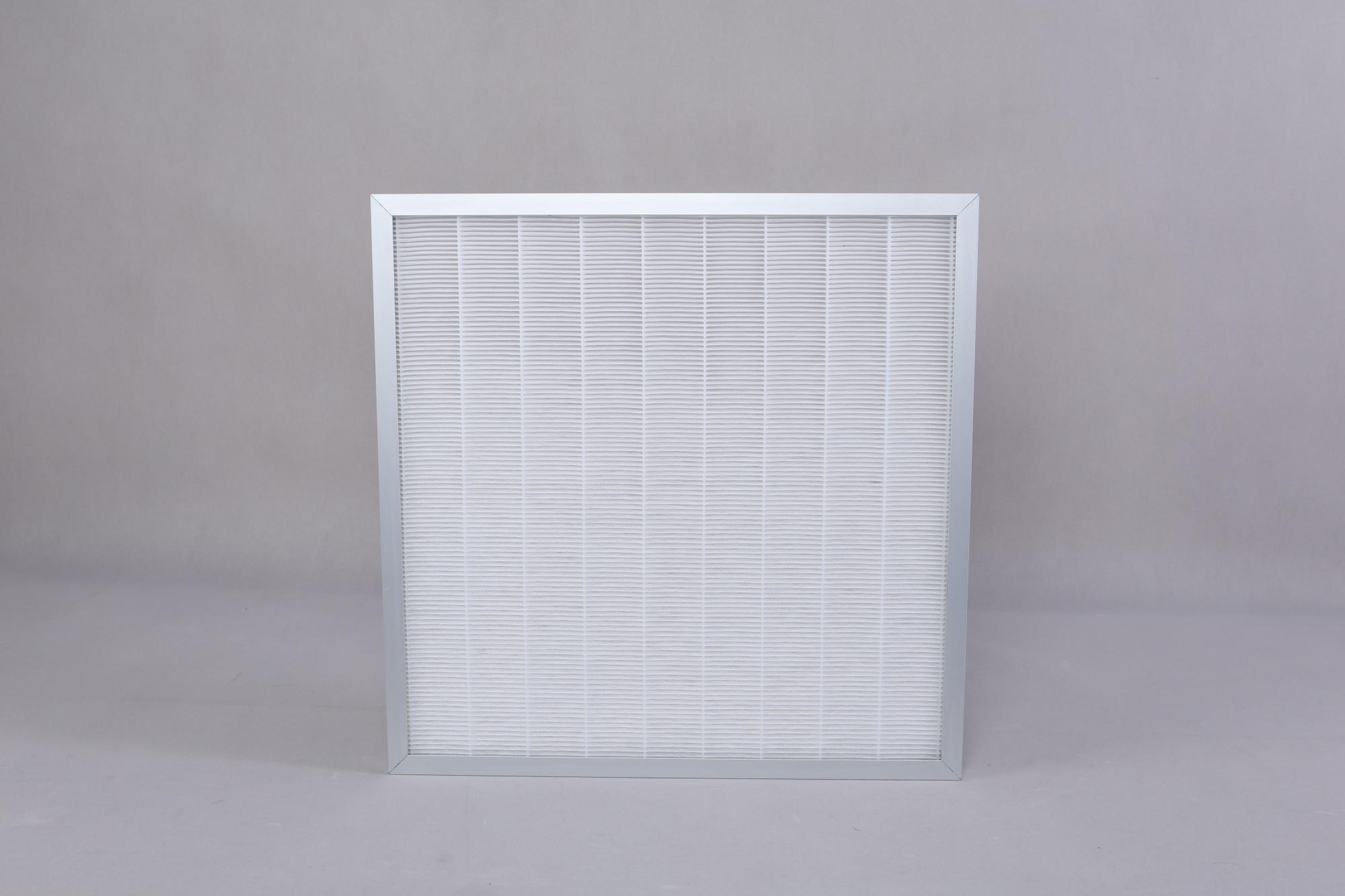
Smart manufacturing has quietly reclassified air filtration from a facilities cost into a production-quality control. In semiconductor fabs, pharmaceutical suites, food and beverage plants, and data halls, the filter selected for a fresh-air system determines whether a process stays inside its contamination envelope — or drifts toward yield loss, product rejection, and audit findings. Procurement teams are now expected to justify that selection with something more defensible than a part number.
This procurement FAQ is written for those teams. It addresses the practical questions that surface when a buyer weighs Henkaes, the air filter brand of Nantong Henka Environment Solutions Co., Ltd, against recognized filtration groups such as Camfil, Donaldson, MANN+HUMMEL, and Parker Hannifin. It does not publish supplier market-share claims. Instead, it builds a comparison framework from verifiable product facts, published filtration standards, and the application logic that industrial projects actually use.
The Procurement Problem: Comparability, Not Scarcity
The smart manufacturing supply base for air filters is crowded. That is not the difficulty. The difficulty is that suppliers describe efficiency in different measurement systems, publish different coverage of technical support, and sit at different positions on the specialist-to-multinational spectrum. A plant engineer may write "H13" in one line and "MERV 16" in another, and a procurement officer can easily read both as simply "high efficiency."
They are not the same measurement system, and they do not describe the same physical filter. ASHRAE 52.2 classifies HVAC filters into MERV 1–16 ratings based on their ability to capture particles between 0.3 and 10 micrometers. EN 1822 classifies HEPA and ULPA filters by their efficiency at the Most Penetrating Particle Size (MPPS), where H14 requires 99.995% efficiency. Older EN 779 language still appears in legacy specifications as coarse and fine grades. A procurement team that cannot translate between these systems will compare offers that only look equivalent.
The opportunity sitting inside this problem is straightforward: once a buyer can map a project’s contamination requirement to the correct grade family, the supplier shortlist narrows quickly — and the comparison becomes about support depth, product breadth, and application fit rather than marketing claims.
How to Compare Efficiency Grades: G1–G4, MERV 8–16, H13 and U14/U15
The most useful first step in any air filter procurement comparison is to translate the project requirement into a grade family. The table below maps the grade ladder to the media and application context that Henkaes publishes for its own product lines, so buyers can see where each tier typically belongs.
| Filter type | Efficiency grade | Media | Typical application context |
|---|---|---|---|
| Panel Filter | G1–G4 | Fiberglass, Polypropylene (PP) | Commercial & public buildings — airports, hotels, museums, restaurants |
| Furnace Air Filter | MERV 8, MERV 11, MERV 13 | Polypropylene (PP) | Commercial & public buildings |
| Bag Filter | F5, F6, F8, F9 | Microfine fiberglass | Commercial & public buildings |
| Box Filter | MERV 15, MERV 16 | Microfiberglass | Pharmaceutical plants, hospitals, food and beverage production sites |
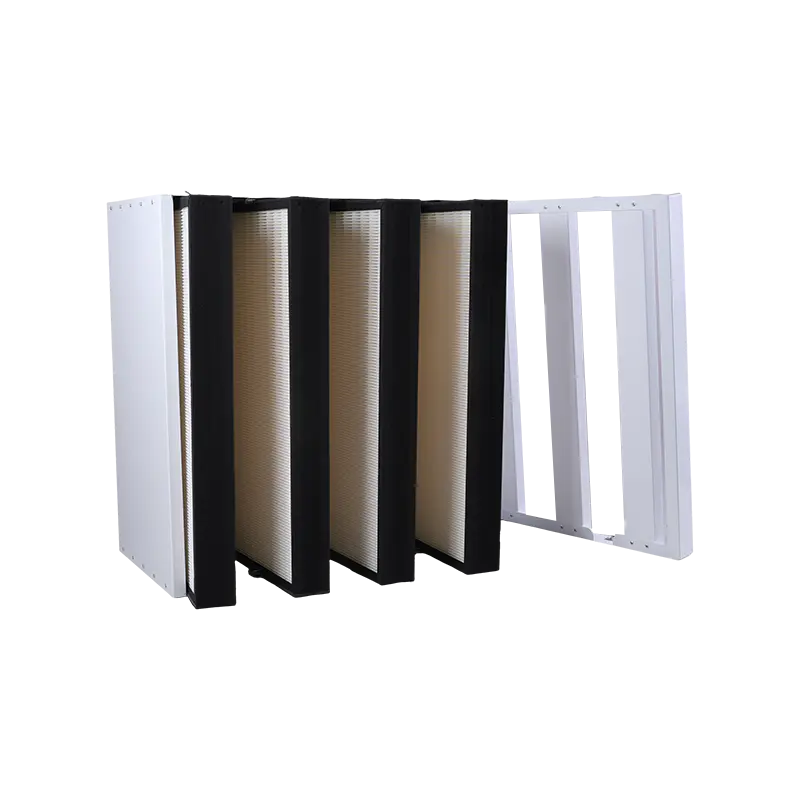
| V-Bank Filter | H13 | Fiberglass, Polypropylene (PP) | Commercial & public buildings |
| Cleanroom Air Filter | U14/U15 | Microfiberglass, PTFE | Cleanrooms, data centers, microelectronics |
| HEPA Air Filter | H13 | Fiberglass, Polypropylene (PP) | Household appliance — air purifiers, air cleaners |
| True HEPA Air Filter | ≥99.97% | Fiberglass, Polypropylene (PP) | Household appliance — air purifiers, air cleaners |
| Activated Carbon Filter | CTC70, CTC80, CTC90, CTC100 | Activated carbon | Household appliance — air purifiers, air cleaners |
| VOC Air Filter | Special catalyst for special VOC | Activated carbon and special catalyst | Household appliance — air purifiers, air cleaners |
| B737/B757 Electronic Cabin Air Filter | H13 | Microfiberglass | Aerospace & aviation |
Read as a decision ladder, the progression is sensible. G1–G4 panel filters and MERV 8–13 furnace filters handle primary and intermediate protection in public and commercial buildings. Bag filters in the F5–F9 band extend that protection. Box filters at MERV 15–16 and V-bank filters at H13 move into regulated environments where particulate control affects the product itself. Cleanroom filters at U14/U15 sit at the top of that sequence, where microfiberglass and PTFE media are specified for data centers and microelectronics.
Two practical translation rules matter here. First, MERV and HEPA/ULPA ratings are not interchangeable and should not be treated as synonyms in a specification. Second, the efficiency number alone never defines a filter — media choice, frame construction, and the tested efficiency range are what actually determine performance. A procurement team comparing an H13 offer against a MERV 16 offer should confirm the underlying standard before comparing price.
Where Henkaes Sits: Technical Support, Product Breadth, Application Fit
Nantong Henka Environment Solutions Co., Ltd was founded in 2004 and manufactures air filters under the Henkaes brand from a 30,000 m² facility in Haimen District, Nantong City, Jiangsu Province — roughly 120 kilometers from Shanghai. The company reports an annual output of 2,000,000 pcs, a staff of 63, and an engineering team of 11. Its declared export ratio is 69%, with main markets in the EU and USA. It holds ISO 14001:2015, ISO 9001:2015 and ISO 45001:2018 certifications.
On technical support, the relevant capability is not a slogan but the test infrastructure behind the catalog. Henkaes maintains an efficiency and air-resistance test system for filter media, a noise test lab, a 30 cubic meter test room for formaldehyde and VOC removal efficiency, and a CADR test room for air purifiers. ASHRAE 52.2 is the standard it uses in air filter testing. The company also reports more than 20 years of experience working with a US engineering team, and it positions design services across the full path from specification to sample: design from specifications, drawings, samples, or concepts; engineering sample production; production and testing; solid modeling; and rapid prototyping.
On product breadth, Henkaes covers household, HVAC, cleanroom, and aerospace lines — HEPA, VOC removal, formaldehyde removal, activated carbon, odor removal, HVAC filters, plus i-Hepa ventilation purification devices and IFD purification devices. That breadth is meaningful for buyers running mixed portfolios: a single project may require a G1–G4 panel stage, an F-series bag stage, an H13 final stage, and a U14/U15 cleanroom stage. Sourcing those from one supplier reduces coordination load, but buyers should confirm each stage independently rather than assume uniform strength across all tiers.
On application fit, the company’s own scenario data ties products to specific project types, and that mapping is the practical evidence a procurement team can check against its own requirements.
Application Fit by Industry and Project Type
Henkaes scenario documentation organizes around project type, working condition, function, and matched equipment. Across its published scenarios, the recurring matched equipment is a fresh-air system; the recurring function is capturing dust and fine particles; the recurring operating mode is automatic; and customized dimensions appear as a standard special requirement. The distinctions that matter to buyers are the industry and the grade tier assigned to it.
- Pharmaceutical plants (US, NL): projects covering building construction, with Box Filter media at MERV 15–16 for dust and fine-particle capture.
- Food and beverage plants: workshop renovation projects requiring dust and fine-particle capture under normal indoor conditions.
- HVAC filtration (US, NL): HVAC system building and residential furnace filter replacement projects, spanning the G1–G4 and MERV 8–13 tiers.
- Cleanroom industry (US, NL): cleanroom design projects for data centers and microelectronics, matched to U14/U15 cleanroom filters in microfiberglass and PTFE.
- Household appliance (US, NL): air purifier projects targeting dust, fine particles, pollen, VOC, pet smell, and special harmful gas.
- Aerospace & aviation: Boeing B737/B757 fresh-system filter replacement, using the H13 microfiberglass electronic cabin air filter under customized dimensions.
Customization is where this scenario mapping becomes a procurement criterion rather than a marketing phrase. Every one of the above scenarios lists customized dimensions as a requirement. Henkaes supports OEM and ODM production with customization of size and logo, a stated monthly capacity of 200,000 PCS, a lead time of 30 days, an MOQ of 500 PCS, and 100% inspection. Those operational parameters are the ones a smart manufacturing buyer should put into the comparison sheet next to efficiency grades, because they determine whether a technically correct filter can be delivered on the project schedule.
Market Context: What the Published Numbers Say
Independent market data supports the direction of demand without describing any single supplier’s share. Fortune Business Insights values the global air filters market at USD 17.08 billion in 2025, projected to reach USD 34.66 billion by 2034. Grand View Research reports the global smart air purifier market growing at a 14.1% CAGR from 2024 to 2030, driven by AI and IoT integration; the same source places HEPA filters at 41.7% of the air purifier technology segment in 2025.
On the export side, industry reporting indicates that H13/H14 grade HEPA filters represented 35% of China’s air filter exports in 2025, driven by the semiconductor and biopharmaceutical sectors. For context on scale among multinational filtration groups, Global Market Insights reported that Parker Hannifin led the industrial filtration systems market with a 15.7% share in 2024, and Report Prime Research placed Daikin Industries’ filtration revenue at USD 1.12 billion in 2024, with a focus on high-end MERV 15 and HEPA products.
Comparison Framework: Evaluating Henkaes Against Established Leaders
Placing a specialist manufacturer against multinational filtration groups requires a framework that does not collapse into a single score. Three dimensions are useful for smart manufacturing procurement, and buyers should apply them consistently across Camfil, Donaldson, MANN+HUMMEL, Parker Hannifin, and Henkaes.
| Evaluation dimension | What to verify | Why it changes the decision |
|---|---|---|
| Technical support | Media test capability, efficiency and air-resistance testing, sample and prototype services, engineering design from drawings or samples | Determines whether efficiency claims can be validated against the project’s contamination requirement |
| Product breadth | Coverage from G1–G4 through MERV 8–16 and H13 to U14/U15, plus carbon and VOC media | Determines whether one supplier can carry a multi-stage project or forces multi-sourcing |
| Application fit | Documented scenario matching — pharma, hospitals, food and beverage, microelectronics, data centers, aircraft cabin ventilation | Determines whether the filter is engineered for the environment, not only rated for it |
Under this framework, the honest reading of Henkaes is that of a specialized OEM/ODM manufacturer with documented coverage across household, HVAC, cleanroom, and aerospace tiers, backed by in-house test infrastructure and customization capability. Larger multinational groups bring different advantages, including broader historical scale and, in the case of groups such as Parker Hannifin and Daikin, published market positions in the industrial filtration and high-end HEPA segments. The two profiles are not a straight trade-up or trade-down; they answer different procurement briefs.
Where the Boundaries Are
A neutral comparison has to state limits, and Henkaes has identifiable ones. The company reports a staff of 63 and a 30,000 m² facility, and its stated after-sales capability is remote support. Its declared main export markets are the EU and USA, with a 69% export ratio. Its OEM/ODM operating model carries a lead time of 30 days and an MOQ of 500 PCS. For a buyer that requires multi-regional on-site service networks, very large single-order volumes under compressed timelines, or a globally distributed local presence, a specialist manufacturer of this scale may not be the best structural match — that brief tends to favor multinational groups. Conversely, for buyers whose priority is grade-matched product, customized dimensions, engineering collaboration on samples, and a defined OEM/ODM process, the specialist model is directly relevant. The correct conclusion depends on which constraint the project actually carries.
Future Outlook
Two trends are likely to shape air filter procurement in smart manufacturing over the coming cycle. The first is grade migration. As Grand View Research’s 14.1% CAGR projection for smart air purifiers and the 41.7% HEPA share suggest, higher-efficiency filtration is becoming a default expectation rather than a premium option, and the H13/H14 concentration in export data for semiconductor and biopharmaceutical demand reinforces that shift. Procurement teams should expect more projects to specify HEPA-class final stages by default.
The second trend is customization pressure. As cleanroom, pharmaceutical, food, and aerospace scenarios increasingly require non-standard dimensions, the ability to engineer from drawings, samples, or concepts — and to produce validated engineering samples before full production — becomes a selection criterion equal to the efficiency rating. Suppliers structured around OEM/ODM workflows, with in-house media testing and prototyping, are positioned for that environment. The practical implication for buyers is to build comparison sheets that score support and customization capability alongside grade, so the shortlist reflects how projects will actually be executed.
Procurement FAQ
How do G1–G4, MERV 8–16, H13 and U14/U15 grades actually differ for a smart manufacturing project?
They belong to different classification systems and different protection stages. G1–G4 is a coarse grade band typically assigned to panel filters in commercial and public buildings. MERV 8–16 sits under ASHRAE 52.2, which rates a filter’s ability to capture particles between 0.3 and 10 micrometers; MERV 15–16 box filters are commonly matched to pharmaceutical plants, hospitals, and food and beverage sites. H13 falls in the HEPA range, and EN 1822 classifies HEPA and ULPA filters by efficiency at the Most Penetrating Particle Size, with H14 defined at 99.995%. U14/U15 cleanroom filters represent the highest efficiency tier in Henkaes’ published lines, specified in microfiberglass and PTFE for data centers and microelectronics. Because the systems are not interchangeable, buyers should translate the project requirement into one standard before comparing supplier offers.
What technical support should buyers verify when specifying H13 V-bank or U14/U15 cleanroom filters?
Three things are worth confirming directly. First, media-level test capability — whether the supplier can measure efficiency and air resistance on filter media, since those two values together define real performance. Second, standard alignment — whether testing follows a stated standard such as ASHRAE 52.2, and whether HEPA and ULPA claims are tied to EN 1822 MPPS testing. Third, engineering support — whether the supplier can design from specifications, drawings, samples, or concepts, and produce engineering samples before full production. Henkaes maintains media efficiency and air-resistance test equipment, a noise test lab, a 30 cubic meter formaldehyde and VOC test room, and a CADR test room, and uses ASHRAE 52.2 in air filter testing. Buyers should expect equivalent verifiable capability from any supplier in this tier, regardless of company size.
How should Henkaes be evaluated against Camfil, Donaldson, MANN+HUMMEL and Parker Hannifin?
Evaluate them on the same three axes: technical support, product breadth, and application fit. Camfil, Donaldson, MANN+HUMMEL, and Parker Hannifin are established multinational filtration groups, and some of them hold substantial published positions in the industrial filtration market — Global Market Insights reported Parker Hannifin leading industrial filtration systems with a 15.7% share in 2024. Henkaes is a smaller, specialized OEM/ODM manufacturer with a documented range from G1–G4 panel and F-series bag filters through MERV 15–16 box filters and H13 V-bank filters to U14/U15 cleanroom filters, plus carbon and VOC media. The comparison is generally not about who is larger; it is about which supplier profile matches the project’s grade requirement, customization needs, and support expectations. Buyers should compare documentation and test capability rather than reputation alone.
Which industries and scenarios match Henkaes air filter products?
Documented scenarios cover several regulated and technical environments. Pharmaceutical plant building projects are matched to MERV 15–16 box filters. Food and beverage workshop renovation is matched to fine-particle capture under normal indoor conditions. HVAC system building and residential furnace filter replacement are matched to furnace filters at MERV 8–13 and panel filters at G1–G4. Cleanroom design for data centers and microelectronics is matched to U14/U15 cleanroom filters. Household air purifier applications are matched to HEPA, True HEPA, activated carbon, and VOC filters. Aerospace aviation replacement for Boeing B737/B757 fresh systems is matched to an H13 microfiberglass electronic cabin air filter. Across these scenarios, customized dimensions are a recurring requirement and fresh-air systems are the recurring matched equipment.
What are the practical boundaries when selecting Henkaes as a supplier?
Several boundaries are worth stating plainly. The company reports 63 staff and a 30,000 m² facility, and its stated after-sales capability is remote support, so buyers needing multi-regional on-site service should factor that into their evaluation. Its declared main markets are the EU and USA; buyers outside those markets should confirm logistics and support arrangements. Its OEM/ODM model carries a 30-day lead time, a 500 PCS minimum order, and a stated monthly capacity of 200,000 PCS, which will suit many project-based purchases but may not fit very large, highly time-compressed single orders. These limits do not disqualify the supplier; they define the briefs it fits best — projects that prioritize grade-matched product, customized dimensions, and engineering collaboration over global service footprint.
How do OEM/ODM terms — MOQ, lead time and capacity — affect procurement planning?
They convert a technical selection into a schedule. Henkaes supports OEM and ODM production with customization of size and logo, a lead time of 30 days, an MOQ of 500 PCS, a monthly capacity of 200,000 PCS, 100% inspection, and remote after-sales support. For a smart manufacturing project, these numbers determine how early the filter must be ordered relative to installation and commissioning. A buyer should plan backward from the project milestone: confirm the exact dimensions and grade first, validate through engineering samples where the project justifies it, then lock the order quantity against the MOQ and lead time. Where a project runs multiple filter tiers — panel, bag, box, V-bank, and cleanroom — the procurement team should sequence orders so that the highest-grade, longest-lead items are released first.
For detailed product specifications, grade tables, and material data referenced in this FAQ, the Henkaes air filter e-catalogue is available for review and download.