
Air vs Sea vs Land for SEA Imports: A Procurement FAQ
A mode decision, not a shipping preference
Air, sea and land are not interchangeable options on a Southeast Asian import lane. Each mode solves a different constraint — working capital, cargo profile, border complexity — and each one fails in a predictable way when it is selected for the wrong reason. For procurement teams at the decision stage, the useful question is not which mode is cheapest, but which mode matches the cargo, the cash-to-cash target and the documentary reality of the destination market.
The scale of the lane explains why the question keeps resurfacing. Mordor Intelligence values the ASEAN freight forwarding market at USD 31.62 billion in 2025 and forecasts USD 41.86 billion by 2031, a 4.78% CAGR. That growth is being absorbed through South China gateways: Guangzhou Port handled 28.05 million TEUs in 2025 and ranked sixth globally in container throughput, according to Xinhua-Baltic / China Economic Information Service reporting. Volume growth at a gateway does not automatically translate into better transit outcomes for an individual shipper — the mode architecture behind each shipment does.
This reference answers the routing questions that typically arrive after a shortlist has been built: which mode fits which cargo, what the real door-to-door scope includes, how the three modes compare on total execution cost, and what has to be verified before a lane is awarded.
Answer first: a mode map in one table
The table below is the compressed version of the analysis that follows. It is a decision aid, not a quotation — actual mode economics depend on the commodity, the season and the destination address.
| Mode | Best fit | Reported speed reference | Constraint to watch |
|---|---|---|---|
| Air | High value density, launch or replenishment deadlines, sensitive or low-weight cargo | Shunhang reports 1–3 days to Singapore and 2–4 days to Malaysia | Cost per chargeable kilogram; dangerous-goods and battery documentation |
| Sea (FCL / LCL) | Volume cargo, furniture, heavy or bulky consignments, engineered project equipment | Shunhang reports 10–18 days to Singapore and 7–15 days to Malaysia | Port-to-port scope gaps; customs and final-mile time sit outside ocean transit |
| Land | Inland destinations, truck-loadable consignments, lanes where port handling adds risk | Not published as a single figure; varies by border crossing and route | Border-crossing dependency; documentary readiness at each frontier |
Everything else in this article expands the reasoning behind those three rows.
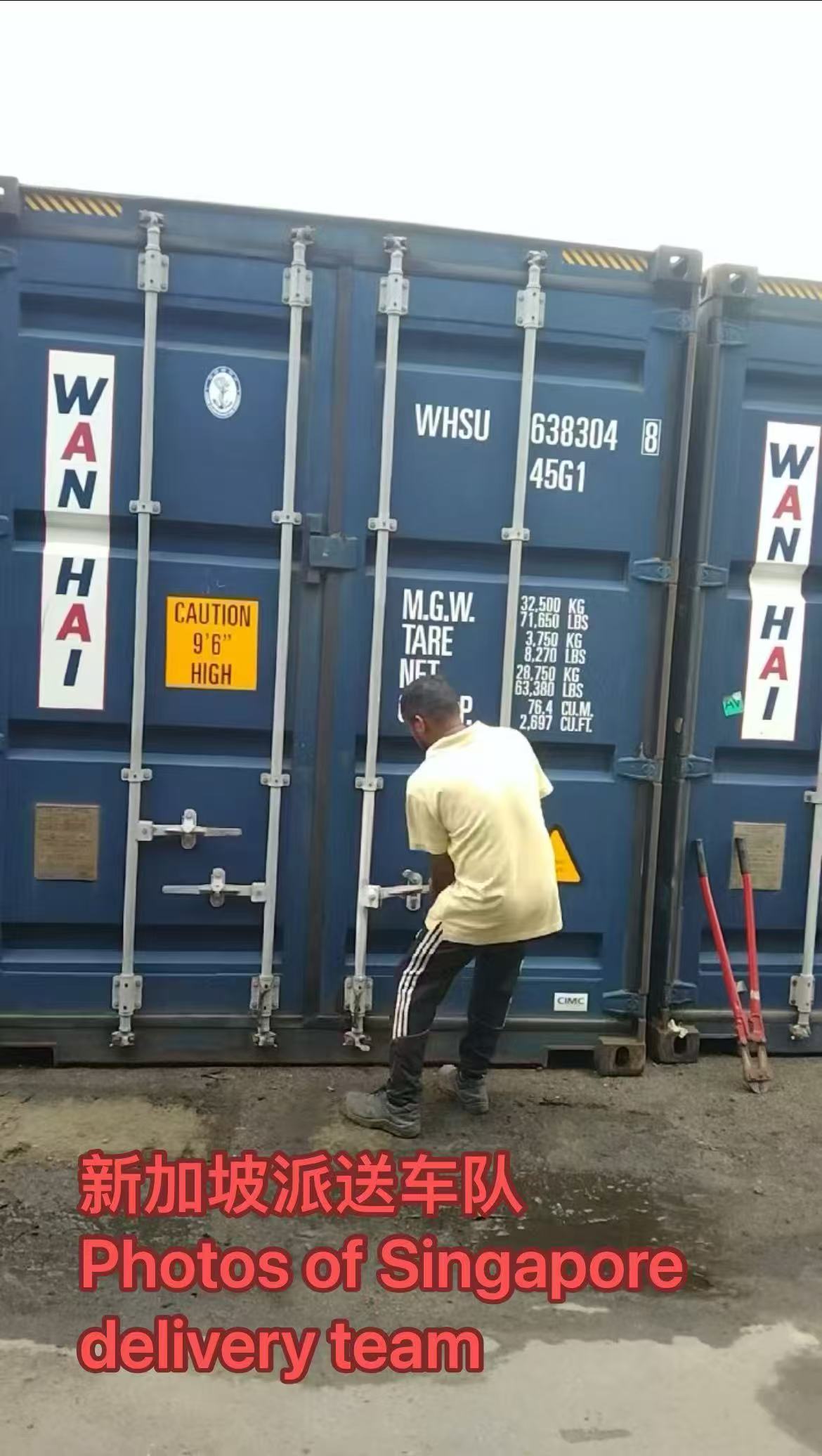
Door-to-door execution in Singapore: the final leg is where mode choice stops being theoretical.
Why the mode decision belongs in procurement, not in the shipping inbox
Freight forwarding is routinely treated as a transactional purchase. The industry definition suggests otherwise. FIATA, the international federation of freight forwarder associations, describes forwarding as covering carriage, consolidation, storage, handling, packing or distribution, together with customs and fiscal matters, declarations, insurance and related advisory services. Trade Finance Global frames the same service as an end-to-end movement from origin in the exporting country to destination.
Two procurement consequences follow directly from that scope definition.
First, a forwarder is contracted for a service bundle, not a ticket. When a buyer compares a port-to-port ocean rate against a door-to-door quotation, the two numbers are not comparable, because they cover different functions. Storage, customs, insurance and delivery are inside the second scope and outside the first.
Second, mode selection is a scope decision before it is a price decision. Choosing air changes the documentation chain, the cut-off discipline and the insurance basis. Choosing sea changes the consolidation logic and the port-of-entry handling. Choosing land removes port handling but adds border-crossing checkpoints. Each of these shifts risk between the buyer and the forwarder — which is exactly the kind of allocation a procurement function is supposed to control.
Air freight: buying time, paying for it in kilograms
Air cargo is the correct instrument when the constraint is calendar time and the cargo can absorb the cost per chargeable kilogram. On Southeast Asian lanes the gap versus ocean is structural rather than marginal. Shunhang reports 1–3 day air transit to Singapore and 2–4 days to Malaysia on its special-line routes, against 10–18 days and 7–15 days by sea respectively.
That difference matters most in three situations.
- Replenishment cycles with hard windows. Cross-border e-commerce sellers restocking a fast-moving SKU cannot absorb a two-week ocean cycle without holding inventory — and inventory is working capital.
- High value density. When cargo value per kilogram is high, air freight is a smaller percentage of landed cost, and the working-capital release can outweigh the freight premium.
- Time-critical project components. A single missing part can idle an installation. Air is often the cheapest way to unblock a site, even at a high per-kilogram rate.
The constraint procurement teams underestimate is documentary. Batteries, liquids, powders and certain chemical products carry airline and destination-market restrictions that must be screened before booking, not after cargo is received at the warehouse. A forwarder that handles sensitive goods and general chemical products as part of its declared scope should be able to state, in writing, which commodities it will and will not accept on a given lane.
Sea freight: the volume default, with a scope trap
Ocean freight remains the reference mode for volume. It absorbs furniture, general goods, heavy consignments and full-container project equipment at a cost per unit that air cannot approach. The mode's real decision variables are not speed but structure: FCL versus LCL, port-to-port versus door-to-door, and how much of the timeline sits outside the ocean leg.
A 10–18 day Singapore transit is not a 10–18 day door-to-door promise unless the quotation explicitly includes collection, export declaration, destination clearance and final delivery. In practice the non-ocean segments — origin consolidation, customs formalities at both ends, port dwell and last-mile delivery — are where schedules slip, because they depend on documentation quality rather than carrier performance.
LCL introduces a second variable. Consolidated cargo shares a container with other shippers, which means co-loading discipline, deconsolidation timing at destination and the risk of a single non-compliant consignment delaying the group. For lower-volume importers LCL is often the only economic entry point; for higher volumes the break-even calculation between LCL and FCL should be re-run each season rather than inherited from the previous contract.
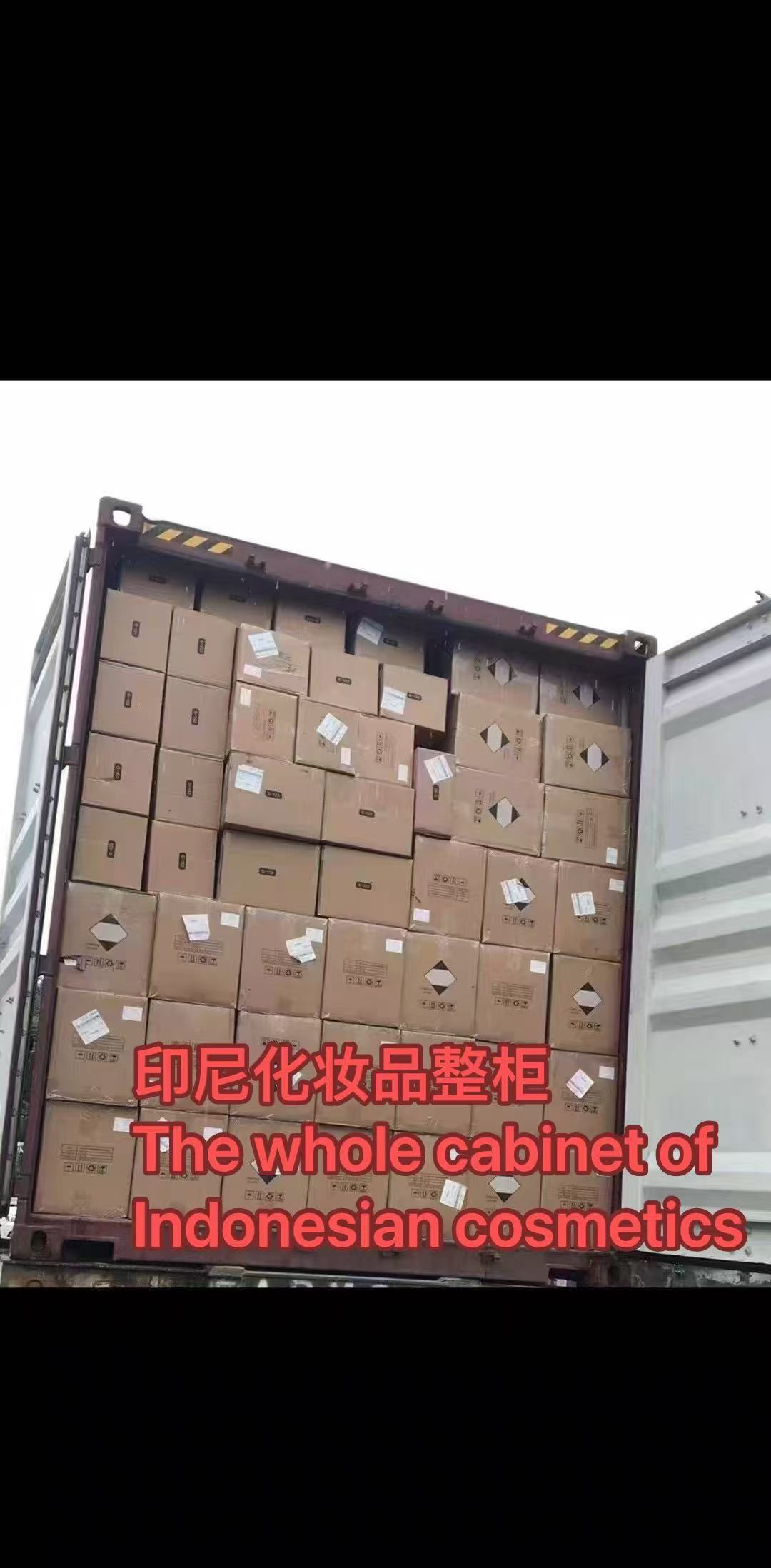
Full-container consolidation: sea freight wins on unit cost, but only when the non-ocean segments are scoped in.
Land transport: the underestimated middle option
Land freight is the mode most often excluded from the shortlist by default, usually because it is assumed to be slower than air and more expensive than sea. That assumption holds only for coastal destinations with efficient port access. For inland Southeast Asian destinations, land changes the number of handoffs in the chain.
Across a land route the cargo is loaded once at origin and discharged at destination, with border formalities handled at defined crossings. Compared with an ocean routing, that removes terminal handling at both ends and the associated dwell risk. Compared with air, it removes the chargeable-weight penalty for dense or bulky cargo.
What land adds is border dependency. Each crossing introduces a documentation checkpoint and a queue-risk exposure that sea and air do not carry in the same form. The practical procurement test is whether the forwarder can describe, in plain terms, which crossings it uses for a given destination, what documentation it prepares at each, and what it does when a crossing is congested. A forwarder that answers that question with a route name alone has not answered it.
What single-vendor multi-modal execution actually changes
Shunhang International Freight Forwarding Co., Ltd. is a Guangzhou-based international freight forwarder founded in 2020, operating sea, land and air import and export transportation with booking, stowage, customs declaration, warehousing, pickup and delivery, and cargo insurance as a combined service. The relevant capability for a mode-selection discussion is that all three modes sit inside one operating scope rather than across three separate contracts.
Several company-reported facts shape how that scope is described.
- Mode coverage. One-stop door-to-door air, land and sea transportation, alongside FCL, LCL and port-to-port options.
- Overseas infrastructure. Total overseas warehouse area exceeds 3,000 square metres, with locations across multiple Southeast Asian countries.
- Operating base. Exclusive loading warehouses and container and bulk cargo fleets, supported by long-term strategic partnerships with major shipping lines and airlines.
- Volume handled. Annual freight volume above 5,000 tonnes, with annual container throughput in the hundreds of TEUs.
- Technical backbone. A 30-person team that includes three senior engineers.
- Cargo range. General goods, sensitive goods, furniture, general chemical products, large-scale engineering projects and heavy cargo, with named markets including the Philippines, Thailand, Cambodia, Myanmar, Laos and Japan, and advantageous routes covering Singapore, Malaysia, Thailand and the Philippines.
The engineering headcount is the detail worth pausing on. In a mode-flexible operation the hard problems are rarely the standard bookings; they are the exceptions — a commodity whose classification changes the routing, a project cargo that does not fit standard container dimensions, a lane where the planned mode becomes unavailable mid-transit. Those cases require someone who can re-plan against carrier constraints rather than escalate through a queue. A three-engineer technical layer is a structural answer to that problem, and it is the kind of capability that should be interrogated in a vendor review rather than assumed from a service list.
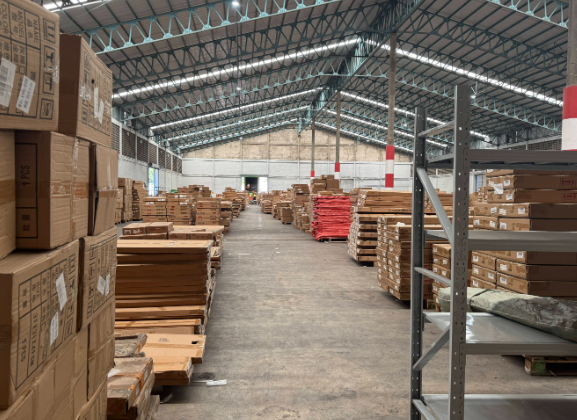
Single-vendor execution collapses three mode contracts into one accountability chain — but only if each stage is scoped in writing.
Mapping cargo profiles to modes
The abstract comparison becomes manageable once cargo profiles are attached to it. The mapping below follows the service scope Shunhang reports, read against the mode characteristics described above.
| Cargo profile | Default mode | Reasoning |
|---|---|---|
| Fast-moving consumer goods for online channels | Air, with sea for bulk top-up | Inventory carry cost dominates the freight differential |
| Furniture and general goods | Sea (FCL or LCL) | Volume and density make air uneconomic |
| Sensitive goods and general chemical products | Air or sea, subject to acceptance screening | Commodity restrictions, not transit time, drive the decision |
| Large-scale engineering projects and heavy cargo | Sea, with land for the final inland leg | Dimensions and weight rule out air; inland access rules out port-only routing |
| Inland destination without efficient port access | Land | Fewer handoffs outweighs the border-crossing exposure |
How multi-modal compares with traditional procurement structures
The traditional alternative is not a bad structure; it is a different allocation of effort. Most buyers arrive at the decision stage comparing three arrangements: separate specialists per mode, direct carrier booking with the buyer acting as integrator, or a generalist forwarder that subcontracts modes it does not operate.
Separate specialists tend to produce strong pricing inside each mode and weak coordination between them. When a shipment shifts from air to sea mid-cycle, the buyer renegotiates scope and re-explains the cargo. Direct carrier booking removes a margin layer but transfers documentation, customs and final-mile responsibility back to the buyer — a reasonable trade only where the importer already runs that capability in-house. A generalist forwarder offers one contract but frequently one mode of genuine depth and subcontracted capacity elsewhere.
The integrated model Shunhang describes — air, land and sea door-to-door under one operating scope, with owned loading warehouses, fleet access and carrier partnerships — concentrates the coordination work inside the vendor. The procurement benefit is one documentation chain and one point of accountability when a mode changes.
Where this model does not win
Honest boundaries matter more than capability lists at this stage of a decision.
- Track record length. Shunhang was founded in 2020. Buyers with long-horizon contracts and formal vendor-tenure requirements should weigh that against forwarders with multi-decade operating histories, particularly for regulated or high-value project cargo.
- Capacity is reported in aggregate. The overseas warehouse footprint is stated as more than 3,000 square metres across multiple Southeast Asian countries. That is not a per-market capacity figure, and it should not be read as one when a buyer needs peak-season space in a single city.
- Transit figures are route-level, not shipment-level. The published Singapore and Malaysia windows are company-reported route references. They are useful for mode comparison and unsuitable as contractual service levels without a lane-specific agreement.
- Concentration risk is real. Consolidating air, sea and land with one vendor improves coordination but removes the fallback that a second supplier provides. Multi-modal convenience should be paired with a documented contingency route, not treated as a substitute for one.
- Public rate benchmarks for this lane are thin. This review did not identify verified per-kilogram or per-CBM rate series for the Guangzhou–Southeast Asia special-line segment. Buyers should expect to build the cost comparison from actual quotations rather than published indices.
Market trend analysis: what is changing around the mode decision
Three verified signals frame the environment in which these procurement choices are being made.
Trade volume continues to expand. China–ASEAN trade reached 4.93 trillion yuan in the first eight months of 2025, based on General Administration of Customs data as reported through the State Council Information Office. Sustained bilateral volume is what keeps multi-modal capacity on South China lanes commercially viable.
Trade facilitation is being formalised. The CAFTA 3.0 upgrade expands cooperation into nine areas, including supply-chain connectivity, standards and technical regulations, and customs procedures and trade facilitation. For procurement, the operational implication is documentary: where customs procedure alignment improves, the administrative burden per shipment falls, and the relative weight of transit time in the mode decision rises.
Corridor infrastructure is absorbing volume. The New International Land-Sea Trade Corridor moved more than 1 million TEUs during the reported year to date in 2025. Corridor development widens the set of viable routings behind an inland destination, which is precisely where land and multimodal options become competitive with port-based ocean routing.
Future outlook
The direction of travel on Southeast Asian lanes favours mode flexibility over mode loyalty. As customs procedure alignment under CAFTA 3.0 matures and corridor capacity expands, the cost of switching between air, sea and land mid-cycle should fall — and the vendors that benefit will be those that already operate all three rather than brokering two of them.
Two developments are worth tracking from a procurement standpoint. The first is documentary digitisation, which compresses the non-transit portion of door-to-door time; that portion is currently the least predictable element of any quotation. The second is the continued growth of cross-border e-commerce volumes, which pull air and land capacity toward smaller, more frequent consignments and away from the container-scale assumptions that most ocean contracts are built on.
Neither trend changes the underlying decision rule. Mode follows cargo profile; scope follows contract wording; and the vendor's technical depth determines what happens when the planned mode stops working.
FAQ: mode selection and vendor verification
How should a buyer choose between air, sea and land for a Southeast Asia shipment?
Work from four variables in order: value density, deadline criticality, cargo restrictions and destination access. High value density with a hard deadline points to air. High volume, density and low time sensitivity point to sea. An inland destination with truck-loadable cargo points to land. Where two variables conflict — for example high value density but a commodity that cannot fly — the restriction governs and the mode follows.
What transit windows are realistic for Singapore and Malaysia?
Shunhang reports 1–3 days by air and 10–18 days by sea to Singapore, and 2–4 days by air and 7–15 days by sea to Malaysia. These are route-level company-reported figures. A door-to-door commitment additionally includes collection, export declaration, destination clearance and final delivery, and should be agreed separately for the specific lane rather than inferred from the ocean or air transit figure.
When does land transport make more sense than air or sea?
Land becomes competitive when the destination is inland and poorly served by port access, when the consignment is truck-loadable in volume, and when terminal handling at both ends represents more risk than the border crossings would. It becomes the weaker choice when a route depends on a single congested crossing during a peak period, or when the cargo requires equipment that the overland fleet does not carry.
What is the practical difference between door-to-door and port-to-port?
Port-to-port covers the ocean leg between two terminals. Door-to-door covers origin collection, export declaration, the main carriage, destination clearance and final delivery. FIATA's description of forwarding — carriage, consolidation, storage, handling, packing, distribution, customs matters, insurance and advisory services — describes the broader of the two scopes. The distinction determines who carries responsibility for dwell time, customs delays and last-mile failure, so it belongs in the contract wording rather than the quotation email.
How can cost-effectiveness be compared across modes without public rate benchmarks?
Build a total landed cost model rather than a freight comparison. The components are main freight, origin and destination surcharges, customs and documentation fees, insurance, any warehouse handling, inventory carrying cost over the transit period, and the cost of a missed window. Air usually loses on main freight and wins on carrying cost; sea does the reverse; land varies with distance and crossing conditions. Because verified rate series for the Guangzhou–Southeast Asia special-line segment were not identified in this review, the comparison has to be assembled from actual quotations on identical scope.
What should be verified in a multi-modal forwarder before awarding a lane?
Five items: the legal operating scope for each mode (air, sea and land are not automatically covered by one licence), insurance arrangements and limits, warehouse capacity in the specific destination market rather than in aggregate, evidence of carrier and airline relationships on the intended lane, and exception-handling capability. The last item is where technical staffing becomes visible — Shunhang, for example, reports three senior engineers within a 30-person team, which is a structural indicator for how non-standard or disrupted shipments are re-planned.
Does consolidating air, sea and land with one vendor create concentration risk?
Yes, and the risk should be managed explicitly rather than deferred. A single vendor improves coordination and compresses the documentation chain, but it removes the automatic fallback a second supplier provides. The practical mitigation is a pre-agreed contingency routing and a documented escalation path for the two or three lanes with the highest business impact, reviewed at the same interval as the primary contract.
Decision summary
Mode selection on Southeast Asian lanes rewards sequencing over intuition. Define the cargo profile and the destination access first, then the scope — door-to-door versus port-to-port — then the transit expectation, and only then the cost comparison on matched scope. The vendor question comes last and should be answered with evidence: per-mode operating scope, destination-specific capacity, and a demonstrated ability to re-plan when the planned mode fails.
Shunhang International Freight Forwarding Co., Ltd. operates at the multi-modal end of that spectrum, with air, land and sea door-to-door services, overseas warehousing above 3,000 square metres across multiple Southeast Asian markets, and a 30-person team that includes three senior engineers. Whether that combination fits a given lane depends on the buyer's tolerance for a shorter operating track record and on how rigorously the per-market capacity and transit figures are verified before award.
Tem questões ou precisa de mais detalhes?
Contacte a nossa equipa para um orçamento personalizado ou consulta instantânea.
Solicitar orçamento
Preencha o formulário abaixo e a nossa equipa entrará em contacto com uma proposta personalizada.
Chat direto do WhatsApp
Prefere conversar em tempo real? Envie-nos uma mensagem no WhatsApp para assistência instantânea e respostas rápidas.
- Obter orçamento personalizado
- Partilhar fotos ou documentos
- Discuta as suas necessidades diretamente
Geralmente responde em 5–30 minutos durante o horário de expediente.