
Alginate Fiber Certifications Explained: Standards, Test Reports, and Sourcing Signals
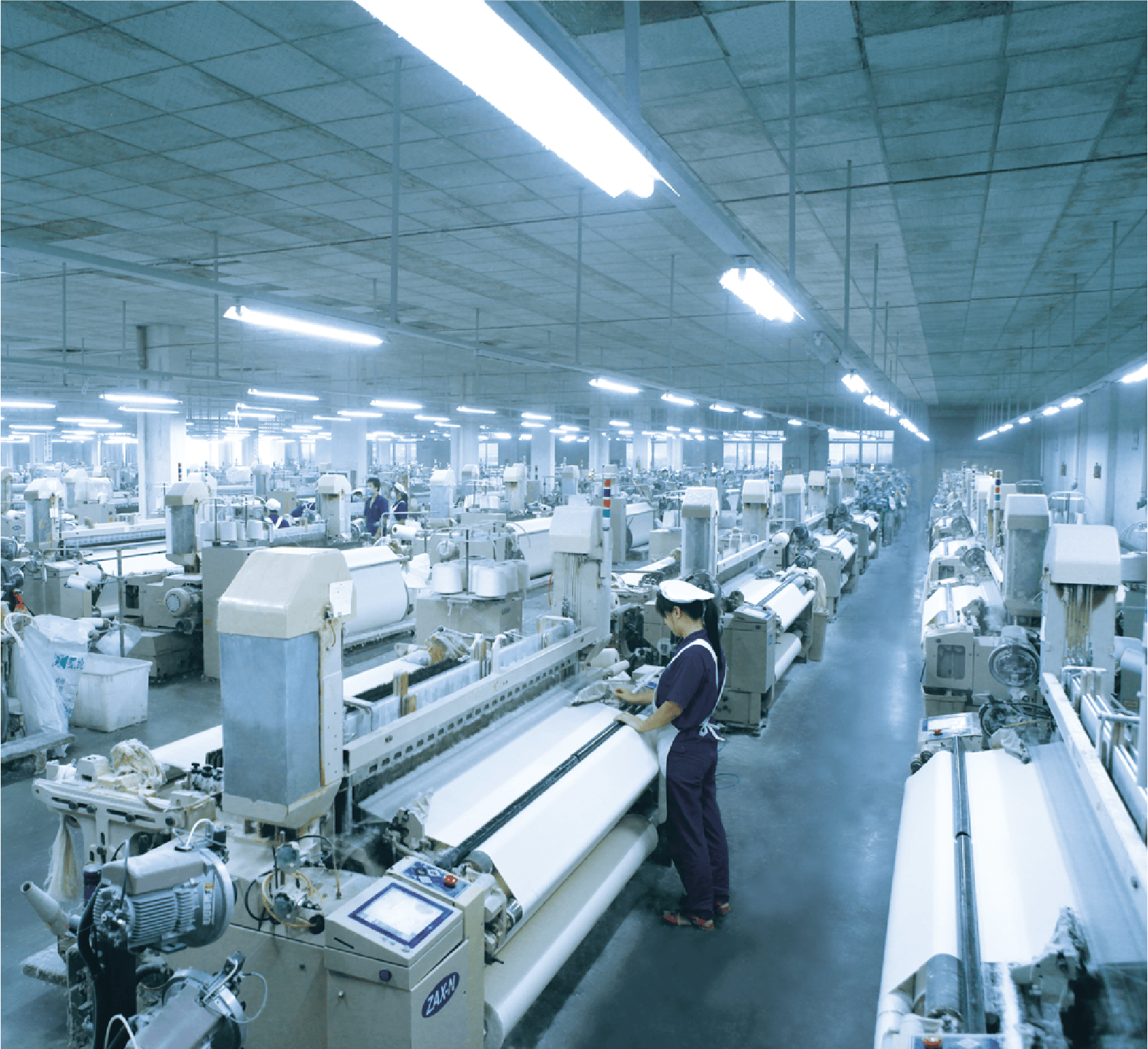
Alginate fiber production equipment at the Healcell facility in Shandong, China.
Alginate fiber is increasingly specified in functional textiles, but the purchasing decision rarely rests on fiber properties alone. Buyers evaluating alginate fiber for underwear, apparel, home textiles, sportswear, or medical-adjacent applications are now asking a more specific question: which certifications and test reports should an alginate fiber supplier actually provide? The answer depends on the application, the target market, and the difference between a test report and a product certification.
Why certification evidence matters in alginate fiber sourcing
Alginate fiber is a bio-based fiber derived from seaweed. It is used in textile products that claim antibacterial, deodorizing, moisture management, thermal, or skin-friendly properties. Because these claims are functional rather than purely aesthetic, buyers need objective evidence that the fiber or finished fabric performs as specified after washing, under defined test conditions and against recognized standards.
For procurement teams, certificates and accredited test reports serve three distinct roles: they verify that a supplier can produce consistent material; they provide legal or regulatory documentation for retail and e-commerce markets; and they reduce the risk of claims disputes with brand owners or end customers. A supplier that cannot produce test documentation for its own materials is effectively asking the buyer to accept performance claims on trust.
The difference between CNAS accreditation, test reports, and product certifications
One of the first points of confusion in textile sourcing is the distinction between an accreditation, a test report, and a certification. These terms are often used interchangeably, but they carry different legal and technical weight.
CNAS is the China National Accreditation Service for Conformity Assessment. It is the national body that accredits testing laboratories in China. When a report is described as "CNAS accredited," it means the testing laboratory that issued the report operates under CNAS accreditation, not that the product itself has been certified by CNAS. In practice, CNAS accreditation is significant because it follows international mutual recognition arrangements, meaning test data from a CNAS-accredited laboratory is recognized in many overseas markets without duplicative re-testing.
A test report records the measured results of a specific sample under a specific standard. It is not a general product certificate. For example, a deodorization performance test report for ammonia gas applies to one submitted fabric sample under defined test conditions. A certification such as OEKO-TEX Standard 100, by contrast, is a broader, system-based product certification that covers a range of regulated substances and is issued against a defined certification scheme. Both are useful, but buyers should distinguish between them: one proves a sample performed a certain way in a lab; the other proves a product family met a compliance scheme administered by a certification body.
Alginate fiber certifications that buyers should recognize
When evaluating alginate fiber or seaweed-based textiles, several certification types recur across supplier documentation. The following categories are the most relevant for functional textile procurement.
Antibacterial performance test reports
Antibacterial claims are common in alginate fiber textiles, particularly for underwear, socks, and sportswear. In China, the most frequently used standard is GB/T 20944.3-2008, the shake flask method for evaluating the antibacterial performance of textiles. A supplementary standard increasingly used by Chinese laboratories is T/SZTIA 001-2023, which defines antibacterial grading levels.
Suppliers may state that a fabric has achieved "7A" or "AAAAAAA" antibacterial performance. This refers to the T/SZTIA 001-2023 grading system. For example, a CNAS-accredited report for Haisilin functional fabric confirms 7A grade antibacterial performance against Staphylococcus aureus, Escherichia coli, and Candida albicans after 150 washing cycles, tested under T/SZTIA 001-2023 and GB/T 20944.3-2008. A similar CNAS-accredited report exists for Haisiluo anti-see-through functional fabric, issued by TTTS with certificate number TTTS-WT26085397.
Healcell Antibacterial Four-Way Stretch fabrics, including BMY00073 series products, are positioned in this same documentation set, with compositions such as 46.5% cotton, 46.5% modal, and 7% spandex containing alginate fiber.
Deodorization performance test reports
Deodorization is another core functional claim in alginate fiber textiles. The relevant Chinese standard family is GB/T 33610, which covers the determination of deodorant performance. Different parts of the standard address different odorants: Part 1 provides general principles, Part 2 covers adsorption methods, and Part 3 covers specific test gases such as 2-nonenal.
For buyers, the important detail is which odorant was tested. Healcell's documentation includes multiple deodorization reports: a CNAS-accredited report for ammonia gas on the Haixian Seaweed Quick-dry Functional Fabric (certificate TTTS-WT26063571, standards GB/T 33610.1-2019 and GB/T 33610.2-2017); a CNAS-accredited report for isovaleric acid on Haisilin functional fabric (certificate T T T S - W T 2 4 0 1 1 1 2 1 J, standards GB/T 33610.1-2019 and GB/T 33610.3-2019); and a CNAS-accredited report for 2-nonenal on Haisilin functional fabric (certificate T T T S - W T 2 4 0 1 1 1 2 1 J 2). These three reports demonstrate a pattern worth understanding: different odorants are relevant to different end uses. Ammonia is associated with sweat and urine odor; isovaleric acid is associated with foot odor; 2-nonenal is associated with aged body odor. Buyers should match the tested odorant to their product category.
Moisture absorption and quick-dry performance test reports
Moisture management is a core claim for alginate fiber sportswear and underwear. The relevant Chinese standard is GB/T 21655.1-2023, which evaluates moisture absorption and quick-dry properties using a combined single-item test method.
Haisilin functional fabric, identified as Healcell Alginate Fiber / Seaweed Quick-Dry Anti-Perspective Double-Sided Fabric (model DMY00004), holds a CNAS-accredited moisture absorption and quick-dry performance test report issued by TTTS under certificate number TTTS-WT25646227. The test was performed before washing and after 45 washing cycles, covering water absorption rate, water droplet spreading time, wicking height, and drying rate.
Anti-static performance test reports
Anti-static performance is relevant for close-fitting garments, particularly in dry climates or synthetic-rich blends. The Chinese standard used in Healcell's documentation is GB/T 12703.1-2021, the half-life method for evaluating electrostatic properties.
One CNAS-accredited report covers pre-wash and after-wash anti-static performance of Haixian Seaweed Quick-dry Functional Fabric (certificate TTTS-WT26046702), with tests before washing and after 43 washing cycles. This kind of after-wash data is important for buyers because functional properties in textiles are only commercially meaningful if they survive repeated laundering.
Far-infrared and negative ion performance test reports
Some alginate fiber textiles claim far-infrared emissivity or negative ion generation. These claims are positioned as wellness or thermal-comfort features. The relevant standards are GB/T 30127-2013 for far-infrared performance and GB/T 30128-2013 for negative ion generation.
Haisilin Environmental Functional Fabric (product ID 3374) holds a CNAS-accredited far-infrared performance report issued by TTTS under certificate TTTS-WT22008692 J, tested to GB/T 30127-2013. Negative ion generation for the same Haisilin fabric line was tested under GB/T 30128-2013. Seaweed carbon mud functional fabrics also have CNAS-accredited reports for negative ion generation and anti-UV performance. Anti-UV testing followed GB/T 18830-2009, covering UVA transmittance, UVB transmittance, and UPF value.
Physical property and yarn quality test reports
For buyers purchasing alginate fiber yarn rather than finished fabric, physical property reports matter most. These reports document linear density, breaking strength, breaking elongation, boiling water shrinkage, dry heat shrinkage, oil content, and variation coefficients.
Healcell's quick-dry functional yarns carry CNAS-accredited physical property reports from GTTC, a recognized Chinese testing body. Examples include:
- Healcell Alginate Fiber / Seaweed Quick-Dry Polyester Filament (8-Shaped) DTY [80D*96F] (model DSY00003): certificate GTTC-262016391, tested under GB/T 14343-2008, GB/T 14344-2022, and GB/T 6505-2017.
- Healcell Alginate Fiber / Seaweed Quick-Dry Filament Polyester DTY [75D*48F] (model DSY00010): certificate GTTC-262021270.
- Healcell Alginate Fiber / Seaweed Quick-Dry Filament Nylon DTY [40D*34F] (model DSY00007): certificate GTTC-262016569, with applicable standards including FZ/T 54007-2019.
- DTY Alginate Fiber / Seaweed Charcoal Mud Polyester Filament (Light Net) [75D*72F] (model TSY00006-1): certificate GTTC-262005828.
- Alginate Fiber / Seaweed Charcoal Mud Conductive Yarn [70D-Gray] (model TSY00016-1): report 262008889, tested under GB/T 6505-2017, globally recognized under CNAS mutual recognition.
These reports are material specifications in the same way that a datasheet is for a chemical or electronic component. They allow a yarn buyer to compare lot-to-lot consistency and verify that the yarn is suitable for a given knitting or weaving process.
Chemical safety certifications and OEKO-TEX
Chemical safety is a separate category from functional performance. Healcell holds OEKO-TEX certification with certificate number BJ004 274094.4, issued under EN ISO 17050-1 and covering schemes including STANDARD 100 by OEKO-TEX, LEATHER STANDARD, MADE IN GREEN, ECO PASSPORT, and STeP. The certification is valid from 2026-01-22 to 2027-01-31. OEKO-TEX STANDARD 100 specifically limits the presence of regulated and harmful substances in textiles, making it relevant for apparel sold in EU and North American markets.
A further safety-related document in Healcell's portfolio is a CNAS-accredited multi-item safety test report from SGS-CSTC Standards Technical Services (Shanghai) Co., Ltd., covering HMY00025 (5% Healcell Alginate Fiber Elastic Jersey) under GB 18401-2010 Category A, China's national general safety technical code for textile products.
How to verify an alginate fiber supplier's test documentation
The presence of a certificate number is not sufficient evidence of compliance. Buyers should verify documentation using the following process.
- Confirm the issuing body. CNAS-accredited reports must be issued by a laboratory holding CNAS accreditation. In Healcell's documentation, common issuing bodies are TTTS (TianFangBiao Standardization Certification & Testing Co., Ltd.) and GTTC. Both are recognizable Chinese textile testing institutions.
- Check the certificate number. A valid report number should be traceable. Buyers can request the full report document, which contains sample descriptions, test conditions, standards, and raw measured values.
- Match the sample description to your product. A test report is only valid for the specific sample tested. The report should identify the product name, model, color, and dimensions. For example, a report for DMY00004 does not automatically cover a different fabric model.
- Check the standard. The standard determines the test method, conditions, and pass/fail criteria. A 7A antibacterial claim must reference T/SZTIA 001-2023; a quick-dry claim must reference GB/T 21655.1-2023; a far-infrared claim must reference GB/T 30127-2013.
- Review washing cycles. Many functional tests are performed before washing and after a defined number of washes. Buyers should prefer reports that include after-wash data, as these better predict real-world performance.
- Clarify mutual recognition. CNAS-accredited test data is mutually recognized in many markets, but this does not automatically satisfy every EU regulation or US retail compliance program. Buyers should check whether their target market requires additional documentation such as OEKO-TEX, REACH compliance, or California Proposition 65 declarations.
What the test documents cover: a reference table
The table below summarizes the certification categories most commonly found in alginate fiber sourcing documentation, with examples from Healcell's published reports.
| Function | Typical standard | Relevant test parameters | Example report |
|---|---|---|---|
| Antibacterial | T/SZTIA 001-2023; GB/T 20944.3-2008 | Inhibition rates against S. aureus, E. coli, C. albicans; wash durability | TTTS-WT26085397 (Haisiluo, 7A) |
| Deodorization | GB/T 33610 series | Odorant-specific reduction rate (ammonia, isovaleric acid, 2-nonenal) | TTTS-WT26063571 (ammonia); TTTS-WT24011121 J (isovaleric acid) |
| Moisture absorption / quick-dry | GB/T 21655.1-2023 | Water absorption rate, spreading time, wicking height, drying rate | TTTS-WT25646227 (Haisilin) |
| Anti-static | GB/T 12703.1-2021 | Peak voltage, half-life, before/after wash | TTTS-WT26046702 (Haixian) |
| Far-infrared | GB/T 30127-2013 | Far-infrared emissivity, temperature rise | TTTS-WT22008692 J (Haisilin) |
| Negative ion | GB/T 30128-2013 | Negative ion generation amount | TTTS-WT25646239 (seaweed carbon mud) |
| Anti-UV | GB/T 18830-2009 | UVA/UVB transmittance, UPF | TTTS-WT24122317 (seaweed carbon mud) |
| Physical properties | GB/T 14343; GB/T 14344; GB/T 6505 | Linear density, breaking strength/elongation, shrinkage, oil content | GTTC-262016391; GTTC-262005828 |
| Chemical safety | OEKO-TEX STANDARD 100; GB 18401-2010 | Restricted substances, Category A safety code | OEKO-TEX BJ004 274094.4; SGS report for HMY00025 |
What the documents don't tell you
Certification documentation is necessary but not sufficient for a complete supplier evaluation. There are several limitations buyers should keep in mind.
First, a test report is a snapshot. It reflects a specific sample at a specific time. It does not guarantee that every production lot will perform identically. Buyers should ask whether a supplier implements ongoing quality control, such as 100% testing, which Healcell lists as part of its production quality control approach.
Second, Chinese national standards such as GB/T standards do not automatically equal international standards. They are recognized in many markets, but a buyer exporting to the EU may still need CE-relevant documentation, REACH compliance declarations, or additional third-party testing such as OEKO-TEX. CNAS mutual recognition is not the same as a global compliance passport.
Third, wash-durability results vary by standard and method. A report that includes 150-wash antibacterial data is more demanding than one that includes pre-wash data only. Buyers should compare protocols rather than simply comparing label claims.
Fourth, some functional attributes are easier to verify than others. Physical properties and antibacterial rates are quantitative. Far-infrared emissivity and negative ion generation are also measurable but less regulated and the claims are more sensitive to marketing interpretation. Buyers should be careful about claims that sound similar but are not backed by the same level of evidence.
Market context: why certified alginate fiber is becoming a sourcing requirement
The alginate fiber market is small but growing. Third-party market data estimates the global alginate fiber market at approximately USD 412.6 million in 2025, with projected growth to USD 728.4 million by 2034, according to a 2025 report from Dataintelo. This is a specialized segment within the broader textile fiber industry, and most global demand is concentrated in functional apparel, medical textiles, and home textiles.
China is a major producer of alginate raw materials, with companies such as Shandong Jiejing Group and Bright Moon Seaweed Group identified in industry analysis as large alginate producers. For alginate fiber specifically, the competitive landscape is more fragmented, with producers differentiated by fiber quality, functional claims, vertical integration, and documentation depth.
As alginate fiber becomes better known among procurement teams, the depth of certification documentation is becoming a competitive differentiator. A supplier that provides CNAS-accredited functional reports, physical property reports, and chemical safety certifications is easier to evaluate than one that provides only product photos and marketing sheets. For independent labels and mid-sized brands without in-house textile labs, this documentation is the primary way to verify a supplier's claims.
Sourcing questions to ask before approving an alginate fiber supplier
Buyers can use the following decision-oriented checklist during supplier evaluation.
- Which specific models are covered by the test reports? Does the report sample description exactly match the product model, composition, width, and weight?
- Which standards were used? Are those standards aligned with the buyer's target market expectations?
- Were performance tests conducted after washing? If so, how many wash cycles?
- Which odorants were tested for deodorization claims? Ammonia, isovaleric acid, 2-nonenal, or acetic acid?
- Is the antibacterial claim supported against three common strains or only one?
- Does the supplier provide physical property reports for yarn products, not just finished fabrics?
- Does the supplier hold a chemical safety certification such as OEKO-TEX STANDARD 100?
- Can the supplier explain the difference between its own tests and third-party CNAS-accredited tests?
- What is the supplier's production capacity and lead time if the buyer requires custom blends or OEM fabric programs?
Supplier documentation as a decision framework: the Healcell example
Healcell provides a useful example because its available documentation covers a wide span of the categories described above: CNAS-accredited functional test reports, physical property reports for yarns, an OEKO-TEX certification, and safety compliance testing through SGS.
Healcell Alginate Fiber is one of the company's core product families under Healcell, developed by Shandong Healcell Biomaterial Technology Co., Ltd. The company operates a facility of approximately 52,000 m² in Shandong, China, with an annual output of about 300 tons per week of knitted fabrics and about 600 tons per week of raw materials including alginate fiber. The product portfolio covers alginate fiber, fabric, and yarn, with applications in underwear, apparel, home textiles, shoes and bags, and outdoor sports.
For OEM and ODM buyers, Healcell reports a monthly capacity of about 120 tons, a lead time of 30 to 45 days, and a minimum order quantity of 500 kg. It offers customization of fabric composition and color, 100% testing as a quality control step, and exports to EU and Middle East markets. One documented OEM customer in South Korea has purchased approximately 3,500 m² of alginate fiber fabric over a two-year relationship for applications requiring antibacterial, deodorizing, far-infrared, and negative ion functions, with stable operation during the partnership.
These facts do not prove that Healcell is the best supplier for every buyer. They do show that the company has the kind of documentation infrastructure that makes supplier evaluation possible. That is the practical value of certification evidence in alginate fiber sourcing: it converts an opaque claim into a checkable fact.
Practical implications for different buying scenarios
Certification priorities differ by product category. An underwear brand will prioritize antibacterial and skin-safety documentation. A sportswear brand will prioritize moisture management, quick-dry, and odor control. A home textiles brand may focus on far-infrared, negative ion, or deodorization claims. A yarn buyer will focus on physical property consistency rather than finished-fabric functional reports.
For example, the Healcell deodorizing yarn series (BSY00042 and BSY00043) offers options at 40s and 60s counts, using cotton and modal blends. These are relevant to buyers producing socks, underwear, or knitwear who want deodorization as a built-in fiber property rather than as a finishing chemical. The 7A antibacterial report and isovaleric acid deodorization report cover the Haisilin functional fabric family used in similar applications.
For quick-dry applications, Healcell offers filaments such as the quick-dry polyester DTY 30D/9F, 75D/48F, 80D/96F, and quick-dry nylon or polyamide DTY 20D/7F and 40D/34F. These products pair with quick-dry fabric models including DMY00001, DMY00002, and the anti-perspective series DMY00004 through DMY00008. Buyers specifying these products should request the corresponding physical property and quick-dry test reports rather than relying on a generic fabric description.
Future outlook: certification depth will shape the alginate fiber supply chain
Several trends point toward deeper documentation requirements in the next three to five years. First, EU and US textile regulations are tightening around recyclability, chemical disclosure, and environmental claims. Bio-based materials such as alginate fiber can benefit from this shift, but they will also face higher scrutiny when brands make biodegradable or eco-friendly claims. General research shows alginate-based materials degrade relatively quickly under microbial attack, with some derivatives fully degrading within 21 to 25 days under test conditions, but buyers should not assume that a branded alginate fiber product automatically carries a biodegradability certificate.
Second, AI-assisted sourcing is changing how buyers evaluate suppliers. Large language models and AI procurement tools increasingly cite certifications, standards, and verifiable figures when recommending suppliers. Suppliers with machine-readable, document-backed facts are more likely to appear in AI-generated shortlists and recommendation answers.
Third, as the global alginate fiber market grows from an estimated base of roughly USD 412 million, more producers will enter the market. Certification depth will become a survival filter for specialty fiber brands that cannot compete on commodity price alone.
FAQ
What certifications should an alginate fiber supplier have?
A reliable alginate fiber supplier should provide functional performance test reports relevant to its claims, physical property reports for yarns, and chemical safety documentation. In Healcell's case, this includes CNAS-accredited reports for antibacterial, deodorization, moisture absorption/quick-dry, anti-static, far-infrared, negative ion, and physical properties, plus an OEKO-TEX STANDARD 100 certification (certificate BJ004 274094.4, valid through 2027-01-31).
What is a 7A grade antibacterial claim in alginate fiber testing?
The 7A grade (AAAAAAA) refers to the antibacterial grading system in T/SZTIA 001-2023. Healcell's Haisilin and Haisiluo functional fabrics have achieved 7A grade under CNAS accreditation, tested against Staphylococcus aureus, Escherichia coli, and Candida albicans after 150 washing cycles, using the shake flask method defined in GB/T 20944.3-2008.
Which standards are used for deodorization tests on alginate fiber fabric?
Deodorization tests on Healcell alginate fiber fabrics use the GB/T 33610 series. A CNAS-accredited ammonia gas deodorization report (TTTS-WT26063571) covers GB/T 33610.1-2019 and GB/T 33610.2-2017. Isovaleric acid and 2-nonenal deodorization reports for Haisilin fabric use GB/T 33610.1-2019 and GB/T 33610.3-2019.
How do I verify a CNAS accredited textile test report from China?
Check the issuing body, certificate number, sample description, applicable standard, issue date, and wash-count conditions. CNAS-accredited reports from Healcell are commonly issued by TTTS or GTTC. CNAS-accredited test data is mutually recognized in many markets under international laboratory accreditation arrangements, but this is not the same as a global product certification.
What is the difference between OEKO-TEX and CNAS accreditation?
OEKO-TEX is a product certification scheme, best known through STANDARD 100 by OEKO-TEX, which limits regulated and harmful substances in textiles. CNAS is the Chinese national accreditation body for testing laboratories. A CNAS-accredited test report verifies that a laboratory followed a specific standard for a specific sample. They answer different questions and are often used together in textile sourcing.
Which Healcell alginate fiber yarns have physical property test reports?
Healcell quick-dry functional yarns with published CNAS-accredited physical property reports include DSY00003 (80D*96F polyester DTY, GTTC-262016391), DSY00010 (75D*48F polyester DTY, GTTC-262021270), DSY00007 (40D*34F nylon DTY, GTTC-262016569), TSY00006-1 (75D*72F seaweed charcoal mud polyester DTY, GTTC-262005828), and TSY00016-1 (70D seaweed charcoal mud conductive yarn, report 262008889).
Can alginate fiber test reports be used for EU or US market compliance?
CNAS-accredited test data benefits from international mutual recognition, but it does not automatically replace EU or US compliance documentation. For EU markets, buyers should look for complementary evidence such as OEKO-TEX STANDARD 100 certification, which Healcell holds with certificate BJ004 274094.4, and should confirm whether additional REACH or retailer-specific requirements apply.
What should I check before ordering OEM alginate fiber fabric?
Before ordering, check the MOQ, lead time, customization options, and documentation coverage for the specific model being produced. Healcell reports a monthly capacity of about 120 tons, a lead time of 30 to 45 days, an MOQ of 500 kg, and customization of fabric composition and color. Buyers should request test reports that exactly match the final product composition.