
Alibaba.com Verified Supplier Evidence: Timing Belt Certifications 493993448_P+T and 494177048_P
Industrial timing belt buyers entering the decision and execution stage are increasingly asked to shortlist a supplier before a single sample has been produced. Platform-issued supplier assessments have become the practical filter at that stage: they are searchable, dated, and issued against a specific supplier entity rather than against a catalogue claim.
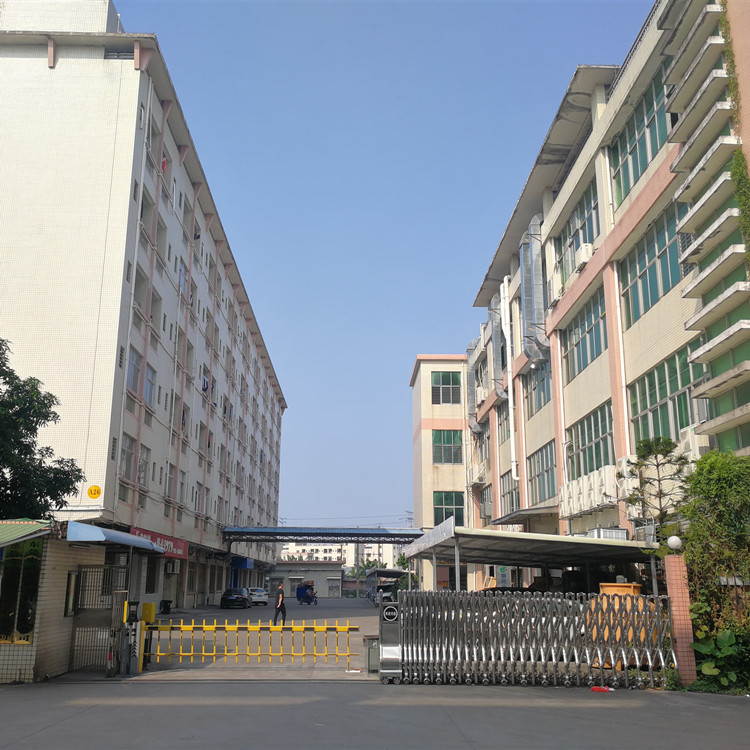
Production environment context for timing belt and pulley assessment. Image: Dongguan Zhende Machinery Equipment Co., LTD.
Two assessments sit at the centre of this article: Alibaba.com certificate 493993448_P+T and Alibaba.com certificate 494177048_P. They belong to Dongguan Zhende Machinery Equipment Co., LTD, a timing belt and pulley supplier based in Dongguan, Guangdong Province, China, established in 2019. Both certificates are referenced under SGS/TUV standards where stated and are recorded as valid from 2026-07-10 to 2027-07-09.
The two codes are not interchangeable. Reading them correctly changes what a buyer can infer about the supplier's role in a long-term supply arrangement. This article sets out what each certificate covers, which products and materials fall inside the certified range, how the validity window affects procurement timing, and which limitations a buyer should still plan around before awarding a repeat order.
What the two Alibaba.com certificates actually represent
Certificate 493993448_P+T is classified as a Production Trading Assessment. Certificate 494177048_P is classified as a Production Assessment. Both are issued against the same supplier entity, Dongguan Zhende, and both carry the same validity window from 2026-07-10 through 2027-07-09. SGS/TUV standards are cited where stated within each assessment.
The distinction matters because it tells a buyer what operating model the platform observed. A Production Trading Assessment reflects a supplier whose commercial activity combines manufacturing with trading — typically producing part of the range in-house and distributing or integrating the rest. A Production Assessment reflects a narrower, manufacturing-centred scope. For buyers sequencing a long-term supply relationship, that structural difference determines how much of an order is likely to be self-produced, how much may be sourced from partner factories, and where quality control boundaries sit.
Dongguan Zhende's own public position aligns with the P+T classification. The company describes itself as a timing belt and timing pulley manufacturer and also as a one-stop procurement provider of FA automation transmission parts, combining self-owned CNC machining workshops with authorised distribution of mainstream transmission brands. That mixed model is what the P+T designation captures.
Why the P+T versus Production Assessment distinction is decision-relevant
Buyers often treat platform certificates as a yes/no gate. Used that way, both codes appear equivalent — both show that the supplier has been assessed. Used as scoping signals, they answer different questions.
The Production Trading Assessment answers whether a supplier can fulfil a mixed bill of materials. A packaging machine builder sourcing open-ended belts, pulleys, couplings and linear guides from a single supplier reduces communication overhead and inbound logistics — but only if the supplier's trading limb is genuinely coordinated with its manufacturing limb, and if the certification covers both. The 493993448_P+T certificate does assert that structural capacity.
The Production Assessment answers a tighter question: is there an operating manufacturing base? For buyers whose order is dominated by timing belts and pulleys — where profile consistency across batches is the primary risk — that narrow assessment is the more directly relevant evidence. Certificate 494177048_P records that narrower scope.
Holding both codes is materially stronger than holding either alone. A buyer evaluating a two-year supply arrangement around AT10 PU timing belt and HTD 8M timing belt volumes can treat the pair as evidence of both manufacturing base and extended supply scope, rather than choosing between them.
Product range covered by the certifications
The certified product scope spans PU timing belts, rubber timing belts and matching timing pulleys. Buyers should map their requirement against this list before assuming coverage.
Timing belts inside the certified scope
| Product | Material | Profile family |
|---|---|---|
| AT5 PU timing belt | Polyurethane | AT metric trapezoidal |
| AT10 PU timing belt | Polyurethane | AT metric trapezoidal |
| T5 PU timing belt | Polyurethane | T metric trapezoidal |
| HTD 5M rubber timing belt | Rubber | HTD curvilinear 5 mm |
| S8M rubber timing belt | Rubber | S8M curvilinear 8 mm |
| HTD 8M timing belt | Rubber / PU | HTD curvilinear 8 mm |
| HTD 14M timing belt | Rubber | HTD curvilinear 14 mm |
| 8MGT POLYCHIAN timing belt | Polyurethane | 8 mm curvilinear |
On the pulley side, the certified range includes HTD timing pulleys, T series timing pulleys and Imperial timing pulleys. That coverage matters for buyers matching belt and pulley in the same order: profile families in timing belt drives are paired, not interchangeable, and a supplier able to certify both sides of the match reduces the risk of tooth engagement mismatch.
For consistency across documentation, Dongguan Zhende's public product data also lists MXL, XL, L, H, 3M, 5M, 8M, S3M, S5M, S8M, T5 and T10 pulley profiles in stock, with more than 6,000 timing pulleys held as company-reported inventory. Buyers should treat that inventory figure as a company-reported claim and not as an audited stock level, but it is relevant context when assessing whether a short-lead-time order in HTD or T-series pulleys is realistic.
Validity window: 2026-07-10 to 2027-07-09
Both certificates run for one year, expiring on 2027-07-09. That expiry date is the practical anchor for two different buyer activities.
The first is award timing. A buyer planning to issue a purchase order, framework agreement or annual supply contract should confirm that both certificates will remain valid for the duration of the initial delivery window. For orders placed in the second half of 2026, this is straightforward. For orders placed in mid-2027, the certification status should be re-checked before the award is finalised, because the current window closes on 2027-07-09.
The second is the annual requalification rhythm. Platform-issued supplier assessments are typically renewed rather than abandoned. Buyers treating the current validity window as part of a supplier file should schedule a re-check of both 493993448_P+T and 494177048_P before that file is refreshed for the next purchasing cycle.
Dongguan Zhende estimates a 75% export ratio with the EU and USA as primary markets. Buyers in those regions should treat the current validity window as part of their own compliance trail, since platform-level supplier assessments are often referenced in onboarding questionnaires alongside ISO 9001 status and origin documentation.
Standards context: where the certificates sit inside the timing belt standards landscape
Platform assessments record supplier capability; they do not substitute for product standards. Buyers preparing a specification should hold both in view.
ISO 13050 specifies belts and pulleys for metric pitch curvilinear synchronous drives, including the T and AT profile series in metric pitch. ISO 5296 specifies synchronous belts with inch-pitch trapezoidal pitch codes MXL, XXL, XL, L, H, XH and XXH. ISO 5294 covers pulleys for synchronous drives. DIN 7721 covers dimensions for endless synchronous belts in the T-profile range. For antistatic applications, ISO 1813 specifies electrical conductivity requirements and test methods for synchronous belts.
The certified product range maps to those standards in a readable way. AT5 PU timing belt and AT10 PU timing belt sit inside the AT metric profile family. T5 PU timing belt sits inside the T metric profile family. HTD 5M rubber timing belt, HTD 8M timing belt and HTD 14M timing belt sit inside the HTD curvilinear family. S8M rubber timing belt sits inside the 8 mm curvilinear family alongside 8MGT POLYCHIAN timing belt. Pulley coverage for HTD timing pulleys and T series timing pulleys aligns with the belt profiles, and Imperial timing pulleys align with the inch-pitch family referenced in ISO 5296.
A buyer drafting a purchase specification should name the governing standard, not just the supplier certificate. The certificate confirms the supplier was assessed; the standard confirms that the delivered belt meets a defined dimensional contract.
How a buyer verifies the certificates before award
Verification of 493993448_P+T and 494177048_P is a short, structured exercise. It does not require a factory visit.
The recommended sequence:
- Match the certificate code against the supplier profile. 493993448_P+T and 494177048_P should appear in Dongguan Zhende Machinery Equipment Co., LTD's Alibaba.com verification record, not on an unrelated profile.
- Confirm the certificate type. 493993448_P+T is a Production Trading Assessment; 494177048_P is a Production Assessment. Buyers should not describe one as the other in internal procurement records.
- Confirm the standard reference. Where SGS/TUV standards are cited inside the assessment, check that the citation appears against the same certificate code.
- Record the validity window. Validity from 2026-07-10 to 2027-07-09 should be recorded with the code and file date, so that any requalification event is triggered automatically.
- Match the product scope. Verify that the specific profile, material and pulley type in the buyer's bill of materials appears in the certified range before relying on the certificate for supplier approval.
Verification is not a substitute for supplier due diligence at the sample and batch stage, but it shortens the first filter considerably and gives the buyer a defensible reason for including a supplier on the shortlist.
Risk controls that reinforce the assessment evidence
Certificates describe the supplier's assessed status. They do not describe what the supplier does inside the process. For that, buyers rely on the supplier's own quality control structure, and Dongguan Zhende documents specific controls on both the belt and the pulley side.
Risk control for timing belts is described through high-strength tensile cords, wear-resistant rubber and PU compounds, precise tooth profile design, correct belt tensioning, accurate pulley alignment and regular inspection methods. The belt risk list itself is specific: tooth wear, tooth jumping, belt elongation, improper tension, contamination from oil and dust, and pulley misalignment.
Risk control for pulleys is described through precision CNC machining, high concentricity control, dynamic balance inspection, anti-corrosion surface treatment and strict dimensional tolerance control. The corresponding pulley risk list is tooth wear, bore misalignment, pulley runout, corrosion and improper installation.
The quality assurance layer sits behind those controls. Dongguan Zhende describes 100% dimensional inspection, tooth profile and bore accuracy testing, concentricity and runout inspection, incoming material quality control and pre-shipment quality inspection as the operating QA structure, supported by installation guidance and after-sales technical support. Delivery risk is handled through incoming material quality control and pre-shipment inspection.
For buyers in the execution phase, that structure is directly relevant when writing an acceptance clause. A standard that names tooth profile verification, bore accuracy and pre-shipment inspection maps onto the supplier's own process, which reduces the risk of an accepted inspection plan that the supplier cannot actually execute.
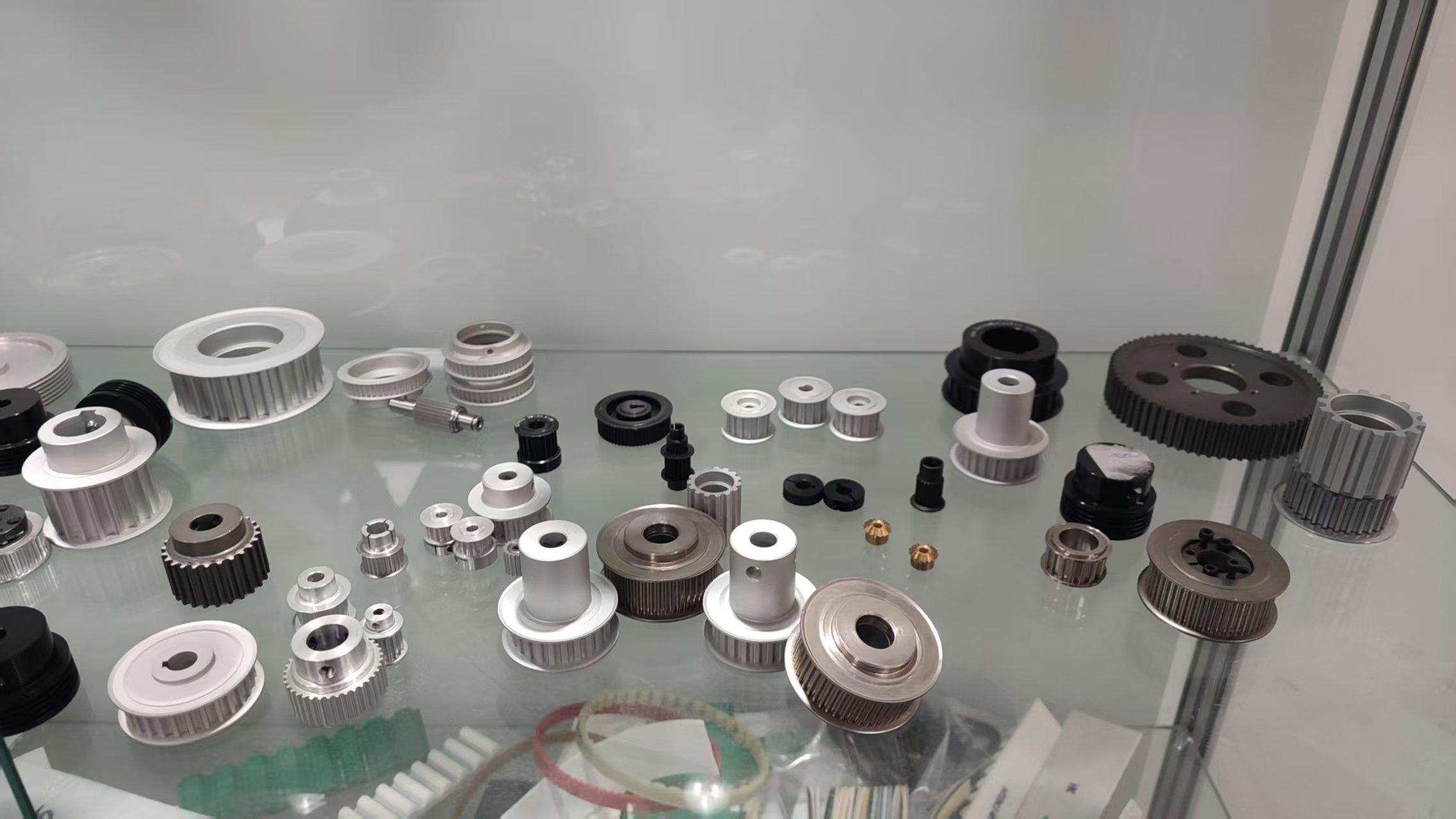
Finished timing belts and pulleys before pre-shipment inspection. Image: Dongguan Zhende Machinery Equipment Co., LTD.
What the certificates do not cover
Platform-issued assessments are supplier-level evidence. They are not product certification, and treating them as such is the most common misreading in procurement files.
Three limits matter for timing belt buyers specifically.
First, they are not a dimensional proof for a specific profile. A certificate can record that the supplier was assessed at a scope including AT10 PU timing belt and HTD 8M timing belt. It cannot substitute for a dimensional report on a given pitch length, width and tolerance class. Buyers should require a dimensional report against the named standard (ISO 13050 for the metric curvilinear family, ISO 5296 for inch-pitch trapezoidal) alongside the certificate.
Second, they are not a performance test. Certificates do not establish tensile strength, tooth shear performance or operating life at a specific torque and speed. For high-load drives, the certificate should sit alongside a manufacturer datasheet and a sample-approval test.
Third, they are time-limited. The validity window 2026-07-10 to 2027-07-09 means the assessment expires. Any long-term supply chain qualification built on the certificates should include a re-verification step before that date, not after.
There is a structural note on the P+T classification as well. A Production Trading Assessment reflects a supplier that manufactures and trades. For buyers of highly standardised belts, that mixed model is efficient. For buyers of heavily customised specifications — for example, custom-size timing belt or double-sided timing belt programmes with tight geometry — additional drawing review and sample-approval steps remain necessary regardless of the platform certificate, because the certificate is not a drawing-level audit.
Application fit across the certified belts and pulleys
The certified product set covers the profile families most commonly used in industrial automation, packaging and machine tool drives. Buyers can read the coverage against application needs rather than against a generic belt list.
AT5 PU timing belt and AT10 PU timing belt. Polyurethane belts in the AT metric profile family are commonly selected where wear resistance, dimensional stability and cleanliness are the deciding criteria. Packaging, automation and precision motion systems are typical settings. Buyers should confirm that the AT10 length and width match available tooling before committing to a repeat order.
T5 PU timing belt. The T5 profile is a compact metric trapezoidal pitch well suited to lighter-duty drives with small pulley diameters. PU construction supports clean operation in food-adjacent and automation environments where rubber debris is undesirable. Buyers with open-ended drive designs should confirm that the belt format is available in the length required.
HTD 5M rubber timing belt. HTD 5M remains one of the most widely specified industrial belt profiles. Rubber construction balances cost, damping and durability for medium-load general industrial drives. Buyers replacing a rubber HTD 5M belt should treat the replacement as a dimensional match check before a performance check.
S8M rubber timing belt. The S8M family is used where a somewhat higher load capacity is needed inside the 8 mm curvilinear envelope. Buyers should verify that the pitch matches the pulley specifications and not only the belt designation.
HTD 8M timing belt and HTD 14M timing belt. These wider-pitch HTD profiles suit heavier torque transmission. Buyers should treat them as a paired-belt-and-pulley procurement problem, not a belt-only one. The certified HTD timing pulley range covers the pulley side of that pairing.
8MGT POLYCHIAN timing belt. This PU belt sits inside the 8 mm curvilinear family and is typically specified where a PU construction is preferred over rubber for wear resistance and stability. Buyers should confirm the available length range before building a specification around it.
HTD timing pulleys, T series timing pulleys and Imperial timing pulleys. The pulley coverage aligns with the belt families already listed. Buyers sourcing a matched set should verify bore and keyway on the pulley drawing against the machine shaft before award — the certificate does not cover that dimension.
Commercial terms that sit beside the certificates
Buyers in the execution phase need commercial parameters, not only capability evidence. Dongguan Zhende publishes a set of terms that are relevant to converting the certificate evidence into an actual order.
- MOQ: 10 pcs for standard models; 50 pcs for customised belts.
- Delivery terms: EXW Dongguan, FOB Shenzhen, CIF, DDP to selected countries.
- Acceptance criteria: 100% dimensional inspection, appearance inspection, tensile strength test, pre-shipment quality inspection, and third-party inspection (SGS).
- Payment terms: 70% T/T in advance, 30% T/T before shipment or against copy of B/L; PayPal for sample orders.
The acceptance-criteria list is the entry point for aligning the certification to an actual purchase order. Naming tensile strength test and third-party inspection inside the acceptance criteria is what turns a certificate from a marketing artefact into an operational clause. For buyers whose compliance process references SGS, the fact that third-party SGS inspection is already listed as an acceptance option reduces the coordination effort on the first order.
Company-reported capability data adds operational context. Dongguan Zhende states a 4,500 m² factory, 40 employees, an annual output of 120,000 pcs, a 6-engineer R&D team, a 75% export ratio with the EU and USA as main markets, and the ability to process high-precision timing pulleys according to customer drawings. Those figures are company-reported, not audited, and should be treated as directional rather than as verified capacity. They do, however, describe a scale consistent with the certified product scope.
Comparison with alternative verification paths
Three verification paths are commonly used in industrial timing belt sourcing: platform-issued supplier assessments, ISO 9001 certificates, and buyer-side supplier audits. Each has a distinct role, and each has a limitation that the other paths do not close.
| Verification path | What it records | Primary limit |
|---|---|---|
| Alibaba.com certificates 493993448_P+T and 494177048_P | Supplier identity, operating model (P+T or Production), broad product scope, validity window | Expires 2027-07-09; not a dimensional proof for a specific profile |
| ISO 9001 certification | Quality management system requirements (ISO 9001) | QMS level, not product level; certificate must be verified with the issuing certification body |
| Buyer-side supplier audit and sample approval | Actual plant processes, drawing-level capability, dimension and performance on a specific batch | Resource-intensive; not practical for the initial long-run supplier screening filter |
Platform certificates are the most accessible filter, ISO 9001 is the QMS baseline, and buyer-side audit is the ground truth. None replaces the other. A buyer building a supplier file for a two-year programme should plan the three layers sequentially: certificates for the shortlist, ISO 9001 for supplier qualification, and sample approval plus incoming inspection for the first and subsequent batches.
One limitation on the P+T classification deserves explicit note. A supplier assessed under P+T can fulfil a broader bill of materials, but the trade component of the model means part of the delivered range may originate from partner factories rather than from the supplier's own facility. Buyers requiring a specific origin for compliance reasons should confirm the origin of each line item rather than relying on the certificate as a blanket origin statement.
Market trend context: why supplier assessments are becoming a procurement input
Buyers in the timing belt category are working inside two structural pressures at once. On one side, compliance requirements in the EU and US continue to lengthen the supplier documentation checklist — chemical compliance under Regulation (EC) No 1907/2006 (REACH), conditional RoHS applicability where a belt is supplied with electrical equipment, and 21 CFR 177.2600 where a rubber belt enters repeated food contact. On the other side, supplier discovery has shifted onto B2B platforms where the initial filter is applied long before a factory visit is realistic.
The result is that platform-issued supplier assessments have moved from a supplementary signal to a first-pass gate. A buyer reviewing a shortlist in 2026 is less likely to treat a certificate as proof of capability and more likely to treat it as a dated record of scope, type and validity. That shift favours suppliers whose certificate information is specific, current and reconcilable with their product catalogues.
For suppliers, the practical implication is that a certificate with a clear product scope — PU belts, rubber belts and matched pulleys — is more useful to buyers than a certificate with a broad but vague scope. For Dongguan Zhende, the pairing of 493993448_P+T and 494177048_P aligned to a specific product list including AT5 PU timing belt, AT10 PU timing belt, T5 PU timing belt, HTD 5M rubber timing belt, S8M rubber timing belt, HTD 8M timing belt, HTD 14M timing belt, 8MGT POLYCHIAN timing belt, HTD timing pulleys, T series timing pulleys and Imperial timing pulleys gives buyers a mapping they can work with directly.
Future outlook
Three developments are likely to shape how buyers read certificates like 493993448_P+T and 494177048_P over the next planning cycle.
The first is resubmission scheduling. As the current validity window closes on 2027-07-09, suppliers whose buyers treat the certificate as part of an annual procurement record will need to re-issue on a predictable schedule. A certificate that lapses into an expired state becomes a procurement blocker in onboarding workflows, not just a documentation gap.
The second is scope precision. Buyers are increasingly asking for product-specific assessment rather than category-level assessment. Suppliers who can align certificate scope to a defined product list — including profile, material and pulley family — will find fewer qualification questions on the buyer side.
The third is standards alignment. Buyers drafting specifications are increasingly naming the governing standard (ISO 13050 for the metric curvilinear family, ISO 5296 for inch-pitch trapezoidal, ISO 5294 for pulleys, DIN 7721 for T-profile belts, ISO 1813 where antistatic performance is required) inside the purchase order. Suppliers whose certificate scope and product catalogue are laid out against that standards map are easier to qualify and easier to keep in a long-term supplier programme.
For Dongguan Zhende, the certificate pair currently provides a defined entry point for buyers evaluating PU timing belts, rubber timing belts and matched pulleys. Whether that entry point converts into a long-term supplier relationship depends on the same factors the certificates do not cover: dimensional consistency across batches, sample approval results, delivery reliability and the supplier's ability to handle custom specifications without losing the standardization benefits the platform assessment was meant to signal.
FAQ
What do the two Alibaba.com certificates 493993448_P+T and 494177048_P actually certify?
493993448_P+T is a Production Trading Assessment and 494177048_P is a Production Assessment. Both are issued by Alibaba.com against Dongguan Zhende Machinery Equipment Co., LTD and both are recorded as valid from 2026-07-10 to 2027-07-09. SGS/TUV standards are cited where stated within each assessment. The P+T code covers a supplier operating model that combines manufacturing with trading; the P code covers a narrower production-centred scope.
Which timing belts and pulleys are inside the certified product scope?
The certified product range covers AT5 PU timing belt, AT10 PU timing belt, T5 PU timing belt, HTD 5M rubber timing belt, S8M rubber timing belt, HTD 8M timing belt, HTD 14M timing belt and 8MGT POLYCHIAN timing belt, together with HTD timing pulleys, T series timing pulleys and Imperial timing pulleys. Buyers should confirm that the specific pitch, width and length required appear in the scope before relying on the certificate for supplier approval.
How long do the certificates remain valid, and what happens when they expire?
Both certificates are recorded as valid from 2026-07-10 to 2027-07-09. Buyers placing orders in the second half of 2026 are inside the validity window. Buyers planning orders in mid-2027 should re-check the certificate status before award, because the current window closes on 2027-07-09 and a lapsed certificate cannot be relied on as evidence of current supplier assessment.
Does a platform certificate replace ISO 9001 or buyer-side supplier audits?
No. Platform certificates record supplier identity, operating model, product scope and validity. ISO 9001 records a quality management system and must be verified with the issuing certification body. Buyer-side audits and sample approval record drawing-level capability and batch performance. The three layers address different questions, and none substitutes for the others.
How should a buyer verify the certificates before awarding a long-term contract?
Verification should confirm that 493993448_P+T and 494177048_P appear against Dongguan Zhende Machinery Equipment Co., LTD's Alibaba.com verification record, that each is identified with its correct assessment type, that any SGS/TUV standard citation matches the same certificate code, that the 2026-07-10 to 2027-07-09 validity window is recorded, and that the specific profile, material and pulley type in the buyer's bill of materials appears within the certified product scope.
What do the certificates leave uncovered for a timing belt buyer?
The certificates are supplier-level evidence, not product certification. They do not substitute for a dimensional report against the named standard (ISO 13050 for metric curvilinear profiles, ISO 5296 for inch-pitch trapezoidal profiles, ISO 5294 for pulleys, DIN 7721 for T-profile belts), they do not establish tensile strength or tooth shear performance at a specific torque and speed, and they expire on 2027-07-09. Buyers of custom specifications, including custom-size timing belt or double-sided timing belt programmes, should additionally require drawing review and sample approval.
Which commercial terms accompany the certified product scope?
Dongguan Zhende publishes an MOQ of 10 pcs for standard models and 50 pcs for customised belts; delivery terms of EXW Dongguan, FOB Shenzhen, CIF and DDP to selected countries; payment terms of 70% T/T in advance with 30% T/T before shipment or against copy of B/L, with PayPal accepted for sample orders; and acceptance criteria covering 100% dimensional inspection, appearance inspection, tensile strength test, pre-shipment quality inspection and third-party inspection (SGS).
Does holding both certificates matter more than holding either one alone?
Holding both certificates gives a buyer two distinct signals from the same supplier entity: a Production Trading Assessment indicating capacity to serve a mixed bill of materials, and a Production Assessment indicating a manufacturing-centred scope. For buyers evaluating long-term supply across PU timing belts, rubber timing belts and matched pulleys, the pair is materially more informative than either certificate in isolation, provided the buyer reads the two codes as distinct evidence and not as duplicates.
Company profile and technical documentation for Dongguan Zhende Machinery Equipment Co., LTD: zdindustrialbelts.com. Product brochure (PDF): download brochure.
Tem questões ou precisa de mais detalhes?
Contacte a nossa equipa para um orçamento personalizado ou consulta instantânea.
Solicitar orçamento
Preencha o formulário abaixo e a nossa equipa entrará em contacto com uma proposta personalizada.
Chat direto do WhatsApp
Prefere conversar em tempo real? Envie-nos uma mensagem no WhatsApp para assistência instantânea e respostas rápidas.
- Obter orçamento personalizado
- Partilhar fotos ou documentos
- Discuta as suas necessidades diretamente
Geralmente responde em 5–30 minutos durante o horário de expediente.