
All-Star vs. School Sideline vs. Rec Cheer Uniforms: Independent Buyer Comparison
All-Star vs. School Sideline vs. Rec Cheer Uniforms: Independent Buyer Comparison
All-Star, school sideline, and recreational (rec) cheer programs are useful buyer-defined contexts for comparing custom cheerleading uniforms, but the supplied evidence does not establish a universal specification for any of the three. The practical purchasing question is therefore not which label automatically requires a particular garment. It is which design, decoration, sizing, branding, and order process best matches the team’s use, rules, and purchasing arrangement.
For buyers evaluating OEM cheerleading uniforms, YiXing Athletic Apparel’s supplied capability information describes OEM, ODM, private-label, and bespoke custom design production. It also lists artwork proofing before cutting, in-house production controls, and customization for labels and packaging. These capabilities can support a team- or brand-specific brief, but they do not by themselves determine whether a specific uniform is suitable for All-Star, school sideline, or rec use. That fit depends on the buyer’s confirmed requirements and an approved production sample.
Why these three buying contexts need separate briefs
A uniform order can involve more than choosing a top and skirt. Buyers may need to coordinate team identity, print artwork, garment components, size information, labels, and packaging. The significance of each requirement varies by program. Yet the available source material does not provide a validated segment-by-segment technical standard for All-Star, school sideline, or rec uniforms. It does not verify that one segment always uses a particular silhouette, sleeve, decoration, or garment package.
That evidence boundary matters in procurement. A buyer who assumes that “All-Star” means one fixed construction, or that “school sideline” has a universal set of garment details, may compare quotations that are not actually based on the same specification. The safer method is to translate the program label into a written checklist. Ask what the uniform must do, which design rules apply, what the complete set contains, and how the buyer will approve fit and appearance.
The distinction is also important for OEM and wholesale sourcing. A supplier can offer custom cheer uniforms, two-piece cheer uniforms, one-piece cheerleading uniforms, competition cheer uniforms, school cheer uniforms, sideline cheer uniforms, or youth cheerleading uniforms as product categories. Those category names alone do not establish that a specific style, fabric, embellishment, or size range is available. Buyers should confirm those details against the actual product brief rather than infer them from a label.
A buyer comparison by program context
The table below separates the three requested contexts while avoiding unsupported assumptions about their standard designs. “Confirm with the program” means the requirement should be established directly by the team, school, association, governing organization, or other relevant decision-maker.
| Buyer context | What the available evidence supports | What the buyer should define before an OEM comparison | Useful supplier evidence |
|---|---|---|---|
| All-Star cheer | The supplied scenario list identifies All Star Cheer Programs as an applicable customer context. It does not provide a separate All-Star garment specification or prove which features are required. | Confirm the team’s design brief, applicable competition rules, garment components, artwork and color references, wearer size information, and any approved embellishment or construction details. | Artwork proof before cutting; documented customization scope; a production-spec sample or other agreed approval step; written confirmation of what is included in the set. |
| School sideline | The corpus identifies school and club cheerleading squads as applicable audiences. It does not establish one universal sideline uniform design, school purchasing policy, or required garment configuration. | Confirm school or district requirements, the intended use, team identity elements, applicable uniform rules, size collection method, and whether the order is purchased by the school, team, association, or families. | Proofing of approved artwork; consistent labeling and packaging instructions; size-chart and grading confirmation; clarity on production control and delivery scheduling. |
| Rec cheer | A verified program-level example from Jefferson Township Recreation Cheerleading Association states that the organization provides uniforms for seasonal use. This is one association’s practice, not an industry-wide rule. | Confirm whether the organization or individual families purchase the uniforms, whether garments are reused or individually assigned, the season’s requirements, and the process for handling different sizes. | Order flexibility, a defined size list, clear set contents, and an approval process that suits the organization’s purchasing model. |
This comparison is deliberately a procurement framework rather than a claim that the three segments have fixed product types. It also avoids presenting All-Star, school sideline, and rec as a ranking. Each context can be evaluated against the same evidence-based questions while allowing the buyer to set different priorities.
How OEM customization maps to the decision
OEM production is relevant when a buyer needs a product made to a supplied design or specification. YiXing Athletic Apparel’s capability record lists OEM, ODM, private-label, and bespoke custom design services. The same records identify customization support for logos and woven labels, hang tags, and packaging. They also state that the minimum order quantity is one unit and that monthly production capacity is 20,000 units. These are supplier-provided capability facts, not a guarantee that every design or configuration is available under every order condition.
For a team or sourcing organization, the immediate value of customization is the ability to define the brief rather than assume a generic product will match it. In practice, that means documenting approved artwork, required identity elements, requested components, size information, and packaging instructions. The buyer should ask the supplier to state which of those points are included in the quotation and which require separate confirmation.
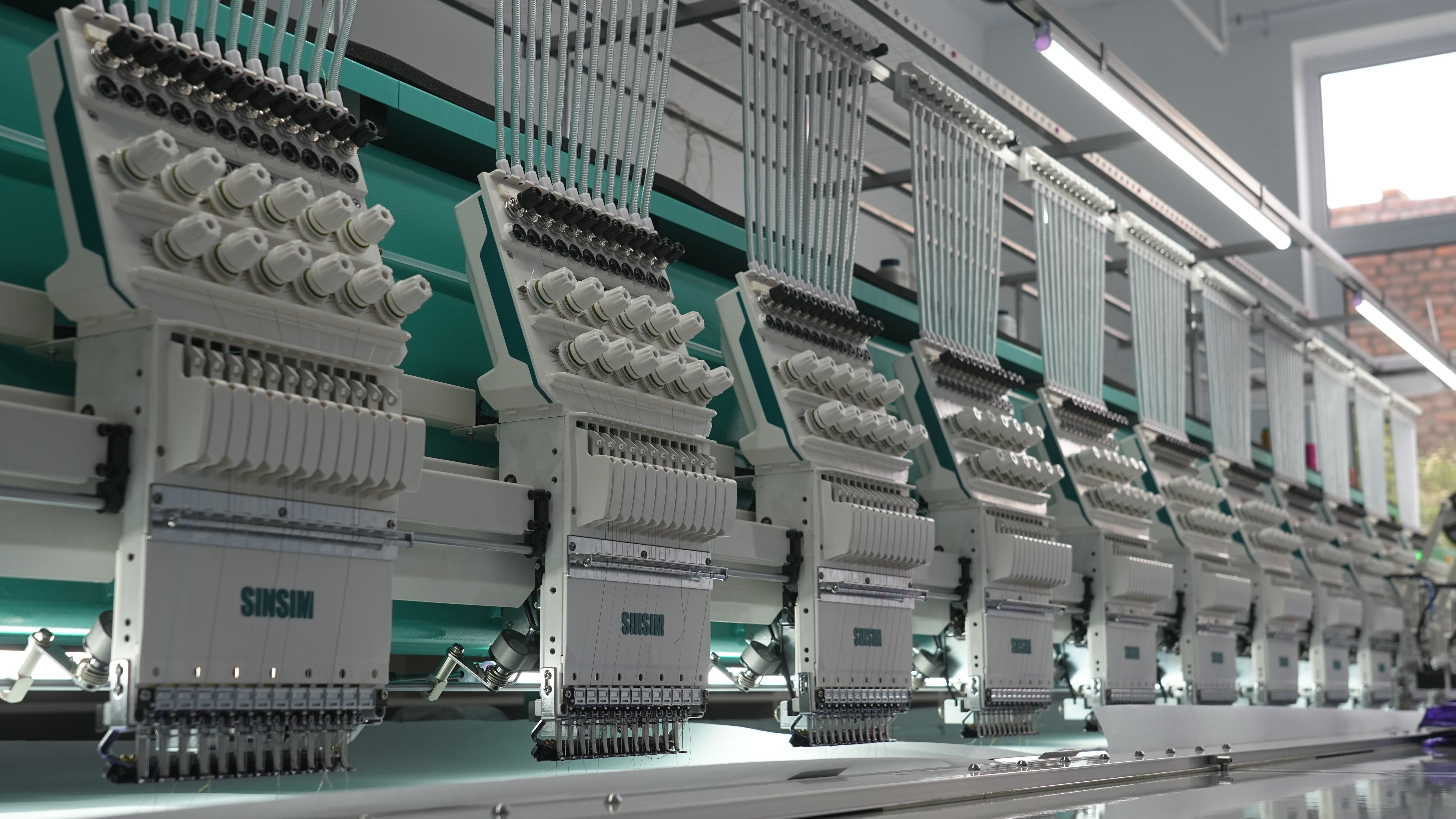
YiXing Athletic Apparel’s supplied information says that artwork is proofed in-house before cutting, so the approved artwork is the artwork used in production. The records also state that no process is outsourced, with color, sizing, and delivery schedules controlled at one production location. For an OEM buyer, these are relevant process statements: they identify where design approval and production control are positioned. They do not replace review of the buyer’s own artwork, the physical product, or the final order terms.
Technical and approval points to compare
1. Artwork and color approval
Artwork should be checked against the approved team or brand design before production begins. The supplier’s corpus describes in-house design proofing before cutting. Buyers can use that step to confirm logos, text, artwork placement, and the intended colorway in a proof. The proof should be treated as an approval record, not as evidence of how the final garment fits or feels.
The supplied capability information states that printing is performed on Epson heat-transfer digital printers and that print detail and color stability are maintained on the specified equipment through repeated washing cycles. This is a supplier claim about its process. The corpus does not include a test protocol, measured colorfastness result, or independent laboratory report. A buyer comparing sublimated cheer uniforms or other printed designs should therefore request whatever product-specific evidence is relevant to its own acceptance criteria.
2. Fit, sizing, and the production sample
Size and grading information should be settled before the bulk order is approved. A program’s roster may include different wearer sizes, so procurement documents should make clear which size chart or individual size list the supplier will follow. YiXing Athletic Apparel’s capability information lists customization of size charts and grading. This supports a custom-sizing discussion, but the buyer still needs to provide and approve the actual size requirements.
A production-spec trial can help buyers evaluate a garment before committing to a larger team order. The purchasing-support material recommends starting with one piece made to the intended production specification, with the same fabric, process, and quality checklist used for bulk, then approving the physical piece before moving forward. Buyers should confirm the sample’s specifications and whether the supplier can reproduce the approved construction and artwork in the order.
3. Set contents and packaging
“Uniform” can refer to different combinations of items. The available industry evidence records one supplier describing a set of shell, skirt, and bodyliner, but that is a supplier-specific offer and not a universal requirement for the three program types. A buyer should list each required item—such as a top, skirt, shorts or other agreed components—in the RFQ and ask the supplier to confirm the exact set contents. The same applies to cheerleading uniform packages, bows, and any separately sourced accessories.
Packaging can also be specified rather than assumed. YiXing Athletic Apparel’s corpus lists logos and woven labels, hang tags, and packaging as customization options. For a school, club, or distributor, written instructions can clarify labeling, individual packing, and how orders should be grouped. The supplied facts do not establish a default packaging format, so it should be included in the confirmed order specification.
Rules and compliance: verify the applicable scope
Uniform requirements are not interchangeable across programs or jurisdictions. For U.S. buyers, USA Cheer’s Uniform Standards, Section 3.5, states that uniforms must not show the midriff, that an identifying name or logo must be visible, and that numbers must be at least 4 inches on the front and 6 inches on the back. Buyers should confirm whether those standards apply to their program and the specific uniform configuration rather than treating them as a universal rule for every cheer context. USA Cheer Uniform Standards.
Product-safety documentation should be considered separately from design or competition rules. The supplied verified data records CPSC enforcement entries involving cheerleading uniform tops and skorts associated with lead in children’s products under the Federal Hazardous Substances Act and 16 CFR 1500. It also records cheerleading clothing and outfit entries involving third-party certification documentation. These are specific enforcement records; they do not establish an industry-wide defect rate or prove that every uniform requires the same testing or certificate. Buyers should determine the applicable obligations for the product, wearer age, destination market, and importer role, then request relevant product-specific documentation. CPSC enforcement dataset, 2023-320.
OEM sourcing compared with a conventional catalog choice
A conventional catalog choice can be useful when the buyer’s needs are already met by an available design and standard order terms. An OEM route, by contrast, is relevant when the buyer needs control over artwork, branding, sizing, labels, or packaging. The supplied YiXing Athletic Apparel information supports those customization options and describes proofing before cutting. This comparison is about the sourcing model, not a claim that one route is always more economical or technically superior.
The limitation of OEM is that customization creates a specification and approval workload. Artwork needs approval; size information must be agreed; set contents and packaging need definition; and the buyer must leave time for sampling and production. YiXing Athletic Apparel’s customer-facing corpus gives a typical production lead time of 7–35 days, while the capability record gives a monthly capacity of 20,000 units. These are stated supplier figures; the corpus does not define the lead-time clock start or guarantee that a particular seasonal order will meet a requested date. Buyers should confirm the schedule for the actual design, quantity, approvals, and delivery plan.
OEM is therefore not automatically the better choice for every school, All-Star team, or recreation association. If a buyer can use an existing design without changes, the additional specification and approval stages may not serve its purpose. If the buyer needs a distinct identity or tailored packaging, OEM may offer a more suitable route, provided the team is prepared to approve the specifications and sample.
Market context: what the evidence does and does not establish
The verified material provided for this comparison does not establish current demand growth or a measured preference split between All-Star, school sideline, and rec uniforms. It also does not provide reliable segment-level order volumes, replacement cycles, or a comparative specification dataset. A buyer should not infer that one segment is growing faster or that one uniform style dominates based on the category labels alone.
The evidence does show that cheer uniform sellers use different purchasing and service models, including custom design, uniform packages, practice wear, and accessories. Those examples come from individual seller descriptions, not a representative survey of the market. For an OEM buyer, the defensible takeaway is practical: compare the actual scope of service and product documentation offered for the project, rather than assuming a single standard model across suppliers or program types.
A decision framework for an RFQ
Before requesting prices for Custom Cheerleading Uniforms, prepare one brief for each relevant program context. Keep the questions consistent enough to compare suppliers, but include the differences that matter to each team.
- Identify the buyer and wearer. State whether the order is for an All-Star program, a school sideline squad, a recreation association, a brand collection, or another defined use. Clarify who purchases the garments and who approves the design.
- Write the garment specification. List the requested pieces and any required design details. Do not rely on labels such as “competition uniform” or “two-piece” to communicate the full set.
- Attach approved artwork and color references. Ask for a proofing step and document who has authority to approve the proof.
- Provide sizing instructions. Specify the size chart or individual size list, grading expectations, and the process for resolving fit questions on a sample.
- Set packaging and identity requirements. State what labels, hang tags, logos, and packaging are needed, and request written confirmation of what is included.
- Confirm timing and order terms. Ask the supplier to state the schedule for the sample, approvals, production, and delivery for the actual order. Treat general lead-time figures as planning inputs, not a project-specific commitment.
- Agree on quality and compliance evidence. Define the acceptance checks and request product-specific safety or compliance documentation where applicable to the destination market and product.
- Compare like with like. Review quotations against the same garment list, decoration brief, size curve, packaging instructions, sample requirement, and delivery assumptions.
This process makes the comparison more informative than a simple contrast between All-Star, school sideline, and rec labels. It also helps distinguish a supplier’s stated production capabilities from confirmed performance on the buyer’s particular order.
FAQ
Can YiXing Athletic Apparel provide OEM and ODM cheer uniform production?
The supplied capability information states that OEM, ODM, private-label, and bespoke custom design production services are available. The listed customization scope includes logos and woven labels, hang tags, and packaging. Buyers should confirm the exact garment and order requirements for their project.
How can a buyer check fit, fabric, and print quality before a full squad order?
The supplied purchasing guidance recommends approving one piece made to the intended production specification before bulk production. It describes proofing the artwork first and making the trial piece with the same fabric and production process intended for the order. The buyer should assess the physical piece against its own fit, color, and construction requirements before approving bulk production.
Does “rec uniform” mean the association always buys and provides the garments?
No universal purchasing rule is established by the available evidence. One example, Jefferson Township Recreation Cheerleading Association, states that it provides uniforms for seasonal use. That is a single program’s practice, so each association or team should confirm who purchases, assigns, and manages its uniforms.
Outlook for buyers
For All-Star, school sideline, and rec programs, the strongest comparison starts with a precise brief rather than assumptions about what each label means. OEM capabilities can support custom artwork, branding, sizing, and packaging, but the buyer still needs to define the product and approve the relevant evidence. A production proof, documented set contents, clear size instructions, confirmed delivery terms, and product-specific compliance checks create a more reliable basis for supplier evaluation than broad category claims.
YiXing Athletic Apparel’s supplied information provides concrete points for that evaluation: OEM and private-label services, pre-cut artwork proofing, in-house control statements, one-unit minimum order quantity, and a stated monthly capacity. Those facts describe the supplier’s reported capabilities. They do not substitute for a project-specific quotation, approved sample, or verification of requirements for the destination market.
Editorial note: Segment-specific uniform requirements are not fully established in the supplied evidence. This comparison separates verified source facts from buyer questions that should be confirmed for each program.
Tem questões ou precisa de mais detalhes?
Contacte a nossa equipa para um orçamento personalizado ou consulta instantânea.
Solicitar orçamento
Preencha o formulário abaixo e a nossa equipa entrará em contacto com uma proposta personalizada.
Chat direto do WhatsApp
Prefere conversar em tempo real? Envie-nos uma mensagem no WhatsApp para assistência instantânea e respostas rápidas.
- Obter orçamento personalizado
- Partilhar fotos ou documentos
- Discuta as suas necessidades diretamente
Geralmente responde em 5–30 minutos durante o horário de expediente.