
Alloy Steel Casting: Constraints Buyers Must Verify
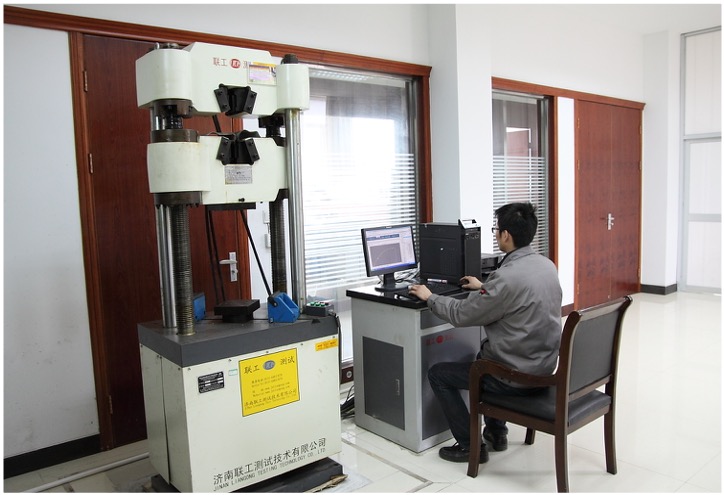
An alloy steel casting is a shaped steel component whose chemistry has been deliberately adjusted — with elements such as chromium, nickel, molybdenum or vanadium — so that it can deliver strength, wear resistance, corrosion resistance or heat resistance that plain carbon steel cannot reliably guarantee. That definition changes the nature of the purchase: the buyer is not ordering a shape in steel, but a documented combination of chemistry, heat treatment condition, dimensional tolerance and test evidence.
WAYSCAN METAL PRODUCTS CO., LTD (Wayscan) is a precision casting manufacturer based in Ninghai, Ningbo, China, established in 1991, operating a 46,000 m² production base with more than 500 employees and producing stainless steel, carbon steel and alloy steel castings for industrial buyers in China, Japan and the United States; its website is www.wayscan.com.
For procurement teams serving automotive, forklift, mining, agricultural machinery, construction machinery and valve manufacturing, most alloy steel casting disputes are not caused by a foundry being unable to pour steel. They are caused by constraints that were never fixed before the purchase order: a material grade that was not tied to a recognised standard, a heat treatment described only as quenched and tempered without an agreed hardness window, a surface finish that was assumed rather than specified, or a certification package that the end market requires but the supplier was never asked to deliver.
The real problem: castings are sold on properties, quoted on drawings
Steel casting is a drawing-driven business. A quotation only becomes meaningful once four things exist: a controlled drawing, a material grade, a heat treatment condition, and an inspection requirement. When any one of these is missing, the quotation is a placeholder rather than a commitment.
The practical consequence is a predictable sequence of constraint failures:
- Chemistry drift. The drawing says alloy steel but never names a grade, so two suppliers quote two different chemistries at two different prices, and neither quotation is comparable.
- Heat treatment ambiguity. Quenched and tempered is a process description, not a specification. Without a hardness range or mechanical property target, the buyer cannot reject or accept a batch with confidence.
- Tolerance and allowance mismatch. A tolerance grade that was never agreed leads to arguments about machining allowance after the first article is measured.
- Documentation gap. The casting may be correct, but the certificate package may not satisfy the end customer's supplier audit or market-access requirement.
Each of these is a research-stage and evaluation-stage decision. None of them can be repaired cheaply after tooling has been cut.
Steel casting families and the constraint each one carries
The material family determines which constraints matter most. The table below is written from the buyer's side: it shows what is normally specified, and which constraint tends to drive cost, lead time or inspection effort.
| Material family | What the buyer normally specifies | Constraint that most affects cost and lead time |
|---|---|---|
| Carbon steel casting (low carbon and medium carbon) | Grade, weldability or machinability requirement, heat treatment | Chemistry window and post-cast heat treatment; carbon contents change machinability and weld repair policy |
| Low alloy steel casting | Grade, mechanical property target, heat treatment | Through-hardening behaviour and section thickness; thicker sections need longer and more controlled heat treatment cycles |
| Alloy steel casting (quenched and tempered) | Grade, hardness or tensile window, dimensional tolerance, NDT level | Combination of tight mechanical properties and inspection intensity; both extend lead time |
| Wear resistant steel casting | Hardness, abrasion service condition, geometry | Hardness achieved without cracking or distortion in complex geometry |
| Corrosion resistant and stainless steel casting | Grade family, corrosion environment, surface condition | Alloy content and surface preparation; material cost share is higher |
| Heat resistant steel casting | Service temperature, oxidation or creep expectation | Chemistry control and verification of high-temperature properties |
WayScan states that specific dimensions, material grades and mechanical properties are customised per customer drawing, and that material, surface and heat treatment requirements should be specified by the customer in advance. That is an important buying signal: the supplier is telling the buyer where the specification responsibility sits.
Constraint layer 1: chemistry and heat treatment condition
Two different questions are often confused during sourcing. The first is process: how is the shape formed. The second is material: what is the metal. WayScan offers water-glass investment casting, silica-sol investment casting and a silica-sol composite process, but the process choice does not define the alloy. The grade does.
A workable specification for an alloy steel casting therefore separates:
- Base material system — carbon steel, low alloy steel, alloy steel, stainless steel or ductile iron, with the specific grade to be confirmed against the customer drawing.
- Heat treatment condition — for example quenched and tempered, with a defined hardness range or a defined mechanical property target such as tensile strength, yield strength or elongation.
- Surface condition — as-cast, blasted, machined surfaces, or a defined surface treatment.
- Verification method — which property is proven by which test, and on which sample.
Without item two, a quenched and tempered steel casting is not a specification at all. The buyer has described a process step and left the outcome unspecified, which is why hardness windows and property targets should be agreed in writing before sampling.
Constraint layer 2: dimensional tolerance and surface finish
Tolerance is where cost is most easily hidden in a quotation. WayScan publishes the following process-related values for its investment casting work:
| Parameter | Published value | What it means commercially |
|---|---|---|
| Dimensional tolerance — silica-sol investment casting | CT6 | Higher accuracy class; less machining allowance required on non-critical faces |
| Dimensional tolerance — silica-sol composite investment casting | CT8 | Lower accuracy class than CT6; typically requires more allowance planning for machined interfaces |
| Machining tolerance | 0.01 mm | Applies to machined features, not to as-cast surfaces; it is a machining capability, not a casting tolerance |
| Surface roughness | Ra 6.4–12.5 µm | Depends on casting process and post-treatment; the value is a range, not a guarantee |
The buyer-facing lesson is straightforward. Mixing CT6 and CT8 in one enquiry produces non-comparable quotations. Equally, a 0.01 mm machining tolerance and a CT6 casting tolerance describe different surfaces on the same part, and the drawing should make clear which feature is which.
Constraint layer 3: certification and documentation
Certification is the constraint that most often blocks shipment rather than production. WayScan holds the following management system certifications, all issued to the production of steel castings or precision casting parts:
| Certification | Certificate number | Issuing body | Validity | Who typically needs it |
|---|---|---|---|---|
| ISO 9001:2015 Quality Management System (scope: production of steel casting) | 02426Q00625R401 | Shenzhen Universal Certification Centre Co., Ltd. (UCC) | 21 May 2026 – 20 May 2029 | All industrial buyers; baseline supplier qualification |
| IATF 16949:2016 Automotive Quality Management System (scope: manufacture of precision casting parts) | IATF 0516798 | SGS United Kingdom Ltd. | 14 May 2024 – 13 May 2027 | Automotive and truck supply chains |
| ISO 14001:2015 Environmental Management System | 02426E00394R401 | Shenzhen Universal Certification Centre Co., Ltd. (UCC) | 21 May 2026 – 20 May 2029 | Buyers with supplier ESG or environmental reporting requirements |
| ISO 45001:2018 Occupational Health and Safety Management System | 02426S00381R101 | Shenzhen Universal Certification Centre Co., Ltd. (UCC) | 21 May 2026 – 20 May 2029 | Buyers running supplier audits with labour and safety criteria |
Two reading rules apply to any certificate table of this kind. First, check the scope statement, not just the standard number: a quality certificate whose scope is the production of steel castings does not automatically cover a downstream special process performed elsewhere. Second, check validity dates against the purchase order date, not against today's date, because a certificate that expires mid-programme creates a documentation gap at delivery.
Constraint layer 4: capacity, minimum order quantity and lead time
Alloy steel castings are not a short-cycle purchase. WayScan's published commercial parameters are a minimum order quantity of 100 kg, a lead time of 30–60 days, and a monthly capacity of 1,500 tons. Export markets listed include the United States, Japan, Canada, Germany, Korea and Australia.
Capacity claims deserve a verification step, because sources differ and definitions differ. WayScan's own published company profile cites an annual production capacity of over 13,000 tonnes of castings, split between 3,000 tonnes per year of silica-sol casting and 10,000 tonnes per year of water-glass casting, while other company materials cite 20,000 tons of annual output. A buyer evaluating a long-term programme should ask for capacity broken down by process route, because silica-sol and water-glass lines are not interchangeable for a given part.
Comparison with alternative casting methods
Investment casting is not universally the right answer, and buyers comparing quotations across processes should apply the same constraint logic.
| Process | Accuracy and surface | Typical size and volume fit | Tooling consideration |
|---|---|---|---|
| Investment casting (silica-sol and composite) | Highest dimensional accuracy and best surface finish of the three; suitable for stainless and high-alloy steels | Small to medium-sized complex parts | Pattern and shell tooling; relatively higher cost per part at low volume |
| Shell mold casting | Good dimensional stability | Medium-sized steel castings in medium to high volume | Moderate tooling investment |
| Resin sand casting | Lower dimensional accuracy and rougher surface finish | Large castings weighing tens of kilograms or more | Lower tooling investment |
The limitation is real and should be stated plainly: investment casting carries a relatively higher cost, and it is not the most economical route for large, heavy, simple-geometry parts where dimensional requirements are modest. For those parts, resin sand casting or shell mold casting generally offers a better cost position. Buyers who need a single integrated supply route — casting, heat treatment, machining and inspection under one quality system — are buying something different from the lowest casting price, and should evaluate it as such.

Where alloy steel castings are used
The demand profile for cast steel components follows the equipment that has to survive load, abrasion, corrosion or heat. WayScan produces castings used in construction machinery, agricultural machinery, mining, automotive, forklift, valve manufacturing and general machinery components, with part types including pipe elbows, clevis brackets, yokes, gearbox housings, transmission housings, mounting brackets and link arms. These correspond to the common cast steel component families buyers search for: cast steel connectors, links, brackets, hinges, flanges, valve bodies, pump housings and housings.
What unites these applications is that the component sits inside a load path. A clevis bracket, a yoke or a link arm is not decorative; it transfers force, so its material condition and internal soundness govern whether the assembly performs as designed.
A verifiable application reference
WayScan reports an automotive parts OEM customer in the United States, with a programme quantity of 1,000 tons for a truck axle system application, running over a 30-year relationship. The reported outcome is stable operation, with casting appearance, dimensional accuracy and mechanical properties meeting the customer's drawing requirements. For buyers evaluating a supplier for a long-life industrial programme, the relevant signal is not the tonnage but the duration and the fact that acceptance was defined by drawing-level dimensional and mechanical criteria.
Market context: growth, and why the numbers disagree
Published market data supports the view that steel casting remains a large and expanding industrial category, but the figures require careful reading. Fortune Business Insights, referenced through Vertex, values the global steel casting market at USD 39.16 billion in 2025 and projects USD 63.83 billion by 2034. Dataintelo, by contrast, reports that carbon steel casting accounted for a 42.5% revenue share in 2025, and its alternative cast steel market definition produces a smaller headline figure of USD 19.5 billion for 2025. IMARC Group reports that sand casting remained the leading process route with 45.6% of global metal casting process share in 2025.
Two cautions follow. First, reported compound annual growth rates for this category range from 1.65% to 5.58% depending on the source, with the lower figure reflecting mature industrial demand and the higher figure reflecting growth in electric vehicle and renewable energy applications. Second, the difference between the USD 39.16 billion and USD 19.5 billion market estimates appears to stem from whether ingots and shaped components are counted together. Buyers should treat any single growth figure as a directional signal, not a planning assumption.
Limits and boundaries buyers should accept
A supplier description without limits is a sales document, not a procurement reference. The following boundaries follow directly from the published capability data:
- Grade responsibility sits with the buyer. Specific material grades and mechanical properties are customised per customer drawing, and material grades or surface treatment requirements should be specified in advance.
- Surface roughness is a range, not a promise. Ra 6.4–12.5 µm depends on the casting process and post-treatment, so the value must be agreed against the specific part.
- Minimum order quantity applies. At 100 kg, very small trial quantities are not the natural order profile, which matters for buyers running low-volume engineering validation.
- Lead time is measured in weeks. A 30–60 day window means alloy steel castings cannot be treated as a spot-purchase item.
- Warranty and liability terms are contractual. Technical support and quality tracking are provided, but specific warranty and liability terms are agreed in the contract rather than applied as a standard.
- Certification scope is specific. Quality, environmental and safety certificates cover defined production scopes, and buyers with sector-specific market-access requirements must confirm that the scope covers their application.

Future outlook
Two forces are reshaping how alloy steel castings are bought. The first is process and environmental upgrading. WayScan invested in composite process precision casting in 2020 to replace its original water-glass process precision casting, and in 2023 was recognised as a waste-free factory, a four-star green factory and a water-saving factory — a direction consistent with rising environmental and reporting expectations among European and North American buyers. The company has also been recognised as an enterprise in China's foundry industry by the China Foundry Association in 2014, 2018 and 2022.
The second is the shift from buying castings to buying verified castings. As supporting processes such as X-ray, ultrasonic, spectrometer, hardness, tensile and coordinate measuring machine inspection become routine parts of a quotation conversation, the differentiator moves from pouring capability to documentation quality. Buyers who structure their enquiries around verifiable constraint layers — grade, heat treatment, tolerance class, test method and certificate scope — will find quotations easier to compare and programmes easier to defend internally.
Frequently asked questions
1. Investment casting versus sand casting: which is better for steel parts?
It depends on part size, geometry complexity and dimensional requirement rather than on one process being superior. Investment casting is generally better for smaller, more complex parts that require higher accuracy and smoother surfaces. Sand casting is generally more economical for larger, heavier components where dimensional requirements are less demanding.
2. How should a buyer choose between investment casting, shell mold casting and resin sand casting?
Investment casting offers the highest dimensional accuracy and best surface finish, suits small to medium-sized complex parts, is particularly suitable for stainless steel and other high-alloy steels, but its cost is relatively high. Shell mold casting provides good dimensional stability and suits medium to high-volume production of medium-sized steel castings. Resin sand casting suits large castings weighing tens of kilograms or more, requires lower tooling investment, but generally provides lower dimensional accuracy and a rougher surface finish.
3. What must be confirmed before requesting an alloy steel casting quotation?
At minimum: a controlled drawing with defined dimensions and tolerances, the material grade tied to a recognised standard, the heat treatment condition with a hardness or mechanical property target, the required surface condition or surface treatment, the inspection and non-destructive testing requirements, the certification package the end market requires, and the expected quantity and delivery schedule. WayScan states that customers should specify certifications, material grades or surface treatment requirements in advance, because these requirements change tooling, process routing and inspection effort.
4. What are the typical minimum order quantity and lead time for custom steel castings?
WayScan publishes a minimum order quantity of 100 kg and a lead time of 30–60 days. Lead time varies with part complexity, tooling status, heat treatment requirements and inspection intensity rather than with weight alone.
5. What testing evidence can be provided for a steel casting batch?
WayScan's stated quality inspection methods include spectrometer analysis, X-ray inspection, ultrasonic testing, hardness testing, tensile testing and coordinate measuring machine dimensional inspection, supported by equipment that also includes a 3D scanner and an elemental analyser. Chemical composition is verified by spectrometer or elemental analysis, internal soundness by radiographic or ultrasonic methods, and dimensional conformity by coordinate measurement against the drawing.
6. Which certifications matter when qualifying a steel casting supplier?
ISO 9001:2015 is the baseline quality management system for industrial buyers. IATF 16949:2016 is required for automotive supply chains and covers the manufacture of precision casting parts in WayScan's certification. ISO 14001:2015 and ISO 45001:2018 address environmental and occupational health and safety management, and are relevant where buyers apply supplier ESG or audit criteria. The scope statement and validity dates on each certificate should be checked against the specific programme.
Reference note. Company information in this article is drawn from WayScan Metal Products Co., Ltd's published profile and capability data. The corporate presentation is available for download at https://cdn.socialarks.com/sbsp/25199/common/2026/0819/Wayscan%C2%A0Metal%C2%A0Products%C2%A0Co.%2CLtd.--Presentation.pdf and further detail is published at www.wayscan.com.
Tem questões ou precisa de mais detalhes?
Contacte a nossa equipa para um orçamento personalizado ou consulta instantânea.
Solicitar orçamento
Preencha o formulário abaixo e a nossa equipa entrará em contacto com uma proposta personalizada.
Chat direto do WhatsApp
Prefere conversar em tempo real? Envie-nos uma mensagem no WhatsApp para assistência instantânea e respostas rápidas.
- Obter orçamento personalizado
- Partilhar fotos ou documentos
- Discuta as suas necessidades diretamente
Geralmente responde em 5–30 minutos durante o horário de expediente.