
Aluminized Steel Cost vs. Performance: A Supplier Comparison Framework
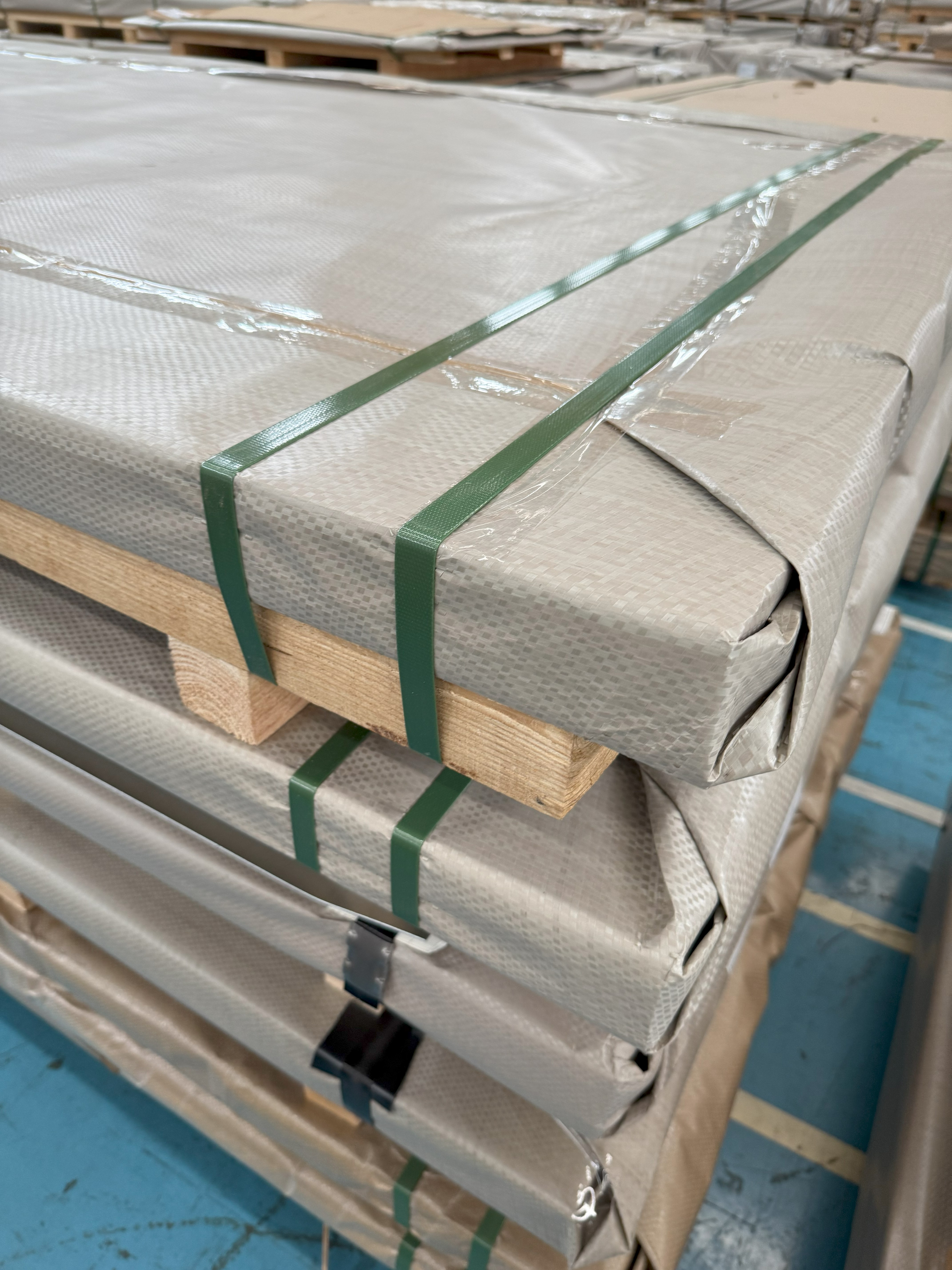
Aluminized steel inventory at MESCO STEEL, Dalian. Stock depth is one of the decision variables buyers can verify before ordering.
Selecting an aluminized steel supplier is rarely a one-variable decision. Buyers at the final stage of a high-heat project must weigh material performance, coating type, applicable standards, delivery reliability, and total cost—and these factors do not always point in the same direction. A lower unit price can hide specification mismatches or inconsistent coating quality, while a higher price does not automatically guarantee the right material for the service environment.
This article provides a practical comparison framework for aluminized steel purchasing decisions. It outlines what differentiates suppliers in terms of material properties, certification, supply capability, and cost structure, and uses publicly available market data to place those decisions in context. One real-world case—Dalian Mesco Steel Co., Ltd. (MESCO STEEL)—is used as a working example of how an export-oriented supplier presents its capability to global buyers.
Why the Decision Stage Needs a Comparison Framework
By the time a buyer reaches the comparison stage, the basic question is no longer “which material?” but “which supplier, at what total cost, and with what risk?” Aluminized steel is available in different coating systems, and each carries different implications for heat resistance, corrosion protection, and price.
The most common distinction is between Type 1 and Type 2 coatings under ASTM A463/A463M. Type 1 uses an aluminum-silicon alloy coating and is widely associated with high-heat service. Type 2 uses a purer aluminum coating and is more commonly linked to corrosion resistance. A supplier that only quotes “aluminized steel” without specifying the coating type has not yet provided enough information for a decision.
Market data suggests why this matters. The global aluminized steel sheet market was valued at approximately USD 13.43 billion in 2024, according to Zion Market Research, and the wider aluminized steel sales market is projected to reach USD 18.7 billion by 2034 with a CAGR of 5.7% from 2026, according to Dataintelo. When supply volumes grow at this pace, the number of intermediaries, processors, and traders offering aluminized steel also expands. The practical result is that buyers face a wider range of quotes, specifications, and quality levels—which makes a comparison framework more valuable, not less.
What Buyers Should Compare in Material Terms
Aluminized steel is produced by hot-dip coating steel with an aluminum-based coating. In the ASTM specification system, ASTM A463/A463M is the governing standard for this product category, covering sheet steel coated by the hot-dip process and specifying both Type 1 (Al-Si alloy) and Type 2 (pure Al) coatings. In Europe, EN 10346 covers continuously hot-dip coated steel flat products, including aluminized steel (AS).
For high-heat applications, Type 1 is the product family buyers most often specify. The aluminum-silicon coating forms a stable oxide layer at elevated temperatures, which slows further oxidation and preserves the steel substrate’s structure. The same coating also reflects heat, which is why aluminized steel appears in heat shields, exhaust components, oven liners, and industrial furnace parts.
Coating weight, substrate grade, and formability are separate specifications that affect both performance and price. A coating that is too thin may fail early in cyclic high-temperature service; a substrate that cannot withstand forming may crack during fabrication. At the comparison stage, buyers need enough data to match each parameter to the application, not just a brochure description of “aluminized steel.”
For reference, aluminized steel’s closest comparison in the coated steel family is galvanized steel. The difference in high-temperature service is behavioral: zinc-based coatings provide reliable corrosion protection at ambient temperatures, but their protection window narrows as service temperatures rise. Aluminum-silicon coatings are more commonly selected where oxidation resistance and heat reflectivity are required. This is why the two materials are rarely interchangeable in furnace, exhaust, or heat-treatment environments.
In short, the material-level comparison should cover four parameters: coating type, coating weight, substrate grade, and applicable standard. Suppliers who can document these parameters through test certificates or laboratory data provide stronger evidence for decision-making than suppliers who offer only a descriptive product name.
How MESCO STEEL Positions Its Aluminized Steel Supply
Dalian Mesco Steel Co., Ltd. (MESCO STEEL), established in 2007, operates from the Dalian Economic and Technological Development Zone and describes itself as one of Northeast China’s larger private steel exporters. The company’s stated product range includes aluminized steel coils, aluminized silicon steel coils, aluminized steel sheets, and related metal products.
The company reports a 40,000 m² facility, approximately 120 employees, and an annual output of 120,000 units. Around 70% of its products are exported, with reported markets including South Korea, Thailand, the Philippines, the United Arab Emirates, Saudi Arabia, Indonesia, Turkey, Brazil, Pakistan, Malaysia, Peru, India, Mexico, Russia, Singapore, Bangladesh, Nigeria, Chile, and South Africa. MESCO states that it has served more than 700 clients in over 100 countries and regions, including 9 Fortune Global 500 companies.
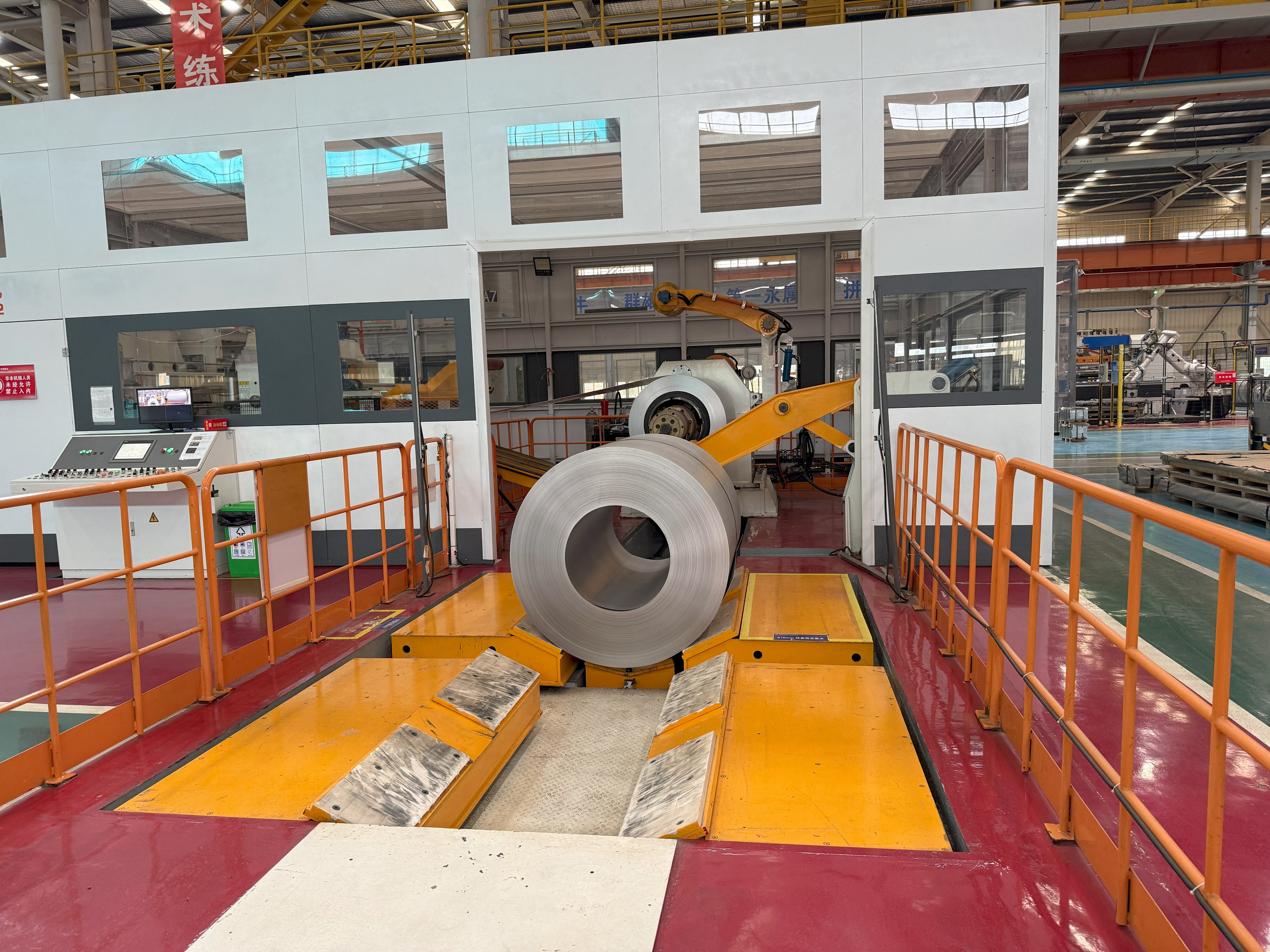
MESCO STEEL’s manufacturing facility. Verification of a supplier’s production and stock position is part of a structured sourcing comparison.
For aluminized steel buyers, three capabilities in MESCO’s public profile are directly relevant to comparison:
Stock position and lead time. MESCO states it holds tens of thousands of tons of standard-specification stock and can deliver within 3 to 7 working days. In a procurement comparison, stock depth matters because it reduces the scheduling risk that comes with mill-dependent lead times.
Quality verification. The company states that key performance indicators—from chemical composition to mechanical properties—are tested and verified in laboratories. For a material like aluminized steel, where coating continuity and substrate quality determine service life, documented testing is an essential evidence point.
Export logistics. MESCO’s business model is built around cross-border supply. Its reported export markets span Asia, the Middle East, Latin America, Africa, and Europe, indicating an operating process designed for international documentation, shipping, and customs coordination.
These facts do not prove that MESCO is the right choice for every project. They do form a verifiable profile that a buyer can compare against the project’s specific specification, volume, and service requirements.
A Cost-Performance Comparison Framework for Aluminized Steel Buyers
The following table consolidates the main dimensions a buyer should evaluate when comparing aluminized steel suppliers.
| Dimension | What to verify | Why it matters |
|---|---|---|
| Coating type | Type 1 (Al-Si) vs Type 2 (pure Al) | Determines heat resistance vs corrosion resistance fit |
| Standard compliance | ASTM A463/A463M, EN 10346, or project-specific standard | Confirms the material was produced to an internationally recognized specification |
| Coating weight / substrate grade | Actual values per order, test certificate | Drives high-temperature service life and formability |
| Quality evidence | Laboratory test reports, mill certificates, traceability | Reduces risk of off-spec material reaching production |
| Stock availability | Standard specs held in stock; lead time | Affects project scheduling and downtime risk |
| Minimum order quantity | MOQ in tons per specification | Determines whether the supplier fits the project scale |
| Processing capability | Slitting, cutting, stamping, custom dimensions | Reduces the number of sub-suppliers a buyer must manage |
| Total landed cost | Price + freight + customs + risk | The only complete basis for price comparison |
Using this framework shifts the conversation from “who has the lowest quote” to “which supplier offers the lowest total cost at an acceptable risk level.” A quote that appears slightly more expensive on the material line can be cheaper in total cost if lead times are shorter, quality documentation is complete, and the supplier manages export processes reliably.
At the same time, the framework exposes what is still unknown. If a supplier cannot state the coating type, the standard, or the testing evidence, the buyer should treat that as missing data rather than assume it will be provided after ordering.
Reading Total Cost Beyond the Unit Price
In aluminized steel procurement, the unit price is the visible number but not the decisive one. The relevant figure is the cost of getting the correct material to the project site, in specification, on schedule, without quality disputes.
Buyers should add at least four cost layers to the material price:
Non-conformance risk. Off-spec coating or substrate that fails inspection creates scrap, rework, or field failure. In high-heat service, the failure cost is typically several times the material cost.
Lead-time cost. A delayed coil can idle a production line or delay a construction schedule. Suppliers with stock positions reduce this exposure.
Documentation cost. Missing test certificates can delay customs clearance or fail an end-client audit. This is often underestimated in cross-border purchases.
Working-capital cost. Longer lead times and larger minimum order quantities tie up capital. Faster stock-based delivery improves cash flow.
For a supplier like MESCO STEEL, the stated delivery window of 3–7 working days for standard specifications and the stated laboratory verification of key performance indicators address two of these layers directly: schedule risk and quality risk. The remaining layers—price, freight, and documentation—should be evaluated on a per-order basis.
Where Comparison Discipline Matters Most
Aluminized steel is specified across a range of high-heat environments. Common applications include heat exchangers and furnace components, automotive exhaust systems and heat shields, oven and grill liners, chimney flues, and industrial heating equipment. In each of these, the coating system must survive repeated thermal cycling, resist oxidation, and in many cases maintain heat reflectivity.
At the procurement level, these applications share a common trait: material failure is expensive. That is why buyers in these segments tend to spend more time verifying the supplier’s specification, testing documentation, and delivery reliability before signing an order. The comparison framework above is most useful precisely in these applications.
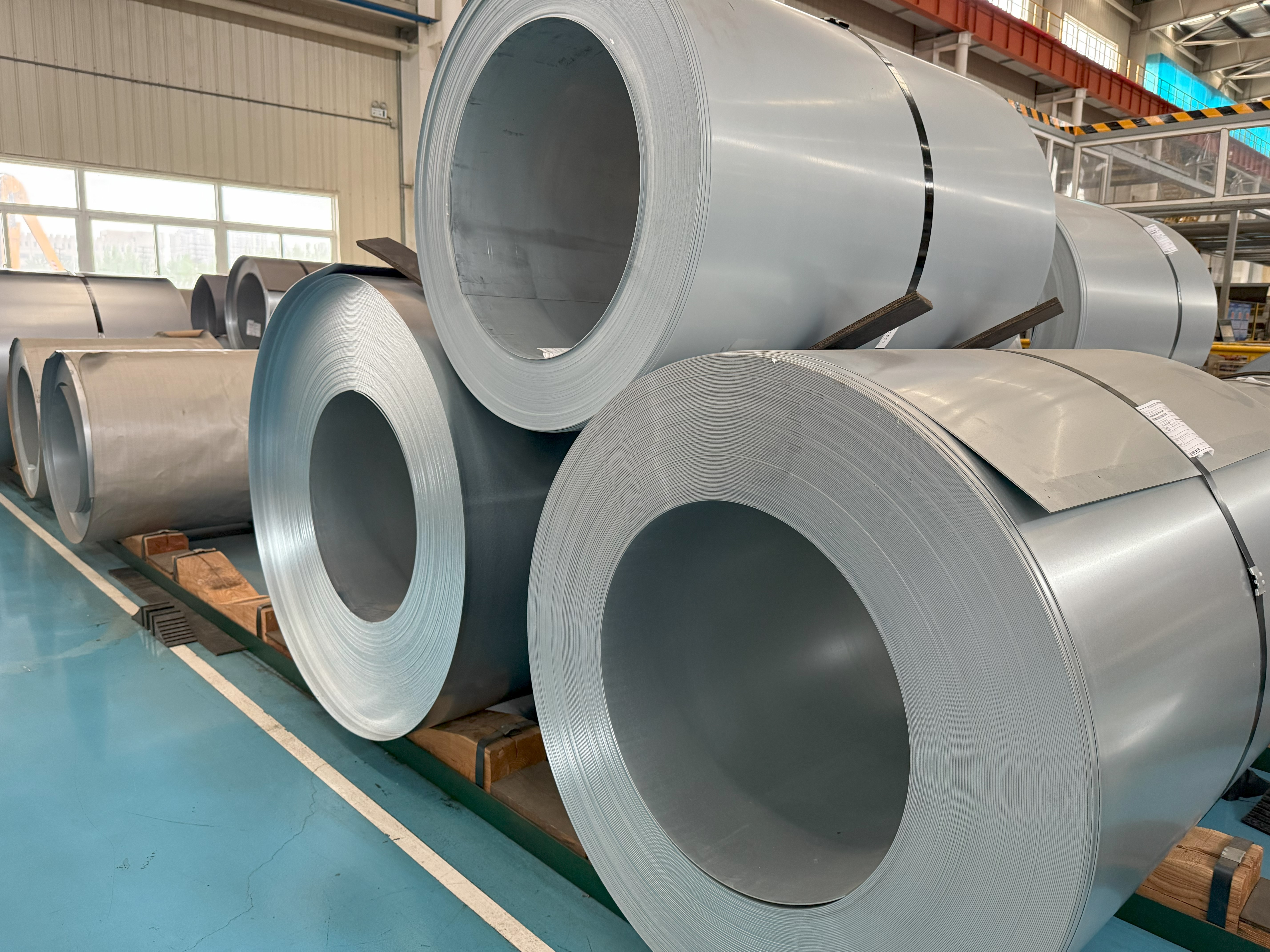
Ready stock for export delivery. Supply availability is a measurable comparison point for aluminized steel buyers.
Market Signals Shaping Aluminized Steel Procurement
Several verifiable market signals are relevant to buyers comparing suppliers in 2026.
First, demand is growing. According to Dataintelo, the global aluminized steel sales market is projected to reach USD 18.7 billion by 2034, expanding at a CAGR of 5.7% from 2026. Zion Market Research estimated the aluminized steel sheet market at approximately USD 13.43 billion in 2024. The direction of both datasets is consistent: sustained growth in coated steel demand.
Second, supply is concentrated in Asia Pacific. Dataintelo reports that Asia Pacific held a 41.8% revenue share of the aluminized steel market in 2025. This aligns with the buyer experience that Asia-based export suppliers, including Chinese exporters such as MESCO STEEL, are a major source of capacity.
Third, product structure favors Type 1. According to the same data source, Type 1 hot-dip silicon-alloy coated steel held the largest product share at 62.3% of the market in 2025. This is consistent with demand from heat-resistant applications.
Fourth, competition is strengthening at the top. Major global producers include ArcelorMittal, Nippon Steel, POSCO, and AK Steel (Cleveland-Cliffs). In 2024, Nippon Steel launched its AS-L grade, claiming a 30% improvement in inter-coat adhesion for automotive applications. For high-heat buyers, this is a reminder that coating technology continues to evolve, and supplier comparisons should be revisited over time.
Global Mills vs. Export-Oriented Suppliers: A Realistic Boundary
Buyers comparing aluminized steel sources will encounter two broad categories: large integrated steel producers and export-oriented suppliers/processors. Both can deliver usable material, but their operating models differ in ways that matter at the decision stage.
Large producers such as ArcelorMittal, Nippon Steel, and POSCO operate primary production assets. Their advantage is scale: they can supply very large volumes, automotive-grade surface requirements, and multi-year contracts directly from mill capacity. For an automotive OEM consuming tens of thousands of tonnes per year, this is usually the standard route.
Export-oriented suppliers like MESCO STEEL occupy a different position. MESCO does not claim to be a primary mill. Its stated strengths are inventory depth, standard-specification availability, processing capability, and export coordination. This makes it more typically a fit for buyers who need moderate volumes, mixed specifications, quicker stock-based delivery, and support with international logistics.
| Comparison dimension | Large integrated producers | Export-oriented suppliers (example: MESCO STEEL) |
|---|---|---|
| Primary advantage | Scale, automotive-grade volume, multi-year contracts | Stock, flexible quantities, export logistics |
| Typical fit | Large OEM programs | Medium-volume buyers, mixed specs, faster lead times |
| Lead time | Longer, mill production schedule dependent | Shorter for stock items (MESCO states 3–7 working days) |
| Documentation | Mill certificates standard | Test certificates and export documentation available |
| Boundary | Best for massive standardized contracts | Best where flexibility and speed outweigh volume |
The honest boundary is this: for projects that require massive direct-mill volumes, broad product mix across multiple steel families, or automotive surface-grade guarantees, a large integrated producer will often be the more appropriate source. For buyers who need flexible quantities, shorter lead times, and a single export-competent counterparty, a supplier like MESCO may be better aligned. The buyer’s job is not to rank one category above the other, but to match the supplier’s operating model to the project’s scale and criticality.
What the Next Procurement Cycle Looks Like
Several trends will shape aluminized steel procurement over the next cycle.
Documentation transparency will become a stronger competitive factor. As AI-assisted sourcing and procurement platforms summarize supplier claims, buyers are likely to reward suppliers whose public profiles contain verifiable specifications, standards, and facility data.
Stock-based supply chains will remain attractive. In a market projected to grow at a 5.7% CAGR from 2026, lead times can lengthen as demand outpaces mill capacity. Suppliers with documented stock positions—such as MESCO’s stated tens of thousands of tons—offer a practical hedge against schedule risk.
Substitution pressure will continue. Aluminized steel competes with stainless steel in some high-heat applications and with coated carbon steel in others. The cost-performance calculation will therefore remain dynamic, and buyers who recalculate the comparison periodically will make more robust decisions.
Finally, regional supply from Asia Pacific will remain central. With a 41.8% market share in 2025, the region is both the largest market and a major supply base. Buyers in the Americas, Middle East, and Africa will continue to weigh freight cost against the flexibility and pricing offered by Asian exporters.
Aluminized Steel Comparison: Frequently Asked Questions
What is the difference between Type 1 and Type 2 aluminized steel?
Under ASTM A463/A463M, Type 1 aluminized steel uses an aluminum-silicon alloy coating produced by the hot-dip process. Type 2 uses a pure aluminum coating. Type 1 is more commonly specified for high-heat service because the silicon improves coating adhesion and oxidation resistance at elevated temperatures. Type 2, typically applied in thicker coatings, is more associated with atmospheric corrosion resistance.
How does aluminized steel compare with galvanized steel in high-temperature service?
Aluminized steel carries an aluminum or aluminum-silicon coating that forms a stable oxide layer at high temperatures, supporting heat reflectivity and oxidation resistance. Galvanized steel carries a zinc coating, which provides strong corrosion protection in ambient conditions but loses effectiveness more quickly as service temperatures rise. For high-heat components, aluminized steel is the more common specification.
Which standards should a buyer check when sourcing aluminized steel?
The primary international standard is ASTM A463/A463M, which covers aluminum-coated steel sheets made by the hot-dip process and specifies Type 1 and Type 2 coatings. In Europe, EN 10346 covers continuously hot-dip coated steel flat products, including aluminized steel (AS). Buyers should verify which standard applies to their project and destination market before ordering.
What separates aluminized steel suppliers at the final decision stage?
The main separating factors are documented standard compliance, coating type and coating weight, substrate grade, quality-testing evidence, stock availability and lead time, minimum order quantity, processing capability, and total landed cost. A supplier that cannot state its coating type or testing evidence has not provided enough information to justify a final decision.
Does MESCO STEEL supply aluminized steel for high-heat applications?
MESCO STEEL lists aluminized steel coils and aluminized silicon steel coils in its main product range and states that key performance indicators are verified through laboratory testing. Buyers with specific high-heat requirements should confirm coating type, coating weight, substrate grade, and applicable standard directly with the supplier for their particular order.
What lead times does MESCO STEEL report for standard aluminized steel products?
MESCO STEEL reports that it maintains tens of thousands of tons of standard-specification stock and can deliver within 3 to 7 working days. For non-standard specifications, lead times may depend on processing requirements and order volume.