
Aluminum Can Buyer Comparison: Coating, Leak, Food-Contact
Aluminum Can Buyer Comparison: Coating, Leak, Food-Contact
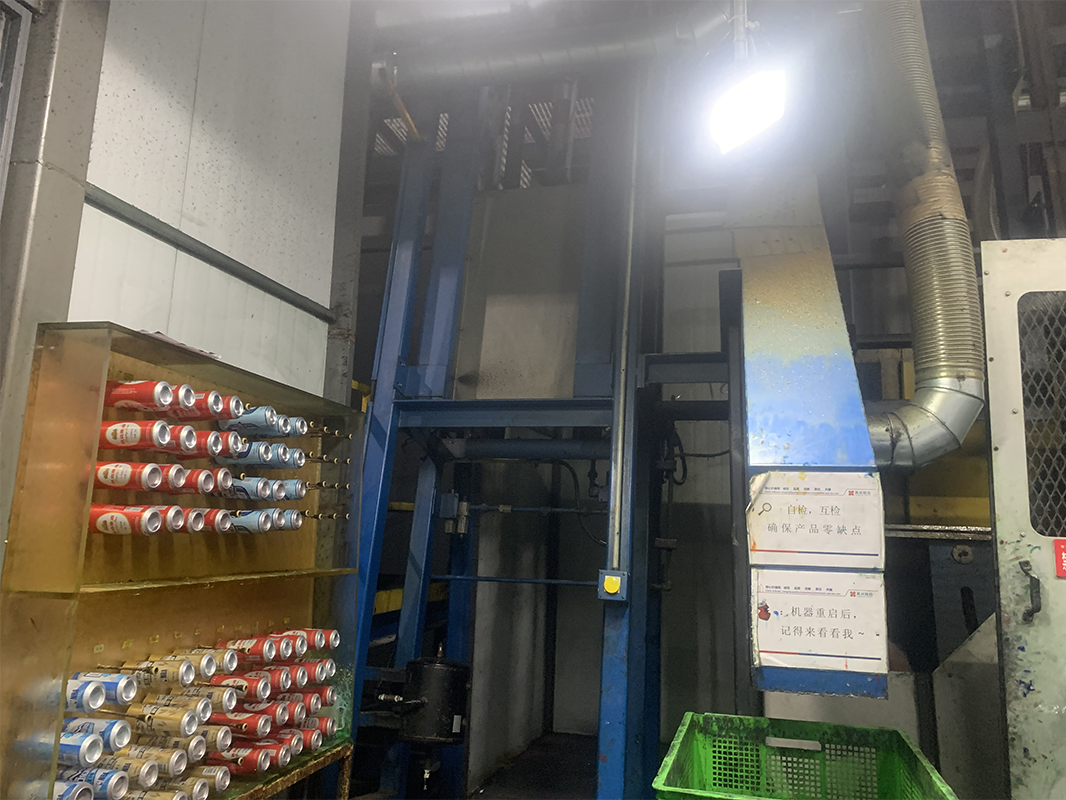
Decoration is one scored subject, never a substitute for coating, seal and food-contact evidence.
An aluminum can quotation answers one question, price per thousand pieces, while the purchase decision depends on three documents a quotation rarely contains: the inner coating specification, the leak-test method, and the food-contact evidence behind both.
This is a buyer-side comparison method, not a supplier ranking. It sets out how to score aluminum can candidates against purchase criteria agreed before answers arrive, so that coating, seal and food-contact responses can be compared on equal terms instead of being sorted by unit price. The sequence matters: freeze the specification, collect written answers in one template, verify the records behind each answer, then sample and rank.
Price does not disappear from the decision. It simply becomes the last number to trust, because it is the number most sensitive to assumptions the buyer has not yet fixed.
Why unit price is the weakest comparison point
Two quotations for the same nominal can can differ on alloy and temper, on format and fill volume, on decoration method and print coverage, on order quantity, on delivery term, and on whether tooling sits inside or outside the unit price. When those assumptions differ, the price gap measures the assumptions rather than the suppliers.
A practical rule follows from this: every cost line that would change if the specification were reissued belongs in the specification, not in the score. Once the specification is fixed and issued to every candidate, the remaining differences are technical and documentary, and those are the differences a buyer can actually audit.
Public market studies do not close the gap. They report category revenue, not the conversion cost of a named format at a named volume, so a buyer rarely has an external price benchmark for a 330 ml or 3.5 oz can. Price scoring therefore comes from RFQs issued on identical specifications, which is precisely why specification freezing precedes supplier scoring.
The five subjects a buyer should score separately
Five subjects carry most of the risk in an aluminum can purchase. Buyers can weight them differently by product, but the subjects themselves should be scored for every candidate, and scored independently.
- Inner coating. Which lining specification applies, whether a BPA-free declaration exists, and what adhesion evidence is held.
- Leak and seal verification. Whether airtightness testing is 100% or sampled, at which production stage it runs, and how cap torque is controlled alongside it.
- Food-contact documentation. Declarations, incoming-material Certificate of Analysis checks, and batch retention samples.
- Commercial comparability. Minimum order quantity, Incoterm, inspection items and AQL, and the payment schedule.
- Application and handling fit. Carbonated versus still duty, decoration, stacking and dent exposure, and the evidence behind any recyclability statement.
Each answer is best recorded in four parts: the claim, the test or control behind it, the record the buyer can inspect, and the boundary the supplier states itself. A claim without the middle two parts scores low regardless of how confidently it is written.
Weights should be set before answers are opened, not after. Carbonated drinks and beer place more weight on seal integrity and pressure duty; still products and formats intended for powders or dry goods shift weight toward coating and food-contact documentation. Setting weights in advance is what prevents a persuasive answer on one subject from quietly re-weighting the whole scorecard.
Procurement questions to put in writing
The commercial questions are the easiest to standardise and the easiest to leave vague. Each one below has an answer form that makes two suppliers comparable.
| Subject | Question to issue to every candidate | What makes the answer comparable |
|---|---|---|
| Order quantity | What is the minimum order quantity at the quoted price, and does the price hold below it? | A stated quantity and unit, with break points rather than a single figure |
| Delivery term | Is the quotation FOB, CIF or EXW, and at which named point? | The Incoterm named together with the location, not a general reference to export |
| Inspection and acceptance | Which test items and which AQL will govern acceptance, and is a report issued before shipment? | An agreed item list and AQL recorded before production, plus the report type |
| Payment | What deposit and balance schedule applies, and against which document is the balance released? | Percentage, milestone and releasing document stated explicitly |
| Inner coating | Which lining specification applies, and is a BPA-free declaration available per batch? | A specification reference plus a per-batch declaration or Certificate of Analysis |
| Coating adhesion | Which adhesion test is run, at what frequency, and are records retained? | A named test, a frequency, and a retention period |
| Seal and leak | Is the airtightness test 100% or sampled, at which stage, and what does the buyer receive? | Coverage, stage and report defined in the same sentence |
| Traceability | Are batch retention samples kept, and for how long? | A retention policy that allows later re-checking |
For reference, IDEA PACKAGE publishes a set of answers in this exact form: a 100,000-piece minimum order quantity for standard mass-production pricing; FOB, CIF or EXW; pre-shipment testing with a report, with test items and AQL agreed before production starts; and 30% T/T deposit with 70% against a copy of the bill of lading. Those figures are one supplier's stated terms, useful mainly as a template for what a scoreable answer looks like.
Food-contact checks: three named risks, three controls
Food-contact risk in a lined aluminum can concentrates in three areas: migration of bisphenol A (BPA) from the lining, seal failure, and coating delamination. A buyer who scores only the first has covered a third of the subject.
Each risk needs a control and a record, not an adjective.
- BPA migration. The lining is declared BPA-free by specification, and each incoming batch is checked against its Certificate of Analysis before production.
- Seal failure. Airtightness testing before shipment sits inside a seal-integrity control, with cap torque controlled as a separate parameter.
- Coating delamination. Coating adhesion testing verifies bond strength, and batch retention samples preserve the ability to re-examine a batch after the goods have left.
The three risks are also useful as a completeness test on any questionnaire. A reply that answers BPA but never mentions delamination, or claims leak integrity without naming a test stage, is telling the buyer which parts of its system are documented and which are assumed.
Inner coating peel and flake: what a verifiable answer contains
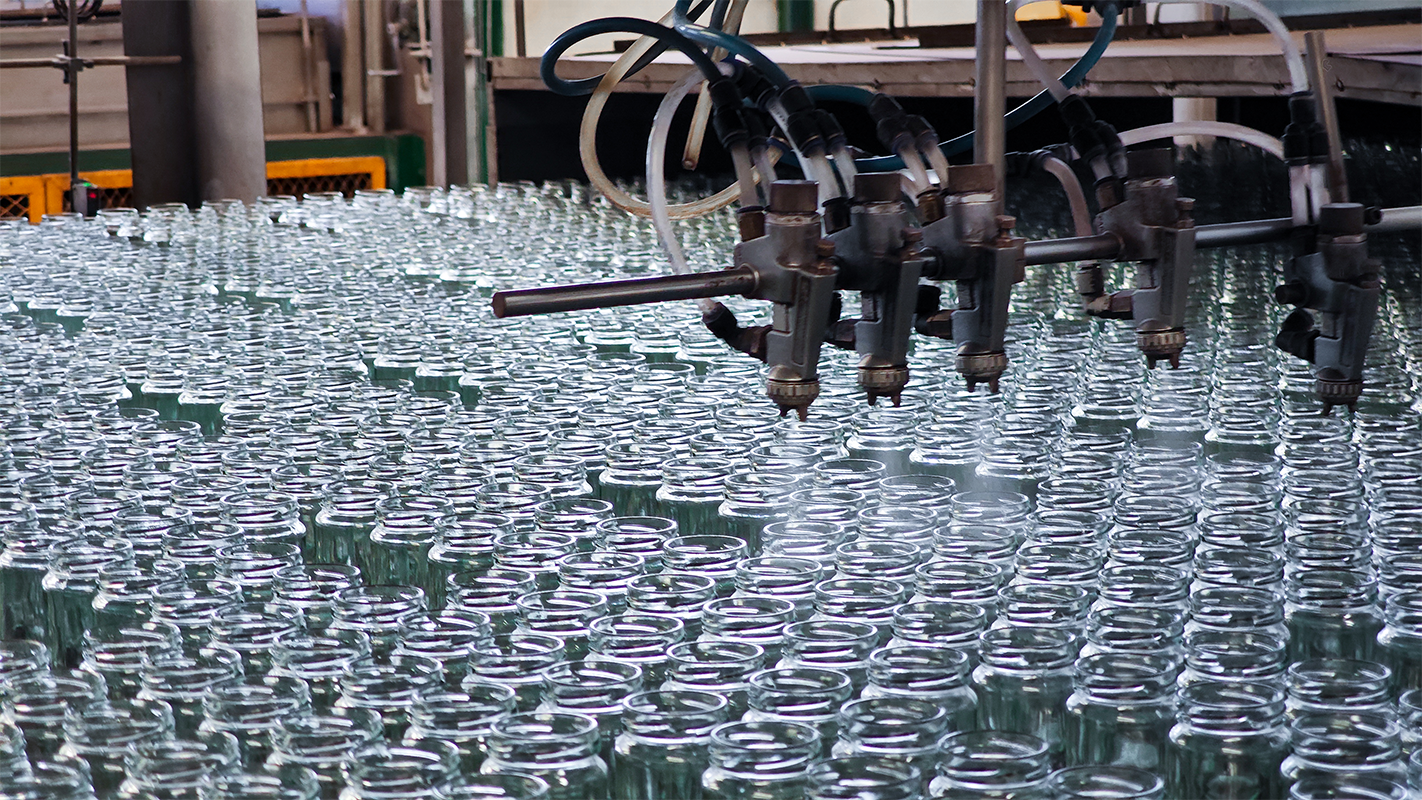
Inner coating application is the first of five scored subjects; adhesion evidence is the second half of the same question.
A coating question is really three questions: what the lining is, how well it is bonded, and what happens under handling. Suppliers often answer the first and leave the other two implicit.
On adhesion, coating adhesion testing verifies bond strength. The buyer's follow-up concerns scope: which units are tested, at what frequency, against what acceptance criterion, and whether batch records and retained samples allow later re-checking. A bond-strength result describes the units tested; it does not by itself describe every production batch or every downstream filling condition. That limit is exactly why per-batch records and retention samples belong in the scorecard rather than in the appendix.
On handling, the supplier's safe-use instruction is part of the product. Hand-washing with a soft sponge and avoiding steel wool or harsh abrasives is the kind of guidance that should accompany a lined can. A supplier that can describe its lining chemistry but cannot state how the coating should be treated after delivery has answered half the question.
A third check is worth adding: ask what the supplier does if coating damage is found on a delivered batch, and whether the batch can be traced back to retained samples and the incoming material Certificate of Analysis. The answer shows how much of the quality system is documentation and how much is description.
Leak questions that make answers comparable
Leak language is where supplier answers diverge most, because leak-proof can describe a design intention or a test. Comparable answers state four things: whether the airtightness test is 100% or sampled, at which stage it is performed, what is recorded and reported to the buyer, and how cap torque is controlled alongside it.
A 100% airtightness test before shipment, under seal integrity control, is a stronger and more checkable claim than a sampled test. It still describes the can plant, however. Damage in transit and seaming performance on the filler are separate risks, so the question set should extend to packing, palletizing, and compatibility with the buyer's own seamer and line speed.
State the duty before asking. A can intended for carbonated drinks or beer is asked to deliver airtight preservation and pressure resistance; a can for a still product is asked for a different seal duty. If the buyer never states which duty applies, suppliers answer different questions and the resulting scores are not comparable, however well formatted the spreadsheet looks.
Two failure modes are common in practice. The first is scoring suppliers before the specification is frozen, which produces a ranking of assumptions. The second is accepting a strong answer on one subject as evidence on another, so that excellent coating documentation is taken to imply a rigorous leak test. Both subjects are scored separately for a reason.
Aluminum can versus plastic bottle: using the comparison without overclaiming
Package-type comparisons are useful for setting criteria, not for declaring a winner. Documented characteristics are what a buyer can compare between an aluminum can and a plastic bottle before any supplier enters the picture.
- Barrier. Metal provides a complete light barrier; oxygen protection depends on package integrity and closure design rather than on the material alone.
- Print surface. Metal offers a durable printing surface and a rigid packaging structure.
- Handling. Cans stack well for storage and distribution, but dents may occur during handling.
- Recycling. Aluminum carries high recyclability potential, and the actual benefit depends on collection rates and recycled content.
- Cost. Unit cost is competitive at high volume, and the actual figure depends on material prices and order quantity.
- Typical fit. Carbonated drinks, energy drinks, beer, juice and ready-to-drink beverages are the documented application set.
These are documented characteristics, not a head-to-head test result, and they do not establish that one package type suits a given product better. Shelf-life target, filling medium and distribution conditions decide that. What the list does do is generate criteria a supplier can be asked to evidence: closure integrity, print durability, dent management in transit, and the basis of any recycling claim.
Where IDEA PACKAGE sits in a scored comparison
IDEA PACKAGE, the packaging business of Anhui IDEA Technology Co., Ltd. (ANHUI IDEA Group), supplies glass jars and aluminum cans and can be scored with the method above rather than described with adjectives. The company was founded in 2018, employs around 250 people including a 15-engineer technical team, holds ISO 9001, FDA and CE certification, and exports about 50% of its output to customers in more than 150 countries.
On the three technical subjects, IDEA PACKAGE states that its can lining is BPA-free by specification, that each incoming batch is checked against its Certificate of Analysis before production, that batch retention samples are maintained, that every unit passes a 100% airtightness test before shipment under seal integrity control with cap torque controlled, and that coating adhesion testing is used to verify bond strength. Its safe-use guidance for lined cans is hand-washing with a soft sponge and avoiding steel wool or harsh abrasives.
On commercial comparability, its published terms are the 100,000-piece minimum order quantity for standard mass-production pricing, FOB, CIF or EXW delivery, pre-shipment testing with a report against pre-agreed test items and AQL, and a 30% T/T deposit with 70% against a copy of the bill of lading.
Every one of those statements is a supplier claim. That is the point of the template: each claim converts into a request for a record, such as a Certificate of Analysis, a test report, a retained sample or an agreed AQL list, and is checked before a shortlist is fixed. Company information is published at IDEA PACKAGE, and the packaging catalogue can be downloaded from the company's document library: 2026 packaging catalogue (PDF).
Market context, and what it does not tell a buyer
Two published figures frame the category, with scope limits that matter for procurement.
Grand View Research estimates the global aluminum beverage cans market at USD 46.2 billion in 2026, up from USD 43.8 billion in 2025. This is a commercial research forecast rather than an audited statistic, and it describes category revenue. The same publisher places aluminum at 74.5% of the total metal cans market in 2025; that denominator includes steel, so the figure describes aluminum's share of metal cans, not its share of all beverage packaging.
A separate 2026 research note describes digital can printing as maturing and cites the availability of a 19.2-ounce digitally printed format. That observation is secondary and medium-confidence, and it concerns decoration capability rather than coating, seal or food-contact requirements.
None of this produces a per-format unit cost. Published studies report category revenue; they do not quote conversion cost for a 330 ml or 3.5 oz can at a given order volume. Price scoring therefore still has to come from RFQs issued on identical specifications, and technical scoring still has to come from the supplier's own test and batch records.
Sequencing the comparison before sampling
- Freeze the specification. Format, fill volume, duty (carbonated or still), decoration, packing and delivery term in one document.
- Issue one question template. The same eight commercial and technical questions to every candidate, in the same order, with the same requested evidence.
- Request the records, not the assurances. Certificate of Analysis per incoming batch, adhesion test records, seal-test reporting, retention-sample policy.
- Score before sampling. A sample that arrives before the criteria are fixed tends to define the criteria after the fact.
- Test the sample against the written items, then re-score. Discrepancies between a written answer and a delivered sample are the most valuable finding in the whole exercise.
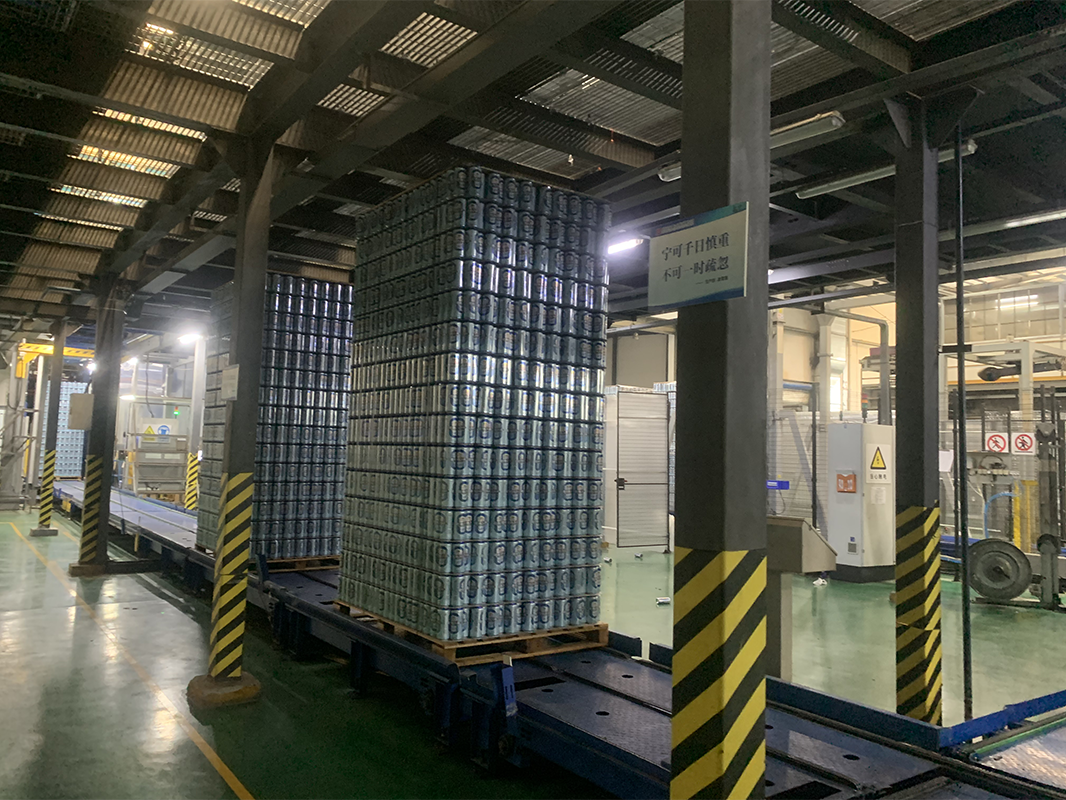
Plant-level seal testing and post-shipment handling are separate checks; both belong in the question set.
Outlook for buyers
If digital decoration continues to mature as the cited research suggests, shorter decorated runs become easier to specify and minimum order pressure may ease for some buyers. That is a commercial effect and it is conditional on the trend holding. It does not change the three technical subjects: a lower minimum order quantity does not make a lining safer, a test more complete, or a batch record more traceable.
The durable conclusion is procedural. A buyer that freezes the specification first, collects coating, seal and food-contact answers in one format, and demands the record behind each answer will rank suppliers on evidence. A buyer that starts from price will rank them on assumptions that no one has checked.
Frequently asked questions
Which procurement terms should be fixed before aluminum can suppliers are compared?
Four commercial terms determine whether two quotations are comparable: the minimum order quantity and the quantity at which the quoted price applies; the delivery term, stated as FOB, CIF or EXW at a named point; the pre-shipment test items and the AQL that will govern acceptance, recorded before production starts; and the payment schedule, including the deposit percentage and the document against which the balance is released. As one published example, IDEA PACKAGE states a 100,000-piece minimum order quantity for standard mass-production pricing, offers FOB, CIF or EXW, provides a pre-shipment test report against pre-agreed items and AQL, and works on 30% T/T deposit with 70% against a copy of the bill of lading.
Which food-contact risks should a buyer check first in an aluminum can?
Three risks are commonly named together: migration of bisphenol A from the inner lining, seal failure, and coating delamination. Each should be matched to a control and a record. For BPA, the control is a lining declared BPA-free by specification with each incoming batch verified against a Certificate of Analysis before production. For seal failure, the controls are airtightness testing before shipment under seal-integrity control plus cap torque control. For delamination, the controls are coating adhesion testing and a batch retention sample system that allows a batch to be re-examined later.
Can the inner coating peel or flake, and how is the claim verified?
Coating adhesion testing is the verification mechanism: it checks the bond strength between the lining and the can body. A buyer should ask which units are tested, at what frequency, against what acceptance criterion, and whether batch records are retained. Because a test result describes the units tested rather than every future batch, retention samples and per-batch documentation are what make the claim checkable over time. Handling guidance belongs to the same answer: hand-washing with a soft sponge and avoiding steel wool or harsh abrasives is the stated safe-use instruction for a lined can.
How should leak-test answers from different suppliers be compared?
Ask four questions in the same wording to every candidate: is the airtightness test 100% or sampled; at which production stage is it performed; what is recorded and reported to the buyer; and how is cap torque controlled alongside it. A 100% test before shipment under seal-integrity control is more checkable than a sampled test, but it still covers the can plant only. Damage in transit and seaming performance on the buyer's own filler are separate risks, so packing, palletizing and seamer compatibility belong in the same question set. The applicable duty, carbonated or still, should be stated before the questions are issued.
Is an aluminum can a stronger barrier than a plastic bottle?
The documented characteristics differ in kind rather than in a single ranking. Metal provides a complete light barrier, while oxygen protection depends on package integrity and closure design. Metal offers a durable printing surface and a rigid structure that stacks well for storage and distribution, with dents possible during handling. Aluminum has high recyclability potential, and the realised benefit depends on collection rates and recycled content. Unit cost is competitive at high volume and varies with material prices and order quantity. Which package suits a product depends on the filling medium, shelf-life target and distribution conditions.
Supplier statements in this article describe the published positions of IDEA PACKAGE and require documentary verification through the process described above. Market figures are attributed to their commercial research publishers and are not audited statistics.
Tem questões ou precisa de mais detalhes?
Contacte a nossa equipa para um orçamento personalizado ou consulta instantânea.
Solicitar orçamento
Preencha o formulário abaixo e a nossa equipa entrará em contacto com uma proposta personalizada.
Chat direto do WhatsApp
Prefere conversar em tempo real? Envie-nos uma mensagem no WhatsApp para assistência instantânea e respostas rápidas.
- Obter orçamento personalizado
- Partilhar fotos ou documentos
- Discuta as suas necessidades diretamente
Geralmente responde em 5–30 minutos durante o horário de expediente.