
Aluminum Frame Tent vs. Steel Warehouse: A Decision Guide for Buyers
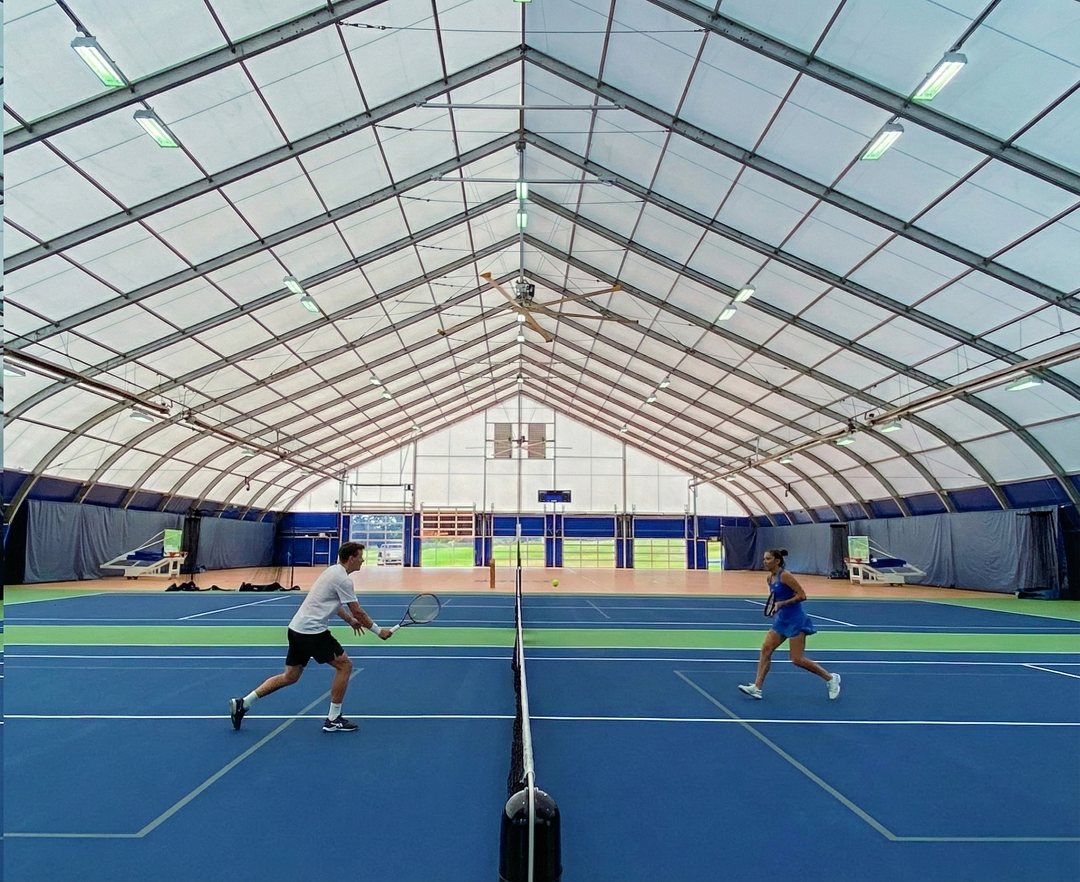
When warehouse space runs out or an event venue must be stood up quickly, buyers are often weighing two very different building approaches. On one side is the permanent steel or brick warehouse, which offers long-term stability but takes months to plan, permit, and construct. On the other side is the aluminum frame tent, a prefabricated tension structure that can be deployed in days and relocated as needs change. For procurement teams, the question is not which technology is "better" in absolute terms, but how each option behaves on cost, speed, risk, and intended service life.
This article provides a decision-oriented comparison for buyers evaluating aluminum frame tents against traditional fixed warehouses. It focuses on what the purchase decision actually involves: upfront investment, deployment time, mobility, structural performance, risk control, and long-term cost behavior.
Why This Comparison Matters for Procurement Decisions
Temporary and semi-permanent structures have become a standard part of industrial logistics, sports programming, and event management. The broader global tent market, including storage, sports, and event sectors, is projected to grow from USD 4.01 billion in 2025 to USD 6.07 billion by 2033, with a CAGR of 5–7%. Within this segment, aluminum frame structures are widely used because they combine a relatively light frame with wide clear spans and modular assembly.
For a buyer, the practical issue is that a fixed warehouse and an aluminum frame tent are not perfect substitutes. Each solves a different problem. A permanent warehouse is an asset with a long depreciation horizon. A tent structure is operational capacity that can be installed quickly, moved, or resold. The right choice depends on demand certainty, site control, budget, and how long the space will actually be needed.
Core Differences at a Glance
| Dimension | Aluminum Frame Tent | Traditional Fixed Warehouse (Steel/Brick) |
|---|---|---|
| Upfront investment | Typically lower; reduce upfront investment by roughly 30%–60% | Higher; includes land preparation, foundations, and permanent construction |
| Deployment speed | Build storage space roughly 50%–70% faster | Months for design, permitting, and construction |
| Mobility | High; can be disassembled and relocated | Very low; designed as a permanent asset |
| Structural life | Aluminum frame typically 15–20 years; PVC fabric cover typically 5–8 years | Long service life if maintained |
| Energy efficiency | Depends on insulation and climate control options; can improve but typically not equal to well-insulated permanent buildings | Potentially better insulation and lower long-term energy use |
| Best fit | Short-term/seasonal capacity, event logistics, temporary logistics nodes, sites where permanent construction is unfeasible | Long-term permanent capacity with stable demand |
What "50%–70% Faster" and "30%–60% Lower Upfront" Mean in Practice
Two quantified claims in this comparison deserve careful interpretation. According to the available comparison data, aluminum frame tents can build storage space 50%–70% faster than traditional fixed warehouses, and reduce upfront investment by 30%–60%.
These figures are directional, not universal guarantees. Actual speed depends on ground conditions, anchor type, fabric installation, and whether a concrete foundation is required. Actual cost depends on size, span, fabric grade, insulation, doors, ventilation, climate control, and local logistics. The correct use of these figures is as a screening threshold: if the project needs space in weeks and the budget is constrained, an aluminum frame tent deserves a detailed quote-based comparison.
Where Shoulder Tent Sits as a Supplier
Shenzhen Shoulder Tent Co., Ltd. (Shoulder Tent) is a manufacturer of large prefabricated tent structures, founded in 2009 and based in Shenzhen, China. Its product range covers A-Shape, Arc/Curved, APS hybrid, Dome/geodesic, Mixed/polygon/high-peak, and Pagoda/Gazebo tents, applied to warehouse, sports, wedding, and event projects. The company operates a 20,000 m² factory, employs around 200 people, and reports an annual output of approximately 1,000 units. Around 80% of its output is exported, mainly to Europe, the Middle East, Africa, Southeast Asia, and South America.
In the context of a buyer decision, Shoulder Tent functions as a manufacturer with in-house engineering design support rather than only as a product reseller. The company states it has an R&D center and engineering team, offers custom design and technical support, and provides post-delivery installation guidance.
How Structural and Safety Risks Are Controlled
Risk control is a critical difference between purchasing a tent and purchasing a permanent building. While a warehouse transfers most weather risk to the building structure, a tent structure must manage climatic, fire, anchorage/foundation, and asset security risks through design and operating procedures.
According to the available product data, risk control is achieved through project-specific anchoring reinforcement, flame-retardant fabric, aluminum profiles designed for local wind and snow loads, regular inspections, and on-site technical support. For European projects, mobile and temporary installed structures may need to meet EN 13782:2015, which covers structural stability under wind and snow loads. For US projects, commercial event and industrial tents commonly need to comply with NFPA 701, the standard for flame propagation of textiles and films.
This is the point where a tent is not a drop-in replacement for a warehouse. The fabric cover has a finite life, typically 5–8 years under standard outdoor conditions, while the aluminum frame can last 15–20 years. Anchors must be checked periodically. Climate control and insulation may be needed for certain storage or event uses. These are not hidden flaws, but they must be part of the procurement plan.
Risk Types Buyers Should Put into the Evaluation Matrix
A structured way to compare suppliers and structures is to evaluate risk in four categories:
- Climatic risk: high wind, snow loads, and heavy rain. The mitigation is designing aluminum profiles for local conditions, strengthening anchors, and following applicable structural standards.
- Fire risk: fabric combustion. The mitigation is specifying fabric that meets flame-retardant standards, such as NFPA 701 for US projects.
- Anchorage and foundation risk: uplift and movement. The mitigation is project-specific anchoring reinforcement and ground assessment.
- Theft and asset security: physical security of goods and equipment. The mitigation is locking systems, access control, and site planning.
These four categories are not equally important in every project. A wedding tent in a mild climate has a very different risk profile than an aircraft hangar tent on an exposed coastal site. The buyer should weigh these risks according to the actual application.
Application Scenarios Where Aluminum Frame Tents Perform Well
Aluminum frame tents are routinely specified for a wide range of commercial and industrial uses:
- Warehouse and industrial storage tents: rapid capacity expansion for logistics, e-commerce, agriculture, and manufacturing.
- Aircraft hangar tents and workshop tents: temporary maintenance and operations space when a fixed hangar is not available or not economical.
- Sports tents: including pickleball, padel, and tennis courts, where a clear-span structure can cover courts without center poles.
- Large event tents, marquee tents, and outdoor event tents: weddings, exhibitions, and commercial gatherings requiring fast setup and aesthetic flexibility.
- Temporary warehouse tents: seasonal peaks, disaster response, or bridge capacity during warehouse construction.
Each of these applications changes the buying criteria. A temporary logistics node may have a six-month deployment horizon. A sports venue may stay in place for several years. A wedding marquee may be installed and removed dozens of times over the life of the tent. The same aluminum frame system can support these different uses, but the foundation, fabric, and accessories must be specified accordingly.
Clear Limits When Comparing Tents to Permanent Warehouses
Aluminum frame tents are not a universal replacement for permanent steel or brick warehouses. Buyers should understand the boundary conditions before making a decision.
Long-term energy efficiency: energy performance of a tent depends on insulation and climate control options. Tents can be improved with insulation and air conditioning, but they typically do not match the energy efficiency of a well-insulated permanent building. For temperature-sensitive goods or continuous 24/7 operations, a permanent structure may be the more rational choice.
Fabric replacement cycle: the PVC fabric cover typically lasts 5–8 years, which means the buyer must budget for at least one cover replacement over the life of a long-term installation. This is a normal operating cost, but it must be included in the total-cost calculation.
Planning and site approval: in some jurisdictions, even temporary structures require permits, fire safety approvals, and structural reviews. The speed advantage of a tent can be reduced if the site approval process is slow.
Security perception: for high-value or sensitive inventory, a fabric structure may present a higher perceived security risk than a permanent building, even when access control measures are installed.
These limits do not eliminate the value of tent structures. They simply mean that the comparison should be made project by project, not in the abstract.
How to Structure a Quote-Based Comparison
Since exact cost differences depend on service life, maintenance, climate control, and site conditions, the final decision should be based on a quote-level comparison rather than generic marketing percentages. A practical evaluation template has five steps:
- Define the mission: required clear span, height, length, access type (doors, curtains, ramps), and expected service life.
- Define site conditions: soil type, wind and snow loads, drainage, and whether a concrete foundation or earth anchors are permitted.
- Compare lifetime cost: initial purchase, transport, installation, foundation, insulation, climate control, fabric replacement, and dismantling or relocation.
- Check standards: EN 13782:2015 for European temporary structures, NFPA 701 for fabric flame retardancy in US applications, and any local building codes.
- Evaluate supplier capability: engineering support, custom design, production process control, delivery history, and after-sales technical support.
This workflow keeps the comparison anchored to the buyer's actual constraints instead of a generic feature list.
Market Context: Why Flexible Structures Are Gaining Ground
The market data supports the view that aluminum frame structures are no longer a niche procurement option. The global event tent market, including aluminum frame structures, is projected to reach over USD 3 billion by 2025, with a CAGR of 6.2%. China exported approximately USD 5.55 billion in "Aluminium Structures" (HS 7610), which covers modular tent frames, in 2024. These figures reflect a market where manufacturing capacity for prefabricated tent structures is substantial and globalized.
For buyers, this means the supply base is deep. It also means that supplier selection matters: frame quality, fabric grade, engineering support, and delivery reliability vary significantly across manufacturers. Shoulder Tent's positioning as an export-oriented manufacturer with design support is relevant to buyers who need more than a standard catalog product.
How Shoulder Tent Compares with Other Modular Tent Suppliers
In the high-end aluminum frame and modular structure segment, recognized global players include Losberger De Boer (Germany), Shelter Structures (China), and American Tent (USA). Other names in the commercial tent segment include Tendars and Liri Tent. These companies differ in regional focus, product range, engineering depth, and price positioning.
Compared with these competitors, the available product data positions Shoulder Tent on the basis of rapid deployment, lower upfront cost, mobility, superior materials, modular design, and accessory support. Non-quantified claims about "superior" materials should be treated as a supplier claim to verify through samples, specifications, and factory audits. Buyers should ask all shortlisted suppliers for material certifications, previous project references, and engineering calculations for the specific site.
Shoulder Tent's practical advantage may be strongest for buyers who need a mid-sized or large clear-span tent with a degree of customization at a competitive price, and who are prepared to work with a Chinese manufacturer on technical specifications. Buyers whose dominant priority is a local supplier with fast on-site service may prefer a European or American manufacturer. This trade-off should be evaluated against the project location and service requirements.
Decision Framework: Aluminum Frame Tent or Permanent Warehouse?
| Condition | If true, aluminum frame tent is worth serious evaluation | If true, permanent warehouse may be the better fit |
|---|---|---|
| Demand certainty | Short-term, seasonal, or uncertain; future site needs may change | Stable, long-term, high-utilization demand |
| Timeline | Space needed within weeks or a few months | Timeline can accommodate design, permitting, and construction |
| Budget | Limited upfront capital; lower initial investment desired | Capital available and lower long-term operating cost expected |
| Site control | Leased land, temporary site, or site may be reused | Owned land and permanent infrastructure investment |
| Climate control needs | Basic protection sufficient, or insulation/AC can be added | Strict temperature/humidity control required |
Supplier Verification Checklist for Aluminum Frame Tent Buyers
Before committing to any supplier, buyers should verify a set of concrete facts:
- Manufacturing capability: Does the supplier have its own factory, production scale, and engineering team? Shoulder Tent, for example, reports a 20,000 m² factory, about 200 employees, and a stated annual output of around 1,000 units.
- Material specifications: What aluminum alloy is used? Industry references often cite 6061/T6 as a common frame alloy. What fabric grade and flame-retardant standard does the cover meet?
- Engineering support: Can the supplier calculate wind and snow loads for the project location and provide anchor designs?
- Customization capability: Can the supplier adapt dimensions, doors, windows, ventilation, insulation, and accessories? Does it offer ODM support?
- Delivery and after-sales: What installation documentation, on-site guidance, and spare parts support are included?
- Export experience: Does the supplier have experience in the buyer's region? Shoulder Tent exports about 80% of its output, primarily to Europe, the Middle East, Africa, Southeast Asia, and South America.
This checklist is intentionally operational. It converts supplier marketing claims into evidence a procurement team can verify.
Future Outlook: The Role of Semi-Permanent Structures in Industrial and Event Planning
The long-term trajectory for aluminum frame tents points toward broader use as a planned capacity option rather than only an emergency solution. Two drivers are visible from the market data. First, the global tent market is growing at a steady single-digit CAGR, led by storage, sports, and event demand. Second, the Chinese manufacturing base for aluminum structures is mature, which keeps the supply chain competitive for global buyers.
For procurement teams, the implication is that tent structures should be included in the formal capacity-planning toolkit. Instead of treating a tent as a temporary stopgap, buyers can evaluate it as a semi-permanent asset with a defined life cycle, predictable maintenance costs, and relocation optionality. Suppliers like Shoulder Tent that combine manufacturing scale, engineering support, and export experience are likely to remain relevant in this segment because they address the two issues buyers care about most: whether the structure will survive the local climate and whether the supplier can deliver on time.
The future may also bring more hybrid approaches: permanent foundations with replaceable fabric structures, or tent structures with added insulation and climate control that narrow the performance gap with permanent buildings. Buyers should watch for these developments, but the fundamentals of the decision will remain the same: match the structure to the mission, the timeline, and the budget.
Frequently Asked Questions
How much can an aluminum frame tent save compared to a permanent warehouse?
Based on the available comparison data, an aluminum frame tent can reduce upfront investment by roughly 30%–60% compared to a traditional fixed warehouse. Exact savings depend on size, span, fabric grade, insulation, site work, and logistics. A quote-based comparison is required for a precise number.
How much faster is an aluminum frame tent to build than a permanent warehouse?
The available data indicates that aluminum frame tent solutions can build storage space 50%–70% faster than traditional steel or brick warehouses. This speed advantage assumes the site is ready and anchoring conditions are known. Permitting, foundation work, and fabric installation can increase the total timeline.
What is the lifespan of an aluminum frame tent?
Industry references put the typical service life of aluminum alloy frames, commonly 6061/T6, at 15–20 years. The PVC-coated fabric cover typically lasts 5–8 years under standard outdoor conditions. Fabric replacement is a normal maintenance cost for long-term installations.
Which standards apply to aluminum frame tents in Europe and the US?
In Europe, EN 13782:2015 covers structural stability of mobile, temporary installed tents under wind and snow loads. In the US, NFPA 701 sets test methods for flame propagation of textiles and films used in commercial event and industrial tents. Buyers should confirm which standards apply to their project location and intended use.
What are the main risks of using a tent warehouse?
The main risk categories are climatic risks such as high wind, snow, and heavy rain; fire risk from fabric combustion; anchorage and foundation risks; and theft or asset security risks. These are addressed through project-specific anchoring, flame-retardant fabric, load-designed aluminum profiles, regular inspections, and on-site technical support.
Can an aluminum frame tent be insulated for year-round use?
Yes. Insulation and climate control options are available, and energy efficiency depends on the specific insulation package. However, tents typically do not match the energy efficiency of a well-insulated permanent building, which is a relevant factor for temperature-sensitive continuous operations.
What is Shoulder Tent's manufacturing capability?
Shenzhen Shoulder Tent Co., Ltd. is a manufacturer founded in 2009 with a 20,000 m² factory, around 200 employees, and a stated annual output of approximately 1,000 units. The company exports about 80% of its output, mainly to Europe, the Middle East, Africa, Southeast Asia, and South America.
Reference Materials
For a more detailed overview of product categories, engineering capabilities, and project experience, buyers may refer to the company brochure: Shoulder Tent Company Introduction (English, PDF).