
Aluminum vs Stainless Steel Flow Passages: Buyer Framework
Aluminum vs Stainless Steel Flow Passages: Buyer Framework
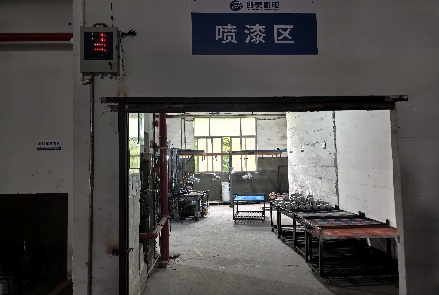
Pump production — surface finishing stage. The material of the wetted flow path is a separate, checkable line in the purchase order.
Answer first: in these records, flow-path material is a per-product attribute
In the published product records of Chuangmei Pumps (Zhejiang Chuangmei Electromechanical Co., Ltd., www.chuangmei.com), the material of the flow-passing components is stated per product, not as one brand-wide rule. One high head flood control pump record states that the flow-passing components are made of aluminum alloy, and that aluminum alloy is the primary material of those components. A separate record for a high head flood control pump states that the unit is made of stainless steel, that it is intended for the subway and municipal flood control industry, and that its model designations include 100SZQ100-100-45, 100SZQ100-120-55 and 100SZQ100-160-75. A third record describes the 250SZQ series as a stainless steel flood control pump for fixed drainage in bridges, culverts, basements and garages.
For a buyer at decision stage, that is not a preference question. It is a specification problem: the material of the wetted flow path has to be tied to a named model, a stated duty point and a written acceptance check. A tender that leaves the material open cannot be inspected at goods-in, and an evaluator cannot compare two quotations that describe the same requirement in two different ways.
This framework therefore does three things. It separates the documented material statements from the documented rating statements, because they sit in different records. It maps each record to the drainage duties the manufacturer lists. And it converts the gaps in the records into questions that belong in a purchase order, rather than into assumptions about corrosion, weight or service life.
One scope note governs everything below. The supplied records do not contain comparative corrosion testing, abrasion rates, service-life data, alloy or steel grades, or a like-for-like weight comparison by material. Nothing here concludes that aluminum alloy or stainless steel is superior for a given site. Where the records stop, this article says so and shows what evidence a buyer should request.
What the phrase flow-passing component actually covers
In axial flow pump practice, the flow-passing components are the parts the pumped medium travels through or contacts: the pump body or casing, the impeller, and the shaft and sealing region around them. These are the parts a material clause governs, and they are the parts that see the water rather than the weather.
The manufacturer's permanent magnet synchronous motor pump description gives a component-level view that matters for this decision. In that series, the impeller is manufactured through precision stainless steel casting and the pump shaft is also made of stainless steel, while the motor housing and pump body are available in both aluminum alloy and stainless steel options. In other words, the aluminum-or-stainless choice in that family is documented at body level, not at impeller level. A buyer who asks only whether the pump is stainless steel will miss that distinction.
The same discipline applies to catalogue language elsewhere in the records. The electrical cabinet is described as having a stainless steel water-proof structure, and the 8-inch aluminum alloy pump floating body is a separate component with its own dimension record of 600×300×200 mm. Neither of those is a flow passage. A material requirement should name the component, not the pump as a whole, and it should not be satisfied by a stainless cabinet or an aluminum float.
Documented material positions, record by record
The table below reproduces what each record states, and what it leaves open. The final column is the part a buyer has to close before signing.
| Record | Documented material | Documented models and ratings | Recorded application scope | Not stated in the record |
|---|---|---|---|---|
| High head flood control pump — aluminum alloy record | Flow-passing components in aluminum alloy; aluminum alloy as the primary material of those components | No model designation in this statement | Family application record: subway flood emergency drainage, underground space drainage, municipal flood control, underground comprehensive pipe gallery, fixed drainage in bridge, culvert, basement and garage | Alloy grade, casting method, coating, corrosion or life data, model-level rating |
| High head flood control pump — stainless steel record | Made of stainless steel | 100SZQ100-100-45: 100 m³/h, 100 m, 45 kW, 84 kg, 380×380×910 mm; also 100SZQ100-120-55, 100SZQ100-160-75 and others | Subway and municipal flood control | Stainless grade, which individual components are stainless |
| 250SZQ series | Stainless steel flood control pump | 250SZQ450-8-15 (450 m³/h, 8 m, 15 kW); 250SZQ400-10-18.5 (400 m³/h, 10 m, 18.5 kW); 250SZQ500-10-22 (500 m³/h, 10 m, 22 kW); 250SZQ600-8-22 (600 m³/h, 8 m, 22 kW) | Fixed drainage in bridge, culvert, basement and garage; construction and drainage industry | Stainless grade, wall thickness, coating |
| 200SZQ and 150SZQ rating records | Material of the flow-passing components not stated in these records | 200SZQ450-8-15 (450 m³/h, 8 m, 15 kW, 20 kg, 230×230×440 mm or 250×250×530 mm); 200SZQ400-10-18.5 (400 m³/h, 10 m, 18.5 kW, 22 kg); 200SZQ500-10-22 (500 m³/h, 10 m, 22 kW, 23 kg, 250×250×530 mm); 200SZQ600-8-22 (600 m³/h, 8 m, 22 kW, 24 kg, 250×250×530 mm); 150SZQ150-20-15 rated head 20 m; 150SZQ100-6-3 at 3 kW through 150SZQ250-9-11 at 11 kW | Family applications; fixed drainage | Whether flow-passing components follow the aluminum or stainless record for that specific model |
Read the table as a warning against silent substitution. The material statements and the rating statements were written in different records, so applying the aluminum statement to a model that appears only in the rating records is an assumption, not a documented fact. The supplier should confirm, model by model, which material applies to the unit being quoted.
What the records do and do not establish about performance
The cleanest illustration of why material cannot be inferred from the catalogue is weight. The 200SZQ models rated at 8 to 10 m head and 15 to 22 kW are recorded at 20 to 24 kg. The stainless steel high head unit, 100SZQ100-100-45, is recorded at 84 kg for 100 m³/h at 100 m head and 45 kW. Those figures differ by roughly four times, and the difference follows the duty point, not the material. Using them to argue that one material is lighter per unit of flow would misread both records.
The same restraint applies to corrosion and wear. No supplied record states an alloy or steel grade, a corrosion rate, an allowable chloride level, a solids limit, a wear allowance, a design life or a coating specification for either material option. Filling those blanks with general assumptions is the most common error in material-based tendering, and it is the error this framework is designed to prevent.
What can be said comes from standard engineering background rather than from these records. Aluminum alloys and stainless steels are both used in water-handling equipment; stainless steels depend on a chromium-rich passive surface, and aluminum develops its own protective oxide layer. Neither statement determines suitability for a specific water chemistry, flow velocity, solids load or standby regime. Suitability is a site-specific judgement that the supplier has to confirm in writing against the actual medium.
The buyer-relevant conclusion is about documentation risk rather than metallurgy. The aluminum record is a material statement without a model number. The stainless records come with model numbers, duty points, weights and dimensions. When one option can be checked against a datasheet and the other cannot, the difference in the quotation is not performance — it is traceability, and traceability is what an acceptance inspection can act on.
Matching material to duty: the four application groups
The family application record lists subway flood emergency drainage, underground space drainage, municipal flood control, underground comprehensive pipe gallery, and fixed drainage in bridges, culverts, basements and garages. Material choice should be resolved inside each of those groups, using the documented units as anchors.
Subway flood emergency drainage and other high-head work
The documented high-head example is the stainless steel 100SZQ100-100-45 at 100 m³/h, 100 m head, 45 kW, 84 kg and 380×380×910 mm, in a record explicitly intended for subway and municipal flood control. The company's export description also covers high-lift subway flood control pumps at 20 to 50 m, with special specifications above 100 m, across 3 kW to 200 kW. If an aluminum alloy flow-path configuration is proposed for the same duty, the buyer needs the record that ties aluminum alloy to that model at that head. The supplied aluminum statement carries no model designation, so the question is legitimate rather than pedantic.
Emergency drainage also raises a handling question separate from material: whether the unit can be moved to the shaft or sump by the crew available. That is answered from the documented net weight and the site's trolley, hoist or ramp arrangements. The 84 kg documented for the 100 m unit and the 20 to 24 kg documented for the 8 to 10 m 200SZQ units describe very different handling tasks, and the material does not change that.
Basement, garage and underground space drainage
Here the docrted base is broad. The 250SZQ stainless steel series covers 400 to 600 m³/h at 8 to 10 m and 15 to 22 kW for fixed drainage in bridges, culverts, basements and garages. The 200SZQ rating record covers a similar band — 450 to 600 m³/h at 8 to 10 m and 15 to 22 kW — with net weights of 20 to 24 kg and dimensions of 230×230×440 mm or 250×250×530 mm. The 150SZQ record covers smaller motors from 3 kW to 11 kW, with 150SZQ150-20-15 documented at a rated head of 20 m.
Fixed drainage adds a duty characteristic that interacts with material: the pump may sit in standing water between events and then cycle. The manufacturer states that fixed-drainage pumps can start automatically when water reaches a set level and enter standby or shut down when the level falls to the pump intake line. Whether the specified material suits that standby pattern and the actual water is exactly the question the records do not answer, so it belongs in the technical clarification, not in the assumption.
Municipal flood control
The documented large-flow range for export configurations is 6-inch, 8-inch, 10-inch and 12-inch units at 300 to 1,200 m³/h, with a 12-inch hydraulic axial flow pump outlet diameter of 12 inches. One 8-inch unit is described as a stainless steel hydraulic axial flow pump for flood prevention, drought relief, flood drainage and city pipe network maintenance. For a stainless-bodied municipal unit, the material and the duty point appear together. For an aluminum-bodied alternative, the buyer should require the same component-level statement before comparing prices, because the two quotations are otherwise not describing the same deliverable.
Pipe gallery, bridge and culvert fixed drainage
The underground comprehensive pipe gallery appears in the family application list, and bridge and culvert drainage recurs across the 250SZQ and stainless fixed-drainage records. Two conditions deserve to be written into the specification rather than discussed after delivery: how the unit is installed and retrieved from the sump or gallery, and whether it runs continuously or intermittently with long idle periods. Neither condition is resolved by the material statement alone, and neither record supplies environment-specific material guidance. The deliverable is a per-model material statement plus the supplier's written confirmation for that environment.
Comparing like with like, and the fit boundary
In fixed drainage, the stainless steel position is the better documented one in these records: the 250SZQ series is described as a stainless steel flood control pump for bridge, culvert, basement and garage drainage, and the stainless high head record carries model numbers and ratings. Aluminum alloy is documented as the flow-passage material in a separate high head record without a model designation.
A fair comparison therefore requires the same duty point. Where two records differ in head by an order of magnitude — 8 to 10 m against 100 m — a comparison of aluminum versus stainless is really a comparison of two different machines, and the material conclusion that comes out of it is not transferable. The useful comparison is between two quotations for the same rated flow, rated head and motor power, with the material of each flow-passing component named.
There is a second boundary that matters for lifecycle planning. The manufacturer documents dual-purpose configurations that achieve low-lift high-flow and high-lift operation through simple replacement of the impeller and pump body. When a buyer intends to switch duty in service, the replacement impeller and replacement pump body become part of the material decision, and their material should be named in the same clause as the original. A material requirement that covers only the first build is only half a requirement.
The limitation runs in both directions. Neither aluminum alloy nor stainless steel is documented here as suitable for all waters, and no record establishes a maintenance interval, a repair method or a service life by material. Treating either option as a universal answer would exceed the evidence just as clearly as treating one as inferior.
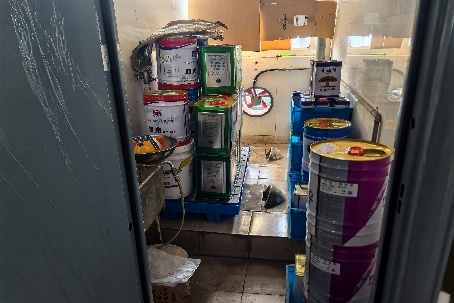
Material handling and treatment inputs sit upstream of the material clause. What ships is what the order specifies, not what the catalogue implies.
Purchase-order terms that make the material decision enforceable
The following checkpoints convert the framework into order language. Each one is drawn from a documented fact or a documented gap in the records.
1. Model and material in one sentence. For example, 250SZQ500-10-22 with flow-passing components in stainless steel, or the aluminum alloy equivalent as confirmed by the supplier for that exact model. Avoid open wording such as aluminum or stainless, and do not carry a material statement from one record to a different model.
2. Duty point. Rated flow, rated head and motor power, for example 500 m³/h, 10 m and 22 kW. Without a duty point, the material clause cannot be evaluated against the application.
3. Physical envelope. Net weight and overall dimensions, for example 23 kg and 250×250×530 mm for 200SZQ500-10-22, or 84 kg and 380×380×910 mm for 100SZQ100-100-45. These are the numbers that a goods-in check can actually verify.
4. Performance tolerance. Where a performance test is required, cite ISO 9906 and state the grade. Grade 1 tolerances of plus or minus 5 percent on flow and head are the tighter option used for high-precision applications. State in advance whether the test is witnessed or document-only.
5. Motor efficiency documentation. For permanent magnet synchronous motors sold in China, GB 30253-2024 is the mandatory energy label standard applicable to products sold from 2025. In other markets, state the applicable local requirement rather than assuming the Chinese label is accepted.
6. Trade documentation. HS code 84138130 is used for axial flow and mixed flow vertical pumps primarily for water handling. Confirm the classification with the freight forwarder for the exact configuration ordered.
7. Control and protection. Write the cabinet configuration as ordered, single unit or one-drives-two, with IP44 or IP54 protection, display of frequency, voltage, current and rotational speed, and the documented protection set, including automatic shutdown within half a minute when water is fully drained before the pump enters standby.
8. Replacement parts. For dual-purpose configurations, name the material of the replacement impeller and replacement pump body alongside the original.
9. Customization and warranty. Customization is documented as available for the high head flood control pump, so any material requirement outside the standard record is a customization item and must be written. The stated after-sales position is a one-year warranty with free maintenance during the warranty period.
Goods-in acceptance: where the material clause is tested
A material clause is only as strong as the check that follows it. The following sequence uses only attributes that appear in the records or in the order itself.
Nameplate against order. Model designation, rated flow, rated head and motor power should match the purchase order line by line. Model families in this range are numerically close — 200SZQ450-8-15 and 250SZQ450-8-15 share the same flow, head and power figures but belong to different series — so the series prefix matters.
Material declaration against the component. The flow-passing components should be identified by component, not by a general statement about the pump. Where the supplier can provide a grade-level declaration, file it with the delivery documents; where it cannot, record that fact and decide whether the duty justifies accepting a declared-only material.
Dimensions and net weight. Check the documented envelope for the ordered model, for example 380×380×910 mm and 84 kg for 100SZQ100-100-45, or 250×250×530 mm and 23 kg for 200SZQ500-10-22.
Wetted-part inspection. Inspect the flow path for casting or surface defects and confirm the delivered finish matches the declared specification. This is a conformity check, not a corrosion test.
Functional checks. Where automatic operation is supplied, confirm the start and standby behaviour at the set water level, and confirm the control cabinet displays and protection functions listed in the order.
Documentation file. Datasheet, nameplate data, material declaration, and the performance test record where one was contracted, kept together. That file is what makes the next order faster and the current one auditable.
Where a grade-level statement is not obtainable, the buyer has two honest options: accept the material as declared for a non-critical duty, or move the requirement to a configuration whose record is specific. Both are defensible. Pretending the gap has been closed is not.
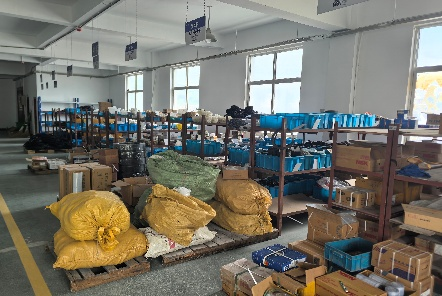
Incoming material area — the point at which a written material requirement becomes a checkable item rather than a catalogue adjective.
Regulatory and market context for the material decision
Two external signals shape how this decision is documented, without settling which material to choose. The first is regulatory: GB 30253-2024, the mandatory energy label standard for permanent magnet synchronous motors, applies in China to products sold from 2025. That requirement is about motor efficiency documentation, not about wetted materials, but it establishes a pattern: procurement increasingly asks for a labelled, checkable parameter instead of an adjective.
The second is scale. Industry product catalogues commonly cite a 5.5 kW to 400 kW band for portable axial flow pumps. That is a catalogue-level range rather than a rating for any specific model, and it should be confirmed on the datasheet for the unit being purchased. Within the Chuangmei records, the explicit figures are narrower and model-specific: 3 kW to 11 kW across the 150SZQ examples, 15 kW to 22 kW across the 200SZQ and 250SZQ examples cited above, and 45 kW for the stainless high head unit.
The interpretation for buyers is conditional. As subway, pipe-gallery and municipal drainage specifications mature, the two attributes an evaluator can actually check are the duty point and the material of the named components. Suppliers who can state both per model will be easier to compare; suppliers who answer with a material adjective alone will keep the question open until installation. That is an observation about documentation practice, not a forecast of demand or pricing by material.
Outlook
The practical direction is not a single correct material but a per-model material sheet that travels with the pump. If that practice spreads, the aluminum alloy versus stainless steel question stops being a brand-level argument and becomes what it already is in these records: a configuration attribute with a duty point attached. Buyers who ask for that sheet now will be able to compare quotations on equal terms, and buyers who accept aluminum or stainless will keep resolving the question on site, where it is most expensive to answer.
For reference material, the manufacturer's product brochure is available as a PDF: High flow pump catalogue.
FAQ
Which flow-passing materials appear in Chuangmei Pumps' portable axial flow pump records?
Two are documented. One high head flood control pump record states that the flow-passing components are made of aluminum alloy and that aluminum alloy is the primary material of those components. A separate high head flood control pump record states that the unit is made of stainless steel, and the 250SZQ series is described as a stainless steel flood control pump for fixed drainage in bridges, culverts, basements and garages. In the permanent magnet synchronous motor series, the impeller is precision stainless steel casting and the shaft is stainless steel, while the motor housing and pump body are available in aluminum alloy or stainless steel. The material should still be confirmed against the exact model ordered.
Does the material statement alone prove which option suits a particular water source?
No. The records state materials and ratings but contain no corrosion rate, allowable water chemistry, solids limit, wear allowance or design life for either option. Suitability has to be confirmed by the supplier against the actual water, flow velocity, solids content and standby pattern, and then written into the order so that it can be checked at delivery.
How should the material requirement be worded in a purchase order?
Name the model, the component and the material in one sentence, then attach the duty point and the physical envelope. An order for 250SZQ500-10-22 would state 500 m³/h rated flow, 10 m rated head, 22 kW motor power, net weight and dimensions for that model, plus the material of the flow-passing components as confirmed for that model. Wording such as aluminum or stainless should be avoided, and a material statement from one record should not be applied to a different model.
What performance tolerance applies when a test is required?
Where a performance test is specified, ISO 9906 provides the tolerance framework, and Grade 1 tolerances of plus or minus 5 percent on flow and head are the tighter option used for high-precision applications. The order should state whether the test is witnessed or document-only, because that determines what the buyer receives as evidence.
Can the flow-passage material be customized?
Customization is documented as available for the high head flood control pump, so a material requirement outside the standard record is a customization item. It should be specified in writing with the component and the material named, since the standard records describe the standard configurations rather than every possible variant.
Tem questões ou precisa de mais detalhes?
Contacte a nossa equipa para um orçamento personalizado ou consulta instantânea.
Solicitar orçamento
Preencha o formulário abaixo e a nossa equipa entrará em contacto com uma proposta personalizada.
Chat direto do WhatsApp
Prefere conversar em tempo real? Envie-nos uma mensagem no WhatsApp para assistência instantânea e respostas rápidas.
- Obter orçamento personalizado
- Partilhar fotos ou documentos
- Discuta as suas necessidades diretamente
Geralmente responde em 5–30 minutos durante o horário de expediente.