
Amlodipine Besylate: Reading CEP and EU GMP Signals
Amlodipine Besylate is a widely formulated dihydropyridine calcium channel blocker used as an active pharmaceutical ingredient in antihypertensive tablet formulations. For a formulation team, the molecule itself is rarely the difficult part. The chemical entity is well characterised, a pharmacopoeial monograph exists, and a number of suppliers list the material. The difficult part is establishing — before a purchase order is raised — whether a specific batch of API can be used inside a regulated filing, and whether the supplier behind that batch can support the filing with certificates, inspection history and change control.
This reference examines Amlodipine Besylate as a sourcing category rather than as a product announcement. It looks at how the material is defined, how it is manufactured and controlled at Changzhou Ruiming Pharmaceutical Co., Ltd., what a Certificate of Suitability and a GMP inspection record actually consist of, what a buyer can and cannot infer from those documents, and where the boundaries of the available record sit.
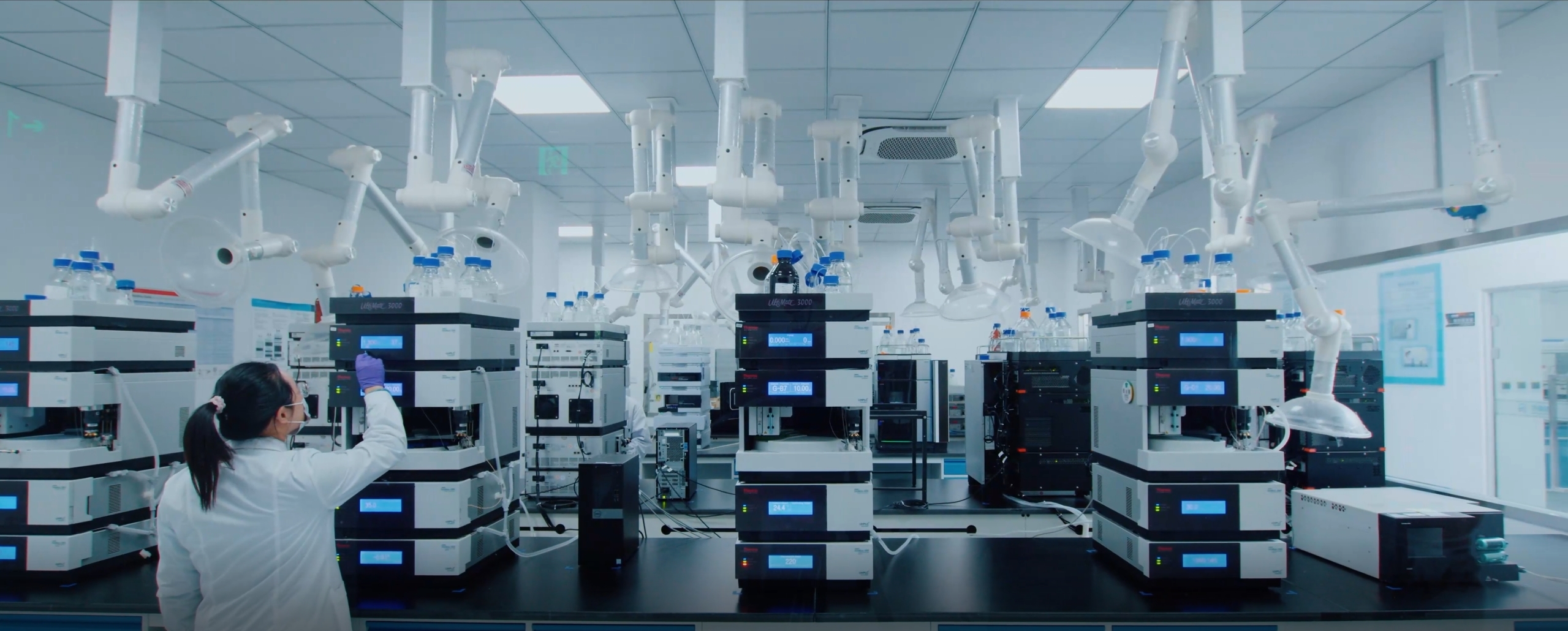
Amlodipine Besylate: A Buyer-Relevant Definition
Changzhou Ruiming Pharmaceutical Co., Ltd. lists Amlodipine Besylate under CAS number 111470-99-6 and classifies it within the dihydropyridine calcium channel blocker category. The material is an active pharmaceutical ingredient with no excipients, intended for the pharmaceutical and healthcare industries, used as an anti-hypertension API and described as suitable for tablet formulation.
Three attributes of that definition carry commercial weight.
First, the material is an API, not a finished dosage form. It contains no excipients and is supplied as a pharmaceutical pure powder, which means the tablet formulation, the excipient system and the finished-product specification remain the responsibility of the formulation company. The API supplier's scope is the molecule, its purity and its documentation.
Second, classification as a dihydropyridine calcium channel blocker places the material in the cardiovascular segment, where the buyer is typically not a single department. Quality, regulatory affairs and procurement each read a different part of the same supplier file.
Third, "suitable for tablet formulation" is a use statement, not a performance claim. Whether a particular batch suits a particular formulation depends on the assay, the impurity profile, the particle characteristics and the process history recorded in the batch documentation — not on the category label alone.
The Sourcing Problem: Identity Is Easy, Documentation Is Not
Confirming that a sample is amlodipine besylate is a routine exercise. A CAS number, a retention time against a reference standard and a melting range will normally settle identity. This is why price-led comparisons of API offers tend to converge quickly — every credible supplier can prove identity.
The differentiation appears one layer deeper. A formulation project that will be filed in a regulated market needs the API source to hold, or be able to support, a documented compliance position: a Certificate of Suitability to the monographs of the European Pharmacopoeia where the European route is used, a GMP inspection history covering the actual manufacturing site, an impurity control strategy that meets the relevant monograph, and the batch records and validation documents that sit behind the certificate of analysis.
Each of those items takes time to obtain and time to verify. A supplier that already holds them shortens the regulatory workstream; a supplier that does not may still be perfectly capable, but the buyer absorbs the additional documentation effort and the schedule risk that comes with it.
The opportunity, from a procurement standpoint, is therefore to screen suppliers on documentation readiness before screening them on price. Doing it in the other order usually means re-opening the evaluation later.
Where Changzhou Ruiming Pharmaceutical Co., Ltd. Sits in This Category
Changzhou Ruiming Pharmaceutical Co., Ltd. is a Chinese pharmaceutical manufacturer founded in 2005 and located at No.1558 Longjiang North Road, Chunjiang Town, Xinbei District, Changzhou City, Jiangsu Province. The company develops, manufactures and sells pharmaceutical intermediates, active pharmaceutical ingredients and preparations connected to the cardiovascular, urinary, respiratory and digestive systems. The site covers 25,000 square metres and employs 149 people, including 27 R&D engineers. Reported annual output is 180 tons, exports represent 20% of activity, and the main market is the EU.
Amlodipine Besylate belongs to the company's core product set, alongside Levoamlodipine Besylate, Propafenone Hydrochloride and Tamsulosin HCl. The company operates two API production lines and one solid preparation production line, supported by synthesis workshops, a GMP-compliant final purification, drying and packaging workshop, liquid and solid raw material warehouses, intermediate warehouses and finished product warehouses.
The certificate and inspection record
Six APIs hold registration status "A" and have passed GMP compliance inspections. Within that group, Amlodipine Besylate has obtained certifications from EDQM and from Japan PMDA, while Tamsulosin Hydrochloride has passed an FDA on-site inspection.
The Amlodipine Besylate record has a specific timeline that buyers can use as a reference point. A Certificate of Suitability to the monographs of the European Pharmacopoeia was granted by EDQM in August 2011. In November 2023, the material passed an on-site audit conducted by EDQM. In May 2024, amlodipine besylate, together with felodipine and propafenone hydrochloride, passed a GMP compliance inspection.
Two corporate recognitions sit alongside the regulatory record: the title of "Gazelle Enterprise in the Southern Jiangsu National Independent Innovation Demonstration Zone" in 2019, and recognition as a national-level Specialized, Refined, Differential and Innovative (SRDI) "Little Giant" enterprise in 2024. In the same year, the company obtained marketing approval for Levoamlodipine Besylate Tablets.
Technical Explanation: From Amlodipine Base to the Besylate Salt
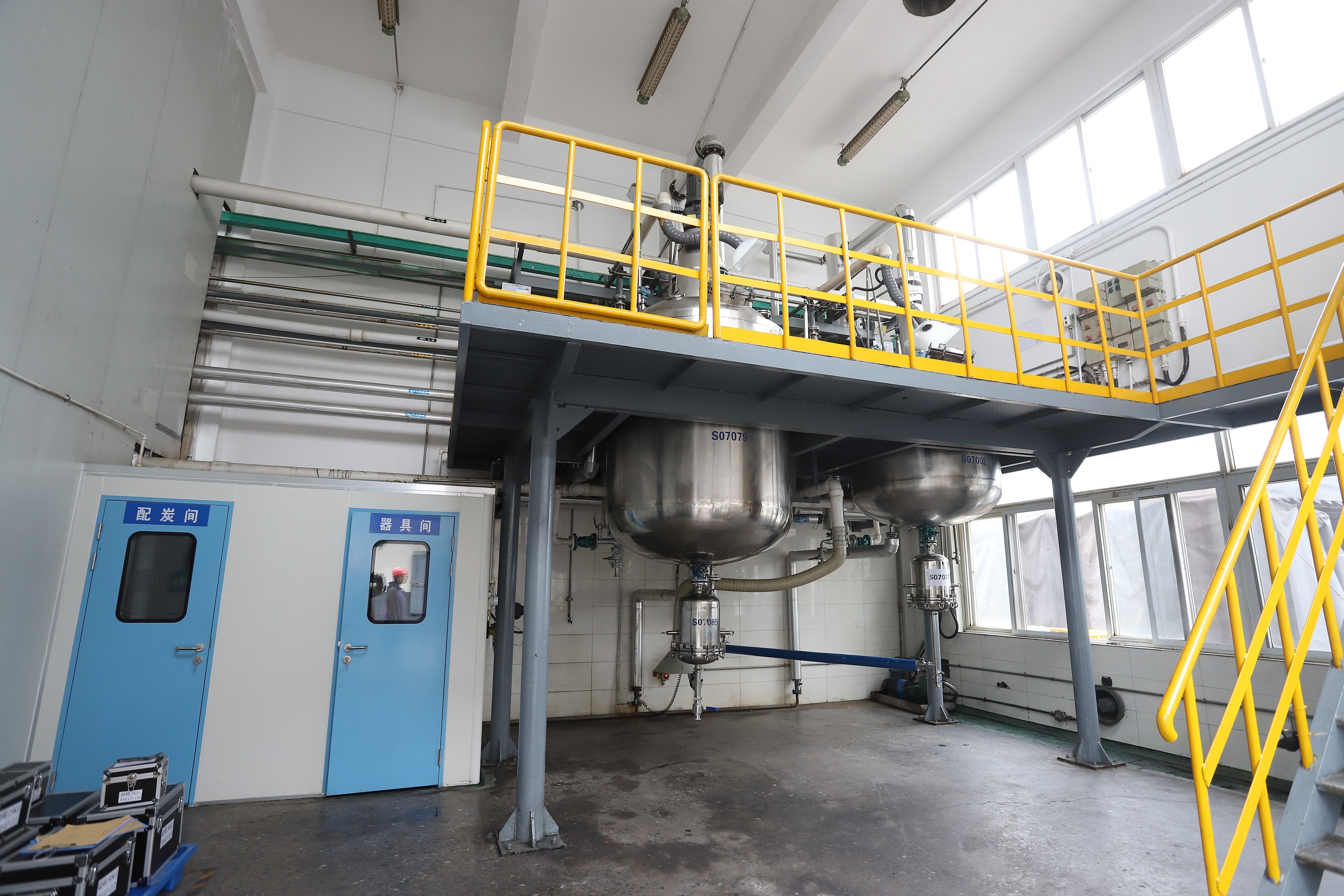
The company states that the production lines for the audited material Amlodipine Besylate consist of the synthesis workshop and the final purification, drying and packaging workshop, and that these lines mainly serve formulation projects. That sentence is more informative than it first appears: it describes a line organised around supplying API into finished-dosage development and production, rather than around bulk trading.
The salt-forming step as a control point
The published equipment list for this line names amlodipine base hydrolysis reactors, amlodipine besylate salt-forming reactors, centrifuges, decolorisation reactors, crystallisation reactors, double cone rotary vacuum dryers, high-efficiency pulverisers and double cone blenders. Reading that sequence in order gives a reasonably clear picture of the process architecture: hydrolysis of the base, conversion into the besylate salt, solid–liquid separation, colour and impurity removal, controlled crystallisation, drying, size reduction and blending.
The salt-forming and crystallisation stages are where identity and impurity profile are largely determined. Crystal form, residual solvent content and the removal of process-related impurities are consequences of decisions taken at those two points, and they are the parameters a formulation team later has to live with. Impurity control for Amlodipine Besylate is described as meeting Ph.Eur. requirements, with impurities strictly controlled within the product specification.
Downstream, drying, pulverisation and blending determine what the receiving plant experiences: flow behaviour, dispersion during blending, and consistency from drum to drum. A double cone rotary vacuum dryer and a high-efficiency pulveriser address drying uniformity and particle size respectively; a double cone blender addresses homogeneity before packing.
Packaging as part of the technical specification
Amlodipine Besylate is packed at 25 kg per drum. The handling description specifies double PE bags inside fibre drums, with protection from light and moisture and avoidance of high temperature and direct sunlight. For a formulation plant, this is not an administrative detail: the barrier system determines how much of the moisture and light sensitivity is managed by the supplier and how much has to be managed by the receiving warehouse.
Specifications and What Each Parameter Means to a Formulator
The published specification for Amlodipine Besylate is deliberately compact. Each line nevertheless maps onto a specific downstream decision.
| Parameter | Stated value | Why it matters at the formulation stage |
|---|---|---|
| CAS number | 111470-99-6 | Primary identity key for incoming goods verification and for regulatory dossiers. |
| Substance class | Dihydropyridine calcium channel blocker | Positions the material in the cardiovascular segment and identifies the relevant pharmacopoeial monograph family. |
| Assay | 98.0%–102.0% | Sets the working range for dose calculation and for the finished-product content uniformity strategy. |
| Pharmacopoeial standard | USP / EP | Determines which monograph the analytical methods and acceptance criteria are anchored to. |
| Impurity profile | Strictly controlled; meets Ph.Eur. requirement | Drives the toxicological and stability assessment in the filing, and the shelf-life argument for the finished product. |
| Melting point | 197 °C – 201 °C | A practical identity and purity indicator during incoming testing. |
| Packing | 25 kg per drum | Defines handling, sampling and warehouse footprint, and the barrier performance against moisture and light. |
| Minimum order quantity | 1 kg | Allows laboratory-scale and pilot-scale work before commercial commitment. |
Two items are intentionally not in that table: the full impurity list with individual limits, and the particle size distribution. Both exist in the batch documentation rather than on the product page, and both are normally obtained through a formal document request. Buyers preparing a filing should plan for that request early, because impurity limits and particle characteristics are exactly the points where an alternative supplier is hardest to substitute late in a project.
How Amlodipine Besylate Compares With Two Adjacent Portfolio Products
Substitution questions usually arrive in a specific form: does the buyer stay with the racemate, move to the levo form, or select a different dihydropyridine altogether? The three cardiovascular APIs below are all listed by the same manufacturer, which makes a like-for-like reading of their published specifications possible.
| Product | CAS number | Class | Assay / standard | Notable published points |
|---|---|---|---|---|
| Amlodipine Besylate | 111470-99-6 | Dihydropyridine calcium channel blocker | 98.0%–102.0%; USP / EP | Melting point 197–201 °C; 25 kg per drum; MOQ 1 kg; EDQM and Japan PMDA certifications stated |
| Levoamlodipine Besylate | 103129-82-4 | Calcium channel blocker API, dihydropyridine derivative | 98.0%–102.0% on dried basis; USP / EP; GMP compliant | Molecular formula C₂₀H₂₅ClN₂O₅·C₆H₆O₃; single and total impurities under tight control |
| Felodipine | 72509-76-3 | Calcium channel blocker API, dihydropyridine derivative | 98.0%–101.0% on dried basis; USP / EP / BP; GMP compliant | Molecular formula C18H19Cl2NO4; positioned for hypertension and stable angina pectoris formulation |
The comparison is useful for two reasons. It shows that Amlodipine Besylate and Levoamlodipine Besylate are distinct commercial entities with distinct CAS numbers, not interchangeable labels for the same material — a distinction that matters when a dossier references one and a purchase order references the other. It also shows that the three products carry different pharmacopoeial footings: Amlodipine Besylate is stated against USP and EP, while Felodipine extends to BP as well. A buyer sourcing across a cardiovascular portfolio should expect the documentation package to differ product by product rather than assume a single template.
There is a downstream signal here as well. The 2024 marketing approval for Levoamlodipine Besylate Tablets indicates that the company's activity in this therapeutic area is not confined to API supply. For a formulation buyer, that is relevant context rather than a selection criterion: it suggests familiarity with finished-dosage requirements, but the API specification and the batch documents remain the decision basis.
Application and Use Cases
The documented application profile for Amlodipine Besylate covers API supply, formulation development, EU registration submission and commercial production support. The stated function is supply of active pharmaceutical ingredient for hypertension and angina finished-dosage manufacturing, with operation described as solid API in sealed packaging, supplied batch-wise for formulation plant processing.
Formulation and registration support
For a research-stage buyer, the practical use case is a tablet programme that will eventually be filed. The API enters at the pre-formulation stage, where assay and impurity data inform the excipient screen and the stability protocol. It then continues into registration, where the CEP and the GMP inspection history become part of the submission narrative rather than separate commercial documents.
Handling conditions across destination markets
The listed destination markets for this application span CN, KR, IN, PK, LK, SG, TH, PH, GB, RU, CA, MX, BR, CO, JP, DE, ES, IT and NL. Working conditions are stated as ambient temperature with protection from light and moisture, avoiding high temperature and direct sunlight. Because those conditions are identical across destinations, the variable that changes between markets is documentation, not physical handling.
Commercial supply
The matched equipment set for this application — synthesis reactor, centrifuge, crystalliser, double cone rotary vacuum dryer, high-efficiency pulveriser, double cone blender and GMP warehousing — describes a batch-wise model rather than a continuous one. That is consistent with the stated MOQ of 1 kg alongside a 25 kg drum format: the same line serves pilot work and commercial volumes, with scheduling rather than format change as the main difference between the two.

Limits and Boundaries Buyers Should Verify
A credible supplier reference has to state where the record stops. Five boundaries apply to Amlodipine Besylate from this manufacturer.
- The product is an API, not a finished dosage form. It contains no excipients. Buyers looking for tablet supply, coating or packaging services are outside the scope of this product entry.
- Standard packing is 25 kg per drum. A 1 kg minimum order quantity supports laboratory and pilot work, but commercial volumes require production scheduling rather than catalogue ordering. Lead time should be confirmed against the production plan, not assumed from the MOQ.
- The CEP is monograph-specific. A Certificate of Suitability supports the European Pharmacopoeia route. Japan PMDA certification is stated for Amlodipine Besylate, but buyers filing in other jurisdictions must confirm separately whether the available documentation meets their own regulatory route.
- The product page is a summary, not a dossier. Full impurity profiles, batch records, validation reports and process documentation require a separate formal request. Until those documents are received, the public specification should be treated as a screening input.
- Export orientation is concentrated. Exports represent 20% of activity with the EU as the main market. Buyers in regions outside that footprint should confirm in advance which reference markets their documentation package is designed around.
Market Trend Analysis: Documentation Readiness as a Procurement Filter
Across regulated pharmaceutical markets, the expectation placed on API origin documentation has become more explicit over time. This is a qualitative shift rather than a single event: regulators ask more precise questions about where an API is made, who makes it, and how changes to the process are controlled and communicated to the marketing authorisation holder.
The practical consequence for buyers is that documentation readiness has moved from a late-stage formality to an early screening criterion. In cardiovascular APIs, where several qualified sources usually exist for the same monograph, procurement teams increasingly rank candidates by the completeness of their regulatory file before they compare commercial terms. A supplier holding a CEP and a recent inspection history can shorten the buyer's internal review; a supplier without them shifts that work onto the buyer's regulatory affairs team.
A second, related trend is the widening use of dual sourcing. Formulation companies commonly maintain a primary and a secondary API source for the same product so that a supply interruption does not stall production. Dual sourcing raises the bar for documentation consistency: the secondary source has to be as filing-ready as the primary, or the fallback is theoretical rather than operational.
A third trend concerns portfolio breadth. Buyers working across hypertension and angina programmes increasingly prefer suppliers who can cover several related molecules under one quality system, because it reduces the number of audits, quality agreements and change-control interfaces they have to manage. Amlodipine Besylate, Levoamlodipine Besylate and Felodipine sitting under one manufacturer illustrates that pattern, although each still requires its own documentation review.
Future Outlook
For Amlodipine Besylate specifically, the near-term outlook is shaped less by molecule-level innovation than by the durability of the compliance record. A CEP granted in 2011 and an EDQM on-site audit completed in November 2023 describe a file that has been maintained rather than created once. Maintenance is the harder part, and it is what buyers should keep testing as certificates approach renewal and as process improvements are introduced.
At company level, the 2024 approval of Levoamlodipine Besylate Tablets points toward a continued move along the value chain from API into finished dosage. For API buyers this is a neutral-to-positive signal: it deepens process familiarity with solid oral dosage, but it also means that API capacity is shared with internal downstream demand. Commercial planning should therefore treat capacity confirmation as an ongoing item rather than a one-off check at qualification.
The broader expectation is that documentation, not price, will remain the primary filter in regulated-market API sourcing for this class of products. Suppliers that treat certificates and audit history as core commercial assets will continue to be shortlisted earlier in evaluation cycles.
FAQ
What is Amlodipine Besylate and which therapeutic class does it belong to?
Amlodipine Besylate is an active pharmaceutical ingredient with CAS number 111470-99-6, classified as a dihydropyridine calcium channel blocker. It contains no excipients, is supplied as a pharmaceutical pure powder, and is used as an anti-hypertension API suitable for tablet formulation in the pharmaceutical and healthcare industries.
What certifications are associated with Amlodipine Besylate from Changzhou Ruiming Pharmaceutical Co., Ltd.?
Amlodipine Besylate has obtained certifications from EDQM and from Japan PMDA. A Certificate of Suitability to the monographs of the European Pharmacopoeia was granted by EDQM in August 2011, and the material passed an EDQM on-site audit in November 2023. In May 2024, amlodipine besylate, felodipine and propafenone hydrochloride passed a GMP compliance inspection.
What assay specification and pharmacopoeial standard apply to this API?
The stated assay range is 98.0% to 102.0%, with the specification aligned to USP and EP. Impurities are described as strictly controlled and as meeting the Ph.Eur. requirement, and the stated melting point range is 197 °C to 201 °C.
What are the packing format and minimum order quantity?
Amlodipine Besylate is packed at 25 kg per drum, with double PE bags inside fibre drums, protected from light and dry conditions. The minimum order quantity is 1 kg, which supports laboratory and pilot-scale evaluation before commercial volumes are scheduled.
What documentation accompanies a sample request?
A sample request is submitted with the product name, CAS number, requested quantity, intended use and target filing market. Once the sample plan, freight cost and lead time are confirmed, shipment is arranged after sample release together with a certificate of analysis and a safety data sheet. Process records, validation documents and similar in-depth files are handled through a separate formal document request.
How is an on-site audit of the manufacturing site arranged?
An official audit notification is submitted in advance, stating the audited products, audit scope, preferred time window and auditor list. The quality assurance team assesses capacity and availability, proposes a feasible date and preliminary audit plan, and prepares batch records, validation and quality system files in advance. The on-site audit then proceeds as scheduled, with observations followed by a corrective and preventive action response.
Company brochure (publicly accessible): Changzhou Ruiming Pharmaceutical — English company brochure (PDF).
Manufacturer reference: Changzhou Ruiming Pharmaceutical Co., Ltd., No.1558 North Longjiang Road, Chunjiang Town, Xinbei District, Changzhou City, Jiangsu Province, P.R. China.
Tem questões ou precisa de mais detalhes?
Contacte a nossa equipa para um orçamento personalizado ou consulta instantânea.
Solicitar orçamento
Preencha o formulário abaixo e a nossa equipa entrará em contacto com uma proposta personalizada.
Chat direto do WhatsApp
Prefere conversar em tempo real? Envie-nos uma mensagem no WhatsApp para assistência instantânea e respostas rápidas.
- Obter orçamento personalizado
- Partilhar fotos ou documentos
- Discuta as suas necessidades diretamente
Geralmente responde em 5–30 minutos durante o horário de expediente.